When people ask what led me to this career path, my answer is simple: a willingness to say “yes” to opportunities, even when they seemed random, and the enduring belief that my mother was right.
Leading From The C-Suite: (Tyre Gray, South Florida Donor Network) On Five Things You Need To Be A Highly Effective C-Suite Executive
As part of our series called “Five Things You Need To Be A Highly Effective C-Suite Executive,” we had the pleasure of interviewing Tyre Gray.
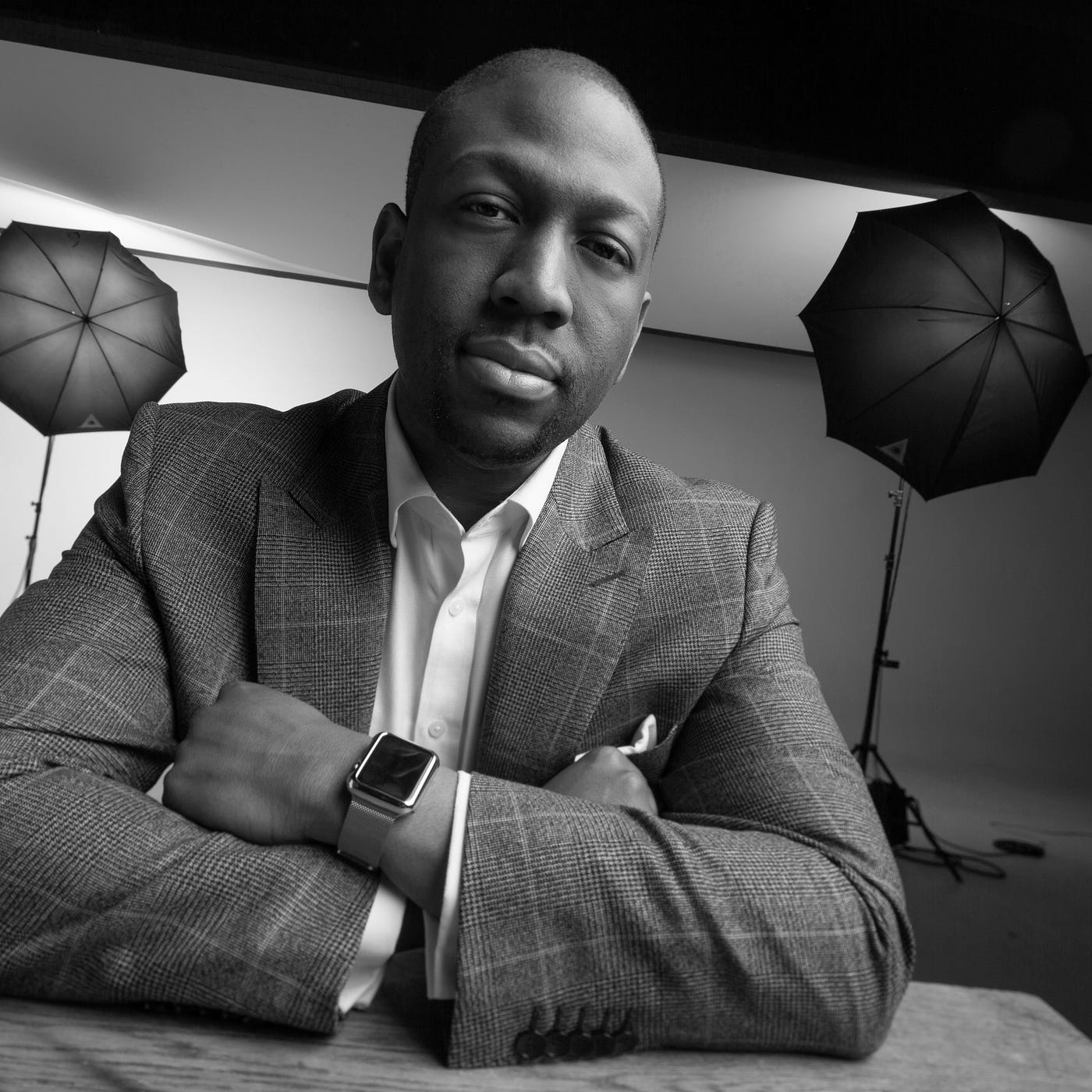
Tyre Gray is Chief Administrative & Legal Officer at South Florida Donor Network (SFDN), the federally designated organ procurement organization serving South Florida and The Bahamas. A kidney transplant recipient himself, Gray combines lived experience with executive leadership to advance organ donation awareness, strengthen community partnerships, and support policies that help save and heal lives through transplantation.
Thank you so much for joining us in this interview series. Before we dive into our discussion, our readers would love to “get to know you” a bit better. Can you share with us the backstory about what brought you to your specific career path?
My career is a testament to the power of saying “yes” to unexpected opportunities. As a child, my mother told me I could become anything I wanted to be, and I believed her. More importantly, I still believe her.
That belief became the foundation of a career that has taken me through roles as an educator, hotelier, consultant, attorney, and, most recently, a C-suite executive. While those roles may seem unrelated, each one built upon the last in ways I never could have predicted.
At every stage, I gained skills that seemed incidental at the time but later became the critical advantage that prepared me for the next opportunity. What I learned in one role became the missing piece that enabled me to qualify for, and excel in, the next. Looking back, my career has been less about following a carefully scripted plan and more about remaining open to possibilities that others might have overlooked.
When people ask what led me to this career path, my answer is simple: a willingness to say “yes” to opportunities, even when they seemed random, and the enduring belief that my mother was right. That mindset has given me the confidence to step into unfamiliar territory, trust that I can learn what I don’t yet know, and see every new challenge as an opportunity rather than an obstacle.
Can you share the most interesting story that happened to you since you started your career?
In 2008, I was laid off. For someone in my late twenties who was thriving professionally, in a serious relationship, and had just purchased a home, it was devastating. While millions of others experienced the same uncertainty during the Great Recession, knowing I wasn’t alone did little to soften the blow.
Looking back, however, that setback became one of the most pivotal moments of my career, teaching me what I believe is the single most important character trait: resilience!
Experiencing unemployment fundamentally changed the way I thought about my professional future. I made a promise to myself that I would never again rely on a single skill set to “feed myself.” I wanted to build a career defined by adaptability; one that would allow me to create opportunities regardless of economic conditions.
Fortunately, I found another position relatively quickly, but the experience left a lasting impression. As I immersed myself in business journals and leadership trends, I noticed that many Fortune 100 companies were increasingly appointing executives with Juris Doctor degrees to C-suite roles. I saw an opportunity to broaden both my perspective and my value as a leader.
While working full-time, I studied at night for the LSAT, earned admission to law school, graduated near the top of my class, and ultimately passed the California, Arizona, and Nevada bar examinations within 368 days.
That chapter of my life taught me that career resilience isn’t built by avoiding adversity—it’s built by responding to it with intention. What initially felt like one of the greatest professional disappointments of my life ultimately became the catalyst for one of the greatest investments I ever made in myself.
Can you please give us your favorite "Life Lesson Quote"? Do you have a story about how that was relevant in your life?
“Chance favors the prepared mind” is one of my favorite quotes. Too often, people miss opportunities not because they lack ability, but because they are not prepared, or because they convince themselves they are not ready.
I have found that readiness is rarely a fixed state; it is something you build over time. When something sparks my interest, I try to spend even a small amount of time exploring it, learning the basics, or speaking with someone who has experience in that area. Those incremental efforts compound, and over time they create a foundation of familiarity that makes it easier to step into unfamiliar roles with confidence.
In my own career, I have frequently been asked to take on responsibilities that were new or unexpected. In many of those moments, I realized I had already done some prior reading or had spoken with someone who had navigated similar work. That preparation, sometimes intentional, sometimes incidental, gave me the confidence to step forward and say yes, even when my confidence exceeded my experience.
Ultimately, I have learned that opportunity often does not arrive with advance notice. Preparation does not guarantee success, but it consistently increases the likelihood that when opportunity appears, you are ready enough to meet it.
Is there a particular book that made a significant impact on your leadership style? Can you share a story or an example of that?
Dale Carnegie’s How to Win Friends and Influence People may seem like a cliché choice, but I first read it in junior high school and still revisit it every few years. Its message has become a leadership compass for me-- a reminder that everyone is shaped by their own experiences and motivations, and that no one sees themselves as the villain in their own story.
I’ve had the privilege of leading teams spanning different ages, backgrounds, and perspectives. That experience has reinforced one of the book’s most enduring lessons: lead with curiosity before judgment. Seeking to understand why people think and act the way they do builds trust, strengthens relationships, and ultimately makes you a better leader.
One passage has stayed with me for decades: “Instead of condemning people, let’s try to understand them. Let’s try to figure out why they do what they do. That’s a lot more profitable and intriguing than criticism; and it breeds sympathy, tolerance and kindness.” It’s a simple idea, but one that has profoundly shaped how I lead people and make decisions.
What do you think makes your company stand out? Can you share a story?
Culture is our competitive advantage. At the Donor Network, we intentionally prioritize organizational health over organizational complexity. As Patrick Lencioni has written, being a healthy organization comes first—the “smart” aspects of business are simply the price of admission.
Our philosophy is simple: we hire people first and find the right role second. More than once, we’ve hired someone who was an exceptional cultural fit but was initially placed in the wrong position. Rather than viewing that as a failed hire, we worked with them to identify a role where their talents could thrive. Those individuals have gone on to become valuable contributors because we invested in the person, not just the position.
That commitment to culture is what differentiates us. Skills can be developed, and experience can be gained, but character, humility, and the ability to elevate those around you are far more difficult to teach. We would rather pass on an exceptional performer who undermines our culture than compromise the environment that allows our entire team to succeed. The right people don’t just produce great results—they make everyone around them better.
You are a successful business leader. Which three-character traits do you think were most instrumental to your success? Can you please share a story or example for each?
Honestly, most days, I feel like a jazz musician improving and playing the wrong notes under the guise of adding more soul to the music.
This is one of those questions that's difficult to answer without sounding like you're accepting an award for yourself. The truth is, resilience and humility have certainly mattered, but I'd be remiss if I didn't acknowledge that a little bit of dumb luck has played a role too. I've been fortunate to have people who believed in me, advocated for me when I wasn't in the room, and opened doors I didn't even know existed. Those champions changed the trajectory of my career in ways I could never have accomplished on my own.
I've also developed a habit of saying "yes" to opportunities that, at the time, seemed just beyond my capabilities or outside of my interests. More than once, people have questioned whether I was taking on too much or whether I was just plain crazy. Fortunately, those leaps of faith have often turned into the experiences that stretched me the most and prepared me for the next challenge.
If there's one lesson I've learned, it's that success isn't the product of three-character traits. It's the result of hundreds of small behaviors, decisions, relationships, failures, and experiences that accumulate over time. You learn something from every role, every mentor, every setback, and every unexpected opportunity. Eventually, those lessons shape how you think, how you lead, and how you respond when the next challenge arrives.
So, if I had to identify the qualities that have served me well, I'd point to resilience, humility, and curiosity. But I'd put an asterisk next to all three and add one more: gratitude. None of us succeeds alone, and I'm certainly no exception.
Leadership often entails making difficult decisions or hard choices between two apparently good paths. Can you share a story with us about a hard decision or choice you had to make as a leader?
My office commute offers a daily reminder of how decision-making really works. I can take surface streets or the freeway, and in the early morning or late at night, they’re nearly identical in timing. But after work, it’s a complete toss-up. About a mile into the drive, there’s a point where I must choose and more often than I’d like, I’m convinced I chose wrong as I sit in unexpected traffic.
I share that because any neatly packaged business example would probably overstate how predictable decisions really are. The takeaway, for me, is twofold. First, indecision is usually worse than making the wrong decision, so stalling a decision is the worst thing a C-suite executive can do. Sitting still guarantees you won’t get where you need to go. Second, having too long a memory can be just as limiting. Even with a thousand data points, you can’t fully account for the accident, the weather, or the variables you simply can’t see coming.
In business, as in that daily commute, the goal isn’t to pick the perfect route every time it’s to have a clear sense of direction, commit to a path, and be ready to adjust when conditions change. Sometimes you’ll hit traffic. The key is to keep moving.
Ok, thank you for that. Let’s now jump to the primary focus of our interview. Most of our readers—in fact, most people—think they have a pretty good idea of what a C-Suite executive does. But in just a few words can you explain what a C-Level executive does that is different from the responsibilities of other leaders?
Have you ever watched a great salsa dance competition? The lead is usually dressed simply, often in black, while their partner is in something bright, sequined, and impossible to ignore. If the lead is doing their job well, you barely notice them. All the attention goes to the partner’s movement, energy, and performance. Yet, none of it works without that steady, intentional guidance behind the scenes.
That’s how I think about the role of a C-suite executive. It’s not about being the most visible person in the room; it’s about creating the conditions for others to shine. When it’s done right, the organization and its leaders are what people notice, while the executive fades into the background. In fact, the ultimate compliment is when it looks so seamless that people think, “This runs so well, it must just happen naturally.”
What are the “myths” that you would like to dispel about being a C-Suite executive? Can you explain what you mean?
The Higher You Go, The Less You Know. It may seem counterintuitive, but as leaders move higher within an organization, they often have access to less unfiltered information. The executive title itself changes workplace dynamics. Employees become more guarded, managers filter what they communicate, and difficult truths are often softened or never shared at all. This phenomenon is particularly pronounced in large, complex organizations, where multiple layers of management separate executives from frontline operations.
Effective C-suite leaders recognize this information gap and actively work to close it. Rather than leading exclusively from the executive suite, they make a deliberate effort to spend time alongside the employees closest to the work. There is no substitute for observing operations firsthand, engaging directly with frontline teams, and understanding the challenges employees face in serving customers and creating value for stakeholders.
Equally important is recognizing that today's managers operate in an environment that may differ significantly from the one executive’s experienced earlier in their careers. Prior management experience provides valuable perspective, but it should not be mistaken for current operational knowledge. The most effective executives approach these conversations with curiosity rather than assumptions. By building trust, encouraging candid dialogue, and listening carefully to those closest to the work, leaders gain insights that are unlikely to emerge in formal reports or executive briefings. These perspectives strengthen decision-making, improve organizational alignment, and help ensure that strategic priorities remain grounded in operational reality.
What are the most common leadership mistakes you have seen C-Suite leaders make when they start leading a new team? What can be done to avoid those errors?
Embrace the chaos! Newly appointed C-suite leaders often feel intense pressure to arrive with answers and immediately begin "fixing" the organization. After presenting a compelling vision to the board and outlining an ambitious first-100-days strategy, the focus naturally shifts to delivering measurable results. In that pursuit, however, leaders can overlook one of their most valuable responsibilities: taking the time to understand their people, culture, and the organization's informal operating dynamics.
Driving short-term financial improvement is often straightforward. Organizations can reduce headcounts, cut costs, and quickly improve profitability. Yet, these actions raise an important question: At what cost? If the changes undermine trust, institutional knowledge, employee engagement, or organizational capability, the gains are unlikely to be sustainable.
Every organization operates according to both formal structures and unwritten norms. These customs, relationships, and informal decision-making processes shape how work actually gets done. Whether a leader ultimately chooses to preserve or transform them, they must first invest the time to understand them.
The "messiness" of organizational life should not be viewed as an obstacle to effective leadership, but as a critical source of insight. By embracing complexity rather than rushing to impose solutions, leaders gain a deeper understanding of the organization's strengths, challenges, and cultural realities. It is within this period of observation and learning that the conditions for meaningful, lasting transformation are established.
In your experience, which aspect of running a company tends to be most underestimated? Can you explain or give an example?
In my experience, the most underestimated aspect of running a company is caring for the people who make it run. You simply can’t build or sustain a business without employees. Compensation, benefits, and incentives all matter, but what matters most is creating a culture where people can thrive, grow, and genuinely enjoy the work they do.
Every effective C-suite leader I know spends a significant amount of time thinking about their people. The best outcomes come from teams that feel supported, developed, and valued, not just managed.
I do think some management approaches over the past couple of decades have unintentionally left employees feeling like senior leadership doesn’t care about them. That’s unfortunate. I can’t speak for everyone, but the leaders I know care deeply, often more than people realize.
If there’s one reminder I’d offer fellow leaders, it’s this: your people make everything else possible. We spend so much time analyzing strategy, operations, and financials, but the most important factor in any company’s success is the human one. It deserves just as much attention—if not more. No strategy succeeds without people who believe in it. That’s why investing in people is what drives business performance.
Ok super. Here is the main question of our interview. What are your “Five Things You Need To Be A Highly Effective C-Suite Executive”? If you can, please share a story or an example for each.
1 . Humility – Look, none of us do this alone, and I think it's important that you're humble. If you are the smartest person in the room, you're probably in the wrong room. And so, it's really important that you get the smartest most qualified people around you to carry out your mission. Surround yourself with people who challenge your thinking, not simply validate it.
2 . Resilience – We all fall down, and we all have the opportunity to get back up. As you try new things as a leader, some things are going to work fabulously, and others are not going to work very well. That resilience and short memory is to be able to overcome the hurdles and for your team to overcome the hurdles is really important. Not every decision will work, and that's okay. What matters is learning quickly, adapting, and continuing to move the organization forward.
3 . Vulnerability – Brenee Brown speaks a lot about this, and I think in today's society being able to be vulnerable is really important. It helps your team trust you. We don't always have good days; some days are harder than others and others are doing better than others. And so, the truth is that when you’re actually vulnerable and show your team that you do have emotions and speak about them openly because sometimes our emotions do guide our decision-making, it is important to be able to check that and it is important to be able to be sensitive to the needs of your team.
4 . Accountability – It is important to be accountable to your team. I believe that my job is very simple; it is to provide my team with the tools, the training, and the support they need to be able to carry out the job. And I need them to hold me accountable to make sure that I provide that to them. Taking ownership over mistakes is important because it sets up an environment where everybody knows that we’re here to do the work. We’re here to carry out the mission. And when you can be accountable as a leader, it helps your staff to be accountable to you. Sometimes we all make mistakes and that’s okay as long as we’re doing so in the name of the mission.
5 . Active Listening -- My grandfather used to always say that God did the math for us. We have two ears and two eyes, but we have one mouth. And I think that it is important that we look, we listen, we think twice as much as we speak. And so being able to do that, I think, really helps you to be a better leader because you’re able to process information and then share your thoughts after the fact.
In your opinion, what are a few ways that executives can help create a fantastic work culture? Can you share a story or an example?
Every business is different, and every leader brings their own perspective to building culture, so I don’t think there’s a one-size-fits-all formula. What I do believe is that culture starts at the top and has to be reinforced consistently, every day, in both big decisions and small actions.
It’s not something you can compromise on or approach in a way that feels inconsistent. People notice quickly if values are situational or if leadership says one thing and does another. Credibility in culture is built through alignment.
At the Donor Network, one of the ways we reinforce this is by holding ourselves accountable and doing so publicly. As a C-suite team, we believe it’s important to demonstrate—not just say—that we are serious about the culture we’re building. That means acknowledging when we fall short and being visible in how we improve. No one is immune from that expectation.
Ultimately, a strong culture comes from consistency, accountability, and a genuine commitment to people. When leaders model that, it gives everyone else permission, and confidence, to do the same.
You are a person of great influence. If you could start a movement that would bring the most amount of good to most people, what would that be? You never know what your idea can trigger. 😊
If I could help solve one issue, it would be student loan debt. It’s a challenge that directly impacts our workforce’s ability to build full, stable, and fulfilling lives. Across many professions—especially in fields like healthcare and law—there’s a significant educational barrier to entry, which means many talented individuals begin their careers already carrying a heavy financial burden.
To me, this isn’t a political issue; it’s a people issue. As leaders, we have an opportunity and a responsibility, to work with stakeholders to explore thoughtful, practical ways to help ease that burden for our teams. Whether through benefits, partnerships, or innovative support programs, there are meaningful ways organizations can be part of the solution.
I don’t pretend there’s a simple solution, but I do think it’s a conversation worth having and one where business leaders can play a constructive role. And if anyone wants to compare notes or explore ideas, I’m always happy to continue the discussion over a cup of coffee, or something stronger.
How can our readers follow you online?
Readers can connect with me on LinkedIn and follow @sfldonor and @nvdonor on Instagram and Facebook for updates on organ donation, transplantation, and the lifesaving work taking place in our communities.
Thank you for the time you spent sharing these fantastic insights. We wish you only continued success in your great work!