Instead of saying does that make sense, I say, tell me how you understood what I just said.
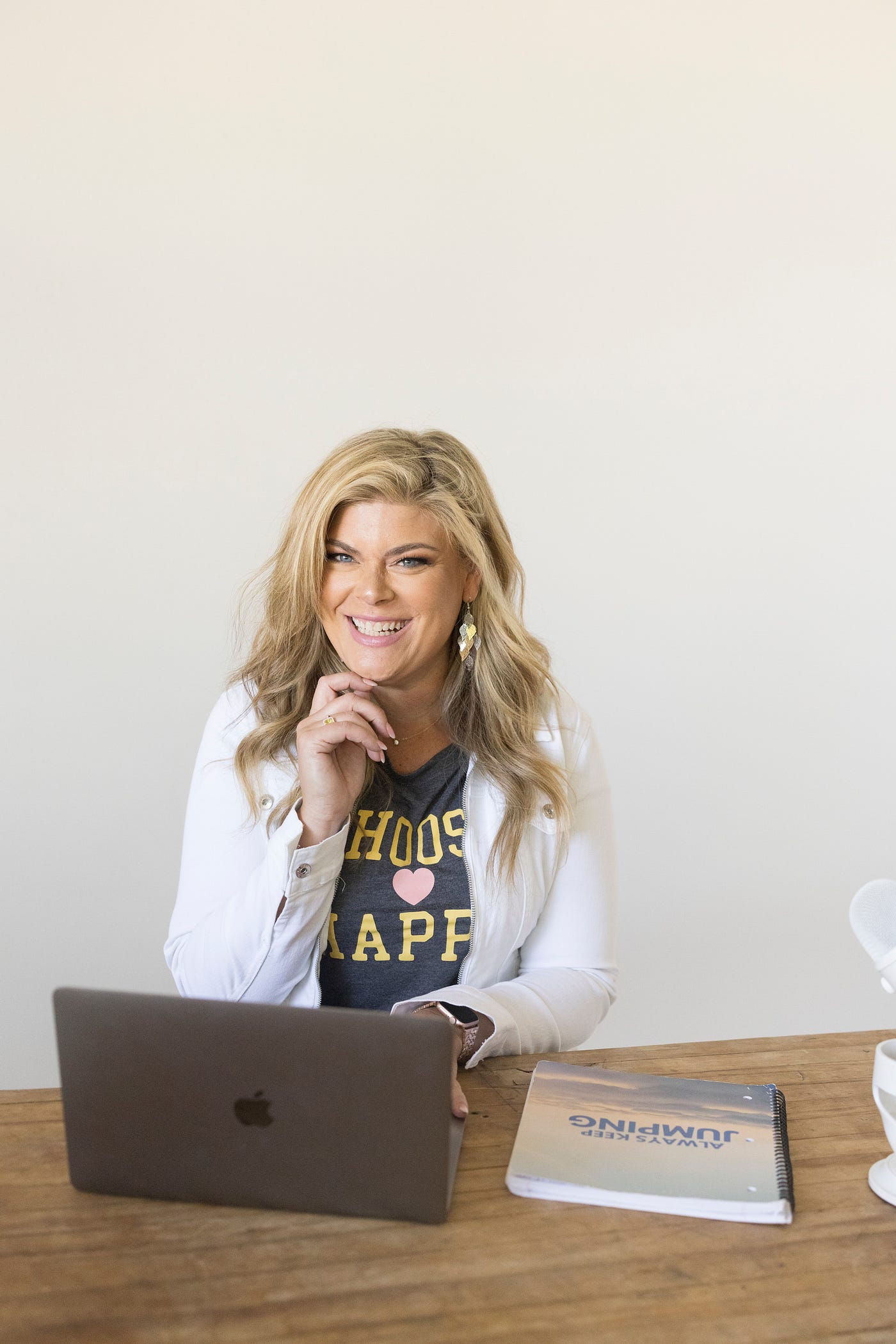
Bella Vasta is an AI strategist, keynote speaker, and serial entrepreneur based in Scottsdale, AZ. She has been in business since 2002, built and sold a nationally award-winning pet care company, and now coaches small business owners as the founder of Jump Consulting. Known as The Strainer… the person who filters the AI noise so busy people can actually use the tools… she hosts two podcasts, Bella In Your Business (470+ episodes) and AI For The Busy Human. She is also a single mom to one of the world’s smallest surviving micro preemies, born at 12 ounces and now a bright 12-year-old creating her own music, stories, and videos with AI.
Thank you so much for joining us in this interview series! Before we begin, can you please introduce yourself? Our readers would love to “get to know you” a bit better. Can you tell us a bit about your ‘backstory’ and how you got started?
I grew up in a strict Sicilian family who wanted to put a curfew on me. When I had the opportunity to sleep overnight at a neighbor’s house watching her two dogs for twenty-five dollars a night, I jumped at the chance. I got to go out, go to karaoke, and skip the curfew.
I ended up growing that into a six-figure, ten-employee pet sitting company and ran it until I sold it in 2016. In 2014, I had one of the world’s smallest micro preemie babies, born at only twelve ounces, and she’s twelve years old now and very smart and involved with AI.
None of us are able to achieve success without some help along the way. Is there a particular person who you are grateful towards who helped get you to where you are? Can you share a story?
I think it would definitely be my parents. They always never let me quit. I wanted to quit things for numerous reasons, and they always showed me to never give up. It became a big core of who I am. In high school I was on mock trial and loved it, because it was lawyers arguing. In college, I had already started my company, and my parents made me finish college anyway. I understand that now as a parent. I was a tri-sport athlete, and they would never let me quit. I couldn’t give up, and that translated to a lot of grit and obsessive excitement over things. That’s the same grit that’s let me help so many different types of people and speak on so many different stages.
Ok, fantastic. Let’s now shift to the main focus of our interview. When dealing with vastly different groups — such as board members, frontline staff, and external partners — how do you adapt your message without losing core intent or transparency?
A human has to connect with a human. When people know that you care about them and that you hear them, but also that you show a little vulnerability, a little bit of your struggles… that’s when it makes a difference. I often get “but I’m not you, Bella.” And that’s why I obsessively share my story about everything, about how I’ve grown my businesses, about the trials and tribulations of life. Literally fighting for my own daughter’s life for a hundred and eighty-two days in the NICU while running a coaching company and a pet sitting company, and having them both not just survive but thrive through the most difficult time of my life.
I think there’s authenticity in the mistakes, in the stuttering, in the brainstorming, in the ums. People want to know that you’re real, and that at the end of the day, we’re all just humans talking to other humans. So you’ve got to be human.
Miscommunications often happen when assumptions go unchecked. What feedback loops or listening mechanisms have you built to ensure stakeholders feel genuinely heard, not just broadcasted to?
Instead of saying “does that make sense,” I say, “tell me how you understood what I just said.” At the end of meetings I follow up with an email: “here’s how I understood our meeting, and here’s how we’re going to move forward… did I miss anything, or do you have anything to add?” Having things documented, and delivered in more than one way, matters more than ever in this day and age. And it’s easier than ever with AI, because you can have everything recorded and pull meeting notes straight from it.
Can you share a high-stakes scenario where misaligned expectations threatened a project or relationship, and how strategic communication turned it around?
Misaligned expectations happened a lot at the beginning of my career, because I was thinking one thing and the client was thinking another. A client early on expected me to basically be there for them twenty-four seven. I learned early that boundaries, and clearly stating expectations, were of the utmost importance. Nobody can read your mind, and you can’t read anyone else’s. So you always want to state the obvious, and you always want to put it in writing.
How do you maintain clear, proactive communication during periods of rapid growth, crisis, or sudden strategic shifts when information is still evolving?
Again, be human, and share with people: “things are changing, we’re going in this other direction, and here’s why.” You have to give people a vision to connect to, something they can get excited about. Otherwise they’re just pencil-pushers doing the work without understanding why. And as a leader you have to remember not everyone is good at everything. Understand where people are at, how far they want to go, and where their ceiling is.
With digital tools, async channels, and remote work, modern communication can feel noisy or impersonal. What boundaries or practices do you use to keep interactions meaningful and effective?
I’ve made my own GIPHYs… search Bella Vasta and a whole bunch come up, and I use them constantly in texts and replies. My top one has been viewed over a hundred million times. I can’t believe it. Beyond that, I teach my clients this all the time: leaving a quick voice note, or sending a quick picture on a text or a Slack channel, instantly makes something more human instead of robotic.
When it comes to AI, it’s why I teach people how to have AI speak like them. There’s so much AI slop out there, so many generic “it’s not this, it’s that” type writings. I’m not perfect. I’m terrible at grammar, I have run-on sentences, I use a lot of dot-dot-dots to connect ideas. Depending on what I’m writing, I tell my AI: this needs to be professional and perfect, or, this needs to be in Bella’s voice. And Bella’s voice isn’t perfect, because she’s human.
I also think it’s important to schedule some “how are you” meetings… not too many, just catching up and sharing parts of your life, because when you share parts of your life, it enables others to share too. And I build “don’t agree with me” into my own tools and my own team. I don’t want echo chamber syndrome. I want people, and bots, to poke holes in my ideas, because that’s the only way they get better.
Ok super. Here is the main question of our interview. Based on your experience and success, what are “Five Strategies Leaders Use to Keep Every Stakeholder Aligned, Heard, and Happy”? Please share a story or an example for each.
1. Be a human in front of a human. A lot of us are afraid, for all different types of reasons. But at the end of the day we’re just humans talking to humans. Let people know who you are, what makes you tick, what you spend your free time doing.
The story behind this one is the biggest thing that’s ever happened to me. I fought for my own daughter’s life for a hundred and eighty-two days in the NICU while I was running a coaching company and a pet sitting company. I talk about that openly, along with the trials and tribulations of building both businesses. People tell me “but I’m not you, Bella” all the time. That’s exactly why sharing it works. It’s the vulnerability that builds the trust.
2. Nobody can read your mind, so put it in writing. You can never repeat yourself enough. You think that because you said something once, everybody remembers it… they really don’t. Follow up with things in writing, because if you just rely on memory, your memory and someone else’s memory are always going to be different.
I learned this one the hard way, early in my career. A client expected me to be there for them twenty-four seven, and I let it slide because I never put a boundary in writing. Nobody had told them otherwise. Once I started clearly stating expectations, in writing, every time, that stopped happening.
3. Learn the swap. Swap “does that make sense?” for “tell me how you understood it,” or “what do you think about that?”, or “how does that make you feel?”, or “did I miss anything?” Adopting those phrases into your vernacular really helps engage others in the conversation and get their thoughts out of their head, instead of just talking at them.
I do this at the end of every meeting now. Instead of assuming everyone’s on the same page, I send a recap: “here’s how I understood our meeting, and here’s how we’re going to move forward… did I miss anything?” That one habit alone has saved more relationships than I can count.
4. Kill Echo Chamber Syndrome. Create a culture and a relationship with people where you’re always asking, “am I missing anything?” or “poke holes in this… how would you push back?” You can do that with humans, and you can do that with AI. Not enough people ask for that. They don’t ask to really workshop something out.
I build “don’t agree with me” into my own tools and my own team, on purpose. I want people, and bots, poking holes in my ideas, because that’s the only way they get better.
5. Stop typing and start talking. This goes for creating any kind of voice you’re putting out there. And for talking to AI too. I write to my AI maybe ten percent of the time; the rest is me talking. Your output is so much richer when you talk instead of type. You talk faster, you get more thoughts out, and it understands everything better than something typed.
I see the proof of this every day. My own GIPHYs, made from just talking and being myself, have been viewed over a hundred million times. People respond to a real voice, not a typed one.
You are a person of great influence. If you could start a movement that would bring the most amount of good to the most amount of people, what would that be? You never know what your idea can trigger. :-)
I’d love to start a movement around building new neural pathways at the end of every day. When you’re washing your face, brushing your teeth, getting ready for bed… keep a sticky note pad next to you and write down three things you’re grateful for that happened that day, in your life or in your business. Put them on a wall, and watch that wall get bigger and bigger with sticky notes. It teaches your mind to start looking for positive things, for things to be grateful for, every single day. It works wild with my clients, and it’s a movement I’d love to start. It’s about creating positive pathways in our brain that help us go forth with my mission of proving that everyone’s “I can’ts” can become “I cans.”
How can our readers further follow your work online?
You can find me at www.bellavasta.com, or on my two podcasts, Bella In Your Business and AI For The Busy Human.
This was very inspiring. Thank you so much for the time you spent with this!