What makes my work stand out is that it’s not about more self-awareness—it’s about self-responsibility. I’m not interested in endless introspection or blaming others; I focus on what you can change, right now, in real time, in the middle of a meeting or a meltdown.
Dreamers: “They Told Me It Was Impossible And I Did It Anyway”
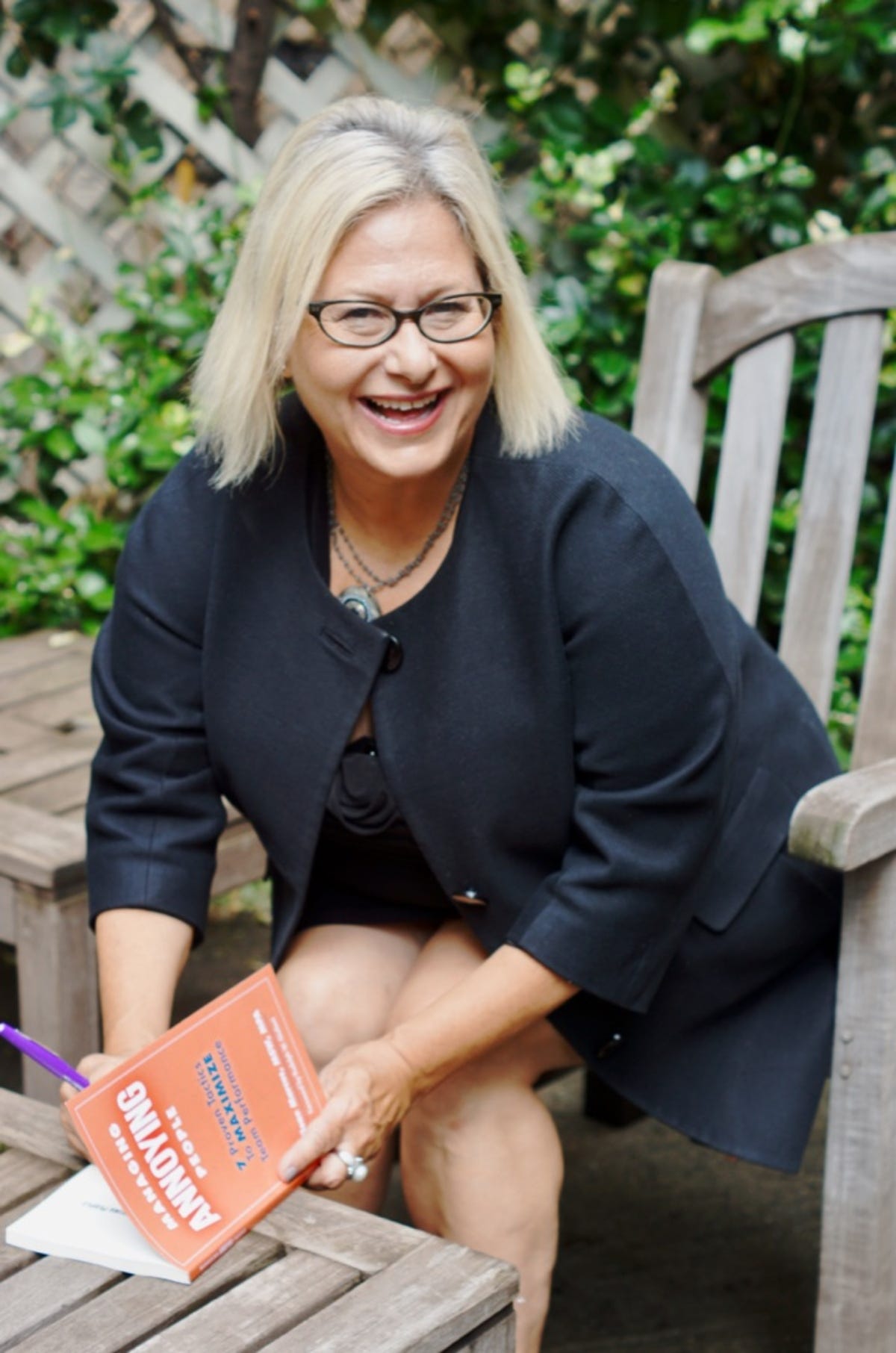
As a part of our series about “dreamers who ignored the naysayers and did what others said was impossible”, I had the pleasure of interviewing Ilene Marcus.
Ilene Marcus turns what annoys her into inspiration for everyone else. The author of the Managing Annoying People brand and inventor of the iLean-Pan, she transforms work and life chaos into innovation, inspiration, and laughter. Holding graduate degrees from Columbia University, she’s guided 10,000-plus employees through self-guided improvement transformation in government, nonprofits, and business. From her home in the Berkshires, Ilene works passionately as a private mentor, public speaker, and columnist for SixtyandMe, a publication with half a million subscribers.
Thank you so much for joining us! Our readers would love to ‘get to know you’ a bit better. Can you tell us your ‘backstory’?
Like many first-generation American families, I come from a background of material and financial scarcity, which gave me opportunities to rely on myself. The biggest, scariest hardship I overcame was dealing with the lack of safety and not having trust. I also feared not having enough, which stifles creativity and confidence. Once I started conquering that (and I am still working on that), I began my career as a social worker, drawn to helping people navigate tragedies and rebuild their lives. I was lucky to have the natural ability to organize people, spark innovation, and move complex processes forward quickly, which propelled me into leadership positions.
My first real management job was overseeing 10,000 employees in a massive social welfare agency—an experience that taught me how to manage not just systems, but human emotions, personalities, and, yes, annoying people.
The most important thing I learned was that financial independence is the ultimate form of empowerment. And the best way to do that is to turn personal and professional frustration into fuel for success, advancement, and happiness.
When I started becoming successful, I sought connection, purpose, and community, realizing that helping others rise is my real life’s work. That’s why interviews like this, published by Authority Magazine are so important to me; they work to help people not feel alone by sharing experience and that builds community and engagement.
Are you working on any new or exciting projects now? How do you think that will help people?
So many projects that it’s crazy when I think about it. I like to say I have a lot of pots boiling. Every initiative is moving forward and I’m not overwhelmed yet. The most recent project nearing launch is my iLean-Pan. Several years ago, I got frustrated with my crooked stove and my cookware being mis-designed for many uses. I kept having to tilt the pan manually to get oil and fat or eggs to one side. I took my own advice about using frustration as fuel and designed a solution, found manufacturers and distribution, and engineered my own solution and brought it to market.
My book series, Managing Annoying People was just accepted and engaged with a premiere book marketing agency, and they are very excited. My public speaking career is exploding. My consulting and mentoring roles are going gangbusters. Blogging and doing podcasts are filling my days. I’m busy, not overwhelmed.
I was chosen to be on the 21st season of The Blox reality show for the iLean-Pan, which pits entrepreneurs and their business plans in competition with each other. And while I can’t share the outcome just yet because it hasn’t aired, let’s just say I think I’ll get plenty of screen time.
And I’m happy, although not satisfied yet - I want to help more people!
Ok, thank you for that. I’d like to jump to the main focus of this interview. Has there ever been a time that someone told you something was impossible, but you did it anyway? Can you share the story with us? What was your idea? What was the reaction of the naysayers? And how did you overcome that?
The short answer is almost everyone almost all the time. Everyone told me things I wanted were impossible. I just learned not to listen.
When I started designing the iLean-Pan, everyone told me it was impossible. It was “too simple,” so it must already exist—or if it didn’t, there had to be a reason. Engineers, inventors, even lawyers tried to talk me out of it. They said it would cost hundreds of thousands to prototype, that metal doesn’t behave that way, and that I didn’t have the technical background to pull it off. Filing for a patent would take years, time and expertise I didn’t have.
At first, I almost believed them. I thought, Maybe they’re right—this is crazy. But for the first time, my gut wouldn’t quiet down. I knew how it worked for me on my own crooked stove, and I couldn’t let go.
So, I stopped trying to convince anyone and focused on building it. Their negativity became my fuel. Every “no” pushed me to refine, test, and prove it could be done. In the end, I didn’t argue my way to a prototype—I built my way there. Turns out, impossible just needed a little tilt.
With my book, I was told to get in line and wait for my turn with agents, editors, and publishers. I put it out there and one of the most prestigious international agents came to me, asking to represent me. A renowned literary and marketing firm followed and came on board to manage, not just the one book, but create a worldwide, multi-faceted consumer brand.
In your opinion, what do you think makes your company or organization stand out from the crowd?
What makes my work stand out is that it’s not about more self-awareness—it’s about self-responsibility. I’m not interested in endless introspection or blaming others; I focus on what you can change, right now, in real time, in the middle of a meeting or a meltdown. Most self-help talks about growth in theory. I teach people how to actually do it—in the room, with other humans, when things get messy. Because that’s where life happens—and where real change sticks.
None of us are able to achieve success without some help along the way. Is there a particular person who you are grateful towards who helped get you to where you are? Can you share a story about that?
Yes—unexpectedly, my neighbor Teri Salomon, has been one of my biggest supporters. She’s not an inventor, but she believed in my idea from the start. She’s one of those people who just gets things done—organized, resourceful, and always ready to roll up her sleeves. She drove with me to factories, introduced me to a great web designer and video team, and somehow always knew exactly when I was running low on steam.
As a Techstars Facilitator, I travel the country meeting entrepreneurs who are just starting out—and the mentors who guide them. I’ve always told founders, “Go to events, join incubators, find your people—they’ll lift you up.” And while that’s true, I’ve learned it’s only half the story. What really sustains you isn’t the professional network—it’s your personal one. A friend, a lover, a sister, or in my case, a neighbor who keeps believing in you even when you’re questioning yourself.
Sometimes help doesn’t come from the people you expect. Sometimes it’s the person next door who reminds you what belief looks like in action.
It must not have been easy to ignore all the naysayers. Did you have any experiences growing up that have contributed to building your resiliency? Can you share the story with us?
When I was growing up my sisters and I scavenged the house for anything we could turn into Barbie houses. I always found the best materials and naturally took charge—earning the title “bossy.” My parents agreed, so I learned to keep my ideas to myself, like secretly wearing bike shorts under my dresses to stop my legs from rubbing together. Years later, Sara Blakely built a billion-dollar brand on the same idea I was too embarrassed to share. She solved it for everyone; I solved it for me. Today, I speak up and help others speak up, build boldly, and launch the ideas I once hid.
Based on your experience, can you share 5 strategies that people can use to harness the sense of tenacity and do what naysayers think is impossible? (Please share a story or an example for each)
Here is a link to my video: https://youtu.be/CfXIzg7cvrc
1. Turn Frustration Into Fuel
When people tell you something can’t be done, don’t argue—get curious. Every “no” hides information you can use. When I first started designing the iLean-Pan, engineers told me it was “too simple” to work. Instead of giving up, I studied why they thought that and learned what to test. Their skepticism became my checklist. Frustration is energy—if you channel it right, it becomes momentum.
2. Lead with Audacity
Audacity isn’t arrogance—it’s confidence with a mission. When I step into a room of founders, I remind them: if your idea doesn’t make someone raise an eyebrow, it’s probably not bold enough. I once presented to a room full of male engineers about my sloped frying pan. Let’s just say, they weren’t expecting me. But I led with certainty—and by the end, they were taking notes.
3. Big Change Happens in Small Moments
People think breakthroughs happen in a flash. They don’t. They happen in the 2 a.m. recalculations, the sixth prototype, the day you don’t quit. When I hit a wall with the pan’s design, I went back to my crooked stove, cooked on it again, and realized: the problem was the handle, not the slope. That tiny insight moved the whole project forward. Small steps add up—if you keep taking them.
4. Your Life Is What You Do Every Day
Success isn’t built in big moments—it’s built in habits. I tell entrepreneurs, “Your life isn’t what you dream about, it’s what you do about it.” I meditate, write, and walk my dog every morning before I check my phone and email. That consistency grounds me. Big goals only come to life through small, repeated actions that say, I’m still in this.
5. Your Reactions Speak Louder Than Your Actions
You can’t control what other people do—but you can control your reaction. When I was managing 10,000 staff, I learned that leaders lose credibility the moment they lose their cool. These days, when someone crosses a line, I reset my boundary calmly—again and again—until the message lands. Your reaction sets the tone. It’s not what happens; it’s how you handle it. For me, what started as kitchen irritation became an innovation and then a business that helps people—proof that annoyance, handled right, can spark transformation.
What is your favorite quote or personal philosophy that relates to the concept of resilience?
Just because it is not working, doesn’t mean it’s not working.
Progress doesn’t always announce itself. It happens quietly, in the moments you hold steady and refuse to give up. Just because it isn’t working in that moment, doesn’t mean something isn't shifting beneath the surface. We all want a quick fix and give-up right away before the miracle.
Staying the course is the heart of resilience.
Resilience isn’t glamorous - it’s messy, confusing, and usually shows up when you’re out of snacks and patience. Progress rarely looks like progress at the moment. Sometimes, it means circling the same problem for the tenth time, trying the thing you didn’t want to try or believe and talking yourself out of quitting…again.
That’s when I remind myself that something is moving, even if I can’t see it yet. Growth hides in motion, mistakes and persistence. I stay with it – because just when I’m convinced it’s all falling apart, that’s usually the moment it’s finally coming together.
Resilience is also slow, especially when you’re trying to change patterns, not just outcomes. Sometimes it looks like setting a boundary for the fifth time with a colleague who keeps stepping over it. Instead of losing my cool, I keep calmly restating it. Eventually, they realize I’m not going to react – and their behavior changes.
You are a person of great influence. If you could inspire a movement that would bring the most amount of good for the greatest number of people, what would that be? You never know what your idea can trigger.
If I could inspire a movement, it would be a Responsibility Pledge. Not another “be your best self” slogan—but a real commitment to owning what’s yours.
It starts with one simple question: What can I change?
Too often, people get stuck trying to fix everyone else—the boss, the system, the family dynamic—when the real shift happens inside.
My Responsibility Pledge would ask people to pause before reacting, blaming, or spiraling, and instead say, “I can’t control them, but I can control how I show up.”
It’s not about perfection—it’s about presence. If more of us took responsibility for our tone, our timing, and our triggers, workplaces would run smoother, relationships would feel lighter, and fewer good people would burn out from frustration.
That’s what makes me different: I don’t teach people how to manage others—I teach them how to manage themselves. Because the moment you do that, everything changes.
Can our readers follow you on social media?
website: ilene@ilenemarcus.com
linkedin: ilenemarcus
tiktok: @ileanmarcus
facebook: ileanmarcus
instagram: @ileanmarcus
youtube: @ilenemarcus
Thank you for these great stories. We wish you only continued success!