I loved my people and genuinely wanted to make a difference, but somewhere along the way my identity became wrapped up in what I accomplished.
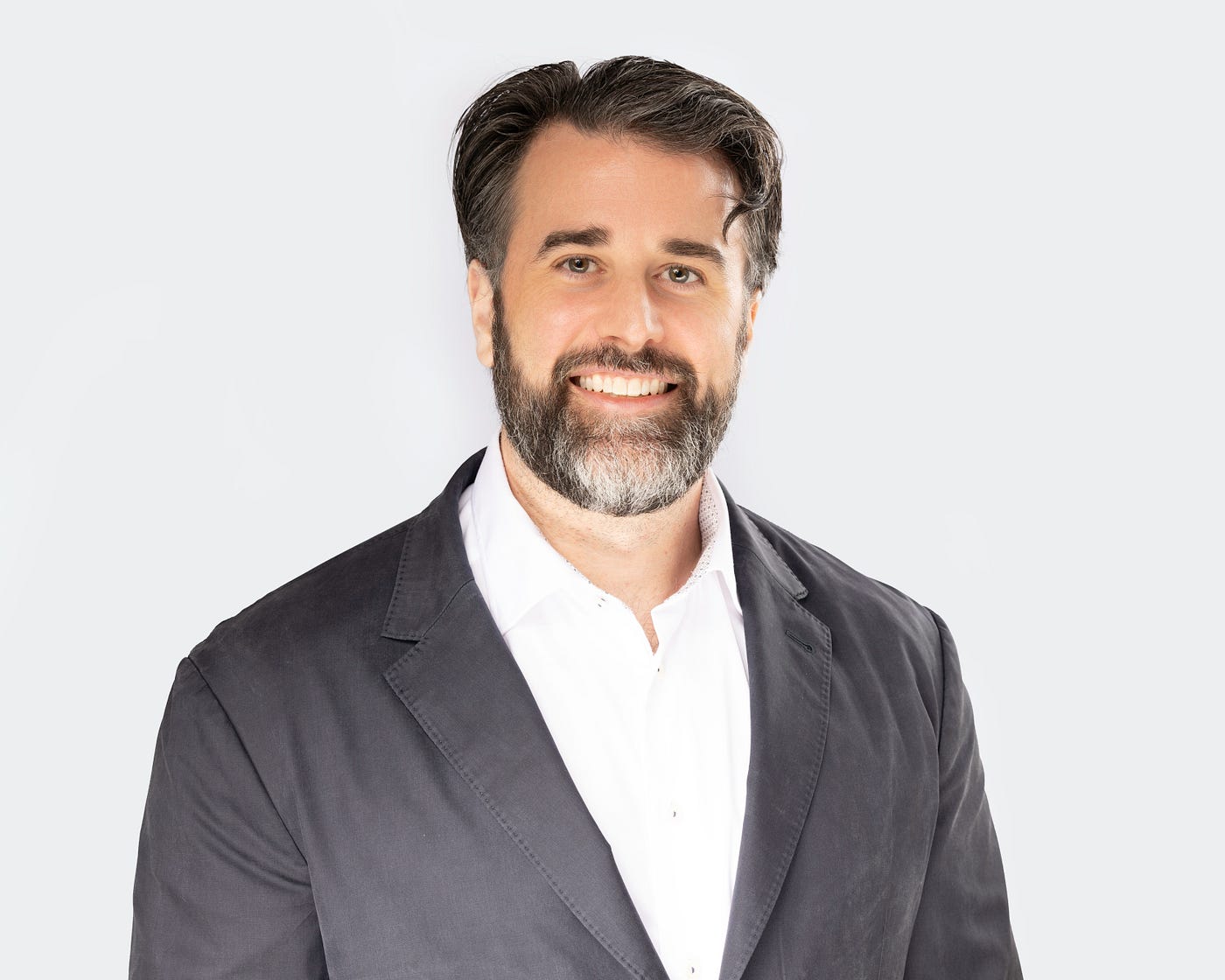
As a part of this series, we had the pleasure to interview Wesley Key.
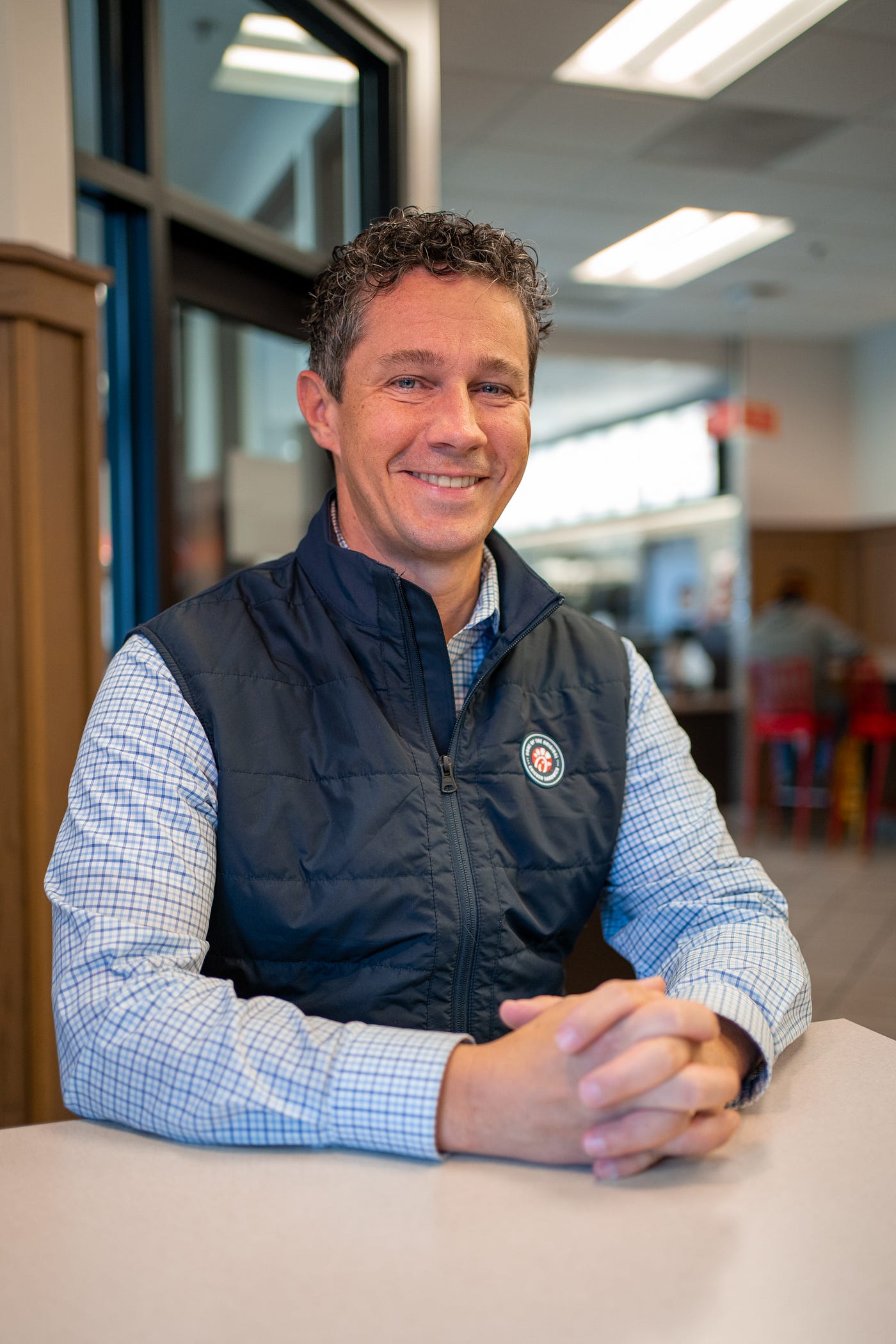
Wesley Key has spent more than 30 years with Chick-fil-A, including nearly 20 as an independent franchise Operator in Bloomington, Indiana, where he leads two restaurants. He is the author of “Inspire. Nourish. Cultivate.” (Fedd Books, 2026), a candid look at the victories, failures and personal struggles that shaped his life and leadership. Wes is passionate about helping leaders discover purpose beyond their accomplishments. For more info, visit his website here.
Thank you so much for joining us in this interview series! I know that you are a very busy person. Our readers would love to “get to know you” a bit better. Can you tell us a bit about your ‘backstory’ and how you got started?
Well, I grew up in a pastor’s home, surrounded by faith, family and a strong emphasis on serving others. If you had asked me at 18 years old who or what I wanted to be, I certainly wouldn’t have told you I wanted to spend three decades in the restaurant business. In fact, my original path looked quite different. At 18, I headed off to seminary, believing ministry was my only option due to expectations set for me. Ironically, that experience led me to question everything I had grown up believing, and I eventually walked away from my faith altogether. During my first year at school, Chick-fil-A became a part of my story. What started as a part-time job in college turned into a career, and ultimately a calling I never anticipated.
I’ve now spent more than 30 years with Chick-fil-A, including nearly 20 years as an independent franchise Operator in Bloomington, Indiana. Over those years, I’ve had the privilege of building businesses, developing leaders, employing thousands of people and experiencing more professional success than I ever imagined. But if there’s one thing I’ve learned, it’s that success and significance aren’t necessarily the same thing.
For most of my adult life, I was consumed with achieving, building more and proving myself. I loved my people and genuinely wanted to make a difference, but somewhere along the way my identity became wrapped up in what I accomplished. I chalk that up to this voice or loop that played in my head from an early age that always said, “You’re not enough.” So I spent my life trying to prove that I was. In my early 40s, I went through an incredibly difficult personal season that forced me to reevaluate almost everything I believed about myself.
Fast-forward to today. I’m still a business owner, but I’m also a husband, father, author and someone who has become deeply passionate about helping others discover purpose beyond their accomplishments. I recently published my first book, “Inspire. Nourish. Cultivate. A Journey of Redemption. A Story of Hope.,” where I share many of the victories, failures and deeply personal struggles that have shaped my life. At this point in my life, I realize my story has never really been about building a successful restaurant business. It’s been about the people I’ve had the privilege of leading and the lessons I’ve learned through adversity. It’s also about discovering that some of life’s greatest rewards have very little to do with what we accomplish.
It has been said that our mistakes can be our greatest teachers. Can you share a story about the funniest mistake you made when you were first starting? Can you tell us what lesson you learned from that?
Early in my Chick-fil-A career, I was a young team leader, and one of the things I was known for was my smile and customer service. I genuinely loved taking care of people. Smiling seemed to be a good way to make it seem more genuine. I thought it took down people’s walls defensively. Well, apparently there’s a wrong way to smile.
One day a woman came back to the counter holding a salad and began explaining a complaint she had with the food. As I listened, I did what I had always done. I smiled and tried to make things right. Unfortunately, she interpreted my smile as a smirk, like I was making fun of her. Before I knew what was happening, she threw her salad right in my face! I laugh about it now, but at the time I was completely caught off guard. I had been trying to provide great customer service, and somehow I ended up wearing someone’s lunch.
I’m not sure I walked away from that experience with a profound leadership revelation, but I did spend a considerable amount of time trying to figure out how to smile correctly. I do believe there was a lesson in it, though. As leaders, our intentions don’t always match how others perceive us. We can mean well, but how we communicate, including our facial expressions and body language, matters. And sometimes, even when you’re trying to do everything right, you’re still going to get a salad thrown in your face.
None of us are able to achieve success without some help along the way. Is there a particular person who you are grateful towards who helped get you to where you are? Can you share a story?
It’s impossible for me to narrow this down to just one person because there have been several people who played incredibly important roles in my journey with Chick-fil-A. Each of them invested in me at different stages of my career, and I genuinely don’t believe I’d be where I am today without them.
The first was Billy, my second Operator at Chick-fil-A. I was young, and Billy saw leadership potential in me long before I really saw it in myself. He continually encouraged me to take on more responsibility, even when I wasn’t necessarily looking for it. What I appreciate most about Billy is that he gave me room to fail. He didn’t just hand me responsibility and expect me to figure it out. He invested his time in teaching me and developing my skills. He taught me that developing leaders requires both challenging people and being patient with them.
Next was Rick, who really helped me understand the business side of Chick-fil-A. He taught me about systems, operations, processes and the importance of running a disciplined business. He helped me understand that great intentions alone don’t build a successful organization. You need structure, consistency and the ability to execute.
Then Jeff, my last Operator before becoming one myself. Jeff had a tremendous influence on how I view people and leadership development. He helped me understand that building a successful business is really about building successful people. He was also a constant source of encouragement as I pursued becoming an Operator myself. There were plenty of moments when the journey felt long, but Jeff kept believing in me and pushing me forward.
But I would be leaving out an incredibly important part of my story if I didn’t mention Troy and my Senior Leadership team at our Bloomington Chick-fil-A restaurants. For roughly the last decade, I’ve had the privilege of being surrounded by an extraordinary group of leaders who have played an enormous role in whatever success we’ve experienced. They know my strengths, but more importantly, they know my many weaknesses! And rather than allowing those weaknesses to limit us, they’ve stepped into the gaps, brought their own unique gifts and abilities to the table, and helped build something far greater than I ever could have accomplished on my own. They’ve developed and empowered countless other leaders, cared deeply for our guests and team members, and made them feel valued. I may be the person whose name is attached to the business, but the success we’ve experienced belongs just as much to them.
I realize that each season of my career has been shaped by people who invested in me, believed in me, challenged me and sometimes carried me. One of the greatest lessons leadership has taught me is that you don’t have to be great at everything to build something great. You just have to be willing to surround yourself with people who are better than you in areas where you’re weak, and then trust them. I’m incredibly grateful for the people who have done exactly that for me.
Extensive research suggests that “purpose-driven businesses” are more successful in many areas. When your organization started, what was its vision, what was its purpose?
When I first became a Chick-fil-A Operator in Bloomington in 2008, my vision was honestly pretty simple. I did not have a clear, written-out vision statement to guide the business. I operated on instinct and drive in the beginning. What were the immediate needs? What were needs I saw coming down the road? What would keep us afloat?
That is what guided us. I had spent years working toward the opportunity, and I was finally getting the chance to build and lead a team of my own. I was excited and determined to succeed. At the time, Chick-fil-A wasn’t nearly as recognizable in Bloomington as it is today. The only location was tucked away in the local mall, so a big part of my focus was simply introducing people to the brand, building relationships in the community, and creating a restaurant experience that would make people want to come back.
I wanted to build a successful business, develop a great team, and establish Chick-fil-A as a meaningful part of the Bloomington community. But along the way, as the business grew, so did my understanding of what we were actually building. I began to realize that our greatest opportunity wasn’t simply to serve great food or generate strong sales, which we were doing. It was the opportunity to influence the lives of the people on both sides of our front counter. Our team members and our guests. In addition to that, people in our local community who may never walk through our front door as a customer. Later on in my career, our team developed our guiding vision statement: To be the best restaurant for Bloomington by inspiring our team, nourishing our guests and cultivating our community. It summed up everything we were and wanted to be. Later on, it also became the title of my book, “Inspire. Nourish. Cultivate.”
Can you share with our readers a story from your own experience about how you lead your team during uncertain or difficult times?
2020. I don’t think anything could have prepared me for leading through COVID. At the time, we had nearly 200 employees, and almost overnight everything about how we operated our restaurants changed. Nobody really knew what was coming next, how long it would last or what the impact would be.
Early on, I made the decision to give every employee what we called a CARE raise, an additional $2 per hour. I wanted our team to know how much we appreciated them showing up every day during such a difficult time. I also wanted them to know we were committed to taking care of them.
That was a pretty significant financial decision considering we had absolutely no idea what was ahead of us. But I don’t regret it.
As COVID continued and inflation started hitting us, things got really difficult financially. Some of our costs increased 40 to 60%. There were many months I didn’t take a paycheck home. I eventually took on debt to make sure our people continued getting paid. I can remember wondering how much longer I could keep doing it. There were many times when I genuinely didn’t know.
What most people didn’t see was how much I was struggling personally. I was dealing with some pretty intense anxiety during that season. But I did everything I could to hide it because I felt like I needed to be strong for my team. I thought that was what good leaders were supposed to do.
One of the things I’m most proud of, though, is how our team responded during that season. COVID was such a dark time for so many people. There was fear, loneliness, frustration, and just so much uncertainty.
We talked a lot about how we could be a light in the middle of all that darkness. We couldn’t change what was happening in the world, but we could make a difference in someone’s day. Maybe it was a smile, a note on their cup, or an encouraging word in our drive-thru. Our team really embraced that. That season taught me a lot about leadership. But probably even more about myself. I wholeheartedly believe in taking care of your people, even when it’s difficult and costly. But I also learned you can’t keep pouring into everyone while completely neglecting yourself. For years, I thought being a strong leader meant staying positive and carrying the weight so others didn’t have too. I don’t believe that anymore. Sometimes leadership means admitting you’re struggling too and allowing the people around you to help carry the load.
Did you ever consider giving up? Where did you get the motivation to continue through your challenges? What sustains your drive?
Absolutely. There have been a couple of times when I’ve seriously questioned whether I could keep going. The first was around 2012. I was operating a Chick-fil-A inside our local mall, and the company was preparing to open a much larger freestanding restaurant in Bloomington. The problem was that this new restaurant was going to significantly impact the sales of my existing location. On top of that, I had to compete against other candidates for the opportunity. I knew what was at stake if I didn’t get selected. There was a very real possibility that I would have to leave Chick-fil-A, find another career and potentially file bankruptcy.
I had spent so many years working toward becoming an Operator, and suddenly I was facing the possibility of losing it all. The selection process was incredibly competitive and stressful. I ultimately received the opportunity, and I am extremely grateful for that. But the experience took a toll on me. I don’t think people always realize how much pressure can come with trying to hold on to something you’ve worked your entire adult life to build. The second time was during COVID and the years that followed.
I’ve shared some of the financial challenges we faced during that season, but what I haven’t always shared is just how much it affected me personally. By 2022, I had been carrying an enormous amount of pressure for a long time. The financial concerns, responsibility of caring for our staff, the uncertainty about the future, and the anxiety I had been struggling with all started catching up with me. Eventually, my mind just couldn’t take it anymore. I had spent years trying to be strong and succeed, making sure everyone else was cared for. Now, I was the one falling apart. It was the darkest season of my life. I wish I could say I handled it well, that I had some incredible leadership mindset or strategy that helped me push through. But I didn’t. I struggled. A lot.
And for the first time in my adult life I had to come to terms with the fact that I couldn’t simply work harder or accomplish more to fix what was happening inside of me. What helped me through that season was a combination of things, including my faith, which had been pushed to the sidelines for much of my adult life. I started rediscovering a relationship with God that I had neglected for years.
My wife, Kelly, was incredibly important during that time. She saw me at my absolute worst and loved me through it. There were also a couple of close friends who stepped up or into my life at just the right time and helped me navigate some really dark days. And I couldn’t say enough about the leaders who surround me in our business. They stepped up, carried responsibilities and helped hold things together when I wasn’t capable of carrying everything myself. I think one of the hardest things for me was accepting that I needed help. I had spent so much of my life being the person who was supposed to have the answers, solve the problems and take care of everyone else. Suddenly, I was the one who needed people to take care of me.
That was humbling, but it was also something I desperately needed. Today, what motivates me looks very different than it did 15 or 20 years ago. I still love building businesses and developing leaders. But I don’t feel the same need to prove myself that I once did. I want to invest in people, and hopefully use some of the difficult things I’ve experienced to help someone else who might be quietly struggling.
What would you say is the most critical role of a leader during challenging times?
I think one of the most important responsibilities of a leader during challenging times is to provide stability and direction when everything around your team feels uncertain. We’re actually walking through something like that right now. Recently, Chick-fil-A made the decision to open another restaurant in our community, and our team wasn’t selected for the opportunity. I’ll be honest, that was disappointing. We’ve spent nearly 20 years building our business in Bloomington and investing in the community. Naturally, we had hoped to be part of that next chapter of growth. But that wasn’t the decision, and now we’re faced with some pretty significant unknowns.
How much will this new restaurant impact our sales? What will that mean for staffing? Will we have to make difficult adjustments to a business and team we’ve spent years building?
The reality is we don’t know all those answers yet.
And as a leader, that’s a difficult place to be. You want to protect what you’ve built, especially the people who have helped you build it. But you also have to recognize that there are things completely outside your control. So, our focus has been on what we can control, which is continuing to take care of our guests, operating our restaurants well, communicating with our leaders, and preparing for different possibilities without allowing fear to dictate every decision.
I think one of the biggest mistakes leaders can make during uncertain times is allowing their own disappointment or frustration to become the attitude of the entire organization. Our team is watching how we respond. And if we’re constantly worried about what might happen, it’s going to be pretty difficult for them not to feel the same way. That doesn’t mean pretending everything is fine. It means being honest about the challenges while continuing to give people something to work toward. I don’t know exactly what this next season will look like for our business, I wish I did. But I do know we have an incredible group of leaders and team members, and I believe how we navigate this season together matters just as much as the outcome. Sometimes leadership is simply helping people move forward when you can’t tell them exactly what’s waiting on the other side.
When the future seems so uncertain, what is the best way to boost morale? What can a leader do to inspire, motivate and engage their team?
I think one of the biggest mistakes leaders can make is believing they have to constantly come up with new ways to motivate their people. Another contest, another incentive, another team-building activity. Don’t get me wrong, we do all those things, but I think what matters most is something much simpler — relationships. Our business is incredibly relational. We talk a lot, and I’m not referring to sitting around a conference table having another boring meeting. I’m talking about real conversations. Conversations about life, how we’re feeling, what we’re struggling with, and what’s going on outside of work. Over the years, we’ve built up an enormous amount of relational equity with one another. We know when someone isn’t themselves. We can usually tell when someone is hurting, discouraged, or carrying something heavy. We also know when they’re excited, encouraged, or celebrating something special. And we try to meet them wherever they are. Most of our full-time team members have been with us somewhere between eight and 15 years. Think about how much life happens in that amount of time.
We’ve celebrated weddings, births, birthdays, anniversaries, graduations, and countless other milestones together. But we’ve also walked through funerals, illnesses, family struggles, and some really difficult seasons. We’ve laughed together, cried together, celebrated together, and sometimes just sat with each other when there weren’t any words that could make things better. After that many years, these aren’t just people who show up to work together. We’ve become part of each other’s lives. And I think that makes an enormous difference when things get difficult. When the future feels uncertain, people don’t necessarily need another motivational speech. Sometimes, they just need to know they’re surrounded by people who genuinely care about them. I can’t tell you how many times I’ve walked into one of our restaurants feeling discouraged about something, only to leave feeling better because of a conversation with someone on our team. That’s something I don’t ever want to take for granted. We’ve worked hard to build a successful business, but I think one of the things I’m most proud of is the relationships we’ve built along the way. Because when things get tough, those relationships are often what carry us through.
What is the best way to communicate difficult news to one’s team and customers?
I think the most important things are honesty and compassion. Also remembering that the people receiving the news are human beings, not just employees or customers.
One of the hardest things I’ve ever had to do as a leader was communicate the unexpected death of one of our young team members.
There really aren’t words to prepare you for something like that. I remember how incredibly difficult it was for our team. We were all simply heartbroken. Troy, my second-in-command, shared the news with our leadership team first. From there, our leaders communicated it to the team members in their respective areas. It was incredibly difficult, but I think it was important that people heard the news from someone they knew and trusted, rather than through some impersonal announcement.
When you work alongside people every day, especially in a business as relational as ours, you become part of each other’s lives. And when you lose someone it impacts everyone.
I believe most of our team showed up for this young man’s viewing and funeral. That says a lot about the relationships that had been built and how much he meant to the people around him.
That experience reminded me that sometimes there simply aren’t any right words. You can’t fix the situation or make the pain go away. And you certainly don’t need to try to put some positive spin on something that’s heartbreaking. Sometimes you just need to be present, allow people to grieve, and grieve alongside them. Obviously, most difficult conversations in business aren’t nearly that devastating. But I think the same principles apply.
Be honest. Don’t avoid the conversation because it’s uncomfortable. Give people the dignity of hearing difficult news directly, and allow them to respond however they need to. With customers, I think it’s equally important to be straightforward, take responsibility when we’ve made a mistake, and genuinely listen to their concerns. I’ve learned that people don’t expect us to be perfect. But they do want to know that we care. Sometimes the most important part of communicating difficult news isn’t what you say at all. It’s what you do afterward.
How can a leader make plans when the future is so unpredictable?
I think one of the biggest mistakes a leader can make is allowing an unpredictable future to keep them from planning for it. We’ve developed a pretty intentional planning process over the years, and it’s something I really look forward to. Every November, I step away for a planning retreat with a close friend and fellow business owner. It’s an opportunity to reflect on the previous year and begin thinking about where we need to go next. I bring those ideas back to two of my Senior Leaders, who help challenge my thinking and begin shaping our direction.
In December, our entire Senior Leadership Team gets away for two days. We spend one day planning for the upcoming year and another doing an extensive assessment of our business. By January, we’re ready to share our plan with our Directors. From there, we have monthly and quarterly follow-ups to evaluate our progress and make adjustments. What I’ve learned is that no matter how much time we spend planning, something is inevitably going to happen that we didn’t anticipate.
That’s why I believe the follow-up is just as important as the planning itself. I think planning gives people clarity and direction to work toward something. But you have to be willing to hold those plans loosely. The goal isn’t to predict the future perfectly. It’s to prepare your people and business to navigate whatever comes their way.
Is there a “number one principle” that can help guide a company through the ups and downs of turbulent times?
If I had to narrow it down to one principle, I would say stay true to your values, especially when things get difficult.
For us, that means betting on people. Find great people, invest in them, give them the tools and opportunities to succeed, and care for them along the way.
It’s easy to talk about those things when business is good, and sales are growing. But I’ve learned that your values really get tested when things aren’t going so well.
Over the years we’ve faced situations where the easiest or most financially beneficial decision wasn’t necessarily the one we felt was right for our people. And I’ll be the first to admit we haven’t always gotten it right.
But we’ve tried really hard to create a place where people feel valued and supported. Both professionally and personally. That doesn’t mean ignoring the financial realities of running a business. You have to operate a healthy business to continue taking care of people. But I believe when you’ve spent years betting on people, those same people will be there to walk through the difficult seasons alongside you. Circumstances change, the economy changes, plans fall apart. But the values you’ve built your business around shouldn’t change every time things get difficult.
Can you share 3 or 4 of the most common mistakes you have seen other businesses make during difficult times? What should one keep in mind to avoid that?
I think there are three mistakes businesses can easily fall into during difficult times, and I’ll be the first to admit I’ve struggled with some of them myself. Allowing fear to keep you from making decisions. For probably the first 28 years of my career, I struggled with this. I was so concerned about making the wrong decision or how things might turn out that sometimes I simply wouldn’t make one at all. I wonder how many opportunities I missed or problems I allowed to grow because I was afraid to act. I’ve learned that making a decision and getting it wrong isn’t nearly as damaging as allowing fear to keep you from moving forward. It also keeps your team from getting frustrated and discouraged by your lack of action. Losing sight of your people would be another. When sales are declining and expenses are climbing, it’s natural to become consumed with the numbers. And those numbers do matter, but I think we can become so focused on protecting the bottom line that we forget about the people who helped build it. You may have to make difficult financial decisions, but how you treat people through those decisions matters. Once you’ve lost their trust, it’s incredibly difficult to earn it back. A final mistake is refusing to change. This one can be especially hard for successful businesses. You spend years building something that works, and you want to protect it. But just because something worked five years ago doesn’t mean it’s going to work tomorrow. I’m learning that you have to be willing to challenge your own thinking and occasionally admit that what you’ve been doing simply isn’t working anymore.
I believe the common thread in all three is humility. Being willing to admit you’re afraid or wrong, or need help. None of these things come naturally to most business owners, myself included. But they’re pretty important if you want to lead a business through difficult times.
Based on your experience and success, what are the five most important things a business leader should do to lead effectively during uncertain and turbulent times? Please share a story or an example for each.
1. Bet on People. I’ve always believed that one of the best investments you can make in business is in your people. Sometimes that investment doesn’t make a lot of sense on paper. Early in COVID, when nobody knew what was coming next, we decided to give every employee an additional hourly raise through what we called a CARE raise. We had nearly 200 employees at the time, so you can imagine what that meant financially. Was it risky? Absolutely. Did I know how we were going to afford it if things got worse? Not really. But I wanted our people to know we valued them and were committed to taking care of them. A couple of weeks ago, I saw a former staff member for the first time in years. She worked with us during that time frame, and the first thing she said was, “Thank you for taking care of us so well during COVID.” It meant so much. I’ve learned that betting on people doesn’t always produce an immediate financial return. Sometimes it costs you more than you expected. And sometimes people disappoint you. But after more than 30 years in this business, I still believe people are worth betting on.
2. Surround yourself with people who are better than you. Get out of their way and cheer them on. I think one of the biggest reasons we’ve been successful is that I’ve been fortunate enough to surround myself with people who are better than me at a lot of things. For roughly the last decade, Troy and my Senior Leadership team have helped lead our restaurants in Bloomington. They know my strengths, but they also know my many weaknesses. And trust me, there are plenty! I’m not naturally great at everything it takes to run a successful business. There are details I miss, things I don’t enjoy doing and areas where other people are simply more gifted than I am. Earlier in my career, I probably would have struggled to admit that. I felt like being the person in charge meant I needed to be good at everything. Today, I don’t feel that way. Our leaders have built incredible systems, developed other leaders, cared for our employees and created an environment our guests enjoy being part of. I may have the title of Operator, but there’s no way we would have experienced the success we have without them.
3. Don’t let fear make your decisions. I wish I had learned this much earlier in my career. For the first 28 years, I struggled terribly with making decisions. Not because I didn’t care or have ideas, but because I was so afraid of making the wrong choice. I’d overthink things, second-guess myself and often avoid making a decision at all. I was so worried about how it might turn out. I know I missed opportunities because I was afraid to take a chance. I also learned that avoiding a decision is often a decision in itself. Sometimes the consequences of doing nothing are worse than getting something wrong. I am still not someone who enjoys making risky decisions, but I’ve gotten better at trusting in the people around me, acting and moving forward. When we get something wrong, which we do, we figure out what happened and try again.
4. Build relationships before you need them. One of the things I’m most grateful for in our business is the relationships we’ve built over the years. Many of our full-time employees have been with us for eight to 15 years. That’s a lot of life we’ve experienced together. We’ve celebrated weddings, babies, birthdays, graduations and anniversaries. We’ve also walked through funerals, illnesses, family struggles and some really painful seasons. I think sometimes we get so focused on building teams that we forget we’re working with actual people who have lives outside the restaurant. We’ve tried to create an environment where we genuinely know and care about one another. And those relationships have mattered tremendously during difficult times. When COVID hit, we weren’t suddenly trying to convince our employees that we cared about them. We’d spent years building those relationships. I think that’s something leaders need to understand. You can’t wait until everything starts falling apart to begin investing in your people. By then, it’s often too late to build the kind of trust you need.
5. Don’t lose yourself trying to build something successful. This is probably the most personal lesson I’ve learned, and I learned it the hard way. For much of my adult life, I was consumed with succeeding. I wanted to be a great business owner, a great leader, a great provider and someone people respected. And on the outside, things looked pretty good. Our business was successful, we were receiving recognition, and I was accomplishing many of the things I’d spent years working toward. But internally, I was struggling more than most people knew. By 2022, after years of pressure, anxiety and trying to hold everything together, I reached a breaking point. I had spent so much of my life taking care of everyone else that I had completely neglected myself. And what made it even harder was that I didn’t really know who I was without the success. That’s a difficult thing to admit. It took a really dark season, a renewed relationship with God, and the love and support of my wife, family and some incredible friends and leaders to begin putting things back together. I am still learning. I still love business. I still love developing people and seeing our restaurants succeed. But I’m trying to be much more intentional about not allowing those things to define who I am. Because I’ve learned that you can build something incredibly successful and still lose yourself in the process.
Can you please give us your favorite “Life Lesson Quote”? Can you share how that was relevant to you in your life?
Easy. Treat others the way you want to be treated. The Golden Rule. Something most of us learned as children, and something I’ve tried to live by for most of my life. I’ve spent more than 30 years in a business where caring for people has been at the center of just about everything we’ve tried to do. I’ve worked hard to extend grace when people make mistakes, encourage them when they’re struggling, help them believe in themselves and remind them of their value. But somewhere along the way, I realized I wasn’t extending that same grace to myself. For most of my life, there was this voice in my head constantly telling me, “You’re not enough.”
Not successful enough. Not a good enough leader. Not a good enough husband and father. No matter what I accomplished, that voice always seemed to find something else I was falling short of. And rather than challenge it at its root, I spent years trying to prove it wrong by accomplishing more. The strange thing is, I would never have treated someone else the way I was treating myself. I would never have expected one of my employees to be perfect or made them feel like their value depended on their performance. Yet those were the expectations I placed on myself. It took a pretty painful season of my life for me to begin recognizing what I was doing. I’m still learning how to give myself the same grace I’ve spent my life trying to give everyone else. So I guess my life lesson is a little twist on the Golden Rule. Treat others the way you want to be treated. But don’t forget to treat yourself that way too.
How can our readers further follow your work?
I’d love to stay connected with your readers! You can find me at wesleykey.com, where I share more about my story, writing, speaking and the things I’m passionate about. I’m also active on Facebook, Instagram and LinkedIn, where I share thoughts on leadership, faith, family and some of the lessons I’m continuing to learn along the way. I recently published my first book, “Inspire. Nourish. Cultivate. A Journey of Redemption. A Story of Hope.,” where I share a much deeper look into my personal and professional journey, including some of the struggles I’ve discussed in this interview. It’s available on Amazon. You can also find links to my writing, book and social media accounts through my Linktree.
More than anything, I hope that sharing my experiences, both the good and the difficult, might encourage someone else who’s walking through a challenging season of their own.
Thank you so much for sharing these important insights. We wish you continued success and good health!
About The Interviewer: Tavares Beverly ( www.tavaresbeverly.com ) is the Founder and CEO of Beverly Boy Productions, a national video production company that has helped organizations tell their stories through video for more than two decades. Over the course of his career, he has worked with everyone from Fortune 500 executives and healthcare professionals to politicians, nonprofit leaders, educators, and artists, gaining a unique perspective on the role communication plays in leadership, business, and human connection.
A frequent contributor on topics including communication, entrepreneurship, leadership, and personal development, Tavares believes that the ability to communicate effectively is one of the most valuable skills a person can develop. His work is driven by a passion for helping organizations connect with their audiences and helping individuals unlock their potential through mentorship, perseverance, and meaningful relationships.
To learn more, connect with Tavares on LinkedIn or visit www.BeverlyBoy.com . If you’re interested in using the power of storytelling and communication to grow your organization, strengthen your brand, or inspire your audience, he welcomes the opportunity to connect.