I figured we’d give a pizza place the spot for free, and they’d hand out the magnets with their orders. But when we called to explain the idea, they’d ask how much we were going to pay them to put the magnets on their pizza boxes.
As part of our interview series called “5 Things I Wish Someone Told Me Before I Became A Founder”, I had the pleasure of interviewing Dennis Meador.
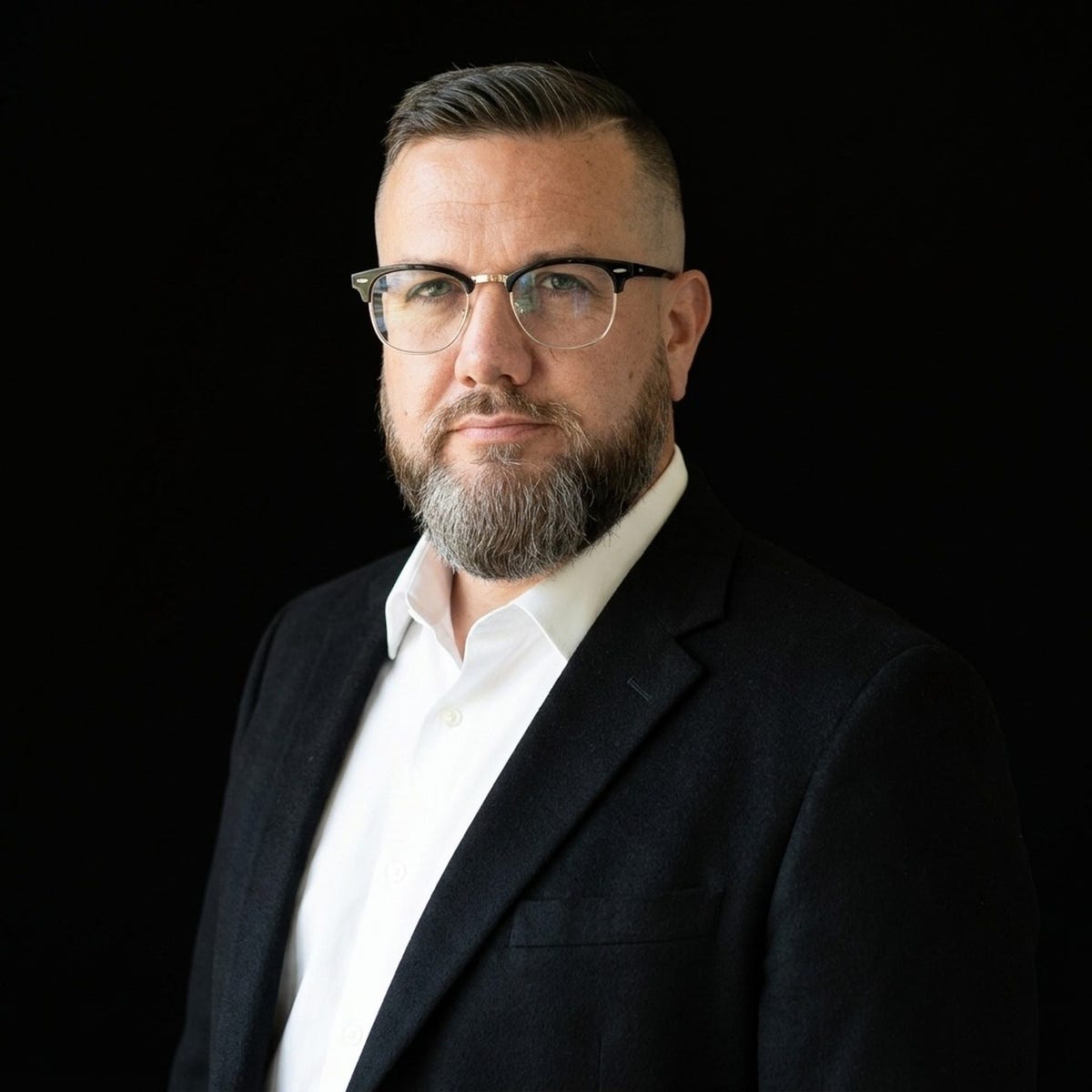
Dennis “DM” Meador is an entrepreneur, marketer, podcast host, and founder of The Legal Podcast Network and The Authority Podcast Network. With 30 years of experience in marketing, he helps attorneys and other professionals connect with potential clients and establish themselves as authorities in their fields through podcasting and content. He started his first business at 14 and has since grown three companies from under $1 million in revenue to between $3 million and $5 million within one to three years.
Thank you so much for joining us in this interview series! Can you tell us a story about what brought you to this specific career path?
I was about 10 when I figured out that whether somebody made another beer run could mean the difference between $10 and $20 for food the next day. For a few years, our house in Iowa was a party house pretty much every night. My mom was dating drug dealers and people involved in gangs out of Chicago, and there wasn’t much grocery shopping getting done. I had to figure out how to make sure my younger sister and I ate. Iowa paid a nickel for every empty beer can we returned, so in the mornings we’d bag up the cans piled in the kitchen and turn them in for cash.
After a while, I noticed that if the party stopped around midnight, we’d have about $10. If somebody went for more beer and the party kept going until two or three, we could get closer to $20. So I started selling people on the idea of another beer run. Ten dollars meant honey buns for breakfast and maybe bologna sandwiches for lunch. Twenty meant my sister and I could sit down and have a meal together at Hardee’s.
By 14, I had a business shoveling snow, mowing lawns, and raking leaves. My stepbrother and his friends did the work. I got the customers. I think that’s where my start in business really came from. I’d already learned to pay attention to what was happening around me, spot an opportunity, and talk somebody into doing something about it.
Can you tell us a story about the hard times that you faced when you first started your journey?
My sister and I moved in with my dad and stepmom. She had two kids of her own, and then she and my dad started having kids together. Pretty quickly, there were six kids in the house. I always joke that I moved from the ghetto to being poor white trash. That was my come-up.
I went to school with kids whose families had money, and I was always drawn to the security I saw in those families. Those kids didn’t have to think about what they were going to eat, what they were going to wear, or whether things were going to be safe. I’d spent a lot of my childhood thinking about those things. Being around those kids gave me a picture of the kind of security I wanted.
Where did you get the drive to continue even though things were so hard?
I was probably 11 or 12. It was about three in the morning, and one of those parties at our house had gotten out of hand. My mom and whoever she was with got into a fight. When it got physical, I took my mom and my sister to a house I usually tried to avoid.
My sister was on a cot, and I was lying on the couch. The lights were on, and there were mice and roaches crawling all over the place. I remember knocking them away and thinking, “When I grow up, I refuse to be poor.”
That was my mantra. I was already working in sales and doing some things on my own when I got married at 19, but it wasn’t until my mid-twenties that I finally said to myself, “You know what? I don’t think I’m poor anymore.”
We had three children, and somewhere along the way, what drove me changed. It went from “I refuse to be poor” to “I refuse to expose the people I love to the things that I had to experience.”
So, how are things going today? How did grit and resilience lead to your eventual success?
I’m in a very thankful place. We spent three and a half years on a Caribbean island, and now we live in Mexico, in a nice house not far from the coast. The company is coming up on three years. We’re doing multiple seven figures, and we’re growing.
There were definitely times when I felt like giving up, and even seasons when I did give up a little bit. But there was always something in me that knew I wanted more out of life. I could see that other people had found a way to build the kind of life I wanted. If they could figure it out, I could eventually figure it out, too.
Can you share a story about the funniest mistake you made when you were first starting? Can you tell us what lesson you learned from that?
My business partner and I were working out of a room so small we had to take turns making calls. We were selling ads on a refrigerator magnet called the Just in Case Emergency Guide. It listed numbers for poison control, power outages, and other emergencies. Right below those numbers was a spot I thought would be perfect for a pizza place.
I figured we’d give a pizza place the spot for free, and they’d hand out the magnets with their orders. But when we called to explain the idea, they’d ask how much we were going to pay them to put the magnets on their pizza boxes. I thought, I’m putting your logo on people’s refrigerators. Why wouldn’t you want that? We were selling the other spots, but we couldn’t give this one away.
So I called another pizza place and pitched it the same way I pitched the other advertisers. When they asked how much it cost, I told them I had one premier spot, right below the emergency numbers. It cost three times as much as the other spots. Out of the 5,000 magnets we were making, they’d get 3,000 to hand out.
I sold what I couldn’t give away. And they’d ask, “Can I get more than 3,000?”
That taught me about perceived value. It’s often easier to sell something than it is to give it away, because when something holds no value, people give it no value.
What do you think makes your company stand out? Can you share a story?
We started as a podcast production company. You’d get a podcast, a couple pieces of content, and good luck. That changed when I started thinking about where a podcast fits into what I call the journey of the customer.
A lot of marketing focuses on getting people to recognize your name or reaching them when they’re ready to hire you. I started paying more attention to what happens between those two points. To me, content is a mile marker on the journey to a decision. Somebody might come across a short clip, listen to a full episode, and visit your website later when they’re ready to learn more.
That’s why we built a full ecosystem around the podcast. We take one recording and turn it into 30 pieces of content. We distribute those pieces, create content for the client’s website, and put the podcast on different platforms.
What I think stands out about us is that we’re always asking ourselves, “How can we add more to what we’re doing for our clients without adding friction for them?”
Which tips would you recommend to your colleagues in your industry to help them to thrive and not “burn out”?
I love what I do, so I need people around me who love me enough to keep me from driving myself into the ground.
My wife knows what I’m like when she goes to her mom’s for a week. I’ll probably work 18 hours a day, sleep in my office chair, take a shower, and come back and do it again. I can do that every once in a while. But I need somebody who’ll stand up to me and say, “We’re gonna take this vacation. Prepare your team. This is a completely unplugged vacation.”
My executive assistant does the same thing. I’ll start thinking about all the projects I could get done if I stayed at work, and she’ll say, “No, you already have the time off. It’s your family time.” She reminds me that I can get those projects done when I come back.
When you love the work, it’s easy to give it every hour you have. So be smart enough to put people around you who know you well and will speak up when you’re taking it too far.
None of us are able to achieve success without some help along the way. Is there a particular person who you are grateful towards who helped get you to where you are? Can you share a story?
You’re probably looking for a business mentor here, but honestly, it’s my sister, Tiffany.
When a relationship ended in Austin, I was heartbroken. The first thing I did was pack up and move to Tulsa to be near her. I needed to be around somebody I could count on, and I knew that was Tiffany.
She worked with me when I had a business at 20. She let me know about some things that were going on with my business partner. She was there when a business failed and when my marriage was on the rocks. When she lost her husband, I tried to be there for her, too.
Through all of that, I’ve always known she was on my side, no matter what.
How have you used your success to bring goodness to the world?
At Christmas in 2025, I was sitting in a restaurant in San Pedro, watching kids open their gifts. We’d bought some bicycles for the event, and when I saw their eyes light up, I started crying. I remember thinking, at one time in my life, I was that kid getting the gifts because my family didn’t have money, and now I’m the guy giving the gifts.
I knew what those gifts could mean to a kid because there was a time when, without them, I wouldn’t have had a Christmas. I’ve been able to give back in other ways over the years, too. When I was involved in ministry, I helped build churches and sent money to orphanages to help feed children.
I’ve also tried to give back through mentoring. There are probably 15 or 20 people I’ve had the chance to help think differently about what they could do. Some went on to earn a lot more in their corporate careers. Others became business owners themselves.

What are your “5 things I wish someone told me before I started leading my company” and why. Please share a story or example for each.
1. Always get clear terms before you start.
Everybody gets along in business until you start making money. In the beginning, it’s easy to say, “We’ll work it out.” Then the money comes in and everybody starts elbowing for credit.
My business partner suggested I open a second office in Tulsa for our emergency guide magnet business. Within a few months, I had about a dozen people working there. Then, one Friday, there was no check. His attorney had told him that the office I’d set up amounted to a competing company. I remember thinking, Competing company? Opening the office had been his idea. I’d invented the product, written the scripts, and trained the people in his office. I thought we were working together.
For a few months, I managed the team all day and stayed on the phone selling until seven, eight, or nine at night to make payroll and pay the bills. Eventually, I had to close the office. I wish somebody had told me, “Always, always, always get clear terms when you start.”
2. Think twice before hiring friends and family.
It’s easy to want to bring the people you love into your success. I’ve done that, and when things didn’t work out and I had to lay off family members, it was heartbreaking.
Whether they´re friends, family, or former coworkers, people who’ve known you for years can have a hard time seeing you for who you are today because they remember who you were. In my experience, working together often doesn’t make either of you more successful. It just adds stress to the relationship.
I wish somebody had told me that hiring friends and family should probably be off the table altogether. If you do it, you need to be really, really careful.
3. Be careful how much stock you put in who’s cheering for you.
At every step, you’re going to lose people who believed in you, and you’re going to gain new people who do. You can’t mourn everybody who stops encouraging you or put too much stock in whoever’s cheering for you now.
There are stretches when you can see the next level, but you haven’t reached it yet. Somebody close to you might hear you talk about where you’re headed and start to doubt you. If you’ve been counting on their belief to keep you going, it gets a lot harder to get through those stretches.
4. Don’t create an echo chamber of awesomeness.
That’s what I call it when everybody around you is always telling you how great you are. When you’re successful and tend to be generous, people can take advantage of that, whether they mean to or not.
If all you hear is how great you are, it stunts your growth. You might eventually start believing it. And the second you stop giving some people what they want, they walk away. Pay attention to who’s willing to tell you something you’d rather not hear.
5. Hold on to the people who are truly on your side.
I know I’ve shared a lot of lessons about being careful with people, but I love people. I really do.
When you find somebody who’s loyal, honest, and willing to work hard, invest in them. When they make a mistake or go through a rough stretch, remember how they’ve shown up for you. Give them the grace you’d hope to receive if something went wrong in your own life.
Can you share a few ideas or stories from your experience about how to successfully ride the emotional highs & lows of being a founder?
I think you have to keep your gaze fixed on where you’re going while still giving yourself a chance to stop and enjoy where you are.
Say you’re driving from New York to LA. If all you can think about is getting to LA, you could cross the whole country without stopping to see the Grand Canyon, the Painted Desert, the Arch, or whatever you’d actually want to see. You’d get there, but you’d miss a whole lot of the trip.
I’ve reached goals in business and immediately started looking for the next one. It’s a state of constant, insatiable hunger. You finally get the thing you wanted, and you barely take a minute to enjoy it.
So every once in a while, I stop and say, “Wow, look at what I have and where I am.” I can be thankful for where I am and still look forward to where I’m going.
You are a person of great influence. If you could start a movement that would bring the most amount of good to the most amount of people, what would that be? You never know what your idea can trigger. :-)
You hear people joke, “It took me twenty years to be an overnight success.” I could fill this whole interview with stories about failure after failure. Why am I a good business owner? Because I fucked up so many times. I learned to get things in writing because I didn’t, and it cost me. I’ve had my heart broken by friends, and I’ve had to let family members go. At 44, I even wondered if I’d missed my window.
I think the difference is I’ve just gotten back up every time. Sometimes it takes me a little longer. There’s a passage in Proverbs I always come back to about a righteous person falling seven times and getting back up. Sometimes I sit there, lick my wounds, and give myself a little time to heal. Then I get back up and keep moving toward the goal.
If I could start a movement, I’d want to help people build the kind of calm self-confidence it takes to get back up after a failure. I think there’s a famine of genuine self-belief. I run across people all the time who are so much more talented and intelligent than they realize. I’d want them to be able to say, “You know what? I can do this. I can get to where I want to be.” The hard part is still believing it after you’ve fallen on your face.
Success happens incrementally. You fall, you heal, and you get back up. You’re a little stronger now. You know a little more. And you keep going.
How can our readers further follow your work online?
Website: www.dmmeador.com/ LinkedIn: www.linkedin.com/in/dennismeador/
This was very inspiring. Thank you so much for joining us!
About The Interviewer: Tavares Beverly ( www.tavaresbeverly.com ) is the Founder and CEO of Beverly Boy Productions, a national video production company that has helped organizations tell their stories through video for more than two decades. Over the course of his career, he has worked with everyone from Fortune 500 executives and healthcare professionals to politicians, nonprofit leaders, educators, and artists, gaining a unique perspective on the role communication plays in leadership, business, and human connection. A frequent contributor on topics including communication, entrepreneurship, leadership, and personal development, Tavares believes that the ability to communicate effectively is one of the most valuable skills a person can develop. His work is driven by a passion for helping organizations connect with their audiences and helping individuals unlock their potential through mentorship, perseverance, and meaningful relationships. To learn more, connect with Tavares on LinkedIn or visit www.BeverlyBoy.com . If you’re interested in using the power of storytelling and communication to grow your organization, strengthen your brand, or inspire your audience, he welcomes the opportunity to connect.