When I started The Job Coach, I did not have everything figured out. I didn’t have a perfect business plan or a big budget or a room full of investors cheering me on.
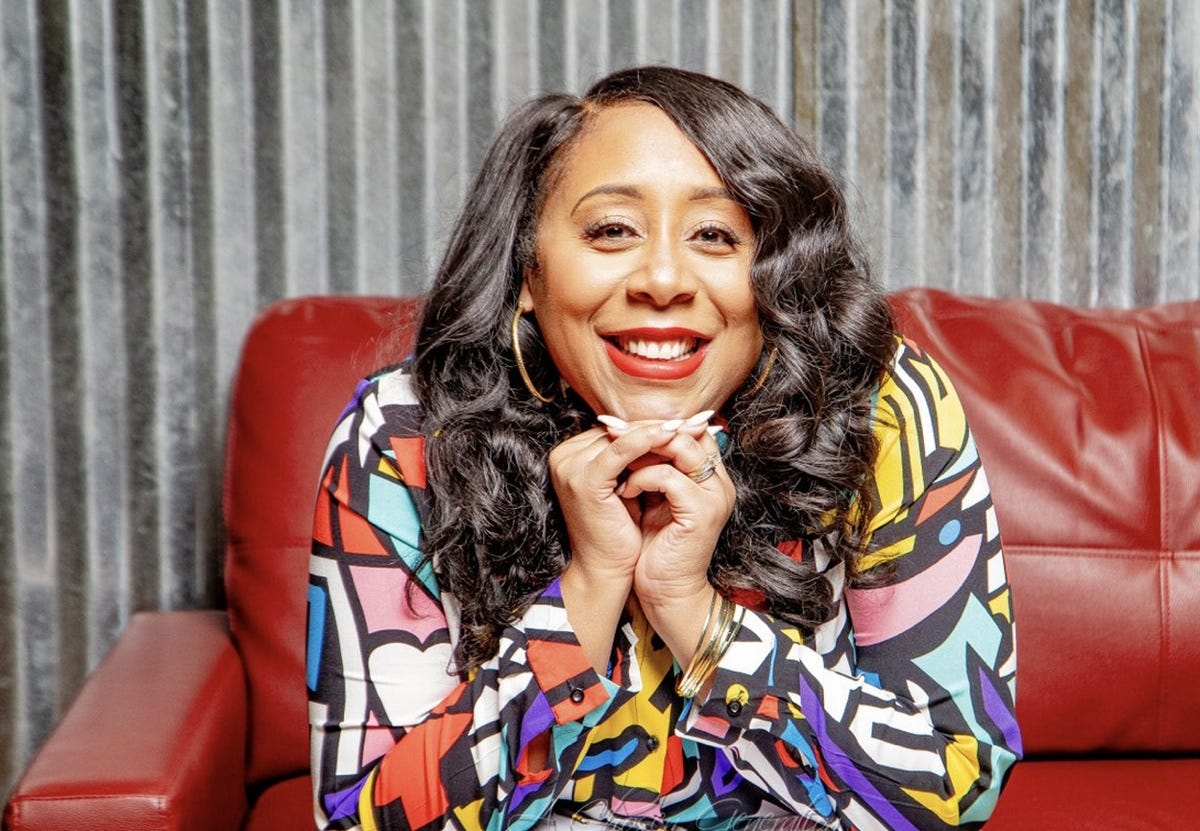
As a part of our series called “Making Something From Nothing”, we had the pleasure to interview Akisha S. Jefferson.
Akisha S. Jefferson is a Washington, DC-based entrepreneur, workforce development strategist, and career coach with over 20 years of experience empowering individuals and organizations to reach their full potential. A proud PG County, Maryland native and second-generation hustler at heart, Akisha has built her career at the intersection of people, purpose, and possibility. She is the Founder and CEO of The Job Coach, LLC, a workforce readiness and consulting firm dedicated to helping individuals navigate the job market, overcome barriers to employment, and build careers they are proud of. Her work spans career coaching, employer partnerships, workforce training, resume development, and university outreach — serving clients that range from returning citizens to corporate teams. Akisha is also the Founder of Friends & Staffing, a full-service staffing affiliate connecting employers with qualified talent, and a principal of NG Investment Group, LLC. Her latest venture, The Blueprint Journal: Building the Life You Were Created For, is a vision and goal-setting tool designed for entrepreneurs and purpose-driven professionals who are ready to stop dreaming and start doing. It is the embodiment of everything she teaches — clarity, action, and the belief that your idea is worth pursuing. A sought-after speaker, trainer, and advocate, Akisha has spent two decades opening doors for people the system tried to close out. Her mission is simple: make sure that where you come from never determines where you’re going.
Thank you so much for joining us in this interview series! Before we dive in, our readers would love to learn a bit more about you. Can you tell us a bit about your “childhood backstory”?
I grew up in PG County, Maryland — the second oldest of five children, all public schools, big family, lots of personality in one house. I wanted to be an attorney. I had the vision; I had the drive — and then I took the LSAT and that plan quickly revised itself. But honestly, looking back, GOD redirected me exactly where I was supposed to be.
What I know for certain is that I was always an entrepreneur. While my siblings were outside playing, I was rummaging through my parents’ old things looking for something to sell. My mother was a teacher, and I used to steal her pencils and sell them to the boys on the bus for pencil fights. I was probably eight years old running my first business and didn’t even know the word for it.
I stumbled into workforce development through something very personal. A family member came home from incarceration and couldn’t find a job. Not because he wasn’t capable — but because the system is designed to make it hard. I helped him navigate it, and something clicked. I realized there were thousands of people in that same position who needed someone to advocate for them, translate the job market for them, and refuse to give up on them. That became my calling. Twenty years later, it’s still what gets me out of bed every morning.
Can you please give us your favorite “Life Lesson Quote”? Can you share how that was relevant to you in your life?
“You don’t have to see the whole staircase, just take the first step.” — Dr. Martin Luther King Jr.
When I started The Job Coach, I did not have everything figured out. I didn’t have a perfect business plan or a big budget or a room full of investors cheering me on. What I had was a clear sense of purpose and the courage to take one step. And then another. And then another.
Entrepreneurship will expose every insecurity you have. There were moments I didn’t know how the bills were going to get paid, moments I questioned whether I was really cut out for this. But I kept taking the next step. I stopped waiting for the staircase to reveal itself in full, and I just moved. That quote has carried me through more than I can explain.
Is there a particular book, podcast, or film that made a significant impact on you? Can you share a story or explain why it resonated with you so much?
The film that has had the most lasting impact on me is Glory. When we were children, my mother made us watch it — which at the time felt like homework on a weekend. But she was a schoolteacher and she was very intentional about what she put in front of us, and I didn’t fully understand why until I was older.
Watching those black soldiers fight with everything they had for a country that refused to fully see them — that image never left me. They showed up with dignity, with discipline, with courage, in the face of a system that was stacked against them. And they did it anyway.
That resonated with me deeply as a Black woman building a business. There are systems that weren’t designed with you in mind. There are rooms that weren’t built to hold you. You have to decide whether that stops you or whether you show up anyway — with excellence, with purpose, and with your head held high. Glory taught me to show up anyway.
Ok super. Let’s now shift to the main part of our discussion. There is no shortage of good ideas out there. Many people have good ideas all the time. But people seem to struggle in taking a good idea and translating it into an actual business. Can you share a few ideas from your experience about how to overcome this challenge?
The first thing I always say is: stop waiting for perfect conditions. Perfect conditions are a myth. There will always be a reason to wait — the timing isn’t right, the market is uncertain, you don’t have enough money yet. If you wait for everything to align, you will be waiting forever.
The second thing is to start with what you know. People try to reinvent themselves instead of monetizing their existing expertise. I didn’t create a career coaching business from thin air — I built it from two decades of real experience in workforce development. What do you already know better than most people? That knowledge is your starting point.
Third: talk to real people before you build anything. I see so many entrepreneurs fall in love with their idea inside their own head and never test it with actual customers. Get out of your head and into conversations. What problem are you solving? Who has that problem? Would they pay for the solution? The market will tell you what your business needs to be — if you’re willing to listen.
Often when people think of a new idea, they dismiss it saying someone else must have thought of it before. How would you recommend that someone go about researching whether or not their idea has already been created?
First — yes, someone has probably thought of something similar. But that doesn’t mean your version doesn’t have a place. McDonald’s wasn’t the first burger, and Starbucks wasn’t the first coffee. What they had was a distinct approach, a specific audience, and consistent execution. So don’t let the existence of competition kill your idea before it starts.
That said, do your research. Start with a simple Google search and go deep. Look at Etsy, Amazon, LinkedIn, and industry-specific directories. If you’re building a product, search the U.S. Patent and Trademark Office database at USPTO.gov. If it’s a service or concept, look at who is operating in your space and study what they’re doing well — and more importantly, what gap they’re not filling. That gap is where you live.
What I’ve found in my own work is that people don’t just buy a service — they buy who delivers it. I’m not the only career coach in the country. But there is only one me. My background, my approach, my passion — that’s what makes The Job Coach different. Find what makes your version irreplaceable.
For the benefit of our readers, can you outline the steps one has to go through, from when they think of the idea, until it finally lands in a customer’s hands? In particular, we’d love to hear about things like how to file a patent, how to source a good manufacturer, and how to find a retailer to distribute it.
Here’s what I’ve learned through my own journey and the work I do with entrepreneurs:
- Validate the idea. Before you spend a dollar, have real conversations with potential customers. Not your friends who will say it’s great no matter what — actual strangers who would be your target audience.
- Define the problem you’re solving. An idea without a problem is a hobby. Your business has to answer a real need.
- Map out your offer. What exactly are you selling? What does the customer receive? What’s the price point? How is it delivered?
- Handle your foundation. Register your business entity. Get your EIN. Open a separate business bank account. For products, research whether a patent is relevant to your situation — the USPTO.gov website has resources to get you started, and a patent attorney can be worth the investment if your idea is truly novel. For sourcing manufacturers, platforms like Alibaba or ThomasNet are good starting points; always request samples before committing.
- Build your presence. Website, social media, professional brand. People will Google you before they buy from you.
- Get your first customer. Don’t launch to the world — launch to one person. Then use that experience to sharpen everything before you scale.
- Deliver with excellence, then ask for the referral. Your reputation is your most powerful marketing tool. Take care of every customer like they’re your only customer.

What are your “5 Things I Wish Someone Told Me When I First Started Leading My Company” and why?
1. Everybody you know is not your customer.
This was a hard one. When I launched, I thought the people closest to me would be my biggest supporters — and by supporters, I mean paying clients. That is not always how it works. The people who cheer you on loudest aren’t always the ones who write the check. Build your business for the market, not for your circle. Find your actual customer and go to them.
2. You will work harder for yourself than you ever worked for somebody else.
Entrepreneurship is not a shortcut to freedom — at least not in the beginning. I have put in hours I never would have clocked for any employer, and I did it gladly because it was mine. But I want people to go in with their eyes open. This is the most demanding thing you will ever do. The reward is worth it, but the work is real.
3. You don’t need people’s validation on your vision.
When I started The Job Coach, not everyone understood it. People questioned whether there was a market for what I was building. I had to learn to hold my vision tightly enough that outside opinions didn’t shake it. If you need everyone to believe in you before you move, you’ll never move. The vision was given to you — not them.
4. Just do it. Stop overthinking.
I say this to clients constantly and I had to say it to myself. Overthinking is just fear in a business suit. It looks responsible, it sounds strategic — but most of the time it is just delay dressed up. You will learn more in one month of doing than in a year of planning. Take the step.
5. Build systems early — even when you’re small.
I wish someone had pulled me aside in year one and said, “Start building your processes now, before you need them.” When you’re the whole operation — the CEO, the marketing department, the customer service team, and the accountant — it’s easy to keep everything in your head. But you can’t scale what only lives in your head. Document your processes. Build templates. Create the infrastructure for the company you’re becoming, not just the company you are today.
There are many invention development consultants. Would you recommend that a person with a new idea hire such a consultant, or should they try to strike out on their own?
I’d try it on your own first — and not because consultants don’t add value, but because you need to understand your own business before you hand it to someone else to interpret. When you go it alone in the beginning, you learn things about your idea, your customer, and your capacity that no consultant can teach you. You make mistakes that become your most valuable education.
That said, there comes a point were trying to do everything yourself becomes a ceiling on your growth. If you’re hitting a wall — if you’ve validated the idea, you know there’s a market, but you can’t figure out how to get to the next level — that’s when a consultant earns their fee. The key is finding someone who has built something, not just someone who advises people who build things. Ask for results, not just credentials.
What are your thoughts about bootstrapping vs looking for venture capital? What is the best way to decide if you should do either one?
I am a bootstrapper by nature, and I think more entrepreneurs should start there. When you bootstrap, every dollar you spend is a decision. You build lean, you stay scrappy, and you learn the fundamentals of your business at the most granular level. That discipline is invaluable.
Venture capital is not free money — it is a trade. You are exchanging equity and, in many cases, control, for speed and scale. That can absolutely be the right move, but you must be honest about what you’re getting into. Investors want a return. That means their timeline becomes your timeline, and their definition of success must align with yours.
My general advice: bootstrap until you’ve proven the concept. Know your numbers, know your market, know your model. Then, if outside capital genuinely accelerates something that’s already working — not something you’re hoping will work — explore it. But go in informed. Understand the terms. Understand what you’re giving up. And never raise money as a substitute for a business plan.
Ok. We are nearly done. Here are our final questions. How have you used your success to make the world a better place?
Everything I do is rooted in access. I grew up watching people around me who were capable, smart, and determined — but who didn’t know how to navigate systems that weren’t built with them in mind. That’s the gap I’ve spent twenty years trying to close.
Through The Job Coach, I have helped individuals with barriers to employment — returning citizens, people experiencing housing instability, those who’ve been overlooked by traditional hiring systems — find meaningful work and build careers they’re proud of. I’ve trained workforce professionals to do that work better and with more compassion. I’ve built employer partnerships that opened doors for people those employers would have passed over.
The Blueprint Journal is an extension of that same mission — giving people a tangible tool to get out of their own heads and into action. Because I believe that the greatest untapped resource in this country is the potential sitting dormant in people who’ve never had someone tell them: your idea is worth pursuing, and here’s how you start.
You are an inspiration to a great many people. If you could inspire a movement that would bring the most amount of good to the most amount of people, what would that be? You never know what your idea can trigger.
I would start a movement called “First Generation Forward.” A movement specifically for the first-generation entrepreneurs, first-generation college graduates, first-generation homeowners, first-generation professionals — the people who are building something that no one in their family has a roadmap for.
Because those are the people who are doing it without a blueprint. They’re figuring it out in real time, often without mentors who look like them or who’ve walked the specific road they’re on. I want to build a community, resources, and a platform that says: you are not behind. You are blazing a trail. And you don’t have to do it alone.
We are very blessed that some of the biggest names in Business, VC funding, Sports, and Entertainment read this column. Is there a person in the world, or in the US, with whom you would love to have a private breakfast or lunch, and why? He or she might just see this if we tag them.
Oprah Winfrey — without question. She came from nothing and built an empire, and she did it without compromising who she was. What I admire most about Oprah isn’t just the business acumen, though that’s extraordinary. It’s the fact that she used every platform she was ever given to lift other people. She never stopped pointing back to the community she came from. She turned her pain into purpose and her story into a movement. I’d want to sit across from her and ask: how did you hold onto yourself when the world was trying to define you? Because I think that’s the question every entrepreneur needs to answer — and she answered it beautifully.
Thank you for these fantastic insights. We greatly appreciate the time you spent on this.
About The Interviewer: Tavares Beverly ( www.tavaresbeverly.com ) is the Founder and CEO of Beverly Boy Productions, a national video production company that has helped organizations tell their stories through video for more than two decades. Over the course of his career, he has worked with everyone from Fortune 500 executives and healthcare professionals to politicians, nonprofit leaders, educators, and artists, gaining a unique perspective on the role communication plays in leadership, business, and human connection. A frequent contributor on topics including communication, entrepreneurship, leadership, and personal development, Tavares believes that the ability to communicate effectively is one of the most valuable skills a person can develop. His work is driven by a passion for helping organizations connect with their audiences and helping individuals unlock their potential through mentorship, perseverance, and meaningful relationships. To learn more, connect with Tavares on LinkedIn or visit www.BeverlyBoy.com . If you’re interested in using the power of storytelling and communication to grow your organization, strengthen your brand, or inspire your audience, he welcomes the opportunity to connect.