Thank you so much for joining us in this interview series! Before we dive in, our readers would love to learn a bit more about you. Can you tell us a story about what brought you to this specific career path?
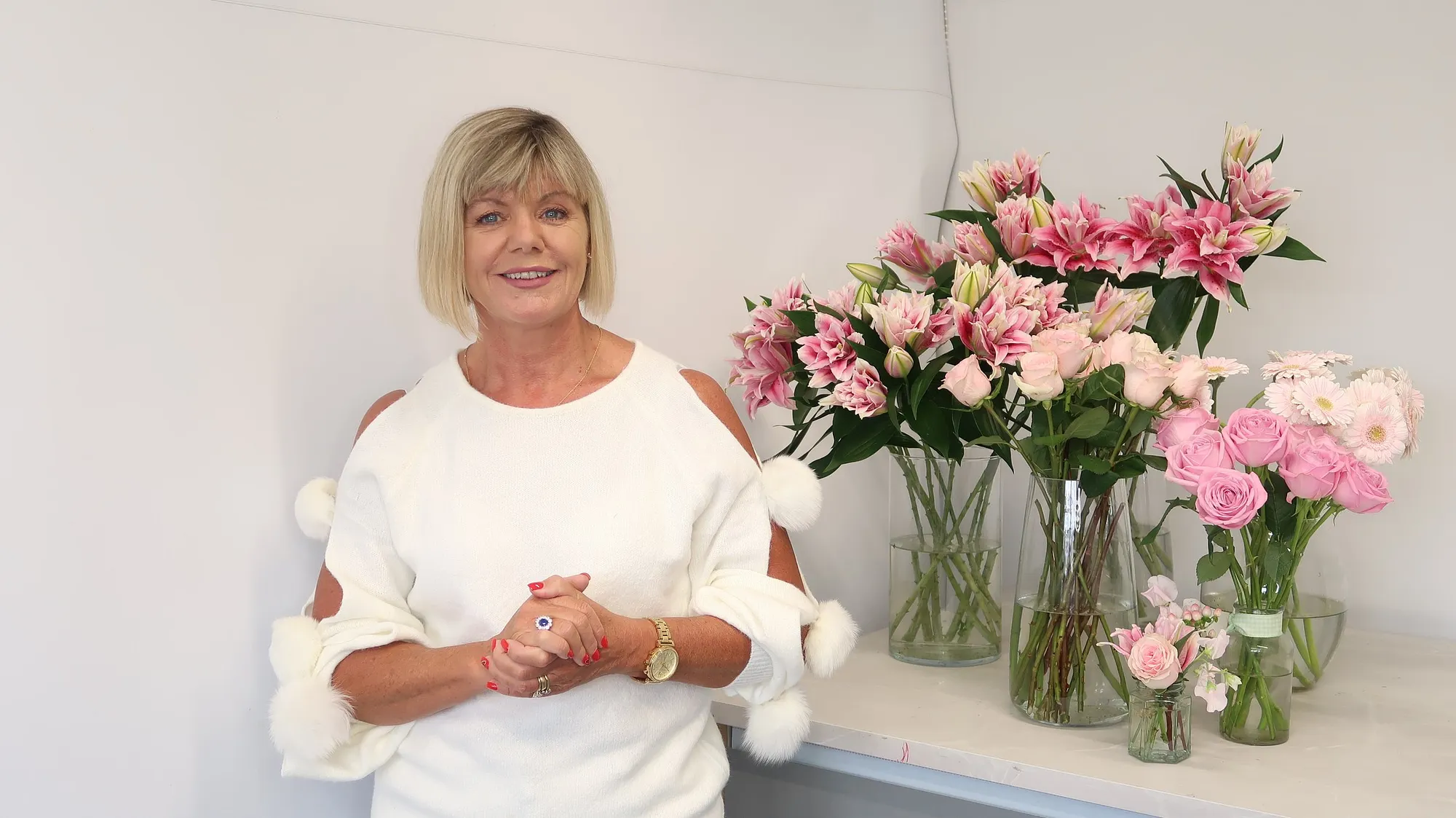
“Ah, thank you so much for having me! It’s lovely to be here. Kay’s Flower School is truly our life’s work, and it’s all built on the incredible vision of our mum, Catherine, or ‘Kay’ as everyone knows her. She was the real trailblazer, you see. Back in her day, if you wanted to learn floristry, you practically had to be born into it — it was a very closed shop, a family craft. But Mum, with her incredible entrepreneurial spirit, saw a different path. She wanted to open up the art of floristry to everyone, especially those outside the traditional trade, so they could not only learn a beautiful skill but also start their own businesses. That was the dream, and that’s how Kay’s Flower School began, right from our little corner in Rialto.
As for my role, well, I suppose you could say I’m the heart of the teaching! I joined Mum straight out of school, around 18 or 19, and she sent me off to the UK to get proper training because there was nothing like it here at the time. So, I’ve been hands-on with the flowers and the teaching for, well, nearly 40 years now!
My passion truly lies in teaching. I often say I might not be the most amazing florist in the world — though I do love flowers, absolutely adore them — but I know I’m an amazing teacher. That’s where I find my greatest satisfaction. Seeing a student who literally doesn’t know how to cut a rose, or even what a rose is called, transform over a few modules into someone creating stunning arrangements and even launching their own successful business… that’s just magic.
Can you share the most interesting story that happened to you since you began this career?
There have been so many wonderful moments, but I think the most interesting, and perhaps most surprising, story has to be our journey to America. A couple of years ago, we got this email saying I’d been nominated for ‘Floral Educator of the Year’ awards over there. We were absolutely delighted, but honestly, a bit stunned! We won it that year, which was just incredible.
What really made it interesting, though, was what came next. Sarah Campbell, a huge celebrity florist in America, invited us to teach at her ‘Intrigue’ conferences. Initially, we were like, ‘Oh, no, we couldn’t possibly go, it’d be too expensive!’ But she insisted, even offering to pay for us to come. We definitely had a bit of imposter syndrome setting in — we knew what we could do, but they didn’t know us!
When we arrived, we were ready to roll up our sleeves and help out, but they treated us like honoured guests. The first day, we observed the other workshops, and that’s when it clicked: ‘Do you know what? We actually have a lot we can teach these people here!’ The imposter syndrome vanished right then and there. We realised our techniques, especially those we’ve honed over nearly 40 years of teaching, were truly unique and valuable. To this day, American florists, even those doing massive celebrity weddings, credit us for techniques they picked up from us. One of them is even crediting us in a book she’s writing!
Can you share a story about the funniest mistake you made when you were first starting? Can you tell us what lesson you learned from that?
“Oh, absolutely! When I first started out as a floral educator, my biggest ‘mistake’ wasn’t about a drooping bouquet, but a much more personal challenge: the fear of not knowing enough. I was terrified of someone in the class knowing more than me, or worse, being asked a question I couldn’t immediately answer. I soon realised that some students, what we affectionately call the ‘wasps’ — those who buzz around, constantly questioning and trying to catch you out — actually thrive on that dynamic. They love to speak for others and often think they know more than they do.
I quickly learned to accept that these types of learners are in every classroom, even in online settings. My strategy evolved into gently throwing the question back to them, getting them to work out the answer they often already knew. The funniest time this played out was actually when I was training my younger sister, Sinead. She was the ultimate ‘wasp,’ questioning and questioning every single thing! The lesson learned there was loud and clear: sometimes, the best thing you can do for both parties is to send your siblings to another tutor!”
What do you think makes your company stand out? Can you share a story?
I believe what truly makes Kay’s Flower School stand out, especially with our online model, is our unwavering commitment to a truly personal and supportive learning experience. When we decided to go online, my experience with other online courses was often very transactional — ‘here’s your login, off you go, good luck!’ We absolutely didn’t want that.
Our students, whether they were in our physical classroom or now online, become part of our family. In the school, we’d always offer a cup of tea, introduce everyone, and share a few penguin bars. We wanted to replicate that warmth and connection online.
The story that comes to mind, which really highlights this, is about some of our students who have unique learning needs. For example, right now, we have a girl who is deaf training with us online. We also have two students with special needs, one here in Ireland and one in the UK, and a student in Malaysia for whom English is a second language. Now, that might sound ‘mad’ to some, teaching floristry online to a deaf student, but it works because of the way we’ve structured everything.
We provide them with the exact same materials I’m using in the pre-recorded tutorials, shipped directly to them from Holland. So, they have everything they need, right in front of them, to follow along visually. And crucially, they can WhatsApp me one-to-one with their progress, sending photographs of their arrangements. This isn’t a group chat; it’s private. This allows me to give them incredibly specific, tailored feedback, zoom in on their work, correct mistakes, and truly guide them. It’s that individual attention, that ability to adapt our teaching to their needs, and the personal relationship we build — even across continents and with communication differences — that truly sets us apart. We don’t just teach floristry; we foster a supportive community where everyone can bloom.”
Are you working on any exciting new projects now? How do you think that will help people?
Absolutely, we’re always looking for new ways to make floristry more accessible! Our overarching goal has always been to ensure that flower arranging and floristry are available to everyone, whether they’re just starting out, doing it for their own mental well-being, or are seasoned florists looking to upskill and learn new techniques.
To that end, we’ve developed what we call our Mini Course Series. This is a growing list of online flower classes, each designed for all levels and delivered in a step-by-step, easy-to-follow approach. The beauty of these mini-courses is their flexibility: they can be watched over and over again, allowing students to learn at their own pace and revisit techniques as often as they need. Crucially, they are all very cost-effective. We’re finding that florists from all over the world are ‘dipping into’ our Mini Course Series to learn from us without a huge financial commitment. It’s a fantastic way for people to explore specific aspects of floristry, refine a particular skill, or simply enjoy the therapeutic benefits of working with flowers, all in a very approachable and affordable format. We’re really excited about how these will help even more people connect with the joy of floristry.”
None of us are able to achieve success without some help along the way. Is there a particular person who you are grateful towards who helped get you to where you are? Can you share a story about that?
What we do, we absolutely cannot do on our own. I am incredibly grateful for the fabulous, supportive family I have around me.
First and foremost, my sister Deirdre works alongside me every single day. She is truly the backbone of the admin and tech side of the business, and she’s the one who keeps everything running smoothly behind the scenes. Without her, the online pivot during COVID simply wouldn’t have happened — she learned all the editing and production, and her vision got us online.
Then there’s our other sister, Sinead, who’s based in Scotland. She also works alongside us virtually and is responsible for all the enrolling and making sure courses and bonus content get onto our students’ dashboards. She’s crucial for that seamless student experience.
Beyond our immediate team, we also have the most loyal and supportive following across all our social platforms, who are always advocating for us and cheering us on. Their enthusiasm is a constant source of motivation.
But I suppose, if I had to pick one particular person, it would have to be my Mum, Kay. Without her, Kay’s Flower School would not be here, and it certainly wouldn’t be as successful as it is today. Her initial vision, her entrepreneurial spirit, and her dedication to opening up floristry to everyone laid the entire foundation. She pushed me into training, she encouraged us to grow, and her legacy is literally in the name of our school. And, of course, I must mention my Dad, who we lovingly call ‘Mr. Kay’ on our socials. Even though both he and Mum are retired, they are a constant pillar of support for us here at Kay’s Flower School, often making celebrity appearances at our Christmas workshops, which everyone loves. Their unwavering belief and presence mean the world.”
How have you used your success to bring goodness to the world?
I think the ‘goodness’ we bring to the world really stems from our core mission: making floristry accessible and empowering people. We’ve seen firsthand how learning this art can transform lives, and that’s incredibly rewarding.
Firstly, we empower individuals to become entrepreneurs. So many of our students, particularly women — over 90% of our florists are women — start their own successful flower businesses after training with us. We’re not just teaching them how to arrange flowers; we’re giving them the skills and confidence to create their own livelihoods, to be their own bosses, and to contribute to their local economies. Seeing them go from not knowing how to cut a rose to promoting their own businesses on social media, that’s a huge source of pride and a tangible way we’re bringing economic empowerment.
Secondly, there’s the mental well-being aspect. Working with flowers is incredibly therapeutic. It’s a mindful activity that brings joy, reduces stress, and allows for creative expression. We hear so many stories from students who tell us how much the classes, whether for a hobby or a career, have helped them through challenging times or simply provided a much-needed creative outlet. Knowing that we’re contributing to people’s happiness and mental health through the beauty of flowers is a profound form of goodness.
Beyond that, a very significant way we use our platform for good is through our deep commitment to cancer charities. This is incredibly close to our hearts, as my sister Deirdre is a breast cancer survivor. She often says that losing her hair and eyebrows during treatment was one of the toughest parts for her, but a charity called Look Good Feel Better truly helped her learn how to work with her new appearance and skin care. Because of this personal connection, every October, for ‘Pink October,’ we dedicate our fundraising efforts to Look Good Feel Better.
We’ve had some incredible moments in our fundraising journey. I remember when Mr. Kay, our dad, was 80 years young, he actually skydived off Croke Park, our national football stadium, and raised nearly €10,000 for the charity! It was an absolutely amazing feat. Over the years, as a family business, with the incredible support of our ‘flower and followers’ community, we have collectively raised over €100,000 for various cancer charities. It’s a testament to the power of our community and our shared desire to give back and support those going through such challenging times.”
Ok thank you for that. Let’s now pivot to the main parts of our interview. How do you define a family business? How is a family business different from a regular business?
For us, a family business isn’t just about family members working together; it’s about a deep, inherited sense of purpose and a shared destiny. It’s where the lines between personal life and professional life are wonderfully, sometimes chaotically, blurred because the business is truly an extension of the family itself.
The core difference from a ‘regular’ business, I believe, boils down to a few key elements:
Firstly, there’s the commitment. In a family business, the commitment goes far beyond just a job or a paycheck. It’s a commitment to a legacy, to my Mums name, and to future generations. You’re not just working for a company; you’re nurturing something that your mum built, that your dad supported, and that you hope your children might one day be involved in. This long-term vision naturally leads to decisions being made with sustainability and endurance in mind, rather than just quarterly profits.
Then there’s the inherent loyalty and support. Within the family, there’s a built-in trust and understanding that you might not find in a traditional corporate structure. We know each other’s strengths and weaknesses, our moods, our quirks! Deirdre and I, for example, might have fought like cats and dogs as kids, but now there’s an unspoken understanding and a fierce loyalty to each other and to the business. This extends to our employees too; we often treat them like extended family, fostering a very supportive environment.
This also brings a unique sense of security. There’s a stability that comes from knowing you’re all in it together, through thick and thin. When challenges like COVID hit, instead of panicking, our first thought was, ‘How do we, as a family, pivot and make this work?’ That collective resolve, that shared commitment to keeping the business alive, is a powerful force.
And finally, there’s the underpinning of ethics. Because the family name is on the door, there’s an incredibly strong drive to operate with integrity and a high moral compass. Our reputation is our family’s reputation. This means we’re always striving to do things the right way, from how we treat our students and suppliers to how we contribute to the wider community through our charity work. It’s not just about profit; it’s about pride, purpose, and making a positive impact, all guided by the values instilled by our mum and dad. That deep, personal investment, that blend of family and business, is what truly sets us apart.”
In your opinion or experience, what are the unique advantages that family owned businesses have?
Building on what I just said about how we define a family business, those very differences are precisely where our unique advantages lie.
Firstly, the long-term perspective is a huge advantage. Unlike many ‘regular’ businesses that might be driven by quarterly results or shareholder demands, we’re thinking generations ahead. This allows us to make strategic decisions that prioritize sustainability, quality, and building lasting relationships over quick profits. We can invest in our students and our community knowing that it’s building something enduring, not just something for the next financial report.
Secondly, the deep-seated loyalty and trust within the family translates into incredible resilience and agility. When challenges arise, like the pandemic, there’s no question of commitment. We’re all in it together, united by blood and by a shared passion for Mum’s legacy. This means we can make decisions quickly and adapt rapidly, without the bureaucratic layers or conflicting interests you might find in a larger, non-family corporation. That inherent trust allows for a level of flexibility that’s hard to replicate.
Thirdly, our strong ethical foundation is a competitive edge. Because our family name is intrinsically linked to the business, there’s an unparalleled drive to maintain integrity and a high standard in everything we do. Our reputation is personal. This fosters trust with our students, suppliers, and our community. They know they’re dealing with a business that cares, that has a face and a heart behind it, and that’s built on strong values. This often leads to incredibly loyal customers and word-of-mouth referrals that money can’t buy.
Finally, the personal touch and passion that comes from a family business is truly unique. We’re not just selling a product or a service; we’re sharing a part of our family’s story and passion. This creates a more authentic and engaging experience for our students. They feel that personal connection, that genuine desire for their success, whether it’s helping a deaf student learn floristry or supporting someone through their cancer journey. That level of care and dedication, born from a deep personal investment, is what makes our business, and I believe many family businesses, truly special and deeply impactful.”
What are the unique drawbacks or blindspots that family owned businesses have?
A challenge we see is the blurring of personal and professional boundaries. Because the business is so intertwined with family life, it can be hard to switch off. Family gatherings can turn into business meetings. You can find yourself talking shop at the Christmas dinner table, or even whilst on holiday! People not in a family business just don’t always get it and understand that the operations are always ‘on’ in your mind. Deirdre and I had our squabbles as kids, and while we get on great and have a great working relationship, we very much understand to separate our work roles from our sisterly bond.
What are some of the common mistakes you have seen family businesses make? What would you recommend to avoid those errors?
Given our long history in this industry. We’ve certainly observed a few common pitfalls, particularly within the flower business, that family-owned companies can fall into.
One of the biggest mistakes I’ve seen is a failure to adapt to changing market trends and technology. The flower industry, like any other, evolves. What worked 20 or even 10 years ago might not work today. We saw this ourselves with the shift to online learning during COVID. Many traditional florists, especially family-run shops, were slow to embrace e-commerce or social media, relying solely on foot traffic. In our case, Mum was ahead of her time with the website, and Deirdre pushed us online, which saved us. My recommendation here is to always keep an open mind to new technologies and business models, even if they seem daunting. Invest in digital skills, or bring in someone who has them, because the world is moving online, and flowers are no exception.
Another common error is underestimating the importance of clear communication and boundaries. As we’ve discussed, the lines between family and business can get very blurred. I’ve seen situations where family members assume roles or responsibilities without clear discussions, leading to resentment or inefficiency. Or, ‘shop talk’ dominates every family gathering, which can be exhausting and lead to burnout. My advice is to establish clear roles and responsibilities from the outset, even if it feels formal. Have regular, dedicated ‘business meetings’ that are separate from family time. And most importantly, communicate openly and honestly, even about difficult topics like performance or succession. It’s better to have an uncomfortable conversation now than let unspoken issues fester.
Finally, a mistake unique to our industry, but often exacerbated in family businesses, is not understanding the true cost of flowers and labour. There can be a tendency to be too generous, or to not properly account for wastage, spoilage, and the time it takes to create arrangements. This often stems from a passion for the craft, but it can severely impact profitability. My recommendation is to get a solid grasp on your costing — know your wholesale prices, factor in your labour, and understand your profit margins. Don’t be afraid to charge what your skill and materials are worth. We teach our students how to cost arrangements for a reason; it’s fundamental to running a sustainable business, family or otherwise.”
What advice would you give to other CEOs or founders of family businesses to help their employees to thrive?
“That’s a fantastic question, and it’s something we’re very passionate about, as our employees, both family and non-family, are truly vital to our success. My advice would center on fostering an environment of respect, clarity, and genuine care.
Firstly, treat all employees, family or not, with professionalism and fairness. While the family bond is strong, it’s crucial that non-family employees never feel like second-class citizens. This means having clear job descriptions, fair compensation, and objective performance reviews for everyone. Avoid making decisions based on family favoritism. A story that comes to mind is when we hire new staff for seasonal work; we make sure they feel just as much a part of the ‘Kay’s family’ as anyone else, ensuring they understand their role, feel valued, and are included in team discussions. This builds immense loyalty and a positive work environment.
Secondly, invest in their development and growth. Just as Mum invested in my training, we believe in continuously upskilling our team. This isn’t just about formal courses; it’s about mentorship, giving them new responsibilities, and listening to their ideas. When employees feel they are learning and progressing, they are more engaged and motivated. For example, Deirdre, with her background in adult education, is brilliant at identifying training opportunities for our virtual assistants and ensuring they have the tools to excel.
Thirdly, and this ties into what we discussed about communication, foster an open and transparent communication culture. Encourage feedback, both positive and constructive. Make sure employees feel heard and that their contributions matter. This means actively listening, not just talking. When we’re discussing new projects or changes, we try to involve our team members who will be affected, getting their input. This helps them feel secure and committed to the business’s direction.
Finally, recognize and appreciate their contributions publicly and genuinely. A simple ‘thank you’ goes a long way. Celebrate successes, big or small. In a family business, it’s easy to assume everyone knows how much they’re valued, but explicit recognition is vital. Our Dad, Mr. Kay, is brilliant at this on social media; he’s always singing the praises of our team and our students, and that positive reinforcement really makes a difference. When employees feel appreciated, their loyalty deepens, and they are more likely to thrive and go the extra mile for the business.”
How do you define “Leadership”? Can you explain what you mean with a story or example?
Leadership’ in a family business, especially one like ours, isn’t about being ‘too big for your boots,’ as we say in Ireland. It’s about being willing to get into the ‘mess’ and do the laborious work alongside your team, no matter how menial it might seem. But crucially, it’s about doing that while leading others to enjoy and see the benefit of those jobs, and helping them understand how they can progress and grow.
A story that perfectly illustrates this goes back to our early days in the flower shop, and even now when we’re preparing for big workshops. There are always the less glamorous tasks: stripping thorns off hundreds of roses, cleaning buckets, sweeping up flower debris, or packing countless boxes for kits. These aren’t the ‘glamorous’ parts of floristry, but they are absolutely essential.
My mum, Kay, was the epitome of this kind of leadership. She was the founder, the visionary, but she was never afraid to get her hands dirty. She’d be right there with us, elbow-deep in the buckets, cleaning stems, or driving the van to collect supplies. She didn’t just tell us what to do; she showed us, and she worked alongside us. And while we were doing those tedious tasks, she’d be explaining why it was important — ‘This is how you ensure the flowers last longer,’ or ‘This is how we keep the shop spotless for our customers.’ She’d also share stories of how she started, or how a particular arrangement would bring joy to someone.
That’s the kind of leadership I strive for. It’s about demonstrating that no job is beneath you, understanding the graft involved in every aspect of the business, and using those moments to teach and inspire. It’s about being present, being hands-on, and showing that every single task, no matter how small, contributes to the overall success and the beautiful end product. It’s about leading by example, sharing the load, and always, always looking for ways to help those around you grow and find their own path within the business.”
Here is our main question. What are the “5 Things You Need To Run A Highly Successful Family Business”? Please share a story or example for each.
I’ve thought a lot about over the years, living and breathing a family business! Based on our experience at Kay’s Flower School, here are my ‘5 Things You Need To Run A Highly Successful Family Business’:
- Unwavering Long-Term Commitment & Vision (The Legacy Mindset):
What it is: This is about looking beyond immediate profits and focusing on building something that can endure for generations. It’s about nurturing a legacy and a shared purpose that binds the family to the business.
Story/Example: Our Mum, Kay, embodied this. When she started the school, there was no formal floristry training in Ireland. Her vision wasn’t just to open a shop, but to create a school where people could truly learn a trade and start their own businesses. She invested in sending me to the UK for training because she saw the long-term need, not just the short-term cost. That commitment to building something lasting, something that would empower others for decades, is the foundation of our success.
2. Clear Communication & Professional Boundaries (The Family Meeting Rule):
What it is: While family businesses thrive on close relationships, it’s vital to establish clear lines between family dynamics and business operations. This means open, honest communication about roles, responsibilities, and even disagreements, but within a professional framework.
Story/Example: Deirdre and I, as sisters, learned this the hard way growing up! We used to ‘breathe too loud’ for each other. Now, we have distinct roles — I’m the teaching heart, she’s the tech and admin brain. We make a conscious effort not to ‘talk shop’ at every family dinner or on holidays, though it’s a constant battle because the business is always on our minds! But when we do have business discussions, they are structured, focused meetings, not just casual chats. This prevents personal issues from spilling into work and ensures decisions are made for the business’s best interest.
3. Adaptability & Embrace of Innovation (The COVID Pivot):
What it is: The world changes, and businesses must change with it. A successful family business isn’t stuck in its ways; it’s willing to pivot, learn new skills, and adopt new technologies to stay relevant and reach new markets.
Story/Example: Our biggest example of this was during COVID. Our business was literally ‘dissolving’ in front of our eyes. Instead of giving up, Deirdre pushed us to go online. She taught herself video editing, and we spent all day, every day, recording classes. This wasn’t easy — I was ‘as stiff as a poker’ at first! But that willingness to completely transform our delivery model, to learn new tech, and to embrace a global online presence saved and then supercharged our business. It’s why we now have students worldwide.
4. Hands-On, Leading-by-Example Leadership (Getting into the ‘Mess’):
What it is: True leadership in a family business means being willing to do every job, no matter how small or ‘menial.’ It’s about demonstrating that no task is beneath you, understanding the hard work involved, and using those moments to teach and inspire your team.
Story/Example: My Mum, Kay, was the absolute epitome of this. She was the founder, the boss, but she was never afraid to get her hands dirty. She’d be right there with us, elbow-deep in buckets cleaning stems, stripping thorns off hundreds of roses, or sweeping the floor. She didn’t just delegate; she participated. And while doing those tasks, she’d explain why they were important — ‘This is how you ensure the flowers last longer,’ or ‘This is how we keep the shop spotless for our customers.’ That hands-on approach builds respect, shows commitment, and helps everyone understand the value of every single step in the process.
5. Deep-Rooted Ethics & Community Engagement (Giving Back):
What it is: A highly successful family business isn’t just about making money; it’s about operating with integrity, contributing positively to the community, and having a purpose beyond profit. The family name on the door means a personal stake in its reputation and impact.
Story/Example: Our commitment to cancer charities, particularly Look Good Feel Better, is a perfect example. Deirdre’s experience as a breast cancer survivor made this cause incredibly personal. It’s not just a corporate social responsibility initiative; it’s deeply ingrained in who we are. Every October, we fundraise, and we’ve collectively raised over €100,000 over the years, thanks to our amazing ‘flowers and followers’ community. My Dad, Mr. Kay, even skydived off Croke Park at 80 for the charity! This dedication to giving back, driven by personal ethics and a desire to make a difference, strengthens our brand and connects us deeply with our community.”
We are very blessed that some of the biggest names in Business, VC funding, Sports, and Entertainment read this column. Is there a person in the world, or in the US with whom you would love to have a private breakfast or lunch with, and why? He or she might just see this if we tag them :-)
If I could have breakfast or lunch with anyone, it would have to be Oprah Winfrey. She built a multi-billion-dollar media empire from a challenging background, demonstrating unparalleled power in personal branding and authentic connection. For me as a floral educator focused on business growth, her mastery of storytelling, community building, and scaling a passion-driven enterprise offers profound insights into creating a business that truly resonates and endures.
Oprah’s influence is especially profound for women in business, particularly diverse or marginalized women. She broke monumental racial and gender barriers by becoming the first African American woman to own a major production company, providing a clear blueprint for self-determination and wealth creation.
Her journey from poverty and systemic challenges to immense success exemplifies resilience, showing marginalized women that one’s beginnings do not define potential. Furthermore, through her platforms, Oprah consistently amplified diverse voices, inspiring countless women to share their unique stories and build authentic connections through their businesses. Ultimately, Oprah’s success demonstrates that authenticity and trust can be powerful business models, encouraging all women to leverage their unique identities as core assets.
You are a person of great influence. If you could inspire a movement that would bring the most amount of good to the most amount of people, what would that be? You never know what your idea can trigger. :-)
If I could inspire a movement, it would be “The Global Bloom Initiative: Cultivating Connection Through Floristry.” Or “The Happy Stem Project: Blooming Connections, Global Access”
This movement would leverage the inherent beauty and emotional power of flowers to improve well-being, facilitate cross-cultural understanding, and empower individuals through sustainable floristry education and enterprise.
Imagine community floral hubs worldwide where people of all ages and backgrounds could learn floral design, grow flowers, and share their creations. This would not only provide therapeutic engagement and creative expression but also offer pathways to vocational skills and micro-enterprises, particularly for marginalized communities.
We’d see pop-up flower exchanges, intergenerational workshops, and “flower-bombing” acts of kindness in public spaces, all designed to spread joy and beauty. The movement would emphasize sustainable practices, local sourcing, and the art of appreciating nature’s cycles.
The ripple effect? Reduced stress, enhanced community cohesion, economic empowerment, and a renewed appreciation for the natural world — one bloom at a time.
How can our readers further follow your work online?
www.kaysflowerschool.com / info@kaysflowerschool.com
Facebook — https://www.facebook.com/kaysflowerschool
Instagram — https://www.instagram.com/kaysflowerschool/
Tik Tok — https://www.tiktok.com/@kaysflowerschool
Free Flower Arranging Course — https://kaysflowerschool.myflodesk.com/freebeginnersflowerarrangingcourse
Thank you so much for joining us. This was very inspirational.