We developed a smart-routing app and leverage a gig-economy model to facilitate recycling pick up and drop off. We have hundreds of independent contractors across the country — and that number continues to grow — who power our weekly or bi-weekly pickup schedule in the 100+ cities in which we operate. Not only does our solution promote sustainability by serving the unserved — bringing recycling to areas where it isn’t accessible — but it also decreases the carbon footprint of the recycling pickup/dropoff process by eliminating the need for garbage trucks.
Tech
Green Tech: Ryan Smith of Recyclops On How Their Technology Will Make An Important Positive Impact On The Environment
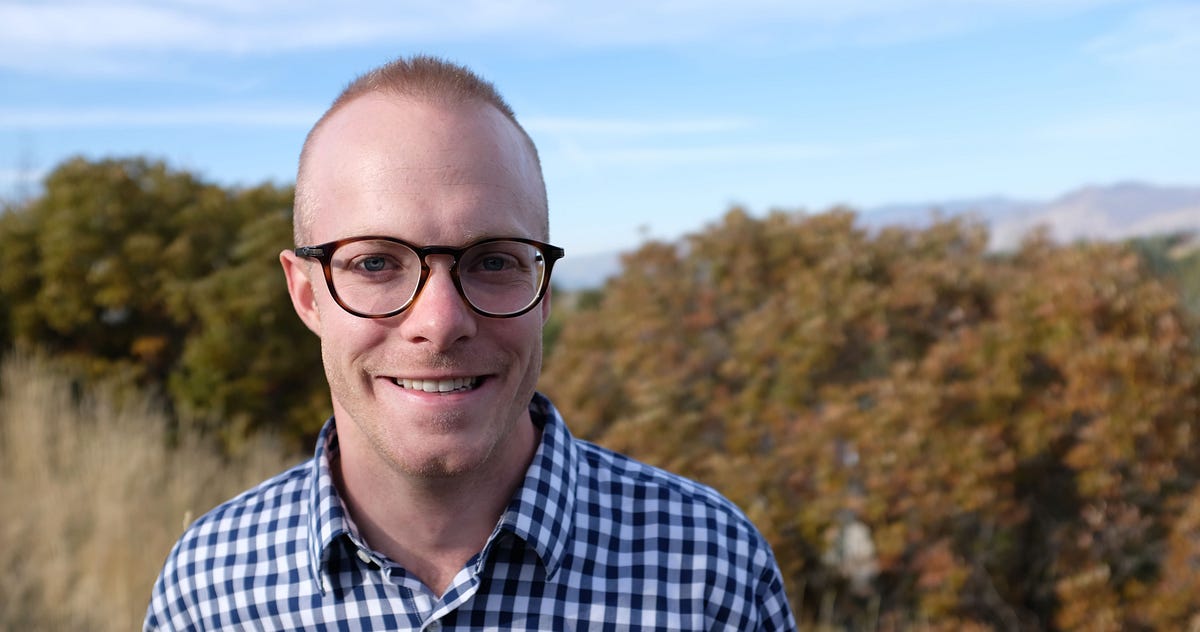
In recent years, Big Tech has gotten a bad rep. But of course many tech companies are doing important work making monumental positive changes to society, health, and the environment. To highlight these, we started a new interview series about “Technology Making An Important Positive Social Impact”. We are interviewing leaders of tech companies who are creating or have created a tech product that is helping to make a positive change in people’s lives or the environment. As a part of this series, I had the pleasure of interviewing Ryan Smith.
Ryan Smith is the founder and CEO of Recyclops, a technology startup that innovates solutions for sustainability, starting with recycling. The company, which launched in 2014, has since become the first to apply technology to environmental logistics and bring recycling to areas where it didn’t previously exist, and at scale. Smith is a graduate of Brigham Young University, and has been recognized on the Forbes 30 Under 30.
Thank you so much for joining us in this interview series. Before we dive in, our readers would love to learn a bit more about you. Can you tell us a bit about your childhood backstory and how you grew up?
I was actually born in Ecuador. Then I lived in Sandy, Utah until I was about 10, and then I moved to Chile, where I spent three years. I was in Boy Scouts of America, but I did it in a foreign troop. I remember getting my environmental science merit badge — burying plastic and paper and styrofoam in the ground, then coming back after a week to see what it looked like. I eventually became an Eagle Scout. I grew up camping and hiking with the “leave it better than you found it” mentality.
There are actually several sustainability-focused instances from my childhood that I feel were formative. I have a big family with a bunch of siblings. When I was young, my older sister gave me a “recycling box” for Christmas. It was a box full of shoe boxes and toilet paper tubes and recycling trash. I loved building things out of Legos, and she gave me this “recycling box” so I could build things out of it. I loved it so much that I gave the same gift to my younger brother the next year.
When we moved back from South America, we stopped and saw some places on the way and saw one of the largest hydroelectric dams. I’d just done this science project on hydroelectricity, and then we went and visited this dam on the border of Brazil and Paraguay, the Itaipu Dam.
At 19, I moved to Russia and then, at age 23, I found myself back in Brazil. Part of what inspired me to start Recyclops in those years was seeing that Brazil actually has a lot of recycling. I was living in São Paulo and I was impressed by the amount of recycling — they had a public infrastructure for it. I’d had this idea for Recyclops a couple of years prior and decided to give it a shot.
Can you share the most interesting story that happened to you since you began your career?
In 2017 the recycling markets crashed. Recyclops went from making money to losing money practically overnight. My wife and I had just had our first kid. I had to decide if I was really all in because if there was ever a time to get out, it was then.
I love the phrase “creativity loves constraint.” In 2017, I was definitely constrained. But it was the constraint that drove us to completely change Recyclops.
Recyclops as it existed before versus Recyclops as it exists now are two different businesses. We’ve been in business for eight years, but it’s not the same business. We’re solving the same problem, but we’re solving it in a completely different way. We’re targeting a much larger audience, and that is all because things got really hard and we fought through it. The business is way better than it ever would have been without that struggle.
None of us are able to achieve success without some help along the way. Is there a particular person who you are grateful towards who helped get you to where you are? Can you share a story about that?
There are really two people. One is my dad. In 2017, when the recycling market crashed, Recyclops didn’t have money. I showed up to my dad’s office saying, “I don’t know what to do.”
I did not ask for anything, but he said, “Let me take out a mortgage on my home to help you try to keep your business alive.”
Knowing that my business was failing and that there was a lot of risk involved in that, he lent me $100,000 from the equity of their home. I feel so blessed that I had a parent who could do that.
I think about how many entrepreneurs fail because they run into that hard spot and they don’t have someone that can have their back. And I was just lucky to be born into a family where my parents could afford to own a home.
The other person is my older brother, Davis Smith. He’s an entrepreneur, the CEO of Cotopaxi, and he has been a huge mentor for me. I bounce ideas off him constantly. He’s said many times, “I wish I had a ‘me’ when I was ‘you.’”
He’s someone who cares about me, who has my back, who I can reach out to with different questions. He always points me in the right direction and gives great advice.
Can you please give us your favorite “Life Lesson Quote”? Can you share how that was relevant to you in your life?
“If you treat an individual as he is, he will remain how he is. But if you treat him as if he were what he ought to be and could be, he will become what he ought to be and could be.” ― Johann Wolfgang von Goethe
When I was living in Russia, I had a couple of instances that really hammered this idea home. People are going through different things. If someone’s at their worst and you have low expectations for them, then they’re going to remain as they are. If you treat them like you think they’re exceptional, then they’re probably going to be exceptional.
You are a successful business leader. Which three character traits do you think were most instrumental to your success? Can you please share a story or example for each?
Perseverance, perseverance, perseverance.
It’s more than just continuing to try what’s not working. You also have to figure out what might not be working. I see some entrepreneurs who keep trying to make a business work that may not be, but you really have to have the perseverance to pivot when necessary and figure out how to do that.
Ok super. Let’s now shift to the main part of our discussion about the tech tools that you are helping to create that can make a positive impact on the planet and the environment. To begin, which particular problems are you aiming to solve?
Recyclops was founded on the belief that recycling and sustainable options should be accessible to everyone regardless of where they live. When I was a student at Brigham Young University (BYU), I discovered that recycling wasn’t available in my apartment complex. After some research, I learned the lack of access was not isolated to student housing — nearly 50 million residences across the US, at the time, lacked recycling options because of cost or logistical challenges.
Most people want to make environmentally responsible choices, but when your city or town doesn’t offer recycling pickup, it’s often too difficult for residents to find alternative solutions. We want to make it easy for everyone, everywhere to recycle.
How do you think your technology can address this?
We developed a smart-routing app and leverage a gig-economy model to facilitate recycling pick up and drop off.
We have hundreds of independent contractors across the country — and that number continues to grow — who power our weekly or bi-weekly pickup schedule in the 100+ cities in which we operate.
Not only does our solution promote sustainability by serving the unserved — bringing recycling to areas where it isn’t accessible — but it also decreases the carbon footprint of the recycling pickup/dropoff process by eliminating the need for garbage trucks.
We now serve about 10,000 households and we’re adding an average of two new communities per week to our service area. We’re also continuing to explore how we can solve complex sustainability challenges for businesses, working with various corporations to develop solutions for their hard-to-recycle materials.
Can you tell us the backstory about what inspired you to originally feel passionate about this cause?
I spoke to some of these influences earlier, but I’d say I can trace my passion for championing environmental causes back to my childhood.
From my time as a Boy Scout and Eagle Scout to seeing ways that other countries made it easier for their citizens to make sustainable choices, I have a profound respect for the environment. I know many others do as well, and I believe we can use technology to create a reality where our desires and actions sync up more fully.
How do you think this might change the world?
Most technologies get started to address a level of inconvenience in doing a particular thing. For example, in Utah, where I live, it wasn’t super easy to get a taxi. Now it is.
It used to not be easy to get clean drinking water. Now it’s super easy in places like the United States because we’ve invested in that infrastructure.
That’s what we want for sustainability. We want it to be so easy to make sustainable choices that people actually do it. One thing I’ve learned from recycling is if you have a trash bin and a recycling bin next to each other, and someone has a plastic water bottle, they’re going to put that plastic water bottle in the recycling bin.
If you have a trash can here and then there’s a recycling bin that’s 50 feet away that they can’t quite see, guess where that bottle is going? The trash can.
Sustainability has to be convenient. If it’s not convenient, it’s not going to happen, and we need sustainability to happen. So it needs to be convenient. That is what we’re trying to do. That is how Recyclops is trying to change the world: by making sustainable social solutions accessible and convenient for everyone.
Keeping “Black Mirror” and the “Law of Unintended Consequences” in mind, can you see any potential drawbacks about this technology that people should think more deeply about?
We’ve tried to be pretty thoughtful about that. One of the things that we need to be really careful about is making sure that our drivers aren’t being taken advantage of in the world of gig-economy drivers.
You can create an opportunity for people to leverage what they have to create more income for their families or to pay off a vehicle. That’s wonderful, but I’ve read so many articles about rideshare drivers that are not being taken care of and not being treated like humans.
We don’t want that to even be a question with Recyclops. We want to take care of the drivers that help serve our customers.
Here is the main question for our discussion. Based on your experience and success, can you please share “Five things you need to know to successfully create technology that can make a positive social impact”? (Please share a story or an example, for each.)
1. Use the scientific method. One of the best things I ever learned in school was the scientific method: come up with a hypothesis, test your hypothesis, check the results. When it fails, adapt, adjust, change your hypothesis and move forward.
2. Don’t be afraid to talk about it. You have so many people who are afraid to talk about their ideas. Ideas get better if you talk about them. Other people are going to say things that are going to trigger new things. If you’re too afraid to talk because you’re afraid someone’s going to steal your idea, guess what? No, one’s going to steal your idea. No one is more passionate about what you’re talking about than you are.
3. Don’t give up. If this is something you want to do, there are going to be a million opportunities to give up. Don’t give up. Perseverance, perseverance, perseverance.
4. Be an expert. You need to be an expert in what you’re trying to do. When you’re thinking about a business idea, if you really want to make that impact, you need to be an expert in that area.
When I first started working on Recyclops, I knew nothing about recycling, and my ability to make an impact was pretty minimal. Now, as an expert, I could take Recyclops in a hundred different directions and be successful because I know the area, and I know the problems.
5. Find someone who’s been there and done that. Find someone who can be your sounding board. There are people who are willing to help you. But don’t forget to pay it forward.
If you could tell other young people one thing about why they should consider making a positive impact on our environment or society, like you, what would you tell them?
If not now, then when? And if not you, then who?
Is there a person in the world, or in the US with whom you would like to have a private breakfast or lunch, and why? He or she might just see this, especially if we tag them. :-)
I think Bill Gates is a genius. He understands the climate crisis. I’m currently reading his book, “How To Avoid a Climate Disaster”. Bill Gates has spent an immense amount of time doing good. He built this monstrous company that had nothing to do with bettering society — although it has. Microsoft has become a tool so many people around the world have used to do amazing things.
Even beyond that, though, Bill Gates has taken his wealth and has used his life to create a platform to do good in the world. First, that good focused on alleviating poverty. Now there’s a strong focus on climate change, and he’s really put his money where his mouth is.
How can our readers further follow your work online?
On LinkedIn https://www.linkedin.com/in/rypaulsmith/ or at recyclops.com.
Thank you so much for joining us. This was very inspirational, and we wish you continued success in your important work.
JH
Written by
Jilea Hemmings
Executive Contributor · Authority MagazineJilea Hemmings is an executive interviewer and contributor covering leadership, culture, and business for Authority Magazine.

Published inAuthority MagazineTop Lessons, Top Authorities · 42K Followers
Exclusive, curated interviews with the leaders and changemakers shaping tomorrow. Leadership lessons, industry deep dives, and executive profiles.
More from Authority Magazine
See all stories →A
Authority Magazine Editorial StaffBrandon Wade & Dana Rosewall on Why ‘Yes’ People are a Liability and the “Painful” 180-Degree Redemption Story
Tech27 min read

Y
Yitzi WeinerAmazon’s Lauren Stovall Talks AWS Nonprofit Programs, Enterprise AI and the Push for Unrestricted Funding
Tech22 min read
G
Gabriel Borden, Managing Partner at Arrow FundGuardians of AI: Kerstin Woods of Toshiba America Business Solutions On How AI Leaders Are Keeping AI Safe, Ethical, Responsible, and True
Tech17 min read
A
Authority Magazine Editorial StaffFrom New York Wild Child to Bali Wellness Queen: Inside Meghan Pappenheim’s Spiritual Empire
Tech20 min read