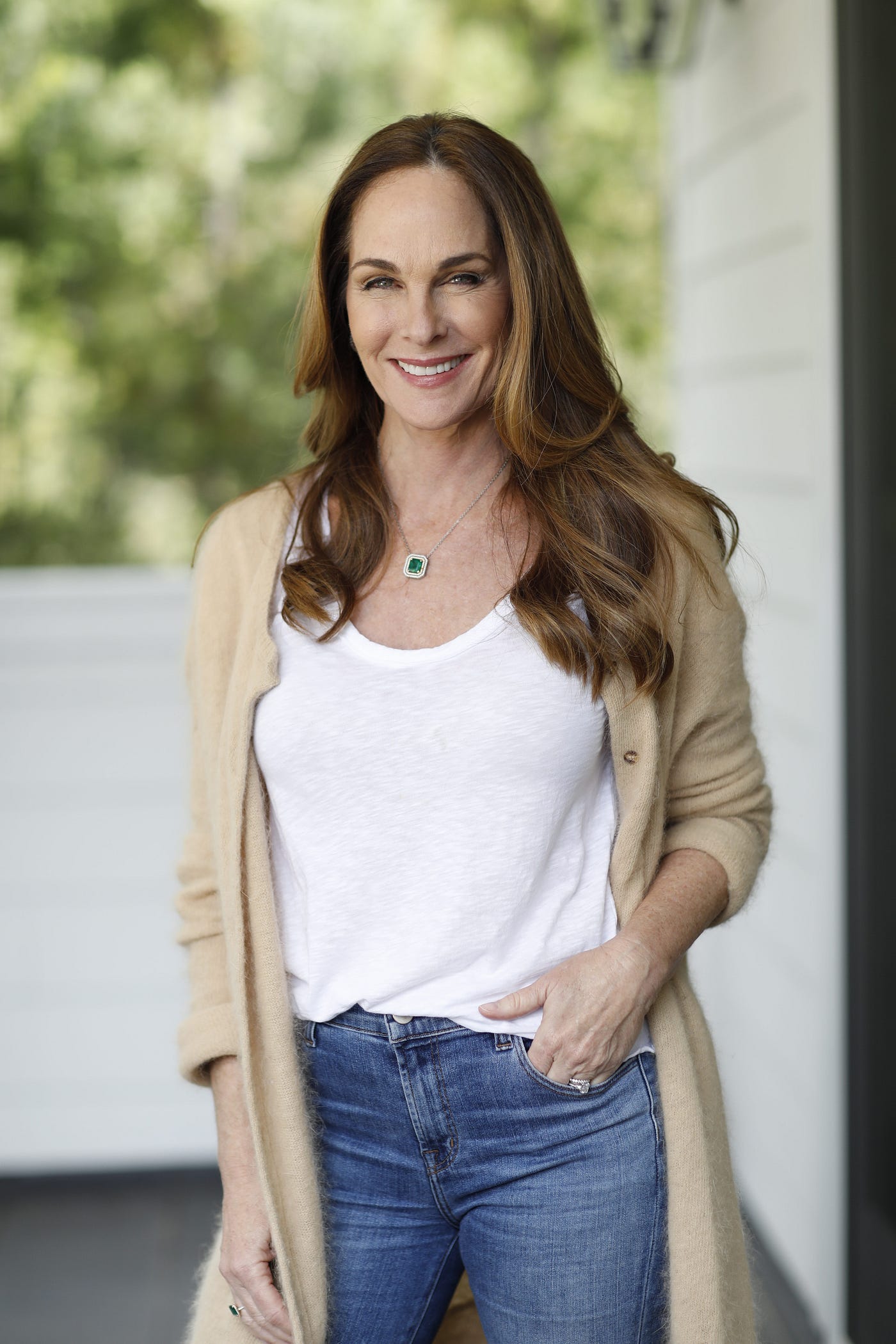
I love to get out and walk outdoors in the sunlight; I always feel my mood lifted and am invigorated afterward.
Wellness
Dr. Kristine Profeta-Gedroic: Why Treating Perimenopause Requires Uncovering Hidden Dietary Triggers Over Masking Symptoms
Integrative physician and author Dr. Kristine Profeta-Gedroic shares how women can navigate perimenopause by identifying root causes and embracing personalized wellness strategies.

Perimenopause is a significant transitional phase for many women, often accompanied by a variety of physical and emotional symptoms that can impact daily life. However, with the right knowledge and support, it’s possible to thrive through this stage. How can women navigate perimenopause with resilience and a positive outlook? What tips, resources, and lifestyle adjustments can make this transition smoother? As part of this interview series, we are interviewing Dr. Kristine Profeta-Gedroic.
Dr. Kristine Profeta-Gedroic is an integrative physician and founder of two Medical Institutes in Morristown, NJ. With 20 years of experience, she specializes in epigenetics, cell toxicity, and microbiome research, having helped nearly 7,000 patients with chronic illnesses.
She holds a Biochemistry degree from Harvard University, an MD from Thomas Jefferson University, and completed training at Cornell University and Overlook Hospital. Board-certified in both Family Practice and Integrative Medicine, she also completed a fellowship at the University of Arizona and Harvard Business School’s General Management Program.
Dr. Profeta-Gedroic is a three-time New Jersey Top Doctor and award-winning author of “A Nation of Unwell” (2018). She serves on multiple professional boards, including as a founding member of The Forum for Integrative Medicine. Based in New Jersey, she balances her medical practice with raising three teenage sons as a single mother.
Thank you so much for doing this with us! Before we dig in, our readers would like to ‘get to know you’. Can you tell us a bit about your background and your backstory?
Thank you for having me! I’m Dr. Kristine Profeta-Gedroic, an integrative physician who has dedicated my career to helping patients overcome complex chronic illnesses. After studying Biochemistry at Harvard and completing my medical training at Thomas Jefferson University, Cornell, and Overlook Hospital, I found my passion in integrative medicine, which led me to establish two Medical Institutes in Morristown, NJ.
My approach combines traditional medical practices with innovative treatments focused on epigenetics, cell toxicity, and microbiome research. Over the past 20 years, I’ve had the privilege of helping nearly 7,000 patients reclaim their health by addressing the root causes of their conditions at the cellular level. I’m also a published author — my award-winning book “A Nation of Unwell” explores critical contemporary health issues.
When I’m not in the clinic or advancing integrative medicine research, I’m a single mom to three teenage boys. This balance of professional and personal life keeps me grounded and reminds me daily of why I’m so passionate about helping others achieve optimal health.
Can you share a story with us about what brought you to your particular career path?
I’m passionate about integrative health because I’ve lived through my own health issues. When I was a plastic surgery resident (yes, I was initially going to go into plastic surgery!), I was getting frequent migraines. I had chalked it up to stress and a busy resident schedule. After all, I had just run a marathon so I was in excellent health. But, despite everything I did, my migraines didn’t go away. In fact, they were getting worse.
But none of the doctors I saw had asked me about my diet. At the time, I was drinking diet soda with aspartame and eating whole-wheat bagels, which I stashed in my white doctor’s coat and nibbled on all day long for energy. Years later, when I finally discovered my triggers for migraines (which turned out to be gluten and dairy), I realized that removing these foods from my diet would have made my life infinitely better back then. Now I can have gluten and dairy in moderate amounts but if I have too much, my body starts to communicate with me with headaches.
That’s when I realized I wanted to help others find the underlying triggers for their health conditions and help them to truly heal. I enrolled in a family practice residency at Overlook Hospital in New Jersey. I knew then that I needed to share my knowledge about blending the best of conventional medicine with the integrative strategies that had ultimately healed me. As I neared the end of my residency I was inspired to train in acupuncture, so I pursued a medical acupuncture degree and two years later took the Medical Acupuncture Boards.
I also became inspired by Dr. Andrew Weil. I ultimately pursued a fellowship in Integrative Medicine at the University of Arizona, which was founded by Dr. Weil. This was the most important step I made on my journey to a new form of medicine. I finally had a framework by which to organize all of the natural healing methods that I had already come to know and embrace from my own healing and through my own research.
Now I transform people’s health — and in the process, give them back their joy and motivation to live an active, energetic life. Who could ask for more?
What are some common misconceptions about perimenopause, and how can debunking these myths empower women going through this stage?
One of the most common misconceptions is that women undergo the same symptoms for a certain period of time. There are a wide range of symptoms that can begin to occur in women for years, without them knowing these symptoms are perimenopause. And these symptoms vary for each woman — and take place for different periods of time. Just as no women are exactly the same, no perimenopause experience is exactly the same. For some women, perimenopause can occur with very few symptoms or disruption to daily life. For others, these hormonal shifts may be so pronounced that they affect a woman’s quality of life.
Some of the most common symptoms of perimenopause, beyond just irregular menstrual cycles, are sleep disturbances, mood swings and irritability, vaginal dryness, changes in libido, hot flashes and night sweats, sore breasts, headaches, depression, and memory lapses. Skin laxity and dryness are also common symptoms, as is hair thinning and loss. But this doesn’t mean that everyone experiences all or even any of these symptoms. Some women may experience more obscure symptoms that they, and many doctors, may not realize are triggered by hormonal fluctuations. These include sore muscles, joint pain, itchy and or tingling skin, heart palpitations, dry eyes, and even body odor changes.
What’s important to understand is that each and every woman is unique in every aspect of herself — and her journey through perimenopause and eventually menopause is no different. This is your journey; you get to be the captain of this journey and make the decisions necessary that are right for you based on your symptoms and how you want to live your life.
Many women experience unexpected emotional challenges during perimenopause. How can they develop mental resilience and maintain a positive mindset through this transition?
The mental aspects of hormonal changes can be hard but not impossible to manage. There’s irritability, tearfulness, depression, difficulty concentrating, memory lapses, and anxiety. Just reading this list is probably enough to make women undergoing these changes anxious! But women are incredibly resilient; we have an internal strength that enables us to keep putting one foot in front of the other. There are some things that I do in my own life that have helped me — and my patients undergoing these changes. These include:
1. Embrace gratitude every day. It’s easy to dwell on the symptoms and issues that are affecting you, but taking a step back every day to think about or say aloud the things you are grateful for can be life changing. Even the simplest things like being grateful for the warmth of the sun or a cup of hot coffee in the morning can help to shift the focus away from what may not be ideal to what is working in our lives.
2. Seek out friends. Social connections are incredibly powerful and healing; research shows that having a strong personal social network — beyond just what’s online — provides emotional support, boosts mood, helps to manage stress, and even strengthens the immune system.
3. Get enough sunlight and fresh air. It’s easy to feel moody and irritable when you’re indoors, but it’s harder to feel this way when you get outside in the sunlight. One reason for this is fresh air is invigorating and sunlight helps the body to produce vitamin D, which has been shown to help lessen symptoms of depression and anxiety. I love to get out and walk outdoors in the sunlight; I always feel my mood lifted and am invigorated afterward. Research also shows that when you walk in the morning, you set yourself up for better sleep at night.
4. Consider cognitive behavioral therapy. This is a type of therapy that utilizes very specific mindset shifting strategies that can help turn around negative thoughts to be more positive. It can also help you to develop coping strategies for mental resilience. Sometimes reaching out for help can be truly life-changing.
5. Try meditative activities. I don’t use the word meditation because many women will immediately see sitting still — amidst a very busy life — to be too much of a challenge. I like to use the words “meditative activities”; this includes sitting quietly in the morning outdoors or indoors, taking some time at night before bed to quietly read or think about your day, or even walking without headphones or a phone to listen to the sounds of nature and the world around you. If you can sit still, definitely do so: I like to use visualization techniques. For example, you can visualize how healthy you are, how strong you are, and are happy you are. Taking time for quiet helps to quiet the mind and any negative chatter going on inside.
What lifestyle adjustments — including diet, exercise, and sleep routines — do you recommend to help alleviate some of the most common symptoms of perimenopause?
All three of these things — diet, exercise, and sleep — are so important for helping to alleviate the common symptoms of perimenopause. But not coincidentally, they’re also important for maintaining optimal health and longevity. So how do you make the changes necessary to help alleviate the symptoms of perimenopause? Here are a few strategies that I recommend.
1. Prioritize sleep with good sleep hygiene and habits. Sleep is restorative; it’s how the body heals itself. Getting enough sleep can help with moodiness and irritability, memory and concentration, and overall health. This means that you have to take a hard look at your habits and make some shifts. The number one thing that can help is to shut off your devices at least one hour before you want to go to bed. We’re constantly streaming images and news. We have to shut down our brains and allow for melatonin, the hormone that helps the body to recognize it’s time to sleep, to be produced. The blue light that’s emitted from our digital devices interferes with our body’s natural sleep patterns. For this same reason, when you turn off your devices, also turn down the lights. These are visual cues to help your body fall asleep.
Perimenopause is the time when women start to wake up at 2 or 3 am and are not able to get back to sleep. This can be incredibly disruptive, even if you’re able to fall asleep easily. For my patients I recommend melatonin to help increase the depth and quality of sleep. This will often protect against waking in the night. There are other herbal products that have combinations of valerian, lemon balm and sometimes 5-HTP (a precursor to serotonin) that can help people get to sleep more easily.
2. Sweat every single day for 20 to 30 minutes. Whether you’re out running, walking at a fast pace, doing cardio at the gym, or sitting in a dry heat sauna, sweating is the body’s natural way of detoxing. If you’re experiencing night sweats, unfortunately this is not the same type of sweat that helps you detoxify. You would need to still get your heart rate up and induce a sweat naturally or through a sauna to get optimal detoxification for the body.
3. Try as best as possible to eat farm to table. You want to try to eat as close to nature as possible. This includes organic fruits and vegetables. I recommend organic as pesticides can be endocrine disruptors, which mean they can affect how hormones in our body work. When you’re going through perimenopause, you want to limit anything that could potentially influence our own natural hormones. This includes steering clear of non-organic dairy products, which also contain hormones and antibiotics that can influence the hormones in our body.
Vegetables, whole grains, beans and legumes including edamame (soybeans), and healthy fats are also important. In fact, healthy fats like avocados and extra virgin olive oil are also important as they help to regulate body temperature and are necessary for the production of steroid hormones like estrogen and progesterone.
What’s also important: nuts and seeds, which offer good sources of omega-3 and omega-6 essential fatty acids. Our bodies can’t produce these fatty acids so it’s essential to get them from outside sources in the right balance of 4 omega-6 fatty acids to 1 omega-3 fatty acid. This optimal balance is important for overall cellular health. Getting enough essential fatty acids is critical for the health of the brain and nervous system — and may be able to help with the cognitive symptoms (foggy brain, memory lapses, concentration problems, and more) that can sometimes arise with perimenopause.
Plant-based foods also offer myriad nutrients and antioxidants that are important for balanced health overall.
Processed foods, sugar-laden foods and drinks, and fried foods keep the body in a state of imbalance that may worsen premenopausal symptoms — and really symptoms of any condition.
4. Drink enough clean water every day. Getting enough water is key; it’s generally recommended to get 8, 8-ounce servings. But I want to emphasize the need for clean water. Tap water, unfortunately, is woefully full of toxins including endocrine disruptors and is lacking in key minerals that are essential to health. Also, do not drink out of plastic water bottles; these bottles have been shown to leach chemicals like endocrine disruptors which can interfere with hormone function in our bodies. I recommend using a reverse osmosis water filter at home and filling up a reusable stainless steel or glass water bottle or drinking glass bottled still mineral water.
5. Take care of your gut. An imbalance in the gut can be triggered by hormones, but an unhealthy gut can also affect hormones in the body. One of the best ways to take care of your gut is by eating fermented foods like organic yogurt or kefir with live cultures, but sometimes this isn’t enough. That’s why I recommend that my patients take a powerful probiotic every day with at least 25 to 50 billion CFUs (colony forming units), a measure of the diversity of healthy beneficial bacteria in the supplement.
There are many more things that women can do to be healthier, but these core strategies are a good place to start.
In your experience, what are the most effective natural remedies or alternative treatments for managing symptoms like hot flashes, mood swings, and fatigue?
️Soy is a phytoestrogen, which is a natural plant-based estrogen. While this got a bad rap for many years, recent research has shown us that the isoflavones in soy may help with perimenopausal and menopausal symptoms. Eating about 50 milligrams of isoflavones daily (about two servings of soy foods or drinks) is what’s recommended. But it must be the purest form of soy available: organic with few, if any, additional ingredients.
️Bioidentical hormones can help depending on what you and your doctor decide what’s best for you. These are hormones chemically or structurally similar to the hormones produced by the human body. They can help regulate hormones in the body, mitigating some — or all — of the perimenopausal symptoms you’re experiencing.
️Essential fatty acids like evening primrose oil are important for the overall functioning of the body, including the way our hormones work. Getting a balance of these fatty acids is key, as I’ve mentioned.
️Probiotics help to balance out the gut, which then helps to balance out hormones. They can also help mitigate some of the gut symptoms that often come with hormonal shifts like constipation, bloating, and stomach upset.
️Nootropics like ashwagandha may help with some of the cognitive issues that arise with hormonal shifts. For other nootropics, see my answer below.
Hormonal changes can impact cognitive function, often referred to as “brain fog.” What advice would you give to women looking to keep their minds sharp and focused during perimenopause?
The most important things I’ve already mentioned: getting enough sleep, being sure to get essential fatty acids every day, and getting outdoors for fresh air, vitamin D, and exercise. But there are some herbal “remedies” that can also help, namely nootropics like ashwagandha.
Nootropics are substances named from the Greek words nöos (“thinking”) and tropein (“to guide”). These substances have been shown in research to improve the brain’s supply of glucose and oxygen and help protect the brain from toxins that could affect its functioning. Some of these nootropics include:
Terpenoids are powerful compounds found in plant extracts that have been shown to elevate cognitive function and mood. Two terpenoids are Withania somnifera or ashwagandha and Bacopa monnieri or water hyssop. Ashwagandha has been shown to support the body’s stress response, lift spirits, and improve cognitive function. Bacopa monnieri may increase attention and verbal fluency/memory.
Polyphenols are potent antioxidants found in foods like blueberries, dark chocolate, coffee and black tea, and spices like turmeric and cumin that have been shown to enhance overall health, including brain health. One commonly known polyphenol and nootropic is Rhodiola rosea. This flowering plant has been shown in studies to help reduce stress, elevate mood, and improve brain function including learning and memory.
Amino acids, the building blocks of proteins, are essential for the body and brain. One amino acid, l-theanine, is also a nootropic and is found in green tea and mushrooms. Numerous studies point to l-theanine as helping to relieve stress, uplift mood, improve sleep, and enhance working memory and executive functions like focus and mental clarity.
Then there’s Coenzyme Q10 or CoQ10 (ubiquinol), a compound found in protein-rich foods like meat, legumes, nuts, and seeds that helps generate energy in the cells of the body and brain. Levels of CoQ10 diminish in the brain with age but supplementing with CoQ10 seems to have a therapeutic role in brain health and may even protect the brain from age-related degenerative changes.

Ok. Here is the main question of our discussion. Can you please share “5 Things You Need To Thrive Through Perimenopause”? If you can, kindly share a story or example for each.
All the advice that I’ve given throughout is so important, but if I had to cull it down, I would say these five.
1. Gratitude. Start thinking positively about your life instead of focusing on the symptoms you’re experiencing. This is a subtle change that will help you thrive through this journey.
2. Essential fatty acids like evening primrose oil. The body cannot make omega-3 and omega-6 fatty acids so we need to get them from outside sources like plant-based foods, wild oily fish, or supplements.
3. Organic soy. The natural phytoestrogens in organic edamame and soy milk have been shown to help balance hormones — and even mitigate perimenopausal symptoms — in some women.
4. Probiotics. Beneficial bacteria can help to balance out the gut due to hormonal fluctuations and in doing so, may help to better regulate hormones in the body.
5. Fresh air, sunlight, and exercise. From getting vitamin D to clearing the mind to helping to set up the circadian rhythm for better sleep at night, getting active outdoors every day is so important for mental and physical health, particularly during times of change like perimenopause.
I also want to add that getting enough sleep is absolutely critical to overall wellness, hormone balance, and cognitive health. If you find that you’re not getting enough sleep no matter what you do, please talk to your primary care provider about non-addictive options that may help you get back on track.
And I want to say: do not shy away from hormonal therapy. There is a place for bioidentical hormones if that’s a decision that you and your healthcare provider decide is best for you.
What role does community and social support play in navigating perimenopause, and how can women find or create supportive networks during this time?
As I mentioned above, having a strong social network is important for health and for support, particularly for women going through this journey. Reach out to friends, share your stories, and even — I would say — find supportive groups online. There are so many people sharing their own perimenopausal and menopausal journeys on Instagram or TikTok or other social media channels. Following them can help you feel that you are not alone. BUT I would caveat this to say: don’t just try supplements or products that are recommended on social media. Always consult with a healthcare provider about what’s right for you.
Looking forward, what proactive steps can women take in their 30s and 40s to prepare for peri-menopause and set themselves up for a healthier, smoother transition?
Every single one of the tips that I’ve offered above can be implemented by anyone; not only will this advice help keep you healthy, it will also help keep your endocrine system — which produces hormones — healthy, setting you up for a more balanced hormonal journey throughout your entire life.
Wonderful. We are nearly done. Is there a person in the world, or in the US, with whom you would like to have a private breakfast or lunch, and why? He or she might just see this, especially if we tag them. :-)
Snoop Dog! I find him fascinating, complex and truly authentic and would love to get a chance to sit down and talk with him.
How can our readers further follow your work online?
You can find more about the Gedroic Medical Institute at www.gedroicmedical.com and profeta.com, as well as follow me on Instagram at @drkristineprofeta and @profetainstitute.
This was very meaningful, thank you so much. We wish you only continued success on your great work!
Thank you for including me!
About the Interviewer: Shawna Robins is an international best-selling author of two books — Powerful Sleep — Rest Deeply, Repair Your Brain and Restore Your Life, and Irresistibly Healthy — Simple Strategies to Feel Vibrant, Alive, Healthy and Full of Energy Again. Shawna is the founder and CEO of Third Spark, an online wellness hub for women over 40 who want to reignite their sleep, reset healthier habits and respark their lives. Shawna is a sleep expert, hormone health expert, and a National Board-Certified Health and Wellness Coach (NBHWC). She has been featured on many podcasts including Dr. Mindy Pelz’s “The Resetter Podcast” and in Authority Magazine, Thrive Global, and The Huffington Post. A free download of her latest book can be found at www.thirdsparkhealth.com/powerful-sleep/ You can follow her on YouTube, Facebook, Instagram and LinkedIn.
SR
Written by
Shawna Robins
Executive Contributor · Authority MagazineShawna Robins is an executive interviewer and contributor covering leadership, culture, and business for Authority Magazine.

Published inAuthority MagazineTop Lessons, Top Authorities · 42K Followers
Exclusive, curated interviews with the leaders and changemakers shaping tomorrow. Leadership lessons, industry deep dives, and executive profiles.