Understand your patients beyond their diagnoses.
Patients are more than their medical conditions. I train my team to treat the person, not just their eyes. This means understanding their preferences, struggles, and concerns. Sometimes patients need a treatment explained in a way that resonates with them personally. This patient-focused approach has created long-term relationships, with patients returning to us for all their eye care needs. It’s about building trust and showing empathy, which fosters loyalty.
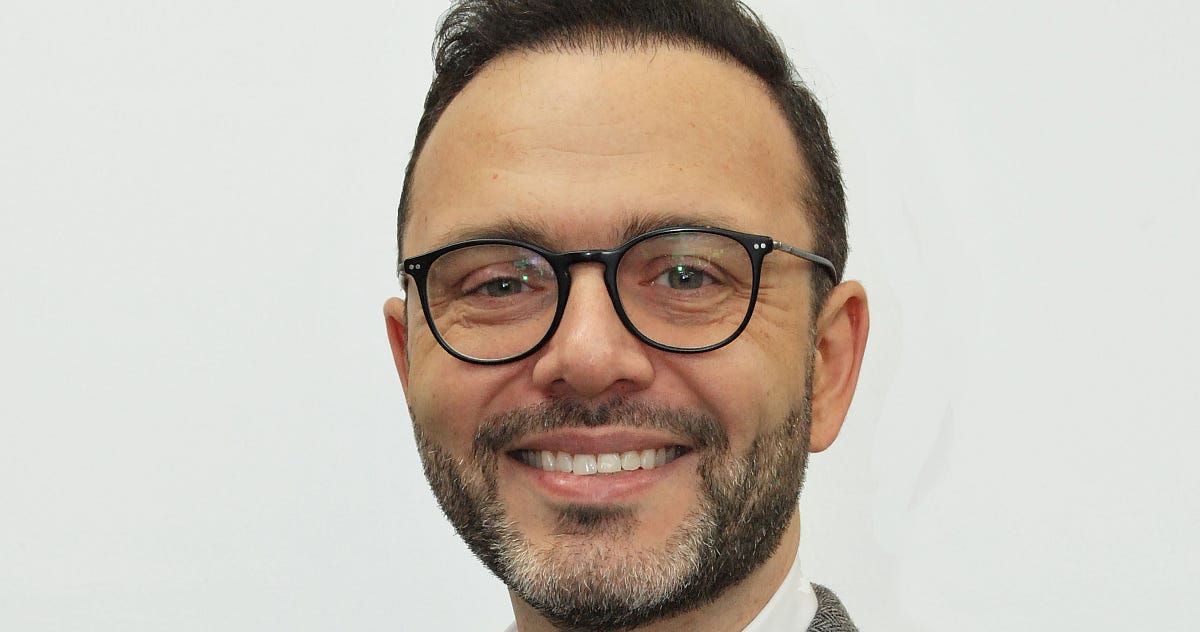
As a part of our interview series with prominent medical professionals called “5 Things You Need To Know To Create a Highly Successful Private Practice” I had the pleasure of interviewing Dr Hakam Ghabra, of Harley Street Eye Centre
Dr Hakam Ghabra is clinic director at Harley Street Eye Centre where he where oversees business development as well as consulting on medical and aesthetic procedures. A qualified ophthalmologist with a Masters in Ophthalmology from UCL, Harley Street is the seventh clinic Ghabra and his father have opened as a father-son business.
Thank you so much for joining us in this interview series! Before we dive in, our readers would love to “get to know you” a bit better. Can you tell us a bit about your ‘backstory’ and how you ended up where you are?
From an early age, my path to medicine felt almost predestined, rooted in the footsteps of my father — a dedicated physician and visionary entrepreneur, or as we fondly referred to him, a “doctorpreneur.” In 2004, this lifelong exposure took a formal turn when I was accepted into medical school. Embracing my father’s spirit of innovation and outreach, I began my journey not just by attending classes but by negotiating a partnership with the admissions department to open doors for more students from my hometown, Damascus.
However, as I graduated and felt the immense pride of becoming a doctor, that joy was overshadowed by the growing turmoil of civil war in Syria. My family’s safety was suddenly on the line, leading my parents to seek refuge in London just as I began my master’s in Ophthalmology. Standing at this crossroads, I knew my path had shifted — not only was I stepping into my career, but I was also called to step up as a pillar of support for my family in a time of profound upheaval.
And so, MAG Optics was born. With only £67 in my bank account and a simple napkin sketch of a medical device by my father as inspiration, I set out to bring that idea to life. I founded the company, navigating countless trials and learning through every misstep. Soon after, I moved MAG Optics to Boston, where I won a competitive spot at J-Labs, Johnson & Johnson’s prestigious incubation lab.
It was there that my vision for a fully integrated ophthalmic company began to crystallize. Realizing that MAG Optics had reached a pivotal point, I engineered my exit to allow the company to evolve into its next phase, entrusting it to new leadership for future growth. Following this chapter, I established The Harley Street Eye Centre, a strategic step forward in building the comprehensive vision I had been cultivating all along.
I’m a huge fan of mentorship throughout one’s career. None of us are able to achieve success without some help along the way. Who has been your biggest mentor? What was the most valuable lesson you learned from them?
I’ve always been the kind of person who puts my head down and gets the work done — that’s been my main approach to managing the heavy workload of an entrepreneur. But one of the most important lessons I’ve had to learn is the value of asking for help when needed. My father, who has been my business partner for the past 12 years, has been my closest mentor and guide. As a fellow medical entrepreneur, his advice has been invaluable in navigating challenges I couldn’t overcome on my own.
Our dynamic works well because he is the visionary, and I tend to focus on the practical implementation. However, there are times when my experience and knowledge simply aren’t enough to solve a problem. In those moments, I turn to him. One of the greatest lessons he’s taught me is that sometimes the most practical solution is the one that’s been sitting right in front of you all along. His ability to think outside the box has been a cornerstone of his success, and it’s something I’ve learned to embrace.
When traditional, “by-the-book” solutions fail, his approach encourages me to be brave, explore unconventional ideas, and even look to alternative industries for inspiration. This perspective has helped me find straightforward, effective solutions to problems that initially seemed complex. It’s a reminder that innovation often comes from being willing to step outside of your comfort zone and challenge established norms.
What made you want to start your own practice? Can you tell us the story of how you started it?
The family business has always been centred on establishing eye clinics and hospitals, so starting my own practice felt like a natural progression. When my family relocated to London from Damascus due to the conflict there, we began exploring opportunities to create something meaningful in our new home. The chance came unexpectedly during a conference in Denmark, where I met a well-known practitioner who was looking to sell his practice in London.
After a year of lengthy negotiations and renovation work, we officially opened the doors to The Harley Street Eye Centre in March 2018. At the time, I was balancing multiple commitments: a full-time role in the NHS and managing my innovation business, MAG Optics, in the United States. It became clear that I couldn’t fully dedicate myself to all three endeavours simultaneously. I made the difficult decision to leave the NHS so I could focus on growing the clinic and supporting MAG Optics during its pivotal phases.
That decision allowed me to invest the necessary time and energy into the clinic during its first two critical years. Building the practice has been one of the most rewarding challenges of my career, blending my clinical expertise with a long-held passion for entrepreneurship.
Can you share the most interesting story that happened to you since you began your career?
One of the keys to success is being ready when an opportunity arises, and for me, that starts with thinking outside the box. By adopting this mindset, I’ve often been able to spot opportunities that others might overlook. Equally important is having the systems in place within the clinic to act on those opportunities quickly and effectively.
A great example of this came from an impromptu meeting on a flight back to the UK after an eye care conference. I was seated next to a gentleman representing a company that manufactured an innovative, albeit very expensive, implant for a rare eye condition. As someone deeply involved in innovation, product development, and clinical care, I recognized the technology’s potential but also saw its financial impracticality for both clinics and patients. Before the flight ended, I mentioned that if they ever transitioned the technology into a wearable device rather than an implant, I would be keen to explore the idea further.
2 years later, the same gentleman reached out to inform me that the technology had been acquired by another company and adapted into a wearable device at a significantly more accessible price point. This opened the door to a collaboration that, three years later, has positioned our clinic as one of the UK’s leading centres for treating retinitis pigmentosa.
This experience reinforced two lessons: always be prepared to see potential where others might not, and always be ready to act when the right opportunity comes along.
Because it is a “helping profession”, some healthcare providers struggle with the idea of “monetization.” How do you address the business aspect of running a medical practice? Can you share a story or example?
This is a common dilemma for many healthcare providers. The need to serve others selflessly often feels at odds with ensuring your practice remains sustainable. It’s one of the reasons many doctors choose to leave public healthcare systems like the NHS. Grappling with the idea of monetization is difficult, but I’ve found that reframing it helps.
I see it this way: if you don’t take care of yourself — whether that’s financially, physically, or mentally — you won’t be able to care for your patients effectively. Burnout helps no one. Ensuring you’re right first is not selfish; it’s a necessary step to serving others sustainably.
From my experience, patients can also struggle with the concept of monetization in healthcare. I approach this by simplifying it: while healthcare may be considered a right, it is also an industry. Like any industry, there are costs associated with the expertise, time, and resources involved in providing high-quality care.
In our clinic, we focus on delivering value in every aspect of the patient experience. From carefully selecting patients who are appropriate for the treatments we offer to ensuring transparency and excellence in care, we’ve found that providing value naturally resolves concerns about monetization. Patients recognize and appreciate the expertise, support, and outcomes they receive.
Ultimately, as long as you are doing a good job and delivering meaningful results, it is not only acceptable but necessary to charge for the service you provide. Sustainability ensures we can continue to serve our patients to the best of our ability.
Managing being a provider and a business owner is a constant balancing act. How do you manage both roles?
Balancing the dual roles of provider and business owner is undoubtedly challenging, but I’ve found that discipline and a clear schedule are key. Structuring my time allows me to give both roles the focus they deserve without becoming overwhelmed. I’ve also learned the importance of understanding and respecting my own limitations.
In my current practice, I’ve chosen to see a smaller, select group of patients. This approach enables me to have more impactful, meaningful interactions from both a clinical and supportive perspective. By limiting my clinical workload, I can dedicate more energy to managing and growing the business effectively.
A significant part of this balance comes from relying on my team. Over the years, I’ve painstakingly built a group of skilled individuals, each performing specific roles that contribute to the clinic’s success. Trusting them has been crucial, as it allows me to delegate responsibilities and step back from micromanaging. With time, that trust has grown, and so has the efficiency of our operations.
By combining a focused clinical role with a strong, dependable team, I’ve been able to maintain the balance between provider and business owner, ensuring that neither aspect is neglected. Delegation, trust, and discipline are the cornerstones of making this balancing act work.
From completing your degree to opening a practice and becoming a business owner, your path was most likely challenging. Can you share a story about one of your greatest struggles? Can you share what you did to overcome it?
Balancing the dual roles of provider and business owner is undoubtedly challenging, but I’ve found that discipline and a clear schedule are key. Structuring my time allows me to give both roles the focus they deserve without becoming overwhelmed. I’ve also learned the importance of understanding and respecting my own limitations.
In my current practice, I’ve chosen to see a smaller, select group of patients. This approach enables me to have more impactful, meaningful interactions from both a clinical and supportive perspective. By limiting my clinical workload, I can dedicate more energy to managing and growing the business effectively.
A significant part of this balance comes from relying on my team. Over the years, I’ve painstakingly built a group of skilled individuals, each performing specific roles that contribute to the clinic’s success. Trusting them has been crucial, as it allows me to delegate responsibilities and step back from micromanaging. With time, that trust has grown, and so has the efficiency of our operations.
By combining a focused clinical role with a strong, dependable team, I’ve been able to maintain the balance between provider and business owner, ensuring that neither aspect is neglected. Delegation, trust, and discipline are the cornerstones of making this balancing act work.

Ok, thank you. Here is the main question of our interview. What are the 5 things you need to know to create a thriving practice, and why? (Please share a story or example for each.)
- Leadership starts with accountability.
When something goes wrong — a staff member underperforming, a frustrated patient, or an operational issue — the most productive response is to look inward and take responsibility as a leader. It’s not about self-blame but about acknowledging that you hold the power to address and resolve the issue. Leadership is about accepting responsibility for the team’s success and being proactive in finding solutions. This mindset has been invaluable in creating a culture of trust and accountability within my clinic. - Learn the skills you weren’t taught in medical school.
Running a practice requires knowledge of business development, marketing, sales, and operational processes. As a leader, you need to understand these aspects intimately, even if you’re delegating them. For example, I recruited a salesperson, Tamsin, from Amazon and trained her to apply her expertise to healthcare. By combining her understanding of sales psychology with my guidance on patient needs and communication, she now provides empathetic and reassuring first interaction with patients. This creates confidence and trust, making patients feel they’re in the right place. - Understand your patients beyond their diagnoses.
Patients are more than their medical conditions. I train my team to treat the person, not just their eyes. This means understanding their preferences, struggles, and concerns. Sometimes patients need a treatment explained in a way that resonates with them personally. This patient-focused approach has created long-term relationships, with patients returning to us for all their eye care needs. It’s about building trust and showing empathy, which fosters loyalty. - Recruit for character, not just skills.
I believe in hiring based on character because skills can be taught, but character cannot. A team you trust is one of the most valuable assets for a growing practice. For example, I ensure I’ve performed every role in the clinic myself before hiring for that position. This helps me identify the qualities needed for the role and train new team members effectively. It also enables me to delegate with confidence, freeing me to focus on what I call “£10,000 tasks” — high-impact activities that drive revenue and growth. - Find your niche and innovate.
To stand out, you need to offer something unique, whether it’s introducing a new treatment or refining a tried-and-tested one. At our clinic, we’ve become a centre of excellence for two rare conditions, leveraging exclusive treatments and patient-focused service structures to position ourselves as leaders in these areas. For any entrepreneur, I’d recommend maintaining an innovative curiosity — finding a niche that sets you apart and building your clinic’s operations, marketing, and patient care around it. It’s this focus on innovation that drives long-term success.
Each of these principles has been instrumental in helping us grow our practice into what it is today. Leadership, adaptability, patient understanding, team building, and innovation are the cornerstones of a thriving practice.
As a business owner, you spend most of your time working IN your practice, seeing patients. When and how do you shift to working ON your practice? (Marketing, upgrading systems, growing your practice, etc.) How much time do you spend on the business elements?
Balancing clinical responsibilities with the need to develop and grow the business is a challenge many practice owners face. In my conversations with fellow doctors, this struggle is a common theme. It’s crucial to create dedicated time to work on the practice, rather than just in it.
There are several ways to address this. One approach is to allocate specific, uninterrupted administrative days. On these days, you can focus on tasks such as marketing, upgrading systems, growing the practice, sales strategies, and HR. This time must be structured and meaningful to ensure productivity.
Another solution is to hire an experienced practice manager who specializes in system development and operational efficiency. This allows the owner to delegate critical but time-consuming tasks, while still maintaining oversight.
For me, I’ve taken a third approach. I dedicate 20% of my time to clinical work and 80% to business development. Most of this time is spent collaborating with my team to identify bottlenecks, inefficiencies, and operational challenges. I then work behind the scenes to create systems that address these issues. Once a system is ready, I train the team on how to use it, troubleshoot, and apply common sense to unforeseen situations.
This balance has allowed me to focus on long-term growth while ensuring the day-to-day operations of the clinic run smoothly. By combining thoughtful delegation with strategic oversight, I’ve been able to manage both roles effectively.
I understand that the healthcare industry has unique stresses and hazards that other industries don’t have. What specific practices would you recommend to other healthcare leaders to improve their physical or mental wellness? Can you share a story or example?
I’ve learned to establish clear boundaries for my time. Monday to Friday is work time, but the weekend is mine. This is when I relax, recharge, and focus on non-work-related activities that help me decompress. Of course, there are moments when that nagging voice in your head will urge you to use that downtime to “catch up.” When that happens, I’ve found it helpful to lean into that urge differently — by spending time educating myself instead of working.
For example, I use platforms like YouTube to learn new skills and explore ideas that can help me run the business more effectively. It’s a way to stay productive without sacrificing personal time. This practice has not only helped me improve professionally but also allowed me to remain dynamic and adaptive in managing the clinic, all while maintaining my mental wellness. Taking care of yourself is not just a luxury — it’s a necessity for sustaining your effectiveness as a leader.
Can you please give us your favorite “Life Lesson Quote”? Can you share a story about how that was relevant in your own life?
“If you’re the smartest person in the room, then you’re in the wrong room.” This quote has been a guiding principle for me, driving my constant push for growth and improvement. I love it because it shifts focus away from ego and instead fosters a hunger and curiosity to learn, evolve, and enhance not only yourself but also your work and business.
A perfect example of this in my life was when I decided to transform the functional structure of our clinic to prioritize customer and patient service. I had a clear vision of what I wanted to achieve, but I recognized that I didn’t have the expertise to implement it effectively on my own. Rather than letting pride get in the way, I brought in a paid consultant to help design and execute the changes over six months.
Had I attempted to take on the project alone, I likely would have grown frustrated and failed to deliver the results I envisioned. Instead, by acknowledging my limitations and seeking out someone with the necessary expertise, we achieved a complete transformation that has significantly enhanced the clinic’s patient experience. This experience reinforced the importance of surrounding yourself with people who challenge you and bring fresh perspectives to the table.
How can our readers further follow your work online?
I’ll admit, I’m a bit old-fashioned when it comes to online engagement. That said, I believe in being accessible. If anything I’ve shared here resonates with someone, I’m more than happy to connect directly — whether through a phone call or email — to share my experiences or help troubleshoot specific challenges.
The easiest way to get in touch with me is by submitting a contact form on our clinic’s website. My team will follow up and can arrange for us to connect directly. I truly value meaningful conversations and enjoy helping others navigate their own paths, especially when it comes to business, healthcare, or innovation. Don’t hesitate to reach out — I’d be delighted to hear from you.
Thank you for these great insights! We wish you continued success and good health!
AM
Written by
Authority Magazine Editorial Staff
Writer & ContributorContributor at Authority Magazine covering leadership, innovation, and industry insights.

Published inAuthority MagazineTop Lessons, Top Authorities · 42K Followers
Exclusive, curated interviews with the leaders and changemakers shaping tomorrow. Leadership lessons, industry deep dives, and executive profiles.
More from Authority Magazine
See all stories →A
Authority Magazine Editorial StaffBrandon Wade & Dana Rosewall on Why ‘Yes’ People are a Liability and the “Painful” 180-Degree Redemption Story
Tech27 min read

Y
Yitzi WeinerAmazon’s Lauren Stovall Talks AWS Nonprofit Programs, Enterprise AI and the Push for Unrestricted Funding
Tech22 min read
G
Gabriel Borden, Managing Partner at Arrow FundGuardians of AI: Kerstin Woods of Toshiba America Business Solutions On How AI Leaders Are Keeping AI Safe, Ethical, Responsible, and True
Tech17 min read
A
Authority Magazine Editorial StaffFrom New York Wild Child to Bali Wellness Queen: Inside Meghan Pappenheim’s Spiritual Empire
Tech20 min read