We place a strong emphasis on mentoring, which we’ve found to be particularly important for the development of neurodivergent workers, a key cohort within the people with disabilities community.
Tech
Disability Inclusion In The Workplace: Deloitte’s Kavitha Prabhakar On How Businesses Can Be Inclusive of People with Disabilities
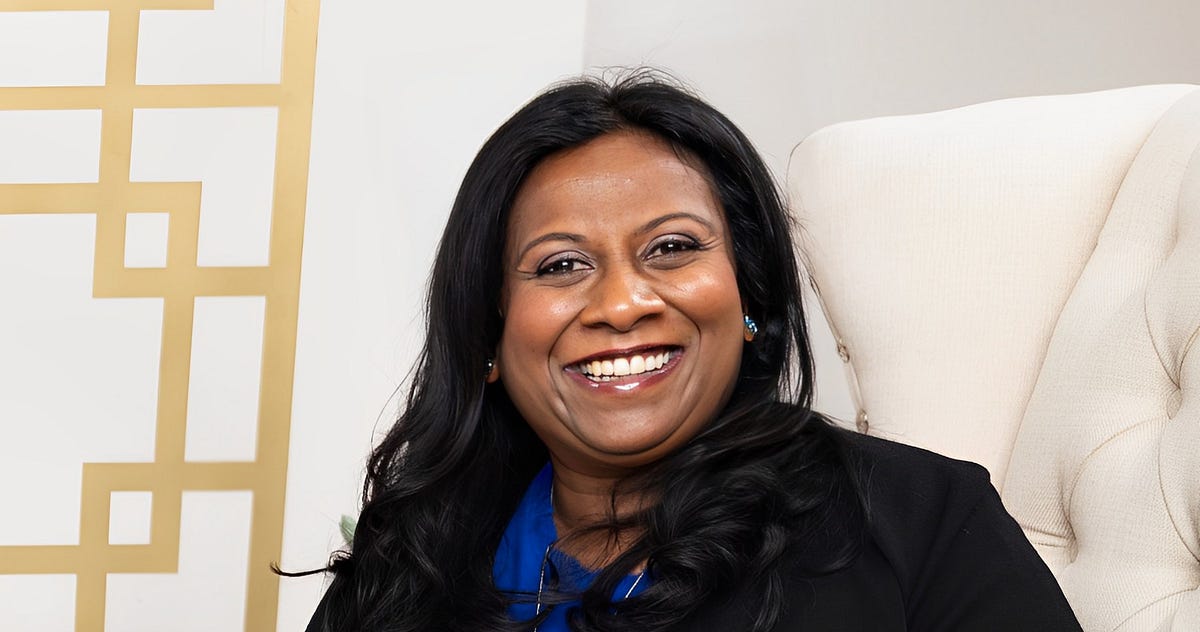
Thank you so much for joining us in this interview series! Before we dive in, our readers would love to “get to know you” a bit better. Can you tell us a bit about your ‘backstory’ and how you ended up where you are?
My name, Kavitha, means “poem” in Hindi, though I go by “KP” to remind me of my father, who has the same initials. I like to highlight this because I believe introductions and names are so important, and taking the time to learn about and correctly pronounce someone’s name is one thing each of us do to be more inclusive and deepen our connection with each other.
I bring a range of personal experiences to my role as Deloitte’s Chief DEI Officer — I am proud to be an immigrant, American citizen, a woman in technology, and mother of two teenagers. Each of those experiences inspire me to champion social change, which is how I’ve come to the work I do today.
While I own the Chief DEI officer title, the culture at Deloitte encourages every one of our professionals to be their own individual champion of DEI. The Chief DEI Officer role is one that is shared by more than 150,000 of us, and our people embrace it by showing up as allies, making business decisions that align with our shared values, and by celebrating each other not for how well they fit into our culture, but for everything they bring to it.
What are some of the most interesting or exciting projects you are working on now?
We’re focused on realizing the public commitments we’ve made, and are doing the quiet, hard work of creating fundamental changes to systems and processes. Everything we do has an equity lens, and we are laser-focused on the “E” in DEI. Ultimately, we want to drive more equitable outcomes within Deloitte and in society more broadly.
We are passionate about holding ourselves accountable for the work that we need to do, and our continued efforts around data transparency help us stay true to our commitments. To that end, my team spearheaded the launch of our first-ever data transparency report in 2021, and in July, we released our 2022 DEI Transparency Report. The journey around DEI is never ending and there is no state of nirvana. Our transparency report reveals that we do indeed have more work to do –but there are many bright spots. Our incoming class of Partners, Principals and Managing Directors is the most diverse in our organization’s 177-year history. The number of Black and Hispanic/Latinx professionals in our total workforce has increased by 43.8% since FY2020. Since the end of FY2021, we have increased overall racial and ethnic diversity from 44.4% to 46.8%, putting us on track to reach our goal of 48% by 2025.
We also continue to provide an option for people to identify as a person with a disability, and encourage such individuals to do so. Because disability status can change over time, we ask Deloitte professionals to update this identity regularly, and the representation of people with disabilities is 5.7% according to our 2022 transparency report. It is so important that we continue to listen and learn from our community of people with disabilities, and our transparency report is one way that we can do this. Accessibility was at the core of our design principles for the 2022 report with a particular focus on screen reader compatibility, color contrast, and reduce motion capabilities for graphs and images that build or move. We engaged with our People with Disabilities & Allies community to gather requirements and complete testing before launch of the report.
Fantastic. Let’s now shift to our discussion about inclusion. Can you tell our readers a bit about your experience working with initiatives to promote Diversity and Inclusion? Can you share a story with us?
Understanding the rich and complex identities of all of our people is a key part of inclusion. We are trying to better understand the experience of diverse cohorts, and empower people to thrive as their true selves. To that end, we are engaged in an organization-wide effort to achieve a more complete picture of the identities of our workforce. Since the summer of 2020, we began to offer our people expanded self-ID options, including expanded race, ethnicity, gender, and sexual orientation options. During FY2022, 77% of our US workforce reviewed and updated or confirmed their personal information. This gave us a more accurate representation of our workforce, and helped us reinvigorate our eight National Communities, including our People With Disabilities & Allies Community.
Last year, for the first time, Deloitte recognized and celebrated Disability Awareness Month across the US. In October 2021, through the efforts of the People With Disabilities & Allies Community, we engaged over 4,500 practitioners through multiple trainings, communications, and a speaker series. This year, we provided our people with even more trainings, speakers, and storytelling through social media “take-overs,” in order to celebrate and learn more about this amazing community, including the history of disability and employment. Training sessions provided an overview of what accessibility is and what it means to impacted communities, how to get started in implementing accessibility options, and what accessibility options are available within Deloitte. In an effort to fully encompass the complexities and contributions both in workplace and beyond, here at Deloitte, we celebrate this month as Disability Awareness Month. Follow our @lifeatdeloitteus Instagram account to see our social media takeovers including the stories of our people and our #WhyID campaign.
This may be obvious to you, but it will be helpful to spell this out. Can you articulate to our readers a few reasons why it is so important for a business or organization to have an inclusive work culture?
Our DEI strategy is one of the ways our Purpose comes to life. We want to make an impact that matters by creating trust and confidence in a more equitable society, and our DEI efforts are one of the primary ways we are able to achieve that goal.
Furthermore, having a diverse, equitable and inclusive workplace is a business imperative, one that today’s employees expect and demand. DEI has become a key factor in recruitment and retention, as seen in our research that showed 40% of workers would consider leaving an organization if they felt like they could not trust their leaders’ sincerity about DEI commitments. The organizations that embed DEI across all business functions and are open about the actions, challenges, and successes of their DEI journey are building trust, and strengthening their ability to win the war for talent.
Aside from what is legally required, what are some best practices that can make a business place feel more welcoming and inclusive of people with disabilities? If you can, please share a few examples.
It is imperative to foster a culture in which people can feel valued and heard, and where the wonderful identities of each person are celebrated. One of the ways we do this is through our national communities.
Our People with Disabilities & Allies community is the driving force behind our enhanced collaboration with Disability:IN, a leading nonprofit resource for business disability inclusion worldwide. As part of this expanded relationship, signed the Disability:IN CEO letter, a collective commitment to disability inclusion from the business community. In addition, Deloitte leaders participate on Disability:IN committees — cross-business roundtables that share and drive leading practices on various disability-related topics including accessibility, mental health, and recruitment. This involvement from the very top of our organization demonstrates how important and vital this community is to our overall culture and richness of our talent experience.
It’s also crucial to revisit processes and systems in order to continue to drive greater equity. For example, consider revisiting recruiting strategies, leadership styles, and accessibility considerations. Managers should identify how professionals work best, how they learn, and adapt their management and communication styles accordingly. Another way to enable the success of professionals with disabilities is to provide career journeys tailored to each individual, as the path toward one’s success and growth does not need to be predefined.
Lastly, we place a strong emphasis on mentoring, which we’ve found to be particularly important for the development of neurodivergent workers, a key cohort within the people with disabilities community.
Can you share a few examples of ideas that were implemented at your workplace to help promote disability inclusion? Can you share with us how the work culture was impacted as a result?
One program, in particular, is our Neurodiversity@Deloitte program, launched in collaboration with Specialisterne USA. Neurodiversity@Deloitte is a three-month virtual apprenticeship program with an opportunity for full-time employment upon successful completion. We believe that our efforts to recruit, retain, and nurture neurodivergent workers at Deloitte can give us a competitive edge from increased diversity in skills, ways of thinking, and approaches to problem-solving. You can read more about our perspective, here.
How can our readers further follow your work online?
Check out my LinkedIn profile, as well as Deloitte’s Diversity, Equity, and Inclusion page, and I encourage anyone interested in cutting-edge research to check out Deloitte’s DEI Institute.
This was very inspiring. Thank you so much for the time you spent with this. We wish you continued success and good health!
About the Interviewer: Eric L. Pines is a nationally recognized federal employment lawyer, mediator, and attorney business coach. He represents federal employees and acts as in-house counsel for over fifty thousand federal employees through his work as a federal employee labor union representative. A formal federal employee himself, Mr. Pines began his federal employment law career as in-house counsel for AFGE Local 1923 which is in Social Security Administration’s headquarters and is the largest federal union local in the world. He presently serves as AFGE 1923’s Chief Counsel as well as in-house counsel for all FEMA bargaining unit employees and numerous Department of Defense and Veteran Affairs unions.
While he and his firm specialize in representing federal employees from all federal agencies and in reference to virtually all federal employee matters, his firm has placed special attention on representing Veteran Affairs doctors and nurses hired under the authority of Title. He and his firm have a particular passion in representing disabled federal employees with their requests for medical and religious reasonable accommodations when those accommodations are warranted under the Rehabilitation Act of 1973 (ADA). He also represents them with their requests for Federal Employee Disability Retirement (OPM) when an accommodation would not be possible.
Mr. Pines has also served as a mediator for numerous federal agencies including serving a year as the Library of Congress’ in-house EEO Mediator. He has also served as an expert witness in federal court for federal employee matters. He has also worked as an EEO technical writer drafting hundreds of Final Agency Decisions for the federal sector.
Mr. Pines’ firm is headquartered in Houston, Texas and has offices in Baltimore, Maryland and Atlanta, Georgia. His first passion is his wife and five children. He plays classical and rock guitar and enjoys playing ice hockey, running, and biking. Please visit his websites at www.pinesfederal.com and www.toughinjurylawyers.com. He can also be reached at eric@pinesfederal.com.
EL
Written by
Eric L. Pines
Executive Contributor · Authority MagazineEric L. Pines is an executive interviewer and contributor covering leadership, culture, and business for Authority Magazine.
Published inAuthority MagazineTop Lessons, Top Authorities · 42K Followers
Exclusive, curated interviews with the leaders and changemakers shaping tomorrow. Leadership lessons, industry deep dives, and executive profiles.
More from Authority Magazine
See all stories →A
Authority Magazine Editorial StaffBrandon Wade & Dana Rosewall on Why ‘Yes’ People are a Liability and the “Painful” 180-Degree Redemption Story
Tech27 min read

Y
Yitzi WeinerAmazon’s Lauren Stovall Talks AWS Nonprofit Programs, Enterprise AI and the Push for Unrestricted Funding
Tech22 min read
G
Gabriel Borden, Managing Partner at Arrow FundGuardians of AI: Kerstin Woods of Toshiba America Business Solutions On How AI Leaders Are Keeping AI Safe, Ethical, Responsible, and True
Tech17 min read
A
Authority Magazine Editorial StaffFrom New York Wild Child to Bali Wellness Queen: Inside Meghan Pappenheim’s Spiritual Empire
Tech20 min read