I started blogging for fun in 2022. It was my 50th birthday year and I wanted to share my story.
Anxiety seems to be the dis-ease of our times. More people than ever are taking medications to help them cope with stress. Nearly everyone I talk to is consumed with anxious feelings that hijack any pleasure they could be getting from their lives. The pressure to “produce” combined with a perception of “not enough time,” combines to create anxiety, self-doubt, frustration and resentment. Resentment, then, is often taken out on your closest, most important relationships. As a part of this series, I had the pleasure of interviewing Dennis Kreba.
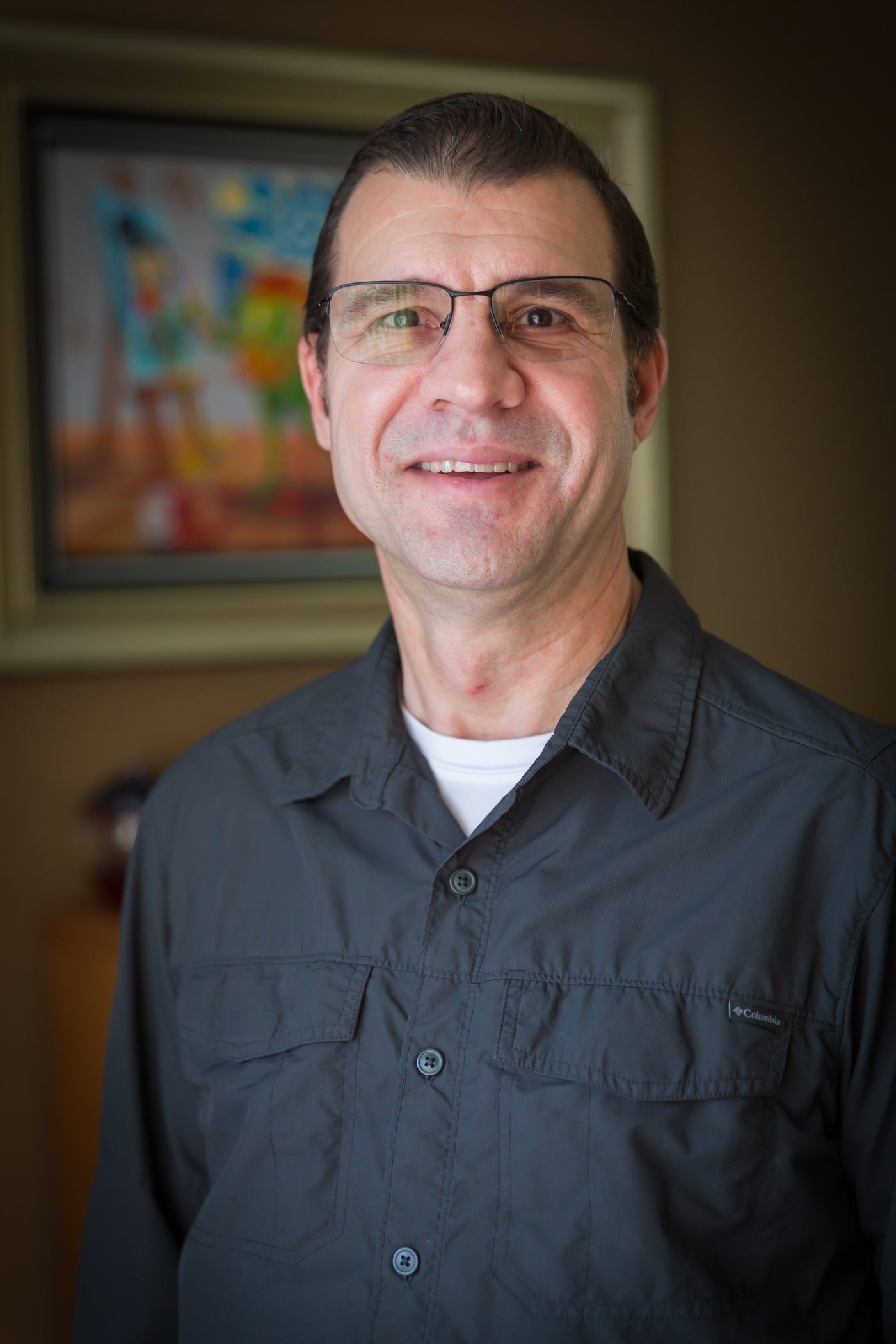
Dennis Kreba is a blogger, author and the founder of Dennis on the Run. He is a men’s wellness and sobriety advocate who writes about making healthy life choices. Dennis is inspired by the things that happen to him like windy days, a fallen over plum tree, or forgetting to pack underwear on a golf trip. Dennis was published in Run For Your Life – Lessons Learned From Going the Distance by Next Page Publishing Inc. in March 2024. Dennis’ book titled Dennis on the Run – A Men’s Survival Guide to Lasting Change by the same publisher is scheduled to be released on October 18, 2024.
Thank you so much for joining us in this interview series! Before we dive in, our readers would love to “get to know you” better. Can you tell us a bit about you and your backstory?
I am an IT Professional in my day-to-day career. I am an IT Project Manager. I’ve been in IT my entire career and I have been with my current employer for more than 15 years. But, my passion is men’s physical and mental wellness.
My life changed during COVID in 2020. I found myself isolated and alone during COVID. Because my employer established a work from home policy, I found myself suddenly with no commute and a lot more free time. I turned to playing video games and drinking to pass the time away. One night during an online gaming session with friends, I lost my cool in a drunken stupor with my best friend – “the incident”. When I called him the next morning to make sure we were okay, he replied “No we are not okay. I need a break from you.” I dropped to the floor crying and questioning my life. I vowed to make a change. I quit drinking that day and made it my mission to transform and make healthier choices. Dennis on the Run was born that day to represent the journey of running towards enlightenment and self-awareness.
I started blogging for fun in 2022. It was my 50th birthday year and I wanted to share my story. As time passed by, my blog focused on physical and mental wellness topics as well as learning lessons from the everyday things that happen to me. My writing became more serious in 2023, when I was accepted to write a chapter for Run For Your Life – Lessons Learned From Going the Distance. I signed a contract with the same publisher to write my own book titled Dennis on the Run – A Men’s Survival Guide to Lasting Change to be published in October 2024.
As a successful person in your field, have you or do you experience anxiety? And if so, how do you manage, reduce or eliminate anxiety so you can work efficiently and enjoy your non-work hours?
Yes, I experience anxiety. Some examples where I get increased anxiety are:
Getting trapped in tight spaces such as going for a magnetic resonance imaging (MRI) test.
Driving in heavy traffic.
Birds (…yes, I’m anxious around birds).
Heights.
Big events or big crowds.
I seem to have increased anxiety after the COVID shutdown. I think the isolation and lockdown triggered more anxiety in me. I got out of the habit of facing it. Instead, it was easy to follow the rules, stay home and avoid these situations. During COVID, no one was commuting in heavy traffic or attending big, crowded events.
As I age, I seem to have increased anxiety. Since 2020, I feel way more anxiety. I get more anxious leaving the house for big events with big crowds. I never really liked big crowds before, but it’s gotten worse.
My anxiety, despite working on it, doesn’t seem to get better for some things. I have worked with a psychologist to reduce my anxiety to a manageable level. For the most part, my anxiety is not crippling but I tend to avoid situations that cause anxiety, if I can. For example, if a bird gets too close, I’m running and ducking for cover! Haha!
If I can’t avoid these situations, I have a toolbox for handling my anxiety:
Deep breathing – When I’m anxious, I really focus on my breathing techniques that I practice with meditation. I really like deep breaths or some boxed breathing (Breathe in for a four count, hold for a four count, breathe out for a four count). I think focusing on your breathing is the #1 key when you are feeling anxious. It's okay to feel anxious. Controlling your breath and focusing on your breath helps bring your anxiety down a level or two to hopefully a manageable amount.
Grounding - Grounding is the act of centering yourself and acknowledging your feelings in that exact moment. I ground myself a lot when I am feeling anxious. To ground myself, I use physical touch and my breath. For example, if I get anxious in traffic, I might take a deep breath and squeeze on my steering wheel. This grounds me and calms me.
The 54321 method of grounding is effective and involves finding 5 things you can see, 4 things you can touch, 3 things you can hear, 2 things you can smell, and 1 thing you can taste.
Mindfulness – I focus on the moment and my surroundings. I think taking a moment to smell the flowers or feel the wind or sun on your face is very calming and can help with anxiety. Try using some of your senses in the 54321 grounding exercise to stay mindful.
Facing your fear – Sometimes, I just face my fear. I have a fear of heights and occasionally, I feel the need to beat it. I parachuted once. That must be the ultimate beatdown on anxiety. But most days, I can’t even climb a tall ladder without shaking and sweating!
Professional help – I work with a psychologist monthly to make sure that I’m doing my best to manage my mental health. Anxiety is one of many topics that we discuss. I recommend that if you are struggling with anxiety, you find a professional that you are comfortable working with. I also work with sports psychology specifically to manage my performance in golf and endurance events.
Humor – I use humor a lot in my life when I feel uncomfortable. A quick joke or laugh releases endorphins which helps manage stress. Every had a bad day and just feel like watching your favourite comedy movie. Give it a try!
Have you gone through a period of time in your life where you felt as though you were drowning in anxiety? If so, please share your experience and what you perceive as the reasons.
I found 2020 during COVID particularly tough on my anxiety. I have asthma so I was super scared about getting COVID. I played life ultrasafe and I barely left the house. Following the rules became my safety net as I only saw family or friends outdoors and masked up.
I basically hid out at home for an entire year. I hardly got out of the house; I only ventured out for groceries and alcohol. I was on my computer for work and playing games 12 hours a day and found myself abusing alcohol to cope in the evenings. I woke up most mornings hungover. It was my new life.
I was a mess and it felt like alcohol was the only way to cope. I was dazed and confused. Life changed so fast, without warning that we all did the best that we could. I was surviving but barely.
What or whom did you lean on to help you cope with anxiety?
My drinking eventually led to “the incident” with my best friend that changed my life forever. I quit drinking and discovered new ways to cope like deep breathing, grounding, meditation, and mindfulness. I also started walking and running and living a healthier life. All these things help with anxiety. I have a lot less anxiety when my mental and physical wellness are healthier and I’m making positive choices.
I also have an excellent relationship with my wife. I love my wife so much. She was there for me after the incident. She didn’t judge me or hold anything against me. She fully supported my transformation. After I got sober, I was able to communicate my anxiety more with her. For example, she knows that I’m super anxious about going to concerts. She loves music and concerts so much. She usually gives me the option to come but doesn’t judge if I decline tickets to a concert. She has some girlfriends that go to concerts with her. I prefer small venues, especially if we can get our own table and our own space.
Dogs…lots of dogs! Just kidding, I only have two poodles. But my pups are incredibly calming. Dogs only know unconditional love. There is nothing better than coming into a room to be welcomed by the wagging of a tail and those puppy eyes. Gosh. I love my pups so much. I love walking with my youngest, Jack, every day at noon for a stroll through our neighborhood.
Finally, I have a psychologist, Dan Cross, that I have worked with for nearly 20 years. I first met him in 2014 after a bad car accident. We worked through the trauma of the accident together. Dan has taught me a lot of these therapeutic techniques for managing anxiety. We currently meet monthly so that I can continue to grow. I keep a little notebook with items for discussion with Dan for each meeting.
What lessons did you derive from that dark period of time, that serve you now?
First, I found out that I can survive hitting rock bottom. I am resilient and I can grow through tough times. I was able to quit drinking. I was able to rebuild my relationship with my best friend. And I’m sharing my story with the world. I really became passionate about wellness and living your best life.
Something as simple as a deep breath and grounding yourself by putting your hand on your heart is so easy to learn and do. I can practically do this anywhere, anytime and I’m instantly calmer. It takes time to retrain your brain to calm down in the face of anxiety, but it can be done.
Maybe it sounds corny, but the biggest lesson that I learned is that I am a survivor, and I came back stronger than ever before. If I can do it, you can do it! That’s my message and lesson to the readers.
Do you have days or circumstances that still cause excessive stress?
Yes, the five items I mentioned earlier still cause me stress.
Getting trapped in tight spaces such as going for a magnetic resonance imaging (MRI) test. Due to a genetic condition, I get an MRI every 4-5 years and I get extremely stressed about it. I try to calm my breathing and keep my eyes shut as tight as possible so that I don’t see my surroundings. Geez. My heart rate just spiked writing about it!
Driving in heavy traffic. I have been in two bad car accidents that were the other driver’s fault. I’m very testy in the car when people drive erratically or unsafely like cutting me off, running red lights, tailgating, etc.
Birds cause me anxiety due to a couple of childhood attacks. This can be challenging on summer walks as the local geese love our neighborhood ponds and pathways. I generally give a very wide berth. It might sound strange, but I clap and quack like a duck at geese. They seem to leave me alone. I’m not sure why, but it works!
Heights. Mostly this is triggered by climbing things like a ladder. Even recreational climbing while tethered to a safety line causes me great stress. I know it’s safe, but as soon as I’m 10 feet up, I start shaking and sweating!
Big events or big crowds. I have been bullied at a couple of events in the past by rowdy people or drunk people. I’d rather just safely watch a hockey game from the comfort of my home than risk going out. I also think that the crowds trigger some anxiety from tight spaces for me. So, I’m fighting two anxieties going to an event. COVID made this one worse because most events were hosted online during COVID. I got used to enjoying entertainment from the comfort of my home.
What are your dependable “go to” strategies that you use to restore balance to your emotions?
I think it’s important to be self-aware and honest with myself. If I can be honest and identify my anxieties and stresses, then I can make a conscious effort to work through them. At that point, I am in control of how I deal with those situations rather than the situations controlling me.
Deep breathing and grounding are the most important strategies for me. By doing this, I’m telling my brain to calm down. I’m not in imminent danger. There is no reason for the fight or flight response. I can use the more logical part of my brain to think about the situation. And that is extremely calming.
Please name five tips, practices, beliefs or affirmations that you recommend to anyone going through a highly stressful time.
Top 5 Strategies for Overcoming Anxiety – YouTube link:
https://youtu.be/o_ZgZlZX9l4
1 . Take a deep breath. Practice your breathing. This is the most important thing you can do if you are stressed. It’s very calming. You may have to practice this a little, but your brain will start to realize that when you take a couple of deep breaths, it’s time to calm down.
2 . Ground yourself. I like putting my hand on my chest or squeezing something like a steering wheel or a stress ball. Do this while you are taking a couple of deep breaths. Once again, over time, you will train your brain that this means calm down.
3 . Practice meditation. There are lots of apps and websites that offer guided meditation. I recommend that you start with some introductions to meditation sessions that teach you how to breathe and meditate. I found this really helped during my first few weeks of sobriety. Without alcohol, my brain was all over the place. I judged myself. I was unkind to myself. My brain kept ruminating on the incident. Why did I let that happen? Slowly over time I learned to meditate and focus my thoughts. I was able to be gentler with myself and less judgmental.
4 . Be mindful. Be more present. A lot of anxiety comes from past events or past trauma. A lot of people worry about what might happen tomorrow. None of that matters if you are focused on the present moment. A sports psychologist once shared a golf mantra with me called “Next Shot” and it became a life mantra for me. In golf, it doesn’t matter what happened on your last shot, or what happened the last time you played the hole, or what hole is coming up next, the only thing that matters is your next shot. Focus on that. Next shot means focusing on what is right in front of you. Next shot is meaningful to me because I’m a golfer. Find your own positive saying that works to stay in the present.
5 . Remember, it’s okay to be anxious or stressed. I think it’s near impossible to go through life with no anxiety and no stress. If you get anxious, be gentle with yourself and remember, take a big, deep breath. Everyone experiences occasional anxiety. If you are experiencing high levels of anxiety that does not go away, I recommend that you seek professional help such as a psychologist or a therapist. They are trained to help and can offer you many ways to identify your anxiety triggers and provide coping strategies.
On a scale of one-ten, if 8-10 was your former, chronic level of anxiety, how would you score your usual level of anxiety today?
Generally, since I quit drinking and learned some healthy coping strategies, I think my chronic level of anxiety is much lower…let’s say 2-3 on a regular day. However, if I get too busy to practice self-care or forget, my anxiety can creep up higher to a 5-6 level. If I don’t make corrections in my life at that point, it can continue to climb.
Do you have daily practices that support you in maintaining peace, calmness or balance in your life?
Yes, I love this question.
Recently, I got too busy, and I tried to push through it. I ignored my mental health thinking that I was okay. I found my anxiety at a very high level. I needed to take some time to realize what was happening and reprioritize some items to be calmer again. This is where self-awareness is key. If you are in tune with yourself, you can recognize the signs of losing control. For example, I get very short and get angry at little things if I am not managing my anxiety and stress levels. If I find myself “sweating the small stuff”, I know that I’m not taking care of myself. So, I have these checkpoints with myself that I monitor.
Daily journaling also helps with this. In my upcoming book, I have a robust chapter on journaling. I believe that you can see patterns if you journal daily. I like to color code my days with a status: green (feeling good), yellow (feeling meh), and red (feeling down). Too many yellow or red days in a row means I need to evaluate my current priorities and situation and take action.
I really believe in daily meditation. I try to meditate for 10 minutes every day. I have found a lot of peace and growth with my meditation practice. Initially, I used a lot of guided meditation. Then, I read in a book one time that unguided meditation was the best preparation for real world application. If you are in a meeting, and need to quickly calm yourself, you can’t exactly put on headphones and listen to your favorite guided meditation. You need to have this practice ready to go and unguided meditation will do that. I like to turn on a little bit of ocean noise or forest noise and sit quietly with my thoughts. But once in a while, I still enjoy a guided meditation.
I also love to walk and run. I have a treadmill in my basement. After I quit drinking, I made it my morning habit to make coffee and walk on my treadmill in the morning for approximately 45 minutes. Eventually I started running and completed my first marathon in September 2021. Running became a new focus for me when I quit drinking. I lost 35 pounds in the first year. I really believe in taking care of your physical health and getting the recommended 150 minutes of moderate exercise a week. In May 2024, I completed my second marathon. I also took up cycling in 2022. I like to stay active and fit and I really love endurance sports like running and cycling.
Lastly, it’s not a daily practice, but I believe in talking to a professional like a psychologist. I really believe that every single person can benefit from seeing a therapist monthly. You can talk to a professional and come up with strategies for coping and dealing with your anxieties and stresses in life.
I would like to stress that having a good support team is so important in maintaining balance in your life. I have a whole “team” of family, friends and professionals that support me. I call them Team Dennis.
Was there any particular saying, person, or book that taught you the skills that enable you to escape or avoid the higher levels of anxiety that used to plague you?
I have done a lot of work with psychologists to maintain my mental health. They have provided me with a broad toolset to help deal with anxieties. I want to thank Dan Cross, John Stevenson and Katie Castle for your expertise and the hard work that we have done together to get me to this point.
Try to find a pro athlete or pro team that doesn’t have a psychologist or therapist on staff. People at the highest level of their craft have acknowledged that mental health is part of a healthy lifestyle and part of success. You simply cannot ignore your mental health to live your best life.
I also really like to refer to some positive sayings in life. Next shot is a term that I have referenced already that is a golf saying meaning be present. I use this often in my life.
“How bad do you want it?”, is also a saying that I refer to from the same named book by Matt Fitzgerald. Matt talks about mind over muscle in physical endurance sports. At times when I face high anxiety, I can ask myself “how bad do I want it?”. If I want something bad enough, like to attend a big, crowded event, then I need to have the mental strength to do it. It’s a bit of a “no pain, no gain” type of saying that helps me push through the anxiety when I really want something.
Thank you for sharing your wisdom with those who are reading this article. Are there also other ways you are sharing your wisdom?
As I mentioned, I am an active weekly blogger on my website. I have been published in one book this year and will have my own book published in October 2024. I’m also active on LinkedIn, Instagram, and Facebook on a weekly basis. You can find my social links on my website. In the future, I hope to be more active on YouTube and possibly start a podcast or vlog.
I am also planning to start a Dennis on the Run community this fall to support my book. I’m currently researching some options with my top choice being a Circle Community. It’s one of the ways that I’m planning to differentiate myself in the wellness world. Read my book and come join my community for support. Let’s grow together!
Wonderful. We are nearly done. Is there a person in the world, or in the US, with whom you would like to have a private breakfast or lunch, and why? He or she might just see this, especially if we tag them. :-)?
Interesting question. I think I would say Jeremy Renner. My wife adores him, and we’ve been following his story since his accident. He is an amazing person that has shown such resiliency. He is a total inspiration to people around the world. So, if I had a chance to meet someone for lunch, and my wife could come, it would have to be Jeremy Renner.
You are a person of enormous influence. If you could start a movement that would bring the most amount of good to the most amount of people, what would that be? You never know what your idea can trigger. :-)
I really have high aspirations for my book and community coming out this October. I’m hoping that I can create a safe space for men to be vulnerable and talk about their anxieties and problems without judgement. I would love to host dinners, meetups and retreats for men to meditate, hang with nature and build real relationships.
How can our readers follow your work online?
You can follow me at https://denniskreba.com/. I write a weekly blog. On my website, readers can subscribe to my blog, or my VIP Book Waitlist Club, or follow my other socials. I would love to have you join Team Dennis.
Thank you so much for joining us. This was very inspirational.
About the Interviewer: Nancy Landrum, MA, Relationship Coach, has authored eight books, including “How to Stay Married and Love it” and “Stepping Twogether: Building a Strong Stepfamily”. Nancy has been coaching couples and stepfamilies with transformative communication skills for over thirty years. Nancy is an engaging interviewer and powerful speaker. Nancy has contributed to The Washington Post, Huffington Post, Authority, Medium, Yahoo, MSN, Psych Central, Thrive, Woman’s Day magazine, and more. Nancy is the Founder of the only one of its kind online relationship solution, www.MillionaireMarriageClub.com. Nancy coaches couples across the globe in person and via Zoom. Nancy’s passion is to guide couples and families to happy lasting marriages where children thrive and lovers love for life.