I was definitely a kid of the 1970s, born in Queens, grew up in the Bronx, and found myself in Manhattan. Although neither of my parents was a professional musician, there was always music in our house.
Often when we refer to wellness, we assume that we are talking about physical wellbeing. But one can be physically very healthy but still be unwell, emotionally or mentally. What are the steps we can take to cultivate optimal wellness in all areas of our life; to develop Mental, Physical, Emotional, & Spiritual Wellbeing? As a part of our series about “How We Can Cultivate Our Mental, Physical, Emotional, & Spiritual Wellbeing”, we had the pleasure of interviewing Barry Goldstein.
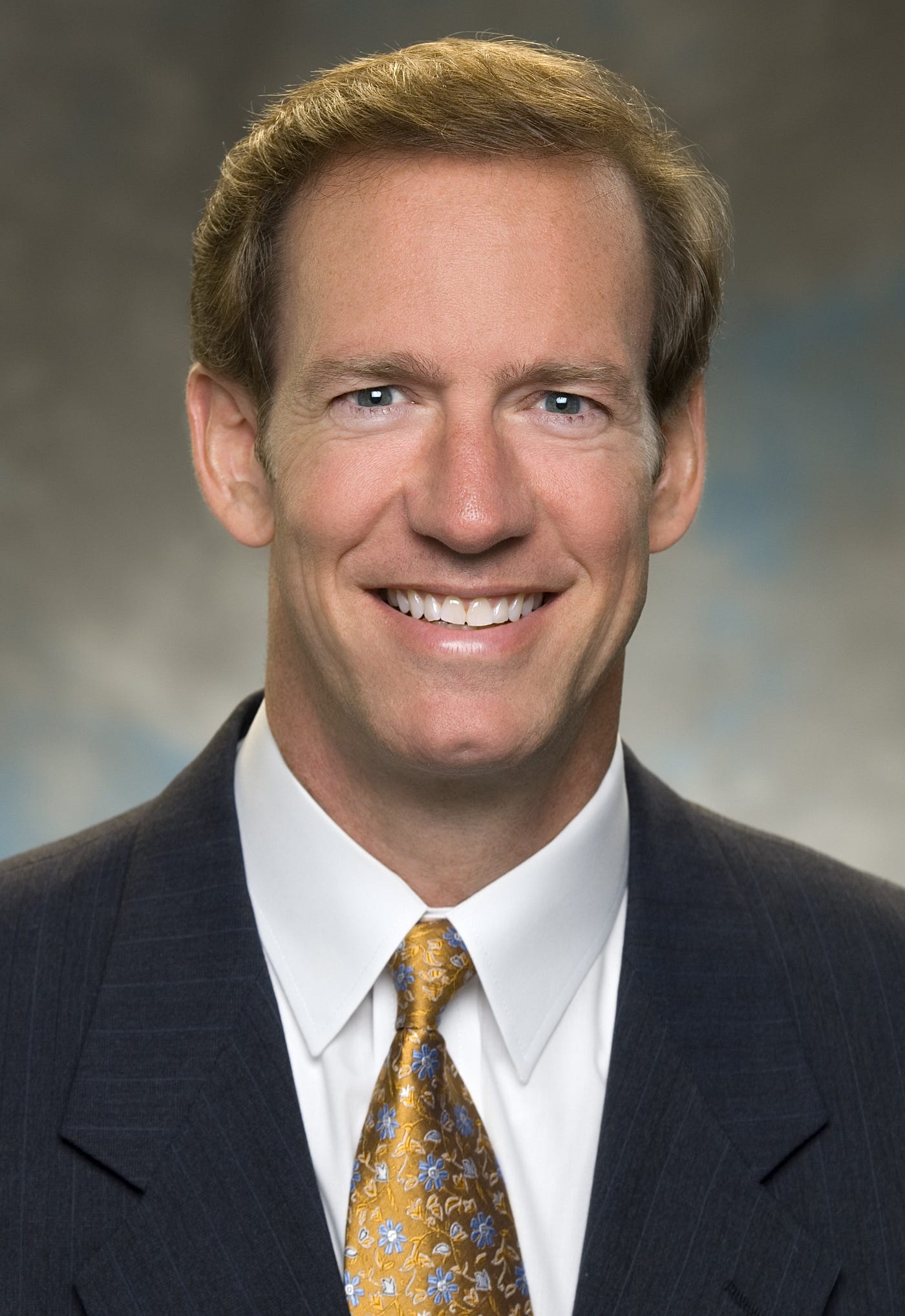
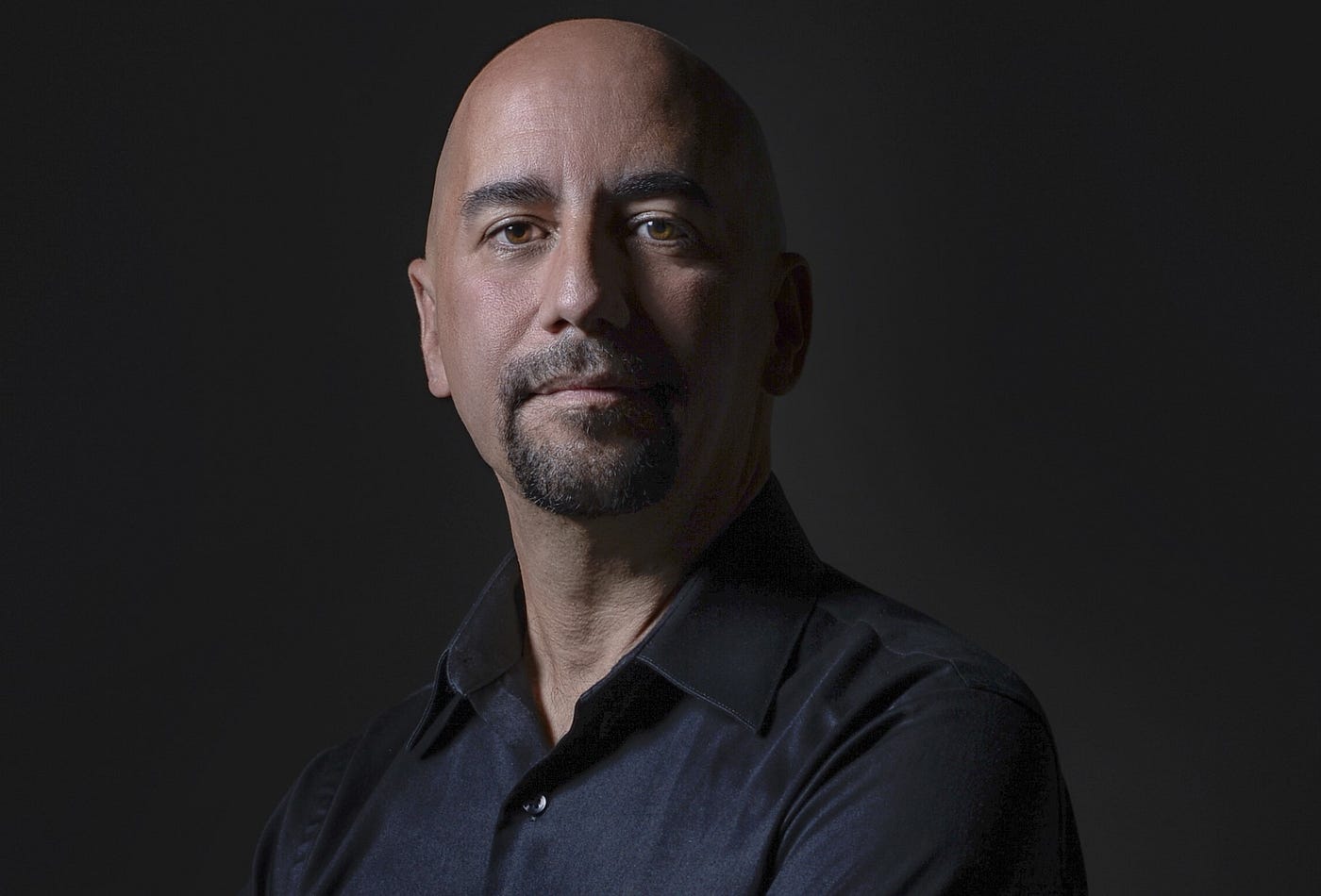
Barry Goldstein is a composer, producer, author, and a leading figure at the intersection of music, wellness, neuroscience, peak performance, and human potential, shown in peer-reviewed research to increase HRV coherence and alpha brain waves, key markers of deep relaxation. For over three decades he has bridged artistic expression with scientific innovation, harnessing music as a powerful tool for emotional balance, cognitive wellness, creativity, and transformation. He is recognized for his Grammy Award-winning production and collaborations with celebrities, and authors, and acclaimed for the use of his music in hospitals, hospices, medical practices, and corporate retreats and development programs.
Thank you so much for joining us in this interview series! Before we dive into the main focus of our interview, our readers would love to “get to know you” a bit better. Can you tell us a bit about your childhood backstory?
I was definitely a kid of the 1970s, born in Queens, grew up in the Bronx, and found myself in Manhattan. Although neither of my parents was a professional musician, there was always music in our house. My Dad was constantly singing, humming, or whistling something. And among my earliest memories is sitting with my Mom on the piano bench. I can still see my fingers underneath hers while she played “Yellow Bird” by Harry Belafonte. I still recall being fascinated by how the notes were struck and how they seemed to hang in the air afterward. I didn’t know the word resonance back then, but I was already intently aware of the space between those notes. Little did I know, years later this would become a big part of my musical style. From the moment I learned to play three chords on a guitar, I was drawn to the excitement of creating something from nothing. And when I got to college, I used the money my parents gave me for textbooks to buy my first synthesizer. That probably tells you everything you need to know about my priorities!
What or who inspired you to pursue your career? We’d love to hear the story.
My parents were foundational inspirations, although they inspired me in completely different ways. They both grew up during the Depression, so financial security was a big deal in our house. They wanted to believe I could make a living with music, but there was always that question: “Music’s a nice hobby, but what are you going to do for a living?” And getting objective critiques at home was pretty much impossible. I could literally sneeze into a microphone, and my mother would say, “Oh my God, it’s beautiful! It’s a symphony!” Meanwhile, I could write the next Mahler symphony, and my father would say, “You call that a song? You could do better than that.” Somewhere between those two extremes, I had to learn to trust myself and love what I was creating.
None of us can achieve success without some help along the way. Was there a particular person who you feel gave you the most help or encouragement to be who you are today? Can you share a story about that?
My dad. At 14, he took me to a music store to buy a standard entry Fender Telecaster electric guitar. But then the salesman opened a display case to show us a Gibson Les Paul and my jaw dropped. I remember saying, “Oh my God! That’s the guitar Carlos Santana plays! That’s the guitar Jimmy Page plays!” Even though it was so much more expensive than what he had planned, my dad saw the excitement on my face. He took me outside, and said, “I’m going to buy you that guitar, but I want you to promise me you’re going to stick with music.” Of course I made the promise. I’m sure all I was thinking about back then was just getting an incredible guitar. Looking back, I realize something much bigger happened that day. My father was putting aside his own fears about money and music and showing me that he believed in me. There were certainly plenty of times over the years when I considered selling that guitar to cover a couple of months’ rent. But I never did. I had made a promise.
Almost 30 years later, I ended up working with Les Paul himself and was recognized for my Grammy Award-winning production with him on “69 Freedom Special.” That guitar, that promise, and that experience all came full circle.
Can you share the funniest or most interesting mistake that occurred to you in the course of your career? What lesson or take away did you learn from that?
This one still makes me laugh, but at the time it wasn’t as funny… Not long after that Grammy, we went to see Les Paul perform at the Iridium in New York. As I was getting out of the car, a button on my pants snapped. My friend Bob, who was a couple of sizes bigger than me, generously offered me his belt. Let’s just say it wasn’t doing a particularly good job. Then Les invited me onstage to play with him. Now, here’s one of my musical heroes asking me to play, and all I can think about is how my pants might drop in front of the audience. So I said probably the dumbest thing you could ever say to Les Paul. “I don’t have my guitar with me.” He looked at me and said, “Well, I work for a little company named Gibson. I think we can find you a guitar.” There was no getting out of it!
So I got up and played the blues with Les Paul, holding on to that guitar in front of me with dear life. Then he asked me to tell the audience a little about myself, and I shared the story of my dad buying me my first Les Paul and the promise I’d made. I could feel my dad’s energy there with me. What started as a wardrobe malfunction turned into one of the most meaningful musical moments of my life. Sometimes you just have to say yes to the moment, even when you’re not quite prepared for it.
Is there a particular book that made a significant impact on you? Can you share a story or explain why it resonated with you so much?
One of the books that truly made an impact on my life is “Breaking the Habit of Being Yourself” by Dr. Joe Dispenza. I appreciated the practical way Joe explained that we don’t have to stay attached to the same thoughts, beliefs, and emotional patterns we’ve carried around for years. Something truly changed in me after I read this book. I first saw Joe in the film “What the Bleep Do We Know!?” Later I met him at a conference and gave him one of my albums. About a year later, he told me my music had helped his advanced students enter coherent alpha brainwave states. That began a long collaboration composing music for his meditations and composing music in real time at live events that aided in cognitive transformations.
Can you share your favorite “Life Lesson Quote”? Why does that resonate with you so much?
At another conference I attended I heard Dr. Wayne Dyer say: “Don’t die with your music still in you”. They hit me right in the heart. For more than 20 years, whenever I thought about singing my own songs, I’d hear the voices of my childhood buddies saying, “Dude, you write great songs but don’t sing!” It’s amazing how something somebody says when you’re young can stay with you for decades. Hearing Wayne that day gave me the strength to choose not to let those voices from the past make my decisions anymore. I released my first solo album at 44 and called it ”The Moment”, because that was the moment I finally committed to sharing my own voice. A year later, I was opening for Wayne Dyer.
I believe we all have a song in our heart that’s waiting to be sung. It doesn’t necessarily mean becoming a musician. It’s whatever part of you has been waiting for permission to come forward.
What are some of the most interesting or exciting projects you are working on now? How do you think that might help people?
I’m also creating new music for Dr. Joe Dispenza and releasing a collaborative album with Gregg Braden, whose flute playing complements my sonic soundscapes and world-influenced tracks. Another project I’m excited about is Sonic Signatures, where I create unique musical identities that help businesses and transformational leaders bring their missions to life through music. I call it Music to Magnify Your Mission.
OK, thank you for all of that. Let’s now shift to the core focus of our interview. In this interview series we’d like to discuss cultivating wellness habits in four areas of our lives: Mental wellness, Physical wellness, Emotional wellness, & Spiritual wellness. Let’s dive deeper into these together. Based on your research or experience, can you share with our readers three good habits that can lead to optimum mental wellness? Please share a story or example for each.
I like to think about music the same way we think about food. We pay attention to what we eat throughout the day, but we don’t always consider what we’re feeding our minds and emotions through music. I call it musical nutrition.
1. Breakfast for Your Ears
Think about the first music you hear in the morning. Is it helping you create the kind of day you want to have? I have a gratitude playlist that includes Louis Armstrong’s “What a Wonderful World” and Sly and the Family Stone’s “Thank You (Falettinme Be Mice Elf Agin).” Sometimes I’ll put my hands over my heart while I’m listening. No matter what’s happening in my life, I still have my heartbeat. I still have my breath. And that gives me something to be grateful for.
2. Take a Musical Vacation at Lunch
During COVID, when being confined to the same four walls were starting to get to me, I’d go on YouTube and search for music from India, Jamaica, or somewhere else I’d love to visit. I’d close my eyes and imagine being there. Five minutes later, I’d come back feeling refreshed. I hadn’t gone anywhere physically, but emotionally I’d taken a little vacation. Music can actually give you a multi-sensory experience that can shift your environment!
3. Musical Dessert Before Bed
I like putting on a beautiful soft ambient piece of music before going to sleep. I reflect on my day by asking myself — What went well? What challenged me? What am I grateful for? Rather than carrying everything into sleep, I give myself a chance to process it. And here’s something important: Schedule music into your day. We schedule meetings, appointments, and workouts. Why not schedule five minutes of music that opens your heart before a difficult conversation or an important presentation?
Do you have a specific type of meditation practice or Yoga practice that you have found helpful? We’d love to hear about it.
Composing is my meditation. Years ago, when I was burned out from producing music in New York, I started experimenting with something different. I’d set my metronome to 60 beats per minute, roughly the pace of a relaxed heartbeat, and play the keyboard for an hour. But instead of trying to compose something, I’d allow myself to decompose to the music. I had two rules. I couldn’t stop, and I couldn’t edit. Eventually, I’d reach this place where I wasn’t thinking about what note to play next. I was almost witnessing the music as it happened, sometimes hearing the notes before my fingers touched the keys.
Before they were calling it heart coherence, my own musical process brought me back to my heart. It wasn’t just the music and meditation, the creative process also became therapeutic. If you have something you love doing and it takes you into the zone or flow state, acknowledge it and make it a practice.
Thank you for that. Can you share three good habits that can lead to optimum physical wellness? Please share a story or example for each.
Believe it or not, I’m going to give you three suggestions of how to use music that can actually create physical results!
The first habit is protecting your sleep. We spend so much time talking about exercise and nutrition, but recovery matters too. I like to begin winding down about an hour before bed with softer, slower music instead of going straight from a busy day to sleep. Multiple studies have shown that listening to certain types of music can improve sleep quality.
The second habit is music and mindfulness, what I call connecting Your Inner Symphony. Your heartbeat is the drummer and your breath is the conductor. Put on relaxing music, pay attention to your breathing, and notice how your body responds. Studies of music interventions have found reductions in stress-related measures, while research on mindfulness and relaxation has also shown effects on cortisol, one of our stress hormones. I love that we can begin with something as simple as listening and breathing.
Do you have any particular thoughts about healthy eating? We all know that it’s important to eat more vegetables, eat less sugar, etc. But while we know it intellectually, it’s often difficult to put it into practice and make it a part of our daily habits. In your opinion what are the main blockages that prevent us from taking the information that we all know, and integrating it into our lives?
Knowing isn’t doing. You can read every nutrition book in the world, but if you don’t change your eating habits, nothing changes. And even when you start eating healthier, it’s easy to slip back into old patterns. I think about it like tuning a piano. If it’s been out of tune for years, the strings naturally want to pull back toward their old tension. Our eating habits work the same way. We may know what’s good for us, but years of conditioning can pull us back toward what’s familiar. Whether it’s the food we eat, the thoughts we think, or the music we listen to, lasting change comes from consistently making healthier choices. Sometimes we have to keep re-tuning ourselves until the new tuning holds.
And it’s like Grandma’s meatball recipe. You can follow every ingredient and every instruction, and somehow yours still doesn’t taste the same. I’ve always believed love is the secret ingredient in recipes and in health.
Can you share three good habits that can lead to optimum emotional wellness? Please share a story or example for each.
Be honest about where you are emotionally. Ask yourself, “Where am I now, and where would I like to go?” Then use music as a bridge to help you move the emotion. Growing up, my friends and I brought mixtapes to the park and we’d each get half an hour to play our songs. Some of us were dealing with really hard things at home, including parents who were in jail or were alcoholics. They created mixed tapes with songs that meant something to them, that represented something in their lives. I would watch these guys who were normally shut down, be moved by music that spoke to them and helped them express things they couldn’t with words. Music was a powerful tool for emotional regulation then and it still is. Music is a language…
Don’t bypass what you feel and learn to express yourself in healthy ways. A friend once spent nearly an hour with me over the phone that almost escalated into a full blown argument over something that was bothering him. I actively listened knowing that becoming defensive, overreacting or saying things I could not take back might damage the relationship permanently. In this situation it made sense to wait until he was not as volatile. Afterward I felt a lump in my throat and felt I needed to move some of the energy I held back. I wrote down everything I hadn’t said, stood in front of the mirror, read it aloud, and let the emotion move. The next day, the conversation had very little emotional charge left. Sometimes an emotion just needs somewhere to go. Expressing ourselves and acknowledging our own voice is a beautiful way to use sound for emotional wellness
Question limiting beliefs that were passed down to you. I grew up with that starving-artist narrative. But at some point I thought, “Why am I still listening to this cliche?” So I decided to immerse myself in songs by artists who actually overcame their obstacles, especially Bruce Springsteen. Their music helped me instead to truly believe in what was possible.
Do you have any particular thoughts about the power of smiling to improve emotional wellness? We’d love to hear it.
Some people say the eyes are the windows of the soul. But a smile can be as well. Sometimes it can communicate beyond words and send powerful emotional messages and comfort. What has amazed me about the smile, is I discovered you can actually hear them. I once produced a song with a singer in my recording studio, and I remember going over different vocal takes searching for the “right” nuances. After many passes, I heard one take that clearly stood out. And it was the one where we could both hear and feel the smile. Hard to explain, but very powerful.
Finally, can you share three good habits that can lead to optimum spiritual wellness? Please share a story or example for each.
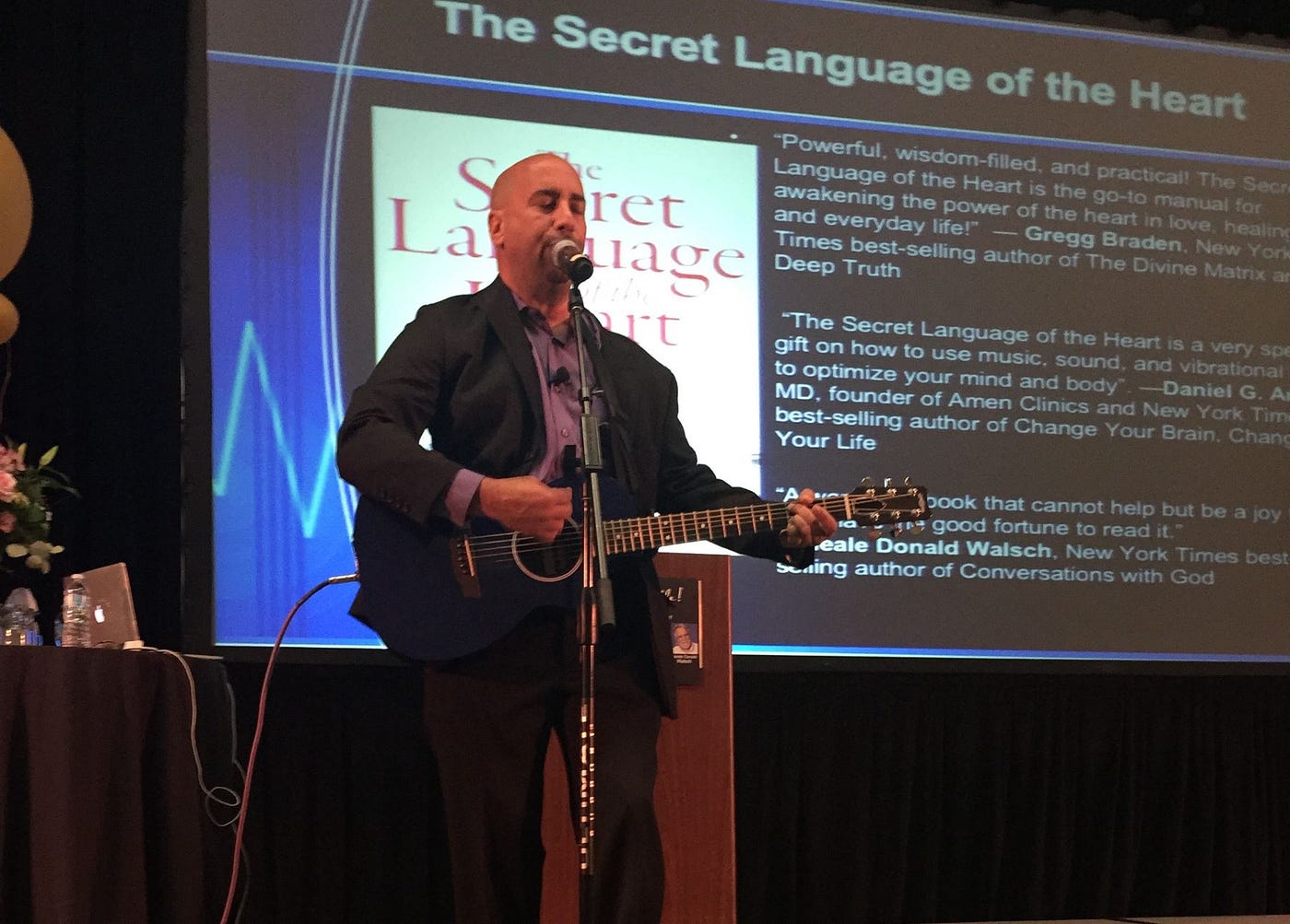
The first practice I’d share is chanting Om. In Sanskrit, Om, or Aum, is a sacred syllable associated with consciousness in Hindu traditions. It is said to contain every sound in the universe and for thousands of years people have used it as part of a spiritual practice. When I was writing The Secret Language of the Heart, I came across a study called “Neurohemodynamic Correlates of ‘OM’ Chanting” which revealed reduced activity in several limbic and related brain regions during audible Om chanting. In practical terms that means more calm and inner peace. I felt its power personally when my dad was passing. He wasn’t fully present, and I could sense his fear. Something inside me said, “Chant to him.” He was a Sinatra and Dean Martin guy, not someone who believed in chanting, so it felt a bit awkward, but I listened to my intuition. I placed my hands on his head and chanted Om. When I opened my eyes, he was looking right at me. I asked, “Dad, you know I love you, right?” He squeezed my hand. That was our last conversation and something that created a deepened spiritual relationship for years to come
The second practice is gratitude. Before the day gets busy, take a few minutes to appreciate what’s already here. Connect with your inner symphony — your heartbeat and your breath. Place your hands on your heart and close your eyes. Give thanks for the life force that moves through you. No matter what’s going on in your life, your heartbeat and your breath are vital signs that in this moment you are ok. Take a breath in and release some of the stress you may be holding.This process always helps me feel a deep spiritual connection to something beyond myself. Give it a try
The third is silence. When we give ourselves a moment to just be, take out the many stimuli of our day and appreciate silence, we can move out of the analytical mind and slow our thoughts to achieve a deeper spiritual connection. Have you ever had an idea pop in from nowhere while daydreaming in silence, or thought of someone you hadn’t talked to in years and then they call? When we are silent we can be more present to move into these flow states.
Do you have any particular thoughts about how being “in nature” can help us to cultivate spiritual wellness?
To me, nature is the music of the universe. Technology emulates nature. Want to hear true surround sound? Sit by the ocean…For me, taking a walk in nature is the ultimate spiritual connection. It provides evidence to me that anything can be created…Look at the colors in a flower, the flight of a bird, the miracle of a beautiful sunset. None of these things were created by us…that helps me find faith, and an unexplainable connection to something beyond myself…something that does not experience creative blocks!
Ok, we are nearly done. You are a person of great influence. If you could inspire a movement that would bring the most amount of good for the greatest number of people, what would that be? You never know what your idea can trigger.
I would like to inspire people to become the DJs of their own lives. Most of us have had experiences where music has affected us in powerful ways. Most of the time, they seem random. What would happen if we made these moments more intentional ? Music can be used to navigate energy. I’ve witnessed this when I used to listen to music in the clubs in New York City. The DJs read the crowd, played the perfect music to start the night, elevated the energy as the night progressed and then slowed everything to wind down. None of it was random, they knew their crowds. We also know ourselves. So what do you imagine could happen if we used music with this type of upscaled intention in our lives? Programming the start of our day with music for gratitude, an afternoon inspirational track to move some energy, and a peaceful piece of music at night to wash away the stress. Utilizing music in this way helps us conserve and expand the energy we have and that leaves more time to create the things we love in the world. If we all did what we love, I believe the world would change.
We are very blessed that some of the biggest names in Business, VC funding, Sports, and Entertainment read this column. Is there a person in the world, or in the US, whom you would love to have a private breakfast or lunch with, and why? He or she might just see this, especially if we both tag them :-)
Carlos Santana. When I was 14, I heard Carlos play and that made me fall in love with the guitar. Every note he played meant something and it didn’t feel like just notes on a page, it felt like notes from his heart. Something was speaking through him, to him and he was translating it back to the listener. The notes would hang in the air for what seemed like forever. I’ve heard many amazing guitar players, but in that moment I realized something was different about Carlos. There was a unique connection happening when he played. Experiencing that opened a door for me, a desire to make music a spiritual practice, not just art and entertainment. And that led me toward a new path in my life. If I had the opportunity, I would love to sit with him and talk about music, spirituality, connecting to the field, creating something from nothing, and what it means to reinvent yourself with every new composition.
How can our readers further follow your work online?
Additional Resources and Sound tools on my website: www.barrygoldsteinmusic.com Courses and music packages at www.thesoundoftransformation.com Instagram: https://www.instagram.com/barrygoldsteinmusic/ Facebook https://www.facebook.com/BarryGoldsteinMusic/ Linkedin: https://www.linkedin.com/in/barry-goldstein-0860b27/ Youtube https://www.youtube.com/user/4444oh/videos
Thank you for these really excellent insights, and we greatly appreciate the time you spent with this. We wish you continued success.