First, there’s a strong correlation between loneliness and depression. We are social creatures; we need other people to be happy and more importantly, we need community to be healthy. In an 80-year study on happiness, Harvard researchers found that the single most important factor for happiness was having close personal relationships — more than wealth, income, race, location, or other factors.
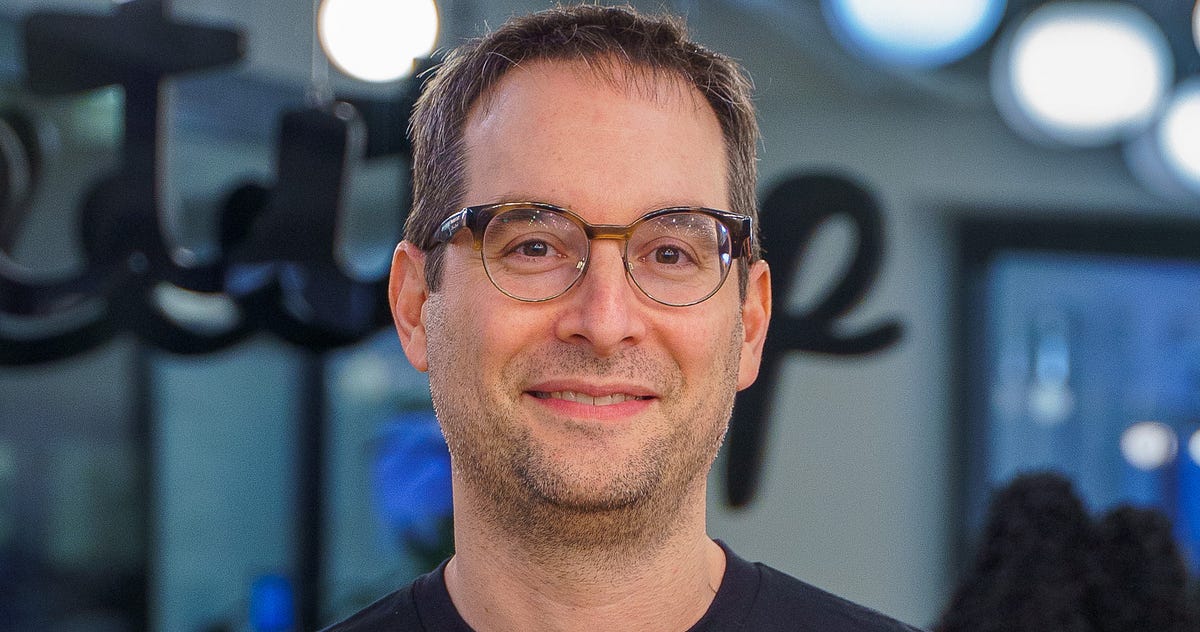
Our youth are facing a loneliness epidemic like never before. They have “social” media, but many are lacking healthy social lives. Many have likes and virtual “friends” but not real life friends. They can text and tweet but not speak and listen and connect. And they are feeling it. Humans were made for real live interaction, and we crave it when we don’t get it, or don’t even know how to go about looking for connection. How can we solve this loneliness epidemic that young people face? As a part of our interview series about the ‘5 Things We Can Each Do Help Solve The Loneliness Epidemic Among Young People ’ we had the pleasure to interview David Siegel.
David Siegel is the CEO of Meetup, the largest platform for finding and building local community. Prior to joining Meetup, David was CEO of Investopedia and, before that, President of Seeking Alpha. He hosts the podcast Keep Connected, a top 2% ranked global podcast that is dedicated to the power of community, and is the author of Decide & Conquer.
Thank you so much for doing this with us! Our readers would love to “get to know you” a bit better. Can you share your “backstory” with us? What was it that led you to your eventual career choice?
I value the power of community because I have lived it. Growing up in an Orthodox Jewish household, community was a way of life. We observed community rituals dating back thousands of years, like sitting Shiva, which involves bringing food and spending time with bereaved families. This also meant joyous celebrations of marriages and births. Community has played an integral role throughout my life, and that is why Meetup speaks to my soul.
Meetup is a company focused on building community. We’re a platform that connects people at events for their shared interests, and we know that great things happen when people come together in person.
Everything I’ve done and every job I’ve held has led me to this moment as CEO of Meetup. But my path differs from most CEOs. I got my start in human resources. Early in my career, I was an HR partner at DoubleClick, an adtech company that was eventually acquired by Google.
While at DoubleClick, the CEO approached me and asked me about my work. I told me my focus was on “motivating people, recruiting top talent, and helping to retain and engage our employees. I want to ensure that we have great communications throughout the company and that our organization is structured and aligned with company strategy.” He replied, “That’s pretty much what I do.” That conversation inspired me. I became intentional about every position I took, focusing on one day becoming a CEO.
At 1–800 Flowers, I ran mergers and acquisitions, strategic planning, and business development. I progressed to become the general manager and ran a number of different businesses for Everyday Health, a digital health publisher that had a successful IPO.
I went on to become president of Seeking Alpha, a technology company for startups seeking financing. It was a natural progression to Investopedia, where I held my first CEO role. That was a fun ride at Investopedia–the company tripled its revenue over a three-year time period.
Four years ago, I was approached by WeWork, the company that owned Meetup, to lead Meetup and as its first outside CEO who would take over for their founder Scott Heiferman, who led the company for 16 years. I consider myself incredibly fortunate to have this role and the opportunity to continue Meetup’s community-building mission.
Can you share the most interesting story that happened to you since you started your career?
The most interesting experience I ever had was a time when I was completely taken by surprise. When I was the CEO of Investopedia, we had a few years of astounding growth, multiplying the company’s revenue and growing the company from about 30 employees to 150 employees. It was one of the most gratifying experiences of my life from a career perspective.
One day the CEO of Investopedia’s parent company, IAC, reached out and said: “I know this is going to come as a surprise to you, but we just sold Investopedia.” Imagine it: I’m the CEO of the company and I had no idea the company was even being sold. I was in complete and total shock. It was a really strange experience because I had been out of the loop at an organization I really trusted. The experience was extremely valuable; I decided that I could never let myself be surprised at work again.
It has been said that sometimes our mistakes can be our greatest teachers. Can you share a story about the most humorous mistake you made when you were first starting? Can you tell us what lesson or take away you learned from that?
Not long after I graduated from business school, I was running a new program for Duane Reade, the New York pharmacy chain. We came up with an idea that was ahead of its time. We thought we would make the prescription pickup and drop off process easier for patients by having 24-hour Duane Reade express kiosks in accessible places like hospitals and senior living facilities.
The idea took off, and I was thrilled to grow in this leadership role. We grew the business from one kiosk to over 100, with dozens of employees reporting to me. Unfortunately, the model wasn’t quite right. The technology couldn’t really replicate the ease of the pharmacy experience. But I had lost sight of the real focus — doing what was in the company’s best interest — and was working toward the interest of myself and my career.
A new CEO came and realized that these kiosks weren’t functioning properly, then shut the kiosk business down. I learned a hard but crucial lesson. If you only focus on what’s in your best interest, you won’t have a long career. But if you focus on what’s in the best interest of the company and align that with your career, you can have an extraordinary future. The best thing to do for yourself is to be selfless. When you look to help people, collaborate and contribute to the success of the organization, good things will happen.
Are you working on any exciting new projects now? How do you think that will help people?
One of the most exciting projects that we have going on at Meetup right now is around incorporating artificial intelligence into our platform. Open AI’s ChatGPT product is a phenomenon that’s going to be no less meaningful than the advent of the Internet itself. We see AI as a major opportunity to assist Meetup group organizers with one of the most difficult tasks they face when starting a group: writing group descriptions.
We notice that group organizers with every intention of creating a group often drop out of the new group process when they reach the step of drafting a group description. By adding a ChatGPT-powered tool to help write a description, organizers can easily describe their group and move on to the important work of community building.
Can you share with our readers a bit about why you are an authority on the topic of ‘The Loneliness Epidemic Among Young People’?
The data on loneliness is quite disturbing. 46% of people regularly feel loneliness. This has been found to be more dangerous to your health than smoking a pack of cigarettes daily. There’s a recent advisory by the Surgeon General about the dangers of loneliness, and I encourage everyone to read his report.
I’ve been very blessed to have a close-knit group of friends and family, so I cannot claim that I’m a true authority on loneliness. But, as the CEO of Meetup, a company founded on the principle of bringing people together to connect, I know a lot about the severity of loneliness.
Before the COVID-19 pandemic, people generally came to Meetup to find other people who shared their interests: technology, books, sports, etc. Now, people are really searching for friendship. In fact, for the first time ever, “friends” was the top-searched term on Meetup, more than any single interest or activity. This showed us that people are more serious and more intentional about making connections than they are about any one hobby.
We released a report about this trend and other changes in how people are making friendships in Meetup’s State of Friendships report from January this year. We’re also making updates to our Member+ subscription to reflect the desire for interpersonal connection and make it easier.
Ok, thank you for that. Let’s now jump to the main focus of our interview. According to this story in the New York Times, loneliness is becoming an increasing health threat not just in the US, but across the world. Can you articulate for our readers 3 reasons why being lonely and isolated can harm one’s health?
- First, there’s a strong correlation between loneliness and depression. We are social creatures; we need other people to be happy and more importantly, we need community to be healthy. In an 80-year study on happiness, Harvard researchers found that the single most important factor for happiness was having close personal relationships — more than wealth, income, race, location, or other factors.
- Second, loneliness increases our feelings of anxiety and stress. At Meetup, we have thousands of different support groups, from parents of children with ADHD to individuals struggling with substance addictions. We have support groups around chronic illnesses. We’ve seen a significant rise in the popularity of support groups. Having a personal challenge whether it’s illness, grief, or another struggle is stress-inducing, but meeting people with similar challenges can relieve some of the anxiety. More people are learning this and looking to Meetup to find people who know what they’re going through and can provide help.
- The third and final item I want to say about loneliness is the impact it has on one’s physical health. Exercise is essential for health and wellbeing, but if you’re feeling lonely you might not feel like exercising. At Meetup, we have so many different communities where people run, bike, and rock climb together. But there are also groups that take walks together outside, gather for book clubs or other passions. When you have a community, you’re more likely to get out of your home and get active. Being alone and isolated is devastating to your mental and physical health. That’s why loneliness is often correlated with heart disease, stroke, and other serious health concerns.
Based on your experience or research, are children impacted differently than adults by the loneliness epidemic? How?
I can’t speak to the impact of loneliness on children specifically, because our platform is only people over the age of 18. There is no doubt in my mind that children have been affected by the loneliness epidemic and the major shift from in-person connection that I associate with my own youth that now largely takes place online.
The Surgeon General released another advisory on the impact social media has on the mental health of children. I think everyone should read it.
On a broader societal level, in which way is loneliness among our youth harming our communities and society?
As mentioned earlier, loneliness is highly correlated with other serious mental and physical health concerns. It also has a broader societal impact like political polarization and distrust of others.
It sounds obvious, but it’s truly important to meet and mix with people unlike yourself. It increases understanding and acceptance, and the only real antidote to ignorance and racism — it’s a critical component of a highly functioning society.

The irony of having a loneliness epidemic is glaring. We are living in a time where more people are connected to each other than ever before in history. Our technology has the power to connect billions of people in one network, in a way that was never possible. Yet despite this, so many people are lonely. Why is this? Can you share 3 of the main reasons why our young people are facing a loneliness epidemic today? Please give a story or an example for each.
There’s a decades-long trend around the increased use of social media and online gaming. Neither activity is bad in itself, but both of them contribute to the practice of people spending more time alone. Omar Acosta is Meetup organizer in Texas. At one point in his life he was addicted to video games, playing 8 to 12 hours every day. Gaming was his hobby and his social life. Then, Omar’s brother got him out to a rock climbing event on Meetup. He came back to the event and made the group part of his routine. Eventually, he then became the organizer of the group, and has hosted over 900 events. He went from being completely alone and isolated to building a massive community for friendships and outings.
I share Omar’s story because it’s an example of how technology can make us feel connected when we’re actually alone. There are video games you can play with other characters — you can even talk to other players and feel like you’re connecting, without ever meeting in person. It’s like drinking soda when you’re thirsty — it feels refreshing but you’re not really getting the hydration you need. You can feel like you’re connecting with others online, but you’re missing out on the deeper connection that requires spending time together face-to-face. At Meetup, our core value is that we use our technology to get people off technology to get people to connect in person.
I mentioned social media as another example of this. You can feel close to other people — even influencers you don’t know — and have what we call parasocial relationships. These relationships mimic real friendships, but they miss the genuine closeness of authentic friendships where you spend time together.
Finally, I’ll mention remote work. There are huge advantages to remote working, and at Meetup we certainly allow for employees to work across the U.S. and Canada. That said, for those who are within commutable distance of our headquarters in New York, we require one day a week in the office. We practice what we preach — there is something special that happens when people get together in real life. It’s easier to share ideas and spark creativity.
What signs would you tell parents, friends, or loved ones to look for in young people they think may need help? Can you please explain?
I think a retreat from the world is a sign of trouble. I’m a parent of three kids, so I know there are times when young people simply want to be alone. But if they’re not engaging with other people, not doing any kind of social activity for weeks or months on end, that would be a time to intervene. For individuals who are struggling with loneliness, the best thing that you can do is to help to support them by making it easier to socialize. Meet with them on their terms. Find out what they like: board games, walks, animals — anything! Find a way to work it into your time with them.
Start small, then gradually invite other people to join you. Make sure the person you care about has at least a little bit of time everyday where they are connecting, and are off technology. Make your outings regular events. Invitations like that can change a person’s life.
Ok. It is not enough to talk about problems without offering possible solutions. In your experience, what are the “5 Things Each Of Us Can Do To Help Solve The Loneliness Epidemic Among Young People?” Please give a story or an example for each.
Answered above.
You are a person of great influence. If you could inspire a movement that would bring the most amount of good to the most amount of people, what would that be? You never know what your idea can trigger. :-)
I don’t think of myself as an individual of great influence. Instead I’m a person who is very lucky to be able to work at Meetup, where the true influencers are our group organizers. The 260,000 different global communities on Meetup. They are what draw our 60 million members to the platform.
There is still so much room to grow. There are millions of people facing loneliness who could benefit from community, and there are hundreds of thousands of communities on Meetup eagerly seeking new members. Meetup facilitates millions of connections each year, but it could and should be billions of connections. It’s never lost on me how great the opportunity is, and how much the world needs more of Meetup.
We are blessed that some of the biggest names in Business, VC funding, Sports, and Entertainment read this column. Is there a person in the world, or in the US with whom you would love to have a private breakfast or lunch with, and why? He or she might just see this if we tag them :-)
A while ago I reached out to Angela Duckworth, a truly incredible behavioral psychologist, neuroscientist, and host of the podcast, No Stupid Questions. She wrote a powerful book on resilience called Grit. I reached out to her because she is someone who I deeply admire and I would love to find a way in which she and Meetup could collaborate. So, Angela, if you’re listening, or if you’re reading this, I would love to connect.
How can our readers further follow your work online?
If you resonated with the topics in this interview, I’d recommend checking out my book, Decide and Conquer. It focuses on the best practices for making smart, decisive actions in business and life. I share lessons I’ve learned throughout my career, and insights I’ve gathered on making tough decisions when the stakes are high.
I encourage your readers to follow me on LinkedIn or Twitter (@Davidmeirsiegel) and to follow Meetup on Twitter, Facebook, Instagram, and LinkedIn to learn more about Meetup and the power of community.
Thank you so much for these insights. This was so inspiring, and so important!
About The Interviewer: Pirie is a TedX speaker, author and a Life Empowerment Coach. She is a co-host of Own your Throne podcast, inspiring women in the 2nd chapter of their lives. With over 20 years in front of the camera, Pirie Grossman understands the power of storytelling. After success in commercials and acting. She spent 10 years reporting for E! Entertainment Television, Entertainment Tonight, also hosted ABC’s “Every Woman”. Her work off-camera capitalizes on her strength, producing, bringing people together for unique experiences. She produced a Children’s Day of Compassion during the Dalai Lama’s visit here in 2005. 10,000 children attended, sharing ideas about compassion with His Holiness. From 2006–2009, Pirie Co-chaired the Special Olympics World Winter Games, in Idaho, welcoming 3,000 athletes from over 150 countries. She founded Destiny Productions to create Wellness Festivals and is an Advisory Board member of the Sun Valley Wellness Board.In February 2017, Pirie produced, “Love is Louder”, a Brain Health Summit, bringing in Kevin Hines, noted suicide survivor to Sun Valley who spoke to school kids about suicide. Sun Valley is in the top 5% highest suicide rate per capita in the Northwest, prompting a community initiative with St. Luke’s and other stake holders, to begin healing. She lives in Sun Valley with her two children, serves on the Board of Community School. She has her Master’s degree in Spiritual Psychology from the University of Santa Monica and is an Executive Life Empowerment Coach, where she helps people meet their dreams and goals! The difference between a dream and a goal is that a goal is a dream with a date on it!
PJ
Written by
Pirie Jones Grossman
Editor & Journalist · Authority MagazineEditor and journalist at Authority Magazine, sharing in-depth executive interviews, leadership insights, and empowering stories from world-class founders and creators.

Published inAuthority MagazineTop Lessons, Top Authorities · 42K Followers
Exclusive, curated interviews with the leaders and changemakers shaping tomorrow. Leadership lessons, industry deep dives, and executive profiles.
More from Authority Magazine
See all stories →A
Authority Magazine Editorial StaffBrandon Wade & Dana Rosewall on Why ‘Yes’ People are a Liability and the “Painful” 180-Degree Redemption Story
Tech27 min read

Y
Yitzi WeinerAmazon’s Lauren Stovall Talks AWS Nonprofit Programs, Enterprise AI and the Push for Unrestricted Funding
Tech22 min read
G
Gabriel Borden, Managing Partner at Arrow FundGuardians of AI: Kerstin Woods of Toshiba America Business Solutions On How AI Leaders Are Keeping AI Safe, Ethical, Responsible, and True
Tech17 min read
A
Authority Magazine Editorial StaffFrom New York Wild Child to Bali Wellness Queen: Inside Meghan Pappenheim’s Spiritual Empire
Tech20 min read