I’m not excited about AI replacing humans. I’m excited about it killing busywork. So much time in law gets wasted on organizing files, tracking schedules, and logging hours. Clearing that clutter lets people focus on the actual work they went to school for.
Tech
Austin Worrell of Dialogica on Eliminating Administrative Friction, Protecting Client Privacy, and the Craft of Legal Innovation
The Dialogica CEO and former attorney discusses how building for human empowerment rather than replacement is the key to modernizing high-stakes, regulated industries like law and medicine.

As a part of this series, we had the pleasure to interview Austin Worrell.
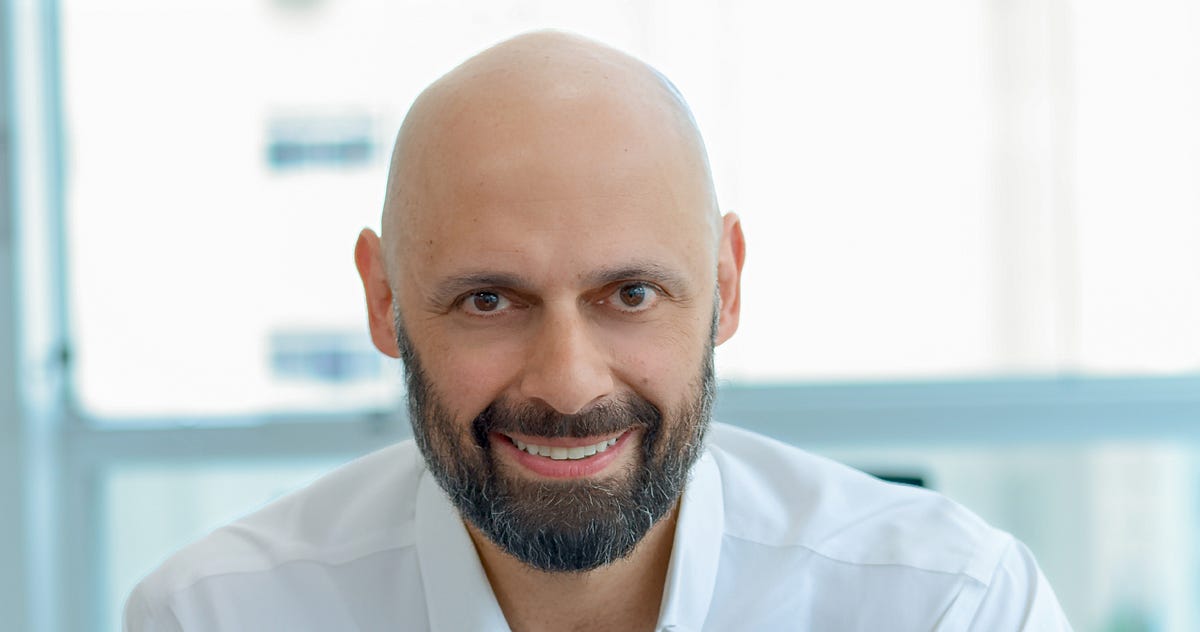
Austin Worrell is the Co-Founder and CEO of Dialogica, following his work at Gunderson Dettmer, where he advised tech companies and venture capital firms through formations, financings, and over $1.2B in M&A. His entrepreneurial background includes co-founding KINO, an AI streaming platform backed by Cathie Wood’s ARK Venture Fund and Sequoia, and EG Global, a blockchain company that reached a $500M market cap and donated over $4M to charity. Previously, Austin competed in mock trial and moot court for over ten years, winning a National Championship against Yale.
Thank you so much for joining us in this interview series! Can you share with us the ‘backstory” of how you decided to pursue this career path in AI?
Growing up in Ohio, I was always fascinated by the law, but I think the turning point came right before I left for college. My parents’ business got wiped out after a long legal battle and my dad called to tell me I was on my own. I’d always thought of lawyers like superheroes, so seeing my family lose everything really hit me and I couldn’t help thinking that if I’d been a lawyer, maybe I could’ve saved them that day.
I ended up at Miami University, where our mock trial team won nationals against Yale. While I was there, I worked at a local law firm and started toying with ways to streamline the boring admin work just so I could focus on the real legal stuff.
After law school at USC, I joined Gunderson, working on everything from early startups to big M&A deals. I loved being a lawyer, but the administrative side was brutal. I was burning hours every day on calendaring, timekeeping, and redlines instead of actual legal work.
When I talked to other lawyers about AI, none of them wanted a generic chatbot trying to do their job. They just wanted something to handle the background grind so they could actually practice law. That was what made me leave my practice and build Dialogica.
What lessons can others learn from your story?
- Find a way or make one. When I was suddenly on my own financially right before college, I was pretty much forced to tackle whatever is in front of me and just figure out how to get through it.
- Build for true user needs. Instead of creating AI that tries to do a professional’s job for them, focus on empowering humans by taking away the administrative grunt work.
- Frustration can drive innovation. Realizing that a job you love is badly designed in certain areas can be the exact thing you need to build something better.
- Craftsmanship matters. I’m inspired by brands like Apple, Ferrari, Tudor, and Cartier because every part of a product experience should feel intentional and beautifully executed.
Can you tell our readers about the most interesting projects you are working on now?
Right now, I am fully focused on building within Dialogica. We are creating an enterprise AI secretary designed for professionals in highly regulated industries. It is built to be local and secure where the customer has complete control. Rather than trying to replace a lawyer’s expertise, Dialogica automates routine administrative burdens so attorneys can devote their time to the high-level legal work they actually enjoy.
None of us are able to achieve success without some help along the way. Is there a particular person who you are grateful towards who helped get you to where you are? Can you share a story about that?
Matthew Rich — I wouldn’t be who I am today without Matt. He is one of the greatest lawyers I know, and someone who coached and pushed me to be my greatest self. He was my national championship mock trial coach, legal mentor, and on some of my toughest days in college, a true guardian angel. I will never forget the day we won the National Championship when he looked at me and said I needed a proper watch to wear. So he gave me his Tudor. And told me that when we win (not if), I could keep it, conditioned subsequently that I graduated law school and passed the Bar. I did all three. And I carried and wore that watch with me to every LSAT, law school final, the Bar exam, and now every law firm that we launch Dia at. A reminder that a simple yet powerful tool like my championship Tudor could carry me through to achieve my wildest dreams, just as we hope Dia carries every new lawyer or professional to their wildest dreams.
What are the 5 things that most excite you about the AI industry? Why?
1. Getting rid of the work around the work. I’m not excited about AI replacing humans. I’m excited about it killing busywork. So much time in law gets wasted on organizing files, tracking schedules, and logging hours. Clearing that clutter lets people focus on the actual work they went to school for.
2. Helping experts instead of trying to replace them. Everyone has been trying to build AI chatbots to do people’s jobs for them. What actually excites me is building tools that act like an extra set of hands. It’s about making real experts faster and better at what they do, not pushing them out of the profession.
3. Finally updating old-school industries. Fields like law and medicine have always been slow to change because standard software just couldn’t handle how complicated the work is. AI is finally giving old-school industries modern tools without cutting corners on quality or safety.
4. Leveling the playing field for smaller teams. When you strip away all the admin work, small teams can punch way above their weight. AI gives a two-person firm the kind of back-office horsepower that used to be reserved for giant corporate players only.
5. Moving past the hype to stuff that actually works. The first wave of flashy AI promises is settling down, and now we’re in the phase of actually building useful things. What fires me up is talking to real people, finding out what frustrates them day-to-day, and building practical fixes that solve those headaches.
What are the 5 things that concern you about the AI industry? Why?
- Trusting AI to do expert thinking. AI is great for busywork, but not so great at high-stakes judgment and strategy. Believing the hype that software can replace human reasoning is a recipe for disaster.
- Skipping the basics in career development. If junior professionals use AI to skip all the foundational work, they won’t build the core skills needed to handle complex issues later on.
- Cutting corners on privacy and security. In industries like law or medicine, privacy is non-negotiable. Too many AI startups are moving fast and breaking things with sensitive data just to launch quickly.
- Flashy hype instead of practical use. There’s a flood of “AI for the sake of AI” products. Slapping a generic chatbot onto a workflow usually adds more friction than it solves.
- Hallucinations in high-precision work. When AI hallucinates a legal precedent or contract term, it can ruin a business. Standard AI models still lack the accuracy required for highly-regulated industry work.
As you know, there is an ongoing debate between prominent scientists, (personified as a debate between Elon Musk and Mark Zuckerberg,) about whether advanced AI poses an existential danger to humanity. What is your position about this?
While Big Tech debates existential risks and government oversight, the real story for law firms is much simpler. The problem with cloud AI was never about models becoming too powerful. It was that sending sensitive client data to cloud servers was a bad idea from day one.
This isn’t a timeline debate or a regulatory debate, it’s an architecture problem. As tech leaders figure out how to safely govern their cloud models, Dia keeps things simple. We run locally on your hardware. Your client data stays on your device, reasoning happens on your desktop, and sensitive work never touches a cloud server. Local AI isn’t a policy debate, it’s just better engineering.
What can be done to prevent such concerns from materializing? And what can be done to assure the public that there is nothing to be concerned about?
We need better engineering. Safety should be built into the tech itself. By keeping data local on your own device, it never leaks to cloud servers in the first place. To reassure the public, tech companies need to deliver tools with clear boundaries. People trust AI when it works as a secure assistant that protects their privacy. People don’t want to use unpredictable products.
As you know, there are not that many women in your industry. Can you advise what is needed to engage more women into the AI industry?
I think it starts with treating women as equal to their peer male counterparts in our space. Technology still lags in the credibility it gives to female founders, and it is high time we abandoned antiquated biases. Dia would not be the technology or company we are today without our founding female members. Some of the world’s greatest technology and business leaders are women. Yet, the spotlight and benefit of the doubt tends towards the male. That is an active choice we can finally choose to leave behind. As a proud big brother of three women who inspire me every day, I think it is not just the right thing, but rather it is the necessary thing to foster a world that achieves its truest potential.
What is your favorite “Life Lesson Quote”? Can you share a story of how that had relevance to your own life?
Inveniam Via Aut Faciam. I will find a way or make one. This one has too many personal stories to reduce to one, but I do encourage readers to search up the quote and read the incredible Hannibal story.
How have you used your success to bring goodness to the world? Can you share a story?
Ask me in a few years– I think I am really just getting started. I hope my companies, products, and client work as both founder and lawyer have left some positive impact. It is what fuels me. A better humanity and a better world is the end goal. The rest is just the ups and downs of a life well lived.
You are a person of great influence. If you could start a movement that would bring the most amount of good to the most amount of people, what would that be? You never know what your idea can trigger.
I think less time locked to our devices, and more time in humanity and the real world is a future worth realizing. I would like for my generation of technology founders to take the stand to chase not just shareholder value, but human value, and realize that those actually often are one in the same.
How can our readers further follow your work online?
You can follow my work and keep up with Dialogica here: Website: dialogicaai.com My LinkedIn: linkedin.com/in/austinworrell Dialogica’s LinkedIn: linkedin.com/company/dialogicaai
Thank you so much for the time. We wish you continued success!
AM
Written by
Authority Magazine Editorial Staff
Writer & ContributorContributor at Authority Magazine covering leadership, innovation, and industry insights.

Published inAuthority MagazineTop Lessons, Top Authorities · 42K Followers
Exclusive, curated interviews with the leaders and changemakers shaping tomorrow. Leadership lessons, industry deep dives, and executive profiles.
More from Authority Magazine
See all stories →
S
Saul W. MarquezNoam Levine of FIZE Medical on Multidisciplinary Innovation and the Shift from Periodic Measurement to Continuous Understanding
Tech8 min read

S
Saul W. MarquezBenn Bluestein-Veyra of ExaVeyra Sciences: Why Scientific Transparency Is The Only Way To Win Over Skeptical Medical Directors
Tech13 min read

S
Saul W. MarquezDanielle K. Miller of The Pivot Nurse: Why Tech Adoption Fails When You Treat Clinical Workflow as an Afterthought
Tech19 min read
S
Saul W. MarquezTito Costa of Tecto Data Centers: How Strategic Infrastructure Placement Accelerates Regional AI Adoption
Tech13 min read