My goal is to help people develop sustainable habits that make people feel good, both in body and mind.
Total Health: Amy Fox On How We Can Optimize Our Mental, Physical, Emotional, & Spiritual Wellbeing
Often when we refer to wellness, we assume that we are talking about physical wellbeing. But one can be physically very healthy but still be unwell, emotionally or mentally. What are the steps we can take to cultivate optimal wellness in all areas of our life; to develop Mental, Physical, Emotional, & Spiritual Wellbeing?
As a part of our series about “How We Can Cultivate Our Mental, Physical, Emotional, & Spiritual Wellbeing”, I had the pleasure of interviewing Amy Fox.
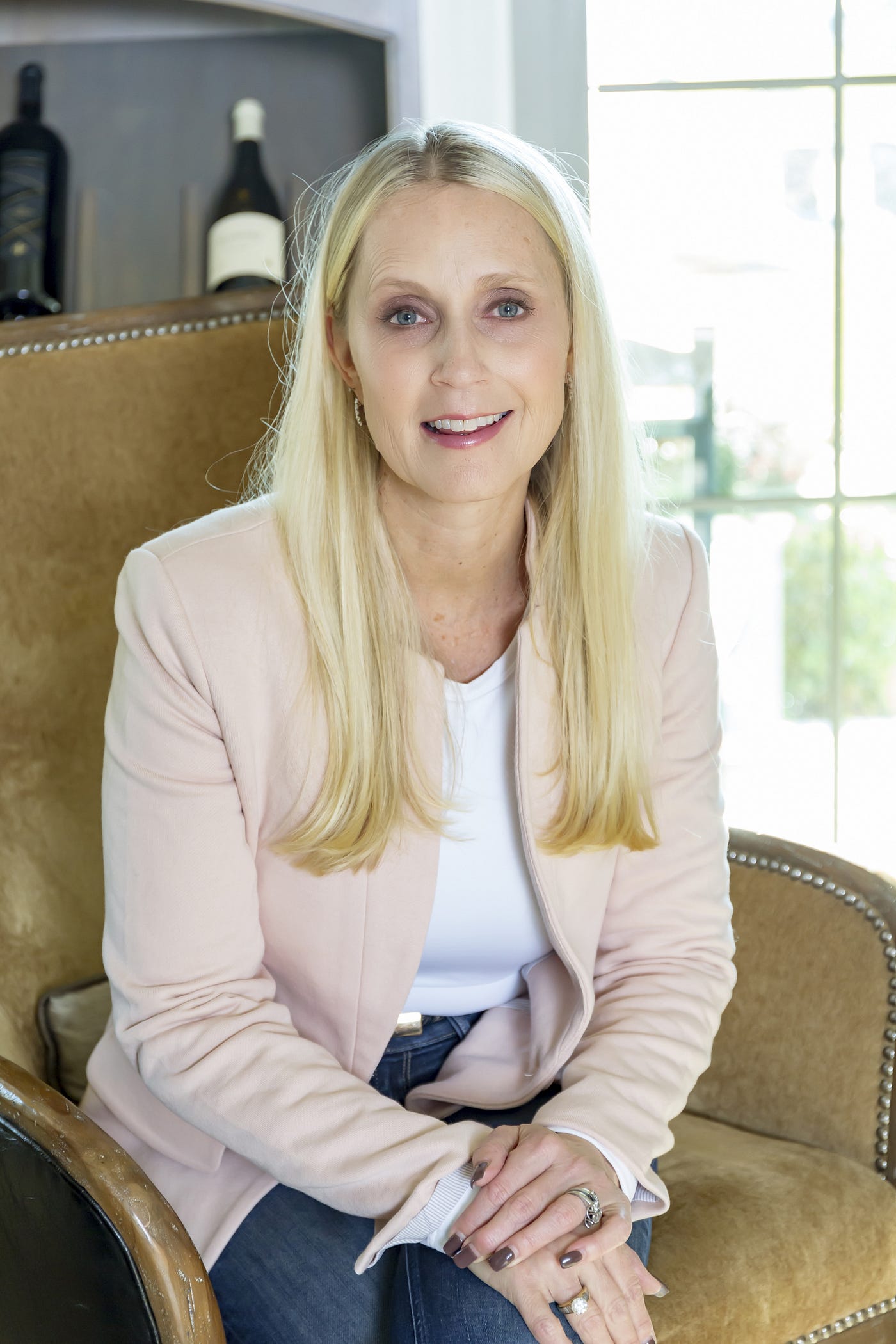
BIO: Certified Nutritionist Amy Fox is on a mission to educate everyone about how food choices affect our health and happiness. Amy holds a Master of Science in Food and Nutrition Sciences from Ohio University and is a Certified Functional Food Professional. She is principal consultant with TiER1 Performance Solutions and founder of Food and Mood Lab.
Having watched her mom’s lifetime struggle with Type 1 diabetes, Amy set out to learn everything she could about the benefits of good nutrition for health and disease prevention. While earning a master’s degree in nutrition through Ohio University’s Master of Science in Food and Nutrition Sciences, she gained certification as a Functional Food Professional, learning how food can help us heal, have more energy and live a resilient, healthy life. Her goal is to help people find sound information amid the glut of confusing and sometimes contradictory information on the internet.
Amy founded Accelerated Business Results (ABR), a learning development consulting company, in 2001 and served as its President and CEO until 2017. At that time she and her team joined forces with TiER1 Performance Solutions, allowing Amy to explore new opportunities combining her 20 years of business consulting and her passion for health and nutrition.
Based in Cincinnati, Amy has served as a consultant for Fortune 500 companies on their learning performance strategies and has been a speaker at events for the Cable and Telecommunications Association for Marketing (CTAM) and the American Society for Training and Development (ASTD). She’s been cited as an expert source on training approaches by The Cincinnati Enquirer and Selling Power magazine.
An endurance athlete, Amy competed in 29029 Everesting, a challenge to climb the height of Mt. Everest within 36 hours. She started Food and Mood Lab as a platform to help people learn how they can improve their health and fuel higher performance through better nutrition. Learn more at foodandmoodlab.com.
Thank you so much for joining us in this interview series! Before we dive into the main focus of our interview, our readers would love to “get to know you” a bit better. Can you tell us a bit about your childhood backstory?
Sure! I’m an only child and spent most of my childhood in rural Massachusetts. I enjoyed hanging out with my friends and playing sports, especially softball. I was a pitcher, played varsity in high school, and ended up playing in college. Being active was a way of life for me. I ran cross-country, which spurred my interest in running marathons later in life. My parents loved opening our home to exchange students. Throughout my childhood, I had a chance to get to know people from all other the world. We hosted students from Australia, Sweden, and China. One student from Sweden, Alex, ended up living with us for over a year. He was like family to us; to this day, we still keep in touch. This experience was one of the reasons why I love to travel.
What or who inspired you to pursue your career? We’d love to hear the story.
My mom inspired my passion for food and nutrition and the launch of the Food and Mood Lab. For 68 years, she suffered from the effects of Type 1 diabetes. Nutrition never played a part in managing her disease. It was complex and mysterious to her. Food choices made it challenging to control her blood sugar levels, eventually leading to heart and kidney failure. I always wondered what role improved nutrition may have had on her life.
Over the past 20 years, food and nutrition have been my curiosity and passion. I formalized this area of interest with a Master's in Food and Nutrition Science and a Certification in Functional Foods. What lights my fire about this topic is the potential of food as medicine. It's not like medicine; it is medicine. And, with so much information on social media and the internet, people are confused and overwhelmed. By 2030, it's projected that more than half of the U.S. population will be obese. Obesity is one of the main drivers of chronic disease. Poor nutrition is making us sick. I started the Food and Mood Lab in 2021 to provide simple information backed by science and practical approaches to creating momentum for a healthy lifestyle. My goal is to help people develop sustainable habits that make people feel good, both in body and mind.
Before the Food and Mood Lab, I founded Accelerated Business Results (ABR), a learning development consulting company, and served as its President and CEO for 16 years. In 2017, my company joined forces with TiER1 Performance Solutions, which allowed me to explore new opportunities.
None of us can achieve success without some help along the way. Was there a particular person who you feel gave you the most help or encouragement to be who you are today? Can you share a story about that?
I come from a family of entrepreneurs. My mom and dad owned a business for 25+ years, and both of their parents were also business owners. Their hard work and sacrifice were an example for me and were my "norm." I assumed that starting a business must be an option for me, too. When the time was right for me to explore launching Accelerated Business Results, I turned to my parents as counselors and mentors. I weighed the worst-case scenarios and was encouraged to go for it.
Can you share the funniest or most interesting mistake that occurred to you in the course of your career? What lesson or take away did you learn from that?
I remember we had a challenging client situation in the early years of owning Accelerated Business Results. This client awarded us a pretty big contract, but he occasionally came across as rude and condescending. Nonetheless, we decided to move forward on the project — it was one of our most significant wins! During the kick-off meeting with our teams, his temper flared, and he actually told someone on my team to "Pull on her big boy pants." I ended the call immediately and asked to speak with the client one-on-one. That was the first time I fired a client. The lesson I learned is that no deal is worth compromising your integrity. People are always watching and observing your actions, especially in business. And that moment (while scary!) was a moment for me to show my team that we don't stand for this behavior. My team still talks about that client. We laugh about it now!
One of the most important lessons I learned recently was on Whistler Mountain in Canada. I'm an endurance athlete, and I had an incredible opportunity in September 2022 to complete my second endurance challenge called 29029 Everesting. In this endurance event we take over a ski mountain, and you have 36 hours to climb the height of Mt. Everest. You climb up, gondola down, and repeat until you reach 29,029 feet, the height of Mount Everest.
This challenge was tough. During the first few ascents of 29029, the weather was miserable, the third ascent in particular. I got rained, sleeted, and snowed on. I thought I would never be able to finish. I broke down and considered quitting. I could have quit, but given how long I trained and traveled, that option was off the table. I decided not to think and just put one foot in front of the other. I put my head down and took one small step and then another. The lesson I learned is that everything is temporary. One ascent later, the rain stopped, the clouds broke, and it was a completely different (and better) situation.
Is there a particular book that made a significant impact on you? Can you share a story or explain why it resonated with you so much?
One the books that made an impact on me is “This Naked Mind” by Annie Grace. It's a bestseller and really ignited the sober curious movement! The book explores the influence that alcohol has on our culture and society and reveals how the unconscious mind has been subjected to a lifetime of conditioning about the benefits of alcohol. But it’s not what you think. It doesn't contain any rules, goals, or scaremongering; rather, it explores why people drink and provides tools and strategies that can apply to any habit that's not serving you. The frameworks in “This Naked Mind” are science-based and compassion-led approaches to reinventing a person's relationship with alcohol. I see parallels to overcoming food addiction, weight loss, and adopting a healthy lifestyle, so I'm becoming a This Naked Mind coach to integrate these strategies into Food and Mood.
Can you share your favorite “Life Lesson Quote”? Why does that resonate with you so much?
“If you have health you have hope...if you have hope you have everything.” ~Thomas Carlyle
I love this quote because it's a reminder that your health (mental AND physical) is everything and must be a priority. When you don't have your health, it can impact how you show up in all areas of your life. But we typically take this for granted until our health gets in the way. I just got back from a vacation with my family. We had been waiting all year for this trip! My son and I got sick, and were down and out for two or three days of the trip. Boy, was that a disappointment! Every choice is a chance to make healthy decisions.
What are some of the most interesting or exciting projects you are working on now? How do you think that might help people?
In 2023, I am launching a health coach subscription-based platform. It will make it easy and affordable to learn how to adopt a healthy eating lifestyle for the long run. The platform will provide content around leading topics in the health and wellness space, like breaking down the latest healthy eating trends, intermittent fasting options, and using foods to impact your mood. It will also include virtual coaching, sample recipes, and meal plans. The health and nutrition information on social media and the internet is confusing and usually focuses on quick fixes, an all-or-nothing approach, or restrictive meal plans. My platform will help people develop sustainable habits that make them feel good, both body and mind. And it will have a real and practical point of view. I’m a working mom, wife, and athlete — I get the challenges of juggling a lot. I'm turning 50 this year, and long-term health and hormones are a front-and-center topic for me. I plan on sharing real-world, authentic stories that work and people can relate to.
OK, thank you for all of that. Let's now shift to the core focus of our interview. In this interview series we'd like to discuss cultivating wellness habits in four areas of our lives: Mental wellness, Physical wellness, Emotional wellness, & Spiritual wellness. Let's dive deeper into these together. Based on your research or experience, can you share with our readers three good habits that can lead to optimum mental wellness? Please share a story or example for each.
Three tips for optimum mental wellness:
Walk: If there is one action to go all-in on, it’s walking. A new study released in 2022 showed that even small amounts of walking have been shown to improve depression or anxiety symptoms. I know that even a few minutes of walking helps me pivot from a bad mood. It's also a strategy to deal with cravings. I tell my clients to start by setting a five-minute timer or picking a spot to walk to on day one. Repeat the next day and add on one minute or 50+ steps.
Meditate: As I'm sure you know, meditation benefits are abundant! Like exercise for the body and healthy food for the gut, meditation helps to condition your mind. Research suggests that meditation may reduce blood pressure, anxiety, depression, insomnia, and symptoms of irritable bowel syndrome. Meditation is not just an activity to help us to relax. It directly impacts health and well-being, and neuroscientists have backed up these benefits by observing changes in brain scans when people meditate. I used to think that meditation was a woo-woo activity like sitting in the lotus position, humming, or chanting. But it doesn't have to be that way. I started with just five minutes a day and built it into my morning wake-up and evening wind-down routines. You can find free meditation via YouTube or free podcasts like Grounded Sleep. Meditation is now something I crave, and it has become integral in helping me better manage my responsibilities and passions. My sleep has improved, and in stressful situations, I've found that I have an extra "reserve," those few extra seconds of pause that allow me to react from a more calm and peaceful space.
Limit or Remove Alcohol: Many people take the edge off by drinking wine or having a drink. But alcohol is a depressant because it reduces the functionality of the central nervous system and slows down your whole body. Alcohol tricks your brain into thinking it's making you feel great by initially producing a high amount of dopamine. However, alcohol decreases the levels of the brain's chemical serotonin, which is crucial for balancing your mood. Unusually high or low levels of these chemicals can create symptoms of depression. For me, even a glass or two interrupts my sleep and triggers anxiety. What an unfair trade! Plus, evidence is adding up that no amount of drinking is safe. New research over the past few years has found that even small amounts of drinking may raise your risk for some types of heart disease and cancer.
Bonus Tip: Flip It! I recently watched a fascinating documentary called Stutz. Jonah Hill directed this project, in which he explores his therapist's relationship with his patients and his practical approach to mental health. The short film covers several tools for mental wellness. It's a beautiful documentary; I highly recommend it. I modified one of Stutz's tools that I call “flip it.” It’s helping me deal with situations when I feel upset or anxious. I run through each aspect of the problem that feels negative and force myself to flip it. I create a list (either a mental list or a journal) and convert at least one positive thing from every negative thought. I've found that feelings of despair or anger are often replaced with hope.
Do you have a specific type of meditation practice or Yoga practice that you have found helpful? We’d love to hear about it.
I've dabbled in mediation for years, hoping it would be a healthy habit I could stick to. I’ve done the research and know the potential benefits, like reducing stress and controlling anxiety. This past year I found Ziva Mediation. Rather than actively focusing on breathing or certain emotions, Ziva is the opposite of heightened concentration. The basis of Ziva is built on an ancient "mantra" technique. The technique calls for a mental state, almost like drifting off into a nap. It's meant to be as effortless as possible. Emily Fletcher, the founder of Ziva, also teaches that noise, discomfort, and other interruptions are okay, which made it even easier for me to adopt as a daily practice.
Thank you for that. Can you share three good habits that can lead to optimum physical wellness? Please share a story or example for each.
Small, Healthy Choices Over an “All or Nothing” Mindset
The "all or nothing" mindset is making us unhealthy; actually, it’s worse — I believe it’s making us feel sick, exhausted, ashamed, and even depressed. This is the primary reason so many diets fail. Often, the minute someone falls off the plan, they throw in the towel, call it a "fail," and go in search of the next idea.
People often overestimate the importance of a diet or plan and underestimate the value of making daily small, healthy choices. Developing consistent, healthy behaviors happens when we begin keeping promises to ourselves. I set daily activity commitments around Mindset, Activity, and Nutrition (MAN). I keep them simple and achievable to get a good streak and build momentum.
Use the “Above the Line” Daily Practice
One of the strategies that work for me is to use something I call “above the line.” This daily practice is simple and involves checking my overall physical and mental health to see if I am above the line. Above the line means above 50%. Above 50% (for me) means I have decent energy, have eaten relatively healthy, etc…Below 50% means I feel tired, have had less movement, and have not made healthy choices. Above 50% is my minimum threshold. At any time during the day, if I'm below 50%, I do whatever it takes to move above the line. This might mean moving, drinking water, choosing a high-protein snack, or walking. It'd be great to be 90%, but that's not a realistic approach. Stuff happens. The above-the-line practice helps me quickly course correct and incorporate small changes that align with a healthy lifestyle.
Ditch the Bag
The simplest and easiest place to start when making a healthy lifestyle change is to remove (or limit) anything bagged or boxed in your diet. Most of these foods are located in the center of the grocery store. Bagged or boxed foods are usually highly processed and high in sugar and calories. They often include artificial ingredients, refined carbohydrates, and saturated fats. These foods are not healthy for you. If eliminating boxed and bagged foods from your diet seems overwhelming, start with one meal or snack. Instead of the bag of pretzels, replace it with an apple, veggies, and hummus. Try it and learn! How often are you reaching for or cooking with boxed and bagged foods? What time of day is hardest?
Bonus!
Use a “More of” Approach
When you think of change and a healthy lifestyle, it usually means "less of" or more aggressive restrictions. Flip the thinking instead and consider:
- One more walk
- One more minute
- One more rep
- One more water
- One more healthy choice
Do you have any particular thoughts about healthy eating? We all know that it's important to eat more vegetables, eat less sugar, etc. But while we know it intellectually, it's often difficult to put it into practice and make it a part of our daily habits. In your opinion, what are the main blockages that prevent us from taking the information that we all know and integrating it into our lives?
I think grace is the number one "secret" of a healthy diet or weight loss. This might be surprising from a food and nutrition expert, but this is the most critical tool in your healthy eating arsenal. Here's why: Let's say you commit to a diet, life happens, and then you fall off the wagon. Most people beat themselves up and start the shame and blame cycle. In reality, what happens is we lose time. We would have been much better off if we were compassionate and told ourselves, "It's okay. What can I do to make some progress, or how can I get healthy tomorrow?” So, it’s this cumulative effect that graces give us over the shame and guilt cycle that can spin out of control. This can turn into days, weeks, or even years for some people. If you make grace your first rule, you'll be successful over the long run. If you don't beat yourself up or throw in the towel, chances are you'll keep making progress.
Can you share three good habits that can lead to optimum emotional wellness? Please share a story or example for each.
I use the "Above the Line" daily practice I mentioned above for my nutritional and mental health and as an overall healthy lifestyle hack. When I sense I'm erring below the 50% line, I complete a three-point checkpoint: Do I need to fuel my body better? Have I moved or exercised lately? Who have I connected with recently? If any answers are below the line, I do whatever it takes to move above the line. For example, it's common for days or weeks to go by that I haven't connected with a friend. If I am below the line here, I might stop and text a friend or schedule a coffee chat.
One micro habit I stick with is no phone, social media, or news for at least the first hour (or more) of the day. I start each day with a morning routine that includes journaling, gratitude, and setting intentions for the day.
Practicing gratitude and reflection is ingrained into my daily routine. I try sprinkling it in at least a dozen different ways throughout the day. Every day, I try to activate gratitude by telling (or texting) one person why I am grateful for them. I identify small daily habits that can trigger a moment of gratitude. For example, when I brush my teeth, I think of the things I am grateful for that happened in the last 24 hours. I do the same thing when I press my garage door opener. To me, it's not enough to think about it. You have to "do" gratitude.
Do you have any particular thoughts about the power of smiling to improve emotional wellness? We’d love to hear it.
Smiling can improve emotional wellness. In fact, research has shown that, too. Studies have shown that forcing a smile can still boost your mood and happiness level. One report even suggested that smiling can help us recover faster from stress and reduce our heart rate. When you smile to help others it feels good, and it's also an invitation that says you're friendly and willing to interact with others.
Finally, can you share three good habits that can lead to optimum spiritual wellness? Please share a story or example for each.
I look at spiritual well-being as a sense of harmony and internal well-being. The need for it is often downplayed more than other emotional and physical needs. Still, it is just as important, and it can profoundly impact our overall health and happiness because it gives us a sense of hope, belonging, and purpose. You can express spiritual wellness in many different ways.
#1 Serve Others
Giving something or serving others, whether donating time, money, or skills, can powerfully nourish you. It feels good to help others. You connect to people and your community, and it helps to promote social connection.
#2 Practice Yoga
Yoga may bring about physical benefits, but it's a practice that can improve your spiritual wellness, too. It creates a sense of calmness and inner peace by reducing emotional and physical strains on your mind and body. Reteach has shown that yoga can lower stress, improve the immune system, lower blood pressure, and reduce anxiety, depression, and fatigue. There are many options to practice yoga, which is taught at all levels. You can also do yoga for free in the comfort of your home. Check out Yoga with Adrienne or Yoga with Kassandra.
#3 Journal Daily
Journaling inherently creates silence for self-reflection and is a way to connect with your purpose, values, and ambitions. It can take little time, too. It's most beneficial to journal first thing in the morning because it sets my intentions and direction for the day. I use these questions as prompts: What are five things I am grateful for in the last 24 hours? What would that look like if I were to go through this day being the person I was meant to be? How do I want to feel today, and what three actions will help?
Do you have any particular thoughts about how being “in nature” can help us to cultivate spiritual wellness?
Spending time in nature is another important spiritual habit that can promote mindfulness and lower stress. Studies show that people who spend more time outdoors have better moods, improved attention, reduced anxiety, and more. One of the studies reported that spending at least 120 minutes a week in nature is associated with good health and well-being. There are countless ways to spend time with nature. Try a walk in a park, hiking, outdoor photography, gardening, fishing, journaling on your porch, or meditating in the sun.
OK, we are nearly done. You are a person of great influence. If you could inspire a movement that would bring the most amount of good for the greatest number of people, what would that be? You never know what your idea can trigger.
The United States is one of the most prosperous countries in the world, but our country has never been more unhealthy. Almost 750,000 Americans will die this year because of their diet. Diet-related deaths outrank smoking, and about half of U.S. deaths from heart disease are linked to poor diet. I believe my health coaching approach and the new 2023 platform will provide a better way and potentially help others to break up with “dieting" and find a positive solution that actually works to build a healthy lifestyle. One of the first steps we recommend is to have our clients stop dieting and ditch restrictive meal plans. The science-based and compassion-led approach allows people to reinvent their relationship with food and mood. The methods, frameworks, and tools in my system not only educate people on nutrition but provides what’s needed to find control, deal with food cravings, and stick with healthy habits for the long run.
We are very blessed that some of the biggest names in Business, V.C. funding, Sports, and Entertainment read this column. Is there a person in the world, or in the U.S., whom you would love to have a private breakfast or lunch with, and why? He or she might just see this, especially if we both tag them :-)
I am a massive fan of Robin Arzon. She's a former attorney-turned-global-Adidas ambassador, VP of Fitness Programming at Peloton, bestselling author, ultramarathon runner, and all-around badass. She's incredibly inspiring and motivational; her motto is "Do epic shit." She's also experienced a traumatizing brush with death that changed her approach to life entirely. I'd love to ask her who inspires her, and how she finds motivation when life is challenging.
How can our readers further follow your work online?
Food and Mood Lab: foodandmoodlab.com
Facebook: facebook.com/FoodAndMoodLab
Instagram: instagram.com/keepitrealwithamy
YouTube: youtube.com/@foodandmood1048
Thank you for these really excellent insights, and we greatly appreciate the time you spent with this. We wish you continued success.