You can have the budget and the executive support and still not be ready. I see that same pressure today. People are excited, they want to move, and there’s a fear of missing out. I understand it. I’ve been part of it. But I also remember what happened after we said yes.
Tech
Adam Dumey of World Wide Technology: The Readiness Quotient That Separates Sustainable AI Innovation From Expensive Failure
The enterprise AI leader explains why rushing into production without assessing an organization's true readiness quotient often leads to failure, and how radical candor drives professional excellence.
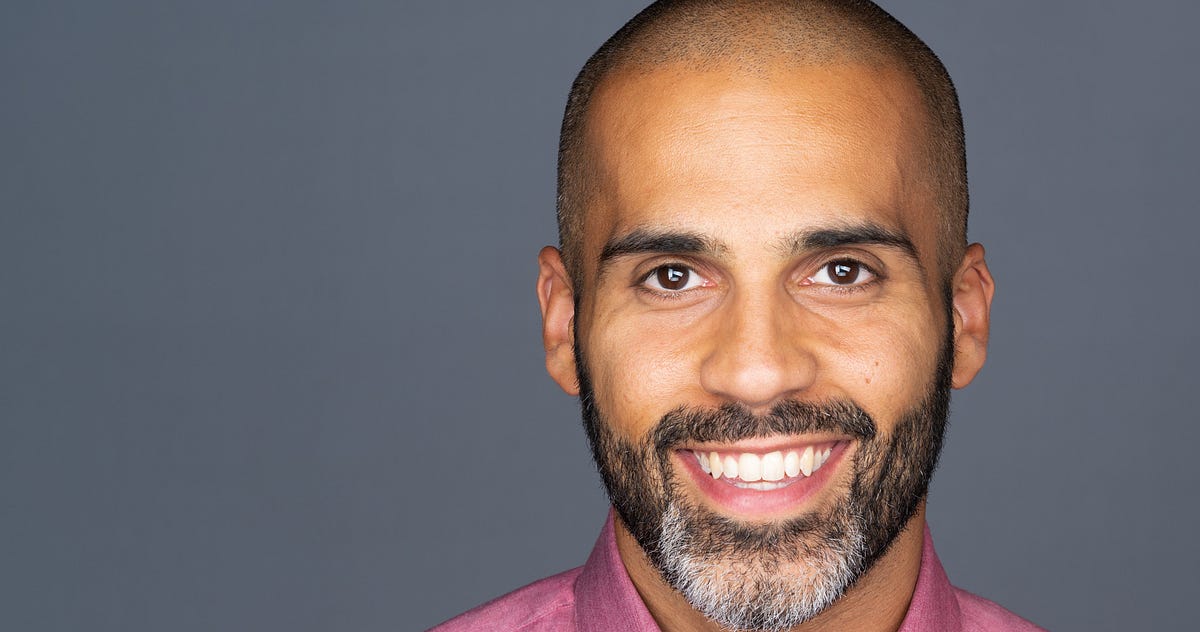
As a part of this series, we had the pleasure to interview Adam Dumey.
Adam Dumey leads enterprise AI at World Wide Technology (WWT), the St. Louis-based technology solutions provider that helps large companies and government agencies design, build and run their IT and AI infrastructure. In his role, he works with enterprise buyers as they move AI from pilots into production, helping them weigh model performance, quality and cost per token so their AI spending translates into real business outcomes. He is a founding member of the Tokenomics Foundation, which focuses on the economics of AI consumption. Before joining WWT, Adam held leadership roles at Amazon and IBM, bringing more than two decades of experience helping large organizations adopt and scale new technology.
Thank you so much for joining us in this interview series! Can you share the most interesting story that has happened to you since you began your career?
There are three that have stayed with me. They’re very different stories, but each one shaped how I think about leading people and working with technology.
Story 1: Readiness. One was during my earlier days in AI. We were advancing a knowledge-retrieval platform that was getting a lot of attention. A customer called and said they wanted it. We said it wasn’t ready yet. Their response was an offer to wire an eight-figure check within the hour. And we shipped it. That’s how quickly our position changed when there was an immediate reward.
I spent the next two years trying to make that platform deliver, and it never fully did. That compromise didn’t sit well with me. It got me thinking about what I call the readiness quotient. Is the technology ready? And is the organization ready to absorb it and get value from it? Those are two different questions. You can have the budget and the executive support and still not be ready.
I see that same pressure today. People are excited, they want to move, and there’s a fear of missing out. I understand it. I’ve been part of it. But I also remember what happened after we said yes. That’s the part I want executives to spend more time thinking about.
Story 2: Times of Change. The second was during COVID. I remember it was a Tuesday, and one of my customers dismissed its employees around noon. People were leaving this 27-floor building with monitors and computer equipment. There were no badge checks. I looked at the security guard and asked, are you okay with this? How do you know that’s their monitor? His response was that he needed to get home, too, and there were bigger issues in the world than a monitor.
That was a very vivid experience for me. When conditions change that dramatically, you find out how people behave and what they prioritize. What are the things we can let go of for a moment, and what are the things we absolutely have to protect? I think about that with AI because the conditions keep changing. Some of the processes we’ve relied on need to change with them but you still have to know where the boundaries are. Being agile doesn’t mean everything goes.
Story 3: Culture. The third was about culture. Someone on my team passed away from cancer. I notified my leader, and within an hour the news had made its way to the CEO. He reached out and asked for the wife’s number because he wanted to pay for the funeral. The chairman also reached out and offered to pay the family’s insurance premiums through the rest of the calendar year. These were private emails to me. There was no announcement. This was a very large company, and its most senior leaders still took the time to help one family in a situation that was so private and so intimate. That touched me. It gave me a North Star for the kind of leader I want to be. You can say employees matter. In that moment, they showed it.
None of us can achieve success without some help along the way. Is there a particular person who helped you, and how did you ask for their help?
I grew up in a Puerto Rican community where self-reliance was a deeply held expectation. Asking for help could be seen as a sign of weakness. You put your head down, worked harder, and found a way forward. I carried that mindset through college, business school, and my early career. I rarely asked for help because I associated self-reliance with competence.
That began to change when I worked for Rashida Hodge at IBM. Rashida, now Corporate Vice President of AI Business Solutions at Microsoft, became one of the most influential leaders in my career. Her support began before I knew how to ask for it. In our first meeting, she gave me direct feedback on something I had said. Then she made a commitment: “Working with me won’t always be comfortable, and I’m going to push you, but I promise that when we’re done, you’ll be better.” We worked together for approximately three and a half years, and she consistently honored that commitment.
Rashida took a proactive role in my professional development. She challenged my thinking and told me what I needed to hear, even when I wasn’t ready to hear it. I also came to appreciate the care and courage it takes to give someone difficult feedback, especially when you don’t know how they’ll receive it. She helped me understand that developing people was part of her responsibility as a leader. My responsibility was to remain open to that investment.
Nearly 10 years later, that experience still shapes how I lead. Managing people is a privilege, and it comes with an obligation to help them grow. That means being candid, setting clear expectations, and caring enough to have difficult conversations. The impact of that investment can last well beyond the working relationship. The most consequential help I received came before I knew how to ask for it. I carry that lesson into my own leadership, particularly with people who believe, as I once did, that they have to succeed entirely on their own.
Can you please give us your favorite “Life Lesson Quote”? Can you share how that was relevant to you in your life?
One I love is: “We can polite our way to mediocrity, or we can honest our way to excellence.”
It captures an important lesson from my experience, largely borne from my relationship with Rashida. Her candor showed me how important it is for leaders to share difficult feedback, even when doing so is uncomfortable. Avoiding those conversations might have been easier for both of us, but it would have withheld perspectives essential to my growth. As a leader, I try to examine my own hesitation before giving difficult feedback. Am I considering what will help this person, or am I protecting myself from an uncomfortable conversation? That distinction matters. Delaying feedback can allow an issue to grow while denying someone the opportunity to address it.
Candor also requires care. Feedback should be specific, thoughtful, and delivered with respect for the individual. The purpose is to help someone understand what needs to change and give them a clear path forward. To me, that is a fundamental leadership responsibility. Supporting someone’s professional growth means being willing to tell them the truth and staying engaged as they act on it.
What are the three character traits that you feel were most instrumental to your success? Can you share a story or example for each?
Clarity. Clarity has been instrumental to my success because relationships depend on a shared understanding of expectations. In both business and personal relationships, I’ve seen frustration develop when people believe they have reached an agreement without explicitly discussing what they expect from one another. After seven years leading implementations, I moved into sales. My first customer assignment was an account with significant challenges. Our Net Promoter Score was minus 27, the account was declining, and the customer’s confidence in us had eroded. I was responsible for rebuilding a relationship whose difficulties predated my involvement. The work began with frank discussions on what we could deliver, where our limitations were, what we would commit to, and what we needed from the customer’s team to establish mutual expectations rather than assume we shared the same priorities or definition of success. Over the following months, we saw meaningful changes in how both teams worked together. Clearer expectations helped us rebuild trust and establish a more productive working relationship.
Paranoia. As an Amazon alum, one leadership principle that has stayed with me is “Are Right, A Lot”: “Leaders are right a lot. They have strong judgment and good instincts. They seek diverse perspectives and work to disconfirm their beliefs.” For me, the discipline of questioning my own assumptions is essential to sound judgment. On one of the first AI implementations I led, we had a lot of senior executive visibility and very little time. So I designated someone as the Challenger. Their job was to find the holes in what we were doing. Some challenges reinforced our confidence in the existing plan. Others revealed issues we would otherwise have missed. I still end meetings by asking, “What did we miss, or not talk about?”
Humility. As you advance in your career and assume more responsibility, you’re not going to be the expert in everything. Every quarter, I ask my direct reports where I dropped the ball and what I could do to support them better. One quarter, they told me my late-night and weekend messages were stressing them out. Now, if I send something outside working hours that can wait, I say, “No need to respond now. I’m sending this so I don’t forget it.” That’s the purpose of asking. You have to be willing to hear that something you thought was helpful wasn’t landing that way, and then adjust.
What was the moment you decided you needed to be involved in AI?
I was watching Jeopardy! in 2011 when IBM Watson beat Brad Rutter and Ken Jennings. Watching Watson answer question after question correctly, I began thinking about the broader applications of that capability. I was traveling for customer work at the time and thought about the practical applications that would remove friction from my every day routine. What if AI could book my flight? Arrange a car to pick me up? Anticipate a flight delay because of an approaching storm? Those were the use cases that came to mind: applying AI to anticipate needs and simplify everyday decisions. I wanted to help turn that potential into practical applications, and I began developing a plan to join IBM.
Was there a moment when AI achieved something you thought was impossible?
Yes. In 2015, I was working with a customer in a security-sensitive field that spent a lot of resources analyzing behavioral profiles for employees. This extended beyond onboarding and continued throughout their careers, with trained psychologists preparing the reports. We used several AI techniques to generate summaries that closely matched those reports. What shocked me was the consistency. The AI output wasn’t just one impressive result. We saw it across employees with different profiles and histories. Seeing a tool synthesize that information on demand, particularly at that stage of AI’s development, was remarkable and gave me a powerful data point that AI could deliver on its promise in specific, well-defined applications.
Can you share a time when AI did not deliver what you expected? How did you adapt?
Autonomous retail reinforced a lesson from earlier AI implementations at a larger, more visible scale. For this specific use case, customers could enter a store, select their items, and leave, with charges processed at nearly 100% accuracy. Across the locations I worked with, adoption developed more slowly than anticipated. One store illustrated this. I had decided to close that underperforming location. On closing day, I arrived 45 mins early and watched dozens of customers approach, look inside, point at the cameras with fascination, and walk away. They were intrigued but didn’t understand how to use the store. Technical readiness was ahead of customer understanding and confidence. That experience reinforced the importance of customer readiness in my discussions with C-suite executives and board directors. Too often, AI discussions narrowly focus on assessing whether AI is accurate, safe, and secure. We must expand the lens to also ask whether people understand the experience, feel confident using it, and have support to participate.
Based on your experience and success, what are the five things you need to know to help shape the future of AI?
1. Specificity. Effective AI use requires a clear objective, relevant business context, and defined boundaries for the system’s actions. People can sometimes interpret an ambiguous request because they understand the business or the person making it. You can’t count on AI to do that reliably, especially when an agent is taking multiple steps. There’s a management lesson here, too. Working seriously with AI forces you to articulate expectations and define success. That same discipline makes you a more effective leader.
2. Faster work must deliver faster outcomes. At WWT, we’ve successfully integrated AI-native engineering into our business operations and are further along in that journey than many customers we work with. Those customers are often at a stage where AI tooling has improved efficiency, but the surrounding processes still operate on the old timetable. Work that once took weeks may now take days, yet it still waits for approval or review. Leaders need to evaluate the entire workflow: Where does work wait? Who needs to make a decision? What must change for the customer to receive the result sooner? Otherwise, you’ve made one part faster without improving the customer outcome.
3. AI proficiency has two dimensions. There’s knowing the AI tool your company has deployed, and then there’s understanding how to work with the underlying technology. Both matter but represent different learning objectives. People need to know how to provide relevant context, recognize where AI can fail, and evaluate the results. The restaurant example illustrates this distinction. Testing showed strong potential, but live performance fell below expectations. You need people who can investigate that gap and determine why. Knowing how to operate an AI tool isn’t enough without the judgment to question the results.
4. Build for a multi-model world. Organizations need the flexibility to use the right model for each task rather than assume one model should do everything. That means considering both closed-weight and open-weight models, along with the different capabilities available within each category. Model selection should be driven by business needs, including accuracy, cost, speed, security, and deployment requirements. Designing workflows that can accommodate different models allows organizations to adapt as those needs and capabilities evolve. Leaders should assess which choices improve outcomes and where human judgment remains essential.
5. Your workforce can be part of your AI R&D effort. Despite your best efforts, your employees will continue to experience avoidable friction that inhibits their maximum output and they understand those challenges better than anyone else. Give them access to AI tools that empower them to address needs that may never reach the priority threshold for corporate IT. That requires a secure place to experiment, clear boundaries, and permission to try. The Arena came from a problem on my team that I wanted to solve. The organization then has a second responsibility: identify what should be shared. If ten people are independently building the same thing, that’s duplicated effort, but it also signals a common need. Recognizing those patterns and turning successful experiments into shared capabilities is how individual experimentation can create value across the enterprise.
What excites you most about AI and its potential to shape our future?
What excites me most is how many people now have access to this technology. In my earlier work, the AI systems I used required resources (e.g. compute, technical) most individuals and small businesses simply didn’t have. Now, someone with curiosity and an idea can begin experimenting without first assembling a large team or making a substantial investment. I envision more small businesses and more people exercising greater control over their future. AI could help them turn their expertise into products and services without building a large organization first. The implications extend beyond business formation. People could have greater choice over where they live, how they work, and how they spend time with their families. Local communities could benefit from people building businesses and solving problems where they live. AI could broaden the paths to professional success, making business ownership and greater independence accessible to more people. The potential to improve quality of life excites me most.
What concerns you most about AI?
What concerns me is AI being used to disrupt the critical infrastructure we rely on every day. I can imagine a scenario where a water facility or an electric grid is disrupted for weeks. The immediate damage is serious enough but my deeper concern is what follows. How do we recover as a society? What happens to trust after that kind of disruption? I think about COVID and how much of the fallout is still with us: distrust of institutions, distrust of one another. What does another major shock do to a society that’s still dealing with the last one? The policy response also matters. We could end up with restrictions that make it harder for people and businesses to use AI productively while doing very little to stop the people who want to cause harm. I don’t have a simple answer to that. But I think we need to spend time on the practical questions of preparation and recovery, alongside the longer-term debate about where AI is headed.
If you could sit down with one person in AI for coffee or dinner, who would it be and why?
If I could have dinner with anyone from AI’s history, I’d choose Frank Rosenblatt, whose work on the perceptron helped lay the foundations for modern neural networks. He was asking whether a machine could learn from examples. I’d want to show him what’s actually happening now and see his reaction. Did he envision this? Does it line up with what he thought was possible? There’s also something in his story that resonates with my own experience, on a much smaller scale. You can see the potential of a technology and still struggle to make it deliver in practice. The early perceptron had real limitations. It took advances in the networks, the training, the data, and the computing power to get to where we are today. I’d want to understand which of those developments he saw coming and which would have surprised him. And I’d ask him about competition. When does challenging someone else’s work make the science better, and when does it get in the way? When should companies compete, and when should they work together? I’d value his perspective on the choices today’s AI leaders are making.
Thank you so much for the time you spent sharing these insights with us! We wish you continued success with your important work.
AM
Written by
Authority Magazine Editorial Staff
Writer & ContributorContributor at Authority Magazine covering leadership, innovation, and industry insights.

Published inAuthority MagazineTop Lessons, Top Authorities · 42K Followers
Exclusive, curated interviews with the leaders and changemakers shaping tomorrow. Leadership lessons, industry deep dives, and executive profiles.
More from Authority Magazine
See all stories →
S
Saul W. MarquezNoam Levine of FIZE Medical on Multidisciplinary Innovation and the Shift from Periodic Measurement to Continuous Understanding
Tech8 min read

S
Saul W. MarquezBenn Bluestein-Veyra of ExaVeyra Sciences: Why Scientific Transparency Is The Only Way To Win Over Skeptical Medical Directors
Tech13 min read

S
Saul W. MarquezDanielle K. Miller of The Pivot Nurse: Why Tech Adoption Fails When You Treat Clinical Workflow as an Afterthought
Tech19 min read
S
Saul W. MarquezTito Costa of Tecto Data Centers: How Strategic Infrastructure Placement Accelerates Regional AI Adoption
Tech13 min read