Don’t waste time worrying about what people think. Early in my career, I often second-guessed myself, wondering how others might perceive my decisions or ideas. Over time, I realised that confidence and authenticity matter more than approval. Focus on doing what’s right — not what’s popular.
Tech
Women Of The C-Suite: Sarah Black-Smith Of Siemens Digital Industries On The Five Things You Need To Succeed As A Senior Executive
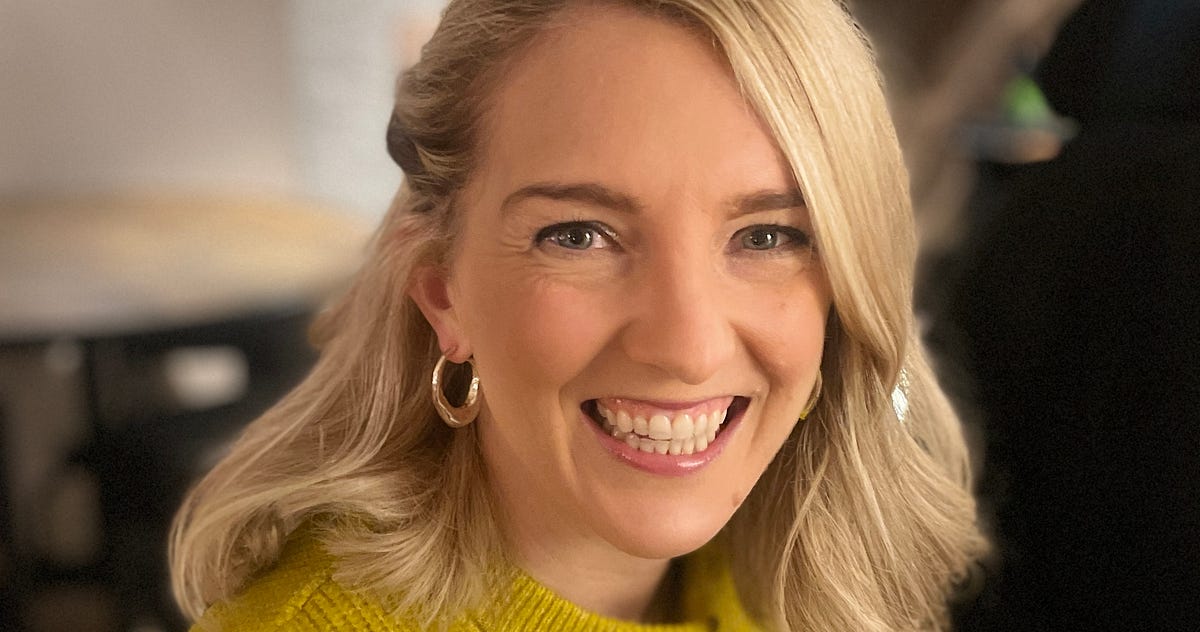
As a part of our interview series called “Women Of The C-Suite,” we had the pleasure of interviewing Sarah Black-Smith. Sarah is the General Manager of Motion Control at Siemens Digital Industries, where she leads operations and strategy in manufacturing and technology. A graduate of Loughborough University in manufacturing engineering, she began her career with Siemens Energy before moving into senior leadership roles across production and factory operations. She played a key role in the UK’s COVID-19 Ventilator Challenge, helping deliver thousands of devices to the National Health Service. Alongside her corporate work, she chairs the Industrial Advisory Board for Women in Manufacturing UK, an initiative aimed at increasing female representation in the sector. She has spoken often about leading with authenticity, saying, “confidence and authenticity matter more than approval.”
Thank you so much for joining us in this interview series! Before we dig in, our readers would like to get to know you a bit more. Can you tell us a bit about your “backstory”? What led you to this particular career path?
From a young age, I was captivated by Formula One — the speed, the precision, and the sheer brilliance of engineering behind every race. That passion sparked a curiosity about how things work and ultimately led me to pursue a career in engineering. I graduated from Loughborough University in 2004 with a Second-Class Honours (Upper Division) BEng in Manufacturing Engineering and Management. During my degree, I completed a Year in Industry placement at Siemens Energy in Lincoln, where I joined the Lean Manufacturing implementation team. That experience was pivotal — it led to sponsorship for my final year and a graduate role at Siemens Energy after graduation. Siemens has always been a fantastic place to work, with an inclusive culture and a brilliant team.
My first role was as a Lean Implementer, where I spent two years driving the deployment of Lean techniques across production and testing operations. I then moved into Production Management as a Cell Manager for four years, developing group strategy and leading performance across quality, cost, delivery, development, safety, and morale. I was later promoted to Manufacturing Manager, overseeing turbine and rotating component delivery for New and Spares businesses, working closely with customers, suppliers, and purchasing teams to ensure full manufacturing capability.
In 2012, I relocated to the Northwest to be closer to family and joined Siemens Digital Industries in Congleton as Production Manager. I was promoted to Head of Manufacturing in 2014, taking on Production, Engineering, Maintenance, and Business Improvement. From 2016, I became Head of Factory Operations, adding logistics to my remit.
In June 2022, I stepped into my current role as General Manager of the Motion Control business within Siemens Digital Industries.
I’m proud to be a Fellow of both the Institution of Mechanical Engineers and the Chartered Management Institute. I earned my MSc in Operations Excellence from Cranfield University in 2016 and recently completed my MBA at Alliance Manchester Business School in 2023
Can you share the most interesting story that happened to you since you began leading in your company?
One of the most inspiring experiences I’ve had — though not “interesting” in the usual sense due to the circumstances — was being part of the Ventilator Challenge UK. Led by the High Value Manufacturing Catapult, the initiative united 33 UK engineering and tech firms to deliver 13,437 ventilators to the NHS during the COVID-19 crisis.
What amazed me was seeing what’s possible when organisations rally around a common goal. The consortium rapidly built seven new manufacturing sites and restructured two existing ones. I was part of a 10-person Siemens team that supported the design of two sub-assembly production lines at the Airbus and AMRC Cymru sites.
The Penlon ESO 2 ventilator received MHRA approval in just three weeks, becoming the first newly adapted design authorised for use. I was incredibly proud to contribute to an effort that directly supported those in need during such a critical time.
Can you share a story about the funniest mistake you made when you were first starting? Can you tell us what lesson you learned from that?
During my year out in industry, I was running my first lean manufacturing training session, which we were rolling out across all manufacturing groups at the Siemens Energy factory in Lincoln. The session was held at Lincoln City Football Club, in one of their function rooms.
It was my first time leading, and I was eager to start on time. A gentleman came over to chat with my boss, and in my enthusiasm, I asked him to take a seat so we could crack on. Turns out, he was the Operations Director — and he was actually there to introduce the session! Doh!
Thankfully, he saw the funny side of it, but it definitely taught me a valuable lesson: always know who’s who, and get familiar with the org chart before diving in!
What do you think makes your company stand out? Can you share a story?
What makes Siemens stand out to me is its clear and compelling purpose — to use technology to solve some of society’s greatest challenges. But what truly sets it apart is how it delivers on that purpose: through its people and a commitment to building a diverse and inclusive workforce.
What impresses me most is the ambition to turn words into action. A great example of this is the company’s target to increase the female share in top management to 30% by 2025. Not only was this goal met — it was exceeded, reaching 32.6%. That’s not just progress; it’s proof of what’s possible when purpose is backed by accountability and action.
Are you working on any exciting new projects now? How do you think that will help people?
I’m passionate about sustainability and the role technology can play in helping society reduce carbon emissions and build resilience for the future.
One of the most exciting projects I’m currently working on is in collaboration with my colleague Christine Lowe, who leads Sustainability for Siemens in the UK and Ireland. Together, we’re partnering with both internal teams and customers to support their decarbonisation journeys.
What I love most about this work is the opportunity to uncover shared challenges and co-create solutions. It’s not just about technology — it’s about collaboration, innovation, and making a tangible difference for people, businesses, and the planet.
What advice would you give to other female leaders to help their team to thrive?
My advice to other female leaders is to lead with authenticity, clarity, and courage. Your team will thrive when they feel seen, heard, and empowered. That starts with you showing up as your true self — sharing your values, being transparent about challenges, and celebrating progress, no matter how small.
Create an environment where diverse voices are not just welcomed but actively sought out. Inclusive leadership isn’t just about representation — it’s about making space for different perspectives to shape decisions. I’ve seen firsthand how mentoring, coaching, and allyship can unlock potential and build confidence, especially in manufacturing where women are still underrepresented. One of my great Allies is my manager, Brian Holliday.
Support work-life balance through flexible policies and open conversations. Encourage your team to take ownership of their development and be their advocate — whether that’s sponsoring them for new opportunities or simply listening when they need support.
Finally, never underestimate the power of visibility. Be a role model. Share your story. Let others see what’s possible. Because when women lead boldly, they don’t just change outcomes — they change culture.
What advice would you give to other female leaders about the best way to manage a large team?
I went on a leadership course run by Skills4 (I would highly recommend them!) several years ago, and one of the areas they covered was gender-smart communication.
In this, the content suggested that differences in gender communication stem from childhood conditioning. As a summary: boys are often taught that achievement and winning are important, while girls are encouraged to share and build caring relationships.
As a result, men may lean towards being more task-oriented, while women often adopt a more relationship-oriented style. Both communication styles have their merits in the workplace, but misunderstandings between them can lead to unnecessary conflict.
My advice? Be aware of these dynamics. Understanding them can help you navigate leadership more effectively — regardless of gender.
None of us are able to achieve success without some help along the way. Is there a particular person who you are grateful towards who helped get you to where you are? Can you share a story about that?
We all need allies, sponsors, mentors, or coaches — whatever you choose to call them. For me, that person is Brian Holliday.
Brian is not only my manager but also my ally. He believed in me at a time when I didn’t fully believe in myself. He supported and encouraged me to apply for my current role, consistently challenged me to be the best version of myself, and pushed me to step outside my comfort zone.
Before this role, I had spent ten years in various positions at our Congleton factory. When the General Manager vacancy came up, I didn’t even consider applying — even though I was studying for my MBA and it was a natural next step. Then Brian sent me a simple message: “You should apply.” That message gave me the confidence I needed. I applied — and I got the job.
How have you used your success to bring goodness to the world?
I believe my purpose is to help make the manufacturing industry more diverse and inclusive.
I’m passionate about increasing the number of women in manufacturing — both by encouraging young women to consider careers in the sector and by helping to retain the incredible talent we already have.
Although women make up nearly half of the UK’s workforce, they represent only 26% of employees in manufacturing and earn 17% less than their male counterparts. This under-representation and wage disparity have serious implications — not just for women’s current and future standards of living, but for the industry as a whole. A lack of diversity and an exclusive culture make manufacturing less attractive as a career path and limit the creativity, innovation, and performance that diverse teams bring.
To help address this, a network of academics, practitioners, and professionals came together in 2022 to launch the Women in Manufacturing UK Initiative (WiM UK). Founding organisations include the Institute for Manufacturing (IfM) at the University of Cambridge, the High Value Manufacturing Catapult, and Innovate UK Business Connect. I’m proud to serve as Chair of the Industrial Advisory Board, helping to shape the initiative’s direction and impact.

What are your “5 Things I Wish Someone Told Me Before I Started” and why?
- Don’t waste time worrying about what people think. Early in my career, I often second-guessed myself, wondering how others might perceive my decisions or ideas. Over time, I realised that confidence and authenticity matter more than approval. Focus on doing what’s right — not what’s popular.
- Don’t be afraid to speak up and ask the ‘dumb’ question. Some of the best insights come from asking what others are too afraid to. I’ve learned that if I’m unsure, chances are others are too. Asking questions shows curiosity and courage — not ignorance.
- Put the effort in. There’s no substitute for hard work. Whether it’s preparing for a big presentation or learning a new skill, the effort you invest always pays off. It builds credibility, resilience, and results.
- Find your passion — and be passionate. When you care deeply about what you do, it shows. Passion fuels perseverance and inspires others. For me, championing diversity in manufacturing has become more than a role — it’s a purpose.
- Ask for help. You don’t have to do it all alone. Some of my biggest breakthroughs came when I reached out to a mentor, a peer, or even my team. Asking for help isn’t a weakness — it’s a strength.
You are a person of great influence. If you could inspire a movement that would bring the most amount of good to the most amount of people, what would that be? You never know what your idea can trigger. :-)
Women make up 50% of the labour force in the UK, yet only 26% hold roles in manufacturing. That needs to change.
The Women in Manufacturing initiative is a force for progress. We aim to work alongside industry and government to raise this figure to 35% by 2035. This is more than a goal — it’s my purpose.
Why does this matter? Because diverse teams are proven to be more innovative, more productive, and better at problem-solving. They bring broader perspectives, challenge groupthink, and reflect the world we serve. Increasing representation isn’t just the right thing to do — it’s a strategic advantage for the future of manufacturing.
Can you please give us your favorite “Life Lesson Quote”? Can you share how that was relevant to you in your life?
“‘If you change the way you look at things, the things you look at change.’ — Wayne Dyer.
This quote has always resonated with me. It’s a reminder that mindset shapes experience. For example, if you approach something like a networking event expecting it to be dull or uncomfortable, you’re likely to close yourself off. But if you reframe it as an opportunity — to meet new people, exchange ideas, and learn something unexpected — you’ll often find it becomes just that.
Throughout my career, I’ve seen how powerful this shift in perspective can be. Whether it’s tackling a challenging project, stepping into a new leadership role, or navigating change, adopting a positive and open mindset has helped me — and my teams — embrace possibilities rather than resist them. It’s a simple idea, but one that can transform how we lead, connect, and grow.”
Some of the biggest names in Business, VC funding, Sports, and Entertainment read this column. Is there a person in the world, or in the US with whom you would love to have a private breakfast or lunch with, and why? He or she might just see this if we tag them :-)
I’m a big fan of Formula One, and if I could have breakfast or lunch with anyone, it would be Max Verstappen.
His determination, laser focus, and passion for racing are truly inspiring. What stands out to me is how confidently he follows his own path — he knows who he is, trusts his instincts, and doesn’t second-guess himself. That kind of self-belief and clarity of purpose is something we can all learn from, whether we’re leading teams, navigating change, or pushing for progress in our industries.
There’s a lot to take from his approach — on and off the track — that applies to leadership, resilience, and high performance in everyday life.
Thank you for these fantastic insights. We greatly appreciate the time you spent on this.

Diversified Management Plus, We Manage Our Clients Assets As If They Are Our Own. For more information email HERE
VM
Written by
Vanessa Morcom
Executive Contributor · Authority MagazineVanessa Morcom is an executive interviewer and contributor covering leadership, culture, and business for Authority Magazine.
Published inAuthority MagazineTop Lessons, Top Authorities · 42K Followers
Exclusive, curated interviews with the leaders and changemakers shaping tomorrow. Leadership lessons, industry deep dives, and executive profiles.
More from Authority Magazine
See all stories →A
Authority Magazine Editorial StaffBrandon Wade & Dana Rosewall on Why ‘Yes’ People are a Liability and the “Painful” 180-Degree Redemption Story
Tech27 min read

Y
Yitzi WeinerAmazon’s Lauren Stovall Talks AWS Nonprofit Programs, Enterprise AI and the Push for Unrestricted Funding
Tech22 min read
G
Gabriel Borden, Managing Partner at Arrow FundGuardians of AI: Kerstin Woods of Toshiba America Business Solutions On How AI Leaders Are Keeping AI Safe, Ethical, Responsible, and True
Tech17 min read
A
Authority Magazine Editorial StaffFrom New York Wild Child to Bali Wellness Queen: Inside Meghan Pappenheim’s Spiritual Empire
Tech20 min read