Create a comprehensive value algorithm for reimbursement that can be applied to everything from compression socks to magnesium to meditation to VibraCool to yoga.
Tech
Wellness Reimagined: Amy Baxter Of Pain Care Labs On 5 Things That Should Be Done To Improve and Reform The Health & Wellness Industry
In our world of constant change, and with life moving faster than ever, topics such as mental health, self-care, and prevention have become popular buzzwords. But there are misconceptions about the meaning of self-care and exercise. Many opt for quick solutions — surgery, pills — to dull the problem without adequately addressing the underlying cause. Meanwhile, many parts of the industry are unregulated and oversaturated. People with years of training are competing with people with weekend training. Many providers are overworked, overwhelmed, and underpaid. The general public is not educated about asking the right questions when selecting a wellness provider. In the face of all this, what can be done to correct the status quo? In this interview series, we are seeking to hear from a variety of leaders in the health and wellness industries who agree that the wellness Industry is in need of an overhaul and offer suggestions about what can be done moving forward.
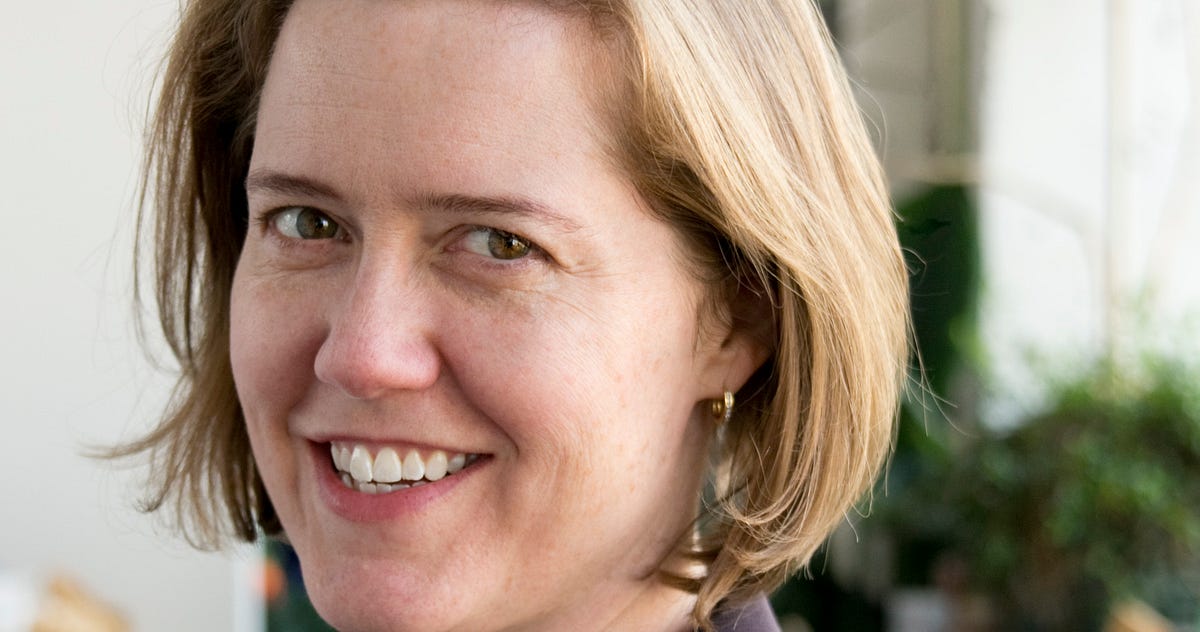
As a part of this series, I had the distinct pleasure of interviewing Dr. Amy Baxter.
Amy Baxter MD is an Associate Clinical Professor at Augusta University, and CEO of Pain Care Labs, founded in 2006 to eliminate unnecessary pain. NIH neuroscience funding led to the discovery of a frequency for mechanical stimulation pain relief, and the invention of VibraCool® Vibrational Cryotherapy, Buzzy®, DistrACTION ® cards, and DuoTherm™. She is known for scientific contributions including a liver enzyme algorithm to time child abuse, the validated BARF nausea scale for pediatric cancer patients, identifying the needle phobia increase, a nasal irrigation COVID study showing reduced morbidity and mortality, and industry highlights from being a Top 10 Disruptor in Medical Tech to turning down “Mr. Wonderful” on Shark Tank.
Thank you so much for doing this interview. It is an honor. Our readers would love to learn more about you and your personal background. Can you please share your personal backstory? What has brought you to this point in your life?
As a pediatrician I focused on preventing unnecessary pain, from needles to nausea. I invented a device to make injections easier, called Buzzy, and got my first NIH funding to develop it. After I realized that needle fear had almost tripled in the past two decades, I spent years trying to make policy-makers aware in care there was a pandemic and people wouldn’t get vaccinated. Then, a colleague told me he was in opioid recovery, and had put off a total knee replacement because he was afraid of addiction. Addiction has a personal resonance for me — I lost my best friend in high school to an opioid overdose. When my device worked for him, I became an NIH researcher full time into the best way to relieve pain and stop addiction.
What is your “why” behind the work that you do? What fuels you?
Women, moms and emergency doctors excel at creating multiple personalized right answers — we don’t believe there is one right answer. I’m all three, so I look at problems differently. In addition, I grew up poor, so the concept of wasting anything — lives, money in healthcare, resources — fundamentally bothers me. Pain is the number one reason people access and spend money in healthcare, but prevention and actively taking power over pain can be extremely inexpensive. After 20 years researching how the nerves and brain interact, I want to change how people think about and treat pain.
What are some of the most interesting or exciting new projects you are working on now?
Our research has uncovered why electrical stimulation fails to treat pain, while mechanical stimulation not only treats pain but speeds recovery. I’m working on a low back pain motor array with heat and ice for low back pain to reduce opioid use. IN the meantime, I’m supporting researchers looking at our VibraCool devices for tendiopathies, and opioid reduction for ACL reconstruction.
It has been said that our mistakes can be our greatest teachers. Can you share a story about the funniest mistake you made when you were first starting? Can you tell us what lesson you learned from that?
When we began shipping Buzzy devices, we didn’t tape the on-off toggle switch. Invariably we’d show up at a medical conference with a vibrating suitcase that never failed to raise eyebrows. That’s part of why I call it “mechanical stimulation” — yes, the platform cancels pain by nerve stimulation, but it’s easier to buy your mom an “M-stim Easy-Fit” than a vibrator for her tennis elbow!
OK, thank you for all of that. Let’s now shift to the core focus of our interview. From where you stand, why are you passionate about the topic of Reimagining The Health and Wellness industries? Can you explain what you mean with a story or an example?
As a nation we keep spending more but getting less health and well-being. Some of the problem is that any for-profit wellness company wants you to adopt THEIR single solution. Spoiler alert: there is NEVER one right answer! The other part of the problem is we want a quick fix to make up for not being active, eating well, and appreciating our agency in our own health. I think we should revamp everything from our pharmacies to our payor system to support healthy lifestyles that result in reduced pain and fewer health problems. This support must be as multi-modal as pain relief. It should be financial (health insurance could cover evidence-based, non-pharma interventions), structural (it’s way too hard to see a professional for preventive healthcare), and educational (sorry, corn, you’re not a vegetable).
When I talk about Reimagining the Wellness industry, I am talking about reimagining it from the perspective of the providers as well as from the perspective of the recipients and patients. Can you share a few reasons why the status quo is not working for both providers and patients?
Here’s a story: we were funded by the NIH to reduce needle pain. We created a device that reduced pain and fear, and the FDA cleared us for controlling needle pain and treating musculoskeletal pain. Then when we went to Medicaid, they said “we don’t cover comfort items”. The innovation R&D loop is broken, because it is biased for pills. This broken payor system contributes to the cost of devices, too: We made our devices reusable and inexpensive, and medical device reps said “how can we make money on a reusable device” so they don’t show it to doctors. And if doctors don’t know about it, or it’s not covered by insurance, patients don’t hear about it because doctors don’t want to recommend things their patients can’t afford. It’s even more of a problem for solutions without a trade group and industry lobbyists behind them. Magnesium, turmeric, heat, cold, stretching, all of these things have a place in power over pain, but no one benefits by creating them so patients lose out.
Why do you think there is a good opportunity now to improve and reform the health and wellness industry?
There are a few trends colliding for good: the risks of opioid use disorder is now well known, so people want other options. And as hospitals focus on reducing opioids after surgery, people are more interested in understanding pain relief options they can choose themselves. Pharmacies are getting into the health business, and they are perfectly poised to create sections with evidence-based options for healthcare. Insurance companies are finally starting to create health choice options for the people they cover. These are changes for good, but they must be adopted universally for true progress to happen.

Can you please share your “5 Things That Should Be Done To Improve and Reform The Health & Wellness Industry”? Please share an example or story for each if you can.
As they say, “You get more of what you subsidize, less of what you tax.” We need to subsidize health, not pills. Walking and nutrition do more for health than phamaceuticals, with the exception of vaccines.
- CMS should lead the way for insurance companies to cover NIH-funded science that is inexpensive, FDA cleared and proven to work. Otherwise it’s a wasted national investment.
- Create a comprehensive value algorithm for reimbursement that can be applied to everything from compression socks to magnesium to meditation to VibraCool to yoga.
- For a start, consider something like: Percent of people who benefit x amount of benefit measured by activities of daily living x duration of benefit / cost x risk
- Then reward people for making a plan and investing in a variety of self-empowering health enhancers.
- Make federal programs like food stamps and school lunches support healthy foods, no sugary fruit juices with no nutritional value, and subsidize healthy food areas in inner city areas.
- Move our trust away from pills to physical solutions. This means movement, concentrating on supporting safety and access to walking, and paying for FDA 510K cleared medical devices in the same way we pay for FDA approved pills (see value algorithm above). Opioids have their place. New and old science show that controlling pain well immediately after an injury reduces PTSD and chronic pain — if I am in the ED, morphine is the best choice! However, I still believe that outpatient use should be limited to 3 days.
- I propose a longer-term commitment: stop unintentionally teaching kids to be afraid of vaccines and healthcare, and begin studying what works to reduce the vaccination fear planted in people born since 1985. https://www.linkedin.com/pulse/illuminating-warp-speeds-blind-spot-calculating-covid-amy/
From the recipient and patient side of the industry, can you please share a few ways that patients and recipients should reimagine what the wellness and healthcare industry should provide?
It’s been shown in the last decade that asking people with chronic pain how much they hurt draws attention to pain. Instead, what makes sense is to ask them what they want to DO, and measure success on doing it. This is called “Acceptance and commitment therapy” when it comes to retraining the brain for comfort, and it works better than traditional pain medications.
In the same way, getting people to reimagine health as more movement, walking, and learning their own solutions for pain and wellness with some patience is where we should go. We are now concentrating on things like steps, diet, and sleep, but through the filter of expensive gadgets. Instead of this kind of tracking, we need to establish a healthcare system that rewards and facilitates these behaviors and taxes communities that don’t facilitate healthy habits. You can’t have a healthy society if you penalize without access to affordable fresh food and safe outdoor spaces: they face health challenges that are outside of their control.
We also need to focus on trusting our vaccines to keep kids safe from deadly diseases, and not pop a pill with any fever. We’ve set up a system that uses more medications for more uses than any other country in the world.
What do you think are the biggest roadblocks to reforming the industry? What can be done to address those hurdles?
Expecting the hate, we need to ditch our for-profit healthcare system. Big pharma has lobbyists that get governmental payment approval more than small manufacturers, drugs are repurposed when their patents are running out, I’ve already talked about how the system is deliberately set up to reward pharma first, and high cost disposable solutions next. Academic institutions and our NIH are wonderfully positioned to allocate grants for research — by having industry do it, the payback of a for-profit system hurts us all.
Even more toxic is the fear of losing our homes due to medical costs. The insurance system hurts small businesses, individuals, and our country — people behave and vote differently when they’re worried about survival and losing everything. Countries like Sweden and Portugal have thriving start-up industries, in part because businesses don’t have to worry about providing healthcare. Capitalism and universal healthcare are far from contradictory: improving health makes the workforce stronger and people more open to taking risks.
I’m very passionate about the topic of proactive versus reactive self-care and healthcare. What do you think can be done to shift the industries towards a proactive healthcare approach? How can we shift the self-care mindset for consumers and providers alike?
Unfortunately, in some ways the high cost of healthcare is shifting consumers to self-treat, rather than truly have self-care. I believe providers need to fully buy into the efficacy of healthy eating, healthy behaviors, and need to campaign and support city development to allow for walking areas. When you know your provider really thinks eating less processed meat and fats will make you feel better, you may try it. So many people live paycheck to paycheck, we have to address wealth inequality to address proactive and preventive healthcare. Maybe it’s time to try crazy things like “health month”, and deliver a box of farmed vegetables to a community for a month so they don’t worry about food insecurity. Then have a “comfort month” and support trying evidence-based, non-pharma pain relief interventions. It is going to take thinking that is NOT incremental.
Thank you for all that great insight! Let’s start wrapping up. Can you share your favorite “Life Lesson Quote”? Why does that resonate with you so much?
“Be kind, for everyone is fighting a hard battle.”- Erasmus. When someone shows someone else a little bit of kindness, both of them win. If we turn down the volume on anxiety, we’ll have more bandwidth to fix some of our country’s problems.
We are very blessed that some of the biggest names in Business, VC funding, Sports, and Entertainment read this column. Is there a person in the world or in the US whom you would love to have a private breakfast or lunch with, and why? He or she might just see this, especially if we both tag them :-)
I turned down Mark Cuban on Shark Tank because I hadn’t planned to make a deal with him and didn’t think he had expertise in medical devices equivalent to the valuation — a mistake! With his pharmacy model he is being innovative and changing some of the structures that need to be changed. I know enough now to be able to understand his advice better, and potentially join forces.
I appreciate your time and valuable contribution. One last question, how can people reach or follow you?
@amybaxtermd paincarelabs.com amy.baxtermd (insta)
This was very inspiring. Thank you so much for the time you spent on this. We wish you only continued success.
About The Interviewer: Maria Angelova, MBA is a disruptor, author, motivational speaker, body-mind expert, Pilates teacher and founder and CEO of Rebellious Intl. As a disruptor, Maria is on a mission to change the face of the wellness industry by shifting the self-care mindset for consumers and providers alike. As a mind-body coach, Maria’s superpower is alignment which helps clients create a strong body and a calm mind so they can live a life of freedom, happiness and fulfillment. Prior to founding Rebellious Intl, Maria was a Finance Director and a professional with 17+ years of progressive corporate experience in the Telecommunications, Finance, and Insurance industries. Born in Bulgaria, Maria moved to the United States in 1992. She graduated summa cum laude from both Georgia State University (MBA, Finance) and the University of Georgia (BBA, Finance). Maria’s favorite job is being a mom. Maria enjoys learning, coaching, creating authentic connections, working out, Latin dancing, traveling, and spending time with her tribe. To contact Maria, email her at angelova@rebellious-intl.com. To schedule a free consultation, click here.
MA
Written by
Maria Angelova, CEO of Rebellious Intl.
Executive Contributor · Authority MagazineMaria Angelova, CEO of Rebellious Intl. is an executive interviewer and contributor covering leadership, culture, and business for Authority Magazine.

Published inAuthority MagazineTop Lessons, Top Authorities · 42K Followers
Exclusive, curated interviews with the leaders and changemakers shaping tomorrow. Leadership lessons, industry deep dives, and executive profiles.
More from Authority Magazine
See all stories →A
Authority Magazine Editorial StaffBrandon Wade & Dana Rosewall on Why ‘Yes’ People are a Liability and the “Painful” 180-Degree Redemption Story
Tech27 min read

Y
Yitzi WeinerAmazon’s Lauren Stovall Talks AWS Nonprofit Programs, Enterprise AI and the Push for Unrestricted Funding
Tech22 min read
G
Gabriel Borden, Managing Partner at Arrow FundGuardians of AI: Kerstin Woods of Toshiba America Business Solutions On How AI Leaders Are Keeping AI Safe, Ethical, Responsible, and True
Tech17 min read
A
Authority Magazine Editorial StaffFrom New York Wild Child to Bali Wellness Queen: Inside Meghan Pappenheim’s Spiritual Empire
Tech20 min read