We would rather our client experience effective marketing even if we don’t make as much income, than get zero results but we were paid a lot.
How to Effectively Leverage The Power of Digital Marketing, PPC, & Email to Dramatically Increase Sales
INTERVIEW QUESTIONS.
(If you are unable to download it, please click File-Download)
Please answer the questions, and leave the questions formatted as they are in the document. We may schedule a follow-up call or skype to round things out.
Marketing a product or service today is easier than ever before in history. Using platforms like Facebook ads or Google ads, a company can market their product directly to people who perfectly fit the ideal client demographic, at a very low cost. Digital Marketing tools, Pay per Click ads, and email marketing can help a company dramatically increase sales. At the same time, many companies that just start exploring with digital marketing tools often see disappointing results.
In this interview series called “How to Effectively Leverage The Power of Digital Marketing, PPC, & Email to Dramatically Increase Sales”, we are talking to marketers, advertisers, brand consultants, & digital marketing gurus who can share practical ideas from their experience about how to effectively leverage the power of digital marketing, PPC, & email.
As a part of this series, I had the pleasure of interviewing Vicky Wu.
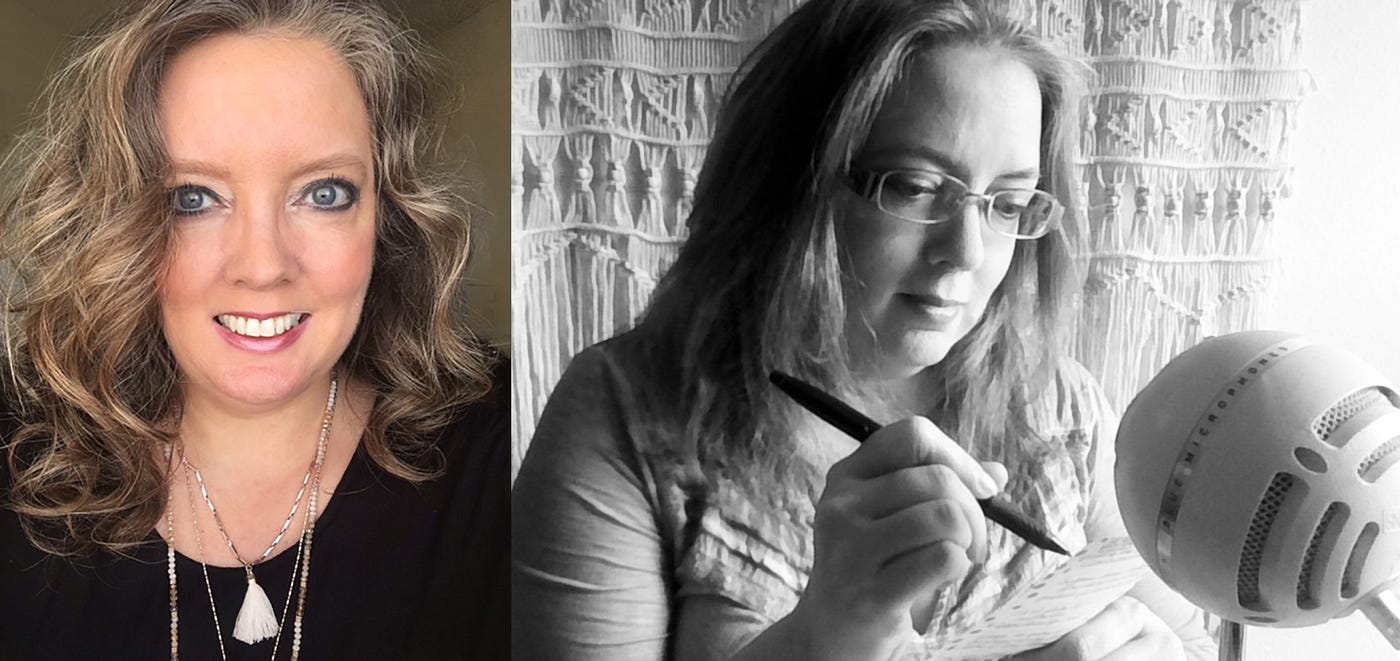
Vicky Wu is the CEO of Vicky Wu Marketing. She has 30 years of experience in marketing, including as a Chief Marketing Officer, working with everything from Fortune 500 companies to nonprofits and entrepreneurs. Her work centers around a holistic marketing strategy and she is an expert at assisting companies with setting up their marketing processes and procedures to generate results now and in the long term. When she is not marketing or hosting her podcast, she can be found painting or ballroom dancing. Vicky Wu Marketing can be found at https://vickywu.marketing.
Thank you so much for joining us in this interview series! Before we dive in, our readers would love to “get to know you” a bit better. Can you tell us a bit about your ‘backstory’ and how you got started?
My passion for marketing began before I even knew what it was. As a young artist, by 7 or 8 one of my favorite things was to create elaborate amusement parks on paper; each with their own theme that might be something as silly as stuffed animals or vegetables. I would sketch related rides, develop a story about the park, name everything, and create ads. I thought I was just having fun; looking back now I realize I was building branding and marketing plans.
After high school, I entered the advertising industry, and then simultaneously completed my degree in Business Administration and Marketing. Since then, I have worked with companies in numerous industries, of all sizes, from global organizations to nonprofits, solo entrepreneurs, and everything in between. Along the way have learned – and created – best practices and those golden marketing tactics that withstand the tests of time and budget.
Can you share a story about the funniest marketing mistake you made when you were first starting? Can you tell us what lessons or ‘takeaways’ you learned from that?
As part of one of my earlier jobs, I hosted and produced a regional talk show on cable TV. We used a “live to tape” format where it was recorded live, and for the most part unedited before it aired later. One of my guests had a set of notecards in her hand that she was going to use to demonstrate an activity you can do with your kids. As she went to hold them up, she dropped them all on the floor of the studio in front of her chair. We both had to hop out of our chairs and pick up the somewhat scattered cards from the floor, all while laughing and keeping the conversation rolling for the cameras. That was one of the few times that I hoped maybe not many people were watching when the episode aired … but that was not the case and I received plenty of light-hearted ribbing from friends.
None of us are able to achieve success without some help along the way. Is there a particular person who you are grateful towards who helped get you to where you are? Can you share a story?
Some of the biggest impact early in my career came when I chose to join an organization – Business and Professional Women (which now exists only as a foundation unfortunately). Not only did I surround myself with some amazing women who were trailblazers in their career or industry, I also took advantage of the many personal development activities that they provided, which included doing some things I never though I would do, such as competing in public speaking competitions and joining the leadership of the organization at the local and state level. The mentoring from all the other women set the stage for my higher expectations around my career from the time I was a young adult.
What do you think makes your company stand out? Can you share a story?
Two things I consistently hear from clients is that we understand so much more than some other marketers they have worked with, and we have a no-BS approach. We serve either as a portion or the entire marketing department for many entrepreneurs and small businesses and our goal is to provide that level of access to marketing expertise that is usually only available to large corporations. One of the biggest surprises is often that we will tell you when an entrepreneur should not use a particular strategy, perhaps either because of the industry a business is in, their target demographic, or perhaps even just the stage that their marketing is currently in … even if this means us losing money because we cannot tack another service onto their bill. We would rather our client experience effective marketing even if we don’t make as much income, than get zero results but we were paid a lot.
A couple of scenarios are quite common with businesses that come to us seeking help. Sometimes, they come to us after having used a coach of one type or another, and that coach only knew one system that they would have all their clients replicate. I always say that doing anything is always better than doing nothing, yet a cookie cutter approach does not work the same for every type of business, because businesses are not cookie cutter, and their marketing should not be either. Over the years, we have already tried and tested so many different approaches to marketing that we know which ones work across the board and have proven success, and we can pull from an expansive list of strategies for any one client to receive a customized process that we know generates results.
Another quite common scenario revolves around outsourcing. Many clients come to us who have either outsourced one major part of their marketing, such as their website, to someone random they found online, and it turns out that they did not receive the results they were expecting. This is exasperated by outsourced freelancers who may be in a foreign country which makes additional obstacles of vastly different time zones and often language barriers. Related to this scenario is those who have outsourced small pieces of their marketing to many different outsourced freelancers, but none of them even talk to one another. This creates silos in your marketing, which makes it much less effective and impactful than having a holistic, integrated marketing approach. It can also result in it costing more money, and some of the work being doubled up – and I have a couple of case studies on my website outlining how bad these strategies can be on your bottom line.
You are a successful business leader. Which three character traits do you think were most instrumental to your success? Can you please share a story or example for each?
Being a lifelong learner. I schedule time in my calendar each week to learn, much like Benjamin Franklin did. A lot of this revolves around keeping updated on the marketing industry, which is always changing thanks to so many of the digital pieces. Yet I also focus on learning things just for me as well, which could be anything from trying a new style of painting or a new ballroom dance step, to a new recipe, or a new virtual reality workout.
Developing a leadership style. One of the best things I did before I became a “boss” for the first time was spend time thinking about what kind of boss I wanted to be, how I wanted that to look, and how I wanted my staff to feel. Of course, there was a LOT of learning when I was in that position for the first time, and every time after. I think sometimes people don’t distinguish the difference between being a manager and a leader, and the first thing is that you need to understand that difference. Then you need to study other leaders and decide which pieces of their leadership style resonate most with you, and actively start implementing those in your daily work.
Intentional expertise. Taking focused effort over time to hone your skills in your field. No matter where you are in your career, it’s not too early nor too late to put this type of intentional effort into becoming better at what you do. I still practice this daily. The important piece is to be intentional about what you are trying to do and learn, rather than only taking what is coming at you or given to you, and then start implementing your new knowledge into your work so that you are doing it and repeating it in practice. For example, if I want to get better at designing websites, I will look at places where I can enhance my skills, and if that is learning higher levels of CSS or programming in JavaScript, then I will find some courses and dive in, while implementing some of what I’m learning into my own website as practice.
Are you working on any exciting new projects now? How do you think that will help people?
One large project which was going to require a lot of face-to-face interaction was delayed by the pandemic, so I pivoted to focus on providing an additional platform for entrepreneurs to gain some exposure and opened my podcasts to guests, where they could promote their business at no cost to them, and benefit from the syndication that I do. It’s been great to meet some new peers that I may not have otherwise and get to know them plus develop some new collaborations.
Ok super. Now let's jump to the main questions of our interview. As we mentioned in the beginning, sometimes companies that just start exploring with digital marketing tools like PPC campaigns often see disappointing results. In your opinion, what are a few of the biggest mistakes companies make when they first start out with digital marketing
? If you can, please share an example for each.
Not curating their own content. I come across a lot of entrepreneurs who are on the hamster wheel of creating content for social media, email marketing, videos, their website, or elsewhere, and they are operating under the belief that they can’t share that content out to the world more than once. What a waste! You’ve put all of the time and effort into making the content and you’ll get the best results by reusing it. Studies show that it takes an average of 11 times for someone to see your message before it even begins to sink in that they have seen it. So reshare that content and do so more than once – just not necessarily multiple times within an hour, and don’t duplicate content on your own website by posting it there more than once. Otherwise, take everything, share it once, share it again, share it somewhere else.
Focus on all three types of content – organic, paid and earned. Organic content or media would be things that you create yourself, such as a blog post, email, or a video. Paid would be advertising campaigns, such as pay per click on Facebook or Google. Earned would be something like being featured in the press, such as an interview or press release. However, you do not need to necessarily focus on all three at exactly the same time. If you’re bootstrapping, you may want to start with organic, and then wait to add paid media as your budget grows.
Integrate your messaging. You will see the best results when your message across all platforms is integrated, saying the same thing at the same time. This reinforces the message and helps with the strategy that something needs to be seen 11 times. Choose one primary hub of your content wheel, such as an email newsletter or a blog post, and then let everything else be the spokes of the wheel that shares the same general message. So, if your primary content focus is an email newsletter each month, let your other digital marketing reflect the same topic and message for the most, such as sharing pieces of the newsletter on social media, making a video related to the same topic, adding a blog post on your website centered around the message, and if you are running ads during that month then also have them focus on the same topic. This holistic approach is much more impactful and will propel your message further much more efficiently.
If you could break down a very successful digital marketing campaign into a “blueprint”, what would that blueprint look like? Please share some stories or examples of your ideas.
One strategy that we use very successfully with companies of any size is integrated marketing. Here is how we do it with our clients who implement this strategy best:
Choose your platforms that you will use for an integrated marketing message. In our example, we will do a blog post, email newsletter, social media posts, and a pay-per-click ad on Facebook.
Pick a timeframe – most of our clients use a week or a month. The timeframe will be broken down further, into days or weeks. In this example we will use a month, which we will break down into weeks.
Choose the overarching topic for that timeframe – for us it may be video marketing.
Break down that topic into sub-topics, which could be questions frequently asked or client pain points. I like between 3-5 of these sub-topics. In our example we may use equipment for making videos, choosing topics and recording, editing videos, and publishing videos.
Focus on one sub-topic at a time within your chosen timeframe. In our month, we would focus on one topic each week, so the first week would be focused on equipment for video editing.
During that week, we will write a blog post about video equipment, write an article for our email newsletter (likely the same as the blog post, just finetuned for email), and several social media posts which would include all or part of our blog post/email article, plus some additional posts with tips, and sharing other people’s content such as a link to a video a microphone manufacturer has made with a how to.
Crosslink all those items, ideally with as much as possible pointing directly back to your own website for SEO backlinks. Add a link in the email newsletter to read the rest of the article, or a related article, from your website. Add a link to your social media posts pointing back to the blog article.
For the pay-per-click ad, choosing the audience is the most important piece, and once that is done, you can use one of those existing posts for your ad, and direct anyone who clicks back to either the blog post on your website, or another related landing page (the topic MUST be the same as your post).
Repeat the process with your next sub-topic during the next timeframe.
This strategy has a few benefits built in. For one thing, your audience is seeing a similar message from you everywhere they look during that week or month. Also, you are presenting information where and likely when your audience wants to consume it, which also helps push your message out further. We have a few modified pieces of the strategy that we use depending upon the client and how large their existing audience is that makes the process even more effective, yet this is the same base strategy used to integrate their messaging.
Let’s talk about Pay Per Click Marketing (PPC) for a bit. In your opinion which PPC platform produces the best results to increase sales?
It depends. That is never the easy or quick answer, or what someone may want to hear, but it’s the truth. Remember I said that no business is cookie cutter, so their marketing strategy – including PPC - should not be either.
Probably the easiest one to start would be Facebook, so it can be the best option when just getting started with pay-per-click.
For B2B use, if I’m needing to target people based upon their occupation, often LinkedIn will be the best option.
For a product or service that people will primarily search for somewhere like Google, since the audience isn’t doing that same type of search on Facebook or LinkedIn, then that is where the ad dollars should be focused.
One of the most powerful PPC strategies to use that is proven to increase sales is remarketing to the people who have already visited your website, no matter which PPC platform you choose.
Can you please share 3 things that you need to know to run a highly successful PPC campaign?
A very well-defined audience. I cannot stress this enough. You may even need to test some different audiences over time to see which one brings the best results.
Having thought through the messaging and flow of what you ask them to do in the ad which includes the why (such as click the link to get your copy of the eBook), what page they are taken to and that the message of the landing page coordinates with the ad, what happens after they complete the lead capture form or make a purchase on the landing page – the follow-up emails they receive etc.
For an ongoing campaign, multiple variations of the ad, with each variation only changing one thing (such as the headline, or the description, or the image) so that you can do at least basic testing to see which variations are getting the best traction – which is valuable information for you as you continue your marketing. This also lets you optimize your campaign, remove the variations that are not performing as well and add new variations that are more like the better-performing options.
Let’s now talk about email marketing for a bit. In your opinion, what are the 3 things that you need to know to run a highly successful email marketing campaign that increases sales?
Do it. Email marketing is still one of the most effective marketing methods, and one of the main benefits is that you are marketing to an audience that is already interested in what you offer.
Segment your list so that you are sharing information with the portion of your audience that will be most interested in your offer. Putting your product or service in front of those who will be most interested is the most efficient way to begin the sales process.
If you have ecommerce at all, see if your email provider or your ecommerce solution can automatically send “abandoned cart” emails. This is one of the easiest, proven ways to increase your conversion rate. We use WooCommerce and MailChimp, and the integration between these two systems provides for these types of automated emails to be sent.
Bonus tip: make sure your emails are mobile friendly. Test it on your own mobile phone and make sure that it’s easy to read, navigate, and click when read on a phone.
What are the other digital marketing tools that you are passionate about? If you can, can you share with our readers what they are and how to best leverage them?
A CRM (customer relationship management) platform. I have used a lot of these over the years, for myself and for hundreds of clients. I’ve chosen Dubsado because of the unlimited automated workflows that it provides. These workflows automatically take new clients through multiple stages of processing their invoice, onboarding, and various project communication pieces. It’s like having another me (or two or three) since so many of those repetitive pieces are automated.
ClickUp for project management. This helps keep me and my team of freelancers on task. What is great is that my clients can email to their own task board, so that no tasks are lost in email, and from there it is either automatically assigned to the right freelancer or I can manually assign it. I also use templates for some of the standardized pieces of our work, such as setting up a new website. Plus, it allows us to track time on tasks which helps with both billing and with planning our project bandwidth.
I connected Dubsado to ClickUp by using Zapier, so that as soon as a contract is signed for a project in Dubsado, a new list with the client’s name is created in ClickUp. Another “zap” will automatically create a project folder in Dropbox for me to begin collecting files.
Here is the main question of our series. Can you please tell us the 5 things you need to create a highly successful career as a digital marketer? Can you please share a story or example for each?
https://www.youtube.com/watch?v=0lJGCTpRN1I
You would think for digital marketing that I would have tips about technical skills. But those are not as important as these:
1. An understanding of psychology, at least at some basic level. You need to understand some of the reasoning behind why people make the decisions and choices that they do. I have taken courses in psychology, adult learning theory, the psychology of colors, and so many other related topics throughout the years.
2. Communication skills. The ability to put words onto paper, use the spoken word, and visual cues to relay a succinct message. This includes strong spelling, grammar and punctuation since most businesses need to project a professional image, and excessive spelling and grammar issues can be a detriment. This includes a solid understanding of how to speak the language of the audience that your client needs to address. One example of this is that there are styles of graphic design I’m not adept at, such as grunge; and styles of communication that I’m not adept at, such as some of the slang and emojis used by Gen Z. While I could try to fake either of those, the audience can tell it’s not authentic; and it’s important for any brand to have authenticity. For those projects I rely heavily on some of my freelancers who those things come to more naturally.
3. Knowing how to define an audience. Even for those clients who already have a well-defined customer persona, they still rely upon us to draft engaging messaging for those characteristics. You may not always be defining the audience that a business will use, although sometimes you will be doing this as well; yet you will always need to understand the audience to create the most powerful and engaging messaging.
4. Being okay with everything not being perfect right now. One of the biggest issues that I see that holds a lot of entrepreneurs back is believing that everything must be completely perfect before they start whatever project. While building your own business, often you must start where you are, with an understanding that you will improve and fine tune as you go. If you wait around for everything to be perfect - like you envision it in your head - before even taking one step in the direction towards your goal, you will find that you never start – because things change in life, in business, in our environment. The perfect circumstances that you envision may never align, and you will have missed out on some amazing opportunities. Begin where you are with what you have, with a vision towards how it will look and be better later, and then practice continual improvement.
5. Don’t be afraid to pass on a client. Sometimes, we are simply not the right fit for a client, and if we try to squish what we do into a mold that doesn’t work well, both us, and the client, have a less-than-ideal experience. Often the best thing you can do for a prospective client where the fit doesn’t feel quite right is tell them that it’s not the best fit, and when possible, share some other resources or refer them to someone else who you feel may work perfectly for them. One example is sometimes prospects come to me and they have their best ideas at midnight and want someone who can respond immediately whenever they have their ideas. I am not a night owl, I don’t want to be a night owl, so I am definitely not the right person to serve them. Don’t get caught up in the fear of not having a client that you take on one that’s not a right fit; the right clients will come along if you leave the room for them to do so. Nothing would be worse than having to pass on a dream client because you are too busy struggling and spending more time and energy trying to make a wrong fit work with someone else.
What books, podcasts, videos or other resources do you use to sharpen your marketing skills?
Some of my favorites that I keep going back to:
Websites: I have followed both Social Media Examiner and Search Engine Journal since they began their websites, and they are two of my favorites.
Books: anything by Malcom Gladwell I will read multiple times, such as “Blink”. Chip and Dan Heath’s “Made to Stick”, and “The One Thing” by Gary W. Keller and Jay Papasan, and “Good to Great” by James C. Collins are a few other favorites. Great information.
YouTube subscriptions tend to revolve around techie things, such as “Linus Tech Tips”.
Thank you for all of that. We are nearly done. Here is our final ‘meaty’ question. You are a person of great influence. If you could start a movement that would bring the most amount of good to the most amount of people, what would that be? You never know what your idea can trigger. :-)
Anything to get rid of hate in the world. So many problems would be solved with more love and less hate.
How can our readers further follow your work?
You can visit my website, find me on most social media platforms, search for my podcast titled “Your Marketing Department” on your favorite podcast platform, or search for Vicky Wu Marketing on YouTube.
This was very inspiring. Thank you so much for the time you spent with this!
About The Interviewer: Orlando Zayas is the CEO of Katapult, an award-winning omnichannel payment platform. Zayas is known for his revenue growth strategies and visionary leadership in the eCommerce and retail space. His future-forward expertise has led companies such as GE Capital, Safe-Guard Products International, and DRB Capital. Zayas is also highly committed to providing educational opportunities to underprivileged communities through his philanthropic endeavors. Zayas’ business insights are regularly featured in publications such as Forbes, Entrepreneur Magazine, Retail Insights, and more.