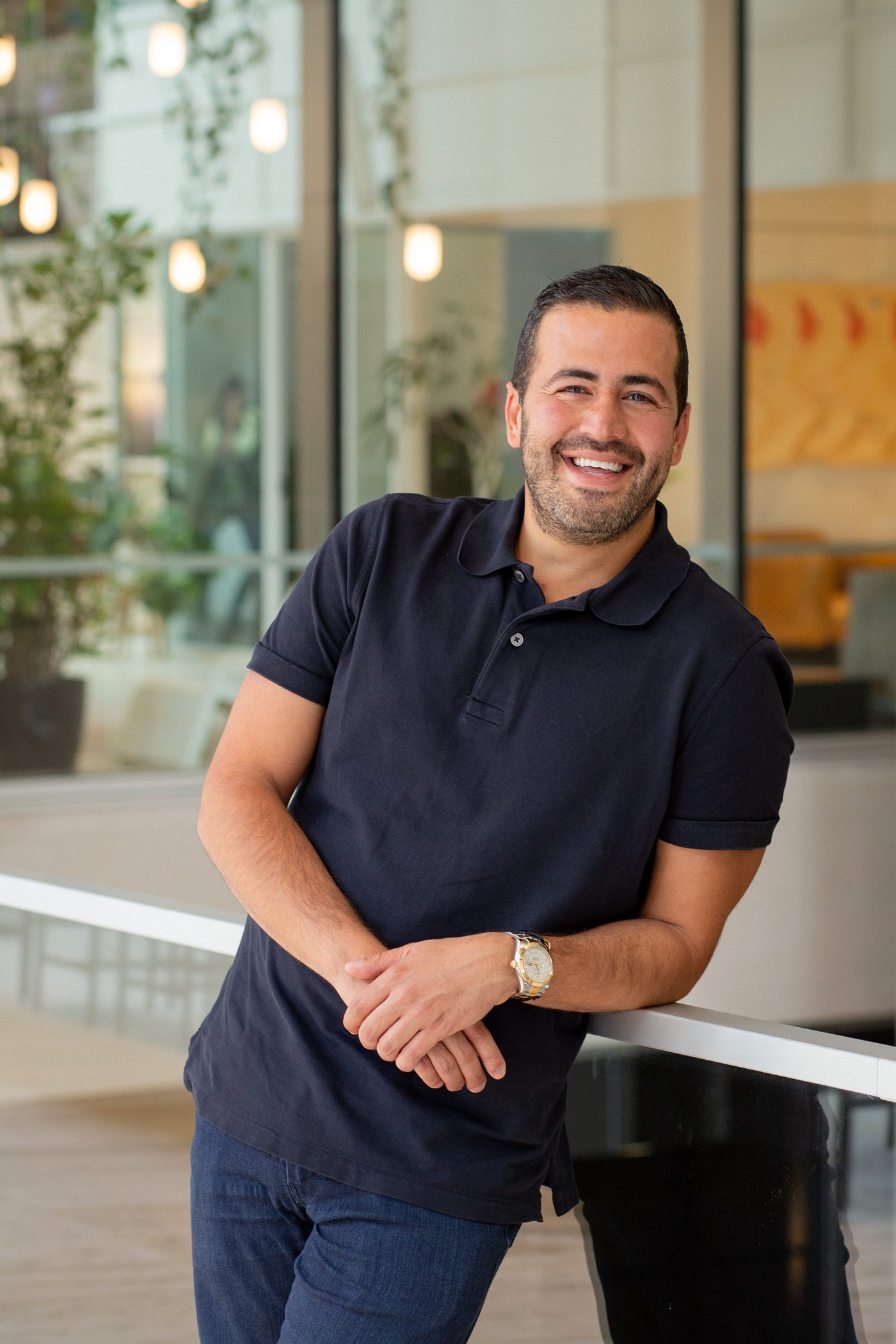
With client relationships, everyone is on a journey somewhere, and the important thing is to be with them at that inflection point when they really need you.
Business
Susan deTray: The Delicate Balance of Mutual Accountability That Builds Lasting Financial Trust

Building lasting customer relationships has many benefits, including increased revenue, positive word-of-mouth recommendations, and saving on acquisition costs. But how does one do this? In this interview series, we are talking to Product Managers, founders, and authors who can share their “Five Tips For Building Lasting Customer Relationships”. As a part of this series, we had the pleasure of interviewing Susan deTray.
Susan deTray is the Head of Citizens Private Bank, where she leads the bank’s private banking growth strategy and partners closely across the enterprise to propel growth in Wealth Management, Business Banking and Commercial Banking. Prior to joining Citizens, she served as Senior Vice President, Deputy Chief Credit Officer and Head of Credit Administration for First Republic Bank, where she oversaw a $200+ billion consumer and commercial loan portfolio. She previously held leadership and credit risk management roles at Wells Fargo, U.S. Trust, The Bank of New York and JPMorgan Chase.
Thank you for doing this with us! Before we begin, our readers would like to learn a bit more about you. Can you tell us the “backstory” about what brought you to this career path?
I started out in Washington, D.C., as a research associate for a consulting firm, specializing in antitrust litigation support focused on telecommunications — but several of my fellow research associates focused on banking, and I found the work they were doing very interesting. At the time, competition in the telecommunications market was relatively new, but competition in banking was relatively established; and there were so many lines of business, products, and sub-markets to discover in banking. It was a fascinating field where one could build a career on so many levels.
I moved back to New York, where I had attended college, and made the pivot into banking. I joined the Investment Banking Analyst Training Program at a large money-center bank. I am truly grateful for the experiences and career opportunities that have been afforded to me by this decision.
Are you working on any exciting new projects now? How do you think that will help people?
As Head of Citizens Private Bank, I am very excited to build out our private banking teams in key strategic markets, where we provide a banking experience that offers tailored solutions for high-net worth individuals, families and businesses. Our mission is to simplify our clients’ personal and professional financial lives.
For the benefit of our readers, can you tell us a bit about your experience with building lasting customer relationships? Can you share an anecdote or two that illustrates your experience in this area?
With client relationships, everyone is on a journey somewhere, and the important thing is to be with them at that inflection point when they really need you. Like with friendships, if you are there for somebody when it’s easy for you to be there, it’s almost meaningless. It’s when there is a little bit of shared pain and give and take that it’s most impactful, not only for you but for the other person. The same can be said about clients.
Part of the challenge of being a good banker and relationship manager is to make sure that the exchange between you and your client always remains in balance.
I remember working with a private equity client with whom I had been associated at three different banks. They were a spinoff of a large private equity firm, and they were hard negotiators. They were establishing their own banking relationship and wanted all the same terms and conditions as the large firm they came from. But they had a completely different risk profile; and although we believed in them and gave them breaks, we needed to keep them bankable. In return, we asked them to keep us in check. A good client relationship is holding each other accountable with an understanding of why it’s important, not only to us but to them. Ultimately, they grew quickly and were extremely successful.
A savvy client is a good client. If what you’re doing is a force of habit but doesn’t have a logical base, it ought to be changed. Sometimes the client is right, and sometimes you are right. It’s a delicate balance.
In today’s fast-paced and constantly evolving landscape, what strategies do you employ to maintain a strong connection with your customers and anticipate their changing needs?
When dealing with high-net worth clients, you can offer them the best investment and trust services and work their business accounts; but if you mess up their mortgage, the relationship is challenged.
You must nail the personal pieces of each client’s unique needs. It’s more than just providing assistance while offering products and services. It’s about being a trusted advisor on a professional and personal level. If there’s an overdraft on one of their corporate accounts or on their child’s account, you need to call them; this business is personal.
Can you discuss the strategies that companies can employ to strike a balance between driving revenue and profitability, and focusing on building customer relationships and loyalty?
Banks only thrive, particularly in the long run, when their clients and communities thrive. Banking is a relationship business. Done well, it provides individuals with products and services to realize their personal and professional dreams. It provides communities with jobs and support for the businesses that make up their local economies. This is one reason why I am such a fan of regional banking. It has the scale to provide the talent and sophistication of products and services that benefit clients, while sharing in their regional market concerns.
Could you describe the metrics and measures you use to evaluate the success of your customer relationship-building efforts, and how you identify areas for improvement?
In terms of metrics, ask yourself whether you are able to get a decent return on your relationship. It’s about helping clients meet their financial goals, while appealing to them on a personal level. Are we valuing each other’s time? Does the client value what I’m offering, or am I being asked to provide products and services at a below-market rate? Are they happy?
It’s a massive vote of confidence when clients refer friends and loves ones. It’s all about the arc of the relationship. Is it one-dimensional or are you involved in multiple aspects of their lives? Are they calling you when they don’t need anything? After you build a little business and practice, you can test out the net promoter score of your entire platform. Is it favorable and improving? That’s how you can measure the success.
Regarding customer-facing teams, what steps do you take to ensure they can deliver personalized, proactive, and efficient support, tailored to the needs of each individual customer?
In private banking, our teams are focused on deepening relationships with clients and getting to know them beyond their financial needs. Learning about their passions, hobbies, interests and family dynamics enables our teams to support clients at different pivotal moments along their journey.
What tips do you have for responding to negative feedback from customers, and what steps can be taken to turn those experiences into positive outcomes?
I believe negative feedback is a gift, and there is something special about it. It can sometimes mean a person is just angry. But, if they simply walk away, you miss the opportunity to improve. However, if someone takes the time to actually endure the discomfort of providing negative feedback, it must mean, on some level, that they care; and you get the opportunity to improve.
When responding to negative feedback, your first couple of words should always be:
- “Thank you.”
- “I’ll take that into consideration.”
- “I’m going to reflect on how this happened.”
The second thing you should do is stay silent, listen more and truly follow through. Do what you said you were going to do, which is reflect and try not to respond.
I often refer to the following quotes that I keep in my office:
- “It is impossible for a man to learn what he thinks he already knows.”
―Epictetus
- “You shouldn’t give circumstances the power to rouse anger, for they don’t care at all.”
―Marcus Aurelius
- “In a controversy, the instant we feel anger we have already ceased striving for the truth, and have begun striving for ourselves.”
―Buddha
When somebody gives you negative feedback, there is something to learn there.
Lastly, how do you use technology or AI to enhance your customer relationships, and what tools have you found to be most effective in building and maintaining them?
Technology is a critical option for clients, but not a replacement for customer service.
It’s important to have it, but it’s more that important that clients don’t have to use it; rather they can choose to use it when they want. I see technology being the most useful when there is the ability to self serve. But with private banking, technology has never replaced the necessity of being able to reach a person and having a single point of contact who can handle business for you.
In your experience, what are five key components of building lasting customer relationships?
1 . Make it Personal
2 . Put Client Needs First
3 . Build Trust
4 . Offer a Support Team
5 . Deepen Relationships
How do you ensure that these ideas are implemented throughout the customer journey?
You must live in the light with your client. You have to hold each other accountable when they are doing things that would be financially dangerous for themselves or your business. The client has to know you are invested in their success.
Fundamentally, it happens with every relationship development.
We are nearly done. You are a person of enormous influence. If you could inspire a movement that would bring the most amount of good to the greatest amount of people, what would that be? You never know what your idea can trigger.
Always ask, “What if I’m wrong?” and not in a way of insecurity, but in a way of true curiosity.
When you are curious, you are looking to learn and willing to be wrong in the pursuit of intellectual honesty.
Also, language matters. Perhaps try “In what way am I wrong?” versus “What if I’m wrong?” One puts you on the defensive, while the other takes away the ability to defend yourself because you’re assuming that you may be wrong. Stay humble. Stay curious.
How can our readers further follow your work online?
LinkedIn: https://www.linkedin.com/in/susan-mcdermott-detray-71199112/
Thank you for the interview. We wish you only continued success!
AM
Written by
Authority Magazine Editorial Staff
Editorial Desk · Authority MagazineThe Authority Magazine Editorial Desk produces, verifies, and edits long-form primary-source interviews with executives, innovators, clinicians, creators, and social impact leaders across Business, Tech, Pop Culture, Wellness, and Social Impact.

Published inAuthority MagazineTop Lessons, Top Authorities · 42K Followers
Exclusive, curated interviews with the leaders and changemakers shaping tomorrow. Leadership lessons, industry deep dives, and executive profiles.