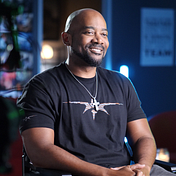
The first film, Mr. Advocate, is designed to spark conversations about artificial intelligence in schools. It doesn't tell educators what to think—it simply encourages dialogue.
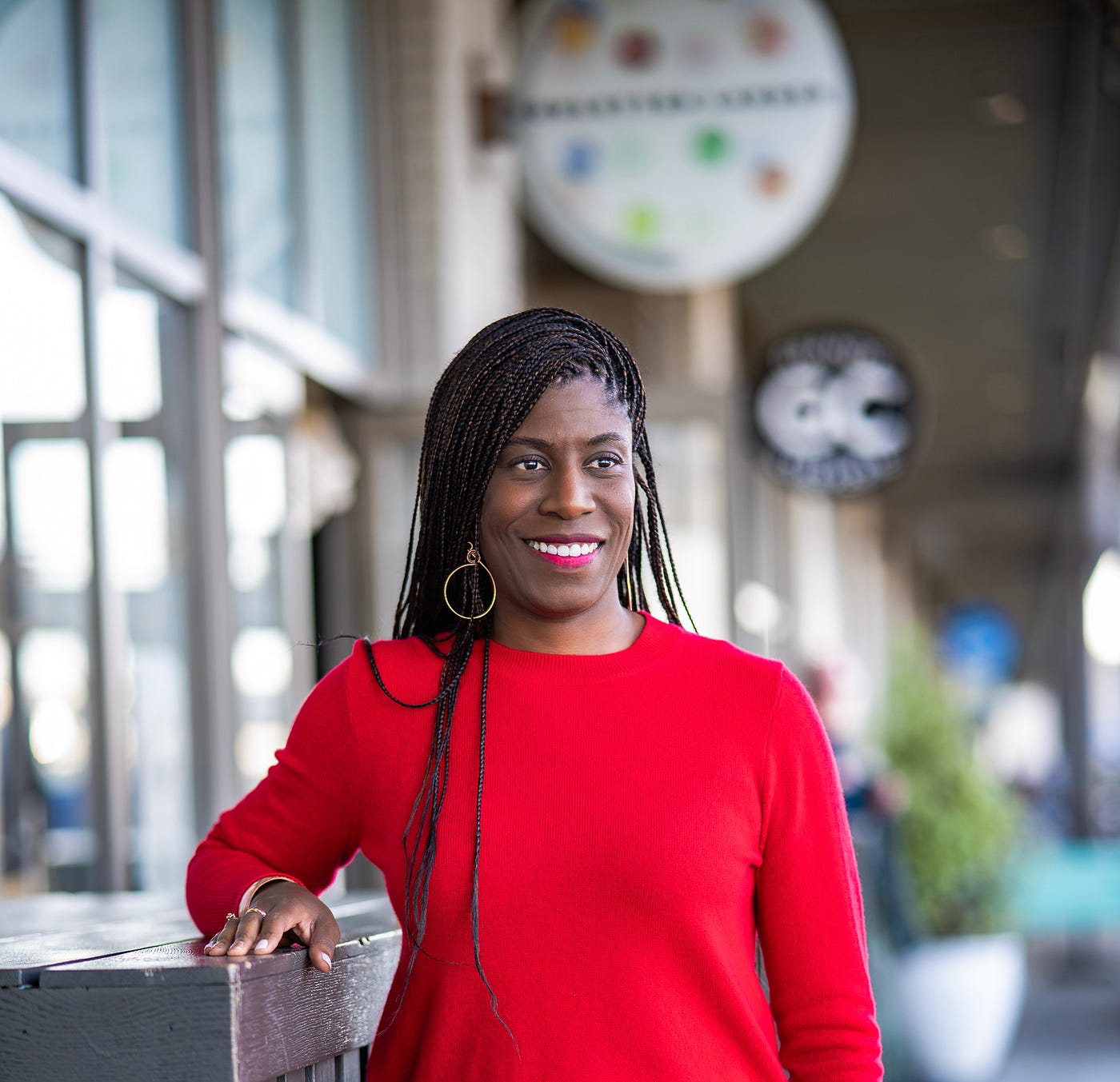
As a part of our series about “Filmmakers Making A Social Impact” I had the pleasure of interviewing filmmaker Stacie McClam.
Stacie McClam is a former educator, independent filmmaker and education advocate whose work on films like MR.ADVOCATE explores the human impact of school systems, technology and public policy.
Thank you so much for joining us in this interview series! Before we dive in, our readers would love to get to know you a bit. Can you share your “backstory” that brought you to this career?
I was bused from my neighborhood beginning at six years old through high school to attend schools outside of my community. Although I grew up in a middle-class neighborhood, the local schools consistently had lower test scores. Looking back, I believe that had much more to do with the demographics of the students than their abilities.
As a child, I remember waking up before sunrise to catch the bus while my neighborhood friends were still asleep. I knew early on that something was different. The school five minutes from my house wasn't considered the "better" school, so I was transported elsewhere.
My aunt, who was a teacher, encouraged my parents to enroll me in the gifted program. At that time, school test scores were published in the newspaper, and my parents likely wouldn't have known about the disparities without her guidance.
Education was also deeply valued in my family. My grandmother was a teacher in segregated Virginia, and my mother often told me how highly respected teachers were in her community. I remember seeing photographs of my grandmother dressed elegantly—with heels, gloves, and a hat—as she headed to school. Those stories shaped my understanding of education and the important role teachers play.
As I moved through middle and high school, I became increasingly aware of academic tracking. I noticed that Black and Latino students were often excluded from advanced math classes, such as seventh-grade Algebra, placing them on a different academic trajectory.
I also experienced gatekeeping firsthand. I was never allowed to take Advanced Placement (AP) classes. My high school counselor even left a message on my parents' answering machine discouraging me from applying to certain colleges. Fortunately, my mother encouraged me to apply anyway.
At my school, counselors created additional barriers by requiring teacher recommendations for AP enrollment, even though those requirements were not mandated by the College Board. Despite earning strong grades and participating in journalism, I was denied access to AP English because I lacked a recommendation. Meanwhile, the majority of students admitted into those classes were White and Asian.
These experiences taught me how expectations influence opportunity and how systems often determine who is considered "gifted" or "capable."
Those experiences—being bused, learning about my grandmother's legacy, and witnessing educational tracking—ultimately inspired me to become a teacher. I wanted students to have opportunities I didn't have and avoid many of the barriers I experienced.
It has been said that our mistakes can be our greatest teachers. Can you share a story about the funniest mistake you made when you were first starting? Can you tell us what lesson you learned from that?
During production of my documentary about an Ohio mother who was jailed for falsifying documents to enroll her daughters in a different school district, I interviewed someone and forgot to press the record button.
I didn't realize it until I got home.
Thankfully, the interviewee graciously agreed to meet with me again the next day. It was a lesson I'll never forget: always make sure the camera is recording.
Sometimes you have to make mistakes in order to learn.
Who are some of the most interesting people you have interacted with? What was that like? Do you have any stories? Which people in history inspire you the most? Why?
The people I find most interesting are truth-tellers.
Faith Jackson – High School English Teacher
She was strict, demanding, and refused to let students settle for mediocrity. Although some people may have called her "mean," I saw it as caring deeply about her students. She also taught me how to be vulnerable through writing for the first time.
Professor Katherine Smith – Law School Professor
Professor Smith generously reviewed students' practice exams during office hours and helped me master the IRAC (Issue, Rule, Application, Conclusion) method of legal analysis. Her willingness to invest extra time in her students made a tremendous difference in my success.
Professor Pedro Noguera – UC Berkeley
Professor Noguera taught Education 40: Race and Culture in the School System.
For the first time, someone gave a name to the experiences I had lived through. He explained concepts like academic tracking, the Asian model minority myth, and the history behind educational inequities. Sitting in that classroom, I realized I wasn't imagining what I had experienced—it was happening nationwide.
That class profoundly shaped my understanding of education.
Which people in history inspire you the most?
Artists.
Artists take risks and say what others are afraid to say.
Filmmaking is my third career. I wasn't the child making movies with a camera. I was a teacher, then I attended law school, and eventually became a filmmaker.
Today I appreciate artists because they challenge the status quo and shine light on issues many people would rather ignore.
Let’s now shift to the main focus of our interview, how are you using your success to bring goodness to the world? Can you share with us the meaningful or exciting social impact causes you are working on right now?
I founded my production company, School Dismissed, to create films exclusively about K–12 public education issues and solutions.
Last year I produced:
Two short films
Three feature films
The feature films make up what I call The System Trilogy.
The first film, Mr. Advocate, is designed to spark conversations about artificial intelligence in schools. It doesn't tell educators what to think—it simply encourages dialogue.
The second and third films examine the challenges of AI, including:
Surveillance
Privacy
Civil rights
Disproportionate monitoring of Black and Brown students
My films are my social impact work.
Many of us have ideas, dreams, and passions, but never manifest them. But you did. Was there an “Aha Moment” that made you decide that you were actually going to step up and take action for this cause? What was that final trigger?
Yes—two of them.
The first was realizing I needed to leave teaching.
After more than ten years teaching across Washington, D.C., Denver, Los Angeles County, and internationally, I experienced a moment when one of my first-grade students became aggressive toward me.
I wasn't afraid of the student. What hurt was realizing the system had positioned me as the enemy, even though I had been working tirelessly on behalf of students.
That experience made me understand I could no longer create the impact I wanted from inside the classroom.
The second "aha" moment came in 2025.
I realized that if I wanted to call myself a filmmaker, I actually had to make films.
Instead of waiting for the perfect opportunity, I committed to execution.
That year I completed two short films and three feature films.
Can you tell us about someone who has been impacted by your work?
Rather than one individual, I've seen many members of my cast and crew discover new opportunities.
Some found the department they wanted to pursue in filmmaking.
Others landed their very first feature film acting roles.
Watching people grow alongside these productions has been incredibly rewarding.
Are there three things that individuals, society or the government can do to support you in this effort?
Follow me on social media and subscribe to my email list. Today, filmmakers must build their own audiences, and distributors pay attention to those metrics.
Introduce my films to school districts interested in professional development. I hope to facilitate discussions around AI, school politics, and educator wellness.
Share my films with colleges, universities, and organizations that may be interested in licensing them.
What are your “5 things I wish someone told me when I first started” and why? Please share a story or example for each.
1. You will make mistakes.
Mistakes are part of growth. Every new experience teaches you something you couldn't have known beforehand.
2. Budget more for post-production.
Editing, sound mixing, color correction, DCP creation, music licensing, attorneys, pickup shoots, and other unexpected expenses add up quickly.
3. Hire a line producer if possible.
Having someone dedicated to budgeting and logistics would have saved time and money.
4. Define success before you begin.
I eventually realized my audience is educators, schools, universities, and organizations—not necessarily traditional film festivals.
That realization led me to develop a hybrid distribution strategy that includes:
School district partnerships
Educational licensing
California college tour
HBCU college tour
5. Understand insurance requirements.
Production insurance, workers' compensation, equipment coverage, and other policies are essential—and expensive.
If you could tell other young people one thing about why they should consider making a positive impact on our environment or society, like you, what would you tell them?
Free yourself first.
You cannot fully help society until you allow yourself to share your gifts.
Perfectionism keeps many people from ever starting.
Create imperfectly.
Once your work exists, you can improve it.
We are very blessed that many other Social Impact Heroes read this column. Is there a person in the world, or in the US, whom you would like to collaborate with, and why? He or she might see this. :-)
Ava DuVernay.
I admire both her filmmaking and her leadership.
Through Queen Sugar, she intentionally hired dozens of women directors, creating opportunities many would not have otherwise received.
I also deeply connected with her film Origin, especially its exploration of grief. After losing my mother in 2021, that story resonated with me in a profound way.
Can you please give us your favorite “Life Lesson Quote”? Can you share how that was relevant to you in your life?
"Start small. Start with what you have."
No one was going to fund my first films, so I invested my own money.
Even though I couldn't afford every scene I envisioned, I made the best film I could with the resources I had.
Now I have work to show.
And perhaps because I started with what I had, others may be willing to invest in what comes next.
How can our readers follow you online?
https://www.youtube.com/@schooldismissed https://www.instagram.com/staciemcclam/ https://www.facebook.com/staciemcclam
Thank you so much for the time, the insights, and for the work you do. We wish you continued success!