It was fascinating to contrast what I knew about human behavior and mental health with what the mainstream training methods said about canine behavior and mental health.
Wellness
Souha Ezzedeen of Way of Life: Inside the Quest to Transform the Human-Canine Bond Through Behavioral Science
University professor and dog training expert Souha Ezzedeen shares how applying behavioral science can help owners heal and build harmonious relationships with their companion animals.
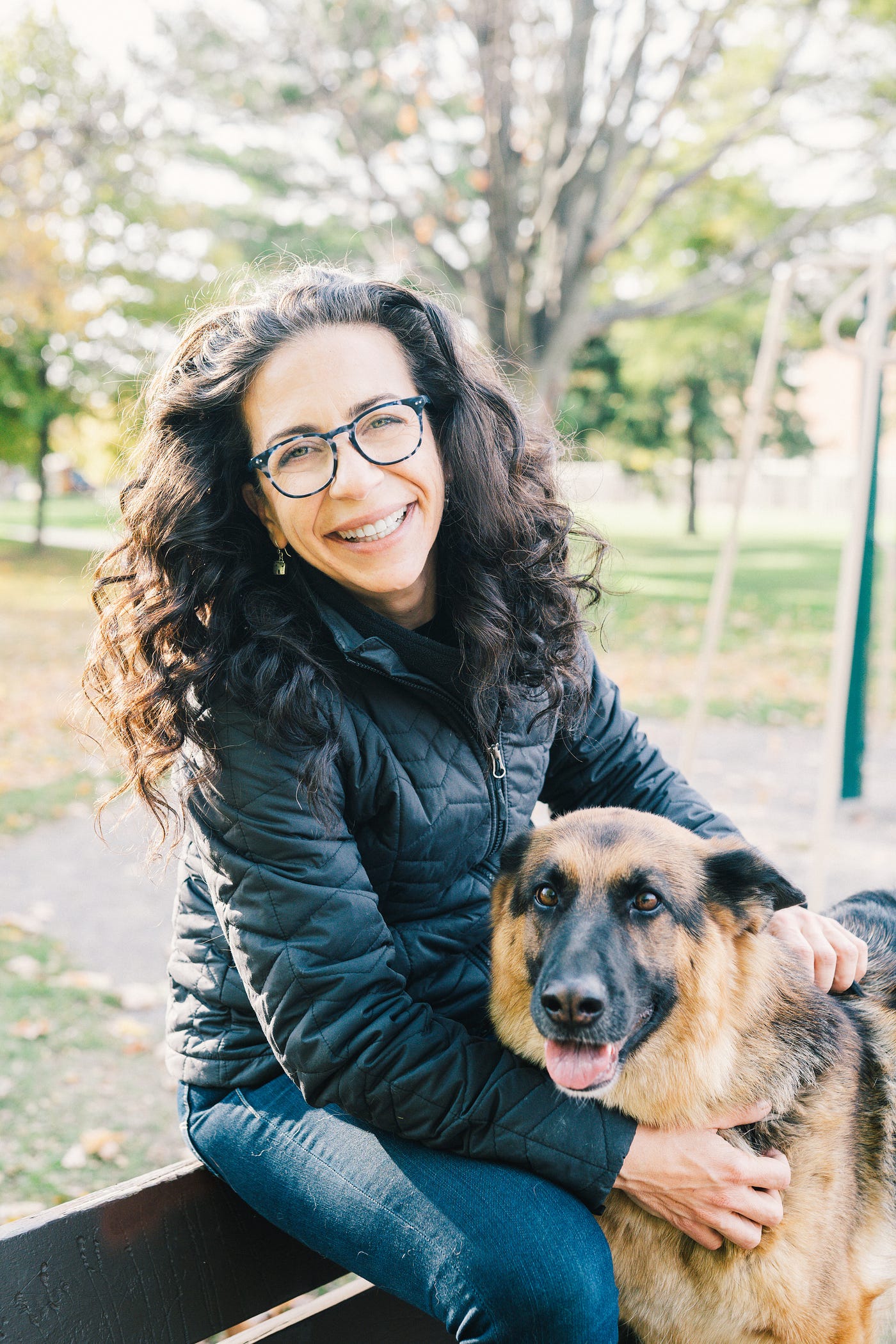
Pets have always been more than just companions; they play a pivotal role in enhancing our mental well-being. From the unconditional love of a dog to the calming presence of a cat, pets have a unique way of alleviating stress, anxiety, and loneliness. But how do we truly harness the therapeutic potential of our furry, feathered, or scaled friends? How can they aid in promoting mindfulness, reducing depression, or even enhancing social interactions? In this interview series, we are talking to veterinarians, psychologists, therapists, pet trainers, and other experts who can shed light on how to maximize the mental health benefits of having a pet. As a part of this series I had the distinct pleasure of interviewing Souha Ezzedeen.
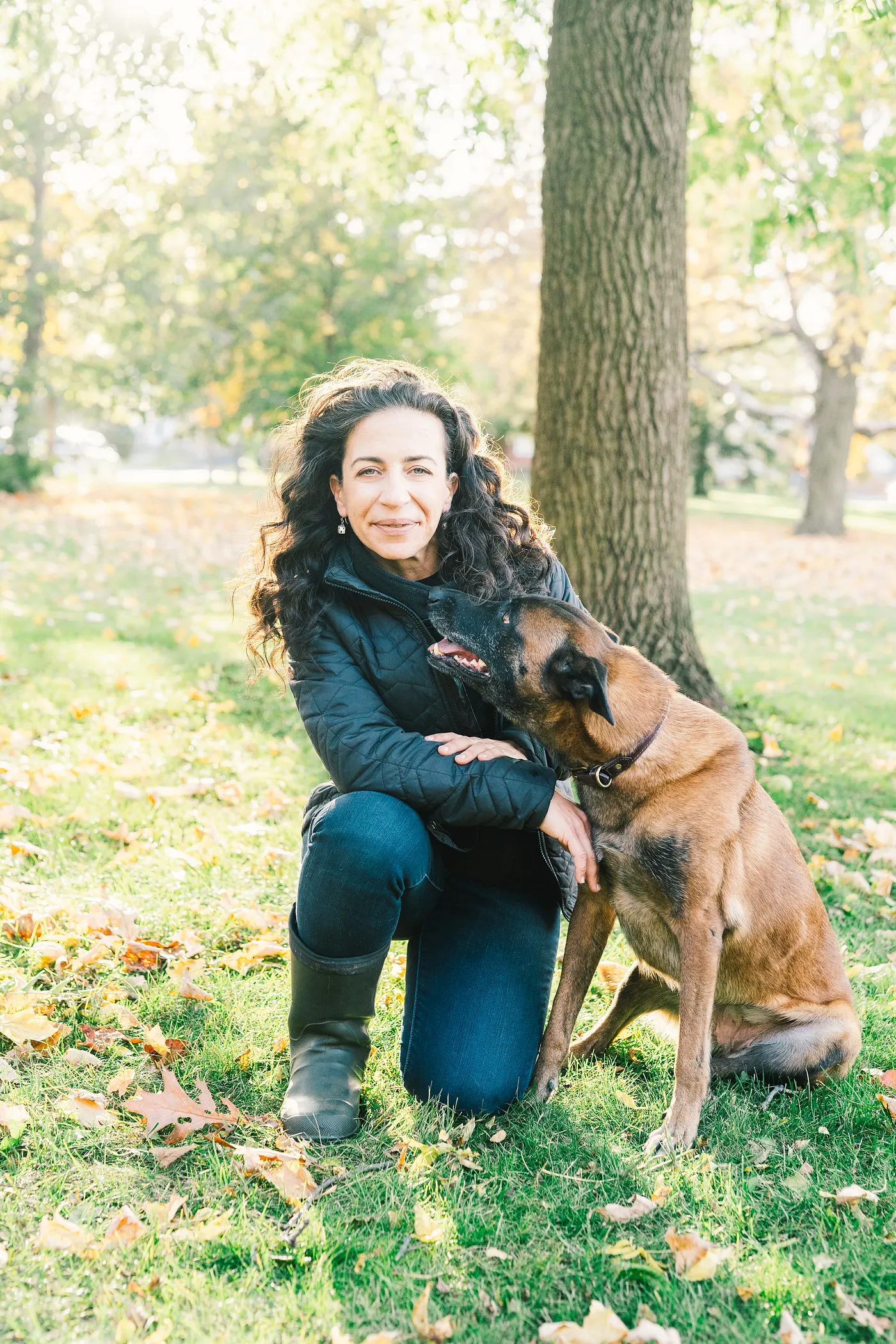
Souha Ezzedeen, PhD, is a university professor and the founder of Way of Life™ Dog Training in Toronto, Canada. Souha has been an academic for more than 25 years with expertise in management and organizational behavior, as well as a dog trainer and coach. As a result, she has a curious mind, loves research, and is perfectly positioned to be speaking to us today about pets, mental health, and ways to maximize the psychological benefits of life with companion animals.
Many years ago, Souha faced complex challenges with her dog Maya at a time when she was also reeling from the sudden death of her father. Souha dove deep into a theoretical and practical study of all things canine, aided by her behavioral and organizational education and expertise.
This study soon became a passion, which revealed itself as a calling to help dog owners and their companions develop stronger relationships. Today, Souha’s goal is to share everything she has learned about the human-canine bond with people struggling to achieve a more harmonious life with their dogs.
Over her 20 years shared with dogs, Souha has gained experience working with behavior issues in her dogs and as a volunteer dog walker and foster parent for shelters and rescues. For years, she boarded difficult dogs and coached friends and acquaintances for free while continuing to work through new challenges with her own dogs. She has also been active in dog sport throughout this time, including sheep herding, obedience, and scent work, which taught her to nurture both stability and drive in her dogs. Feeling truly blessed to have gained so much valuable knowledge about dogs, Souha founded Way of Life Dog Training in 2019. She recently published her first book, The Way of Life Method: How to Heal Your Relationship with Your Dog and Raise a Sound, Strong, and Spirited Companion (At Any Age).
Today, Souha leads a busy life as a university professor, coach, trainer, and guardian of four dogs. She coaches her clients to design ways of life that nurture sound, happy, and well-adjusted dogs. In turn, this coaching process helps the human owners heal of their own issues, grow, and experience a bond with their dogs that they never imagined possible.
Thank you so much for joining us in this interview series! Before we start, our readers would love to “get to know you” a bit better. Can you tell us a bit about your background and your childhood backstory?
Thank you very much for having me. I am honored to be speaking about pets, mental health, and ways of maximizing the mental health benefits of life with companion animals. In many ways, I feel uniquely suited to talking about these topics.
Currently, I am a university professor, dog training coach, business owner, and guardian of four dogs. My inspiration for a life with animals came from spending summers with my grandmother in the mountains of Lebanon and seeing her surrounded by animals. She made it look easy to share her life with dogs, cats, and other critters — at least that’s how it appeared through my young eyes and in my recollections.
Outside of those summers with my grandmother, I led a parallel life very much focused on academics and scholarly achievement. While I loved animals and imagined myself one day living the way my grandmother did, I never considered becoming a dog trainer. Instead, I worked on becoming a business school professor.
Getting a dog was one of the first things I did after completing my PhD. I had a very bumpy beginning as a dog guardian, and there was one dog in particular who made me want to find out more about our bond with our dogs and how it might become a source of healing, wholeness, and joy for both the human and the animal. Maya was not my first dog, but she was my ultimate teacher when it came to the experience and expertise I share with my clients today. I talk about her a lot in my book, The Way of Life Method — the issues she manifested, her mental health troubles, and how they affected me at a particularly difficult time of my life when my own mental health left much to be desired.
I had tried all the conventional methods to change Maya’s behavior to no avail, digging both of us into an ever-deeper pit of despair. It was fascinating to contrast what I knew about human behavior and mental health with what the mainstream training methods said about canine behavior and mental health. It was, and still is, simplistic and reductionist, and that is why so many people struggle with their companion animals, especially dogs. Instead of this unique relationship being a source of joy and happiness, it is a source of anguish and stress for many — both human and animal. This ushered in a decade of learning for me. I eventually discovered the power of our way of life with our dogs and its role in rearing sound dogs who, in turn, maximize our mental health.
Can you share the most interesting story that happened to you since you started your career?
There are so many interesting stories I could share, stories of my clients and their dogs and stories involving my own dogs. But there is one story in particular that is near and dear to my heart because of how desperate my clients were when we met and the serendipity that brought us together.
I am an avid gardener, and in recent years I have developed a passion for native gardening. I needed help taking my native gardening to the next level and hired a local business for a consultation. When my future client, Andy, came for a site visit, I had my German shepherds out with us. Soon enough, dogs came up in the conversation. It turned out Andy and his wife were facing tremendous challenges with their northern-breed rescue dog and had experienced only limited success with conventional training methods. They were at their wits’ end, struggling to keep trying, and researching rehoming options. It was clear that we were meant to work together and agreed on bartering gardening for training services.
Fast forward to today: I am not only pleased with my growing native garden but I also have clients who are amazed at the 180-degree change from where they were with their dog when we met. It brings me infinite joy to be able to work with people to help them better understand and be understood by their dogs, and to see them rediscover each other and heal each other in the process.
Is there a particular book that made a significant impact on you? Can you share a story or explain why it resonated with you so much?
The Road Less Traveled: A New Psychology of Love, Traditional Values and Spiritual Growth, by M. Scott Peck, MD, is one of the most treasured books on my shelf. It’s one that I return to periodically and I listened to the excellent audiobook more than once. Essentially, Peck argues that life is not meant to be easy and that love is doing difficult things for the growth of those we love. In our life with companion animals, for our bond to be truly healing and mutually satisfying, we need to take responsibility for this relationship and extend ourselves for the benefit of the animal we care about. We will find that we were the ones who grew, healed, and made a real difference in the end.
Ok, thank you for all that. Now let’s move to the main focus of our interview. Can you share a personal story about how a pet has helped you or someone you know to improve mental wellness?
Again, I could share so many stories from my life as a professor, trainer and coach, and parent and guardian to my own dogs. There is one client in particular who comes to mind due to the extreme mental health challenges that she presented, which in turn affected her relationship with her young dog. This dog owner was extremely afraid of dogs, a germaphobe, and terrified of ordinary situations like taking her dog for a walk or hike. She feared attackers bounding out of the bush or bands of coyotes stalking and harming her and her dog.
Despite her fears, during the pandemic (when so many of us sought comfort in companion pets) my client adopted a puppy. Things started to go off the rails very quickly. Still, my client loved her dog and knew she needed to get better for him, and she did. Dogs rely on us to model mental health for them — if we want our dogs sound and happy, that is what we need to be. Over time, I have seen this client conquer one fear after another. Recently, she sent me a picture of her and her friend’s dog — a dog she’d known for eight years and had never worked up the courage to pat, much less hold in her arms. The picture showed my client holding a sleeping dog in her arms. I could see the strength in my client’s face. She knew she had conquered!
While human interaction is essential for emotional well-being, in what ways do interactions with pets offer unique benefits that human relationships might not provide?
Great question. There are three ways that I think pets provide unique benefits that human relationships might not. First is the constant caregiving responsibility that we have toward our dogs. It’s a responsibility we bear from the moment we bring them home to the very end when they pass on — at least I hope most of us take that lifelong responsibility seriously. Many people see this level of commitment as daunting, and those people generally do not have pets. For those of us who do, there is something incredibly bonding and healing that happens when we take the care of our animals seriously. Although this responsibility can feel heavy at times, especially for those of us struggling with mental health issues, it is ultimately beneficial.
The second reason I believe that pets offer benefits that cannot be matched by other humans is that they are a different species. They speak a different language, are from a different culture, and are non-human animals — specifically, a canid predatory species. Then there is the particular language a dog uses in front of humans, which pulls us out of ourselves and makes us less human-centric and self-centered.
Third is their constancy and their nonjudgmental, noncritical, and authentic presence. These attributes are rare in our human friends, who are busy, distracted, and often judgmental and critical, even when they don’t mean to be. We spend more time with our pets than anyone else — they are witnesses to our lives, and us to theirs, in ways that are unparalleled in our human relationships.
On the other hand, our relationships with animals are not a substitute for bonds with fellow human beings. I think part of the reason why so many pets and pet owners are struggling is because we have placed an unfair burden on our companion animals to compensate for an epidemic of loneliness and isolation.
Can you explain how this works? How do pets, particularly common ones like dogs and cats, biologically and psychologically help to alleviate human stress levels and anxieties?
There are five ways that we know common pets, like dogs and cats, help ease our human stresses and anxieties. First, our companion animals live in the here and now. They are present to the present experience. Of course, their experience of the present is shaped by their background, like any living being. However, unlike us humans, they don’t fret over the future or keep ruminating over the past. Second, our pets are constant in a way that humans simply cannot be. They are reliable and predictable, while our humanity often makes us inconsistent, moody, and unpredictable. Third is the healing power of physically touching our furry or feathered friends. There is scientific evidence that physical touch lowers blood pressure, reduces stress, and increases relaxation. Fourth is the element of physical exercise. Our pets, particularly our dogs but increasingly our cats too, force us into a more active lifestyle. Fifth, our pets are social magnets that bring people together in community and conversation. As animal guardians, there are people we have met and become close with who we would not know had it not been for the animals who brought us together.
In the backdrop of global events like pandemics or natural disasters, how have you seen pets playing a role in alleviating anxiety and providing comfort? Can you share some instances where pets have been integrated into therapeutic practices? How do they complement traditional therapeutic techniques?
Let me begin with the second question about pets being integrated in therapeutic practices. There are many, many ways that animals are involved in formal therapeutic and clinical settings, including animal-assisted therapy (AAT). There are also interventions where the animals themselves are the vehicle of therapy. Dogs are increasingly present in workplaces in addition to therapeutic, clinical, and medical settings.
The role played by pets in alleviating anxiety and providing comfort during the pandemic was significant and has been well documented. The company and purpose they provided during unprecedented and isolating lockdowns was felt by many, and this explains in part why so many animals were adopted during the pandemic. Maybe people could not imagine being without some form of company during the lockdowns, or perhaps they finally had the chance to have a pet since they no longer had to be at the office. Sadly, the animals have paid dearly for this. During the pandemic, we witnessed a rise in dognapping, puppy mills, and backyard breeding to take advantage of the unprecedented demand. And since the pandemic, with cost of living rising, we are seeing unprecedented pet relinquishments, full shelters, and many people rehoming, surrendering, and even euthanizing pets they are no willing or able to care for.
Not all pets are dogs or cats. From birds to fish to reptiles, how can individuals choose the right pet that aligns with their mental health needs?
That’s right — there are many kinds of companion animals beyond dogs and cats. As with any potentially life-changing decision, it is important to choose the right pet for one’s mental health and life situation in general. I think there is always something to be said for the inner attraction that we feel toward a particular species. That counts for something! But chemistry aside, we need a detached analysis of our capacity and commitment to care for an animal, given that specific animal’s needs. The better we can meet the needs of a particular species, breed, and temperament or personality, the more that pet can become the source of comfort and company that it was intended to be. For the relationship to deliver the most benefit for both parties and therefore endure, both parties’ needs must be met.
How does the act of taking care of a pet — feeding, grooming, exercising — contribute to an individual’s sense of purpose and mental well-being?
This is a great question. Like I said before, for many people these responsibilities can feel daunting. But the act of working for the benefit of others ultimately contributes to our sense of purpose and mental well-being. There is something maturing and growth-inducing about realizing that the wellbeing of our animals is entirely dependent on us. We are responsible for all aspects of their care, including feeding, grooming, exercising, training, and health care. Not only does this get us out of our own heads, but also, when we do our job well, particularly when we raise mentally healthy companions, our animals look up to us, want to be with us, pay attention to us, and increasingly care about what we like and what we are up to. This is incredibly healing and rewarding.
The past 5 years have been filled with upheaval and political uncertainty. Many people have become anxious from the dramatic jolts of the news cycle. From your experience or research, what are your “Five Ways To Maximize the Mental Health Benefits of Having a Pet?” Can you please share a story or example for each?
1. The right fit between the human and the animal cannot be emphasized enough. Raising a good companion animal is not easy, and the impact of fit on the person and pet’s relationship and enjoyment of each other is evident and significant. In my practice, I encounter people whose dogs are a good fit for them and people whose dogs are a less-than-optimal fit. One striking example was a world-renowned surgeon who brought home a young and energetic border collie. With her busy schedule and devotion to her career, she simply could not meet the needs of that type of dog.
2. Understand the reasons why you want a companion animal and be realistic about your expectations. Appreciate that you are responsible for the success of this relationship. One of the most common mistakes I see people make with dogs is expecting that they instinctively know how to be our pets and will fit right into the companion role we’ve assigned to them, without giving them the benefit of time or training.
3. Focus your relationship with your companion animal primarily on meeting and fulfilling their needs. The less you make it about you and your needs, the more rewarding it will be. One of my first clients contacted me with concerns about her pup nipping and biting her soon after she’d brought him home. Once she realized that he needed a transition period, and that it was her responsibility to set him up for success, the dynamic changed and their relationship blossomed.
4. Seek companionship, friendship, comfort, and guidance from a community of fellow animal lovers. There are groups all around the world dedicated to owners of all kinds of pets. It has made a big difference in my own life to be part of a community of fellow dog lovers comprising rescue volunteers, my teachers and students, my clients and followers, and my family and friends, not to mention the veterinarians, trainers, and dog sport instructors in my life.
5. Seek expert help if you’re having issues of any kind — don’t assume you know or should know what to do just because you love your companion. And remember that not all advice is good advice, so don’t trust everything you read on the internet. In my practice, I see people all the time who let a behavioral issue in their dogs carry on for longer than necessary, thinking they can fix things on their own. They also make the mistake of thinking that the solutions will consist of tips, quick fixes, and hacks, when usually it takes a more holistic outlook to effectively resolve issues of any kind.
The loss of a pet can be deeply traumatic. How can individuals navigate this grief, and how does it compare to other forms of loss in terms of mental health impact?
Our companions are so special to us that their loss can be a harrowing experience. Years of constant companionship leave a gaping hole in our lives and our hearts. It is one of the hardest things that a person can endure — that I know for sure! This great loss, unfortunately, is part of the story of a life beautifully shared with a companion animal. It is the price we pay, but this does not make it any less difficult. My advice is to remember, write down, and talk about beautiful memories; to list all the ways that you made that animal’s life special and how they made yours special; and to celebrate all the good that you were blessed to experience with them. Of course, you can find solace and company with others who understand and avoid (but not judge) those who don’t. Remember also that there is always a new love out there waiting, with so many animals looking for their forever home. You just might have the perfect home for one of them.
You are a person of great influence. If you could inspire a movement that would bring the most amount of peace to the greatest amount of people, what would that be?
I think the most important gift we can give both our animals and our fellow humans is to take a moment to understand where we are all coming from and see that we reflect our way of life, context, and situation. This is true of any living being — human or animal. In organizational behavior, there is a concept of the “fundamental attribution error,” where we tend to overestimate the individual’s role and underplay the impact of the situation. We do that with dogs constantly — blaming breed, background, or personality for their dysfunctional behavior when in fact they, like us, reflect their way of life. I have learned to judge my fellow humans less and understand them more because of how I learned to do that for my dogs.
We are very blessed that some very prominent names in Business, VC funding, Sports and Entertainment read this column. Is there a person in the world, or in the US with whom you would love to have a private breakfast or lunch, and why? He or she might just see this if we tag them. :-)
As a woman, conservationist, and trailblazer, I deeply admire Jane Goodall and would love to meet her one day. To me, she embodies the essence of speaking for those who cannot speak for themselves and of ecological leadership at a time of existential environmental crisis. She faced many challenges in her career and life, which she overcame with quiet elegance and poise. She has already inspired countless animal lovers, scientists, and protectors of the natural world, and she will continue to be an icon for decades to come.
How can our readers further follow your work online?
Way of Life Dog Training Website
https://wayoflifedogtraining.com
The Way of Life Method Book
https://thewayoflifemethod.com
Newsletter Signup
https://wayoflifedogtraining.com/newsletter/
+ FREE RESOURCES
Blog
https://wayoflifedogtraining.com/blog/
Five Reasons For Reactivity That We Don’t Talk About Enough (+Way of Life Solutions)
https://wayoflifedogtraining.com/dog-reactivity/
Puppy Primer: Priorities for a Great Puppy Start
https://www.wayoflifedogtraining.com/puppy-primer/
Let’s Fix This: Ten Steps You Can Take Right Now to Address Just About Any Behavioral Issue
https://www.wayoflifedogtraining.com/lets-fix-this/
Thank you so much for sharing these important insights. We wish you continued success and good health!
About the Interviewer: Wanda Malhotra is a wellness entrepreneur, lifestyle journalist, and the CEO of Crunchy Mama Box, a mission-driven platform promoting conscious living. CMB empowers individuals with educational resources and vetted products to help them make informed choices. Passionate about social causes like environmental preservation and animal welfare, Wanda writes about clean beauty, wellness, nutrition, social impact and sustainability, simplifying wellness with curated resources. Join Wanda and the Crunchy Mama Box community in embracing a healthier, more sustainable lifestyle at CrunchyMamaBox.com .
WM
Written by
Wanda Malhotra
Editor & Journalist · Authority MagazineWanda Malhotra is a contributing interviewer at Authority Magazine covering Wellness and Business, conducting primary-source Q&A interviews with founders, executives, and industry leaders.

Published inAuthority MagazineTop Lessons, Top Authorities · 42K Followers
Exclusive, curated interviews with the leaders and changemakers shaping tomorrow. Leadership lessons, industry deep dives, and executive profiles.