What I realized is that even if you can’t cure a disease or completely change the course of what’s happening, the ability to support a family in the small things that perhaps we don’t even think about were really very important.
Wellness
Edward M. Kaye: Small Support Matters Most When A Cure Is Out Of Reach
The CEO of Stoke Therapeutics reflects on his transition from pediatric neurology to biotech and why listening is the most vital tool for any medical leader.
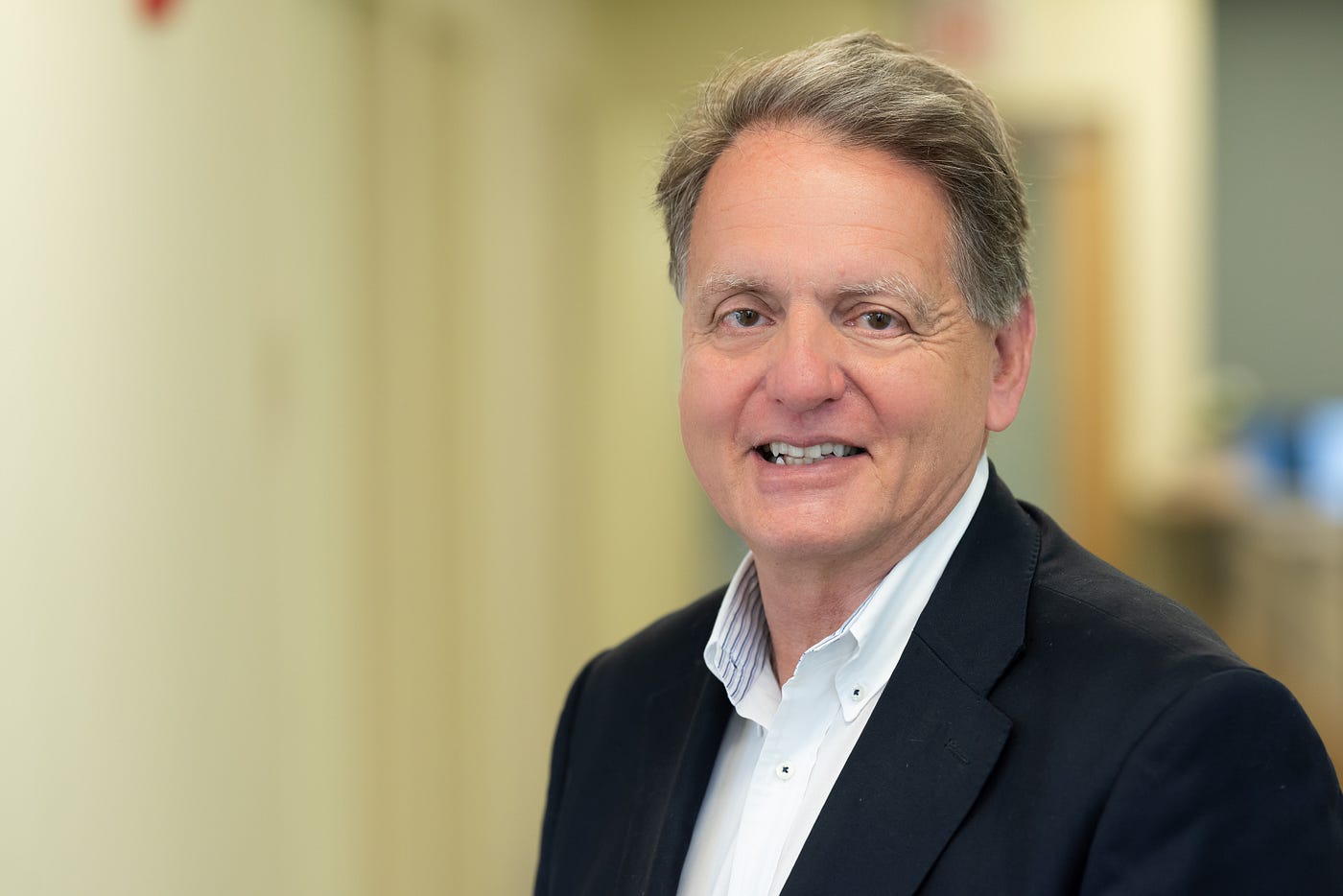
As a part of my series about healthcare leaders, I had the pleasure of interviewing Edward M. Kaye, M.D.
Edward M. Kaye, M.D. is a pediatric neurologist and biochemical geneticist who spent the early part of his career practicing medicine and leading the division of Biochemical Genetics at The Children’s Hospital of Philadelphia. His unique experiences as a physician motivated him to transition to drug development to improve treatment options for patients with an emphasis on pediatric diseases. He currently serves as Chief Executive Officer and Director of Stoke Therapeutics, which is targeting the underlying cause of severe diseases by upregulating protein expression with RNA-based medicines.
Thank you so much for joining us in this interview series! What is your “backstory”?
My work has always centered around helping children with severe diseases. I was a researcher at Massachusetts General Hospital and Tufts University Medical Center before leading the division of Biochemical Genetics at The Children’s Hospital of Philadelphia. I was also a consultant in pediatric neurology at Boston Children’s Hospital until 2015.
Leaving academia and clinical practice was a big decision for me. I routinely saw patients leave the clinic without an official diagnosis and limited, if any, treatment options. It was frustrating to see patients and their families come to me for help that I couldn’t give them. So, in 2001, I joined Genzyme as the company was emerging as an early pioneer in the development of medicines for rare diseases. Then I joined Sarepta and helped the company establish its pipeline of potential medicines for Duchenne muscular dystrophy, many of which went on to gain regulatory approval.
Today, I lead a team of dedicated, talented people at Stoke Therapeutics, where we are developing the first potential medicines to treat the underlying cause of severe genetic diseases, starting with a rare and debilitating disease called Dravet syndrome.
Can you share the most interesting story that happened to you since you started your career?
I once had a patient who had Sanfilippo Syndrome, a neurodegenerative condition that affects the brain and spinal cord. The patient was a child and it was a severe case. Because of where they lived, the family had a hard time taking the child into the clinic. So, I tried to give the best care I could remotely and by phone. I was talking with nurses and trying to help the family however I could. I always felt that I just wasn’t helping this family at all because there was nothing that I could actually do as a physician to change the course of the disease. This child was going to die, I knew it and the family knew it.
Towards the end of life, the child was having very severe pain. So, I said, the only thing I can do is really work with the nurses and prescribe pain medication and try to be attentive. But I always had this feeling that it was never enough. And then the child finally died, and I got this lovely note from the mother who basically said I was the only physician who really took care of and really tried to help them. And the note was just for me. I thought I was doing nothing and thought I was failing and not helping this family, but it was just the opposite of what they thought. What I realized is that even if you can’t cure a disease or completely change the course of what’s happening, the ability to support a family in the small things that perhaps we don’t even think about were really very important.
Can you share a story about the funniest mistake you made when you were first starting? Can you tell us what lesson you learned from that?
I was a third-year medical student doing my first rotation in neurology at the VA hospital. An intern had backed out and decided to take another position a week or two before the first week in July, which is when all the interns changed. So, they were very short on residents. Here I was as a very green medical student, and the resident basically made me into an intern, which was way above my level of competence at that point.
But I didn’t admit that. I took over half of the ward and I thought I was doing a pretty good job. But one time, I was writing a death note, which is what we do when we lose a patient. I wrote a very good note, only to find out from the ward clerk that I had put it in the wrong chart. It was a little embarrassing, but it was a lesson learned: When it’s really important, you need to double check and make sure that all of the details are covered and don’t just assume. I was so focused on writing such a good note, but it would’ve been helpful if I made sure it was in the right chart.
Are you working on any new or exciting projects now?
It’s a really exciting time at Stoke right now. We are working on an investigational therapy for Dravet syndrome, a severe genetic epilepsy that usually affects people in their first year of life. Dravet has many comorbidities beyond seizures that can significantly impact the lives of young patients and their families such as intellectual disability, developmental delays, movement and balance issues, to name a few.
STK-001, our potential new medicine for Dravet syndrome, could help treat the seizures, but also the non-seizure aspects of the disease, which hasn’t been done before and would be huge for patients and families. There is a high mortality rate, and physicians have thus far only been able to treat the disease’s symptoms with anti-seizure medications. We are proud to be making progress on the first disease-modifying treatment for Dravet. We plan to share an update in the first half of 2024 for STK-001, pending results from our ongoing studies.
We also have other candidates in the pipeline for Autosomal Dominant Optic Atrophy, SYNGAP1, and Rett syndrome — all severe, rare diseases.
None of us are able to achieve success without some help along the way. Is there a particular person who you are grateful towards who helped get you to where you are? Can you share a story about that?
One was in my academic career, and he was a gentleman by the name of Hugo Moser. He was considered one of the premier pediatric neurologists in the country. I was in Boston for my training at the time. But for whatever reason, Hugo Moser just took a liking to me and quietly would help my career. He would do things like recommend me to be an editor of the Annals of Neurology. I was very junior at the time for that position, but because he recommended me, I got it. He recommended me for when I moved to Children’s Hospital of Philadelphia. He didn’t owe me anything, but he just volunteered to be supportive. And what I learned after he died is that he did that for a lot of people. He decided if someone was standing out in the field, he was going to help them.
The other person who was incredibly helpful to me when I went into the biotech industry was Henri Termeer, who was the CEO of Genzyme. I went into biotech from academia and had to learn everything. But like Hugo, Henri would help if he thought someone had more potential. He allowed me to really learn all the parts of an organization so that when it was time for me to be a CEO, I was very comfortable with being able to do that because of all the things that he had made me do.
What I appreciated is that I didn’t always agree with him. I would always argue based on the science, and based on what I thought was the right thing to do. There were times when I’m sure he did not like it, but there was also respect that came out of the disagreements. It was uncomfortable to argue with him, but at the end of the day, he respected you for doing it. Today, I’m proud to serve as a mentor at the Termeer Foundation, a nonprofit that is focused on connecting healthcare innovators.
Is there a particular book that made an impact on you? Can you share a story?
I really love Sailing True North by Admiral James Stavridis. It’s about the history of naval heroes and what made these people great at what they did, even though some of them were very flawed individuals. I think what it taught me is that we’re all flawed, and we all have challenges, but it’s what you do in crisis situations that brings out the truly gifted people versus those who shrink away. They all were able to overcome immense challenges. Even though some of their decisions were not necessarily correct, overall, they were very successful.
How have you used your success to bring goodness to the world?
Taking care of patients and really understanding the severity of their disease reminds you of what’s important and allows you to focus on what you need to do to be successful in biotech. Patients should always be at the center of every decision. I’ve always kept that focus to try and do the right thing, and not get sidetracked. Throughout my career, I’ve been involved in developing seven medicines that have been approved to help patients and improve the lives of families.
Can you please give us your favorite “Life Lesson Quote”? Can you share a story about how that was relevant to you in your own life?
One of the things I try to live by is ‘find your true north’. It’s so easy to be distracted by everyday events and get consumed by them, and you realize that at the end of the day, they’re not that important. But what really is important, and true? When it comes to family, you can get annoyed with spouses or children. But then you realize the value that this person has, and what the family means to you, and you forget about the silly things. It’s the same thing in a company, finding what’s really important. In a biotech company, if we think about what we are doing, it really is about making a medicine that changes people’s lives. Even if you have challenges and disappointments, it’s important to keep focusing on what you’re trying to do. It’s not about the money. It’s not about prestige. It’s about trying to make something that will bring value to patients. And if you keep that in mind, it helps you get past some of the other things.
Can you share your top three “lifestyle tweaks” that will help people feel great?
-Wake up early: It allows you to get ahead of the day and not feel rushed.
-Work out: It’s a great way to get away from the distractions of life and release endorphins.
-Work in a profession that excites you and that you’re passionate about: Loving what you do makes you excited to wake up every day.

What are your “5 Things I Wish Someone Told Me Before I Started” and why.
The first thing I learned very quickly, during my training in pediatrics, is always listen to the mother. Actually, it could also be a father, a spouse, or person who’s actually caring for that patient. But you really need to listen to what they’re saying and not make an assumption that you know what the diagnosis is right away. Most of the time the mother actually does know what she’s talking about. And you need to understand that.
The second thing is that you need to learn what the patient’s values are as opposed to trying to impose your values on a patient. For example, I had a family from Puerto Rico who didn’t speak English, and I remember trying to talk to them about why we wouldn’t do long-term ventilation. I kept on thinking, they just don’t understand, it’s a language barrier. And what I realized later is that they were so religious that their viewpoint was that God would find some way to take care of this child and it would be okay. I was imposing what I would do as a parent, not what they would do. And that’s not always the same.
The third thing I wish I knew was how much you can learn from nurses. And I think certainly as a medical student and as a junior resident, you go through all this training, and you think that you have all this knowledge and information. But there was so much practical knowledge that the nurses had, and they were more than willing to impart their knowledge to you. It was a partnership, and I learned from them.
I also wish I would’ve learned a little bit earlier that I don’t have to be the smartest person in the room. In the past, if somebody had a differing opinion from me, I could be really tough, and I would come up with all the reasons and the journal articles to back my case. And I could be pretty tough on people if they didn’t exactly see it my way. I think it’s important to realize that you don’t always have to be the smartest person in the room.
And another thing I wish I had known that a doctor should try very hard to be the last one to speak. And what I mean by that is trying to listen to the other opinions that people are giving rather than very quickly give your opinion. Because you may learn something that may change your mind. If you speak last, you afford yourself the possibility that you can actually change your mind.
If you could start a movement that would bring the most amount of wellness to the most amount of people, what would that be?
If I was able to start a movement, it might be to bring the same kind of awareness to genetic and rare diseases that you see with cancer and other diseases. There are thousands of rare diseases that we know about, and others we haven’t yet discovered. Each disease might just affect a limited number of people, but together it’s hundreds of millions. Increased awareness of this can bring more research and more funding.
What is the best way our readers can follow you online?
Connecting on LinkedIn is best: https://www.linkedin.com/in/edward-m-kaye-md-0a46a710/
Thank you so much for these wonderful insights!
AM
Written by
Authority Magazine Editorial Staff
Editorial Desk · Authority MagazineThe Authority Magazine Editorial Desk produces, verifies, and edits long-form primary-source interviews with executives, innovators, clinicians, creators, and social impact leaders across Business, Tech, Pop Culture, Wellness, and Social Impact.

Published inAuthority MagazineTop Lessons, Top Authorities · 42K Followers
Exclusive, curated interviews with the leaders and changemakers shaping tomorrow. Leadership lessons, industry deep dives, and executive profiles.