If an order comes in and you want to throw your phone across the room because you’re angry that someone bought something, it’s time to close the business.
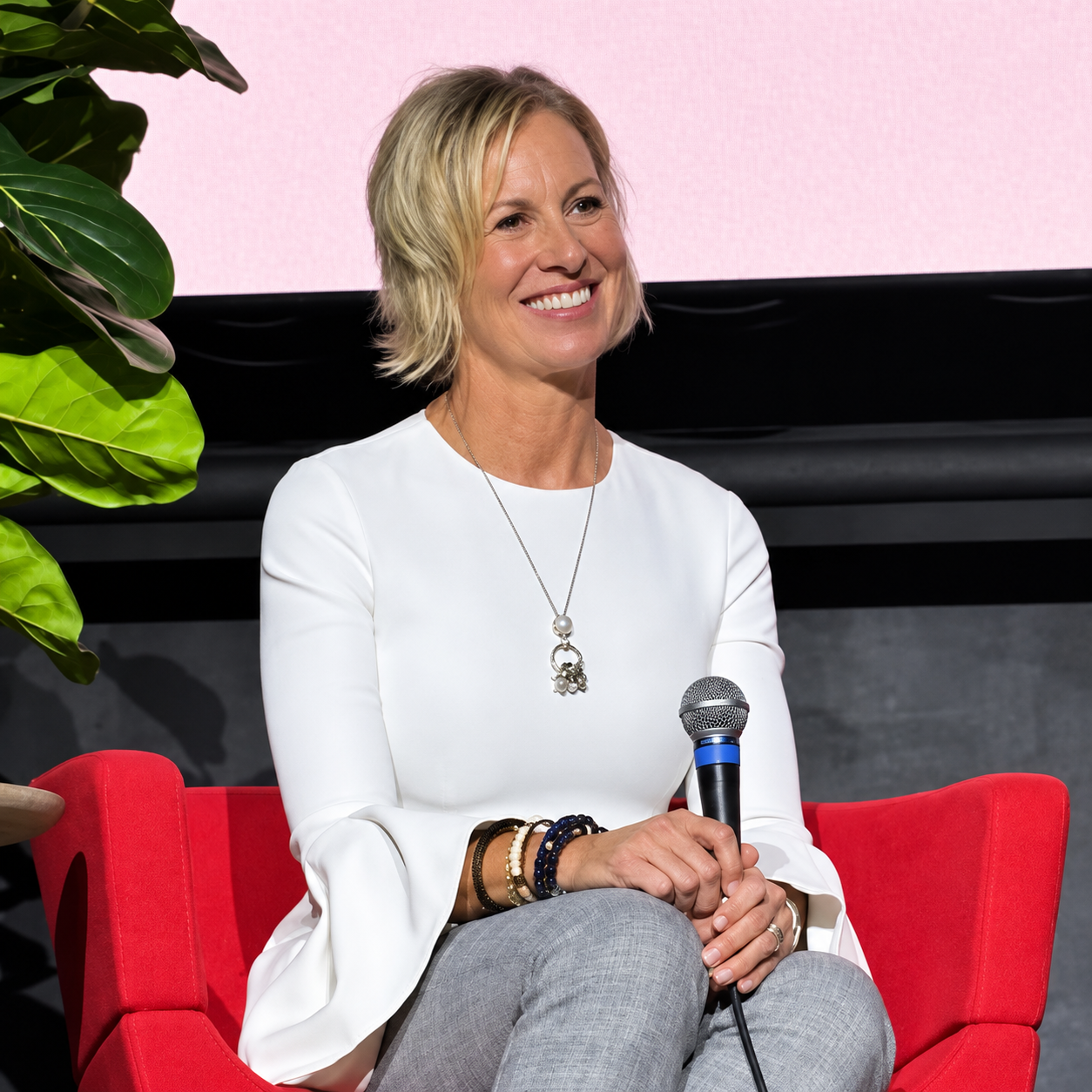
We had the pleasure of talking with Shelton Wilder. Years before she became one of Los Angeles’ most successful luxury real estate agents, she gathered with family and friends to watch herself appear on Shark Tank. Her mother, Cathy Ann, had thrown a proper watch party: around fifty people, plenty of food, bottles of wine, everyone waiting through the episode for Wilder’s segment.
Then it aired.
Wilder had gone on the show to pitch the Shemie, a fashion product she had developed after years as a stylist. During the taping, she had spoken openly about being sober and having gone bankrupt. The pitch itself had lasted more than an hour, but television reduced it to roughly twelve minutes. Wilder had signed a strict nondisclosure agreement and had no idea how the final edit would play.
Her mother did. “Everybody, it’s time to go,” Wilder remembers her saying after the segment. “We’ve got to get out of here!” Then came the family verdict: “Never speak of this again.”
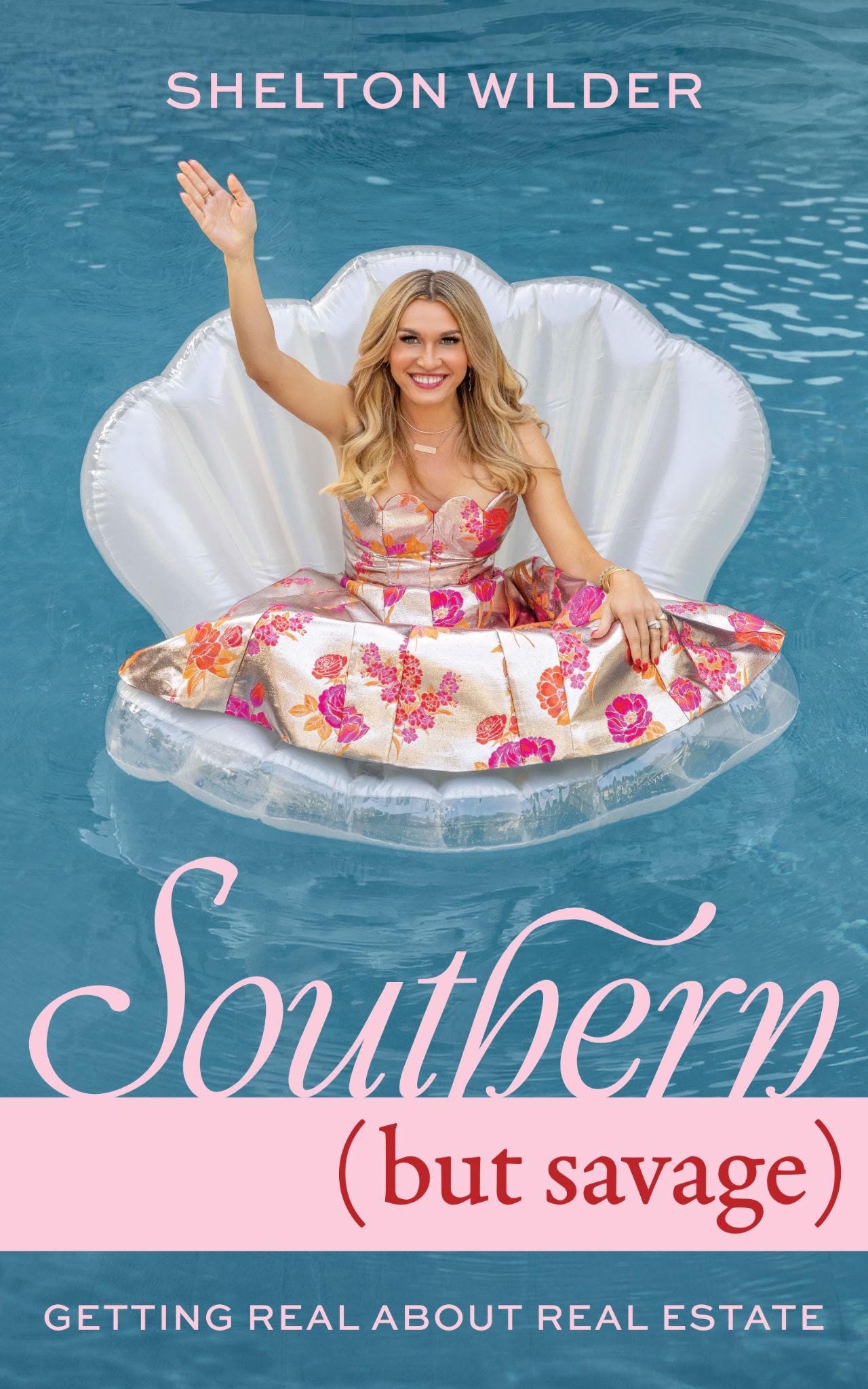
Wilder can laugh about it now. That may be one of the more useful ways to understand her. Her career has been built less on avoiding embarrassment or failure than on refusing to let either one become permanent. The title of her new book, Southern But Savage: Getting Real About Real Estate, captures the contradiction she has come to embrace: hospitality without passivity, optimism without denial, warmth paired with a willingness to walk away when trust is broken.
Wilder grew up in North Carolina, first in Gastonia and later Charlotte, in a blended family of six children. She was the oldest sister in a household she jokingly calls “the fake Brady Bunch,” and says she was helping raise younger siblings by the time she was ten. The experience left her comfortable with noise, responsibility, and having people around. Today, her real estate team is made up of twelve women, a structure she traces partly to those early years. “I just like a lot of people,” she says.
Her path to real estate was anything but direct. Wilder spent two decades in fashion styling before creating the Shemie, an undergarment she believed solved a recurring problem she had encountered with clients. She raised money through Kickstarter and ran the company for a time, but eventually discovered that manufacturing made her miserable. Her husband finally gave her a comparison she could understand. Both are sober, and he told her to think about the business “like a drink.”
“You’re done,” he told her. “We can’t take any more financial hits.”
Wilder has an even simpler test for entrepreneurs now: “If an order comes in and you want to throw your phone across the room because you’re angry that someone bought something, it’s time to close the business.”
So she did.
She knew she wanted to sell again. Yachts, airplanes, houses, something. Real estate was the field she could enter, though accessibility should not be confused with ease. Wilder says she cried every day during her first two years in the business. Running her product company alone had also taught her how much she disliked isolation, so by her second year she began assembling a team. She wanted other women to have the support she had struggled to find.
What followed was a decade of growth that Wilder attributes as much to visibility as to traditional prospecting. She says her team has sold close to $1 billion in real estate, with the overwhelming majority of business coming through referrals. She is unapologetic about what helped her get there: social media.
“You can’t be a secret agent,” she says.
Wilder calls her approach “digital door-knocking,” partly because actual door-knocking went badly. Early in her career, she and colleague Leah visited homes in Santa Monica. One homeowner invited them inside while his phone repeatedly rang. The calls, they eventually realized, were from his wife, who had seen two unfamiliar women enter through the home’s Ring camera.
Wilder’s imagination immediately jumped to Dateline and Lifetime movies. They left. She never developed a love for door-knocking.
Instead, she built a public presence through videos, newsletters, social media, and a willingness to show her face before everything looked polished. One of her rules is “done is better than perfect.” Another is that nothing gets done without a deadline. Those principles eventually extended beyond real estate. After spending time around entrepreneurs who had written books, Wilder decided she would write one too. She booked a room at the Hotel Bel-Air with Leah, now her collaborator on the project, and stayed up recording stories that became the foundation of Southern But Savage.
The title came from a comment Wilder overheard at Wilder Women, the community she created for female entrepreneurs. Writer Kim Liggett described her as “southern, but savage,” and Wilder immediately recognized herself in the phrase.
The southern part is visible in the gifts her team brings to appointments, the closing presents, the Starbucks cards sent when escrow opens, and her insistence that the other agent in a transaction should be treated as a client too. The savage part is quieter. “If you’re out of integrity,” she says, “I simply cannot be a part of anything to do with you.”
There is a useful distinction there. Wilder’s version of toughness is not theatrical aggression. It is knowing when to keep going and when to leave. She has done both repeatedly: with manufacturing, difficult clients, professional setbacks, and her own reinventions.
She has also learned not to hide the messier parts. On October 27, Wilder marks seventeen years of sobriety. One lesson from recovery, she says, is that “secrets keep you sick.” It is a striking principle for someone whose business philosophy now depends on being seen.
The woman whose mother once wanted everyone out of the room after Shark Tank has built a career around doing the opposite. Post the video. Tell the story. Ask for the business. Admit the failure. Then decide what deserves another chance and what gets, as Wilder likes to say, “access denied.”
Shelton, it’s so nice to meet you. Before we dive in deep and talk about your amazing work, our readers would love to learn about Shelton Wilder’s personal origin story. Can you share with us a story of your childhood, how you grew up, and particularly the seeds of all the amazing creativity and leadership that have come since then?
Shelton Wilder: Oh, wow. Yes. Well, I am Sheltonia from Gastonia. I’m from North Carolina, a little town, and then moved to Charlotte. I have five siblings, so that was a big shaping influence in a very blended family. It was like the fake Brady Bunch: three girls, three boys. I kind of raised my little siblings, so that was an important part of my life. When it was time for my own kids, I was not worried about having kids at all. I was like, “I’ve already been a mom at ten.”
I went to the University of Georgia. Go Dawgs! Growing up, being the big sister was a big part of what shaped my life. That’s also why I love having a team and having a lot of people around. We have an all-female team of twelve of us. I just like a lot of people, so I do think that really shaped leadership and the way I’ve wanted to have my career.
Amazing. Let’s jump all the way to the present, and we’ll move back shortly. Tell our readers a bit about the amazing things that you’re doing now. Tell us about the work that you do and the amazing things that are going on.
Shelton Wilder: I am a top luxury agent in Los Angeles at Christie’s International Real Estate, and I have sold close to a billion dollars in ten years. I’m very excited and proud of that. I have this incredible team, so it’s not just me; I always like to give credit where credit’s due. It’s a team of twelve women, and it’s all of us together.
I’m in Brentwood, which is great, with my two boys — they are ten and twelve — my husband, Clark, our dog, Buster, and our nanny, who is the love of our life. That’s kind of what’s been going on.
I also just wrote a book that came out a few weeks ago called Southern But Savage: Getting Real About Real Estate. That’s really fun, talking about my real estate career, the journey, and what it took for me to get there. It covers an entrepreneur’s journey because I did a lot of things before ever doing real estate. It has a lot of fun stories, and it’s really a playbook if you ever want to be an entrepreneur or get into real estate.
Amazing. I know you cover this in the book, but give us a bit of a rundown. Could you share with us a story of how you became a successful agent?
Shelton Wilder: Oh, my goodness. One of my favorite stories happened just this year. Actually, it was on 11–11 last year. I was at an abundance conference with Cathy Heller, and I got a call from a dear friend. We didn’t talk all the time, and he said, “There’s a house that I want to see.” I said, “I’d love to show you.”
About nine years ago, in the beginning of my career, I had asked him, “I’d love to be your agent.” He said, “Well, I actually have one, but I will always keep you in mind.” I replied, “Yes, please keep me in mind. I will never bother you about it. You told me you’re working with someone. I love you, you’re great, and if you ever need me, I’m here.”
Then he called, and we closed on a $41 million property for him in February. It’s one of those things where I asked for the business in the beginning and did not take it personally. I was one year in; I wasn’t going to take it personally. I totally respected him and never bothered him about it, but I kept building, and he was watching.
That’s why I feel social media is so incredibly important. I say this in the book and I always talk about it: you can’t be a secret agent. I do feel that social media is the reason that I have become so successful, because people think I’ve done it for twenty years or longer since I put myself out there all the time.
I cannot do cold calling or door-knocking. I have a funny story about door-knocking in my book I can share, but I physically just cannot do it. I call it digital door-knocking through an online presence — coming at you with my Wilder Wednesdays or different little videos so you can see what I’m up to. That has been very important to me because I believe if you build it, they will come, versus knocking on doors. That’s my philosophy.
That’s great. I’d love to hear the door-knocking story.
Shelton Wilder: It’s so funny. Leah on my team is my not-so-ghostwriter. She has been writing my newsletters for years, and she’s an amazing writer. When she was going to pursue more marketing, she was still doing my newsletters, I was paying her, and she remained on my team. When I decided to write the book, I told her, “Okay, well, you have to write the book.”
She has been with me for nine years, so this was eight or nine years ago. We decided, “Okay, we’re going to go door-knocking.” We went walking around Santa Monica. It was right when Ring cameras first started coming out, and there was a Ring camera at the front door. We walked up, joking that we were Tweedledum and Tweedledee, two blondes just walking in.
This guy opens the door and says, “Oh yeah, sure. Come on in. Would love to show you around.” Then his phone starts ringing off the hook. We said, “Please go ahead and get that.” Leah and I are both married with children, and she was even pregnant at the time. He said, “Oh no, I’ve got it,” and kept sending it to voicemail. It rang seven to nine times. We said, “Please answer the phone!”
It was his wife, who had seen us on the Ring camera. I thought, “Oh my God, I don’t want to end up on Dateline. We’re about to be a Lifetime movie. We’ve got to get out of here!” I thought the wife was pulling up. We said, “Bye, we’ve got to go!”
It was so awkward, and we decided we could never do that again. It’s just not for me. I think it’s amazing that a colleague of mine has sold $400 million worth through cold calls and door-knocking; I bow down to him. But I would rather do it with social media and talking to friends. Ninety-seven percent of our business is referral, and I just prefer it that way. That is so much safer for me.
That was an amazing story, and I bet you have more stories like that. We’d love to hear another good story from your book if you’d like to share.
Shelton Wilder: What are some other good stories? Well, one that was not my favorite was a listing I had with a lady. We never name names — I’m very private — but she was not very nice. I was in the home trying to get ready for her open house. We had prepared this beautiful catered valet event, and she looked at me while I was arranging flowers and said, “Well, you really need a facelift.” I was forty-two, and I thought, “Okay, this is just not going to work.”
There have been so many crazy, unhinged things over the years, but we really try to stay away from that. I even have a whole chapter in the book called “Access Denied.” If anybody gives me weird vibes now, after what I’ve gone through, I just think, “No, lose my number.” You’re blocked on Instagram, LinkedIn, everything, even Venmo. You cannot reach me ever again.
We have to move on because I believe like attracts like. Ninety-nine percent of our clients have been incredible, lovely, and kind. You hear the saying, “buyers are liars and sellers are yellers,” but I really haven’t experienced much of that because 97% of our business is referral-based. People would be embarrassed if they acted crazy after being referred by a friend. A lot of our business isn’t random Zillow leads; buying leads has never really worked for us. I feel very lucky and blessed. I’ve worked hard, but I try to give genuine value to the people around me so they think of me for real estate. No yucky people allowed: access denied.
That’s great. Back to the book, tell us the reason behind the title.
Shelton Wilder: Southern But Savage. I host a women’s group called Wilder Women, where we put on free events for amazing women and everybody gets to share what they do. I was filming some of it, interviewing each of the women off to the side.
A famous and amazing writer named Kim Liggett was off to the side, and I overheard her say, “Let me tell you about Shelton. She’s southern, but savage.” I thought, “Oh my God, that is my favorite thing I’ve ever heard.” It captures that southern part of me, combined with coming out to LA where there’s a little savage edge.
By savage, I mean savage in my integrity. It’s not that I’m coming for anyone; I’m a Capricorn, so you’ll just never hear from me again. I’m not going to scream at you; I’m going to stay calm. But the savage part means that if I lose trust or faith in someone I’m working with or in a brokerage, I walk away. That’s why I moved around in the beginning: if you’re out of integrity, I simply cannot be a part of anything to do with you. That’s where the savagery lies.
That’s fascinating. What’s the reason for the word “but”? It sounds like being southern is in tension or contradiction with being savage.
Shelton Wilder: Southern is the core of who I am: southern hospitality and southern charm. I brought a lot of that to Los Angeles where it doesn’t always exist. It’s different here, and bringing that southern side has really helped my success.
We always bring little gifts when we meet clients or go to listing appointments. Everything is beautiful and aesthetic, which connects to my past in design. We also give closing gifts and gifts for other agents. When we open escrow, we send a Starbucks gift card and say, “Coffee’s for closers.” It warms up the mood. I genuinely feel that has helped me secure hundreds of thousands of dollars in repair credits for clients because people are more collaborative when you work together.
I don’t know why people think you have to be adversaries in real estate; we have the exact same goal. Another tagline of mine is that agents are our clients too. If other agents don’t like you, you won’t close deals. Nobody accepts your offers, people don’t want to work with you, and if they do, it’s unpleasant. I want things to be smooth. When we end a transaction, we call it a lovefest. We make sure the buyers, sellers, and agents all feel good. That’s the southern side of me.
You mentioned briefly that you had a fashion background. We would love to hear more.
Shelton Wilder: I was a fashion stylist for twenty years. There was a missing piece in women’s wardrobes: a little slip. I created it, originally calling it the “Shelini” and then the “Shemie.” It was like Skims, but not shapewear like Spanx. One of my taglines was, “When do we give the slip the slip?”
As a stylist, I would have sheer dresses that I couldn’t sell to clients without the right undergarment, and I’d run to the mall trying to find one. Eventually, I developed it myself, and I was cast on Shark Tank with the Shemie.
It was a complete disaster and failure. The show was crazy. You don’t have to look it up; I’ll tell you. I shared that I was sober and had gone bankrupt, and it turned into a very dramatic episode. ABC loved to re-air it over and over.
You pitch for an hour and fifteen minutes, which they cut down to twelve minutes, and you don’t see the edit beforehand. Five months pass between filming and airing, and you sign a $5 million non-disclosure agreement. I’m a rule-follower, so I couldn’t tell anybody what happened.
My southern mom, Cathy Ann, was so excited. She threw a huge watch party with fifty people, bottles of wine, and food everywhere. I was featured in the final segment of the episode, so everyone was waiting for me to appear. Then my segment aired, where I said I was sober and bankrupt. My mom immediately said, “Everybody, it’s time to go. We’ve got to get out of here!” She told me, “Never speak of this again. We are never going to talk about this.” It’s one of those wild stories. I only watched it once and never plan to watch it again. One day, I’d love to return as a shark on Shark Tank just to show them, but that experience was outrageous. They were not fans; it was a total failure.
What happened to the business? Why did that torpedo the business?
Shelton Wilder: I ran a Kickstarter and raised $30,000, which went fine, and I ran the business for a while. But I realized manufacturing was not the industry for me.
My husband and I are both sober. I love to joke when people ask where we met; I say, “We met at church — in the church basement,” because that’s where twelve-step meetings happen. At that point, I had our son, Beau, and was fully focused on being a mom and nursing him for nearly two years.
My husband came to me and said, “You need to think about the Shemie like a drink: you’re done. We can’t take any more financial hits.” The physical manufacturing part was exhausting.
Here is a pro tip for anyone: if an order comes in and you want to throw your phone across the room because you’re angry that someone bought something, it’s time to close the business.
I did a lot of soul-searching. On my podcast, I ask people, “When did you get the click?” For me, I realized I wanted to sell again. I loved retail and sales, and I considered selling yachts, airplanes, or houses. Real estate seemed like the most accessible path.
Real estate is not easy at all; I cried every single day for my first two years. But I didn’t know anyone selling airplanes or yachts, so I chose houses. I started, never looked back, and found my calling.
In my second year, I started a team because I hated being alone. Running that product business alone, packing and shipping orders, had been very lonely. In real estate, I wanted a team around me to build something great and ensure the women working with me wouldn’t have to cry every day for two years. Women supporting women is my passion. Giving them the support I couldn’t find early on is what has made this career so fulfilling.
You’re an amazing storyteller. Really amazing.
Shelton Wilder: It’s fun to look back and laugh. People hear these stories and think it’s crazy that it happened, but they make for good stories.
You have a podcast, you’re a pro at social media, and you have all these videos. What made you decide to write a book?
Shelton Wilder: I have always been a big fan of Richard Branson. A friend from my Wilder Women group came on my podcast and told me, “I was invited to go to Necker Island. You should come!” I didn’t even know how much it cost, and without asking my husband, I immediately said, “Yes, the answer is yes!” I had manifested it after seeing photos from another friend on Instagram.
I went, and then I returned for a second trip last October. I met so many incredible entrepreneurs, many of whom had written books. I thought, “I’m going to write a book, too.”
At the end of October, I called Leah, my door-knocking buddy, and said, “We’re going to write a book.” She agreed, and that was that. We booked a room at the Hotel Bel-Air, stayed up almost all night, and recorded all my stories. That became the foundation of the book. From there, we sent voice notes back and forth, and the book was released in September.
Nothing gets done without a deadline; that’s one of my favorite mantras. That’s why I love real estate: an escrow transaction has a clear beginning and end date, backed by a firm contract with no ambiguity. I applied that same structure to the book. I partnered with Legacy Launch Pad, set our deadlines, and committed to getting it out by September. Now it’s out in print and on Audible, narrated in my own voice.
I noticed that you have a wonderful southern accent when you lean into it, but day to day, you have a hybrid California-southern accent. Do you feel like you’re code-switching, or have you just naturally picked up the California vibe?
Shelton Wilder: I definitely have the California vibe. On the 15th, it will be twenty years that I’ve lived here, which is a long time. Some people say they don’t hear an accent, but it’s still there, and I can dial it up instantly if I want to.
My hero of all time is Dolly Parton; I usually wear a Dolly pin. I love everything about the South, and I love that I’ve brought pieces of it to sunny California.
Amazing. This is our signature question. Shelton, you’ve been blessed with so much success, and you’ve learned a lot along the way. Looking back to the beginning, can you share five things you’ve learned over the years that someone starting out today can benefit from?
Shelton Wilder: First, you cannot be a secret agent or a secret entrepreneur. You have to put yourself out there. Showing your face and your voice builds genuine trust, and that has helped me tremendously.
Second, done is better than perfect. Stop re-watching your videos over and over. Just post it, send the email, and get it out there. There is no such thing as perfect.
Third, nothing gets done without a deadline. Set a firm date and commit to it.
Fourth, embrace vision and goal-setting. None of this would have happened without vision boards, clear targets, and talking openly about numbers and money. You have to put your goals out into the world.
Fifth, stop speaking fluent “victim-ese.” No victims allowed. Early on, whenever I made excuses about my husband, my background, or my circumstances, a mentor firmly told me to cut it out. While I have very strong faith in God, accountability is entirely up to me. The moment I stopped blaming outside factors, my life shifted. Stay in your lane, take responsibility, and don’t wait for someone to hand you a marketing budget. I bought a $17 ring light and started my Wilder Wednesdays videos. You are capable of achieving anything if you stay focused and eliminate blame.
I’m curious: what makes your faith in God such a foundational part of your outlook?
Shelton Wilder: I talk about it openly because it is central to who I am. My grandparents were Baptist missionaries in Japan for thirty years, and my grandfather had his own church in North Carolina and wrote seven books. I have a very strong faith, and I don’t believe I would have reached this point in my life, or have this level of joy, without God. I respect everyone’s personal beliefs and higher power; living with that foundation is a truly blessed way to be.
Can you share some of the self-care routines that help your body, mind, and heart thrive?
Shelton Wilder: Self-care is essential to me, and it goes beyond spa visits. I wake up at 5:18 a.m., with a backup alarm at 5:22. I get ready, feed the dog, and head to Monarch, a gym I invested in because I believe in it so much. I work one-on-one with a trainer five days a week, and they have medical staff who monitor blood work and wellness metrics.
I was never naturally a workout person, but having that community keeps me accountable. I also joined the Riviera Country Club four and a half years ago, which is my happy place. I play tennis four days a week on the club team.
For mental health, I see a craniosacral therapist weekly, write down my goals, and stay connected with people. Another key lesson from recovery is that secrets keep you sick. On October 27th, I celebrate seventeen years of sobriety. Being open, talking things through, taking vitamins, and staying proactive keeps me grounded and positive.
This is our final aspirational question. Because of your work and the platform you’ve built, you are a person of significant influence. If you could spread an idea or inspire a movement that would bring the greatest amount of good to the most people, what would it be?
Shelton Wilder: That is a wonderful and generous question. I think about this constantly, especially looking at Dolly Parton’s legacy. She gave away over half a billion dollars and created her Imagination Library to champion childhood literacy in honor of her father.
While giving back and spreading kindness are central to my platform, I’m still defining the exact shape of my long-term philanthropic legacy. In the next couple of years, I will have that fully defined.
How can our readers purchase your book, follow your work, and connect with you or your team?
Shelton Wilder: Southern But Savage is available on Amazon in hardcover and paperback, as well as on Audible. You can follow me on Instagram at @SheltonWilderEstates and visit my website at sheltonwilder.com to connect regarding buying, selling, or working with any of the agents on our team.
I love hyping people up and bringing positive energy into spaces that can otherwise feel stressful. Real estate can be overwhelming, so I approach my role with patience and care, helping people navigate major milestones smoothly.
It’s been an absolute joy to meet you, Shelton. I wish you continued success, good health, and many blessings, and I look forward to connecting again soon.
Shelton Wilder: I will be there! You are wonderful, and I love your energy. Thank you so much for having me.
It’s my pleasure. I’m excited to share the draft with you, and once approved, we’ll share it with our readers.
Shelton Wilder: Thank you! Bye-bye.