I had to adjust to the language, the food, the culture — everything was new. There was no internet, no email, nothing like that.
Business
Dr. Bharat Sangani: The Resilience Test That Transformed A Immigrant Cardiologist Into A Billion-Dollar Real Estate Titan
Cardiologist and Encore Enterprises CEO Dr. Bharat Sangani shares how he moved to the United States with $10.45 and built a multi-billion dollar commercial real estate empire.
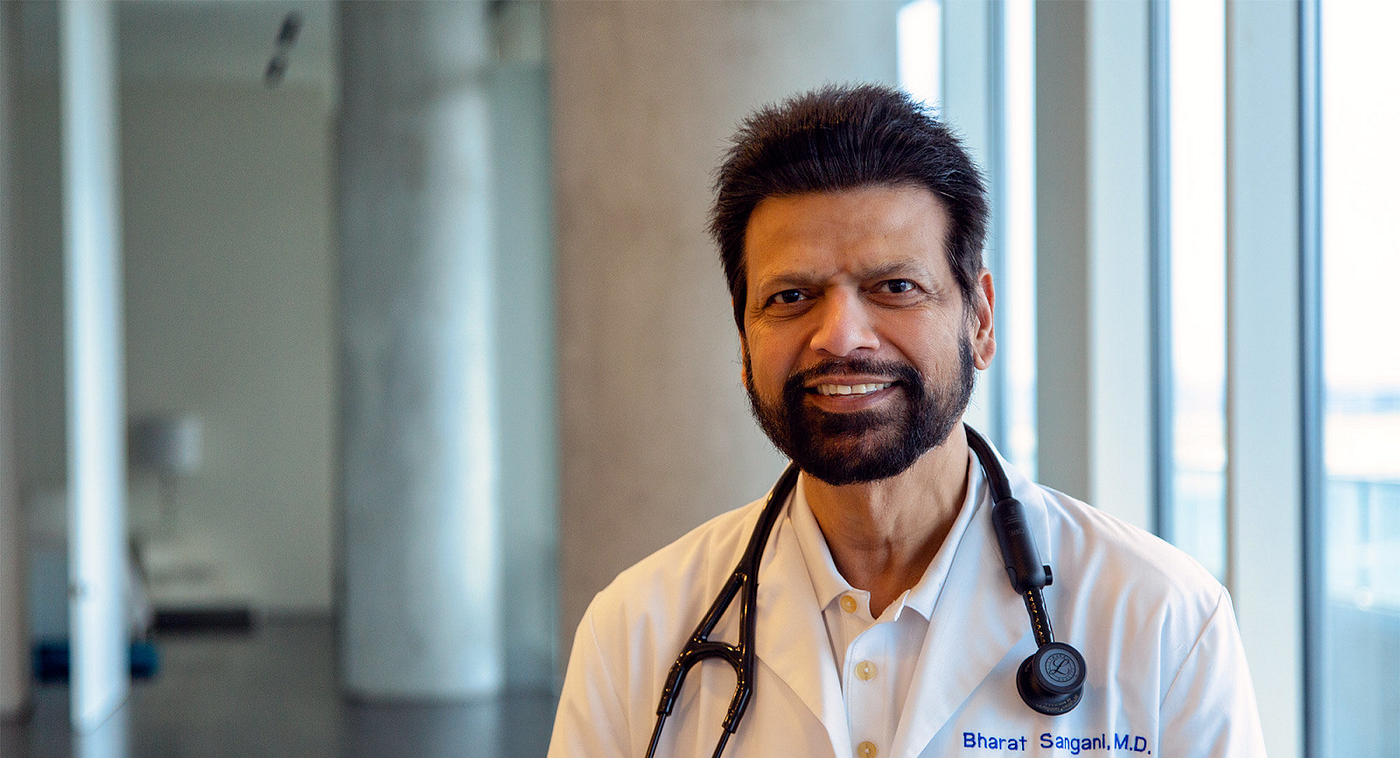
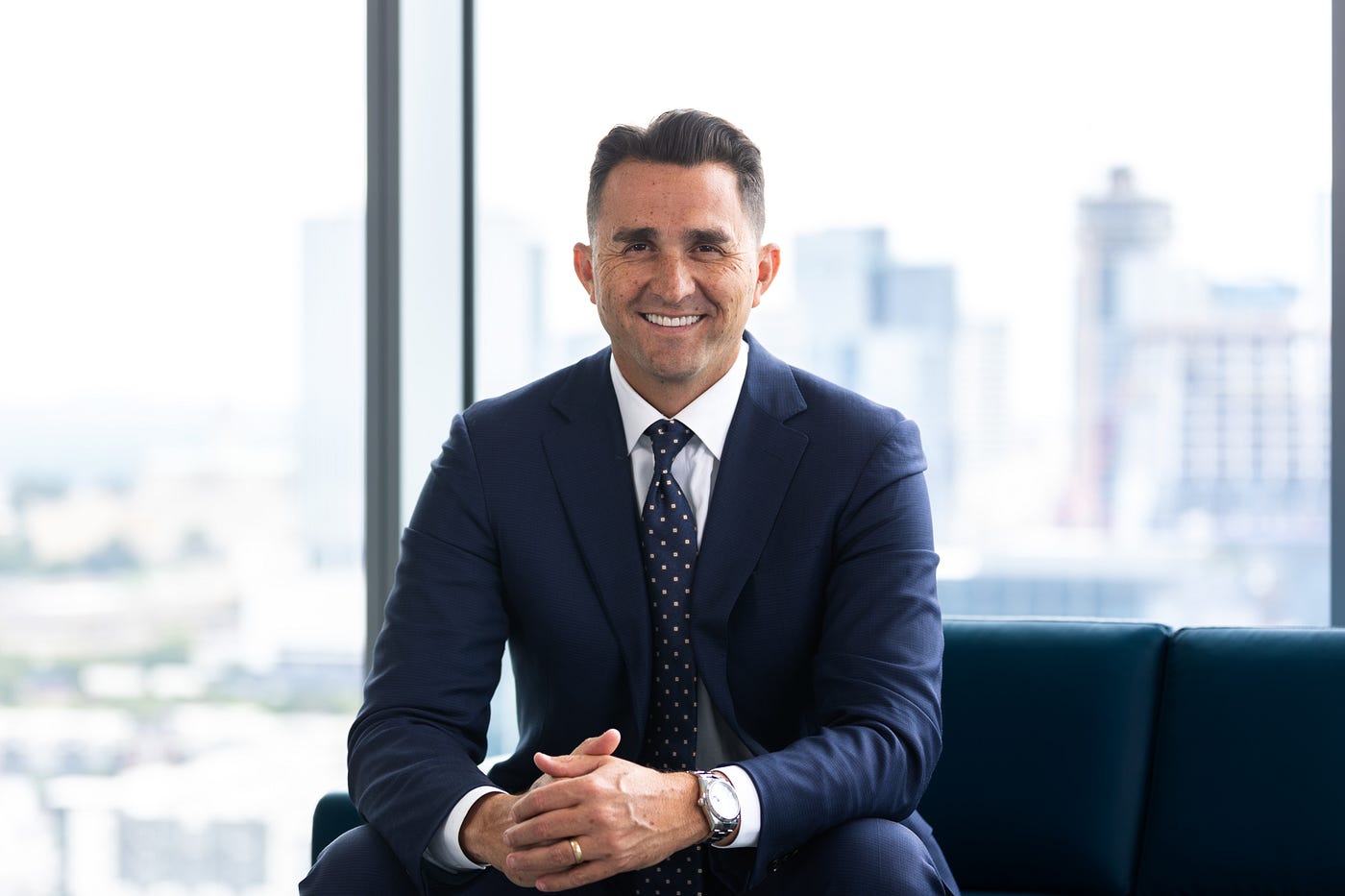
We had the pleasure of talking with Dr. Bharat Sangani. Dr. Sangani, widely known as “Doc,” is a cardiologist and entrepreneur whose transition from medicine to real estate investment has marked a unique career path shaped by resilience, adaptability, and a focus on community impact. Raised Mumbai, India, Sangani excelled academically, earning a medical degree and graduating at the top of his class from the University of Bombay, where he was awarded a gold medal in his MD examination. His ambitions in cardiology led him to the United States in 1983 with just $10.45 in his pocket. Overcoming initial cultural and financial hurdles, he completed his residency at Mount Carmel Medical Center in Columbus, Ohio, before establishing one of Mississippi’s most prominent cardiology practices.
Sangani’s career took an unexpected turn in the early 1990s when he entered the real estate sector. His first project involved reviving a failing hotel in Gulfport, Mississippi, a venture that became profitable under his and his wife Smita’s management. This success sparked his interest in real estate, leading him to co-found Encore Enterprises in 1999. Based in Dallas, Encore Enterprises grew under his leadership into a diversified commercial real estate investment firm with over $2.9 billion in transactions across multifamily, hospitality, mixed-use retail, and office sectors nationwide.
As Chairman and CEO of Encore Enterprises, Sangani has emphasized values of integrity and fairness, which he credits as foundational to his success in both business and medicine. These principles extend to his broader life philosophy, centered on the importance of balancing health, wealth, and wisdom. This holistic outlook inspired him to establish the “Life is a Business” mentorship program, through which he shares insights from his dual experiences in medicine and entrepreneurship. The program encourages participants to integrate personal and professional growth, while focusing on long-term fulfillment over short-term gains.
In his medical career, Sangani is known for his commitment to patient care and innovation. He became a trusted figure within his community as he introduced advanced cardiac treatments to Mississippi, allowing local patients access to cutting-edge care that previously required travel to larger cities. Sangani continues to practice cardiology, finding purpose in both his medical and business roles. His dedication to cardiology, he notes, has provided the steady foundation that allowed him to explore and expand his business interests.
The journey, however, has not been without significant challenges. In 2005, Hurricane Katrina destroyed his Mississippi home and damaged many of his investments, a crisis that temporarily disrupted his business and personal life. Reflecting on this period, Sangani describes the experience as both humbling and formative, underscoring the necessity of resilience in unpredictable times. With support from family and colleagues, he rebuilt his business in the hurricane’s aftermath and found new avenues for growth, expanding Encore’s portfolio to include franchise operations, notably becoming the largest Five Guys Burgers and Fries franchisee in the United States before successfully exiting that sector in 2023.
A respected mentor and philanthropist, Sangani is also committed to giving back to communities in both the U.S. and India. His philanthropic efforts reflect a commitment to education, healthcare, and community support, particularly among underserved populations. His mentorship program, “Life is a Business,” has been particularly impactful, guiding aspiring entrepreneurs and young professionals in achieving balance and sustainability in their own lives.
Dr. Sangani, it’s a delight and an honor to interview you. Before we dive in, our readers would love to learn about your personal origin story. Can you share the story of your childhood and how you grew up?
Dr. Sangani: Sure. I was raised in Mumbai — back then, it was called Bombay — in India. I actually was born in a very small town near Mumbai, but my family moved to the city when I was six months old. I went to school and medical school in Mumbai, where I ended up as a gold medalist in my MD exam at the University of Bombay. Like many others, I wanted to come to the U.S. to pursue medical research. I had big ideas about making changes in the medical field, and my brother was already here, so I moved to the U.S. around 40 years ago. Life hasn’t been the same since then.
Amazing. That’s a great start. So, let’s hear the next part of the story. Tell us about your experience moving here. What was your immigrant story like? How did you adjust, and how did you get into the medical field here in the U.S.?
Dr. Sangani: Well, it was quite a cultural shock coming from India as it was 40 years ago, compared to now. Things have changed a lot, but back then, it was very different. I had to adjust to the language, the food, the culture — everything was new. There was no internet, no email, nothing like that. I still remember, it cost about $3 a minute to call back to India, so I practically never called home because I just didn’t have the money. I came to this country with $10.45 and borrowed $1,500 from my brother to start applying to different hospitals so I could get internships and continue my education. My brother was living in Columbus, Ohio, at the time.
He wanted to “train” me because I’d been living a life of relative luxury in India, and he wanted to make sure I understood what life was like in the U.S. So, in the middle of winter, he’d drop me off in downtown Columbus. I didn’t have a car, so I’d either walk or take the bus, going from hospital to hospital with my resume, asking people to give me a job. Luckily, a few people listened to me and gave me a chance to talk to them.
One place I really wanted to work had already finished their matching process, so there weren’t any openings. But a friend of my brother knew the program director and convinced him to at least meet me. He agreed to see me in the library for five minutes, though it wasn’t an official interview. I brought everything — my gold medal, certificates, all my qualifications — and just talked non-stop for 15 minutes. I told him about my achievements, including how I’d climbed mountains and almost reached as high as the base of Mount Everest. I didn’t even let him ask any questions!
At the end of the 15 minutes, he looked at me and said, “Son, I haven’t understood a word you’ve said so far.” Mind you, this was only a few weeks after I’d arrived, and I had a very thick Indian accent. But he added, “I can see your gold medal, and I can see your passion. Based on those two things, I’m going to give you a job.” So that’s how I got my first job, without even speaking proper English.
From there, life picked up. I finished my cardiology fellowship, and then I approached my fellowship director, Dr. Ralph Lach, and told him I wanted to join his practice because my wife and I loved Columbus, Ohio. There were already 75 cardiologists in Columbus at that time, but he agreed, saying, “I like you. You’re a hardworking kid. I’ll give you a job.” That was on a Wednesday, and he promised to have the agreement ready by the following Wednesday. I was thrilled.
But the very next day, I got a call from a headhunter about a position in Gulfport, Mississippi. She told me they needed someone to start a balloon angioplasty program — a relatively new procedure at the time. I looked up Gulfport on the map and saw it had similar weather to Mumbai and was by the ocean. I thought it might be perfect because I was struggling with Columbus’s winter. I’d never seen snow before, and scraping ice off my car at 5 a.m. every morning wasn’t something I enjoyed.
So, I went back to Dr. Lach and explained that someone had offered me a position. He reminded me that I’d given him my word, and I said, “Yes, that’s why I’m coming to you first. I’ll stay if you want me to, but I’d really like to explore this opportunity because of the warmer weather and the unique challenge of being the only cardiologist there.” Dr. Lach laughed and said, “You’re an Indian guy moving to the South? I know you’re not going to like it. Just go, and when you come back, be prepared to join me.” I agreed.
To make a long story short, I visited Gulfport and fell in love with the town. My wife, Smita, loved it too. In fact, before I even had the job, we bought a home there, deciding it would be our vacation home if nothing else. And the rest is history. Gulfport turned out to be a great place for me. The community accepted me with open arms and within a few years, we built a practice with 70,000 patients in a town of 100,000. I became one of the most beloved cardiologists in town because I was the first to offer many of these advanced procedures, so people didn’t feel the need to go to New Orleans or Mobile — they stayed with me. That’s the story of my journey in the medical field.
So, please tell us the next stage of your story. After practicing cardiology for a while, how did you venture into other areas?
Dr. Sangani: You can say business is in my blood. I’m from a region in western India called Gujarat, and Gujaratis are known for their entrepreneurial spirit and business-oriented society. So, I think I would have found my way into business eventually, but my journey started in an unexpected way.
My father-in-law, who was retired, came to visit us in Gulfport. He loved the place as much as my wife Smita and I did because it reminded us of Mumbai. In our culture, like in some other communities, it’s common and welcome to have extended family living together. So, Smita and I suggested that he move to the U.S. and live with us, and he agreed.
Within weeks, he came to my office and said, “I’ve decided to move here, but what am I going to do? I’m already bored.” I was a bit surprised and said, “You just retired! Why are you thinking about work?” But he was a businessman at heart, and he wanted to do something. So, I told him, “I don’t know anything about business; I’m just a doctor. But tell me what you’d like to do.” He said, “I want to build a hotel.”
By that time, I had about $5 million saved, but it was just sitting in a money market account. I didn’t know much about finance, so I hadn’t even put it in a CD. I went to the bank and got a $2 million loan, which they were more than happy to approve because I had more than that in my account already — plus they made me sign a personal guarantee. The loan’s interest rate was higher than the interest I was earning in my account, so they were making money with no risk. And there I was, thinking the bank loved me for giving me a “100% of the cost of the project” as a loan.
My father-in-law started building the hotel, and I continued practicing cardiology, working about 18 hours a day. Because I knew many people in town, anytime he had a problem with construction, he’d call me. I’d get on the phone with whoever he needed — whether it was the cement guy, the lumber guy, or whoever — and they’d come over right away to help. Everything was going smoothly… until February, when the hotel was almost finished.
At that time of year, the weather in Gulfport usually turns a bit chilly. Now, “chilly” here means a few hours in the low 40s, but that was cold for my father-in-law. So, he came to my office and said, “Nobody told me it gets this cold here. I can’t live here — I need to go back to India.” I didn’t know what to say! I couldn’t exactly tell him, “No,” so I said, “Okay, Dad, if you want to go, that’s fine.” But it really wasn’t fine. The hotel was about to open, we’d already sunk $2 million into it, and I had no time to manage it. I didn’t know anything about running a hotel beyond how to spell the word “hotel.”
So, I called Smita and told her, “Your dad is leaving, and we’re in trouble.” She immediately took the project over, moving with our two kids — ages one and three — into a tiny 250-square-foot room in the Ramada Hotel, which was just about to open. She stayed there for about six weeks, hiring the staff and getting everything up and running. After that, Smita would spend just a couple of hours each day managing the hotel. In the first year, she booked a profit of $400,000 working only two hours a day. Meanwhile, I was working 18 hours a day in cardiology, making about $1 million a year.
That’s when I thought, “Wait a minute. My wife is making this much with just a couple of hours a day, and here I am working around the clock. I need to get into this business!”
And that’s how I made the transition from medicine to business. It all started with that first hotel, thanks to my father-in-law.
Amazing story. So, did you put your medical career aside entirely, or did you keep a foot in medicine even as you expanded into real estate and hospitality?
Dr. Sangani: Oh, no. Even today, I still practice medicine. Medicine is my heart. Business, as I mentioned, was never really my main goal. I wouldn’t even call myself a businessman, even now. It’s just something I’m passionate about. So, I simply started sleeping less and found a way to do both. My medical practice was really booming at that time, and I just added business on top of it. Fast-forward, and things started to fall into place. I felt like I was on top of the world, like I could do no wrong.
You know, that initial success can be incredibly motivating. It makes you feel unstoppable, so I started taking risks. I was sitting in Gulfport, which had hardly any infrastructure, and I was building hotels in places like Orlando and Fort Myers, Florida — millions and millions of dollars invested. Looking back, it was a risky move. If even one thing had gone wrong, I could have gone bankrupt. But, thankfully, God was on my side, and everything worked out.
Fast-forward to 2005. From 1991, when I did my first hotel deal, through 2005, I was at my peak in both my medical practice and my investments. Around that time, Rothschild, the investment firm, invested about $85 million in our company as equity, and we secured about $150 million in debt. So, we were looking at around $235 million total. But then Hurricane Katrina hit.
Katrina was devastating. My house, which was right on the ocean — a 20,000-square-foot home — was completely destroyed, down to the slab. As we were driving back after the hurricane, Smita would look at the debris and say, “That’s our TV, that’s our furniture.” I found a picture of my father two streets over, lying in a gutter. Everything was gone. We thought we were finished.
There was no communication available, so people assumed the worst. The local church even announced that they couldn’t find me and said, “He was a nice guy who took good care of his patients.” I remember listening to that and thinking, well, at least people thought well of me. But honestly, I didn’t think we’d survive the aftermath of such a massive disaster.
However, after Katrina, the economy surprisingly took off, and we started making money faster than we ever had before. Things began to grow even more. So, fast-forward from 2005 to 2023. By 2023, the company had grown to around 4,000 employees across the country, managing between $3 to $3.5 billion worth of assets. Most of these were owned by us, with some syndicated.
2023 was a significant year for us because we were the largest Five Guys Burgers and Fries franchisee in the country, and we successfully exited that business with a strong return on our investment. We haven’t looked back since, and we’re still moving forward.
So, that’s my story, and I’m sticking to it.
That’s an incredible story. I imagine that within all these experiences, you’ve had some amazing encounters with interesting people or memorable situations. Could you share one or two anecdotes that really stand out in your mind about your professional career?
Dr. Sangani: Well, I think age played a big role in my journey. I was generating a significant cash flow very early in my career, which allowed me to take big risks. And I never left my day job — even with all these ventures, I kept practicing medicine. Even now, if I had to go back to full-time cardiology tomorrow, it wouldn’t be much different; I’d just spend more hours there. I think that gave me a lot of confidence to take big risks, and it all just fed into each other. The more risk I took, the more confident I felt.
There’s a saying — though I can’t remember who said it — that “fortune favors the brave.” Looking back, I’m not sure if it was bravery or just plain recklessness, but at the time, I felt invincible, like the “king who could do no wrong.” I took a lot of risks. But over the years, after going through multiple economic cycles, with ups and downs, life has humbled me. I’ve learned that we’re not really in control of the world. We’re just reacting to it, adjusting as we go.
With that understanding, my approach to business has evolved. Now, I think I’m better at knowing what *not* to do. I still make mistakes — I don’t want anyone to think I’ve mastered it all — but I’ve learned a lot from experience. This is what inspired me to start a mentorship program, which is the focus of this latest phase of my life. I want to share my experiences with others, to help them avoid the mistakes I made.
I don’t see myself as a guru or someone who can motivate people who aren’t already driven. I’m not here to inspire someone who doesn’t want to be inspired. But for those who are self-starters and eager to make a difference, I can offer guidance. My goal is to help motivated people stay on the straight path toward their goals. Often, people get sidetracked, veering left and right instead of moving straight toward the finish line. My job is to keep them focused, to stop them from getting distracted so they can reach their goal faster.
So that’s the journey I’m on right now. That’s why we’re talking — to see how I can share what I’ve learned and help others. When I leave this world, I hope I’ll have made it a slightly better place than when I came in. I know I’m just one small person, trying to make a small difference in as many lives as I can.
You mentioned learning from mistakes. Mistakes can sometimes be our greatest teachers. Do you have a story about a mistake you made when you were first starting, either in medicine or in hospitality, and the lesson you learned from it?
Dr. Sangani: The biggest and most important lesson I can share is that, when you get into business, there are two fundamental things you need to do. First, you must consider the worst-case scenario right from the start. Everybody likes to focus on the best-case scenario, but I promise you, it’s Murphy’s Law: if you stay in business long enough, you’ll get very close to the worst-case scenario — or even experience it outright — sooner or later. And if you’re not prepared for that, it can take you down. You need to be ready for the worst case, and anything better than that should be considered a success. This mindset also keeps you from getting too discouraged or demotivated when things don’t go as planned. And in everyone’s life, there will be times when things don’t go right.
The second thing is that, to truly be an entrepreneur, you need to have enough capital. If you don’t, and you find yourself in a down cycle where values drop and you need to put more money into the business just to survive, you won’t be able to stay in business. You’ll be forced out. And let me tell you, once you’re out of business, it’s very, very difficult to get back in, if not impossible.
These are fundamental mistakes that many people make, including myself when I was starting out. Luckily, I had a steady positive cash flow from my medical practice, and I had a very supportive wife who understood that our life would be better if I succeeded financially. She let me “go conquer the world,” so to speak, which made me happy, and she enjoyed the perks that came with it. She had a loaded credit card she could use whenever she wanted, so she was happy too.
I also had the resources to build a strong infrastructure of assistants. Even today, I have three and a half full-time assistants who help me with everything. I always tell people that I’m so passionate about what I want to do that I want to dedicate all my time to it. If I could delegate even breathing to someone else, I’d do it! I’ve become a master at delegating. I offload everything that someone else can handle so that I can focus on what I really need to do. This has freed up a lot of time and has been key to helping me grow my business.
So those are some of the critical lessons I’ve learned over time, and they’ve really helped me continue to expand and stay resilient in business.
Amazing. I could ask many more questions, but I want to respect your time, and maybe we can do a follow-up later. But here’s our final, aspirational question. Given your incredible work and the platform you’ve built, you’re a person of enormous influence. If you could spread an idea or inspire a movement that would bring the most good to the most people, what would that be?
Dr. Sangani: If I could inspire anything, it would be to bring prosperity to my fellow humans in three key areas: health, wealth, and wisdom. Because without strength in each of these areas, we can’t reach our full potential.
I believe I’ve figured out a practical definition of happiness, and it’s about achieving your highest potential in health, wealth, and relationships. Success in health is obvious — we need to feel good physically and mentally. Wealth doesn’t mean everyone needs to be a millionaire; it’s about learning to live within your means while striving to expand those means. That’s what I consider a wealthy person.
And then there’s wisdom in relationships. We all have about 20 to 100 people in our lives who can really impact us, positively or negatively. These are the people who can make life either very pleasant or very difficult — spouses, partners, children. We need to learn to nurture and manage these important relationships so they enhance, rather than disrupt, our lives.
So, to sum it up, my goal is to pass on this message to my fellow human beings: pursue happiness through health, wealth, and wisdom, and strive to strengthen all three. I believe that one person at a time, we can spread a “cloud of happiness” across the world. That would be my message.
How can our readers continue to learn more about your mentorship program, get in touch with you, explore working with you, or support your initiatives?
Dr. Sangani: First of all, you’re already helping by sharing this conversation, and I’m very grateful to you and your organization for that. You saw something in me worth supporting — a doctor who’s now talking about business, mentorship, and happiness. As I’ve always said, I’m just a doctor trying to do something different, something I don’t have formal expertise in, but have learned along the way. And I’m proud of what we’ve built.
For anyone interested, it’s simple: just go to www.BharatSangani.com. Once you’re there, you’ll find my other videos, my vision, and you can sign up for my newsletter, which reaches a six-figure audience. If you’d like to join the mentorship program, all the instructions are there as well.
Thank you so much for this uplifting, inspiring, and empowering story. I’m excited to share this with our readers. Thank you for your time, Dr. Sangani.
AM
Written by
Authority Magazine Editorial Staff
Editorial Desk · Authority MagazineThe Authority Magazine Editorial Desk produces, verifies, and edits long-form primary-source interviews with executives, innovators, clinicians, creators, and social impact leaders across Business, Tech, Pop Culture, Wellness, and Social Impact.

Published inAuthority MagazineTop Lessons, Top Authorities · 42K Followers
Exclusive, curated interviews with the leaders and changemakers shaping tomorrow. Leadership lessons, industry deep dives, and executive profiles.