I grew up in a unique environment in that my dad played in the NFL for 19 years. This meant moving a lot as a kid, and to some degree growing up with what felt like a spotlight on you.
Business
Kyle Matthews of Matthews Real Estate Investment Services: The Balance of Competition and Care That Powers a Top Brokerage Platform
The founder and CEO discusses how early life lessons and athletic discipline shaped his rapid rise to leading a major commercial real estate brokerage firm.
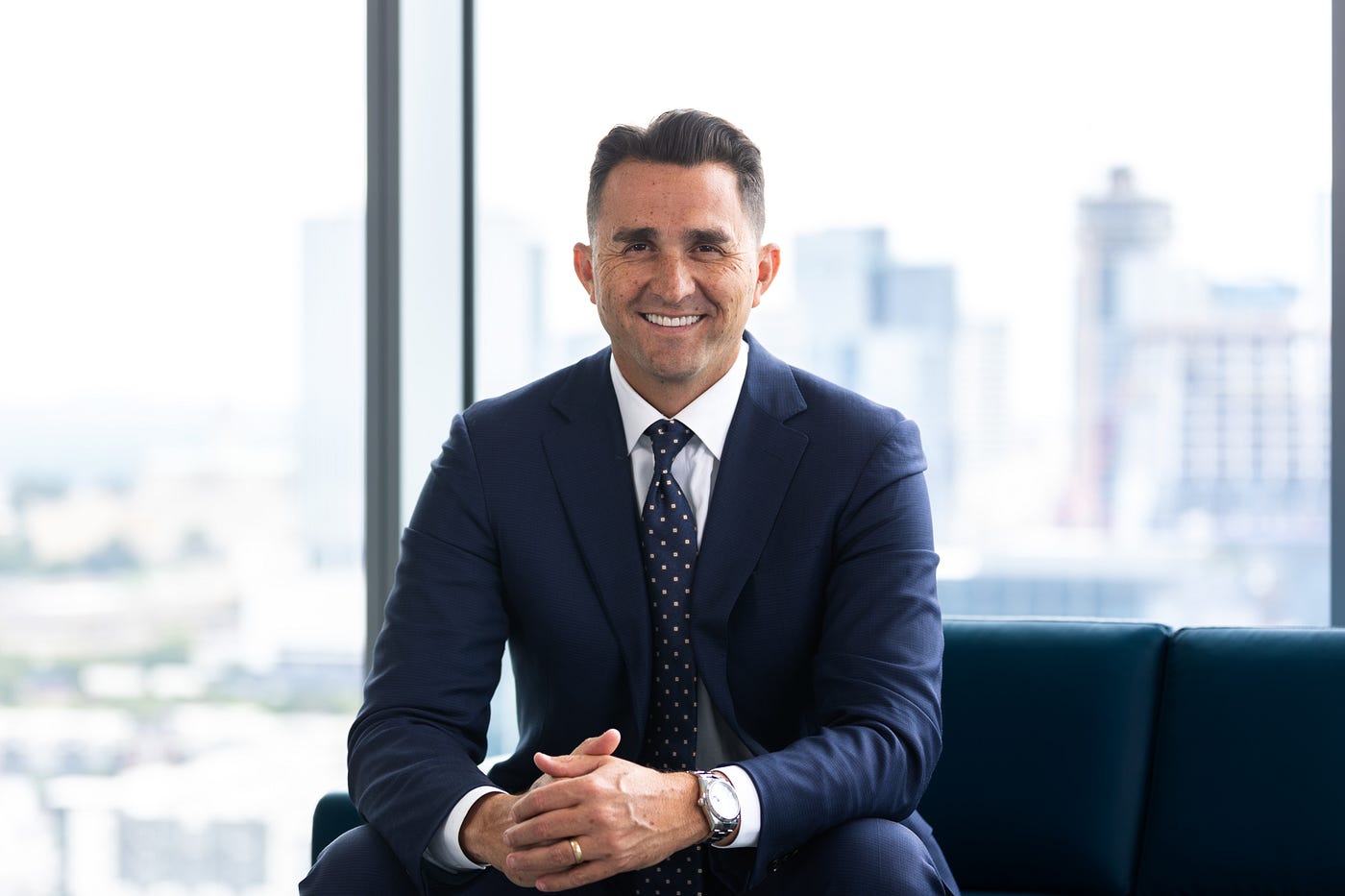
The commercial real estate industry is a dynamic and challenging landscape that offers enormous potential for success. However, it requires a unique blend of skills, knowledge, and aptitude to truly excel. How does one establish themselves in such a competitive field? What does it take to consistently rise to the top in commercial real estate? How does one rise above the headwinds that are challenging the commercial real estate industry today? In this interview series, we are talking to commercial real estate professionals, brokers, investors, leaders of Real Estate Firms and Real Estate Investment Trusts (REITs), as well as anyone who’s found significant success in this industry. As part of this series, we had the pleasure of interviewing Kyle Matthews.
Kyle Matthews is the Founder, Chairman, and Chief Executive Officer of Matthews Real Estate Investment Services™, a commercial real estate and technology firm with 25+ offices and over 1,000+ agents and employees nationwide. The firm is a leader in commercial real estate brokerage providing advisory services in transactions, leasing, and debt/capital markets. Since Kyle founded the company in 2015, Matthews™ has become the fastest-growing commercial real estate firm in the country, is the largest privately held brokerage platform in the U.S., and has successfully closed over 23,662+ transactions totaling $62 billion in sales volume.
Kyle has an extensive background in the industry, with an aggregate value of $9 billion in transaction volume during his years as an agent. Prior to starting Matthews™, Kyle served as Vice President of Investments and thereafter as Executive Vice President at two publicly traded commercial real estate brokerage firms. In each of these roles, he was recognized for his client-focused commitment to results and ability to train and mentor teams to execute top sales. As a producer, he was viewed as an authority in the field of private client capital transactions, as well as the top performer industry-wide in both the shopping center and net leased transactions. Kyle has an extensive list of notable clients, including most of the largest global institutional real estate companies, in addition to U.S.-based publicly-traded REITs, private equity funds, development companies, and high net-worth private family offices.
Thank you so much for joining us in this interview series! Before we dive in, our readers would like to learn a bit about your origin story. Can you share with us a bit about your childhood and how you grew up?
I grew up in a unique environment in that my dad played in the NFL for 19 years. This meant moving a lot as a kid, and to some degree growing up with what felt like a spotlight on you. We generally would move between LA, Cleveland, and then subsequently Atlanta, and I believe that consistent change helped me become adaptable, which I think added a lot of value when I entered the commercial real estate brokerage industry.
My dad retired when I was a sophomore in high school, and it wasn’t until my freshman year I even started playing football, which most people find surprising. Looking back, those early experiences shaped not only my perspective on life but also my approach to success.
Can you share with us the ‘backstory’ of how you got into the real estate business?
I played college football at USC at a time when we were the top team in the country, and while I had a great experience, given the level of talent of my teammates I quickly realized I likely wasn’t headed to the NFL. I started to think about my future beyond football, and since I was young, I knew I wanted to be in real estate. My dad owned a few rental properties, the most significant being a 24-unit apartment building just 15 minutes from our home. As the oldest boy, I was dragged along on Saturday mornings to collect rent, meet with contractors, and manage the property. I became curious about the whole process — seeing how tenants paid rent and understanding the concept of passive income fascinated me. I thought it was amazing that my dad could own a building and receive money every month without having a typical job. That early exposure left a lasting impression, planting the seed for my eventual career in real estate, even if I didn’t know the specifics of how to get there at the time.
Can you tell us about your company and what makes it stand out?
Matthews Real Estate Investment Services is a privately-held, self-funded company. We’ve scaled rapidly in only nine years, growing to nearly 1,000 people and establishing around 25 offices across the U.S.
I generally attribute our success to a beautiful combination of support, technology and culture. We are especially unique because of our culture, which is a unique blend of competition and caring. Agents are constantly striving to be the best, but they also genuinely care about each other’s success. They want their teammates to excel, and when one of them achieves success, everyone celebrates together, which isn’t often the environment that exists in the commercial real estate brokerage profession.
Can you tell our readers about the most exciting new projects you are working on now?
I’m really excited about several projects we’re currently working on. First and foremost, our proprietary AI infused prospecting CRM and transaction management software ATLAS(™), the overall investment and build is a project we call Gemini, is designed specifically for commercial real estate agents as an end-to-end solution to revolutionize the brokerage experience by streamlining every step, from prospecting to transactions, and offering seamless client-facing integrations. The platform integrates data from third-party systems and harnesses the power of machine learningLLMs, and AI, delivering actionable insights directly to agents.
Additionally, we are also looking to expand our revenue streams by offering more services to property owners, including property management, insurance, and debt servicing, which we plan to roll out in the next year.
Finally, I have really enjoyed the success of our podcast, the Matthews Mentality Podcast. The reach has grown significantly and it’s been a great way to connect with interesting and successful people in all walks of life across various industries. It also has helped the company and the agents from a brand awareness standpoint.
Ok, let’s now move to the main part of our interview about commercial real estate. What are the 3 things that most excite you about the industry now? Why?
1. The integration of technology is truly transformative. I believe it’s not about replacing professionals but rather making them more efficient. The industry has been slow to adopt innovations, but with advancements in AI and automation, we’re finally seeing a shift that can enhance productivity.
2. I’m inspired by the potential for real estate to transform communities positively. When done right, developments can improve lives while generating profits. It’s encouraging to see more developers considering the impact of their projects on local residents, aiming to create spaces that benefit everyone involved.
3. I hope for an improvement in the support from the political community to get more behind the development community and the housing providers to build more housing so that housing becomes cheaper for everyone. Ultimately, I want every American the reasonable opportunity to afford the American Dream and own a home in a great community, and right now that’s unattainable due to costs and low supply.
What are the 3 things that concern you about it? Why? What should be done to address and alleviate those concerns?
- There’s the issue of housing regulation, particularly rent and vacancy control. History shows that cities implementing such measures tend to see negative outcomes, as they discourage development and ultimately lead to a shortage of available units. Misunderstandings about these policies can create resistance against new projects, which further exacerbates the housing crisis.
- Immigration is a critical factor. While I’m a strong advocate for immigration, I believe it needs to be thoughtful and controlled. Our birth rates are declining, and without a steady influx of people, we face significant challenges in filling jobs and maintaining economic vitality. However, we should prioritize skilled immigration that supports our industries, ensuring that we attract the right talent while also addressing labor needs.
- Local and state politics can heavily impact the real estate market. When policies are unfavorable toward developers, it can drive businesses and people away from those areas, even if the overall economy is strong. For example, despite positive macroeconomic conditions, San Francisco’s real estate market has struggled due to local regulations. We need to advocate for policies that support development, as demonstrated by cases in other cities where restrictions have led to increased rents due to a lack of new units.
If you had the power to put in place 3 changes to improve or reform the industry, what would you suggest? Please share stories or examples, if possible.
If I had the power to implement changes in the real estate industry, I would focus on two key reforms:
- I would establish a “Department of Real Estate Efficiency.” This agency would be dedicated to slashing unnecessary regulatory burdens that hinder developers from building new housing. By streamlining the approval process and reducing red tape, we could stimulate construction, ultimately increasing the supply of housing and making it more affordable. The idea is simple: more housing equals lower prices, benefiting everyone in the community — except, perhaps, some developers who might feel the pinch. But the broader goal is to ensure that housing is accessible to all.
- I would create a uniform federal commercial real estate license to do business across all state lines. Currently, each state has its own licensing requirements, which can be cumbersome and focused heavily on residential real estate, leaving out crucial aspects of commercial transactions. A standardized license would facilitate easier cross-state transactions and ensure that all agents are equipped with the necessary knowledge and skills to navigate the complexities of commercial real estate.
How has technology changed the commercial real estate industry, and how do you foresee it shaping the future of the sector?”
Technology has fundamentally transformed the commercial real estate industry, especially as we’ve evolved our tech stack over the past few years. One of the most exciting advancements is the integration of AI and machine learning models.
While I wouldn’t consider myself a tech savant by any means, I do recognize the importance of leveraging these tools. Some may worry about job displacement due to AI, particularly for roles like analysts. However, I see it differently: AI will enhance productivity rather than replace jobs. For instance, an analyst can now generate a 10-year cash flow model in seconds instead of spending hours on it. This means that instead of needing more analysts, they can significantly increase their output, allowing them to handle multiple models each week.
Moreover, technology enables us to optimize our marketing efforts. With AI tools, we can expand that ratio of agents to staff, as our production team can quickly and efficiently create high-quality marketing materials. For example, tasks that involve changing backgrounds or creating tenant maps are now automated, allowing us to be quicker and more efficient.
Looking ahead, at Matthews, we’re excited about initiatives like the Gemini project, which streamlines the agents workflow. Additionally, we plan to expand our service offerings which includes, property management, property insurance, and casualty insurance. By embracing technology, we not only improve our operational efficiency but also enhance the value we provide to our clients.
I am hearing the phrase “Stay alive until 2025” a lot. What is your plan to survive in the current market?
The phrase “Stay alive until 2025” really captured the sentiment during a tough market in 2023 and early 2024. When interest rates rose rapidly, the cost of borrowing increased significantly, making it difficult for many deals to pencil out. This meant fewer transactions, and consequently, many brokers faced financial strain.
Our approach during this period was to double down on our efforts. We embraced the mentality of “working twice as hard for half the money.” This meant showing up early, making our calls, attending meetings, and pitching deals — even when the market seemed bleak. We focused on maintaining relationships and staying engaged, knowing that the environment would eventually improve.
Looking ahead, there’s a growing optimism about the real estate environment heading into 2025. We’re starting to see signs of recovery, and it’s crucial to stay proactive and prepared as opportunities arise. The key is to keep pushing through the current challenges while positioning ourselves for success when the market rebounds.
For a young person who would like to eventually make a career in commercial real estate, which skills and subjects do they need to learn?
When I first started in commercial real estate, it took me 18 months to land my first deal. My key advice for anyone starting a new career is to work as hard as you possibly can. In the beginning, you may not have a work-life balance, but trust me, it pays off in the long run.
For young people aiming to build a career in commercial real estate, it’s crucial to develop a blend of hard and soft skills. Start with a solid understanding of financial analysis and market research, including underwriting, financial modeling, and property valuation. Familiarity with technology tools that streamline these processes is also essential.
On the soft skills side, communication and relationship-building are vital. You need to pitch ideas effectively, negotiate deals, and connect with clients. Strong time management and organizational skills will help you juggle multiple tasks while staying focused on revenue-generating activities.
Do you have three things you would advise a new real estate professional to avoid?
- Don’t Expect Quick Riches: One of the biggest misconceptions is that a career in real estate will lead to fast wealth. In reality, it’s a slow-and-steady game — think of the tortoise, not the hare. Success in this industry often comes from patience and persistence, so be prepared for a journey rather than an immediate windfall.
- Seek Mentorship and Guidance: Entering the real estate field without a mentor can be a costly mistake. It’s crucial to find an experienced guide who can help you navigate the complexities of the industry. When considering job opportunities, prioritize positions that offer apprenticeship potential over immediate salary. Learning alongside someone with experience will accelerate your growth and understanding.
- Choose Your Work Environment Wisely: Avoid settling for a casual work environment. Instead, seek out companies that foster a high-intensity, competitive atmosphere. These organizations are often more resilient during downturns and provide the support and motivation necessary for success. Look for firms that emphasize excellence and have a track record of thriving, even in challenging times.
When evaluating deals or opportunities in real estate, what are the most important factors you look for and why? Can you provide some examples?
When evaluating deals in real estate, the most important factors really depend on the investor’s profile. Are you a value-add investor looking for risky opportunities to increase returns, or are you a more conservative investor seeking stability and consistent income? Understanding your own investment style is crucial.
From an agent’s perspective, we first assess how the deal is currently operating and identify any potential upside. The first thing we consider, aside from pricing, is the type of deal. Is it a value-add opportunity or a safety and security play? This classification helps us understand the potential buyer’s perspective.
For example, if you’re a younger investor in your 30s, you might be willing to take on higher risks with value-add projects that could yield significant returns. In contrast, if you’re in your 70s, you might prioritize stability and opt for properties with strong tenancy and core locations, even if the yields are lower.
Can you share a story with us about the hardest deal you made, that ended successfully for you?
One of the most challenging deals I worked on comprised 83 properties across 17 states. This portfolio included single-tenant assets, primarily 7-Elevens. The complexity arose because the ownership was split between fee ownership and leasehold ownership, which had been divided years earlier.
The fee ownership was held by a synagogue in New York, while the leasehold was owned by a REIT that was liquidating its retail holdings. I leveraged my connections with the REIT and began reaching out to the synagogue to explore the possibility of combining the interests for a sale.
After more than a year of discussions, we managed to align the interests of both parties, assigning a value to each stake and facilitating the sale. Ultimately, the deal closed for around $60–70 million, and it was a win-win for all involved. My deal partner played a crucial role in managing the diverse interests of the stakeholders, helping us navigate the complexities and get it across the finish line.
Based on your personal experience and success, can you please share “Five Things You Need To Create A Highly Successful Career In The Commercial Real Estate Industry”?
- Time: This is arguably the most crucial factor. You need to dedicate a significant amount of time each day to your work. It’s not just about years of experience, but about the hours you invest daily. For example, in my early days, I often worked 14-hour days. This commitment was exhausting but essential. Balancing work with family commitments made it even more challenging, but I learned that the sacrifices were necessary for long-term success.
- Discipline: Discipline is foundational in this industry. You need it to manage your time effectively, follow up with clients, and prepare for meetings. I had a mentor who emphasized the importance of consistent follow-up. I made it a point to reach out to clients regularly, which not only solidified relationships but also led to new business opportunities. The discipline to stick to a routine and hold yourself accountable can make a significant difference in your success.
- Financial Analysis Skills: Understanding the financial aspects of real estate is essential. You need to be able to analyze deals, understand cash flow, and assess risk. In one of my early deals, I faced a portfolio of properties where the numbers didn’t initially pencil out. By applying my financial analysis skills, I was able to identify hidden value and negotiate terms that made the deal feasible. This not only secured the investment but also taught me the importance of thorough financial scrutiny.
- Preparation: Preparation significantly increases your chances of success. I’ve found that the more time I spend preparing for meetings or presentations, the better the outcome. For instance, I was competing for a major listing and invested time in researching the property, the market, and the client’s needs. My thorough preparation impressed the client and ultimately secured the listing for me.
- A Servant’s Heart: Having a mindset focused on serving others can set you apart. Initially, I was driven by commissions and personal gain. However, as I gained experience and financial stability, I began to prioritize my clients’ best interests over my own. I recall advising a client to hold off on selling their property, even though I would have earned a commission. They appreciated my honesty, which strengthened our relationship. Over time, this approach led to more referrals and long-term clients.
What advice would you give to another real estate professional about improving the work culture, building team morale, and helping each employee thrive?
My core principle is simple: I’ll never ask you to do something I haven’t done myself. In this industry, I’ve researched more properties than anyone at this company and made more cold calls than I can count. I emphasize the importance of investing in your business — whether that means traveling to see clients, hosting events, or enhancing your financial analysis and underwriting skills.
I took proactive steps to educate myself, even when it was costly, because I recognized gaps in my own knowledge. I prepared diligently for meetings and made it a point to wake up early, consistently outworking my competition. I also believe in the power of looking ahead; always have your next vacation planned to keep motivation high.
The reason this approach resonates with my team is that they see I lead by example. When I encourage them to put in the effort, they know I’ve lived that same intensity. Just like in sports, effective leaders lead from the front. It’s not about saying, “Do as I say, not as I do.” Instead, it’s about showing them the commitment and hard work that comes with success.
Ultimately, fostering a positive work culture starts with authenticity and accountability. When your team knows you’re in the trenches with them, it creates a sense of unity and inspires them to give their best.
You are a person of great influence. If you could start a movement that would bring the most amount of good to the most amount of people, what would that be? You never know what your idea can trigger. :-)
If I could start a movement, I’d focus on two key ideas. The first is a practical approach: I’d launch a movement called “The Supply’s Too Damn Low.” Inspired by past advocacy for rent control, this initiative would shift the conversation around housing from capping rents to increasing supply. The goal would be to gather people in cities to advocate for policies that encourage new construction and development. By highlighting the need for more housing units, we can create a narrative that addresses the root cause of the housing crisis — insufficient supply. More supply leads to lower prices, benefiting renters and first-time homebuyers alike.
The second movement would be broader and more challenging: changing the prevailing mindset that promotes victimhood. I would aim to shift the narrative from one where people feel powerless due to external circumstances to one that emphasizes personal responsibility and empowerment. Life can be hard, and while obstacles exist, individuals have the ability to shape their own outcomes through hard work, resilience, and sacrifice.
Changing such deep-seated beliefs is no small feat, but it’s essential for fostering a generation that recognizes its power to affect change in its own life. While it may be a heavy lift, starting with our families and communities can create ripples of positive change. For me personally, my focus is on raising my four kids with these values, ensuring they grow up with a sense of agency and the understanding that their efforts truly matter.
How can our readers further follow your work online?
Listen to my podcast, The Matthews Mentality, on Apple, Spotify and YouTube. Readers can also connect with me on LinkedIn, Instagram (KyleMatthewsCEO) and X (KyleMatthewsCEO).
This was very inspiring. Thank you so much for joining us!

Published inAuthority MagazineTop Lessons, Top Authorities · 42K Followers
Exclusive, curated interviews with the leaders and changemakers shaping tomorrow. Leadership lessons, industry deep dives, and executive profiles.