An accent may reveal geography, but it can also preserve years of habit, inhibition, assimilation, and memory.
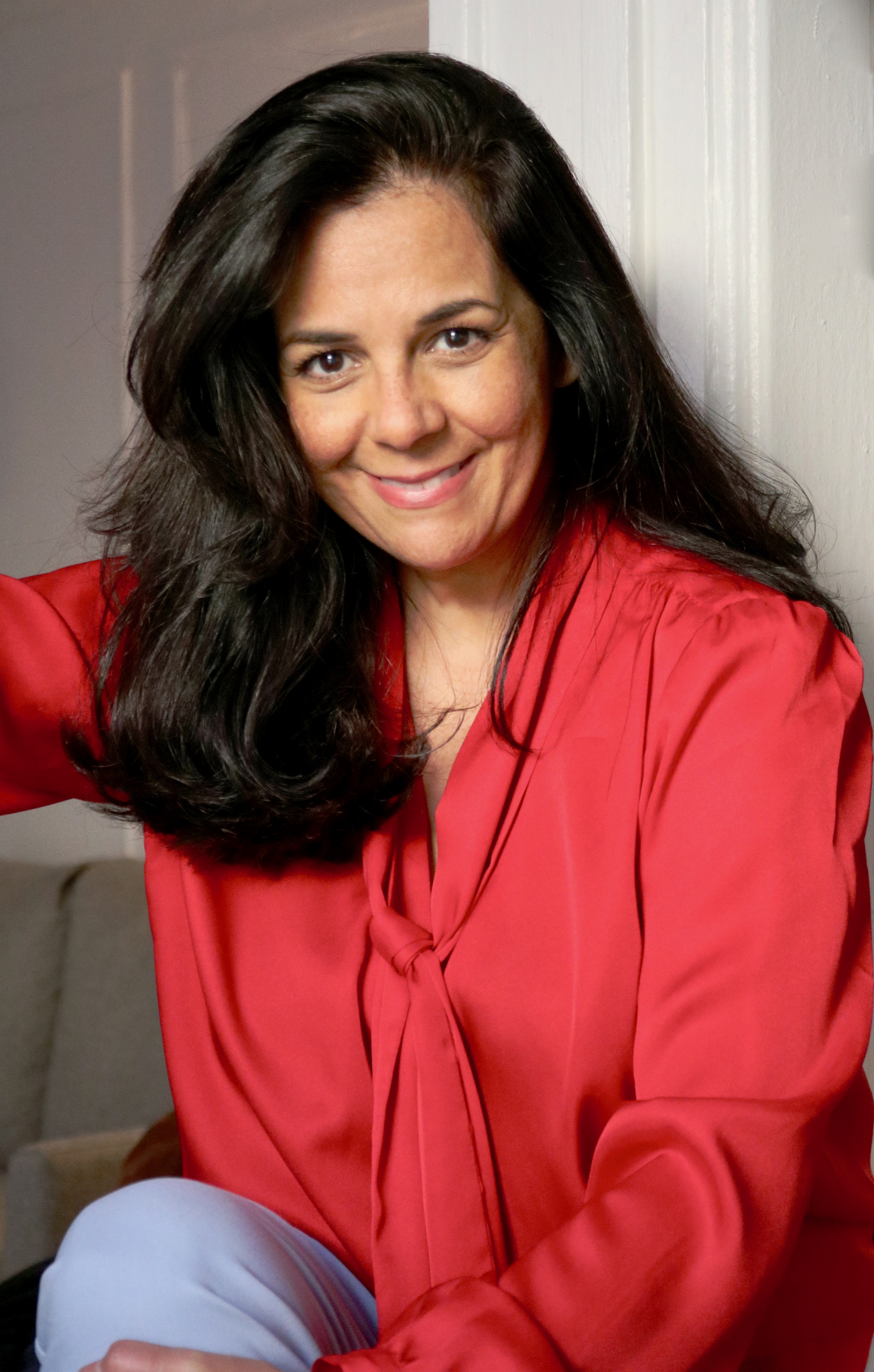
Rosie Berrido thought she was helping an actor with a vowel.
The Spanish-speaking client was working in English and having trouble with the long “e” sound in words such as receive and conceive. Berrido noticed something more physical than phonetic: he seemed reluctant to let his mouth widen into the shape the sound required. She asked him to consider why. The question stopped him. He told her that when he was a boy, his father would hit him when he laughed and tell him, “Laugh like a man.”
For Berrido, a bilingual acting and dialect coach whose work depends on the mechanics of speech, the exchange altered her understanding of what a voice can carry. An accent may reveal geography, but it can also preserve years of habit, inhibition, assimilation, and memory. “I am not a psychologist,” she says, but the experience convinced her that coaching could not be reduced to correcting sounds. The studio had to be a place where an actor could work carefully through patterns that might be far more personal than a director or casting team realized.
That balance between technical precision and cultural memory runs through Berrido’s career. She grew up in New York in a Dominican family where English and Spanish existed side by side from infancy. She was traveling to the Dominican Republic before she could walk, reading in both languages by five, and translating for cousins who were less comfortable in Spanish. Even the family debate over her first word reflects the point: her mother remembers either leche or juice.
Language was ordinary family life before it became professional expertise.
Performance arrived soon after. Berrido remembers playing Mrs. Claus in fifth grade and loving the stage immediately. A high school visit to Santo Domingo’s National Theater, where she saw Same Time, Next Year, made the attraction more serious. After high school she spent several years in the Dominican Republic, then returned to New York, where acting classes competed with the practical work of earning a living. She took jobs that included translating for a Spanish bank and working in emerging markets on Wall Street.
The break with that life came during the Oklahoma City bombing. Watching the news unfold on Bloomberg terminals, Berrido heard a supervisor respond by asking how the attack would affect the market. Her reaction was immediate: “This is not where I belong.” She committed herself more fully to acting, training for years at HB Studio and later in film and television.
Her bilingualism soon stopped being a background fact. At an audition, a producer asked whether she could perform the scene in Spanish. Another actress then asked whether Berrido had ever acted in Spanish and whether she wanted to. Berrido’s answer was characteristically practical: “Does it pay?”
That connection led to Repertorio Español, where she spent eighteen years performing. It also opened the door to audiobook narration and eleven years of narration work for the Library of Congress. Eventually, John Leguizamo’s office called looking for someone to translate his one-man show Ghetto Klown for a Latin American tour. Berrido had been preparing for a trip to India. She canceled it.
The assignment expanded beyond translation. Leguizamo asked her to work with him directly on his Spanish delivery, and the two spent seven months preparing before the production reached Colombia. For Berrido, the collaboration represented something larger than diction. Leguizamo had spoken publicly in his work about pushing Spanish away as part of assimilation and reclaiming it later. Berrido understood that arc instinctively. Her own career was increasingly being built on the idea that language is never merely sound. It is belonging.
Then a six-car accident on New York’s West Side Highway forced her away from regular stage work. Her car was hit four times, and recovery required nearly two years of physical therapy. At home, she began getting calls from actor friends asking for audition help. She had already been coaching informally for years, often watching colleagues book roles after working with her. During recovery, she finally built a website. A friend helping with the site asked what made her method different. Berrido described the rules and principles she had developed. The friend supplied the name: Rosie’s Rules.
What began almost accidentally became her primary work. Today, the same combination of acting experience, bilingual fluency, and close attention to how culture shapes speech has placed Berrido inside major theatrical productions. After coaching twenty-seven actors in Spanish for Saheem Ali’s bilingual audio production of Romeo y Julieta, she was brought into the development process for Buena Vista Social Club. She remained through its workshops, its Atlantic Theater Company run, and its move to Broadway, where her work includes ongoing dialect or speech maintenance with the cast.
Her approach resists formulas. She may use the International Phonetic Alphabet as a reference, but she is more interested in building a bridge between the language an actor already inhabits and the one a role requires. For performers working in Spanish, that can mean something as precise as sinalefa, the blending of vowels across words that helps create the language’s natural musicality.
Yet the technical detail is only half of what keeps her in the room. “When I give an actor an adjustment and it clicks,” Berrido says, “my heart leaps.”
That response helps explain why a performer who once fought to stay onstage no longer sees coaching as a consolation prize. The work that found her after an accident has become the place where her childhood languages, her acting training, her years of translation, and her understanding of assimilation finally meet. Berrido still deals in vowels, consonants, rhythm, and breath. But underneath them, she is listening for something harder to standardize: the moment when an actor can sound like someone else without losing the person they already are.
Yitzi Weiner: Rosie, it’s so nice to meet you. Before we dive in deep and talk about your amazing work, our readers would love to learn about your personal origin story. Can you share with us a story of your childhood, how you grew up, and particularly the seeds and genesis of all the amazing work and creativity that has come since then?
Rosie Berrido: Great question. Thank you. I was born and raised in New York to Hispanic parents. From a very young age, I would visit both sets of grandparents in the Dominican Republic and my mother’s hometown. English and Spanish were a part of my upbringing from birth. I often tease my mother and have asked her throughout the years, “What was my first word?” There is some controversy over whether it was leche (milk) in Spanish or juice in English. At six or seven months old, I was already on a plane traveling to see family in Latin America, so both languages were truly part of who I was all the time. It was very easy for me to switch back and forth.
By the age of five, I was already reading in both languages and served as a translator of sorts for all my cousins. My mother’s older sister married an American, and those cousins didn’t speak Spanish well. Whenever they visited the Dominican Republic, I became the translator.
I always had a deep love for music. Both of my parents — I wouldn’t quite call them bohemians because my mother worked in corporate America — had a tremendous love for music. I grew up with all the classics, including a lot of Cuban music. Growing up, my mother’s best friend was Cuban, and my best friend was Cuban. Funnily enough, when my mother speaks Spanish, she doesn’t sound Dominican. My grandmother was a grammar teacher, so everything was properly pronounced and grammatically correct. Some people even told her she sounded Cuban, which probably comes from the influence of southern Spain, since my mother’s grandmother was from Granada.
In fifth grade, I was on stage for the first time playing Mrs. Claus. I was a bit chunky back then, and back in those days we didn’t have the sensitivity filters we have today. People immediately assumed, “Okay, this kid is chunky, so she can play the jolly Santa figure.” I was cast as Mrs. Santa, and I loved it. There was no turning back from that moment.
Later on, during high school, I was visiting the Dominican Republic, and my grandfather took us to the National Theater in Santo Domingo. We saw a production of Same Time, Next Year. The movie version was made famous by Shirley MacLaine and Alan Alda, telling the story of a couple, each married to someone else, who met once a year in the same hotel for twenty years. I watched Puerto Rican star Gladys Rodríguez and Mexican actor Rogelio Guerra, and right then I knew for sure: This is what I want to do.
When I finished high school, I spent five years in the Dominican Republic, returned to New York, and went straight to the conservatory. I worked various odd jobs, including a year as a runner on Wall Street, all while attending the conservatory. I also worked for a Spanish bank as a translator, studying translation fairly informally just to see where it would go.
Then the Oklahoma City bombing occurred. I was working on Wall Street in emerging markets, watching the tragedy unfold on the Bloomberg screens — which were essentially our Google back then. The first thing out of my supervisor’s mouth was, “How does that affect my market?” Right then, I thought, This is not where I belong. I don’t need to be here. Let me do what I truly want to do full-time instead of taking a casual class here and there.
I went to train as an actor, spending five years at HB Studio, followed by a conservatory program for film and television. During an audition, a producer saw on my resume that I was fully bilingual and asked, “Could you do this scene in Spanish?” I said yes. The actress auditioning for my grandmother heard me speak Spanish and asked, “Have you ever acted in Spanish?” I said no. She asked, “Would you like to? Does it pay?” I said yes! She introduced me to Spanish Repertory Theatre, now known as Repertorio Español, which has had an uninterrupted curtain for nearly sixty years, running seventeen classical and contemporary Spanish plays in repertory all year.
I spent eighteen years there. Over time, casting directors took notice. A friend working in audiobooks asked, “Do you want to audition for an audiobook?” I had never done one before, but I read for In the Time of the Butterflies by Julia Alvarez — who, coincidentally, is Dominican like my mother. I narrated all fifty-four characters on my own and absolutely loved it. I didn’t abandon acting; I stayed with the theater, auditioned for film and television, and did the obligatory Law & Order guest spots like every New York actor does.
I also spent eleven years narrating for the Library of Congress. Those narrations go onto specialized audio cartridges for disabled individuals and wounded veterans who have lost limbs, who often operate the devices with breath controls. The vast majority of my recordings were produced specifically for the Library of Congress rather than commercial release.
Eventually, I received a call from John Leguizamo’s office. The theater reached out saying his team needed a translator. I had actually been preparing for a trip to India, but when they called, I couldn’t believe it because John had been a personal hero of mine for years. I canceled my trip. Two hours later, his manager called and explained, “He has three performances left of Ghetto Klown. We want to translate the entire show and tour it across Latin America.”
I went to see the show three times and told them that if I connected with the material, I would take the job. I completed the translation, and John and I met for lunch. He said, “I love the translation. How do you feel about working with me directly to prepare my delivery? My Spanish needs work.” I was thrilled. We worked together for seven months before landing in Colombia. That project really put me on the map because a filmmaker traveled with us and produced the documentary The Making of Ghetto Klown.
Everything seemed to be aligning, but two years later, I was involved in a severe car accident on the West Side Highway involving six vehicles. My car was impacted four times, leaving me in physical therapy for nearly two years. I had to step away from the stage. While recovering at home, friends from Repertorio Español would call and ask, “Can you coach me for this upcoming audition?”
Coaching truly found me. Over the years, whenever I helped colleagues prep, they booked the roles and referred others. I had coached informally for six or seven years without realizing it was a viable business. While recovering at home with my computer, I decided to build a website.
The name “Rosie’s Rules” started as a cheeky joke with the friend designing my site. He asked, “Why should actors come to you? What is your methodology?” I told him, “I have these core rules and suggestions. When actors follow them, they book the work.” He replied, “That’s it: Rosie’s Rules.”
From that point on, Rosie’s Rules Bilingual Coaching grew through word of mouth. Twelve years later, that work led me to Buena Vista Social Club. I was working on a television pilot when a stand-in noticed me working with the actors and asked, “What exactly do you do?” I explained that I coach acting, diction, and accent reduction in both English and Spanish. He told me, “You need to meet my partner. He’s the speech and vocal coach for Harry Potter on Broadway.” That partner was Andrew Wade. A month later, Andrew called me from The Public Theater and invited me to join his vocal coaching team.
From that point on, Rosy’s Rules Bilingual Coaching grew through word of mouth. Twelve years later, that work led me to Buena Vista Social Club. I was working on a television pilot when a stand-in noticed me working with the actors and asked, “What exactly do you do?” I explained that I coach acting, diction, and accent reduction in both English and Spanish. He told me, “You need to meet my partner. He’s the speech and vocal coach for Harry Potter on Broadway.” That partner was Andrew Wade. A month later, Andrew called me from The Public Theater and invited me to join his vocal coaching team.
Through that network, director Saheem Ali reached out to me on a recommendation from a Carnegie Mellon professor. During the pandemic, Saheem was directing a bilingual audio production of Romeo y Julieta starring Lupita Nyong’o and Juan Castano, featuring Ivonne Coll and several actors who later joined Buena Vista Social Club. I coached twenty-seven actors in Spanish for that production. Toward the end of that project, Saheem told me, “I’m developing a new musical, and you’ll definitely hear from me in a few months.”
We did an initial workshop for Buena Vista Social Club, followed by a second and third. Once the production team secured the necessary capitalization — roughly $17 million to mount a Broadway show — we premiered in an incubator run at the Atlantic Theater Company before transferring to Broadway. That is how I became part of the Buena Vista journey.
Stepping back from regular stage acting was the right choice. I still take occasional film and episodic roles if I love the project or the compensation is right, but coaching has become my primary focus. I wouldn’t trade it for anything. Someone recently asked me why I love coaching so much, and without hesitation, I said, “When I give an actor an adjustment and it clicks, my heart leaps.” It is a completely visceral joy.
I bring a unique perspective to the table because very few coaches in this industry are truly bilingual and bicultural. Monolingual coaches often struggle with foreign accents because they do not understand the linguistic mechanics of the language of origin compared to the target language. We have phenomenal texts like Edith Skinner’s Speak with Distinction, but those methods were developed primarily for standard American English and monolingual speakers.
While I use the International Phonetic Alphabet as a reference, my approach is non-formulaic. I meet actors where they are. In the 1960s, a non-regional Latin American accent was referred to as a “transatlantic” Spanish accent. In modern industry parlance, people use terms like “neutral” or “generic” Spanish, which I dislike, but they refer to standardized speech. Whether someone speaks Japanese, Hebrew, or Polish, we identify the shared phonemes and diphthongs to build a bridge.
For Buena Vista Social Club, working with North American Latino performers wanting to polish their Spanish, concepts like sinalefa — the blending of vowels across word boundaries — create the natural melody of the language and align directly with the musical score. That is the journey of how I arrived here.
Yitzi Weiner: Rosie, you are an amazing storyteller. You are definitely in the right business. You must have incredible stories from your career. Can you share two specific moments that stand out in your memory?
Rosie Berrido: In bilingual dialect coaching, one moment stands out as a profound epiphany about how deeply our vocal patterns are tied to our past. Accents reflect where we grew up, but they also reflect childhood conditioning and self-censorship.
I was working with a Spanish-speaking client transitioning into English, and he was struggling with words featuring long “e” sounds, such as receive and conceive. My coaching rules are divided into four distinct categories: the craft of acting, communication, spirituality, and ethics. I bring my entire worldview into this work.
I asked this young man to meditate that evening on why he hesitated to let his mouth smile fully for that vowel sound. I told him, “You have a gorgeous smile and great teeth; why are you holding back?” He froze. His eyes welled with tears, and he blushed. He said, “Maestra, I know why. When I was a boy and would laugh, my father would strike me across the head and say, ‘Laugh like a man.’” He is a gay man, and that fear had stayed locked in his jaw.
That was an enormous learning moment for me. It showed me that vocal coaching reaches far beyond basic phonetics. I am not a psychologist, but I realized that my studio has to be a sacred, safe space. When an actor shares something so vulnerable, it requires immense trust. When directors push to fix a speech issue quickly, I remind them to give the actor time. Speech patterns are deeply personal, and old emotional baggage often surfaces during the process.
The second highlight was collaborating with John Leguizamo. John is the poster child for this work. In his one-man shows, he talks openly about growing up in an environment where he pushed Spanish away to assimilate, only to reclaim and embrace his native tongue fully as an adult. Working alongside him on that journey was extraordinarily fulfilling.
Yitzi Weiner: There is an adage that our mistakes can be our greatest teachers. Do you have a story about a mistake you made early on and the lesson you took from it?
Rosie Berrido: One of my core coaching rules was born out of recovering from my car accident: redefining PTSD as the “Potential To Surrender and Discover.”
Early in my coaching career, my biggest mistake was underestimating how quickly an actor could progress and pushing them too hard as a result. It is like assuming someone cannot afford something and immediately offering an unrequested discount; you never know what internal resources a person has.
At one point, I expressed doubt to a director about whether an actor would achieve the accent in time. That experience taught me an invaluable lesson. Whenever clients ask, “How long will it take to reduce my accent?” I tell them it is impossible to predict. Progress depends on discipline, neuroplasticity, emotional baggage, and personal dedication. Now, I conduct a brief diagnostic conversation to evaluate their phonetics, identify gaps, and propose a structured package of five to ten sessions to address the core challenges systematically.
Yitzi Weiner: Do you have any exciting new initiatives or upcoming projects you are working on?
Rosie Berrido: Right now, my focus remains on Buena Vista Social Club. The production has been extended through 2027. I am in the theater every week doing dialect or speech maintenance with the cast.
The production is also launching an international footprint with engagements in Puerto Rico and Mexico, alongside a thirty-city North American tour that just kicked off. I will be traveling to Buffalo shortly to support the tour, balancing that alongside my private roster of regular coaching clients.
Yitzi Weiner: That is wonderful. This brings us to our signature question. Looking back at your journey, what are five key lessons you have learned that someone starting out in this industry can benefit from?
Rosie Berrido: First, honor your cultural roots and native language. Many immigrant families feel pressure to assimilate quickly, sometimes setting aside their heritage language. My mother insisted that we speak only Spanish at home, reminding us that we would learn English in school and with friends. That cultural foundation became the cornerstone of my entire career.
Second, learn the art of active listening and respect silence. On stage, the most compelling moments happen between the spoken lines. Acting is reacting. Taking the time to process what your partner gives you is far more powerful than rushing to deliver dialogue.
Third, let love and utility be your point of departure. Whatever work you choose, ground it in a desire to be of service. The Oklahoma City bombing was my wake-up call to the fragility of life. If life can change in an instant, you must spend your days doing work that makes a meaningful difference. My mother wrote an inscription on my baptismal card: “Do good, and you will be useful in life.”
Fourth, approach your growth holistically. My grandfather used to say that a bilingual professional is worth two people, and I add that a well-rounded professional must be a well-rounded human being. You cannot treat your body with neglect or turn to substance abuse and expect your voice and presence to thrive. Personal discipline and mental clarity are prerequisites for sustained artistic success.
Fifth, practice patience with your creative timeline. As an artist, you cannot be reckless or precipitous. Significant artistic growth requires time, self-reflection, and persistent effort. Trust the gestation period of your craft.
Yitzi Weiner: Can you share some of the personal self-care routines that help your mind, body, and spirit thrive?
Rosie Berrido: Long walks are essential for me, as is grounding myself in nature. Daily meditation is non-negotiable; I began chanting Hare Krishna in my youth, transitioned into meditation and yoga, and have maintained a vegetarian diet for over thirty years.
My self-care routines took on an even deeper importance seven years ago when I brought my mother to live with me. She lives with advanced Parkinson’s disease, which presents atypically as severe muscular rigidity, mobility loss, and late-stage cognitive decline. Being a primary family caregiver is demanding, so maintaining my own equilibrium through meditation, fresh flowers throughout the home, and cooking nourishing meals keeps me centered.
Cooking is therapeutic for me. On tour, I naturally play the maternal figure, carrying snacks, first-aid supplies, and essentials for the cast. Caring for my mother has deepened my empathy, which in turn enriches my coaching.
Yitzi Weiner: For our final aspirational question: If you could inspire a movement or spread an idea that would bring the greatest good to the greatest number of people, what would it be?
Rosie Berrido: I would champion a movement focused on actively embracing diverse cultures, languages, and shared rituals.
Prejudice stems from fear of the unfamiliar. When we make the effort to understand another person’s language and cultural background, the perceived divides vanish. If we instituted a simple cultural practice — such as sitting down once a month for a meal with people from completely different backgrounds — we would quickly realize how much we have in common. Food, language, and shared conversation demystify differences and cultivate genuine community.
Yitzi Weiner: Rosie, how can our readers continue to follow your work or engage your services?
Rosie Berrido: Readers can connect with me through my website, rosiesrules.com, where they can explore my coaching programs. I am also active on Instagram at @rosiesrulescoach, as well as on Facebook under my full name, Rosie Berrido.
Yitzi Weiner: It has been an absolute pleasure. I wish you continued success, good health, and abundant blessings.
Rosie Berrido: Thank you so much, Yitzi. This has been a wonderful conversation, and I look forward to reading the feature!