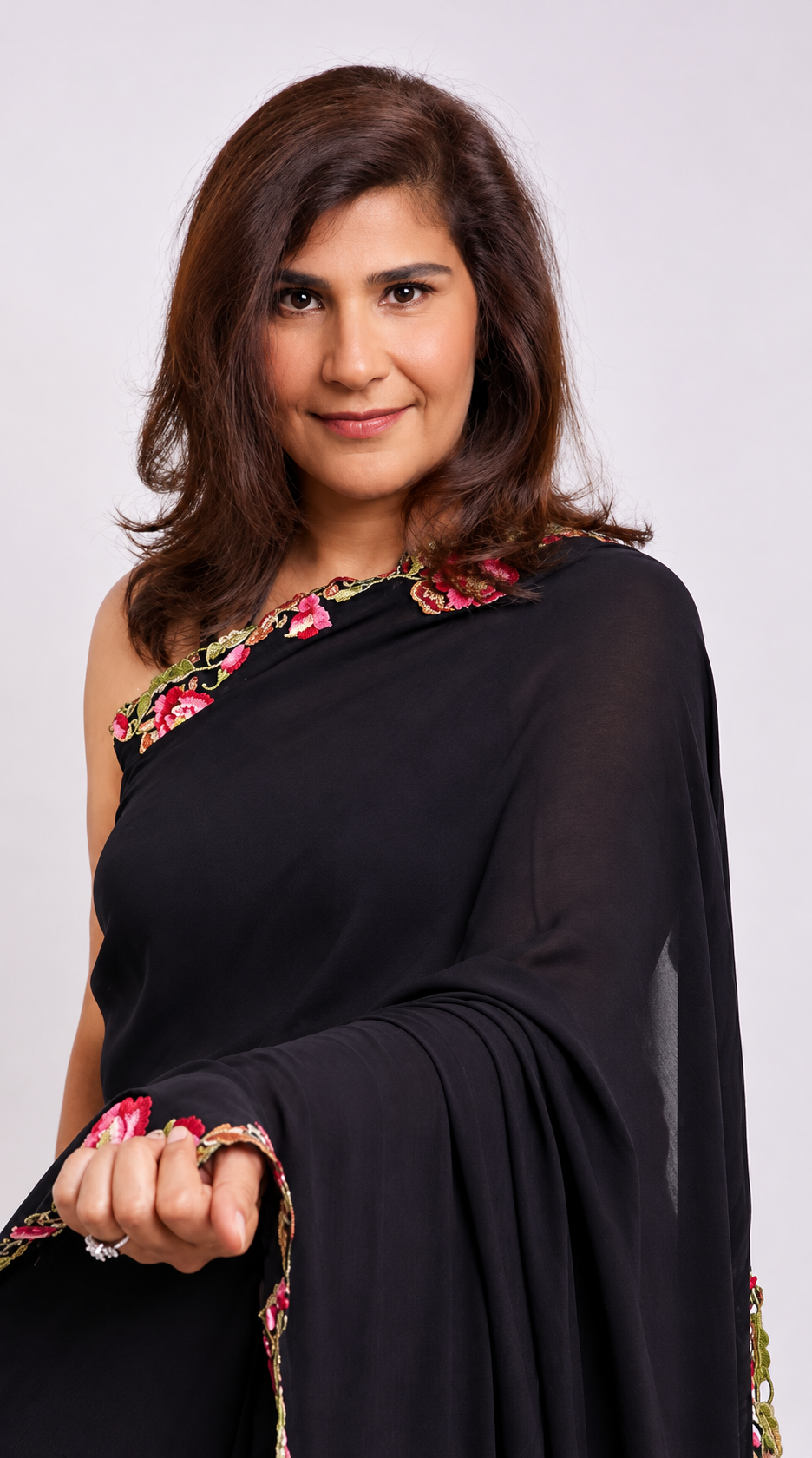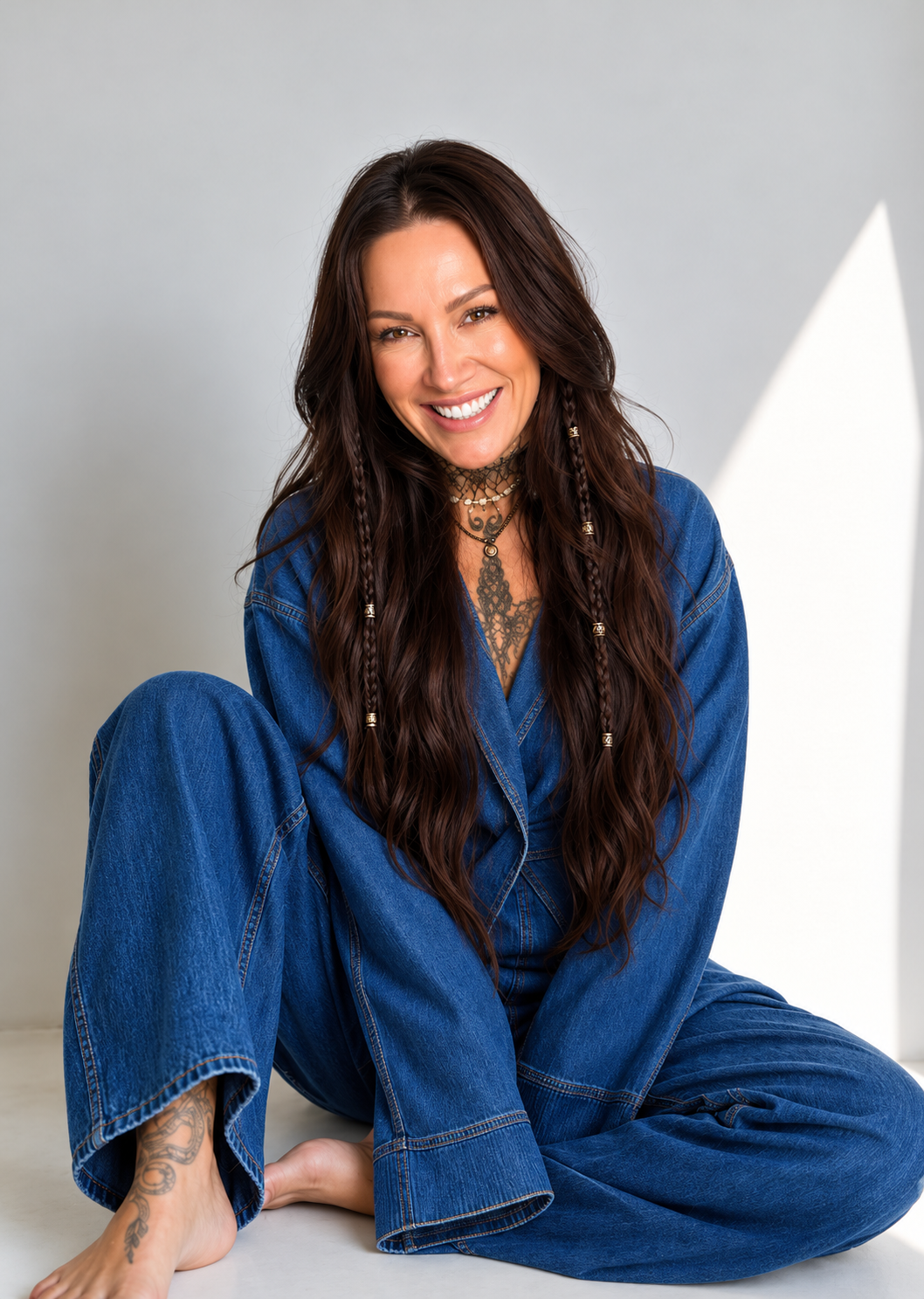
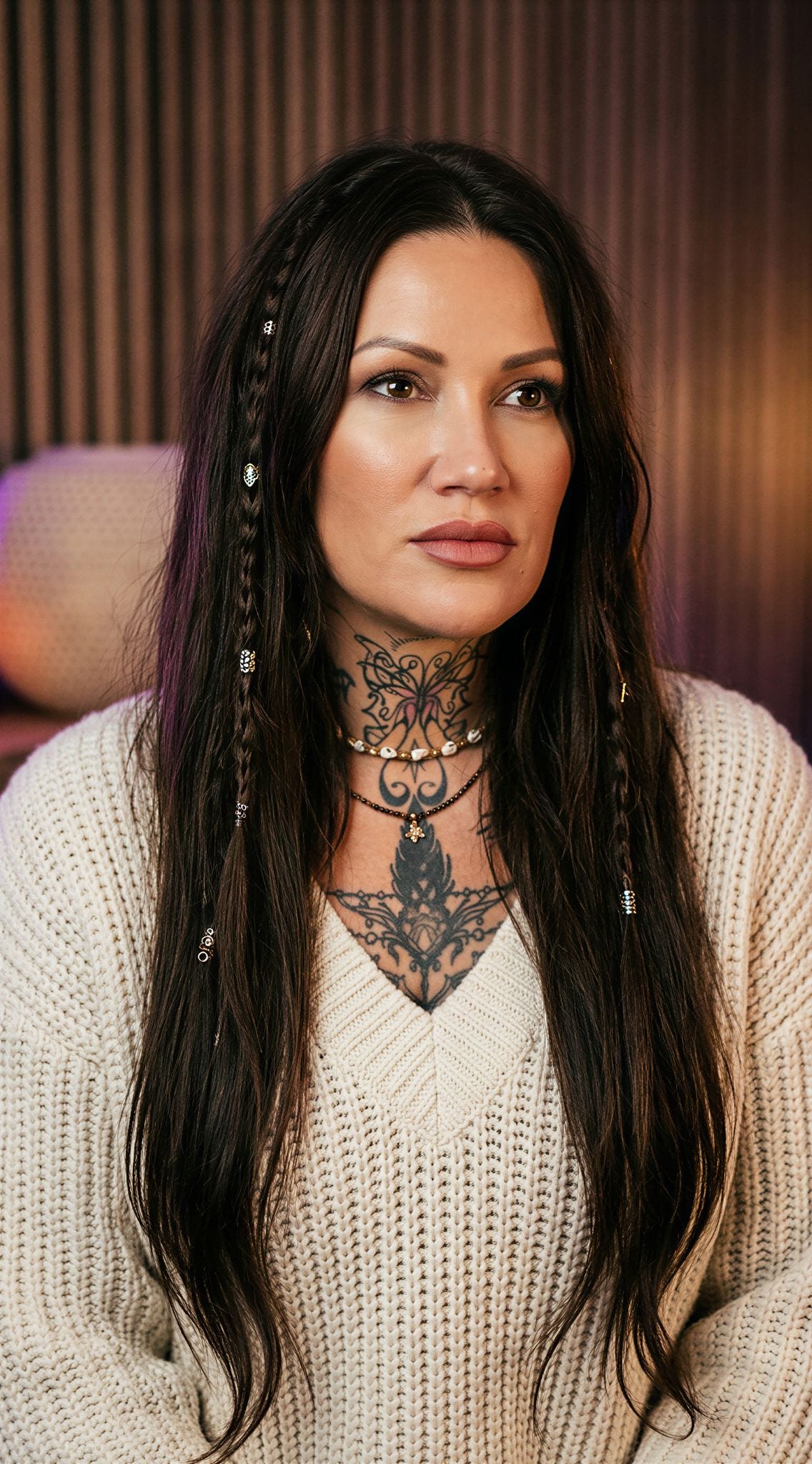
I think that saved my life. I’ve never actually said that before, but after doing so many interviews and podcasts and having launched in so many directions, if I look at the genesis and the source of everything, it all comes back to art, creativity, and fantasy world imagination, which started at a very young age.
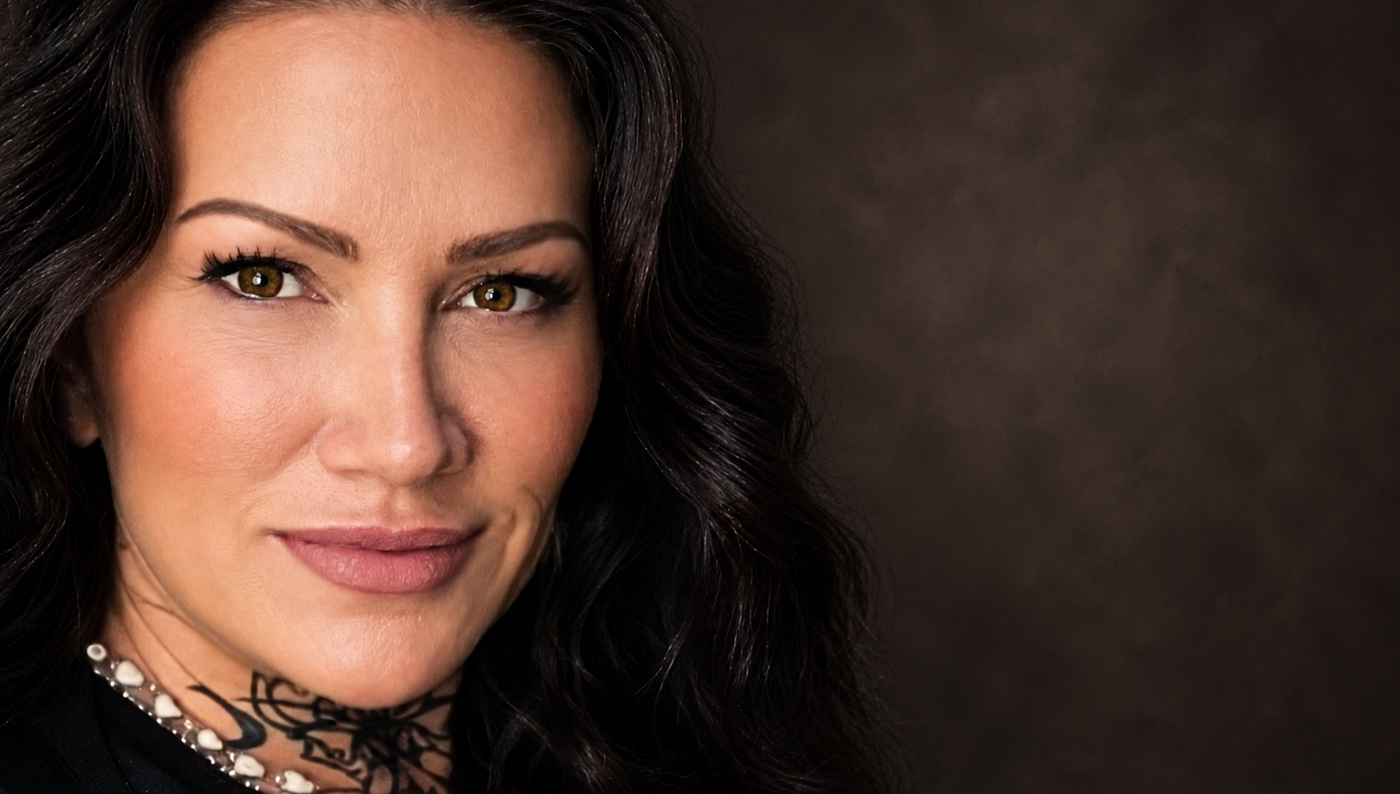
I had the pleasure of talking with Oriah Hera, whose first attempt at transforming a room began when she was five years old. She was an only child growing up in a strict religious household, where tensions between her parents often left her feeling alone. One day, she took possession of a walk-in closet, brought in a bedside lamp, stuffed animals, books, blankets, and her cat, and turned it into a private fairy-tale kingdom. Inside that little space, she could decide how everything looked and felt. The loneliness that followed her through childhood seemed less overwhelming. Sometimes, her mother had to persuade her to come out.
More than four decades later, Hera is still creating rooms that offer an escape from the outside world. The difference is that she now creates them for other people.
At 53, Hera is an artist, author, podcast host, magazine editor, and spiritual practitioner whose professional life seems to expand in a dozen directions at once. Yet beneath those pursuits is a remarkably consistent instinct: when life becomes difficult, she creates an environment in which she can imagine something different. What began as a private childhood survival mechanism has gradually become the foundation of her work helping others.
“I think that saved my life,” she says of discovering her artistic abilities. It is a striking admission from someone whose public identity is so closely associated with optimism, mystical living, and personal transformation.
Her childhood in East Los Angeles was far removed from the enchanted environments she would eventually build. Her family had limited financial resources, and she describes her early home as emotionally difficult. At approximately 15, inspired by the elaborate costumes and interiors of the film Dangerous Liaisons, she began collecting vintage fabrics, mirrors, lace, and decorative objects from thrift stores and garage sales. She suspended curtains from the ceiling to imitate a four-poster bed and transformed her bedroom into another era. For six months, she immersed herself in that carefully constructed world.
When friends discovered what she was doing, they wanted their rooms transformed too.
“Doesn’t everybody know how to do this? This is so obvious,” she remembers thinking.
It wasn’t obvious to them. Watching their reactions, sometimes including tears, introduced her to a possibility she had never considered. The private worlds she created to comfort herself might offer something meaningful to others.
“I got hooked on the feeling,” she recalls.
That discovery followed her into adulthood. As a mother of five, she painted elaborate murals and constructed imaginative environments for her children, including an enormous orca mural and bedrooms filled with artificial trees. Later, at a private healing ranch in Malibu that she operated with her longtime partner Riz Mirza, she filled spaces with branches, fairy lights, and fantasy-inspired decorations. One Thanksgiving celebration involved removing the living-room furniture to accommodate a 20-foot table and a costumed Lord of the Rings gathering.
The playfulness is an essential part of her personality, but it exists alongside a much more difficult personal history.
Hera speaks candidly about surviving sexual violence, years of alcoholism, painful relationships, and a prolonged custody conflict. She also acknowledges the continuing emotional effects of her early isolation. These are complicated experiences, some involving family members whose privacy she is careful to protect. Her account resists the easy assumption that personal transformation erases everything that preceded it. She describes creativity as something she repeatedly returned to when other parts of her life felt unmanageable.
Over the years, that instinct expanded into life coaching, shamanic practice, and international retreats. With Riz, she developed Sacred Earth Retreats and co-created The Mystics Podcast, which has attracted an audience of more than half a million subscribers. She is also Editor-in-Chief of Chakra Cozy Magazine, a publication exploring spirituality, wellness, travel, and conscious living, and the author of books including Finding Merlin and Alien Upgrades.
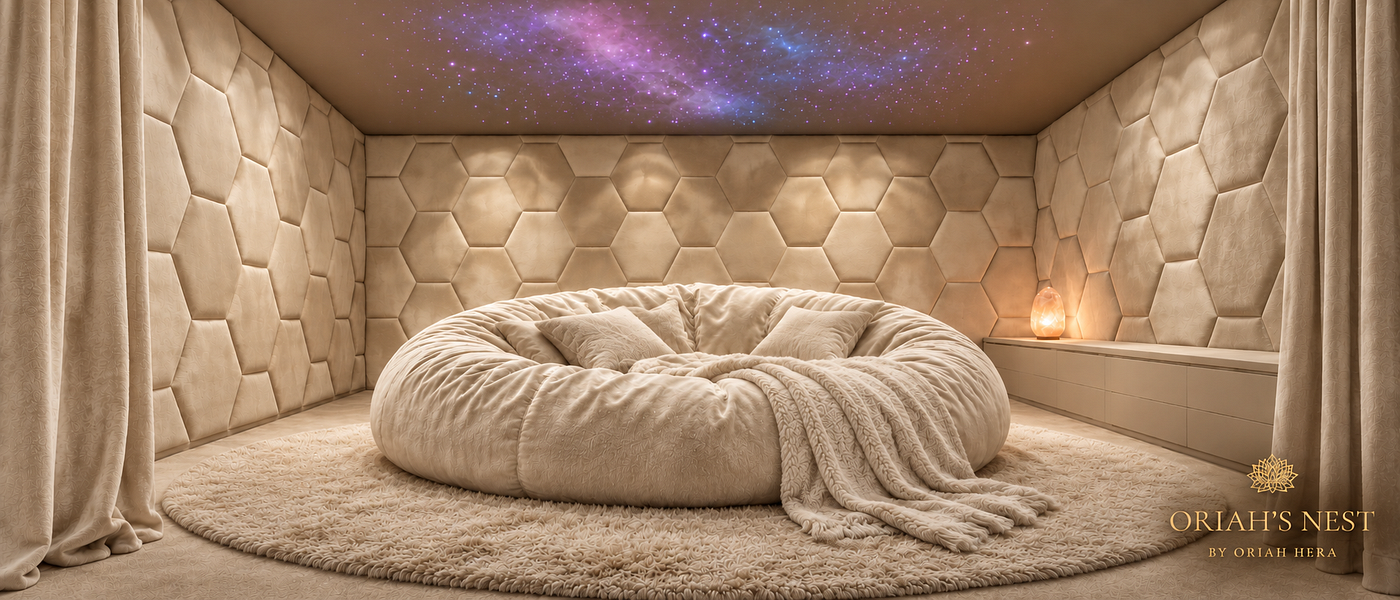
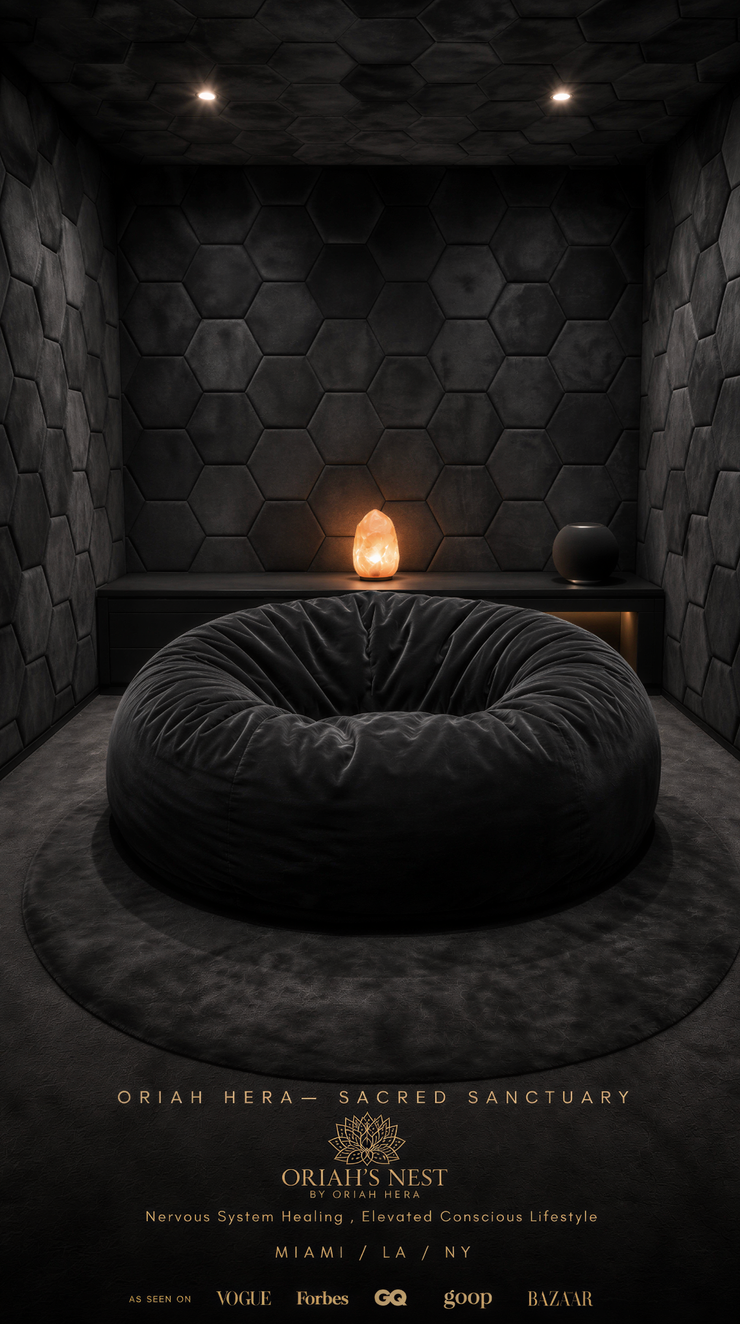
Her latest venture, Oriah’s Nest, brings her work back to its earliest expression: the physical environment. She designs individualized spaces using lighting, texture, color, sound, and meaningful personal objects. Her clients include families seeking calmer environments for neurodivergent members and people looking for relief from sensory overload. She recently completed three rooms for a family in North Carolina and is developing the concept into a television project. A related book, The Unplugged Room, is also in development.
Her approach is personal and experiential rather than a conventional formula for interior design. She wants to understand what makes each individual comfortable, what objects carry meaning, and what kind of space allows that person to relax. In an era when technology occupies so much attention, she sees the home as one place where people can regain some measure of control.
“Do you know what you like?” she asks people. Often, she says, they struggle to answer.
Meanwhile, Hera’s own life is undergoing another reinvention. After 17 years together, she and Riz ended their marriage in 2026 while choosing to continue their creative and business partnerships. With her five children now adults, she describes this period as an opportunity to devote more attention to her independent work and reconsider what she wants from the years ahead.
There is something revealing about that combination of independence and connection. The little girl who once retreated into a closet has spent much of her adult life building environments where people can feel comfortable enough to open themselves to the world. Her ambitions have grown considerably, but her underlying question has remained surprisingly similar: how can a person make the space around them feel more livable?
For all her interest in mystical experiences and extraordinary possibilities, Hera ultimately offers a remarkably practical answer to the question of how people can improve their lives.
“Help one person. Start there.”
It is a philosophy that brings her story back to that childhood closet, and to the moment she discovered that something she had created for herself might be worth sharing with someone else.
Oriah Hera, it’s such an honor to meet you. Before we dive in deep and talk about your great work, our readers would love to learn about Oriah’s personal origin story. Can you share with us a story of your childhood and how you grew up, and the seeds and genesis of all the amazing creativity that has come since then?
Oriah Hera: Yes. Well, I’m lucky that I had an artistic inclination. I think that saved my life. I’ve never actually said that before, but after doing so many interviews and podcasts and having launched in so many directions, if I look at the genesis and the source of everything, it all comes back to art, creativity, and fantasy world imagination, which started at a very young age. I had to do it for survival.
What was really interesting is I’m 53 now, and I never saw that my entire life was going to be based on my skill set regarding art, graphics, interior design, magazine editorials, paintings, murals, and everything that you can think of that’s related to art. I leaned on it because it was a second language to me. I’m really happy to have this interview because I’ve actually never spoken about this part of my journey. It’s really nice that this is coming up right now because it’s something that has been in the background near and dear to my heart, and I’ve never had a chance to really speak about it properly. I could tell you a list of traumatic experiences that I went through from a very young age, and I could go on and on for decades. Each time I got out of a hard situation, it was always through creating art and creating something that propelled me into a new vista, a new arena.
If you want to know any specifics, I could give you some milestones or things that I experienced when I was young and how I segued into art.
Let’s start this way, if it’s okay. Please tell us about the amazing things you’re doing now, and then we’ll work backwards and learn about the story of what led you to this.
Oriah Hera: Okay. First, I’m going to give you the list. There’s a list because if you imagine a tree with the roots at the bottom and the small trunk, if I start at the end, which I will, it’s going to be the top of the tree. There are a lot of branches, so it spreads out. I’ll just go down the list.
First, I’m Editor-in-Chief of Chakra Cozy magazine. I do the designs and the graphics, so I’m hands-on. I am also talking all the time and showcasing my lifestyle that I have created with my now creative partner. He’s no longer my husband, but we still work together. We created a lifestyle over the last 17 years which we consider conscious mystical living, which means breaking the norms of society and not fitting into any box. You just get to live your magical life however you want to, keeping it as safe, holistic, and healing as possible for yourself, and bringing in as much fun and mysticism as possible. That’s what the magazine is about.
I also co-produce, co-host, direct, and write a podcast called The Mystics Podcast, and it has over half a million subscribers in three years. My creative partner, Riz, and I co-hosted and started it, and it’s grown.
The next thing is I’m an author of several books. One book is called Finding Merlin, which is a sojourn of my journey to find the magic within myself by looking for Merlin. It’s a fantasy-sojourn journaling of my spiritual quest for finding my own magic because I came from trauma. That’s one book.
The other book is called Alien Upgrades, and that is a book from an alien experience I had in 2010. I wrote a book and have been on several shows talking about it. I’m also pitching a TV show series or an episode right now to showcase my story. It’s in its second edition, and with the help of AI, I was able to recreate some of the scenes that I experienced. That changed my life, and I became more focused and honed in on my desire to help lift the conversation of humanity to a more evolved and holistic level.
I also have another book in the works right now that I’m looking for a publisher for and sending out inquiries on, and that is called The Unplugged Room. The Unplugged Room is about my Oriah’s Nest design company, where I create sanctuaries for decompression and healing for fried nervous systems — for people with disabilities, first responders, children, neurodivergent people, people with ADHD, and people who are going through a healing crisis.
I create these very special rooms that are custom designed for their personalities. They’re soundproof, texture-driven, and color-driven. Since I’m an intuitive and an empath, I’ve had to do this for myself. That’s how I learned it. I’ve done it for everybody I know and all my children, and I’ve turned this into a service that I provide. I just finished doing three rooms in North Carolina where I was helping a neurodivergent family. I filmed it for a teaser pitch to send out to possibly have a show with my manager in New York. I’m very excited about that. That’s been a whole lifetime in the making, and that’s my true driven passion.
I got there through many means, one of which was being a shaman. I was a shaman for 25 years. Once a shaman, always a shaman, so I can still lead anybody in a plant medicine journey. I’ve led hundreds and hundreds of people, doing group and individual sessions, domestically and internationally. I was a life coach for at least six years prior to being a shaman. For all this time, I have been doing trauma life coaching, reprogramming, and helping people through their traumas through being a shaman.
Many people wanted to travel with my creative partner Riz and me, so we created Sacred Earth Retreats, which is an international retreat company. We’ve had that for 17 years. We take people six times a year to various sacred sites around the world, including Stonehenge, Egypt, India, Ireland, Japan — you name it. We do our channeling and psychic messages, and we show the more sacred part of that particular location.
Back to The Unplugged Room, that book came from this Oriah’s Nest service. You add all these things together, and I’m sure I could find more because I always have other things, but these are the main threads that I focus on. I write a lot, and I’m never going to stop writing.
Once in a while, every couple of years, I get this urge to paint a big mural, but I need a lot of room. I need a 30-by-20-foot canvas to do a mural, and those are expensive. So I donate my services to local restaurants, and that’s how I get out my urge to do my murals. I’ll go into a restaurant, scope it out, offer my services, and show my portfolio, and they always say yes. I always choose a big wall. I go restaurant to restaurant until I find the right wall, and then I spend a weekend and do the whole mural.
When I was younger, I was an artist in acrylic and watercolor. I’ve always been drawing, making spaces and fantasy rooms, painting walls, and turning things into other environments. It kept me sane. It kept me alive. I got through all of my domestic difficulties and my several marriages, and I have five children who are all adults now.
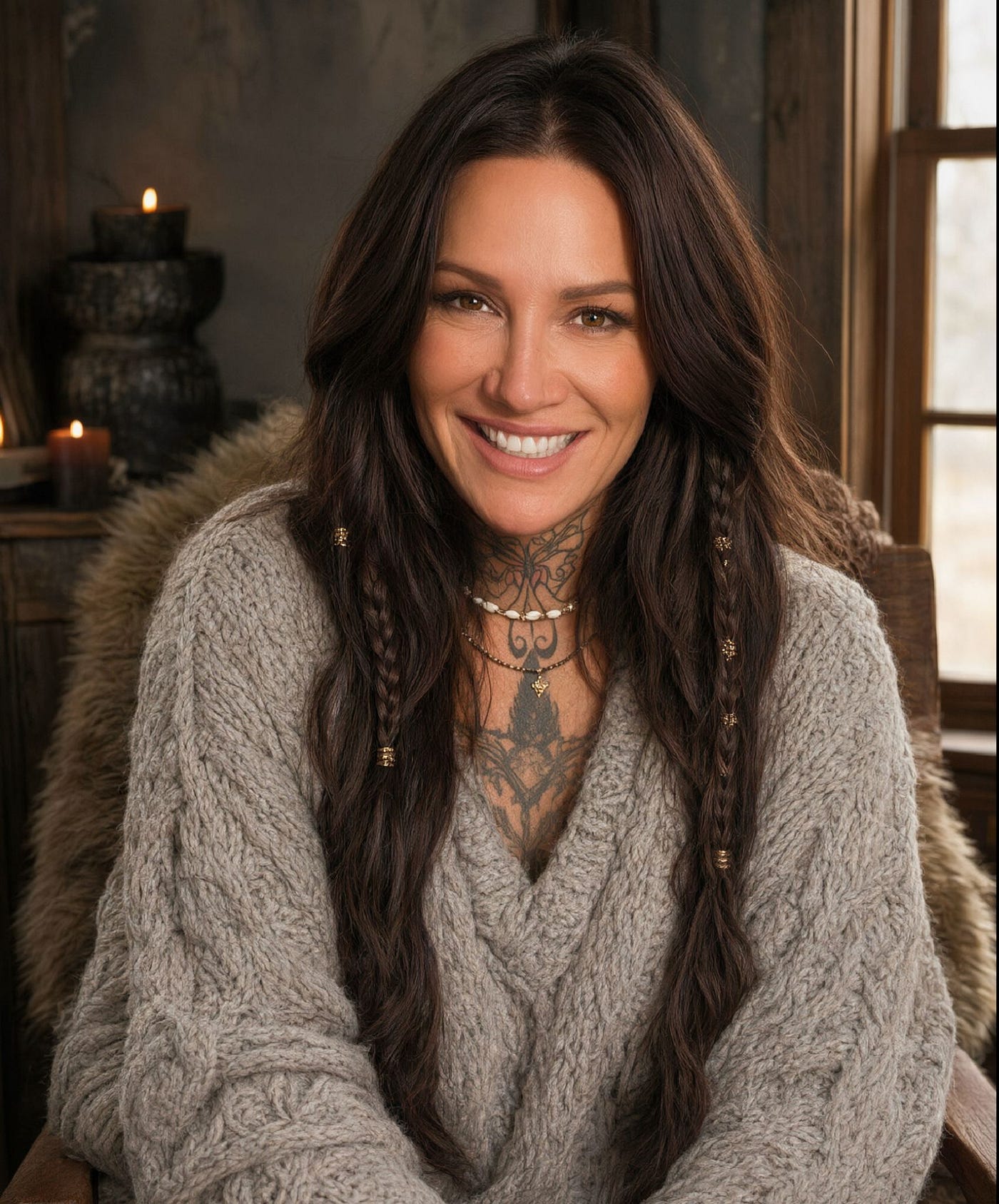
Wow, unbelievable. I’m sure this is an elaborate, long, amazing story. You could pick any starting point. I would love to hear the starting point. You weren’t born with all these amazing accomplishments. Where did it come from?
Oriah Hera: Well, I always have different favorite stories based on the era I’m in right now. The Oriah’s Nest era is my hyperfocus, and I’m beyond excited to do it at this level.
It started when I was five years old. I was an only child and grew up in a very strict religious family. I didn’t have a television, and I didn’t have siblings. I was alone. My parents were always in some battle with each other, and they ignored me a lot. They locked me out of their room many times, and I was left alone a lot. Of course, I’m Gen X, so I was already left alone a lot on top of that. I lived a very isolated, quiet life, and I was lonely a lot when I was under the age of 10. I can still tap into that loneliness and feel it. I feel like it’s a part of my soul journey and my impetus to become who I am today, because I still struggle with intimacy and loneliness because of that early childhood programming.
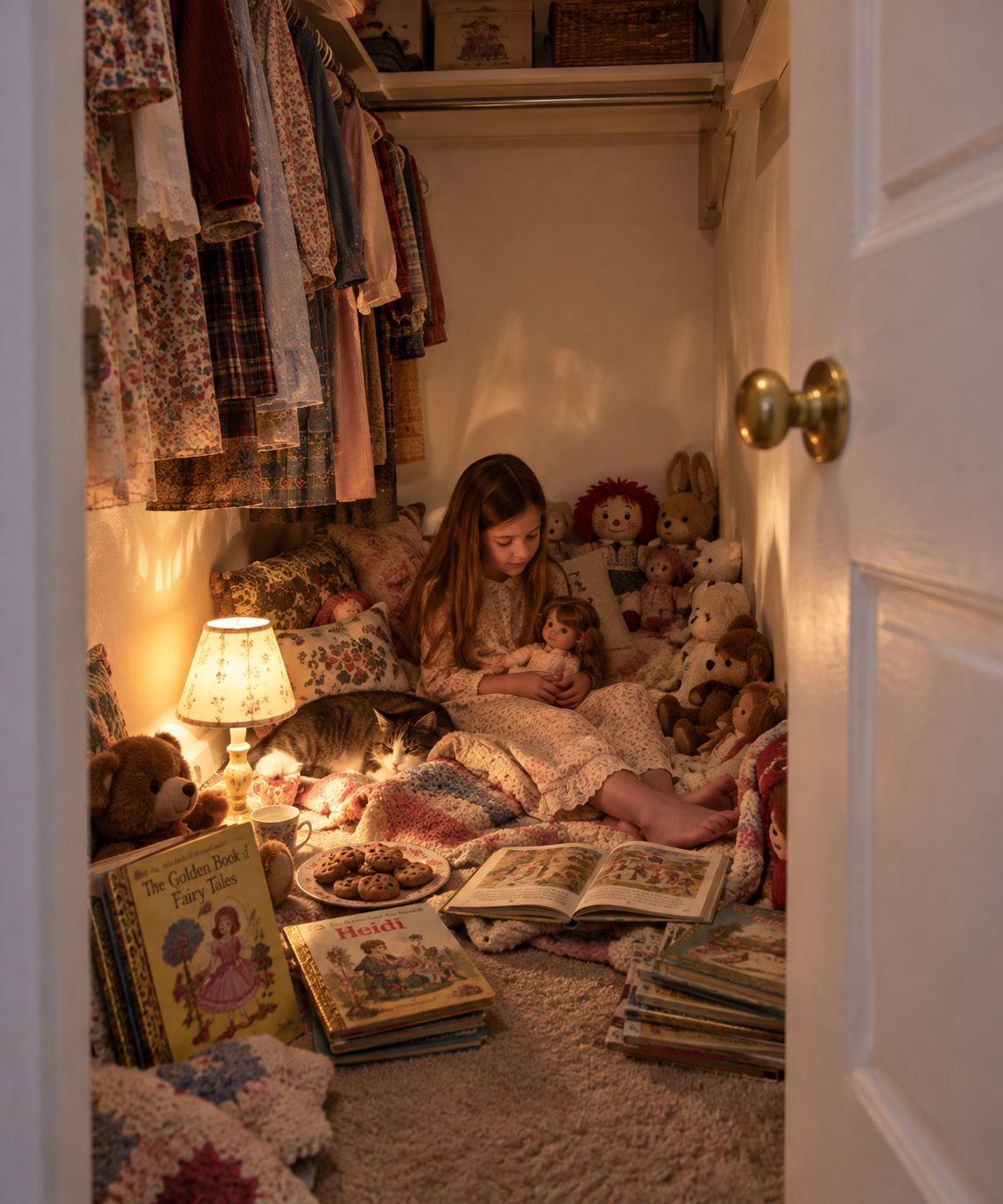
How I solved it — and I’m still solving it — is at five years old, I realized I had a walk-in closet. I actually had AI make an image for me of that exact closet and what I used to wear, my books, and everything. I recreated it; I’ll give that to you later if you want. I brought in my little bedside lamp, my stuffed animals, my books, and my cat. I hung things on the rack and turned it into a fairy tale. I was the princess, of course, and I sat on the floor in all my special blankets and made it so perfect and so beautiful. I was fascinated with the lighting. I loved how my cat loved it. I felt my stuffed animals came to life. I felt my books were real. I had my snacks, and nobody could bother me in there.
This internal sadness of loneliness and these tears on the inside alchemically turned into my fantasy world. It became this very watery experience where I was almost interdimensional, I think, because I was so deep in my imagination at five to begin with. I was already artistic, though I didn’t know it, and I also didn’t know I was a very sensitive empath.
When I was in the closet, I would create these worlds, and these worlds were so magnificent I didn’t even want to come out. My mom would have to beg me to come out of the closet. Then I’d go play with my friends and want to go right back in the closet. I didn’t like the way my mom and dad decorated their house. I was very aware of that at a young age. I thought it was very plain, and I thought there was no love, no spark, and no magic. So it was my mission to make that in my own life.
When I was around 15, I was very inspired by Dangerous Liaisons, which was a movie back in the day with Glenn Close. I loved the tapestries, the lace, the clothes, the pageantry, the velvet, and the colors. I was so swept up with the drama and the French Revolution and all of that. During that time in the ’80s, I was lucky enough that the garage sales and thrift stores near me were getting estate sale loads of things to sell, coming from grandmothers and great-grandmothers who were actually born and alive in the 1920s. I lucked out because I was able to get so many items. I got brushes, mirrors, lace doilies, and everything. I started hanging sheers and curtains from the ceiling to create a four-poster effect, because I wanted a four-poster bed so badly and didn’t know how to create it. We didn’t have a lot of money, and my mom didn’t participate in anything I did because she was so wrapped up in my dad.
So I just created another world. I took everything modern out of it, and I lived in that room for six months. It even smelled old. I would get into the covers, and the sheets were almost ready to crack and break because they were so delicate, because everything was authentic. I would lie there with the blanket over me, smelling this old vintage smell, and I felt like I was transported back to that time. It was so soul-soothing and so peaceful. I felt so taken care of by my own magic that I didn’t need anyone. I became very isolated and became that solo artist in high school. I had cliques and groups that I could join and talk to, but I was always alone, even though I knew a lot of people.
I continued doing that to my own rooms through high school until my friends started finding out, and they freaked out because I would do different eras and they wanted it. So I showed them how to do it, and I would go to their rooms. Nobody knew how to do it, which I thought was so interesting and unusual. I was like, “Doesn’t everybody know how to do this? This is so obvious.” No, they didn’t. So I would go and do it for them.
They watched me, and they were in profound awe. That magic of their being in awe was so intoxicating for me — to watch people transform, how their eyes would glaze over, the smile. Sometimes they would cry, and they would lie on their bed and feel transported. I got hooked on the feeling. I wanted to give this to people. This magic I had been living my whole life, I was finally able to give to someone else, and it was so incredible.
As I got older, I had kids, and I would do that to their rooms and their closets and paint murals, and they would be transported into different places. They were so used to it, they thought all mothers did that. In the early ’90s, not a lot of people were putting fake trees inside bedrooms. I was doing things like that for my kids, and they loved it, though they always had to explain to their friends what was going on because my house was always different. I painted a 20-foot orca one time on this big empty wall in a house I bought. That mural was my favorite mural; I wish I could have taken it with me.
There are all these experiences like this that I had, and then I would do it for people who were in need. Sometimes there would be people going through a loss, grieving, or just so depressed. At the time, I didn’t feel like I had the skill to be a professional life coach or speaker. So if I wasn’t painting a picture for someone or drawing their portrait, I would go and make over their room, their kitchen, or their living room, or do anything to change it. I even remodeled the inside of my van one time and made it very cozy. This is something you see on Pinterest every day now, but at the time I was a renegade. No one I knew was doing anything I was doing.
When I became a life coach and then a shaman, I realized I had a skill and knew I needed to give it to people, so I’d give it away. I would do clients’ rooms, and I did that all the way through when I had a private healing center ranch in Malibu for 10 years with my creative partner. I’d go to people’s houses and put fairy lights and branches all across the ceiling. Our house looked like Harry Potter or some version of that. It was an older home, and you walked into a wonderland. I loved doing that, and everyone loved it. Everyone would walk in and be transported with twinkle lights, trees, fairy gardens, and kingdoms.
For Thanksgiving, we did Lord of the Rings. We took all the furniture out of the living room and did a 20-foot table. Everyone was in costume, and all the goblets and plates were authentic. I was Thorin, of course, and it was amazing. I like to live a life worth living, where you feel like you’re not copying or doing what other people are doing, but living a life that’s unique to yourself and what you want. This was way ahead of its time, and I was teaching people how to do this at a young age.
Now in 2026, especially after COVID when everyone was stuck inside, people started to want to know more about immersion and these experiences. With the world the way it is right now, and technology and AI and what it’s done for people — positive and negative — everyone’s nerves are shot. People’s nervous systems are frying. People are experiencing mental illness more than ever. People are snapping, short-tempered, and scared. They call it the great divide or the shift. There’s a group of people who believe it’s the end of times, saying, “Why bother? Let’s just protect ourselves and we’ll all go down in flames.” And the other group is saying, “No, we can still rebuild. We can still create a new life. Let’s help each other.” That’s the group I’m in.
I just keep really focused on what’s around me, my environment, my surroundings, and the people I’m with. Funny enough, during this time, I had a conscious uncoupling this year with my husband. It was a part of the exploration and growth at my age of 53. I realized that I wasn’t in my truth and wasn’t feeling as expressed. I had been unhappy for a long time, and I posed this to him many times. Finally, this year, I gave him an offer he couldn’t refuse. He really recognized it and saw that he had also felt stifled, and we said there’s nothing wrong with us choosing different paths while staying on the same playing field. So that’s what we’re doing. That’s one of my bigger stories that I love. I have so many stories, but you can ask any other stories you want.
First of all, you’re an amazing storyteller, and it’s amazing that you’ve created a whole immersive life around stories. Do you have another story that most stands out in your mind or that fills you with the most nostalgia?
Oriah Hera: That’s a good question. It’s funny how the human mind works, because the mind wants to go to the eras where you struggled the most, because it feels like those are the ones where you accomplished the most when you got out of those situations.
I have so many in-between moments of fun and greatness — of travel, exploration, being in other countries, and meeting people from around the world. Those obviously changed my life, and taking my children on these retreats with us changed their lives. Of course, those are always going to stand out as an incredible feeling, along with meeting your soul partners and people in your life who bring you so much joy.
For some reason, when you say nostalgia — nostalgia usually has a positive connotation, but I can take it as a neutral word and look at what is nostalgic in my life in general — I will say it was the challenges I overcame. They stand out to me as the gems. They stand out to me as the things I’m the most proud of. Where most people would become statistics, I had so many life-and-death moments — from sexual violence to alcoholism, to my children being taken away through parental alienation when I wanted to commit suicide, to overcoming that, to having so many divorces.
I kept choosing men who were really emotionally intense and tended to have that hyper-masculine aggression that came with the ’90s and previous years. They were a part of that generation, which I can’t fault them 100% for, because in the work I’ve done, I realized it all comes from your upbringing and your circumstances. I know that now, but at the time, I had to get out. Therefore, I’ve had to come out of many marriages.
If you want to know the number, it’s five, with two fathers. With my first husband, I was married for seven years, and I had three children by 23 years old. Then I was with somebody for four years, married for two; there was infidelity in that, so I left. The third marriage was to a con artist, which I didn’t know at the time. I was so happy to be a stepmom to his kids and grow our family, but it turned out he was just interested in material things that I had, and it wasn’t a real marriage at all. I found out within 18 months, really quickly, so I had that annulled. I don’t know if I want to count that as a marriage, though it is technically. My fourth marriage was to the second father of my children. We had two children together, and I was with him for seven years. And I just completed a 17-year marriage.
There are people who have a lot of shame around this because society, and especially certain religions and ideologies, look at this as a negative. I look at it as a quest. For people who have been married multiple times and kept their heart open, believed in love, and never stopped believing in themselves or others, we share the same belief. We have these conversations, and it’s beautiful because we talk about how it’s a quest. Some people have it as a pattern, and I can see why, but if you learn and evolve from each one, become better at who you are, and have a better outcome, I feel like you’re on a mission, a quest. That’s what I’ve been on. I’m a Taurus; I believe in love first and foremost. I’m a love baby — everything I do is from love. If I didn’t feel properly seen or heard, and I didn’t want to fight anymore and gave up the fight, I would leave because it was too much.
My children and their soul path with me had to be a part of this adventure, which made us very close, almost like peers. My children are all very independent and intelligent, and they live all over. I have a son in Europe who has been on the cover of Time magazine, and I have four daughters who are all over Southern California. They’re working hard, and I don’t worry about my kids at all, even though times are hard right now. They are so smart and resilient. I think it has a lot to do with their upbringing, which could be looked at as traumatic, but both fathers and I stayed so consistent with them to make sure they understood as much as they could what was happening, and we stayed in their lives 100%. I didn’t leave my recent husband until my youngest daughter was 21. I waited until all my kids were adults before I made this last transition.
Now I live in Florida, and I am dating somebody right now. I’m going to go public with him in March of next year. I know that you’re going to post that, and it’s fine — I’m not going to say his name yet until everything’s super finalized, though we’ve already gone public with the fact that I had the uncoupling.
You have all these experiences, and you say to yourself that most people can’t mentally get through a portion of some of the things I’ve experienced. They can’t get through sexual violence; that takes them out. They can’t get through rape mentally and emotionally; it’s almost impossible. I’ve been raped many times in my younger years.
A lot of people can’t even imagine how to survive just one of these experiences. I was an alcoholic for 13 years, from morning to night — a hidden, working alcoholic; nobody knew. That kept me alive because I was suicidal while fighting for my kids in court 12 times to try to get them back from their father, who was trying to wrongly accuse me of abandonment and many other things as part of an abusive dynamic. My kids are very uncomfortable about what happened and me talking about it, so I don’t want to go into too much of that.
While going through all this, my dad died when I was 25. My mom lived with me for a while, and then she passed away in her 80s. She was from Honduras and was raised on a coffee plantation with 14 brothers and sisters, and she wasn’t educated. My dad was a high school dropout, so education was not a part of my family conversation. I grew up in the inner cities of East LA. I went to Montebello High and San Bernardino High School, and it was extremely violent. San Bernardino was way more violent, and I experienced attacks, stalkers, rapes — everything from living there, starting very young in high school.
Plus, I was born and raised a Christian, and I was excommunicated at 16. It was a cult that I was in; I didn’t know, but I found out and caused a lot of problems, so I was excommunicated. I went to other Christian churches, lost all interest, and was religion-free at about 24 years old. I went on a quest to understand myself. The closest thing anybody would call me is a pagan or a druid. Now I’m more like an earth mama who believes in the supernatural and the metaphysical. I believe that we create our reality, I believe there’s a higher power, I believe in the universal law of oneness, and I believe in love and no doctrine. I believe everybody has the freedom to be who they want to be and practice what they want to practice. There is no right or wrong or one way, and that’s the beauty of this earth school that we live in. I’m very pleased to be a part of it.
I see so many ways people want to check out and give up. I also have a new podcast called Lady O Unfiltered — there are only about six episodes so far — where I talk about how to use your environment, your mind, and your senses to recalibrate and center yourself. I talk about how not to give up.
Generationally, there are so many Gen Xers who don’t want to be a part of this new technology burst. They want it how it was, and they want to experience the simple life. Some people fight for that and do that, and I love that for them. There’s a part of me that wishes I could do that too; as soon as I am able to, I would love to go back to the basics, and I try my best to do that. But there are so many of them who are angry and upset about how things are going, and they take it very personally because they remember a life when it was different, just like the Boomers did.
Then you have Millennials, who don’t know what is happening because they thought it was one way, and now it’s another way, and they’re expected to hold the torch while the Gen Xers are super mad. Millennials have to deal with the Gen Xers and the Gen Zs. They’re the middle children, and they’re asking, “What is going on?” They just want to be left alone, given love, and treated fairly. They’re trying to get through, and they struggle with how to make this life good. They’re very good students of learning how to evolve their creativity and their mind. I work with a lot of Millennials, early and late, which I love. I have some Gen Xers who like what I’m doing, but by the time you get to Gen X and Boomers, if you’re not interested, you’re just not going to do it; you want to do it your way, which is fine. So I focus on younger people.
Then Gen Z doesn’t know if they should be happy and celebrate the fact that they’re not like anyone else, or if they should be mad about being stuck with this technology and born into the screen. They’re trying to decide as a culture which way they want to go. Do they want to embrace technology or not? Do they want to get out of the algorithms and buy CD-ROMs, Walkmans, and record players, read books, and be phone-free, which is understandable? Or there are other Gen Zers who are embracing technology completely and changing the world.
Then we have our Alphas, whom we’re all keeping an eye on because we’re wondering, “What’s going to happen? Are the Alphas going to come in and whip everybody into shape?” They seem a bit pissed. They’re given too much information too young and put into highly scheduled lives at a very young age, not given an opportunity to be a child long enough. They’re thrown into the deep end. Part of them likes it because they want the stimulus, but then they can’t focus in school and have problems retaining information, so the public school system needs to be reformed.
There are so many ways somebody can check out of life, and ways that people want to give up, become hermits, and go live on a mountaintop to get away from people because it’s overwhelming. Because I experienced everything I’m talking about in micro in my own life, I learned that in small increments you have to build and create your environment. You have to create your bubble, your world, and the people in it. It has to be for you. You have to like it, you have to feel good in your life, and it has to be authentic because you can’t lie to yourself. Forget about being authentic with other people — let’s work on being authentic with yourself first, focusing on taking care of yourself, and learning how to love yourself.
I talk to so many people and ask them, “Do you know what you like?” People don’t know what they like anymore. They don’t know what kind of music they like, what colors they like, or what vacation spot they want. They’re so inundated with data, processing terabytes of information per day, to the point where they’re losing track and focus of who they are, and younger kids are fighting hard to find an identity.
For us Gen Xers, here’s an opportunity where we can teach people what we know, because we went into our 20s without technology. We can teach people how to get into music, how to dance, and how to do all these things. Those of us who still believe there’s hope are like the older kids teaching the younger kids not to give up.
I believe in collective consciousness. If the collective consciousness is gearing towards change in a positive way, then it’ll go in that direction; if it’s the opposite, it’ll go in that direction, because of the power of unified belief systems. I feel like I’m somebody who’s on the sidelines. I’ve already graduated from the pit. I’m out of the pit and on the sidelines with my clipboard, my bullhorn, my toys, my sprinklers, and my magic tricks, telling people, “Here’s what you’re doing, here’s how you’re hurting yourself, here’s what’s going wrong, and here’s the fastest way to fix it that I did for myself. Here you go.” I give it out in life coaching sessions, PDF downloads, or any way I possibly can to show people how to make it better. My whole philosophy in life is how to make it better.
I am focused on the unplugged lifestyle, though not to a rigid, religious degree like being fully pescatarian or fully keto. I’m doing it from a place of awareness and personal choice — to try it out and get some time back to the basics where the phone is not involved. There are countries like Denmark, Sweden, Norway, and Finland that are already actively working on that, and it’s starting to come here to the United States, where the phones go in a bucket and no one looks at their phone. Eventbrite has seen over a 154% rise in reservations for phone-free events; they’ve never seen anything like this. It’s a good thing that I have a magazine and talk about the unplugged room and decompressing your nervous system. The timing is right for all of it.
I believe in a philosophy of not giving up, because there’s always something new around every corner. Don’t give up because you think you know how this is going to turn out. Both in Western medicine and in holistic healing throughout the centuries, people have surprised doctors and scientists with recoveries and dramatic miracle healings in their bodies that were not supposed to happen. There are so many supernatural events like this. I tell people all the time: you don’t know the outcome. Even though I’m a psychic and an intuitive, and I can have some predictions based on patterns, ultimately if you leave yourself open for change, chance, possibility, and the unknown, you keep yourself free and loose like a dancer. You stay loose on the dance floor instead of stiff. If you do that, you’ll stay young longer, your body will respond more positively, you’ll have fewer cortisol spikes, and your blood pressure will be lower. You’re taking care of yourself somatically.
People need healers, teachers, podcasters, and people in this conversation on the sidelines giving out water cups and verbal, mental, emotional, and spiritual nutrition to help them keep going. If they haven’t taken the time to understand or live what I’m talking about, all they know is, “We’re going to hell, everyone’s going to die.” They go straight to the extreme that there’s no hope for anybody. “Humans suck, animals are better” is a big thing people like to say. I look at it like humans are programmable; anything is possible with humans. Miracles happen with humans. Humans are an advanced technological system of energy, frequencies, sound, light, connection, and communication at the subatomic level. Much of the human body and mind is still unknown. We still don’t know how we fully operate, and yet we’re willing to throw everybody away because some people are mad.
They’re mad because there aren’t enough people like us who are quiet and calm on the sidelines saying, “Hey guys, it’s okay. Let’s figure this out one step at a time.” Everybody loves the grandmother or grandfather who comes into the room and says, “Okay, kids, let’s get out the milk and cookies. Everyone sit down, stop fighting, let’s talk.” That’s why I think we should come back to our roots and bring back the grandmothers, the grandfathers, the wisdom-keepers, and the elders who have been quiet on the sidelines watching and holding a lot of information.
As a podcaster, any chance I get to talk to somebody with wisdom, I’m trying to set it up to have guests on my show. Right now it’s just me talking, but I’ve been asking a lot of people to come on. A lot of people with wisdom out there are not speaking because they think it’s just a drop in the bucket: “What difference is it going to make?” And I say, “If you put enough drops in a glass, it’s going to make a glass full of water. Don’t give up.”
My whole message to humanity is not to give up on anyone or anything. For every storyline, there are 10 storylines that will contradict it. If you want to study aliens, controversies, or conspiracy theories, go ahead. Go down as many rabbit holes as you want. It’s endless, and there’s no single right rabbit hole. I’ve been through many of them, and they keep going. If you end up losing your mind over it, the joke’s on you, bro. That’s how I look at it — you went down that rabbit hole way too far. I look at rabbit holes as option A, option B, rabbit hole C, rabbit hole D. There are thousands of rabbit holes in every single category of humanity, from aliens to science, government, politics, black ops, military, reptilians, flat earth, or this all being a matrix game console — everything you can possibly imagine.
We hold politicians and figures like Trump and Elon Musk in such high regard as political characters who hold so much weight in our lives. I tell people all the time: yes, but you can still make your life how you want it every day. You can still eat how you want. If you don’t like the foods in the grocery stores because you don’t trust the markets, the FDA, and the way food and products are manufactured, plant a garden. Go get the right soil, get the right seeds from the right farms, and grow your own food. There are no rules that say you can’t live how you want to live. People just don’t like it when modern conveniences are threatened; I get it. But if you travel around the world, you’ll see how cultures live. Even in impoverished countries where people have fewer choices, they’re still making choices inside of that which are good for them. We all have to take care of ourselves, focus on the desk in front of us, and pay attention to what we’re creating. Worry about your own mess, and then you can talk about other people’s messes. That’s my big public service announcement.
This is our final aspirational question. Because of your amazing work, the platform that you’ve built, and your leadership, you’re a person of enormous influence. If you could spread an idea or inspire a movement that would bring the most amount of good to the most amount of people, what would that be? Because you never know what your idea can spark.
Oriah Hera: Well, I wish I could say it’s original, though does anybody ever have a completely original thought on the planet? What I’ve come to the conclusion of is that when you help someone else, you’re helping yourself. If you have nowhere to go and nothing to do, and you don’t know how to do anything that can make a difference, all you have to do is try helping one person. Help one person. Start there. Maybe help two. Help them in any way you can — help them move, help them make food, help an elderly person, help a child, volunteer, help clean up something. “Help others” is my message. If you help others, you’re helping yourself. It’s the most profound conclusion of life. If you want a good life, don’t keep it to yourself. What good is that, and what fun is that? It’s more fun to share it, and it comes back. That’s what I would say.
Oriah, how can our readers continue to follow your work, engage your services, make their own fantasy room, or support your work in any possible way?
Oriah Hera: First of all, you can go to my website, oriahsneststudio.com. I also have a pitch room if professionals in any industry want any of my services. I have so many because I’m also a speaker and a workshop facilitator, and I’m available for working in spas and working with clients and employees to help them have a more holistic workplace. It’s all there.
Then there is also rizmirza.com for my creative partner, Riz. Riz and I have all these businesses there, including the retreats, psychic readings, and shaman work. I also offer free consultations and in-person work. I’ve opened every door at this point because I have nothing to lose and everything to gain — what am I holding it all in for? I’m at a perfect time in my life where my kids are older and I can put 100% into everything I’m doing.
Oriah, it’s been an honor to meet you. I learned a great deal from this conversation, and I’d love to do this again in the future.
Oriah Hera: Thank you.