I just always loved how music could make me happy or make me sad or take me on a journey.
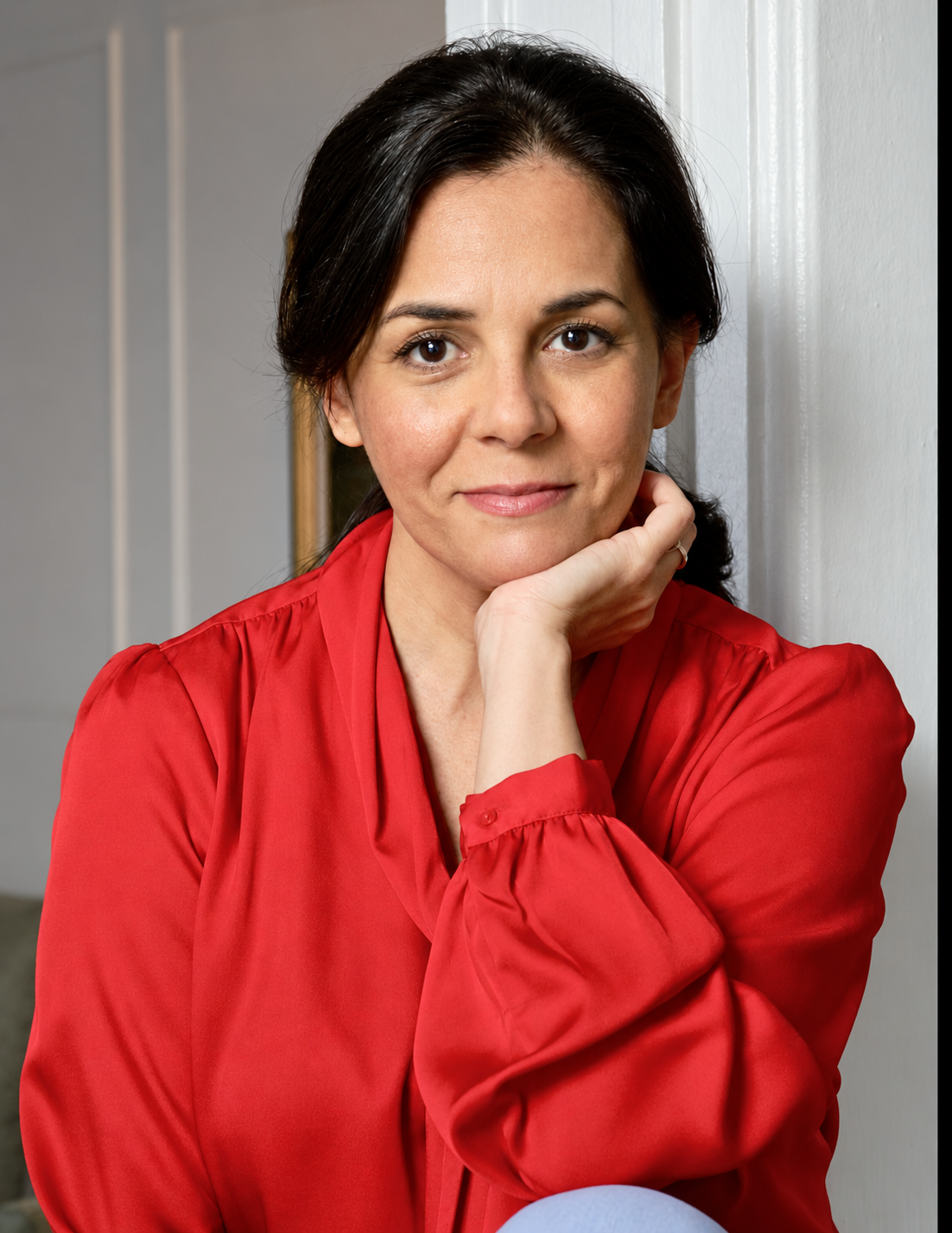
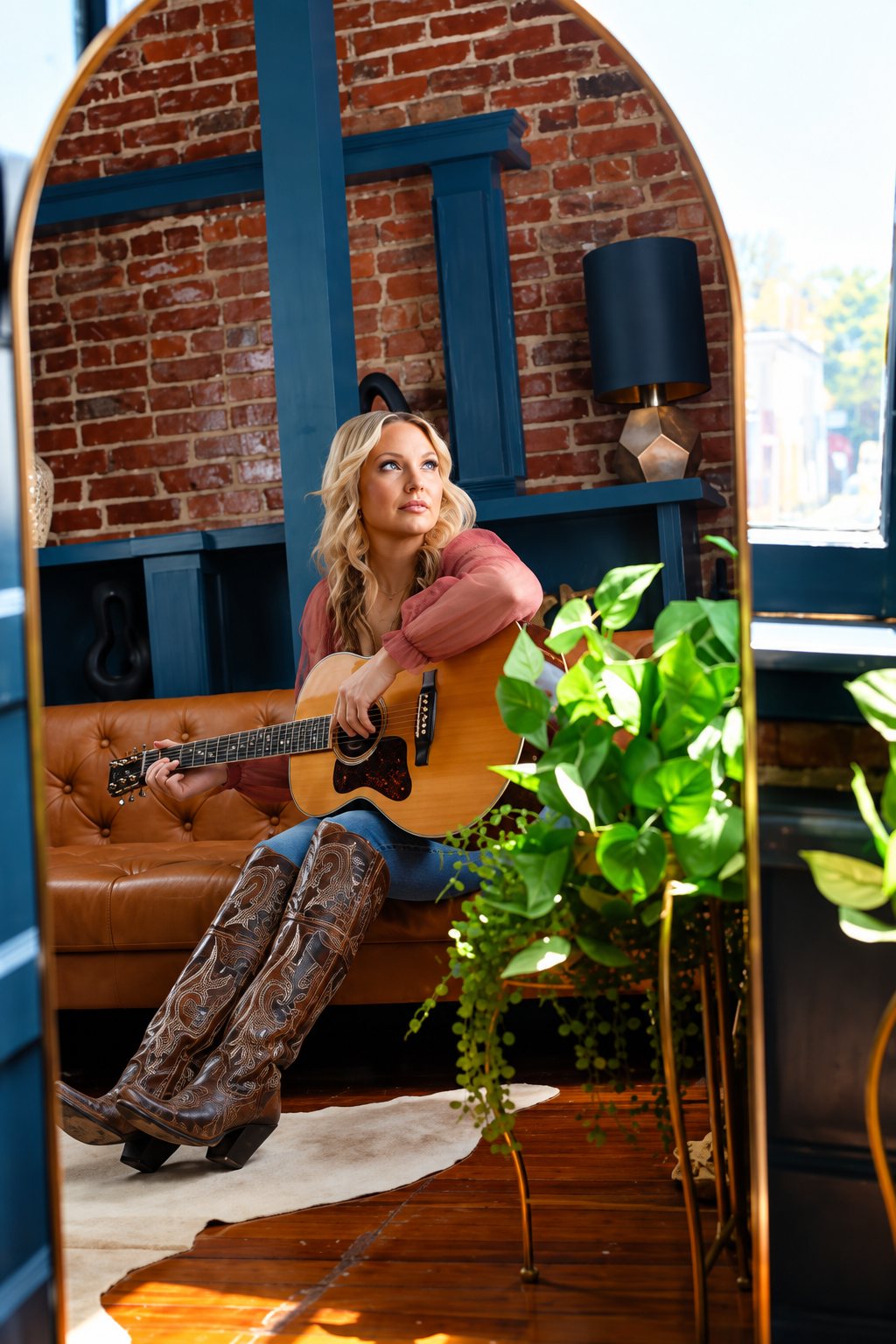
I had the pleasure of talking with Kristy Cox. Kristy had come to Nashville from Australia for the International Bluegrass Music Association convention when she met Emmylou Harris, one of her musical heroes. Harris gave the young singer advice that would alter the course of her career: believe in yourself, play the music you genuinely love, and trust that an audience will recognize the difference.
Cox went home and promptly dismantled the album she had been planning.
At the time, she had been preparing to make the kind of country-pop record that seemed like the obvious move for a young female country singer. “I was going to do a country-pop album and try to be Carrie Underwood,” she recalls. After meeting Harris, that plan suddenly felt like somebody else’s career. Cox called her producer with a new request: “Can we fire the drummer and the electric guitar player? I want to do a bluegrass album.”
They did. Cox released a bluegrass single to Australian country radio, where she was, by her recollection, the only woman at the time releasing that kind of music. The song went to number one.
For Cox, the story has become more than a favorite career memory. It explains much of what followed. Her career has repeatedly turned on the question of whether she is willing to listen to outside voices without allowing those voices to tell her who she is. Sometimes the lesson has been to trust herself. At other moments, it has been to admit that somebody else was right.
That tension is especially visible now. Cox is an Australian-born, Nashville-based bluegrass singer who has spent years building an international career in a traditional genre, performing everywhere from Australian stages to Nashville’s Ryman Auditorium. Yet some of her most consequential work has come from periods when the direction ahead was anything but settled. Her forthcoming album, Winds of Change, due in October 2026, emerged after a divorce and what Cox describes as having to “start over.” Rather than treating that upheaval as something separate from her work, she wrote through it.
“It’s probably my most personal album yet,” she says. The first half is sadder and more reflective; the second moves toward a brighter place. Cox sees that progression as a record of what happened to her emotionally as she rebuilt her life. That openness also makes the album unusually exposing. “I’m being very open and honest,” she says, “so it’s a little nerve-wracking to literally wear my heart on my sleeve.”
Long before Nashville, bluegrass awards, touring, or personal reinvention, there was a house in South Australia where the radio seemed to matter more than the television. Cox spent part of her childhood moving around, but considers Mount Barker, in the Adelaide Hills, her hometown. She says she announced at three that she wanted to become a singer and began singing and playing music around age 11. Her parents were not musicians, but music was constantly playing. What fascinated her was its ability to change the emotional temperature of a room, making her happy, making her sad, carrying her somewhere else.
One of her first major public opportunities arrived when she was about 14 or 15, when she was invited to perform at Adelaide’s Carols by Candlelight. Suddenly she was singing before roughly 30,000 people on live national television. She remembers the nerves more clearly than the song. “I can’t even remember what song I sang now,” she says, “because I think I was so nervous that as soon as it was done, it was gone.”
Her instinct afterward was to keep saying yes. Cox credits much of her career to accepting stages and opportunities without assuming she already knows which ones will matter. But age has complicated that instinct with another lesson: persistence does not mean ignoring criticism. Early in her career, she could bristle when songs were not played on radio or when festivals turned her down. Looking back, she can see that some of those rejections contained useful information. Sometimes the recording was not ready. Sometimes she needed better songs. Sometimes the people saying no had heard weaknesses she could not yet hear herself.
“When I was younger, I would sometimes get upset or disagree,” she says, only to realize later, “Hang on, I should have listened to that because they were 100% right.”
That willingness to revise herself now extends beyond her own recordings. Cox helps run “Bluegrass Comes to Tamworth,” an annual show designed to strengthen the genre in Australia, a project that can put 15 artists on one bill. She speaks about it less as a victory lap than as work that has to be done again each year. Music, in her telling, is communal before it is prestigious.
It is also one of the few forces she still believes can make very different people share the same space. Asked what kind of movement she would like to inspire, Cox reaches for Dolly Parton and the image of a roomful of strangers singing “Jolene” together. The differences between them do not disappear. For the length of the song, they simply stop being the only thing that matters.
That idea fits a career shaped by borders crossed and identities clarified: South Australia to Nashville, country-pop plans abandoned for bluegrass, rejection converted into instruction, private disruption turned into songs. Cox sometimes describes her catalogue as “a bit of a jumbled mess.” She means it affectionately. The disorder is part of the point. Her music has become a record of someone trying to remain recognizable to herself while accepting that nearly everything else can change.
Yitzi Weiner: It’s so nice to meet you. Before we dive in and talk about your amazing work, our readers would love to learn about Kristy Cox’s personal origin story. Can you share with us a story of your childhood, how you grew up, and particularly the seeds of all the amazing creativity and musical genius that has come since then?
Kristy: Nice to meet you, too. I grew up in Mount Barker, South Australia, which is about 30 minutes from the ocean in the mountains. I did move around a bunch as a kid, but that’s kind of the place that I call my hometown.
I started playing music and singing when I was around 11, although when I was three, I told my parents that I wanted to be a singer. I grew up in a house that was surrounded by music all the time. My parents didn’t play music, but they were always listening to it.
We always had music on. We were definitely more of a turn the radio on kind of family than the television, if that makes sense. I just always loved how music could make me happy or make me sad or take me on a journey. I pretty much always knew that that’s what I wanted to do when I grew up.
Yitzi Weiner: Can you tell us a bit about the first breaks, the first entrée you had into the music industry?
Kristy: When I was 14 or 15, I got invited to sing at the Carols by Candlelight in Adelaide, South Australia, which is the capital city of the state I grew up in. That opportunity got me on live national television, and I got to play in front of 30,000 people and sing a Christmas carol. I can’t even remember what song I sang now because I think I was so nervous that as soon as it was done, it was gone.
Really, I’ve had a blessed career and been able to sing on some amazing stages. A lot of opportunities have come my way because I never say no. You never know what a tiny little stage might lead to next, and I’ve been blessed in that way. That was probably my first big break, so to speak.
That led to me performing live on television, which got postponed because I was supposed to perform on my first live television broadcast and then 9/11 happened that day. So we got rescheduled. Since then, I’ve just been lucky to play at the Ryman Auditorium in Nashville and on the Golden Guitar Awards, which are Australia’s CMA Awards, a few times. I have just been really blessed.
Yitzi Weiner: You probably have some amazing stories from your successful career, and I’m sure this is difficult to single out. Can you share two stories that stand out in your mind from your successful music career?
Kristy: I remember the first time I came to America, on my first trip to Nashville. I came over for the International Bluegrass Music Association’s convention, and I got to meet Emmylou Harris, who is my idol. I remember her telling me that if I believed in myself and played music that I loved and believed in, my audience would follow suit, and I would have a long and grateful career from that.
I remember taking that advice, going home, and changing everything. I was going to do a country-pop album and try to be Carrie Underwood, because that’s what all the girls my age were doing. Having that conversation with her made me realize that wasn’t what I wanted to do at all. I wanted to sing and play bluegrass music because that’s who I was.
So I called my producer and said to him, “Can we fire the drummer and the electric guitar player? I want to do a bluegrass album.” I remember him just being like, “What?” But we did that. We went in and recorded a bluegrass album, and I released my first single to country radio back in Australia. I was the only girl singing bluegrass at the time in Australia, and it went all the way to number one on the country charts.
That’s probably my favorite story of my career: following my idol’s advice, having it actually work, and being able to be authentic and myself without pretending to be something I wasn’t.
Yitzi Weiner: There’s a saying that sometimes our mistakes can be our greatest teachers. Do you have a story about a funny mistake that you made when you were first starting and the lesson that you took away from it?
Kristy: My current single is “No Regrets,” and that song is really my life. I can’t think of anything that I would say was a mistake, because everything that I’ve done and what has happened — whether musically or in my life — has contributed to who I am as a person and what I do.
Some of the outfits that I wore back in the late ’90s are a little questionable, but I really don’t have anything that I would call a mistake. Sure, there were some bumps, but I feel like I learned something from everything that I’ve been through.

Yitzi Weiner: Not so much to ask you what you regret, but can you share what you’ve learned from the bumps?
Kristy: Something I learned from the bumps is to keep my head down, keep going, and take criticism with open ears. Listen to the feedback from the people around me who know better than I do.
When I was younger, I would sometimes get upset or disagree, and then I would realize a year down the track, “Hang on, I should have listened to that because they were 100% right.” Just learning through doing, and learning who you are as a person and as an artist. For me, it was more about trying not to be so headstrong that this is what I want, but realizing I have to listen to those who know better.
Yitzi Weiner: There is a related idea that ‘no’ is not rejection, but redirection. Do you have a story like that where you received a ‘no’ to an opportunity, but that led to an even better opportunity?
Kristy: Yes, I agree with that. I’ve heard the word ‘no’ so many times that it’s hard to pinpoint one or two times. There have been times that I’ve applied for festivals and been told no. I look back now, and it was a good thing that I was told no, because I wasn’t ready to perform. They were right not to put me on at that time because I needed to get better. I needed better songs.
I remember releasing songs to radio when I first started and getting frustrated about why it wasn’t getting played. The quality just wasn’t there; it wasn’t ready yet. That’s a hard pill to swallow as an artist sometimes when you’re growing, to realize that those people in those positions are there for a reason because they know what their program or station needs.
Do not take a ‘no’ or them not playing a song as an indicator that what you’re doing is wrong; it’s just not right for what they need at that time. From that, you learn that if you really want to do that, you need to give them what they’re looking for.
Yitzi Weiner: What’s been the most challenging project or role you’ve taken on so far, and why?
Kristy: Motherhood, for all of the reasons. It’s also the most rewarding. From a musical standpoint, I have run some really big shows and showcases in Australia where we’ve had 15 different artists on one bill. The “Bluegrass Comes to Tamworth” show that we run every year is aimed at growing the bluegrass genre in Australia. Trying to lead the way in that with some other musicians in Australia who love bluegrass is a big job every year.
In my life, motherhood is the most challenging and rewarding. Every day I’m learning, trying to figure out what the best thing is and what to do next. It’s a fun balance.
Yitzi Weiner: Please tell us about your exciting new initiatives, albums, or music you’re releasing. We’d love to hear about it. Please feel free to be as elaborate as you like.
Kristy: We’ve got a new album coming out in October. It’s probably my most personal album yet, called Winds of Change.
The last few years have seen some pretty big changes in my life. I got divorced and had to start over. I really turned to my songwriting at that time; that was my healing. I healed through my writing, and recording this album shows my healing process and my journey through that.
The first half of the album is sad and reflective, and the second half is uplifting and happy. It shows my audience that I found myself again and that I have grown as a person through this process. I hope that people who are going through something similar to what I’ve gone through — which a lot of people are — can listen to it, know that they’re not alone, and know that everything is going to be okay.
I’m really excited. It’s my most raw and personal album yet, with the most originals of any album I’ve ever recorded. I’m being very open and honest, so it’s a little nerve-wracking to literally wear my heart on my sleeve.
Yitzi Weiner: If you could take all of your songs, melodies, lyrics, and album covers, put them into a big blender, and mix them up, what would be the overall message that comes out of that mixture?
Kristy: That is a very difficult question. Just be who you are. I try to be honest about who I am with my audience, and I think every song that I’ve recorded is a reflection of my personality, something that I’ve gone through, or a story that I’ve heard. None of us are alone in this world, so I hope all of my music resonates with other people in some way. If you were to blend all of my stuff up, you would find a bit of a jumbled mess, but that’s okay.
Yitzi Weiner: That’s a great answer. This is our signature question: Kristy, you’ve been blessed with a lot of success and you must have learned a lot from your experiences. Looking back all the way to the beginning when you first started, can you share five things that you’ve learned over the years that someone starting out today can really benefit from?
Kristy:
- Be true to yourself.
- If at first you fail, try again and again.
- Listen to those who are ahead of you, because they know. Don’t take criticism as something being given to you in a negative way. Nobody ever offers feedback just to be hurtful; usually, it’s because they see something in you and genuinely believe that advice is going to help you.
- Have fun. If you’re not having fun, why are you doing this? Life’s hard enough as it is without trying to build a music career if you’re not enjoying it.
- Make sure you see this beautiful world while you’re doing it. Get out and play shows all over the place. Meet new people in all corners of the world, because music has no boundaries.
Yitzi Weiner: So beautiful. Can you share some of the self-care routines that you do to help your body, mind, and heart to thrive?
Kristy: I try to remove negativity from my life as well as I can. That’s not an easy feat in the world today. I don’t watch the news, I don’t scroll on Instagram or Facebook, and I don’t get involved in any of the online noise; I don’t feel that that’s reality.
I make sure I sleep well, and I don’t eat fast food. I like to cook with raw and organic ingredients because you are what you eat. I try to eat the best that I can, though that’s not always easy on the road. I am that weird person who carries bags of tuna around so that I don’t have to eat McDonald’s.
I go for long walks. I find walking, listening to podcasts, and reading books helps me recharge. I try to feed myself healthy, positive things in every way, and hopefully, that means a healthy, positive person comes out the other end.
Yitzi Weiner: This is our final aspirational question. Kristy, because of your amazing work and the platform that you’ve built, you’re honestly a person of enormous influence. If you could spread an idea or inspire a movement that will bring the most amount of good to the most amount of people, what would that be? Because you never know what your idea can inspire.
Kristy: I don’t know what I could personally do, but I really wish that more people would adopt Dolly Parton’s viewpoint on life. I would like to make music and have a platform that brings people together again, showing the world that we are all actually the same. We all want the same things, even if we have different ideas about how we’re going to get there.
What I love about music is that it doesn’t matter what your background or history is — you can be in a room together listening to Dolly Parton’s “Jolene” and singing along. It would be really cool to have a way to do that on a larger scale. We need more Dollies. Maybe we need a hundred thousand different Dolly Parton tribute shows touring around the world.
Yitzi Weiner: Did you ever meet her?
Kristy: I have not. I wish I had.
Yitzi Weiner: In the next life, the next world.
Kristy: In the next life. Exactly right.
Yitzi Weiner: Kristy, it’s been a joy to meet you. How can our readers continue to follow your work, purchase your new music, and support you?
Kristy: My website is kristycox.com. I am on Instagram and Facebook under the handle @KristyCoxMusic. I have a TikTok, but I don’t use it; I do the bare minimum when it comes to social content creation.
The best way to support me is to listen to my music and come to my live shows. That’s how musicians make a living these days, since streaming has significantly reduced income streams. If you want to support an independent or up-and-coming artist, buy a ticket and go to a show.
Yitzi Weiner: Kristy, it’s been a joy to meet you. I wish you continued success and good health, both physically and emotionally. I hope we can do this again next year.
Kristy: Thank you so much, mate. Thanks for having me.
Yitzi Weiner: A pleasure. All the best.
Kristy: You’re welcome.