As one of the rare female CEOs in the tech industry, specifically the family entertainment center sphere, I was a unicorn. In a heavily male-dominated industry, it posed challenges.
Women Of The C-Suite: Renee Welsh On The Five Things You Need To Succeed As A Senior Executive
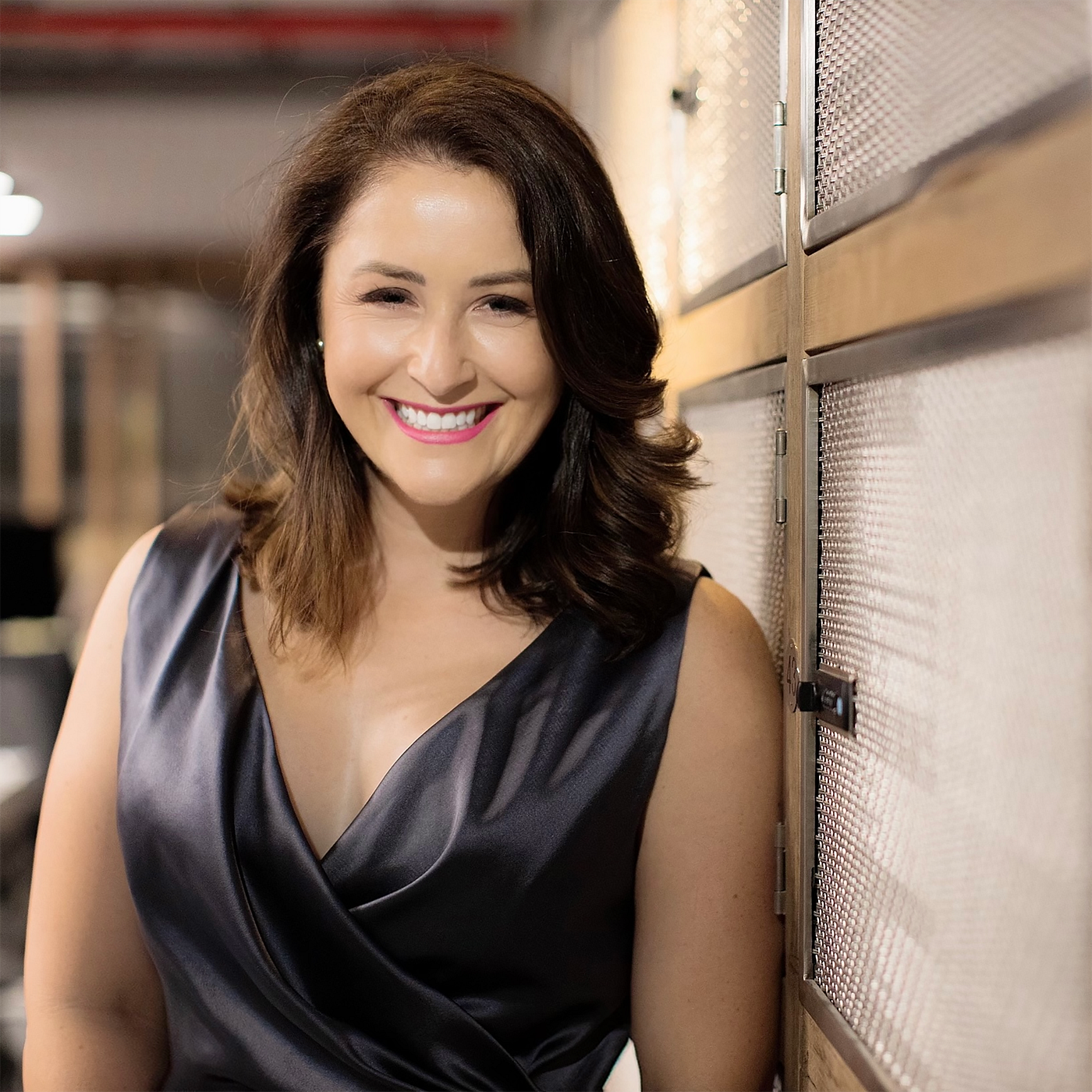
As a part of our interview series called “Women Of The C-Suite” , we had the pleasure of interviewing Renee Welsh.
At 27, Renee launched her first tech business and worked at prominent start-ups globally. As a woman in a male-dominated industry, she faced challenges starting her own company, but her perseverance paid off when it was acquired by Helix Leisure, and she was subsequently appointed CEO of both Booking Boss and sister-company Embed. Renee stands resilient and steadfast towards workplace diversity, emphasizing that everyone has a shared commitment to cultural and gender parity at all levels.
Thank you so much for joining us in this interview series! Before we dig in, our readers would like to get to know you a bit more. Can you tell us a bit about your “backstory”? What led you to this particular career path?
I have always been passionate about building businesses and transforming industries because I love innovation. I launched my first tech business when I was 27, and I’ll always be grateful for the relevant experiences I gained by joining prominent start-ups including lastminute.com, Wotif, Monster, and RedBalloon. In 2013, my husband Andy and I started Booking Boss, a ticketing and booking management start-up. Helix Leisure eventually acquired our start-up four years later, and I was privileged to be appointed CEO of Embed, an integrated cloud-based software solution platform for family entertainment, attractions, and amusement industries. Today, we are the ultimate cashless solutions provider in the industry.
Can you share the most interesting story that happened to you since you began leading your company?
A very important aspect of what we do at Embed is pioneering the tech transformation of the family entertainment industry – the industry of fun. Embed’s award-winning Mobile Wallet is a testament to this – no one in the industry has ever come close to developing what Embed has, and we launched it back in 2019! On top of this, our Mobile Wallet is still the only non-banking, non-loyalty, and non-financed brand to sit in the consumers’ Apple Wallet or Google Pay – the only iOS and Android-certified solution in the business. It’s interesting because not everyone gets to partner with the biggest players in the tech industry. Our SaaS systems also operate on the Amazon Web Services (AWS) platform. To be able to achieve this in our 20 years of fuelling fun is a gift.
Can you share a story about the funniest mistake you made when you were first starting? Can you tell us what lesson you learned from that?
I am very close to my family and at the end of every phone conversation, I have a habit of saying “Love you, bye” before hanging up. Well, it was such an ingrained habit that I was on the phone with a client and I told them I loved them when I hung up. I was mortified and so embarrassed! I worked up the courage to call them back and they were laughing hysterically. Fortunately, it never happened again.
None of us are able to achieve success without some help along the way. Is there a particular person who you are grateful towards who helped get you to where you are? Can you share a story about that?
I have had many mentors over the course of my career, and they present themselves at just the right time. As you grow and mature personally and professionally, you need varied advice and guidance. Two people who stand out are Michelle Duval and Daniel Dempsey. Michelle was my business coach for many years and was instrumental in adding more structure into my daily life, as well as pushing me to think bigger and hold myself accountable. Dan was our first lead investor and is still involved in the business today. He is an incredible support and continually provides valuable advice when I need it.
In my work, I often talk about how to release and relieve stress. As a busy leader, what do you do to prepare your mind and body before a stressful or high stakes meeting, talk, or decision? Can you share a story or some examples?
First, I will make sure I am well prepared for what’s ahead. Then if time permits, I will go on a nature walk, meditate, or use a power pose to increase adrenalin just before diving into what must be done.
As you know, the United States is currently facing a very important self-reckoning about race, diversity, equality and inclusion. This may be obvious to you, but it will be helpful to spell this out. Can you articulate to our readers a few reasons why it is so important for a business or organization to have a diverse executive team?
As one of the rare female CEOs in the tech industry, specifically the family entertainment center sphere, I was a unicorn. In a heavily male-dominated industry, it posed challenges. That’s why it became my personal journey to have greater female representation, especially at the C-suite level, so sponsorship, mentoring and championing became a personal mission for me. Diversity in the executive team is imperative to inspire women’s multi-dimensional capabilities
As a business leader, can you please share a few steps we must take to truly create an inclusive, representative, and equitable society? Kindly share a story or example for each.
Embed runs on a customer-first approach; ensuring our software enables the optimal end-customer experience because when the customer thrives, the operator (our customer) thrives. It informs every operating and strategic business decision we make and how we execute it. We are dedicated to supporting operators and enable their businesses to become FECs of the future. It’s why we partner with the best in the tech industry like Apple, Google, and Amazon to empower our customers to provide a superior guest experience at their locations.
We operate as a global brand and a tight-knit team, with a results-driven work culture where we “take the business of fun seriously.” When you normalise this type of equitable culture within and through our business relationships, it becomes contagious. The only way to change society is by being the change you want to see every single day.
Ok, thank you for that. Let’s now jump to the primary focus of our interview. Most of our readers—in fact, most people—think they have a pretty good idea of what a CEO or executive does. But in just a few words can you explain what an executive does that is different from the responsibilities of the other leaders?
Setting the vision and strategy is critical to both long- and short-term success, as is understanding the macro elements of the organization and industry and how all the micro-objectives and initiatives support and contribute to the strategy. There is also effective troubleshooting and decisive decision-making, the ability to be a step ahead, and bringing people on the journey. Leading by example is also important to me, and nothing has been more valuable than this over these past 2 years as we have navigated one of the toughest crisis in world history.
What are the “myths” that you would like to dispel about being a CEO or executive. Can you explain what you mean?
I believe that a CEO is beyond how the job description reads. You’re not just the head honcho or the chief decision-maker - you are a driving force that makes or breaks an industry. The CEO sets the spirit and culture of a company; it trickles to every corner of the company and how teams collaborate, work together, and drive initiatives forward. How a CEO leads a company instills values in stakeholders and delivers life-changing results – this spirit of innovation furthers the boundaries of any industry. When you look at it that way, it’s an overwhelming but fulfilling responsibility.
In your opinion, what are the biggest challenges faced by women executives that aren’t typically faced by their male counterparts?
The staggering metrics speak for themselves. Statistically, raising capital is harder for start-ups with female founders. There is a general apprehension that women are not good at running businesses. In fact, female-led start-ups only secure around 2% of overall investment capital and often have to tap on their close network of friends and family to raise funds. There are also a few women decision-makers in venture capital firms – about only 12% - and most firms still don’t have a single female partner. What’s surprising is that this challenge reveals a reality that female-led organisations are more profitable, better performing, and generate higher profit compared to male-led companies according to S&P Global’s 2019 report. Women are just as capable as men in doing business and the numbers are there to prove it. Women-owned businesses are growing 2x-faster than the US National average, yet they receive just 16% of all conventional business loans.
What is the most striking difference between your actual job and how you thought the job would be?
Right now, it is the impact of politics and government on our industry. I never would have anticipated that it would be so pervasive.
Is everyone cut out to be an executive? In your opinion, which specific traits increase the likelihood that a person will be a successful executive and what type of person should avoid aspiring to be an executive? Can you explain what you mean?
I think there are necessary strengths to become a successful executive like forward-thinking and planning ahead, a macro perspective, and a clear vision, direction, and action of the future aspired. For instance, at Embed, we are dedicated to catapulting our customers to become FECs of the future. This means future-proofing their businesses with tech solutions that grow with them, their needs, and their guests. This means regular cycles of innovation. This means never being satisfied with the results of today but looking forward to what would it incur to have a secured future. It’s why we partner with the best in the tech industry like Apple, Google, and Amazon to empower our customers to provide a superior guest experience at their locations. With these things in mind, we continue to develop and evolve our solutions to drive the FEC industry forward. Being a chief executive means being strategic and operational; understanding finance, technology innovation, sales and marketing, supply chain, and other global factors involved in running a business.
What advice would you give to other leaders to help their team to thrive?
Embrace change. Advance just as technology advances. Do not just keep up with the times; stay ahead of them. And if ever you feel disheartened with challenges, bring your focus back to the very heart of what you do and why you are doing it. And if there’s an area of business you don’t understand, study, study hard to get up to speed so you can help guide your team.
How have you used your success to make the world a better place?
Our position as industry leaders and partners enables us to be a driving force of change. When the pandemic forced business in the FEC industry to close their doors, Embed was there to help them turn the lights back on. To showcase our commitment to the industry’s recovery, we launched Embed’s COVID-19 Relief Act in 2020, giving away our Mobile Wallet to everyone in the industry for free for one year. Aside from this, we also kicked off our COVID-19 Resource Center, which is comprised of free white papers, video featuring critical advice from industry leaders, and creative toolkits to help operators facilitate successful reopening of their FECs. We joined the fight to eliminate COVID-19 by developing Embed Hygiene Defence products – powerful 100% natural hygiene protection that’s safe for families, which is the primary segment that frequent family entertainment centers. Our business agility makes Embed an impact player in our industry, aside from the tech solutions we provide.
Can you please give us your favorite “Life Lesson Quote"? Can you share how that was relevant to you in your life?
“Great things never come from comfort zones” - this has been my mantra my entire career. It’s what attracted me to work for start-ups across the world before starting my own, and it has inspired me to say “YES” before I thought I was ready, to learn on the job, and get practical life experience.
Thank you for these fantastic insights. We greatly appreciate the time you spent on this.