I didn’t grow up announcing that I wanted to be an executive, actually it was lawyer first, then pharmacist.
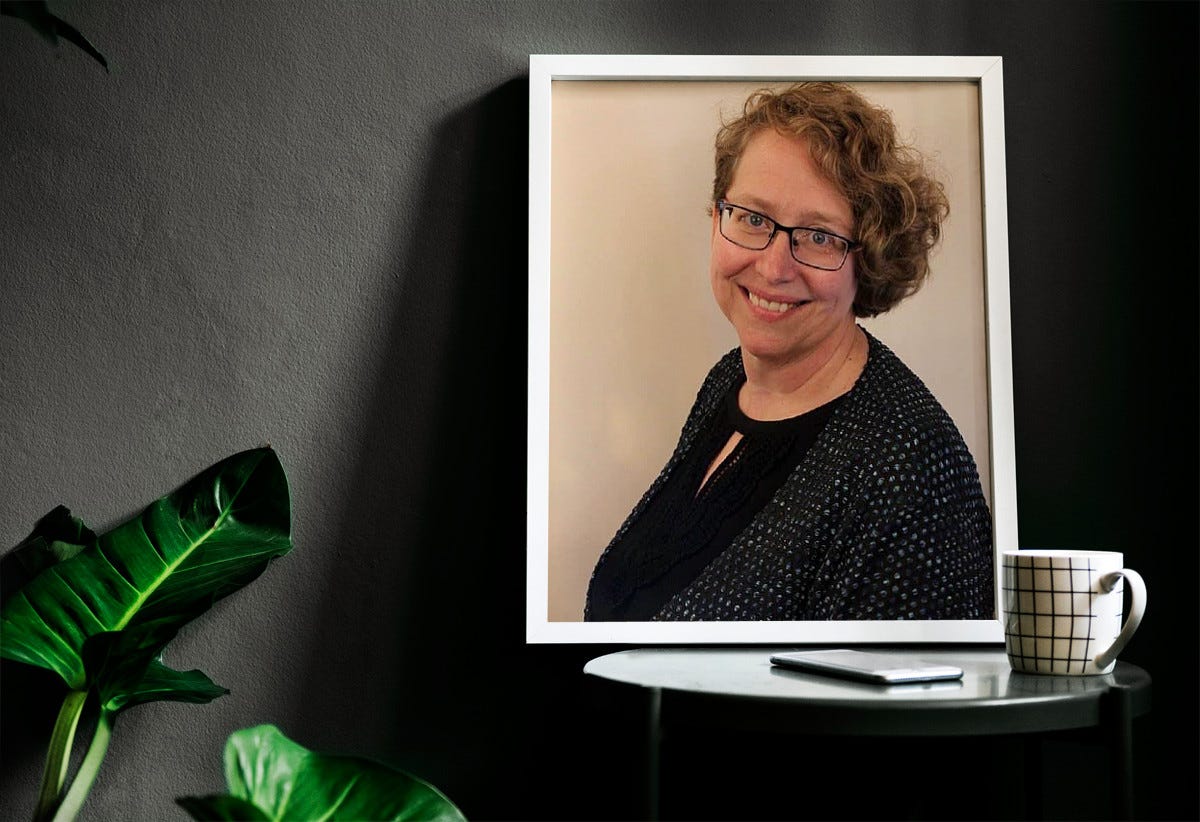
As a part of our interview series called “Women Of The C-Suite”, we had the pleasure of interviewing Maria Bruscianelli.
Maria Bruscianelli is the Chief Revenue Officer of X Factor Media Group, home of NJ Digest, where she leads revenue strategy, partnerships, and growth across media, content, and advertising. Her career spans more than two decades in securities finance on Wall Street and senior leadership in financial services, where she built teams, mentored advisors, and learned how to turn relationships into lasting businesses. An Italian-American mother of two based in New Jersey, she brings a direct, people-first approach to leadership — and a healthy skepticism of doing things a certain way just because they have always been done that way.
Thank you so much for joining us in this interview series! Before we dig in, our readers would like to get to know you a bit more. Can you tell us a bit about your “backstory”? What led you to this particular career path?
I didn’t grow up announcing that I wanted to be an executive, actually it was lawyer first, then pharmacist. But truly I grew up in an Italian-American family where you worked hard, showed up for people, and learned pretty quickly that a good deep connection was worth its weight in gold. My career started on Wall Street in securities finance (I was 18), a world that teaches you to think fast, know your numbers, and never walk into a room unprepared. I loved it and it loved me. I spent years in that environment before making a shift into financial services leadership, where I discovered I loved building people as much as building business and wealth. Today, in media, I get to bring those two sides together: commercial discipline and creative thinking. On paper, the path may look unconventional. To me, the common thread has always been the same: people, trust, and the ability to see an opportunity before it becomes obvious.
Can you share the most interesting story that happened to you since you began leading your company?
One of the most fascinating things about moving into media has been watching how quickly a conversation can change when you stop selling “advertising” and start talking about what a business actually wants to accomplish. I’ve sat across from people who thought they needed an ad placement, only to realize their real problem was visibility, credibility, recruitment, or reaching an entirely different audience. Suddenly we’re not discussing banners — we’re discussing a growth strategy. That’s what makes this chapter so interesting. In an industry moving at the speed of technology, the most valuable thing in the room is still a human being who listens closely enough to ask a better question.
It has been said that our mistakes can be our greatest teachers. Can you share a story about the funniest mistake you made when you were first starting? Can you tell us what lesson you learned from that?
Early in my career, I confused sounding prepared with being effective. I could walk into a meeting with enough detail and terminology to fill an entire afternoon. The problem? Nobody had asked for an afternoon. I learned that the moment you start talking to prove how much you know, you may have stopped listening to what the other person needs. Now I’d rather ask one smart question than deliver ten perfectly rehearsed points. I still love a good spreadsheet, but I’ve learned it shouldn’t be the most interesting person in the room. Spend 75% on the approach and the person… the rest follows.
None of us are able to achieve success without some help along the way. Is there a particular person who you are grateful towards who helped get you to where you are? Can you share a story about that?
There isn’t one name I could give without leaving out a dozen people who mattered. I’m grateful for leaders who trusted me with responsibility before I had the perfect title, colleagues who challenged my thinking, and the people I managed who taught me what leadership looks like from the other side of the desk. I also have to credit my parents. They didn’t hand me a corporate playbook; they handed me something better: a work ethic, an appreciation for family, God, and the understanding that your word means something. When you build a career across industries, those values travel with you.
Leadership often entails making difficult decisions or hard choices between two apparently good paths. Can you share a story with us about a hard decision or choice you had to make as a leader?
Leaving a well-established professional lane to enter a different industry is not the neat, predictable decision people imagine executives make. I had credibility, experience, and a clear professional identity in financial services. Moving into media meant being willing to learn a new language while trusting that my core skills were transferable. The choice was between familiarity and growth. I chose growth. It reminded me that leadership isn’t always about choosing between a good option and a bad one; sometimes it’s having the courage to leave a perfectly respectable option behind because something else could be extraordinary.
Most of our readers — in fact, most people — think they have a pretty good idea of what a CEO or executive does. But in just a few words can you explain what an executive does that is different from the responsibilities of the other leaders?
An executive has to connect the dots other people are paid to own individually. You’re accountable not just for your department’s results, but for the decisions, people, priorities, and trade-offs that determine whether the business moves forward. You have to see the whole chessboard — and still be willing to pick up a piece yourself when needed.
What are the “myths” that you would like to dispel about being a CEO or executive? Can you explain what you mean?
The biggest myth is that the higher you climb, the less you have to do. Quite the opposite. The work becomes less visible and the accountability becomes more personal. Another myth is that confidence means having all the answers. I’ve found that the best leaders are comfortable saying, “I don’t know yet, but we’re going to figure it out.” And finally, the idea that executives have to be intimidating to be respected? That one needs to retire. You can be warm, funny, and approachable — and still run a very tight ship.
In your opinion, what are the biggest challenges faced by women executives that aren’t typically faced by their male counterparts?
Women are often expected to be the whole package, all at once: decisive but never abrasive, ambitious but endlessly available, accomplished but not too proud of it. Add motherhood and the mental load that often comes with managing a family, and you’re running two complicated organizations — only one comes with a job title. I don’t think women need to apologize for wanting both a meaningful career and a full personal life. I do think we need to stop pretending success requires doing every single thing ourselves. The issue isn’t whether women can handle responsibility. We’ve demonstrated that repeatedly. It’s whether we’re equally free to set boundaries, delegate, and lead without being judged by a different set of rules.
What is the most striking difference between your actual job and how you thought the job would be?
I expected strategy to take up most of my day. What surprised me is how much of strategy is actually psychology: understanding motivations, building trust, getting people aligned, and knowing when to push or when to give an idea room to breathe. The numbers tell you what happened. People usually tell you why. My job is to listen to both.
Is everyone cut out to be an executive? In your opinion, which specific traits increase the likelihood that a person will be a successful executive and what type of person should avoid aspiring to be an executive? Can you explain what you mean?
No, and that isn’t an insult. Leadership is not simply the next promotion for someone who is excellent at their job. The people who tend to do well are curious, accountable, emotionally steady, and decisive without being rigid. They can give credit away and take responsibility when something goes wrong. If you need constant praise, if you avoid uncomfortable conversations, or if being “the boss” appeals to you more than being responsible for other people’s success, the job may not be what you think. A title can give you authority. It cannot give you character.
What are your “5 Things You Need To Succeed As A Senior Executive” and why?
1. Learn the numbers, then learn the people. My Wall Street years taught me that you cannot lead a business on charisma alone. You have to understand the economics, the risk, and what actually drives results. But managing and mentoring advisors taught me that the same plan can produce wildly different outcomes depending on the people executing it. The best decisions honor both realities.
2. Get comfortable being uncomfortable. I have changed industries more than once. Each move required trading the comfort of expertise for the discomfort of being a student again. That can be humbling, especially when you’re accustomed to being the person with the answers. But if you’re never the least knowledgeable person in the room, you may not be putting yourself in rooms that stretch you.
3. Be direct without losing your humanity. I believe in honest feedback, clear expectations, and having the conversation everyone else is avoiding. That doesn’t mean humiliating people or mistaking volume for strength. When I’ve led teams, the goal has been for people to know exactly where they stand — and to know I’m in their corner. Respect and accountability are not opposites.
4. Protect your credibility like it’s your most valuable asset. Whether you’re discussing a financial transaction, mentoring a professional, or building a media partnership, trust compounds. I would rather be transparent about what we can deliver than win an agreement with a promise I can’t stand behind. A short-term “yes” is never worth a long-term loss of confidence.
5. Keep your life bigger than your title. I’m a mother, wife, daughter, friend, and a working executive. I have responsibilities at home that don’t disappear when my calendar fills up, and I have no interest in pretending otherwise. Being ambitious shouldn’t require losing your sense of humor or your connection to the people you love. Success means very little if you have no room left to enjoy it.
You are a person of great influence. If you could inspire a movement that would bring the most amount of good for the greatest number of people, what would that be? You never know what your idea can trigger.
I’d love to see a movement around practical mentorship — less gatekeeping, more opening doors. Not another inspirational quote on LinkedIn, but people with experience making time to teach, introduce, recommend, and advocate for someone who hasn’t had the same access. I’ve worked in industries where knowing the right person can change the trajectory of a career. Imagine what would happen if more leaders made it a habit to be that person for somebody else. That’s influence worth having.
We are very blessed that some very prominent names in Business, VC funding, Sports, and Entertainment read this column. Is there a person in the world, or in the US with whom you would love to have a private breakfast or lunch with, and why? He or she might just see this if we tag them
Sara Blakely. I admire the way she built a serious business without surrendering her personality or treating business as something that has to be joyless. I would love to talk about intuition, resilience, and how you keep the entrepreneurial spark alive as an organization grows. Also, I suspect it would be a genuinely fun lunch — and I think that matters.
Thank you for these fantastic insights. We greatly appreciate the time you spent on this.
About The Interviewer: Vanessa Morcom is a millennial mom of three and founder of Morcom Media, a performance PR shop for thought leaders. She earned her degree in journalism and worked for Canada’s largest social enterprise. She can be reached at vanessa@morcom.media.