As a new concept, it was up to us to define what exactly videobooks would look like and examine how that fit into the literary industry.
Business
Ronak Sheth of LIT Videobooks: How Defining a Brand-New Media Format and Securing Top Authors Built a Multi-Million Dollar Startup
The founder and CEO of LIT Videobooks shares how his team transformed traditional nonfiction publishing into engaging visual content for modern learners.

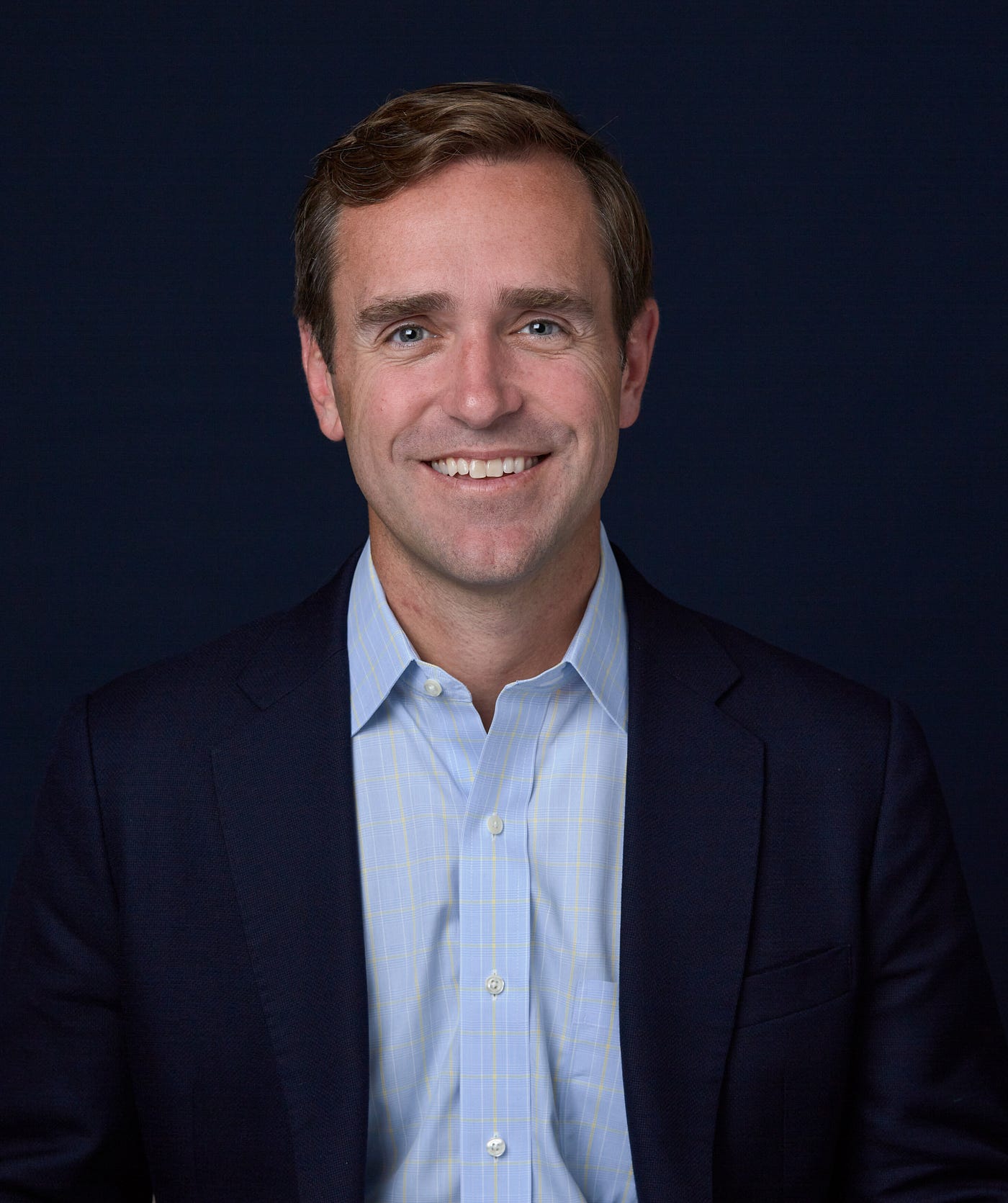
As part of our interview series called “5 Things I Wish Someone Told Me Before I Became A Founder”, I had the pleasure of interviewing Ronak Sheth.
Ronak Sheth is the CEO and Founder of LIT Videobooks, the leader in creating and distributing video versions of best-selling nonfiction books. Ronak, a first-time entrepreneur, spent the first four years of his career working in enterprise marketing software.
Ronak’s inspiration for founding LIT came from his love for reading and desire to make bestselling nonfiction books accessible and enjoyable for all. On a flight to Los Angeles, Ronak was listening to an audiobook but found he could not focus with the “Wolverine” movie playing in the row ahead of him. In that moment, he realized the value of creating book content in a way that is accessible to the visual learner. From there, Ronak set out to create a way for himself and the 65% of the population that are visual learners to absorb the information and lessons found in nonfiction literature.
A graduate of the NYU Leonard Stern School of Business, Ronak spent the first four years of his career at Wunderkind, where he oversaw client strategy and advised executives at over 85 top e-tailers. Ronak is an avid traveler, having visited over 40 countries and counting in his lifetime. He also spends a great deal of his free time reading, having completed 51 books alone in 2020.
Thank you so much for joining us in this interview series! Can you tell us a story about what brought you to this specific career path?
In 2018, while on a flight with my coworker, I was listening to the audiobook Grit by Angela Duckworth. An hour into the flight, my coworker asked what was happening in the book. I replied that I had been “listening” but was simultaneously fully engaged in watching Wolverine, playing on the screen in the row in front of me. As an avid reader, who spends hours both reading and listening to books, I found that visuals had always stuck with me more profoundly. After discussing the benefits of learning and absorbing information in an audio-visual capacity with my coworker, I knew there had to be a better way to consume and retain information from the books I loved. I set out on a mission to create a way for myself and the 65% of the population, also multi-sensory learners, to access and enjoy the lessons found in great non-fiction books.
In a world where people typically spend most of their day glued to a screen and less time reading, I founded LIT Videobooks to serve the everyday needs of screen addicts, developing a way for individuals to fit books into their busy schedules. In late 2020, I spearheaded the launch of the LIT Videobooks, an entirely new platform offering a unique and immersive way to consume bestselling nonfiction and business books. The first book launched on the platform, #1 NYT Bestseller, Contagious, by author Jonah Berger, was well received by our users with a 75%+ completion rate and a 4.97/5 star rating. After this successful beta, we announced our official launch and $5 million seed funding round led by MaC Venture Capital. Our recent releases included Predictably Irrational by Dan Ariely, Profit First by Mike Michalowicz, and Trillion Dollar Coach by Eric Schmidt, Jonathan Rosenberg, and Alan Eagle, and we plan to continue to release new videobooks every month.
Can you tell us a story about the hard times that you faced when you first started your journey?
As a new concept, it was up to us to define what exactly videobooks would look like and examine how that fit into the literary industry. In the early stages of the company, we faced a lot of resistance from people who were concerned the accessibility of our product would cannibalize traditional distribution.
After laying the groundwork with a variety of top-selling authors, the next challenge was creating the format from the ground up and demonstrating that there was a market for the product. In addition to figuring out what the format was and how we could create it so that it is engaging and exciting, we had to figure out the middle piece of how we were going to distribute it. We decided to acquire and own the rights, create the content, and bring on Emmy award-winning producers from places like Vox Explained to help pioneer this format. Since it was a blend of a variety of types of media, including author interviews, secondary interviews, animation, and data visualization, it is a bit more challenging but important because it also makes it engaging.
Our biggest challenge really has been in defining ourselves in a way that helps others share in our mission. Figuring out what the format was was vital because it was our first exposure to consumers and our first way to demonstrate both the value and quality of the format to agents, authors and consumers.
Where did you get the drive to continue even though things were so hard?
As entrepreneurs often do, I hold a deep belief in the mission of my company. I reminded myself every time I got a ‘no’ that I was creating a new way to increase the accessibility of information in a way that is easy and fun. We are moving into a world where people want curated, high-quality content delivered to them that doesn’t waste their time. I knew that there was a high value for LIT’s format within the market.
So, how are things going today? How did grit and resilience lead to your eventual success?
Things are going great now! We are seed-funded, growing the team, and increasing the number of high-caliber titles and authors on the platform. The LIT team is excited about being a part of something innovative that can make a change. Authors are excited about that, too, to have their core learnings reach the broadest audience possible. There was grit and resilience in getting the first author on the platform, and now that same grit and resilience is there to continue to get top authors and figure out how to create high-quality content in high volumes.
Today, grit and resilience is at the core of our company culture and key to our ongoing growth. One of the most challenging things for any founder in this early stage is figuring out how to do more with fewer people and finding that drive to know when to take on a job and when to delegate it to another passionate employee.
Can you share a story about the funniest mistake you made when you were first starting? Can you tell us what lesson you learned from that?
The funniest mistake I made when I first started LIT was bringing in two office dogs to our WeWork space thinking nothing could go wrong — everyone loves dogs in the office, right?! Well, I was wrong. It was the LIT team’s first time working together in person, so the team and the dogs were getting used to the new space. The dogs were overwhelmed with the people and the noise and started barking and fighting with each other. Next thing you know, papers were flying, and the whole team was chasing the dogs around, trying to calm them down. The rest of the day was filled with chaos, distractions, and little work. So the lesson I learned was never to bring dogs to work unless they are very well behaved:)
What do you think makes your company stand out? Can you share a story?
LIT Videobooks is highly innovative from a category perspective. We are bringing a new format into the market that allows customers to watch bestselling nonfiction books, combining interviews, animations, illustrations, archives, and other live footage to recreate the author’s insights and ideas. In under two hours, customers can consume an entire book and be more likely to retain information better than if they had read or listened to it. Individuals typically retain up to 20% of written or spoken information but up to 65% of visual information. LIT is combining both audio and visual components in a first-of-its-kind format, which has been proven to engage every type of reader. Our data shows that 2/3rds of our customers finish watching their videobook, which is two-three times higher than other business and non-fiction book formats.
With one-hundred thousand total users on the platform and twenty thousand registered users, we believe LIT provides an unprecedented way for individuals to intake and get even more out of their books while simultaneously creating new ways for authors to connect with their fans.
With our most recent releases, including Predictably Irrational by Dan Ariely, Profit First by Mike Michalowicz, and Trillion Dollar Coach by Eric Schmidt, Jonathan Rosenberg, and Alan Eagle, we have a 68% completion rate, a 4.98/5 overall rating of videobooks, and all new reviews at 5/5 stars with over one-hundred and fifty total reviews including:
- “You just changed the nature of learning for me” — Ed Barr.
- “Having visuals for these chapters raises your awareness and plants the pictures in your mind and locks them into your memory. I read the book twice and have also listened on audio, however watching the video still increased my retention.” — David Albin.
- “Wow. Just amazing stuff and a great format. This is going to change the way people learn.” — James B. Mcnab.
- “This was incredible! Having read the book and listened to it on audio as well, seeing it in a video format was super helpful as a refresher and as a way to get someone interested in the book.” — Anthony Ambriz.
- “The concepts were all the more powerful to me because 1.) I “watched” the book from start to finish. I would never have read the book from start to finish like this allowed me to do this. 2.) The format allowed note-taking vs. underlining in the book. 3.) The guided imagery reinforced the audible vs. me reading the book and having to supply my images and kept me wanting more.” — John Palma
We are also able to attract top talent in the innovation in the publishing space. For example, Andy Gaies, LIT Videbooks Chief Content Officer, was the Chief Content Officer at Audible for six years and was at Blinkist as the Chief Growth Officer. In addition to our internal talent, we have brought top authors to our platform even though it is still in the early stages.
Which tips would you recommend to your colleagues in your industry to help them thrive and not “burn out”?
First and foremost, I would not be able to thrive without the right people advising me. It is essential to have a handful of people that you can go to for anything at any time. For me, that is an investor that I can text or call for any questions about the company. I also connected with another founder just a few stages ahead of me (in terms of funding). These individuals can serve as informal advisors or coaches because they were likely in your position only a year ago.
I also advise making sure you make time for other things in your life, which means having a solid work-life balance. Running a startup, you can easily spend 120% of your time just doing work. My schedule is eight or nine to six, but then from six to eight, I just take a break in any way I can. Personally, I choose to work out four to five times per week because it helps me clear my head, but each person needs to find what works for them. There is an infinite number of tasks that you could always be doing as a founder, and the only way to break through that is to be able to shut it off for one or two hours. Those couple of hours a day that you give yourself to step away from your computer will go a long way to helping your mental health.
The last thing I would say is never be afraid to ask for anything. If you don’t ask, you will never know. The same thing goes for if you are struggling with something; always ask and share how you are feeling. The people you talk to have probably been through many of the same struggles you are going through currently and can offer you invaluable advice.
None of us can achieve success without some help along the way. Is there a particular person who you are grateful towards who helped get you to where you are? Can you share a story?
Someone who has helped me get to where I am today is Andy Gaies, the current Chief Operating Officer and former LIT Videobooks advisor. Andy has been valuable in defining the overall strategy for the company from a legal perspective, structuring deals to bring the authors on board. Andy was right there with me when we launched Contagious, ensuring that we were hitting all of the right metrics and helping prove out the concept. He guided me in preparation for our recent seed funding round in sharing his expertise from his time at Audible and Blinkist and what he knew about the publishing industry in terms of what would be exciting for people investing in a new category.
How have you used your success to bring goodness to the world?
There is so much that can happen from reading a book, especially when it comes to self-development. For instance, if you read High Output Management or Radical Candor and it can change one conversation at work, that could lead to a promotion. The existing way that books are distributed can be limiting, making it difficult to be able to consume and digest the lessons within books for those who process differently or whose lifestyles don’t allow for convenience. The premise and foundation of LIT is to take these books that have already had an impact on hundreds of thousands of people and further expand the audience. We ultimately want everyone to have access to learnings found within best-selling books, regardless of personal constraints.
We want those learnings to positively impact people’s lives, whether it’s to improve people’s careers, personal lives, health, wellness, or mental well-being. There are books in all of those categories that we can tap into and create. Just as much as books change lives, so do movies, documentaries, and any stories, which is essentially what a book is at its core. With LIT, we are expanding the reach of that story to as many people as possible.
What are your “5 things I wish someone told me before I started leading my company,” and why? Please share a story or example for each.
1. Expect to hear ‘no’
Everyone thinks they have the next great thing, and it can be hard when you start fundraising to hear no all the time. If you’re not prepared for it, it can really make you second guess your concept. Fundraising is a learned skill, and you should expect to hear no a lot before you get a yes.
2. Learn to delegate
The ability to delegate is extremely important. You need to constantly optimize towards what is most important for the company and make the best use of your time.
3. Investing in your hiring process
Our product and the company are the people. As an early-stage founder, taking the time and effort to put a good process in place for hiring is super important. The faster you can bring in the right people, the faster you can delegate tasks and the better your chances to grow.
4. Leverage your network
As a first-time founder, I found the quality and the strength of my network helped bring my business to the next level. You need to be creative in how to leverage your network and get in touch with people. You need to think intelligently and evaluate the strength of your network and the strength of their connections in terms of who you are trying to get introduced to.
5. Be ready to adapt
The ability to adapt and change your mind on things is important. I was originally very sold on a vision for LIT Videobooks that is very different from how the concept looks today. You need to be willing to learn from investors, friends, family, customers, agents, and authors to incorporate their advice into your existing mission.
Can you share a few ideas or stories from your experience about how to successfully ride the emotional highs & lows of being a founder”?
I would not have been able to weather the emotional highs and lows without a really great support system. There needs to be someone that you can be fully open and transparent with on exactly what is going on in the company and the emotions that come with it — for me, it’s my partner. There are only certain things you will say to your investors, employees, parents, and most friends. It’s important the person you choose is completely unbiased in the company’s success; it is better that the person not have a vested interest in the success or failure of the company; you just need someone to talk to.
Routine is also important. It can be very hard in the startup world, but try to set aside an hour or two a day for yourself. If you like to work out, read, or watch content, don’t feel bad for doing it. You invest in yourself by spending that time, so you don’t burn out during your lows. Specifically, it is important to go back to the people who believed in you early and explain how you felt during your lows.
You are a person of great influence. If you could start a movement that would bring the most amount of good to the most amount of people, what would that be? You never know what your idea can trigger. :-)
If I could start a movement, it would be to provide access to high-quality education for everyone. In my ultimate vision for LIT, we would include a corporate good program that increases access to knowledge to all communities globally. It is my hope to not only provide free LIT Videobooks to those who cannot afford to pay for it, but I envision a larger initiative where people can enroll in virtual courses with our renowned authors.
How can our readers further follow your work online?
Linkedin: https://www.linkedin.com/in/ronakbsheth/
Instagram: https://www.instagram.com/litvideobooks/
Twitter: https://twitter.com/LITvideobooks?ref_src=twsrc%5Egoogle%7Ctwcamp%5Eserp%7Ctwgr%5Eauthor
This was very inspiring. Thank you so much for joining us!
CK
Written by
Charlie Katz
Editor & Journalist · Authority MagazineCharlie Katz is a senior columnist at Authority Magazine covering Business and Tech, conducting primary-source Q&A interviews with founders, executives, and industry leaders.

Published inAuthority MagazineTop Lessons, Top Authorities · 42K Followers
Exclusive, curated interviews with the leaders and changemakers shaping tomorrow. Leadership lessons, industry deep dives, and executive profiles.