Empathy doesn’t mean avoiding difficult decisions, but it tells you how a decision will affect someone. I always try to listen to all viewpoints, no matter how junior or senior the person, before making any decisions.
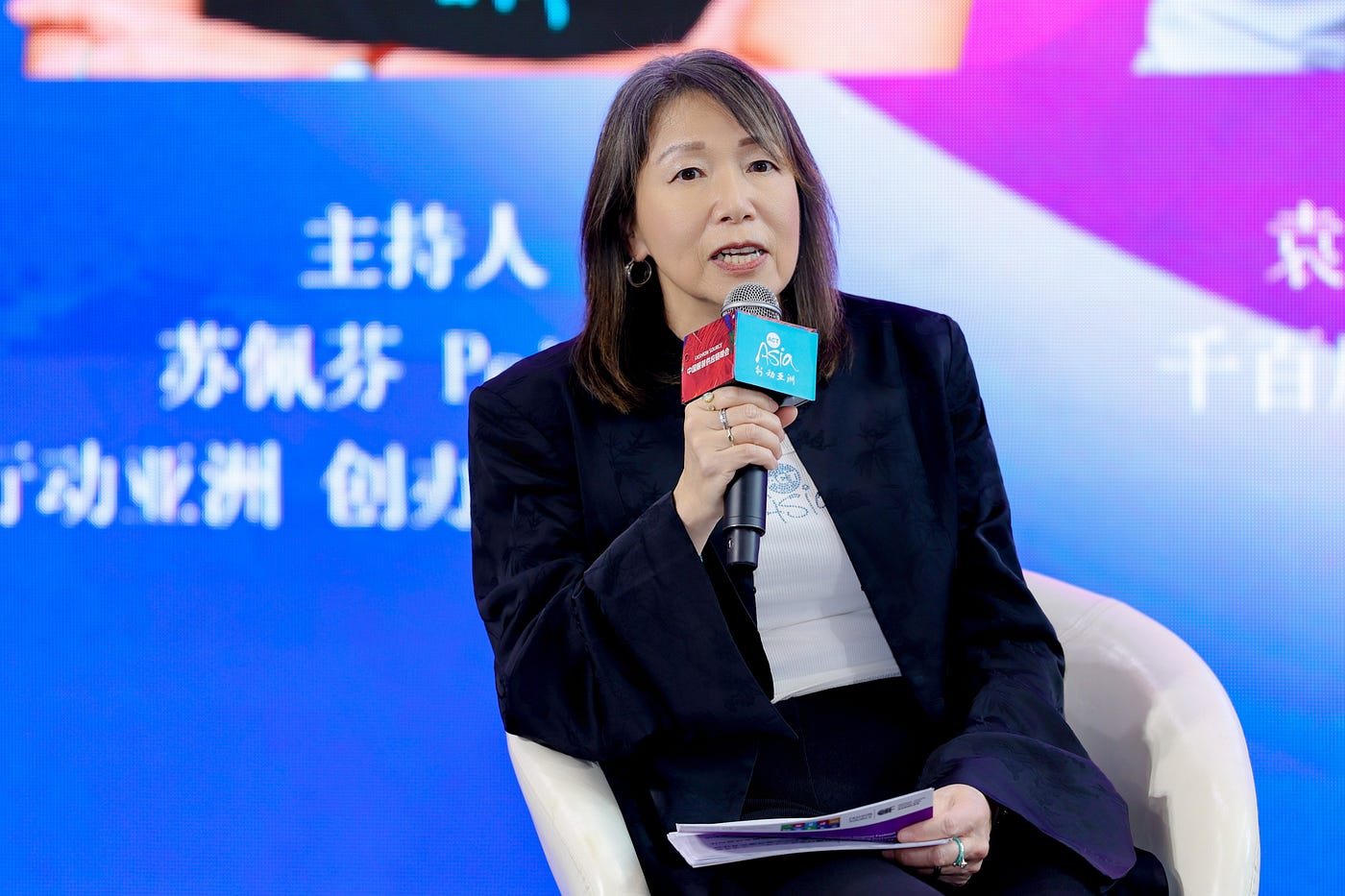
As a part of this series, we had the pleasure to interview Pei Su.
Pei Su is the CEO of ACTAsia, a charity she founded in 2006 to promote compassion for animals, people and the environment in Asia, in order to address the root cause of many societal issues. Her goal is to educate children, consumers and professionals in Asian societies, to help build a kinder and more sustainable world. Pei grew up in Taiwan, spent years travelling and learning, and now lives in the UK with her husband, daughter and cat. Her team is spread across the globe. She has written a book on her life, called Life of Pei, and is a regular public speaker.
Thank you so much for joining us in this interview series! Before we dive into our discussion about empathy, our readers would love to “get to know you” a bit better. Can you share with us the backstory about what brought you to your specific career path?
I didn’t have the easiest childhood growing up in relative poverty in Taiwan, then losing my beloved grandmother, mother and father, so that I was orphaned by 16. I had no sense of direction until I discovered Buddhism, and very nearly became a monk. I went through all my training until at the final hour I decided it wasn’t for me — although I have taken the learnings from that time with me through life. Instead I began volunteering with young offenders, advocating for victims of domestic violence and prison reform, but then realised that nobody was really speaking up for the humane treatment of animals. I travelled the world, training in animal welfare and working for different charities, even going undercover in bear bile farms to expose the terrible cruelty within the industry. Then in 2006 I decided to set up my own charity to fill a gap in the sector, and so ACTAsia was born. There are several key strands to our work, but the main goal is teaching compassion from the ground upwards.
Can you share the most interesting story that happened to you since you started your career?
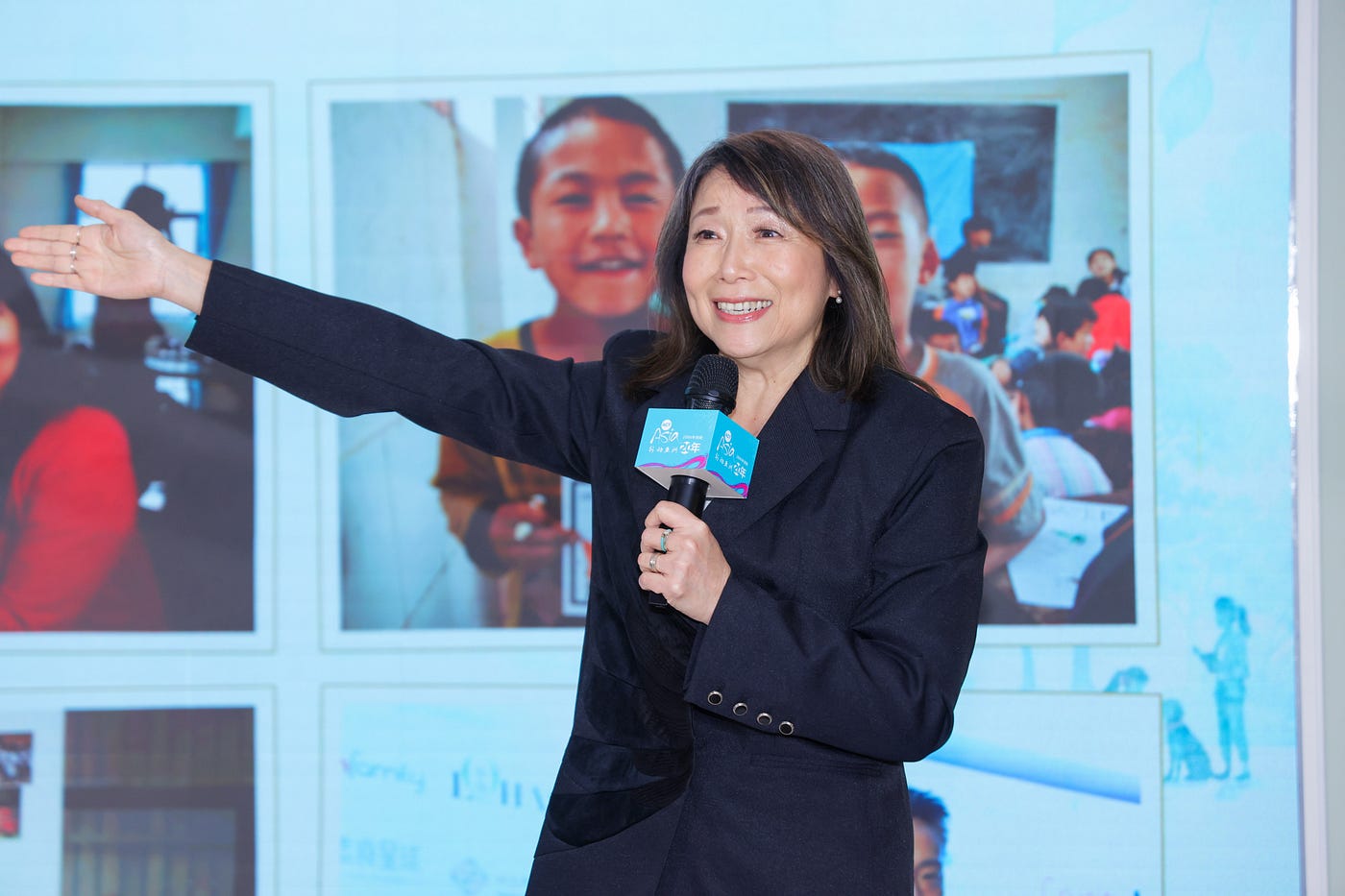
In China there is a real concern about ‘left behind’ children. A large number of adults leave remote rural areas to work in the cities, and a staggering estimated 61 million children are left back in rural villages. A lot has been done to address the academic concerns for these kids, but without parental role models, we are still witnessing a gap in emotional intelligence, compassion and empathy. One of ACTAsia’s key strands of work is Caring for Life, a programme that plays a critical role in giving moral guidance and nurturing kindness and compassion for all living things. I will talk more about this programme later, but a principal in one rural school really stood out to me for the way she embraced it. With a school of less than 100 children, many of whom she felt were introverted and reliant on their phones, she introduced the programme and told me she quickly saw this imbalance being corrected. Personal development is as important — if not more so — than academic development, and to hear that our programme was able to help with a huge shift in attitudes and behaviour was extremely gratifying. The school may be small, but our impact on the students was big, and that is exactly the reason ACTAsia was created.
What do you think makes your company stand out? Can you share a story?
Many charities exist to heal problems, effectively putting a plaster over the wound. ACTAsia aims to prevent the problems before they happen — so stopping the wounds from appearing in the first place. We tackle the root cause through education, seeing it as the vehicle for long-term behavioural change. Our Caring for Life programme is unusual because it teaches empathy, critical thinking, responsibility and interconnectedness to children over a six-year period, deliberately connecting animals + people + environment. It was created because there wasn’t an equivalent humane-education curriculum in China or across Asia, and is based on UNESCO’s Four Pillars of Education. Rather than telling people “don’t do this”, ACTAsia tries to give people the understanding that allows them to make different choices themselves. We started with a handful of schools in 2012. Caring for Life has now reached more than 600,000 children aged 6–12 years old across China, something I am very proud of — although we of course want to reach millions more.
You are a successful business leader. Which three character traits do you think were most instrumental to your success? Can you please share a story or example for each?
Resilience. Twenty years of building an international charity from scratch takes plenty of that. I am repeatedly hit by funding difficulties, political and social obstacles, and moments of exhaustion and doubt, but I will always keep going. Courage. I have always been willing to speak about difficult issues, repeatedly stepping into spaces where nobody else is speaking up and it is not always welcomed with open arms, but I have to keep doing what I know is right. Empathy. I don’t mean this in sentimentality terms, but empathy as leading to action and responsibility. This year we are celebrating 20 years of ACTAsia — two decades of translating compassion into programmes, policy work and education — and it is my absolute belief that empathy is key, that has driven us through those years.
Leadership often entails making difficult decisions or hard choices between two apparently good paths. Can you share a story with us about a hard decision or choice you had to make as a leader? I’m curious to understand how these challenges have shaped your leadership.
Choosing education over immediate rescue and action is a decision that has made charity life ten times harder. The latter would be easier to get support and funding for, whereas education is seen as slower and therefore less ‘sexy’ to funders, but ultimately it is more transformative. Helping the individual today changes the system so there is less suffering tomorrow, but I am well aware that people prefer to see instant results. For example people find it easier to give money for an injured dog, than to give money for a system that tries to stop the dog being injured in the first place. I am constantly revisiting the charity’s core values to keep on track, but I do feel I made the right decision on our focus, however hard it seems at times.
Let’s now jump to the primary focus of our interview. Let’s begin with a basic definition so that all of us are on the same page. How do you define empathy in a leadership context, and why do you believe it’s a vital trait for leaders to possess in today’s work environment?
Empathy is the ability to understand another person’s perspective and feelings, without necessarily agreeing with them. In ACTAsia’s case, understanding leads to connection, which leads to responsibility, which leads to action. Empathy is not passive, it isn’t simply “being nice”. Our whole philosophy is built around extending empathy beyond our immediate circle, to other people, to animals, to the natural world. It isn’t a leadership luxury. It is a way of understanding reality more accurately.
How do empathetic leaders strike a balance between understanding their team’s feelings and making tough decisions that might not be universally popular?
Empathy doesn’t mean avoiding difficult decisions, but it tells you how a decision will affect someone. I always try to listen to all viewpoints, no matter how junior or senior the person, before making any decisions. You can understand someone’s feelings and still make a decision that they don’t like, in fact, understanding their perspective may help you make a better difficult decision. As a CEO your priority is not to be liked — although that is of course a bonus — but the number one priority is to achieve the charity’s mission.
How would you differentiate between empathy and sympathy in leadership? Why is it important for leaders to distinguish between the two?
Sympathy is feeling sorry for someone, but can create distance, whereas empathy creates connection. Leaders need empathy because as with general society, sympathy alone doesn’t necessarily change behaviour. Empathy should then become action, which ties into ACTAsia’s philosophy that compassion needs to translate into responsibility.
What are some practical strategies or exercises that leaders can employ to cultivate and enhance their empathetic skills?
Ask questions before giving opinions. Regularly put yourself in someone else’s position. Seek out perspectives you don’t naturally encounter. Build reflection into leadership — I meditate daily and find this hugely beneficial.
How can empathy help leaders navigate the complexities of leading diverse teams and ensure inclusivity?
I have worked across Asia and internationally, and today have a team spread across the world with very different cultures and ways of working. Diverse teams bring different experiences, cultural assumptions and ways of solving problems, and I accept and embrace that as a positive. I hope I have created an environment where people can explain their perspective without having to first conform to the dominant culture. It is one of the reasons ACTAsia was created in the first place — working for larger western charities I sometimes found a western perspective overrode the lived experience on the ground in Asia, and I wanted to change that.
Based on your experience and research, can you please share “5 Ways Empathy Will Affect Your Leadership”? If you can, please share a story or an example for each.
1. Empathy helps you see the root cause, not just the symptom
Animal suffering isn’t simply an animal welfare problem, it can be connected to education, consumer behaviour, culture, economics, environment and human wellbeing. Similarly, leadership problems often have deeper causes than the behaviour you initially see. Address root causes rather than constantly firefighting.
2. Empathy expands your sense of responsibility
Empathy starts with understanding another person, then it can expand beyond our immediate circle. If we understand interconnectedness, our definition of leadership responsibility becomes bigger, whether that is connecting the dots from empathy with animals through to wider societal challenges.
3. Start small, think generationally
We all know how one teacher can influence hundreds of children, and in the same way one great leader can impact hundreds of careers. Even one compassionate interaction can have a big impact.
4. Empathy is a skill, not just a personality trait
Empathy can be taught, practised and embedded into institutions, no matter how late in life a person comes to it.
5. Learn empathy as early as possible
Empathy is not something you magically acquire, but can be cultivated and developed, so do actually focus on it yourself, and encourage others to do the same.
Are there potential pitfalls or challenges associated with being an empathetic leader? How can these be addressed?
Empathetic leaders can absorb too much suffering — this is particularly relevant in humanitarian/animal welfare work — so need to ensure they have boundaries and recovery time. A leader can also become so emotionally invested that their judgement is impaired. To stop this, you need to always step back and ask what is best for the mission and the team. There is also a risk that empathy can be confused with weakness — it is anything but that!
As someone steering the ship, what thoughts or concerns often keep you awake at night? How do those thoughts influence your daily decision-making process?
So many things… I can be overwhelmed by the scale of the problems faced by the planet: animal suffering, biodiversity loss, climate change, conflict, human health. This combines with the frustration of knowing that there is so much more ACTAsia could do if resources allowed, and I worry that society is not moving quickly enough. I think about the challenges of being a mother and wife alongside being a female, minority, charity leader — but equally I am proud that I am all of these, and an example to others of what is possible.
You are a person of great influence. If you could start a movement that would bring the most amount of good to the most amount of people, what would that be? You never know what your idea can trigger.
I would like to take the Caring for Life philosophy globally. A worldwide compassionate education movement, to make empathy, compassion, critical thinking and responsibility core parts of every child’s education. What if every child in the world was taught empathy as deliberately as we teach mathematics? We need to treat emotional intelligence as seriously as academic intelligence. Teach children to understand other people, animals, nature, the consequences of their choices, and the interconnectedness between all actions. Give children the skills to become responsible citizens rather than simply successful students. Education rooted in compassion changes how we see the world, which changes how we act within it.
Thank you for sharing these insights!