The best method I have found is to recognize anxiety and worrying as a compulsive habit, and to break it at its core using mind-body techniques.
Anxiety seems to be the dis-ease of our times. More people than ever are taking medications to help them cope with stress. Nearly everyone I talk to is consumed with anxious feelings that hijack any pleasure they could be getting from their lives. The pressure to “produce” combined with a perception of “not enough time,” combines to create anxiety, self-doubt, frustration and resentment. Resentment, then, is often taken out on your closest, most important relationships. As a part of this series, I had the pleasure of interviewing Omar Shaker.
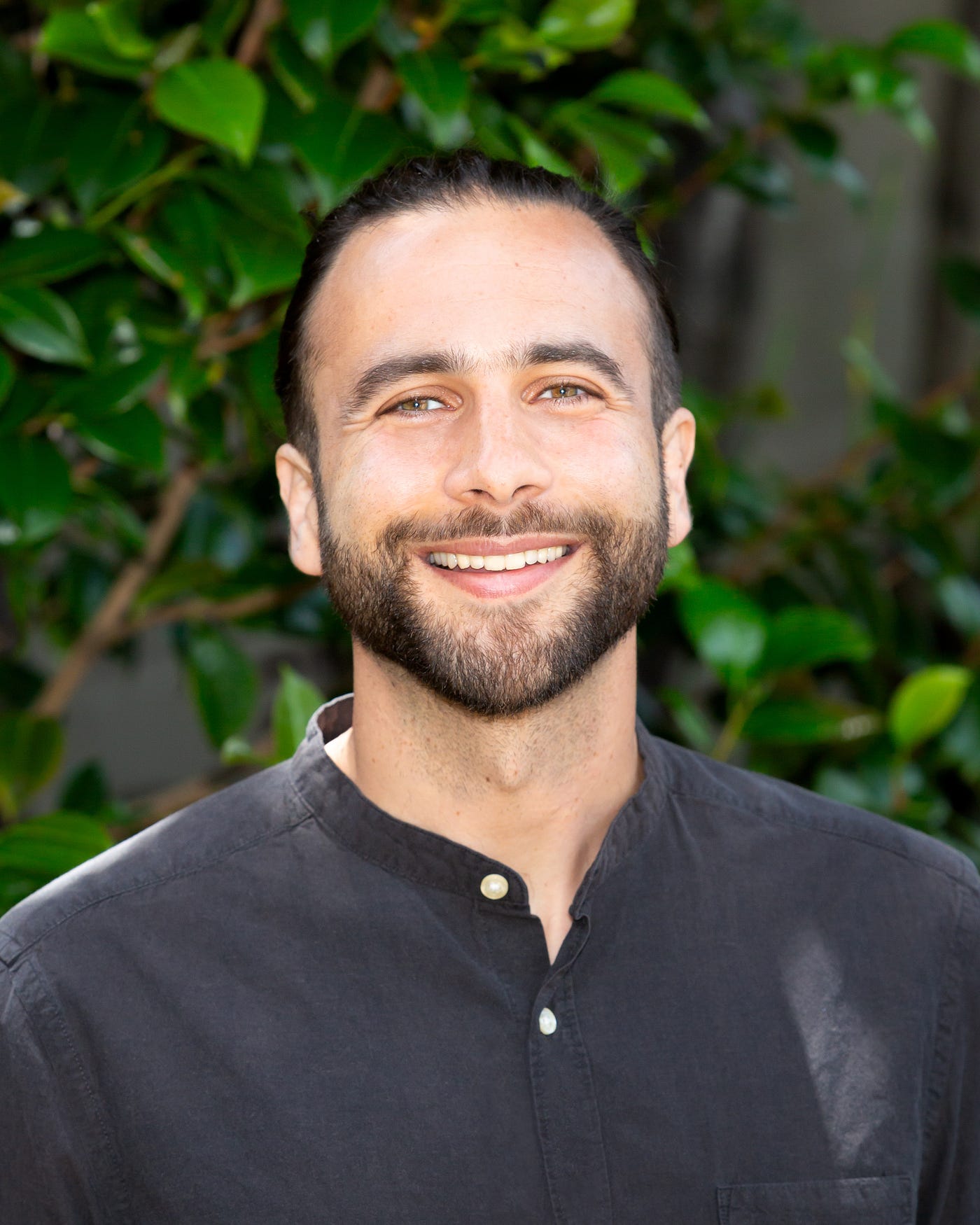
Dr. Omar Shaker is a certified functional medicine practitioner and trained physician, skilled in clinical data science. He is the Founder of The Human Dash, a six week data-driven health coaching program that teaches professionals how to achieve their dreams without sacrificing their health or sanity. Find opportunities to work with him at https://shaker.health.
Thank you so much for joining us in this interview series! Before we dive in, our readers would love to “get to know you” better. Can you tell us a bit about you and your backstory?
Sure! It is a pleasure being part of this timely series.
I think our collective understanding of stress and how it affects our bodies is expanding in very exciting ways. It’s incredible how much we have learned over the past few decades about how anxiety, depression, addiction, chronic diseases, and burnout are all many heads of the same Hydra monster. Just like in the Greek myth, these stress-driven diseases keep popping up, and it takes nothing less than a herculean task to defeat them.
My “origin story” with stress-related diseases started during my medical internship at Tufts New England Medical Center in Boston. Up to that point in my life, I thought I had never experienced anxiety - and that it was only for the weak.
A little context before you judge me: I grew up as the eldest son, my father is a hyper-achieving surgeon, and my mother was a successful oil IT executive. They offered me a very loving home that also came with a high benchmark for achievements. I felt the pressure to perform at an early age. Looking back, I didn’t realize I was anxious because it was always my status quo. It helped me get through medical school, become captain of my basketball team, and fueled my puzzling millennial desire to save the world. Little did I know, my body was quietly paying a huge price.
Had you met me back then, you would have seen a successful person, who was outgoing and seemed very confident. Had you gotten to know me, however, you would see a man riddled with anxiety, sunken into a silent depression, and secretly engaged in compulsive behaviors.
My mental and physical health declined sharply: The depression worsened, my biomarkers showed prediabetes, and I had recurring back pain that kept me in bed for days. I kept a strong face through it all and kept it all in…until I couldn’t anymore. It was time to wake up, leave my job, change my environment, level up my health behaviors, and correct my overall trajectory.
I quit medicine and pivoted into clinical data science, advising large US insurance companies like Kaiser and Blue Cross. My exposure to clinical data and medical records showed me the extent of the problems patients face in America. I learned how to measure and visualize health metrics, experienced various corporate environments, traveled the world, lived in simple remote villages, and experimented with different lifestyles. In 2020, I became a certified Functional and Lifestyle medicine practitioner and returned to the San Francisco Bay Area, where I have lived for most of the past eleven years.
As a successful person in your field, have you or do you experience anxiety? And if so, how do you manage, reduce or eliminate anxiety so you can work efficiently and enjoy your non-work hours?
Yes, I do experience anxiety and stress daily because I choose to take part in a culture that triggers our stress response system in ways that are abnormal for our bodies. Perhaps monks can eliminate anxiety, but that is not a practical goal for most of us who still want to function in modern society. The best method I have found is to recognize anxiety and worrying as a compulsive habit, and to break it at its core using mind-body techniques. Understanding stress and its impact is crucial for that.
Think of the stress response like a shot of espresso. If you have one or two early in the morning, it can make you do amazing things. However, if you have 20 shots of espresso throughout the day, then it frays your nerves, deprives you of sleep, and depletes your hormones and immune system. We did not evolve to experience stress the way we do today.
The only way out is to understand how our stress response system works, why the brain generates it, and when to use the body to reduce it. Robert Sapolsky PhD (one of the world’s most well-versed stress scientists) has a wonderful book called “Why Zebras Don’t Get Ulcers”. He describes what happens when a zebra sees a lion, and its brain signals the need for a stress response by the body. This is very useful for it to focus, sharpen its vision and memory, and supply the muscles with blood and oxygen for running. However, once a zebra has escaped the lion, it relaxes for long periods of peaceful grazing. It does not sustain the stress response beyond the stressor.
Compare that to us human beings living a modern life away from the Savannah where we once belonged. We don’t have lions chasing us anymore, but we do have an endless barrage of bills, politics, news, taxes, horrible bosses, wars, inflation, stock prices, text messages, emails, social media ads, and work tasks that chase us from the moment we wake until we go to sleep. Most of us are not sleeping well because of that, and the continued activation of the stress response then causes everything from cardiac problems to depression to immune diseases. This long-standing cortisol activation affects every system in our bodies, and so it is a very ‘expensive’ thing for our bodies to do. The Stress Response is best when used for rare threatening occasions, not as our modus operandi.
That is a long but important preface to answer your question. How do I work efficiently and enjoy life? My answer is that I use the brain as a gatekeeper for the body, and use the body as a messenger for the brain. In more practical terms: I observe my thoughts, choose the ones worthy of a taxing stress response (e.g. a friend or family member needing help), and swipe left on the ones that do not have immediacy (e.g. a Slack message from work, or social media). This is not a simple feat given the economic reality that we live in.
The brain is superb at generating stress, but the body is a far more effective tool to quiet that stress response down. What I have found to work, is that once my brain is aware of a useless compulsive thought, I use my body to tell my brain to calm down. There are many ways to do that such as vagal breathing (making the exhales much longer than the inhales), moving the eyes from side to side,using panoramic vision by focusing the periphery of our eyesight, and stretching the neck muscles, just to name a few.
My first mindfulness teacher told me “Mindfulness is when the mind and the body are doing the same thing”. This is easy to remember when I find myself being swept away by anxiety. If I am driving, I rub my fingers over the leather and think of how it feels. If I am lying down I put my hand on my belly and watch it rise and fall with every breath. If I am on a Zoom call, I move my toes to feel my shoes or the floor. These seemingly small trivial actions can be enough to prevent stress-related diseases in the long term if practiced consistently.
Have you gone through a period of time in your life where you felt as though you were drowning in anxiety? If so, please share your experience and what you perceive as the reasons.
Yes, my time at Tufts felt exactly that way. It started with social anxiety at first. I felt insecure and uncomfortable around people. I would go back home after a regular day at the hospital, and start judging myself for things I said that day or did not say. There was a regular ‘beating myself up’ or ‘negative ruminations’ that got so overwhelming, that I could not tolerate being around anyone. That led me to isolation and a feeling of overwhelm. I felt like I was living in a glass cube, devoid of sensations and the ability to enjoy life. This snowballed into a depression, an inability to experience pleasure, and a disengagement from life.
I continued hiding while trying to get by through my internship and felt self-conscious. I was also under a lot of external stress due to a cut throat work environment (in a literal sense if you are training to become a surgeon like I was). My coworkers and I were in survival mode, and they felt more like competitors than comrades. My senior residents were always out to get me rather than teach me. I felt alone and more isolated in these experiences. Internally, I was still very young and did not have the tools I have now to deal with how messy the world can get sometimes.
I felt myself drowning in that social anxiety, found it harder to focus, my relationships suffered, and I picked up a bunch of bad health habits to cope with it all. It was one of the hardest times of my life.
What or whom did you lean on to help you cope with anxiety?
My therapist (who uses Internal Family Systems which we can get into later) and my Somatics teacher were the most influential people in my journey. They are both advisors and co-creators of The Human DASH six-week program now.
Before finding them, however, I could only replace anxiety with numbing behaviors such as drinking, smoking, or porn. When the anxiety ran unaddressed for very long, I fell into my first depressive episode and required Prozac to get out of it.
Once I did, I stumbled upon psychedelics and started researching and experimenting with psilocybin. I also had a couple of ayahuasca and Wachuma ceremonies. These medicines gave me powerful insights into where my anxieties came from and deepened my understanding of them.
I also explored my anxiety from a generational trauma lens, which helped me deepen my relationship with it.
What lessons did you derive from that dark period of time, that serve you now?
This interview is starting to be more of a therapy session! I love it.
One of the biggest lessons I learned during that time was from a well-renowned psychiatrist and author on burnout called Mark Goulston. He coached me and a few other physicians and he taught us the syndrome of ‘disavowed yearning’ which was a big aha moment for me.
The syndrome describes our desire to please our parents at an early age by doing what they want us to do (in my case it was to get good grades), and how that need to please them gets ‘disavowed’ by our employers. It ultimately makes us want to stretch ourselves, over-identify with a sense of duty, and put others' needs before ours.
Understanding that, and how shame can dictate my behaviors in both personal and professional relationships has single-handedly transformed my life. I also learned the skills of self-compassion which serves as a potent shame antidote for work or habit failures. Shame has a way of swallowing us whole otherwise.
For example, I used to call myself lazy or fat when I missed my workouts, and that would create a vicious cycle of shame that kept me ‘lazy’ and ‘fat’. This new muscle of self-compassion is fascinating because it gives me a safe platform in my mind to recover from failures and bounce back even stronger into my workouts or projects. I would not have uncovered that extraordinary form of well-being, had I not been down this path of anxiety and depression.
Do you have days or circumstances that still cause excessive stress?
Yes, but let’s first define what ‘excessive stress’ is. Remember Sapolsky’s Zebra running from a lion? It is experiencing just the right amount of stress for that circumstance. It can’t sit and meditate, for instance, it has to run. Otherwise it would die!
So excessive stress involves the chronic repeatable activation of the stress response system when no stressor or trigger needs to be dealt with in the current moment.
Some of the “fugazi” lions that are currently chasing me are politics, and on a more personal note, romantic relationships. I have been through a divorce recently, and so relationships have been more of a stressful area since I’m learning how to trust people in intimate relationships all over again. There’s a new anxiety about repeating past mistakes. The same goes for the current state of US and Global politics, but I don’t want to stress you out!
What are your dependable “go to” strategies that you use to restore balance to your emotions?
We are experiencing a fundamental change in how we understand our mental, physical, and spiritual health. One approach leading to this change is the “multiplicity of the mind” approach, recently made popular by an evidence-based psychotherapy model called Internal Family Systems (IFS for short). It has become my go-to strategy for emotional regulation during stressful times.
The stigma of Multiple Personality Disorder and schizophrenia has kept this approach underground until recently. That stigma results from a century-long debate between clinical psychiatrists and scientific philosophers. The former downplayed the theory of the multiplicity of the mind as ‘heresy’, while the latter argued for it. The clinical psychiatrists won the argument around the turn of the 19th century, with Freud becoming a central figure in psychology.
Early challenges came from Freud’s own disciple, Carl G. Jung, but it took 100 years for any change to happen. A family therapist, by the name of Dr. Richard Schwarz, changed the status quo in the 1980s, and gave legitimacy to the multiplicity of the mind approach once again by creating Internal Family Systems Therapy. His 2021 book “No Bad Parts” is a good first read to learn more about this.
Schwarz’s research showed that bulimia patients were able to change their eating behaviors when they saw themselves as multiple personalities. In other words, the bulimic person was only a part of who they were. Multiplicity of the mind allows for more effective paths for mental health and anxious behaviors. Research continues to show massive improvements in the treatment of PTSD and depression.
Here is how it works: Instead of seeing myself as “an anxious person”, the facilitator helps me see it as only a part of who I am. That puts me in the driving seat immediately, as opposed to overidentification with anxiety (which is proven to lead to depression and learned helplessness in the long term). Anxiety becomes a part that I can talk to, witness, hear out, and become curious about. Learning that method was critical to my evolution as both a human being and an entrepreneur. It allowed me to change shame into compassion, which is liberating.
Anxiety, like addiction, is a compulsive habit. It happens for a reason. With stressful events, the anxious parts of us usually want more control, more predictability, or more social validation. Gabor Maté writes about this in When The Body Says No, outlining the traits of the “Stress-prone persona”, like the inability to say No for example, and how it shows up as chronic, autoimmune and mental health diseases later on. Bessel van der Kolk, Susan McConnell, and the work of many others show us clearly how the body and mind are not just connected, they are the same.
Just like mindfulness and Buddhist-inspired techniques, IFS allows us to witness this anxiety habit loop. It allows us to recognize the objective of this behavior, negotiate with that part, and accept it so that it does not act out of proportion when times get stressful.
I know this all sounds laborious, but it really isn’t. The beauty of parts work is that it becomes like muscle memory. Once you see it, you can’t unsee it. It is incredibly effective too. What we see with participants of our program is that a few sessions are enough for a radical positive change in a person’s perspective and health trajectory.
So my strategy is to recognize these anxious parts of me when they arrive, track where they live in my body, allow them to express themselves, and then use some of the somatic body-based techniques that I mentioned before to calm my stress response system down, sparing my body a lot of needless daily physical turmoil.
When I get stressed I ask this part two critical questions: First, what are you trying to protect me from? This unveils the purpose of anxiety, allowing me to understand its purpose. Second, what are you afraid would happen if you stopped feeling anxious? This question shows the vulnerable feelings beneath the anxiety, which usually date back to childhood, or even multigenerational wounds that we can’t even link to our own memories. This helps us get to our core needs, rather than play whack-a-mole with anxiety.
I also measure my biomarkers every three months to see tangible evidence of this (I am a clinical data guy) and double down on activities like meditation or yoga when I need that extra help if my Urine cortisol levels are high or irregular.
Please name five tips, practices, beliefs or affirmations that you recommend to anyone going through a highly stressful time.
1 . Vagal Nerve Activation via 4-7-8 Breathing, moving eyes from side to side, or by Panoramic Vision (focusing on the periphery of your vision).
2 . Low-intensity exercise and Stretching of the neck muscles is better than high intensity exercises for stress.
3 . Measuring multiple urine cortisol at-home tests is more accurate than a blood test, and gives the full picture.
4 . Parts Work or Internal Family Systems can help you learn how to stop over identifying with anxiety.
5 . High Frequency Friendships calm our nervous system.
On a scale of one-ten, if 8-10 was your former, chronic level of anxiety, how would you score your usual level of anxiety today?
1-2
Do you have daily practices that support you in maintaining peace, calmness or balance in your life?
Yes, my stress ‘supplements’ or daily practices are Qi Gong, Vipassana, and Metta meditation (loving-kindness), frequent walks in nature, hanging out with any dog, and a good warm shower!
That being said, I have also gone past depending on these practices. I see them the same way I see food supplements: sometimes I need them more than others. One common pitfall about “stress-management”, is that we can develop anxiety about how well we are managing our stress. Anxiety can be sneaky like that.
Was there any particular saying, person, or book that taught you the skills that enable you to escape or avoid the higher levels of anxiety that used to plague you?
Yes. There is this saying that is frequently attributed to Viktor Frankl, author of Man’s Search for Meaning, although the truth is that its author is unknown. The quote was described by Stephen Covey, who wrote the famous 7 Habits of Highly Effective People. He quotes an unknown author and ties it to Frankl’s work:
“Between stimulus and response, there is a space. In that space lies our freedom and our power to choose our response. In our response lies our growth and our happiness.”
This quote summarizes my current philosophy of the human stress response, and I believe that this information is critical for every human being to learn in this day and age.
Thank you for sharing your wisdom with those who are reading this article. Are there also other ways you are sharing your wisdom?
Yes, I have a podcast called Better Perspectives with Omar Shaker about how tough times can fuel extraordinary wellbeing. We host it as a live in-person event in San Francisco, where guests join the audience, and my friend Volkan Eren improvises a musical set inspired by the conversation. Live events allow us to have a more meaningful Q and A and to engage and have tea afterwards. You can find the produced episodes wherever you find your podcasts!
Wonderful. We are nearly done. Is there a person in the world, or in the US, with whom you would like to have a private breakfast or lunch, and why? He or she might just see this, especially if we tag them. :-)?
Easy. Gabor Maté. His writings have given me the scientific grounding, the spiritual maturation, and the confidence to pursue what I could only understand intuitively about stress. I would like to have a sit down meal with him, mainly to thank him for his work, his courage, and his writing. I would also really love to interview him on Better Perspectives with a live audience the next time he is in The Bay Area! Did I get carried away? Ok, ok, let’s just start with breakfast!
You are a person of enormous influence. If you could start a movement that would bring the most amount of good to the most amount of people, what would that be? You never know what your idea can trigger. :-)
The idea would be this: We all have a powerful blue electromagnetic field surrounding us and that we can expand and contract based on the environment that we are in. When conditions are rough, and the weather is turbulent, we can expand that like a shield to protect ourselves from these outside forces. When it is safe outside, it's equally important to recognize that, and be able to turn off that electric shield so that we can regenerate and connect with others. The beauty of having this capacity is that it can be taught to others, and once enough people have passed it on to each other, we can develop herd immunity against stress-related diseases. Wouldn’t that be amazing?
How can our readers follow your work online?
Find me as ‘Omar Shaker.Health’ on LinkedIn,X or follow ‘Better Perspectives with Omar Shaker’ on Substack,Youtube, Spotify or Apple Podcasts, Instagram and Tiktok.
Thank you so much for joining us. This was very inspirational.
Thank you for this interview. Your questions were awesome. I enjoyed this.
About the Interviewer: Nancy Landrum, MA, Relationship Coach, has authored eight books, including “How to Stay Married and Love it” and “Stepping Twogether: Building a Strong Stepfamily”. Nancy has been coaching couples and stepfamilies with transformative communication skills for over thirty years. Nancy is an engaging interviewer and powerful speaker. Nancy has contributed to The Washington Post, Huffington Post, Authority, Medium, Yahoo, MSN, Psych Central, Thrive, Woman’s Day magazine, and more. Nancy is the Founder of the only one of its kind online relationship solution, www.MillionaireMarriageClub.com. Nancy coaches couples across the globe in person and via Zoom. Nancy’s passion is to guide couples and families to happy lasting marriages where children thrive and lovers love for life.
lies in understanding that the stress response comes from my brain and that my thoughts and personality are the gatekeepers of the body’s stress response. The way I stop my brain from flushing my system is by observing thoughts, and deciding which ones are true lions, and which ones are fugazi lions that I do not need to activate my cortisol response for.
Once I realize that my brain is being hijacked by thoughts that do not help me, then I can do certain things like breathing, eye-movements, panoramic vision, or .
What I do is try to avoid the consequences of the stress response system by recognizing what triggers are worth me being in flight and fight mode.
There is a huge