
The thing that makes anxiety so unpleasant and overbearing is when people try to run from it or try to get rid of it completely.
Anxiety seems to be the dis-ease of our times. More people than ever are taking medications to help them cope with stress. Nearly everyone I talk to is consumed with anxious feelings that hijack any pleasure they could be getting from their lives. The pressure to “produce” combined with a perception of “not enough time,” combines to create anxiety, self-doubt, frustration and resentment. Resentment, then, is often taken out on your closest, most important relationships. As a part of this series, I had the pleasure of interviewing Kelly Mitchell
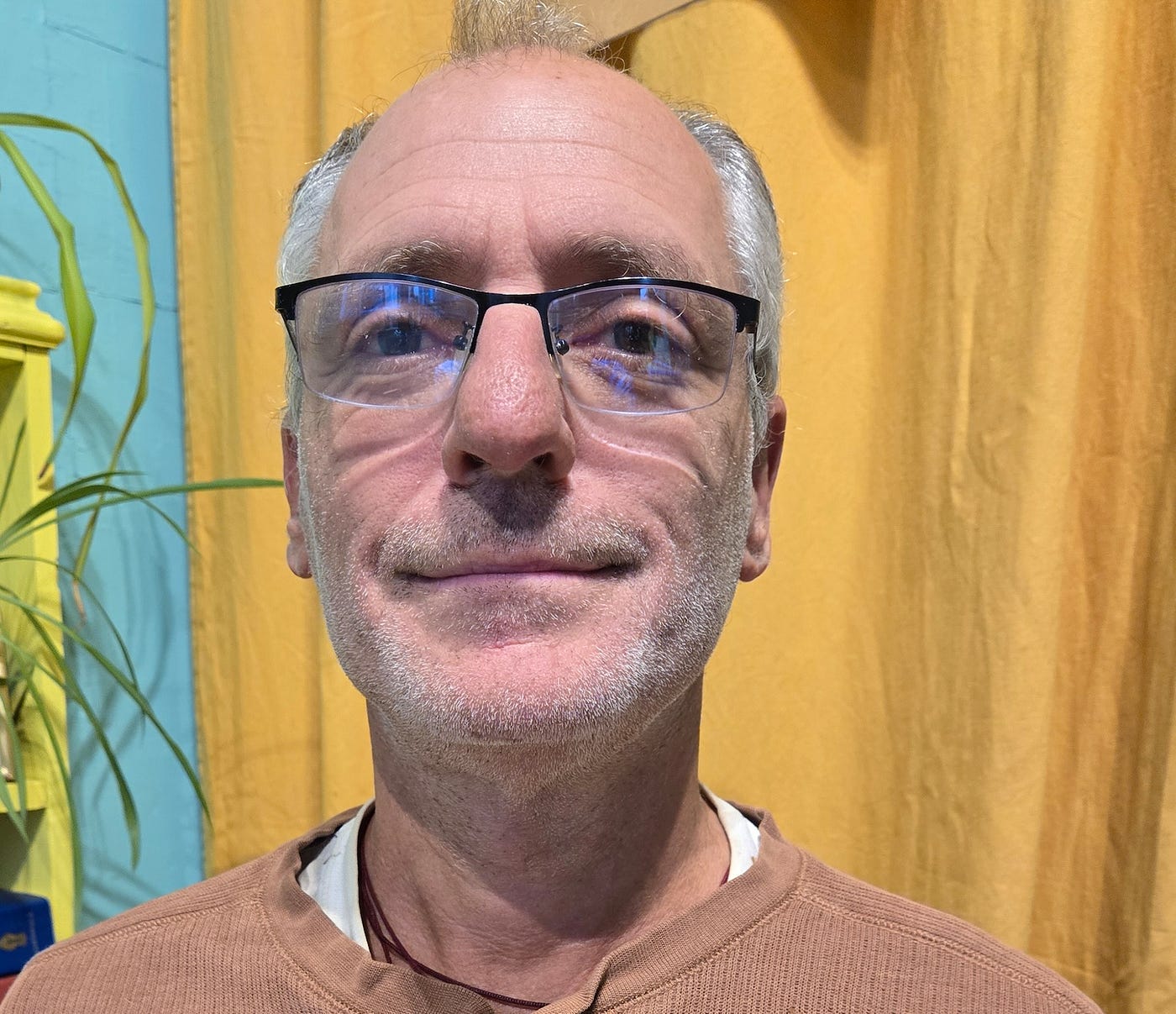
Kelly Mitchell has been a very serious meditator and student of Buddhist forms of meditation for over 30 years. After suffering a couple of acute run-ins with anxiety and having muddled through using meditation, he's systematized the approach and created a lengthy online course on meditation for anxiety.
Thank you so much for joining us in this interview series! Before we dive in, our readers would love to “get to know you” better. Can you tell us a bit about you and your backstory?
I started meditating in the mid-90s and discovered the Buddhist path of meditation. I found it to have the most comprehensive set of explanations for meditation, along with the most accessible numbers of teachers. I got very engaged and have made it a centerpiece of my life. It's my only spiritual practice, and I spend a significant amount of energy on it, meditating at least an hour and a half a day, and I often do month-long and even multi-month meditative retreats. Along that journey, I found that meditation is not what people tend to think it is or what it's presented as. It's actually something very different. I go into that a lot in my writings and classes.
As a successful person in your field, have you or do you experience anxiety? And if so, how do you manage, reduce or eliminate anxiety so you can work efficiently and enjoy your non-work hours?
I do experience anxiety. I haven't totally gotten rid of it, nor do I think that's actually fruitful or effective or even advisable. I don't even think it's possible. Even the most confident and stable person experiences some level of underlying anxiety in their mind. It's because anxiety is a naturally existing thing; it's an awareness against danger. The problem is not anxiety. When it gets out of control and takes over our minds then it becomes a problem especially when it disables our ability to function.
So how do I manage anxiety?
Anxiety self-manages through the meditative process. I've done a lot of study of the philosophy of Buddhism, and one of the key points is that emotions are not as solid and fixed as we think they are. Anxiety can be reconceived. I find it much more fruitional. In fact, this is what I teach: to explore the anxiety rather than try and terminate it, meaning don't call it anxiety, but experience it in meditation as directly as you can. Trust me, it's not going to overwhelm you if you have the willingness to go into it.
The thing that makes anxiety so unpleasant and overbearing is when people try to run from it or try to get rid of it completely. If you just accept it as a normal flow in the mind, it rapidly becomes more workable. There are a number of tools and skills and philosophical outlooks that can be used to do this. They can be framed for different people and situations. I’ve put together 75 different meditative structures. Not all of them are going to work for everybody, nor would that make sense. But people can look through them all and pick the ones that make sense for them.
It's kind of a graded approach. You look at the basic stages, for example, learning to meditate, and then you begin to apply that with a more profound view of things not being so solid, not being so fixed. We call it shunyata or emptiness in Buddhism. That view is incredibly helpful and incredibly powerful at dissolving the fixity of anxiety and other emotions as well. Finally, we find out how to mine anxiety for its innate energy and use it for our own purposes. Why throw away the energy? Use it!
Have you gone through a period of time in your life where you felt as though you were drowning in anxiety? If so, please share your experience and what you perceive as the reasons.
Yes, I had a very severe episode of anxiety when I was living in Dallas, Texas. I didn't find Dallas a very satisfying place to live, even though I grew up in Texas. There was something empty. I was looking for a sort of spiritual approach to life, and Dallas is very far from providing that kind of approach. It's a very professional environment with a lot of people focused on their careers and status symbols, and a lot of people with Mercedes and a lot of cocaine and so forth. It was not a good fit for me.
I didn't understand what was going on because I was young. I was only in my 20s, and I experienced a lot of what's called free-floating anxiety these days, where there's no particular focus of it. It's odd. Why would somebody be so upset? Life is basically good, but still, something is not right. This experience of just not being able to make sense of the world, not being able to take meaning out of one's existence, is when I was looking for meditation. So in a sense, just meditating and finding some meaning in that largely solved it.
What or whom did you lean on to help you cope with anxiety?
I coped with the anxiety by getting professional mental help, and it was somewhat helpful. They prescribed Prozac for me, and I took it for a while. It was actually an anxiety of depression or a depressive anxiety, so they thought the Prozac would help regulate it.
It didn't make me feel better, but it also made me feel kind of weird and disoriented. So after a few months, I stopped taking it, but it seems to have solved the issue at that time. However, I also left Dallas soon after that, which I think had a lot more to do with it. I went to Boulder and found a more spiritual community that made more sense to me, and that was actually far more helpful.
What lessons did you derive from that dark period of time, that serve you now?
My takeaway from that period is that we all need some kind of meaning in our life. Some people can derive meaning just from making money and having a career and so forth, but that didn't work for me. Other people can drive over it and exist without meaning or just looking for the next good time or good feeling, and that's fine for them. But for me, I needed something a little deeper that made more sense. I think everybody needs something to make sense. That's why a lot of people have families and so forth that keep them grounded and meaningful.
Since I've gotten married and had children, it provides me with a strong sense of purpose in addition to my spiritual practice. So it's been very grounding and stabilizing from that perspective, but it’s still required me to deal with my own issues.
What does that mean?
The main lesson is that you're on your own. Nobody's going to save you and nobody can. People might try to help, but the more you lean on them and rely on them, the more you tend to burn them out, and they'll begin to push you away sometimes. They won't understand. Some people will simply abandon you for not living up to a standard that they try to maintain, but one that's easy for them.
Other people may try to help and maybe even make a project to help, but at some point, if you keep relying on them, nothing will happen because other people can't help you. There's nothing they can do. It's in your mind. This sounds pretty bleak. It's not inspiring. It's not a happy thought. It's frightening because the essence of anxiety is a feeling of helplessness. You can't help yourself. You're alone. You're stuck with it. A sense of trappedness is almost unbearable. I felt like I was going crazy at times of acute anxiety and that I was going to stay that way. I probably was somewhat crazy by normal standards. If no one else can help you, then you're beyond any help or hope.
But that's not true.
The idea that no one else can save you means that you get to save yourself. And this thought can become very inspiring when you realize that it is completely doable. It is altogether within your power to do so. And that's where meditation comes in. At least for me. There are some other things, too, that I'll go over.
I believe we're going to get to that. But within those, meditation is, if not a binding factor, it's an enhancement factor for some of the other methods, and it is also its own method. There are huge numbers of meditative tools you can use. In fact, I teach people to make up their own meditative tools and practice them, and then at the end to integrate them into their mind so that they use them automatically.
So this message that you're on your own turns out to be the best message, the best lesson you can learn, because what we need in anxiety is not the sense of someone helping us through it, or a sense of calm and peace escape, but a sense of confidence. And only you can give yourself confidence. That's what I found out.
Do you have days or circumstances that still cause excessive stress?
Yes, I have days of excessive stress often when there's some business issues or some problems with my home or social interactions that are particularly unpleasant. And the normal things, generally it's when a number of things sort of stack up at once.
But being a Buddhist, I just take the perspective that this is karma ripening and it's what we have to go through. And that just being in this realm has its ups and downs. No one's immune to it and we all have to deal with negative situations like that.
What are your dependable “go to” strategies that you use to restore balance to your emotions?
My go-to strategy is always meditation. At this point I meditated so much that there's no strategizing. It's just an intuitive process, which is I think the goal with any kind of effective strategy in dealing with anxiety.
Getting it strong enough and ingrained enough that the instant the anxiety arises, the strategy kicks in and counters it. The best approach to anxiety is not to relate to it when it's too late. It's to see it the instant it arises, the moment it comes up before it can turn into the second layer of anxiety.
The problem is not anxiety; the problem is anxiety about anxiety. When we're worried the anxiety is going to get out of control, then it's a problem.
For a lot of people who have serious anxiety conditions, what happens is a normal anxiety trigger comes up and then they get worried that the anxiety will never go away, that it's going to continue and build and build and build and overwhelm them completely. That's when it becomes a problem.
If we can relate to anxiety in a simple straightforward way and spot it really early on, get an early warning detection system, then it's pretty much always manageable if we have a set of skills and techniques to work with it. The basic one is just resting within your own being.
This isn't about focusing on peace or calm. Those aren't actually very effective methods. It's resting in your native, innate confidence that's the deepest level of your being. I suppose that's what I do and I just experience the anxiety as pure energy and allow it to wash over me.
Like Paul Muad-dib, "When the fear is gone, only I will remain." That sort of thing. When you get right down to it, the experience of these emotions is actually quite fascinating.
What it does to your body is not only fascinating from a clinical scientific perspective just to see what your body and your mind do, but also from a direct, experiential perspective. How does it really feel at its deepest level?
It's its own world to relate to something that directly and that closely. Developing a deep sense of real curiosity and being totally in the moment, enjoying it, writing it, turning it into, instead of a sense of opposition, a sense of power.
That's exactly what I teach in my course: how to flip anxiety into your own system of power.
Please name five tips, practices, beliefs or affirmations that you recommend to anyone going through a highly stressful time.
1. Exercise in nature
2. Virtuous Socialization
3. Spiritual Meaning
4. Shamatha
5. Vipassana
Exercise in nature.
There’s a bit of habit stacking here, to be honest. This combines different things that all help, but the synergy of them creates a much more powerful effect than either one alone.
In other words, you could exercise in a gym or you could just go sit outside on your deck. But it’s much more powerful to go exercise outdoors. Go for a walk in nature. It’s been shown that people who walk in the woods get a psychological lift of happiness, pleasure, and contentment—almost sort of like a bliss that lasts for quite a while after their walk. You can also add to that sunlight. If you can get a fair amount of sun on your skin, this increases vitamin D, which has been shown to increase happiness.
Just the act of exercising, just the act of moving your body, is beneficial. So when you bring all these together—exercising outdoors, preferably with a mixture of sunshine and being around in the woods—it’s very effective. The woods, by the way, are in a coniferous forest around pine, spruce, or fir trees. These have been shown to have the best effect. I’m not sure if they did a study around other kinds of trees, but I’m sure it would not be harmful and would probably be beneficial to do it in a hardwood forest as well. A mixed forest might be the best of all.
Virtuous socialization
In a sense, this is one of my weakest points. I’m just not that social of a person, but I have a family—a wife and two boys. That gives me enough socialization with the occasional interactions I get from people coming over for dinner, lunch, or coffee, or us going somewhere two or three times a month. I recently went square dancing with my wife, for example, and that combined exercise and socialization. It was quite a good time. I hadn’t done it before, and neither had she, and we really enjoyed it. It was wholesome to boot.
To really boost this: when you socialize, socialize with people that are virtuous. This almost sounds corny and like a throwback to another time, but maybe that’s okay. Virtue is a funny thing, and it’s easy to confuse it with morality. The two are very, very different. Morality can be a good thing, but it can also be used as a cudgel—a way to blame people for their moral failings. Think of the Spanish Inquisition or burning witches at the stake. All sorts of things have used a moral framework to oppress people and to blame them for sins and the like.
Morality—I am not a big fan of. If you act within virtue, you’ll be more content. This is a part of socialization, because virtue is how you relate to the world around you. I’d like to expand socialization to include animals—relating to dogs and cats as a form of socialization. If you’re good and you really enjoy it, then relate to wild animals as a form of socialization. Sure, you’re not going to talk to them, but you enjoy seeing hawks in the sky. You feed the birds. You watch the deer as they move through your yard or in the forest. You go out on walks and look for those things.
So, what’s this stuff about virtue and how does that work with this issue of anxiety? Well, there are a lot of virtues. As a student of Buddhism, virtue is considered to be our underlying human heritage, a birthright. It’s not this sort of boring old stuffy thing; it’s a manner, a mode of living. You might have heard of the noble eightfold path. Virtue, at its most mechanistic level, I guess, is ways of engaging with the world through right livelihood, how you make your money, how you earn your living, right meditation, right effort, and so forth.
These are ways to socialize and to increase your sense of goodness in the world. It’s possible to see anxiety as a loss of goodness. More traditional societies didn’t really have anxiety, and I think there are a couple of reasons for that. One is that life was a lot more difficult. They just didn’t have time for anxiety; it would have seemed like an indulgence to them. They had to get on with the business of staying alive and dealing with the elements. Anxiety meant - go solve this problem NOW.
They didn’t have all the modern conveniences. They didn’t have grocery stores; they just had enough to get by, so their lives were spent in toil. We have this modern life, and we don’t have the stresses of wild animals that could kill us and diseases that can wipe out whole segments of the population, particularly, or at least they’re very rare if they happen. We don’t have invading armies that come through. We don’t have famines. None of us have ever experienced those things, but those were common in those days.
So they had to figure out how to survive in those conditions, and we don’t. Their anxiety had something to do with real-world conditions to stay alive and keep their children alive. Our anxiety is very different; we don’t know what the real driver of GAD is.
As far as I can tell, anxiety is a natural phenomenon. It’s a normal thing in the mind that protects us from danger. There’s a point to it; there’s a reality to it. It’s pretty well an inescapable aspect of the brain and the sort of hormonal, chemical makeup of who we are.
Animals experience anxiety too. Watch a squirrel; squirrels are very anxious creatures, for example. But any sort of prey animal experiences anxiety. Deer are constantly a little freaked out by something attacking them. So it’s just an alertness to danger. From that perspective, you’re not going to overcome anxiety completely. It’s not going to happen, and nor would you want it to. You want that alertness to danger because what if you encounter danger and you have no flicker of fear?
There are people that don’t experience fear, and they wind up putting themselves in a lot of danger because they don’t understand that it is a danger. Their spidey sense doesn’t trigger. So you need that; you just don’t want it to get out of control and rule your life. From that perspective, we’re trying to flip into confidence. That’s the whole setup of the course on Meditation for Anxiety — to swap out confidence for anxiety.
We’re going to get into that more in a little bit with the shamatha section or with the meditation section. But to continue this idea, there’s virtue in action, like the eightfold path, and doing right behaviors in various ways. But there’s also self-existing virtue, which is a deeper, more powerful, more profound form of virtue. This one stems from what we call the tathagatagarbha, or the Buddha nature.
Buddha Nature - the ultimate relief
The Buddha nature is everybody’s genuine deepest nature. It’s an intangible, inexpressible, deep quality that undergirds everything. It’s the source of everything that arises, it’s said. It has to come from somewhere, right? So in the Buddhist theory, it comes from Buddha nature. The idea is that Buddha nature contains this infinitude of positive qualities. It also contains the potential for negative qualities; they can arise out of it. But if you’re closer to the essence, the Buddha nature itself, then you’d be closer to the positive qualities, the Buddha virtues.
That’s a deeper level of virtue—that’s the self-existing virtue. This is very interesting and actually very useful because you don’t develop virtue. You don’t go find a virtue or decide, “I want to have that virtue and go get it and create it in yourself.” It’s more this idea that you find it already existent within yourself. You don’t exactly plant it like a seed; it’s more like you clean it off, right? Or that the seeds are already planted and you can grow it—either way you want to look at it.
When you have all this virtue, there’s a lot less reason for anxiety. You don’t need to worry about things because you’ve already got goodness within you. The worst thing that can happen to someone is to lose their goodness. Fortunately, this goodness, this Buddha nature, can never be lost, discarded, or destroyed. It can only be covered over with negative actions.
“Well, how could Hitler exist?” That kind of question is common. Hitler could exist and still have Buddha nature or basic goodness because he covered it over. That’s what we all do to some extent; he just did it more thoroughly than most people. But it’s still there because it’s the basis of all things. It’s like saying, “Well, if clear water is good, how could it get dirty?” Well, it can get dirty and can be really nasty water. It can also be purified.
So that’s virtue. It’s the activity of having a set of underlying principles that guide you. It’s also this deep down, base level essence of who you are at your basis. We are these virtuous qualities, and they’re infinite in number: courage, kindness, love, compassion, wisdom. Those are all available to every being you see in infinite measure. But we’ve obscured it with our view. We’ve narrowed our mind down to much smaller than it needs to be.
If we can expand that and open into it through virtue, then we’ll have much less anxiety. So contemplate virtue and think in terms of knowing that you have virtue, that you are worthwhile at your basic level. You’re not better or worse than anybody else; you’re just you. And you, at your deepest level, below this smaller idea of who you are, is infinite virtue. Relate to people in that way.
We’re starting with socialization and saying - have a good social network and a support network. Then move into something much, much deeper and dramatically enhance your sense of connection to all beings in the whole universe.
Spiritual Meaning
I’m going to say philosophical or spiritual meaning. They did a study with Christians and atheists, and they found that Christians are actually happier. The hypothesis, which I think had some testing on it, was that they’re happier because they have meaning in their lives. It’s also shown that people who raised children tend to be happier than people who did not as they get older.
Although while people are raising children, they’re not that happy, they would never have traded it for anything because it has more meaning in their lives. It’s meaningful. So in a sense, it’s not about happiness. But when you do have that meaning, it provides a focus and a direction to your life. Much of anxiety comes from directionlessness. Generalized anxiety disorder or free-floating anxiety—these have to do with lack of meaning.
When you have an inherent meaning in your life, then you’re relatively immune to that kind of anxiety. It doesn’t mean you won’t have other kinds of anxiety, like fear of death and so forth, or fear of getting mugged if you wind up in New York City in a dark alley or whatever. But the Generalized Anxiety Disorder that is so common and so prevalent right now is very well countered by having an authentic spiritual practice.
What can be a spiritual practice? Well, if you already have a spiritual practice, and this isn’t for you, you already know what you’re doing and what you’re about. Mine is Buddhism, and it doesn’t have to be Buddhism. But the thing I like about Buddhism is that it’s a search for truth—a search for an underlying reality. What is reality? And notice I’m not saying the meaning of reality, but reality itself.
So when I say a search for meaning in life, the meaning is the quest for truth. It’s not that there’s some meaning to life; there isn’t any meaning to life. But there is an underlying reality. There has to be because otherwise, there is no reality at all. Either there is a reality or there’s not. From that perspective, that seeking for reality can become an end in itself. It can provide meaning, a philosophy of purpose.
Now, unfortunately, or fortunately, I don’t know, in this tradition, that meaning cannot be encapsulated in words. It can only be met with personally and directly. It can be somewhat approached in words. There is an inferential quality to the path, but the words will always fall short of the truth. They’ll always have some sort of bias or some sort of confusion.
In fact, a word is merely a representation of an underlying reality in any event. You cannot eat the word hamburger. But if you eat the actual thing, it doesn’t matter whether you know the word or not; you can still eat it. The same goes for more profound and abstract concepts about reality. They help you approach it, but if you mistake the words, the conceptual construct for the reality, for the meaning, then the path will become lost.
It will disappear in the conceptual framework. This is a very common mistake in almost all spiritual paths—getting lost in the words, the framework of meaning, the scriptures, and so forth. The scriptures should point you to something beyond them. So at the same time, you’re going to have sacred, holy words, but the meaning is going to be a direct encounter with the deepest reality that we’re capable of meeting at that point in our lives.
Reality IS the meaning.
A deeper meaning is to continually deepen that meeting—to get to a deeper level of reality, to overcome the barriers that block us from seeing that, perceiving it, and attaining that. That sense of meaning will overcome many, many forms of anxiety. It will simply push it aside.
Now again, it’s not going to mean that you won’t have any anxiety about frightening situations or difficulties at work or health conditions and so forth. But it will make the meaning a more central focus of your life than just dealing with anxiety. This is one of the big problems with anxiety. When we have a serious anxiety disorder, the anxiety itself becomes the center point of our life.
So much of what I teach in my course is to replace it. Instead of trying to get rid of the anxiety, which just increases the power of the anxiety, ironically and painfully, it makes it bigger; it makes it larger. This is called reification. It gives it more existential reality. It turns it from a scary badger or something into a whole pride of lions, and you’re on the open savanna; you can’t get away.
The more you try and push it away, the worse it gets. The more you think of it as a bad thing to get rid of, the more power you give it. In my system, we don’t do that. We do a little bit of analysis, a little bit of meditation on it. In fact, we do more, but we see through the heavy, thick quality of it, which is just a creation of the mind. It’s really just energy.
That dovetails back into the reality we’re talking about—the search for reality—because the reality of anxiety is that it’s not a thing called anxiety. There’s a deeper process going on. Once you penetrate this idea, this word anxiety, then you get down into the feeling tone of it. That’s where the next parts come in, which is meditation.
Shamatha
So shamatha—that’s number four I’m going to drop. Shamatha, or shiné, means dwelling in peace or calm abiding. It’s what most people think of when they think of meditation. It’s what their idea is: you’re sitting there, you’re being peaceful, everything’s calm.
The problem is there’s a bit of a mistake in meditation—the way it’s been brought over unconsciously and the way Westerners have adopted it. They adopted it a little too quickly. Because calm abiding or dwelling in peace is a result of meditation. But most people take it as the path or the method of meditation, and it’s not.
The method of meditation is concentration. Meditation is focusing your mind upon an object of concentration. By doing that, once you get your mind to actually do it—and it is not easy—I’m going to go over the details of how to do it in a minute. Getting your mind to focus on the object of concentration, then you deepen it and deepen it. You really get your mind unified with that object.
It’s not wandering to other thoughts. As a natural outgrowth of that, you will have peace because your mind is simply not moving. There’s no movement towards non-peace. The natural state of the mind is peace because it’s just this—like what is the quality of the mind? What does the mind do? The mind perceives. That is its function; that is how it operates. It just sees things.
There are a lot of deeper things we could say about this, about what those things really are and how real they are, but it’s not worth getting into that. The activity of the mind is its ability to be aware, its ability to be conscious, which means to see another. The mind creates a self and it creates an other outside of it. It sees another thing.
Now, if that thing is anxiety, then that’s what we experience. But we can use that power of the mind, that consciousness, which is immense, amazing, and fascinating. It’s the most powerful thing in the universe. Without that power, we couldn’t do anything. None of the things humans have built would exist.
We can use that power to transform the mind’s approach to itself. We have to claim that; we have to understand it and believe it. That’s where meditation comes in. The key to meditation, the goal of meditation, if you will, in my perspective, one of the best goals you can have, is phrased up in a simple vernacular sense by a very interesting teacher, Dzigar Kongtrol Rinpoche. Pema Chodron’s lama, incidentally.
He said, “What I like is to be the boss of my own mind.” So there are two kinds of power, or bossness—being the boss. One is power over others; the other is power over the self. You can look at the acronyms for that. Power over the self is POS - positive. Power over others is POO. Kind of negative, right?
You don’t need power over others. That’s not going to de-stress you or lead to less anxiety. The more power over others you have, the more you’re worried about that power, and the harder it is to deal with. The more you have power over yourself—in other words, the control of your own mind, just holding the mind to its own ground, letting the mind be stable—the more you have that, then the more you can settle the anxiety and not be overwhelmed by it.
Shamatha methodology is the way to do that. I’ve got a whole section on the nine stages of training the mind for shamatha on my website; you can go look it up if you want. It’s a five-part series, and the first section is called “How to Meditate properly,” I think, on the Tibet Dharma website.
I’ll explain a brief version of it here—and this is important because most people who are trying to meditate in the West don’t know how to meditate; they’ve never had proper instruction. So they just listen to a guided meditation online or something like that, and maybe it feels good for a little while, but it doesn’t stick. It doesn’t provide any real lasting change; it’s more like taking an aspirin when you have a headache. It’s not getting at the underlying problem.
So there are basically these stages of meditation. In the beginning, what we’re trying to do is get the mind to focus on an object and remain there. The breath is the most commonly recommended object of meditation for a number of reasons. It has a calming effect; it doesn’t create a whole lot of fixedness, so it keeps a fluidity to it. It connects you to your own life, your own body—just the meaning and the feeling of being alive; it’s all contained within the breath.
It’s always there; it never stops. If it does stop and you’re meditating, you know you’re dead. Little joke there. So what you do is you sit down, you take a good posture with your legs crossed, hands on your legs, good straight back, your butt on some kind of cushion, a little lifted up, and have your gaze be out in front of you and slightly down, softly focused.
Don’t stare; just let your gaze be really soft. Then breathe normally and just examine the breath with the mind; follow it. You’re going to have problems; the mind’s going to wander away. You might do fine the first time, and then the next time you do it, it doesn’t work. So at that point, just count breaths—count to seven breaths and see if you can do that without getting distracted by a thought.
It’s okay if a thought comes up—you can let it go. Then try and deepen that. Try a cycle of 21 breaths. Then try a cycle of 108 breaths. Generally, if you can do 108 breaths, you can do it continuously. The point where you can do it continuously without getting distracted, you’re engaging in what I would call genuine meditation.
Before that, it’s like trying to ride a bicycle and falling over. You’re not riding a bicycle; you’re learning to ride a bicycle. Before you can stabilize the mind on the object of meditation, you’re not meditating; you’re learning to meditate. That’s okay; it’s not an insult. Everybody has to learn. We all had to go through this process, and it’s tedious and manual. But you have to go through it.
At some point through sustained effort—and I do recommend at least 10 minutes a day, preferably about a half hour or 45 minutes a day—start with 10 and then work up in a reasonable time, within a month or two, to 30 minutes a day, and then maybe up to 45 minutes or even an hour if you begin to enjoy it. At that point, if you bring your mind back to the breathing over and over and over again, look at your thoughts and release them.
You can label them “thinking”—that’s a common technique. It’s not always used, but you just say “thinking.” Then say to yourself, “I’m meditating on the breathing. I’m focusing my mind on the breathing.” You’re training your mind to maintain that focus. That gets you to the fourth of the nine stages of meditation when your mind stays with the breathing continually, and then you’re actually meditating.
After that, you get into things like dullness and agitation. The mind starts to settle into itself too much; the mind starts to get a little energized. Meditation can be very energizing. So you deepen it and you relate to those activities of mind. You begin to see more subtle aspects. You deepen and deepen and deepen until the mind begins to merge with the object of the meditation.
Meditator and object become one thing in your experience, and that is a very powerful experience. That’s not available at the fourth level; the fourth level is still meditator and object. At the ninth level, the mind begins to be completely suffused with the object. Within that, you experience things like bliss, clarity, and non-thought. Those are said to be the three temporary experiences. They’re extremely powerful.
People get very addicted to them, and they tend to lose their focus and wander off into those blissful, glorious realms of meditation.
Vipashyana
Vipashyana is the second aspect of meditation. It’s the two wings of meditation. Once you develop your shamatha, your power of concentration, on a normal object like the breathing or a statue of the Buddha or a cross of Jesus or whatever, anything you want really, then you apply it to an object of insight. This is vipashyana.
You can apply it to your anxiety. Vipashyana here, insight, means that we see through the solidity of an object. We see its non-existent quality. It’s vibrant; it’s shimmering; it’s energetic. But it’s not a fixed, solid, real thing. It’s not imaginary. There is some quality, but there’s nothing you can really pin down about it.
I want you to flip from feeling anxious and worrying about anxiety into feeling curious about anxiety. You can get curious about all the aspects of your mind—any of the thoughts that come up, any of the emotions that come up. Feel them as energy. Even penetrate that energy. Let it be loose and sparkly, right?
So instead of feeling objects and people and things, we feel the connections between them—the energetic flow in our lives. That’s what interconnectedness means. That’s what “it’s all one” means. It means that there are no barriers between things. It doesn’t mean that there’s just one big amorphous blob. It means that the separation between us and the outside world is not real.
All these other people are just part of the outside world, and there’s me. I feel like I’m separate from the world, but I’m really not. Everybody else experiences me as just part of the world. So it’s that kind of thing—overcoming this sense of separation.
Now, the problem with Vipassana is it can increase anxiety, and it can do so dramatically. That was one of the greatest experiences of anxiety I had—was not having properly grounded myself in Shamatha before I started to do Vipassana. I was feeling confident; I thought I was going to get enlightened. And pro tip: it ain’t gonna to happen. It didn’t happen to me; I just freaked myself out.
But I had a lot of inner experiences, and then they got distorted. I didn’t have the basis in Shamatha, in calm abiding, to handle what I experienced in Vipassana. But if you do—if you properly develop your Shamatha and then apply and stabilize it so it’s good and steady, and then apply some Vipassanistic technique—you can begin to see through the solidity of anxiety.
This is the permanent solution to the problem of anxiety. All the other methods before this were ways of managing it. This one will end it forever.
On a scale of one-ten, if 8-10 was your former, chronic level of anxiety, how would you score your usual level of anxiety today?
2-3 in general. Some days up to 5. Enough to feel alive.
Do you have daily practices that support you in maintaining peace, calmness or balance in your life?
I meditate for 1-2 hours every day. It develops confidence in basic being.
Was there any particular saying, person, or book that taught you the skills that enable you to escape or avoid the higher levels of anxiety that used to plague you?
Khenpo Tsultrim Gyamtso Rinpoche - Progressive Stages of Meditation on Emptiness
Mipham Rinpoche - Turning the Mind into an Ally
Trungpa Rinpoche - Cutting Through Spiritual Materialism
Thank you for sharing your wisdom with those who are reading this article. Are there also other ways you are sharing your wisdom?
My website has a lot of articles at tibetdharma.com
Wonderful. We are nearly done. Is there a person in the world, or in the US, with whom you would like to have a private breakfast or lunch, and why? He or she might just see this, especially if we tag them. :-)
Joe Rogan (or Ray Dalio).
You are a person of enormous influence. If you could start a movement that would bring the most amount of good to the most amount of people, what would that be? You never know what your idea can trigger. :-)
If I could start a movement, it would probably be along the lines of confident inner virtue. Perhaps it would be called the Ziji movement. Ziji is a Tibetan word for brilliance and radiant confidence. That brilliance is a sense of virtue so profound and powerful that it overcomes obstacles. It leads to a state of wangthang, called a field of power.
I think that in our society we're missing a sense of inner virtue. It's led to a lot of self-dealing and distrust and disharmony and fear. People even hate themselves. Why? It’s terrible and it’s creating massive anxiety issues.
We may be heading towards some kind of societal collapse; in fact, some people think so. I think that's causing a lot of the anxiety that people are feeling. People sense that something is wrong and they want to solve it outwardly. They're angry at some others. There's no doubt that there are others out there that are not acting in the best way possible.
But the way to change it might not be just to simply fight them and force them to change. As they say, be the change you want to see in the world. When people develop some of these things in this program—a sense of inner confidence and a sense of virtuous base within their own minds—they are interested in doing the inner work to accomplish that. Then society can slowly begin to change when that inner work and actual virtue is seen to have value.
Unfortunately, those words—wisdom, compassion, generosity—are not seen as good things anymore. They're almost embarrassing to talk about. People vaguely think they're good, but no one discusses them as a reality anymore. In fact, if they're seen as good, they're not seen as strength; they're seen as a form of weakness. We're left with just a few positive ideas in the main sort of society. Pretty much the only positive virtue left is love.
But what do we love? People love their children, but they also love chocolate cake. The word doesn't have a really strong central meaning; it has a number of meanings, and people use it in a trivial manner. Also, if we only rely on the one virtue of love, then it's not a full and well-rounded society. We need a whole host of virtues that people can develop on their own.
We need arête, the Greek idea of living within one's own integrity, living within one's own virtue. So that's the movement I would start—one where people recognize their own and others' virtue and realize that it's just covered over for the present time, but that it's there and it's deep. It is the key to a greater society, to an enlightened society.
How can our readers follow your work online?
My beginner and advanced courses on Meditation for Anxiety are at: https://tibetdharma.com/meditation-anxiety-course/
Thank you so much for joining us. This was very inspirational.
About the Interviewer: Nancy Landrum, MA, Relationship Coach, has authored eight books, including “How to Stay Married and Love it” and “Stepping Twogether: Building a Strong Stepfamily”. Nancy has been coaching couples and stepfamilies with transformative communication skills for over thirty years. Nancy is an engaging interviewer and powerful speaker. Nancy has contributed to The Washington Post, Huffington Post, Authority, Medium, Yahoo, MSN, Psych Central, Thrive, Woman’s Day magazine, and more. Nancy is the Founder of the only one of its kind online relationship solution, www.MillionaireMarriageClub.com. Nancy coaches couples across the globe in person and via Zoom. Nancy’s passion is to guide couples and families to happy lasting marriages where children thrive and lovers love for life.