When my parents divorced, I was 9. Suddenly, I found myself displaced, moving from upstate New York to Maryland where everything was different.
How does a successful, strong, and powerful woman navigate work, employee relationships, love, and life in a world that still feels uncomfortable with strong women? In this interview series, called “Power Women” we are talking to accomplished women leaders who share their stories and experiences navigating work, love and life as a powerful woman.
As a part of this series, I had the distinct pleasure of interviewing Safrianna Lughna.
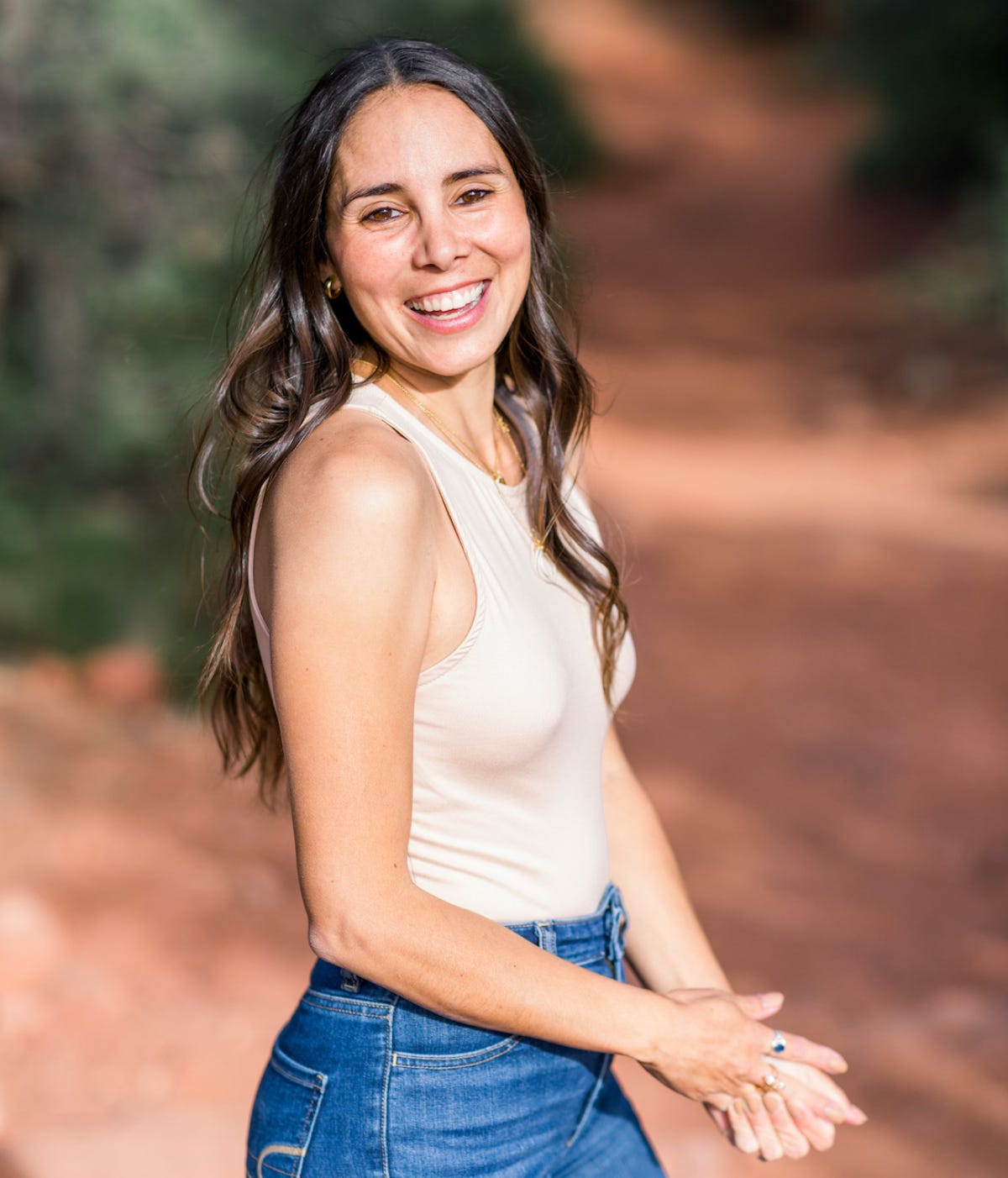
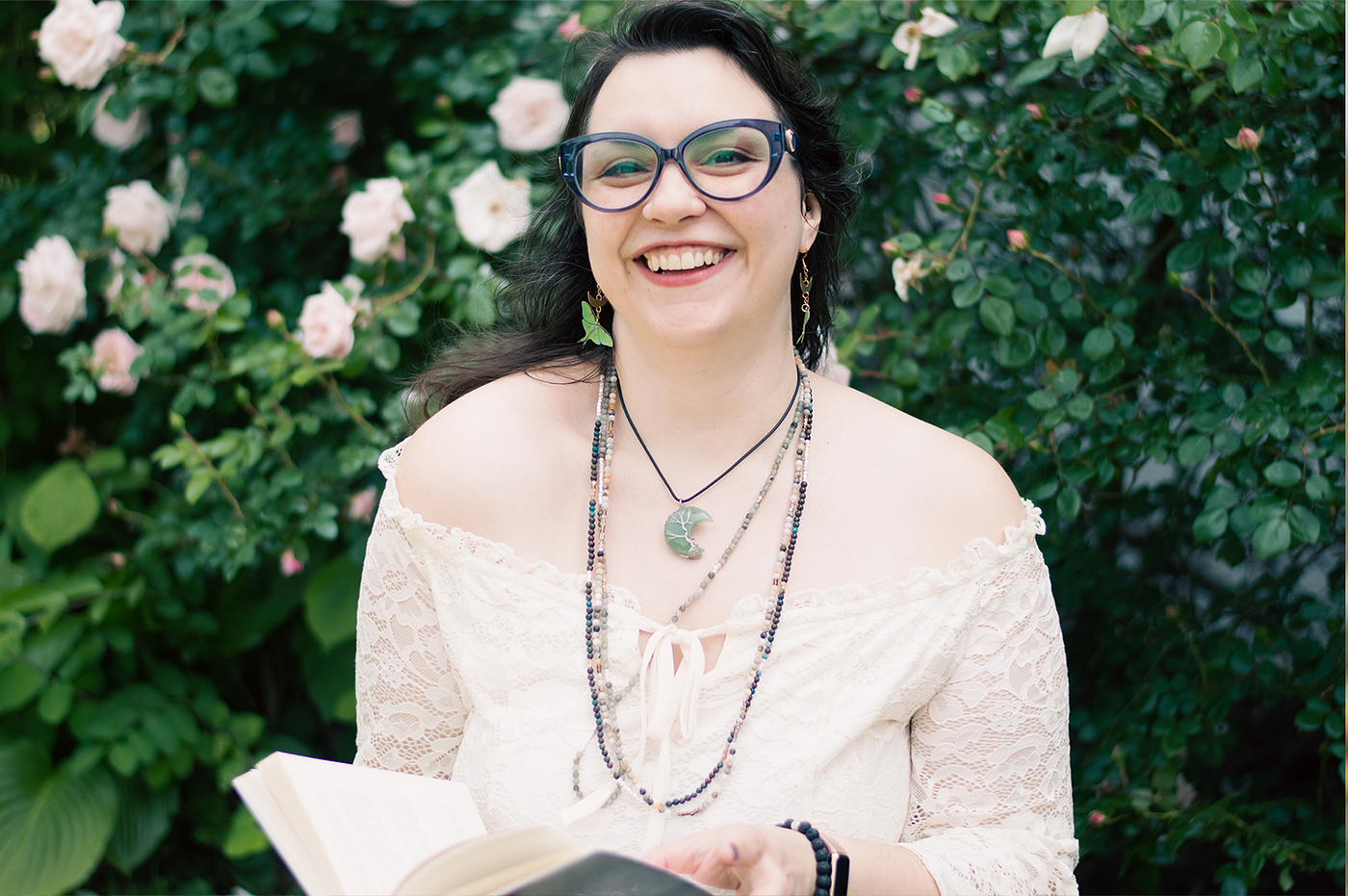
Safrianna Lughna, LCPC, aka the Queer-Spirit Guide, is here to create more love and harmony in the world. Before she pursued her own entrepreneurial dreams, Safrianna was a public school teacher and a trauma therapist. Now, she shares her vision as an author, speaker, CEO, and transformational guide. Safrianna leads Living LUNA, a brand committed to "Uplifting the Others" through education, community, content, and wellness services. She assists visionary leaders and creatives in breaking free from societal constructs, bridging the gap from surviving to thriving with their soul-aligned desires.
Thank you so much for doing this with us! Before we dig in, our readers would like to get to know you a bit more. Can you tell us a bit about your childhood “backstory”?
I was born into the fire. My early life provided an intimate view of generational trauma and what happens when a society avoids its shadows. By the time I was 18, I’d experienced most forms of abuse and traumatic circumstances I’d later learn about as a therapist, aside from war and homelessness. My family of origin played out centuries old patterns and wounds like the scripts were written just for them. But, I always knew there was something off about the energy—there had to be more to life than the pain and suffering I was initiated into.
As a kid, I didn’t fit in anywhere: not at home or school. At school, I was bullied for how I looked, who I befriended, and for my family’s name. At home, I was the “willful child.” I was the “black sheep,” asking critical questions that defied the “because I told you so” mentality.
When my parents divorced, I was 9. Suddenly, I found myself displaced, moving from upstate New York to Maryland where everything was different. Not only was I in a new world with an entirely different culture, but I was thrust into a household riddled with domestic violence and sexual abuse. Quickly, I found myself losing my voice and agency while simultaneously forced into being almost exclusively responsible for my younger siblings.
Admittedly, things didn’t really change in my early adulthood. The parentified child transformed into a wounded healer. I either ended up in toxic, explosive relationships where I had to manage my partner’s emotions, or neglectful ones where I was forgotten—both types recreating the dynamics I had in my early life. But, I was a dutiful woman and a good worker, things I’d been conditioned to be, so I continued without realizing there were any other options.
Then, a therapist I worked with in my mid 20s brought mindfulness, compassion, and radical acceptance into my life, and everything changed. I was a public school teacher at the time, but after four years of teaching and therapy, it was like I woke from a fugue state, a terrible nightmare, and realized I didn’t have to keep living anymore grinding away and sacrificing myself for others.
Can you tell us the story about what led you to this particular career path?
My career is a bit of a grab bag of experiences. My first long term job was as a middle school English and Life Skills teacher. During that time, dozens of LGBTQIA+ or questioning students came to me, opening up after I put a small, rainbow safe space poster in my room. Their vulnerability led to me creating a “Queer Crew” lunch group that we called “Anime Club” because administration and other kids would have bullied them even more for being openly queer. As I recognized the dire need for spaces people like my students could open up, I decided to go to grad school to become a therapist.
Due to the expectation of overworking, the conditions in public schools were ultimately not supportive and my health was declining as someone with C-PTSD, fibromyalgia, and ADHD. After earning my Master’s degree while teaching and license as a clinical counselor, I left teaching to become a full time trauma therapist in center for survivors of domestic violence and sexual assault. It was wonderful. I loved working with fellow survivors, quiet about my own experiences, but finding so much joy and purpose in helping them find self-love again after such terrible things happened. But, my health continued to decline.
After a few years in the nonprofit world, I asked for a raise, but due to the nature of grant and donation based funding, my employer wasn’t able to meet my needs for higher pay to accommodate my medical treatments. Still very much wrapped up in productivity culture, I got a second job in a for-profit therapy agency. While I finally reached the income level I needed to get care for myself, my health didn’t really improve. With the additional workload, I was on a fast-track to complete burnout, seeing around 40 clients a week: most with extreme trauma.
That’s when I started my own business, LUNA Counseling & Creative Services, LLC, aka Living LUNA. By taking things into my own hands, I knew I’d be able to build, bit by bit, something more sustainable, values focused, and with better working conditions as the foundation of the business. I wanted to create an environment for myself, my loved ones, and the world that intentionally steps away from overworking. I wanted to create a brand, community, and social movement that would compassionately fight back against injustices, perpetuation of trauma, hustle culture, and many issues that continue to plague our planet today.
Can you share the most interesting story that happened to you since you began your career?
When I opened myself to taking one-on-one guidance clients after taking a step back from being a fulltime therapist, I was immediately contacted by someone from a friend from my past–nearly 20 years ago at this point.
When I asked this potential client why they wanted to work with me specifically, they said, “I remember how you made me feel back then. You listened to me and didn’t judge. I know you’re the person who can help me navigate the realizations I’m having about who I really am!”
I was blown away. As a therapist, I had numerous students come see me years after I’d left the school system. They similarly remembered how I honored them and listened, so when they decided to pursue therapy, they sought me out as a safe space. What an honor to provide safety for people, especially when I know based on my own history what it’s like to feel unsafe!
You are a successful business leader. Which three character traits do you think were most instrumental to your success? Can you please share a story or example for each?
Idealism – I am a visionary, through and through. Since I was a small child, I imagined a world that was kinder to people, animals, plants, and the planet than the one I witnessed. I was devastated by forest destruction, animal slaughter and living conditions, slavery which still persists today, and the continuance of trauma cycles globally. I want better for humanity.
This constant vision of a better future for all drives me to make the most of my business and life. No matter how awful the world appears to be or what challenges I may personally face, I maintain my optimism, hope, and ideal view for a better future for all.
Flexibility – Flexibility is one of the most important traits we can have for mental health and wellbeing. When we’re rigid, we often find ourselves frustrated with how life is going and unable to adapt. We hold expectations that set us up for disappointment.
When I let my therapy practice go, I had no idea what would come next. I was open to seeing what would happen if I truly allowed the path to unfold for me. As I surrendered to faith in my highest Self, I found ideas flowing, new exciting offers forming, and fresh collaborations that revitalized my joy of writing and retreats. Because of my flexibility, I’ve been able to pivot with my business’s needs and my inspiration, weather unexpected storms in the economy, and listen to the needs of my team rather than asserting my own agenda as the sole vision.
Perseverance – Despite growing up in an extremely traumatic environment which rippled into my adult life, I have maintained a quality of resilience and perseverance through it all. I stand in my power and genuinely believe in my mission to create a world where peaceful harmony is the norm and people can freely be themselves.
Over a decade ago, I co-founded my first business in a partnership that was unsupportive. I provided all of the starting capital and investments, only to find my business partner was self-serving and did not truly want to collaborate. After only a year in business with no profit to show, I filed the Articles of Dissolution and thought I’d never go into biz myself again. But, in 2021, I realized the only way I could truly succeed in my mission was to create something supportive for myself and my team. I didn’t see what we needed in the world at large. So I found supportive professionals to help me hone my vision and filed a new Articles of Incorporation. Today, Living LUNA has become a brand I am truly proud of with a team of incredible people supporting our mission of “Uplifting the Others.”
Ok, thank you for that. Let’s now jump to the primary focus of our interview. The premise of this series assumes that our society still feels uncomfortable with strong women. Why do you think this is so?
We’ve been held back by a lack of compassion for a very long time. Society at large still sees us as weaker, less capable, hormonal, you name the stereotype! We perpetuate the war paradigm in modern society. Us vs. Them mentality is a tale as old as time and we continue to play it out every day: men vs. women, white vs. black, straight vs. queer, our country or religion vs. theirs. This is used to spread division and isolate disadvantaged populations further in order to maintain the status quo and keep those in power from losing that influence.
Women represent the largest collective population that could drastically change how society functions–right around 50%. The fact that nearly half of the world is marginalized simply for their sex-characteristics is unacceptable. We’ve been living in a patriarchal, male dominated society for millenia now. Strong, empowered women represent a possible toppling the status quo. If enough women woke up one day and decided they would not put up with the level of abuse, discrimination, unequal pay, forced narratives, and quit giving in the ways they’ve been expected to, what would happen? I dare to say the world as we know it would cease to be. If you’re not familiar with the 4B Movement in South Korea, look it up sometime. Fascinating stuff and proof of the power that strong, empowered women have on a society at large.
Without saying any names, can you share a story from your own experience that illustrates this idea?
When I was 19, I found myself sitting across from my then boss—an angry, middle aged man who owned a mom and pops’ grocery store. This was the last in my line of predatory, minimum wage jobs before I decided to go to college–the only other path society taught me was possible.
I put in my two week notice to my supervisor, but she told me I had to “take it upstairs.”
As I entered the room, this man I’d only seen perhaps once or twice before in my months working there, glowered. The power differential between us was palpable. He sat like a king on his throne while I came in damp from dishwashing duty.
“So, what do you mean you’re leaving?” he asked.
“I’m going to go to college,” I said. “I want to focus on my studies and become a t—”
He proceeded to tear into me with every insult he could muster, red in the face after only a few words. This man didn’t really want to hear what I had to say. He wanted to try and scare me, maintaining his sense of power and control.
“You’re never going to make it out there,” he said. “It’s a rough world out there for girls like you. You need someone like me to make sure you can survive.”
I saw what the women downstairs were going through. That barely looked like surviving. One of the women was actively doing sex work in the parking lot as our boss berated me so she could make enough money to pay her rent. Meanwhile, the men in the business, all in high up supervisory or management roles unless they were floor stock boys, were getting by just fine.
Somewhere around the moment he barked, “This is your future! There is no future out there for you!” I stood up.
I said, “Thank you for the job opportunity,” and left the room. Of course, I seethed inside that he had the audacity to tell me I would never amount to anything without a man like him to get there. That certainly ended up being far from the truth! The implication was there though. Without a ‘strong’ man, a woman was not going to make it anywhere. The deck has been stacked against us for a long time and anyone standing up against it had to be hammered back into their place.
What should a powerful woman do in a context where she feels that people are uneasy around her?
I believe she should anchor in, stay deeply compassionate with herself, and tune in with her higher self.
“Is this a place where my perspective and contributions will be honored, even if they make people uncomfortable? Or, is this a place where no matter how I show up and what I offer, people will reject me in favor of their outdated ideas?”
Sometimes people are uneasy because we’re helping them expand into an even more aligned version of themselves. This is great! Other times, they’re so deeply in their own shame, fear, or disappointment that they can’t hear us. If they can’t really receive us, it’s not worth pouring our energy into. It’s not a woman’s responsibility to keep people comfortable, but it’s also not our responsibility to pour all of our energy into those who are unable to receive it.
What do we need to do as a society to change the unease around powerful women?
Most importantly, we need to dismantle the Us vs. Them mentality at large. We must renegotiate our need for compulsory societal “norms” and allow people to be themselves whether they fall into those norms or not. Truly, we need to stop equating women with one dimensional caricatures of “femininity” that serve specific roles.
Humans are infinitely complex and unique, and women are people, too. It’s about time we collectively woke up to that!
In my own experience, I have observed that often women have to endure ridiculous or uncomfortable situations to achieve success that men don’t have to endure. Do you have a story like this from your own experience? Can you share it with us?
I could list more than I’d care to admit, but one memory stands out. During my years in the public school system, I only had one male principal. While I interacted with him only when I had to, I routinely witnessed him treat these young, teen girls, his own students, like they were irredeemable and attention starved by publicly shaming them when they’d wear tank tops or shorts. He even bought neon yellow shirts he forced them to wear when they broke dress-code, which he personally watched like a hawk. The boys, many of which wore short shorts and tank tops in solidarity, were not given the same punishment.
Meanwhile, he made many of our female teachers uncomfortable, and in some cases, sexually harassed them. He backed women into their classrooms during their planning periods, comment on their bodies, outfits, and seemed to insinuate their performance reviews would be tied into how nice they were to him. I ended up finding all of this out after signing up to be my school’s union representative. Suddenly, an influx of teachers showed up to let me know about the conditions they were experiencing when no one else could see.
While anyone can experience sexual harassment or be a perpetrator, in our modern society, men in positions of power think themselves untouchable. Until they had someone who could possibly do something, to hold the perpetrator accountable, these women kept quiet because they knew going to HR individually would just lead to more silencing or retaliation. In the end, I was able to advocate on behalf of many of the teachers and staff who felt belittled, aggrieved, and harassed by him. By bringing these offenses to light to the Union and eventually HR, he was removed from his position. I stood in my power and helped others do the same.
In your opinion, what are the biggest challenges faced by women leaders that aren’t typically faced by their male counterparts?
The simplest answer is the pervasiveness of misogyny that exists today and the level of violence women face. While men are impacted by rigid societal standards, too, women are assaulted and killed daily for little things like saying “No.” No one will ever convince me this is normal or okay.
Let’s now shift our discussion to a slightly different direction. This is a question that nearly everyone with a job has to contend with. Was it difficult to fit your personal and family life into your business and career? For the benefit of our readers, can you articulate precisely what the struggle was?
Absolutely. In all of my careers, I have been expected to hold emotional support for my colleagues, give my time freely without compensation, and juggle the work-life balance nonsense on top of my traditional roles. When I branched out into my own business, I had the intention of abolishing these conditions entirely. But, I was still so used to people pleasing, overgiving, and overcommitting, that these patterns continued in different ways.
I’ve had to really look at my priorities and consider what is most important to me. I’ve realized first it is myself and my self-care. Next is my loved ones. Then my business. While my business supports my loved ones and I, if it is not sustainable then it goes against what Living LUNA was founded for in the first place. Taking care of me has become essential.
What was a tipping point that helped you achieve a greater balance or greater equilibrium between your work life and personal life? What did you do to reach this equilibrium?
During a large collaborative project I led, I recognized I was caught in a cycle of overdoing everything. While this had been expected of me from others in my past, it wasn’t realistic for me to keep going this way. My burnout was becoming severe, and my chronic illness was flaring, leaving me with little energy to give anyone, let alone myself. I needed a radical change.
I started exploring the reality of my health and burnout with my partners. I got honest with myself and recognized many of the metrics of success I was using were being measured against a neurotypical, ableist society that promotes compulsory overwork and self-sacrifice. I am all about living by my own design! So, I scrapped the idea of pushing through to make all my big goals happen in a short period of time and began to prioritize my health and self-care plan above all else. I began by shortening my work window and offering targeted training to my team so I could delegate more effectively. Now, I work about 25 to 30 hours a week rather than the 60 to 80 that used to be my norm.
Ok super. Here is the main question of our interview. Based on your opinion and experience, what are the “Five Things You Need To Thrive and Succeed as a Powerful Woman?” (Please share a story or example for each.)
Safrianna’s Five Things You Need To Thrive and Succeed as a Powerful Woman on YouTube
1 . Self-Awareness: Get to know yourself inside and out.
I started seeing a therapist when I was 11 and have been actively engaged in some form of self-reflective practice since then. Despite the stigma surrounding mental health services, I see them as essential for a healthier future. Being willing to actually look at myself has helped me see my own shadows for what they are: opportunities to grow, signals for what I don’t want, and hidden gems of wisdom. Looking at myself, my patterns and cycles, has liberated me from repeating the same mistakes over and over.
2 . Self-Empowerment: Your power comes from within you!
Often, we want to externalize validation–looking to others to tell us what to do, how to be, or what is the right way to do something. My own lack of self-empowerment backfired on me frequently in the past. In one year I spent over $30,000 just on coaching for various aspects of my life. In most of those cases, I was given a rigid framework to apply for success—but these frameworks did not match my situation nor my values or worldviews. Rather than going within to see what was right for me, I kept saying yes to every coach or consultant who told me they had a solution for why I wasn’t seeing the results I desired.
Once I got out of my own way and recognized I was dealing with Imposter Syndrome and self-doubt, I found supports who could simply prompt me and help me reflect my own soul-level alignment back to them. That way I could articulate my own desires and empower my vision in the world. Self-empowerment also means not allowing others to beat us down or convince us to abandon our dreams.
3 . Self-Ownership: You’re responsible for yourself and your actions.
It can be easy to blame others for our problems—however, we’re the ones that make the choice to stay in our present situation (unless we’re children). In my early adulthood, I believed I was a victim of circumstance, powerless to determine my own path as it was already predestined for me. Because of my adverse childhood experiences, I just assumed that was how the world worked. When I stepped into self-ownership and started taking responsibility for the situations I was in, I also found myself feeling more capable of changing my circumstances by realizing that I have control of how I choose to live my life. If I didn’t like a job, I spoke up for myself. If that didn’t change things, I left the position to find or create something better. If a relationship wasn’t healthy, I did my part to own what I was bringing to the dynamic and did my best to work on my own behaviors and patterns. I made requests to others, drew boundaries, and took responsibility for my own wellbeing. Suddenly, the unaligned situations and people began to fade from my life, all because I realized how I was co-creating misery by continuing to engage!
4 . Self-Expression: Share your message and truth with the world.
It took me a long time to liberate my voice. I could share stories for days of how many times I was silenced by grown-ups, unaligned partners, and even social media. But, at the end of day, it was my own fear of speaking my truth that held me back. I was so afraid that if I spoke of my mission, purpose, and my life experiences that I would be attacked, harassed, or even “canceled.”
However, once I moved through that fear and learned to just “Do it scared,” everything changed. People started to respond to my videos, articles, and authentic shares. Instead of hatred and more cruelty, I found myself receiving predominantly uplifting feedback, affirming my voice was resonating with others all over the world: queer people thrilled to see a business owner who was out and proud; spiritual entrepreneurs once afraid to take the leap into speaking their own truth until they heard me; and polyamorous folks cheering on the reality of a polyamory informed business. While I was afraid to express myself, I was unable to inspire others. Now, I do it every day. My message is needed, and yours is, too!
5 . Self-Love: When you genuinely care for yourself, everything shifts.
Self-love really helped me cut through the noise of our patriarchal society. Unfortunately, I didn’t genuinely love myself until I was 29. I thought I deserved the things I’d been through, the struggle and toil of my life. One day, I was standing in front of a giant mirror in a church bathroom when I looked up and met my own eyes. Emotion flooded through me as I found myself smiling, leaning in to study the lines and colors of my face. Suddenly, I heard my heart and soul saying, “I love you. You are the woman I am in love with.” I immediately wrote a poem about it! I still consider that moment the major turning point of my life.
Now, I live daily with self-love for all of me–light and dark. I do not judge myself. When unkind words surface in my mind, I turn toward them with compassion and curiosity. I am kind to myself and treat myself with the same dignity and respect I treat others. It’s been a game changer, and there is no going back.
We are very blessed that some very prominent names in Business, VC funding, Sports, and Entertainment read this column. Is there a person in the world, or in the US with whom you would love to have a private breakfast or lunch with, and why? He or she might just see this if we tag them.
I’d love to speak with others who have a bigger vision for humanity than profits. I want to co-create a more sustainable, humanitarian, ethical, and loving planet. I admire the work of Malala Yousafzai, Suzanne Simard, Tara Brach, Alexandria Ocasio-Cortez, and of course, Oprah, to name a few!
Thank you for these fantastic insights. We greatly appreciate the time you spent on this.