The clearest example in my own work came from education. Early on, in several places, we helped put equipment into schools, and in some cases, the classroom carried on exactly as before.
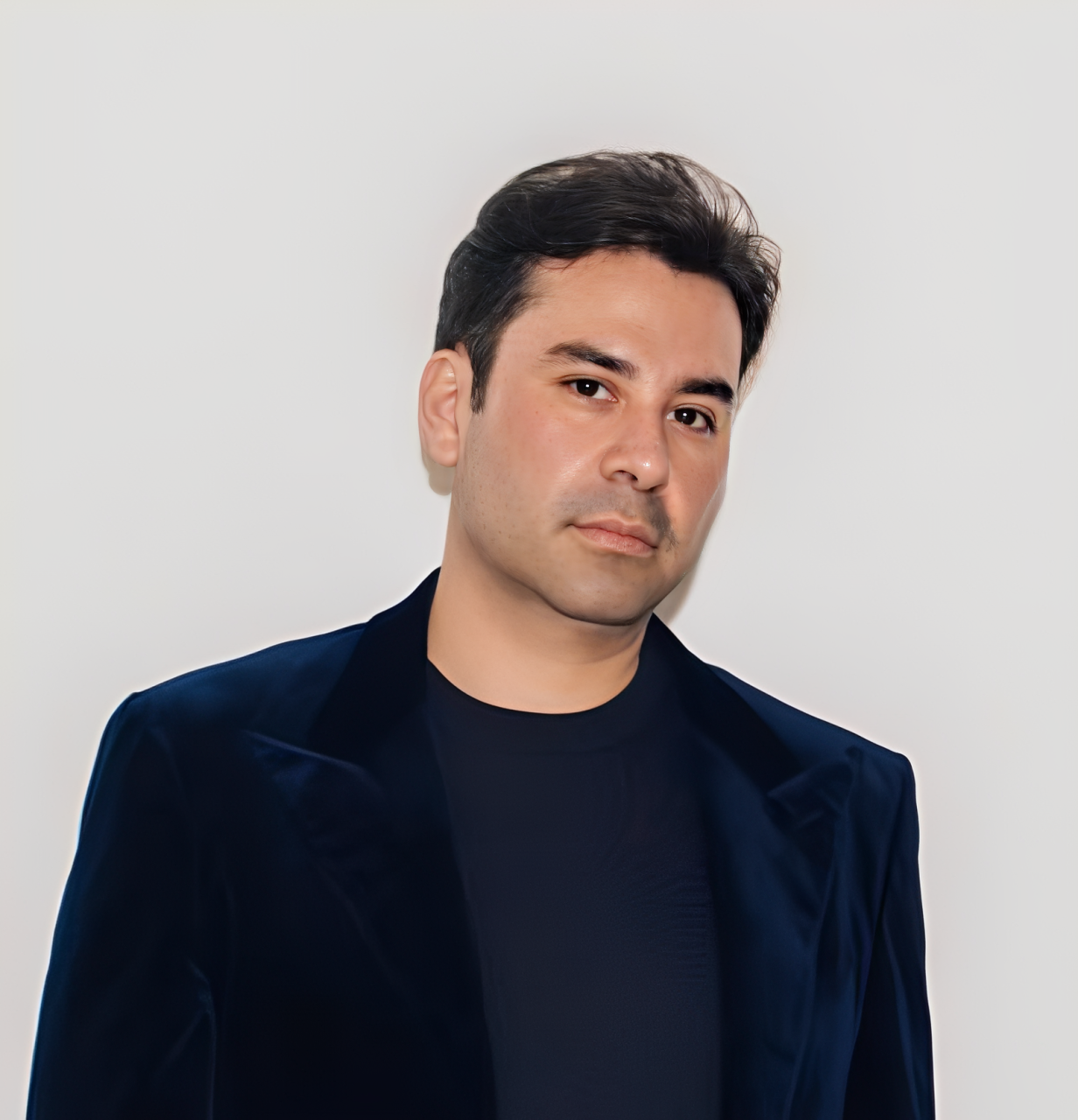
As a part of this series, we had the pleasure to interview Mauro Alberto Monarris.
Mauro Alberto Monarris is Deputy General Director at Rimova, a privately owned Swiss group that works with governments on public infrastructure, education, health, innovation and research, largely through public-private partnerships. He has been with the group for over a decade. He is a Global Ambassador and board member of the Global Gift Foundation, and Rimova was the presenting partner of the Global Gift Gala Cannes in 2026. Outside Rimova, he is a co-founder of Mon Collectionneur, a French wine business, and a private collector of fine art. He works between North America and Europe.
Thank you so much for joining us in this interview series! Before we dive into our discussion, our readers would love to “get to know you” a bit better. Can you share with us the backstory about what brought you to your specific career path?
I grew up around industry. My family’s relationship with it goes back more than two centuries, to metalworking in Southern Italy. The idea that you take raw material and turn it into something useful was never a career decision for me; it was simply what the people around me did. I didn’t have a plan, though. I actually started out working with numbers, rather than machinery. I like numbers because they’re not open to negotiation. So it was less of a path and more of an interest in making things and a habit of looking for evidence. The scale changed over the years, but those values stayed the same.
Can you share the most interesting story that happened to you since you started your career?
There are three from the early part of my career that I still think about. The first was the acquisition of a train in Japan for the Mexico to Querétaro rail project. I was very young to be anywhere near something of that size, and I spent most of it acutely aware of how much I did not know. That turned out to be useful. You learn more in a room where you are the least experienced person there than in one where you are the most.
The second was a financial restructuring in Las Vegas, at a point when the position was under serious pressure. I worked on the plan to address the debt and get the project back onto a sustainable footing. It taught me financial discipline in the only way anybody really learns it, which is in difficulty. Nobody builds discipline when a project is going well.
The third is the one I am proudest of. I worked on developing and implementing educational technology programmes that eventually supported the deployment of more than three million tablets into schools. Watching something go from a plan on paper to that scale, in actual classrooms, is rare. Most ideas don’t survive the distance between the two.
Three very different pieces of work taught me the same thing. Stay curious, take the difficult problem rather than the comfortable one, learn quickly, and aim for something that will still be useful in ten years.
Can you please give us your favourite life lesson quote? Do you have a story about how that was relevant in your life?
You learn more from failure and your own mistakes than you ever do from success. Success is a poor teacher because it never tells you which part worked. You did 20 things, the project went well, and you concluded that all 20 were right. In reality, about three of them were, and you won’t discover which three until next time, when the other 17 let you down.
The clearest example in my own work came from education. Early on, in several places, we helped put equipment into schools, and in some cases, the classroom carried on exactly as before. When we looked at it honestly, the reason was that nobody had trained the people who were meant to use it. We had solved the logistical part of the problem and left out behaviour change. Almost everything we do in education now comes out of that. Had we got it right the first time, I don’t think we would have understood it nearly as well.
Is there a particular book that made a significant impact on your leadership style? Can you share a story or an example of that?
I have to be honest and say that no single book shaped it. Instead, learning from failure did, and what made that practical was the habit of writing it down.
The most useful reading I have done isn’t management writing at all. It is reviews of public projects that went wrong. There is a whole literature on them, which is mostly dull and largely unread. They are written after the enthusiasm has worn off, when nobody is selling anything anymore, and they are far more candid than anything published when a project is still underway. What you realise again and again is that the problem was clear from the start. It wasn’t that we didn’t have enough information; the problem was that nobody was willing to act on it while there was still time. I have tried to be the person in the room who raises uncomfortable questions early, and that comes directly from reading many accounts of what happens when no one does.
What do you think makes your company stand out? Can you share a story?
We work in the space between an idea and its execution, which is narrower than people assume and considerably harder.
Governments are rarely short of ambition. They understand what their populations need and what has to change. The distance between a national intention and a working system is where things come apart, because closing it requires engineering, manufacturing, finance, technology, education and long-term coordination to move at the same time. Our job is to bridge that gap and keep the public purpose of the project intact.
Two things follow from that in practice. The first is that we keep almost everything in-house, including design, engineering, software, manufacturing and deployment. That’s not common practice because it’s expensive. The reason is compliance. When you work for governments, there is material that cannot leave the building, and once you have subcontracted a stage, you have lost control of it.
The second is the time scale. We don’t think in quarters. Something we begin now, may not have an impact for a decade, and by then the government that commissioned it will probably have changed twice.
Here’s an example of how that changes things. When we consider a motorway project, we don’t just ask whether we can build it. We ask whether the area it passes through is economically depressed and whether the road will change that, what happens to carbon across the life of it, and whether the people building it will be properly paid. If the project will have a negative impact, it’s not for us, however good the commercial case.
You are a successful business leader. Which three character traits do you think were most instrumental to your success? Can you please share a story or example for each?
Patience, first, although I must admit that it’s a discipline I impose on myself rather than my natural temperament. Wine has taught me more about this than industry has. A vineyard can’t be told to move faster. You can’t negotiate with the seasons, and no technology reproduces what a particular piece of land does to a grape. Our factories take years to build, and education reform takes considerably longer than that. If you need to see the result of a decision to feel that you made one, this is the wrong industry.
Second, I prefer evidence over instinct. My instincts are no better than anybody else’s, and I have learned to distrust them when a figure is telling me something different. I have changed my position on projects I was personally attached to because the assessment said something I didn’t want to hear. That is the whole purpose of having an assessment.
Third, and this is the one that matters most, is saying things plainly, even if they’re uncomfortable. If a programme is behind, I would rather say it is behind than describe it as being in a challenging phase. Public institutions are dealing with many people who tell them what they want to hear. Being the one who doesn’t might cost you in the short term, but it’s worth far more over a decade.
Leadership often entails making difficult decisions or hard choices between two apparently good paths. Can you share a story with us about a hard decision or choice you had to make as a leader?
The hardest decisions are the projects we turn down, and they are hard in a way that nobody ever sees.
Every project has to protect three things: the people carrying out the work, the environment where it takes place, and the quality of what is left behind. We use that to assess opportunities before we look at the commercial case, not afterwards. If a project can’t answer those questions well, it won’t go forward, and we don’t go back to the table just because the numbers improve.
I have had to decline work on the basis that we could not answer those three questions honestly. What makes it difficult is that refusal is invisible. There is no announcement, no coverage, nothing to point at a year later. You carry the cost, and nobody ever learns why you carried it. That was the part of the job I found hardest to get used to.
Ok, thank you for that. Let’s now jump to the primary focus of our interview. Most of our readers — in fact, most people — think they have a pretty good idea of what a C-Suite executive does. But in just a few words, can you explain what a C-Level executive does that is different from the responsibilities of other leaders?
Most leaders are accountable for delivering something. At this level, you are accountable for having agreed to it in the first place, which is a lot more uncomfortable. If a project goes badly, someone below me can reasonably say the brief was wrong. I can’t say that. I approved the brief.
The other difference is the timeframe. Most roles in a company are assessed against this year. Mine has to be assessed against a period longer than my own tenure, and I won’t be in the room for the verdict.
What are the myths that you would like to dispel about being a CEO or executive? Can you explain what you mean?
The first is that the person at the top decides things. Most of what reaches me has already been shaped by twenty people, and my contribution is quite often to slow it down and ask what we have not looked at. Deciding is a smaller portion of the job than people imagine.
The second is speed. There is a widespread belief that senior executives move fast and that this is a virtue in itself. In our sector, moving fast is usually a sign that somebody has skipped a step, and the step they skipped is normally compliance.
The third is visibility. People assume seniority means standing in front of things. A great deal of this work is the opposite. There are programmes I have spent years on, that I will never be able to describe publicly. That is a permanent condition of the job rather than a phase it passes through.
What are the most common leadership mistakes you have seen C-Suite leaders make when they start leading a new team? What can be done to avoid those errors?
The most common is arriving with a plan. People want to demonstrate that they were the right appointment, so they change something in the first month. It is almost always the wrong thing, because they have not yet met the person who could have explained why it was set up that way.
The second is confusing the organisation chart with where the knowledge sits. The people who understand a project best are rarely the ones sent to brief you on it.
The remedy for both is dull. Wait longer than is comfortable, and ask the people two levels down what they would change. They will tell you, and they are generally right.
In your experience, which aspect of running a company tends to be most underestimated? Can you explain or give an example?
Administration. Compliance, documentation, quality systems, the audit trail. It is the least interesting part of the business, and it determines whether we are permitted to work at all.
We run an integrated management system covering worker protection, environmental standards and quality. It is not a marketing asset, and we do not treat it as one. It exists because if it fails, a contract fails, and in our sector, a failed contract isn’t just a lost account; it’s a school or a hospital that doesn’t get built.
People also underestimate how early this has to be in place. Protecting workers, the environment and quality can’t be brought in once a project is underway. They’re either part of the first conversation, or they aren’t really there at all. Progress that compromises any of the three may look efficient at the time, but it creates a debt that someone else inherits.

Ok super. Here is the main question of our interview. What are five things you wish someone told you before you began leading from the C-Suite? Please share a story or an example for each.
1. The results will arrive long after you’ve gone.
I understood this as a fact long before I understood it as a feeling. We are building manufacturing capacity now that will not reach full output for years, and running education programmes whose effects will appear in a generation of students I will never meet. You have to learn to be satisfied with decisions rather than results, because the results arrive late and often to somebody else’s credit.
2. Most of the job is deciding what not to do.
I assumed the role would be about choosing between good options. In practice, a great deal of it is declining things that look good. The projects we have turned down have shaped this business more than most of the ones we accepted, and not one of them appears anywhere on the record.
3. You won’t be able to explain much of your work.
This is specific to government contracting, and it is absolute. There are things I can’t discuss with colleagues, let alone publicly. Nobody warned me how isolating that becomes over a long period, or that it would affect how my own family understands what I do for a living. I have made peace with it. I would have made peace with it sooner had someone told me about it.
4. The people closest to the work know more than you do.
The best idea I’ve been involved with in education didn’t come from me. It came from people who had spent years watching equipment arrive in schools where nobody had been trained to use it. My contribution was to back it and argue for it with a government. It’s common at this level to treat the best idea as one you ought to have had yourself, and that’s expensive.
5. You are holding it in trust rather than owning it.
This is the one I most want to pass on. Take a vineyard, for example. You can care for the land, cultivate it and leave your mark on it, and you never actually possess it. You receive it from the people before you and hold it for the people after. A company works the same way, and so does a family name. Once you see the role that way, a surprising number of difficult decisions become straightforward.
In your opinion, what are a few ways that executives can help to create a fantastic work culture? Can you share a story or an example?
I would be careful with the word ‘fantastic’. A lot of what makes a place decent to work is administrative rather than cultural.
Pay people correctly and on time. Make the safety standards real rather than documented. Credit the person who did the work to the client, by name. Those three do more than any published set of values.
Beyond that, the thing I would point to is telling people what the work is actually for. Someone forming metal for a school desk is a long way from the classroom that desk ends up in. If nobody tells them where it goes, it is just metal. But if they make the connection, the work changes. It costs nothing, and few people bother.
You are a person of great influence. If you could start a movement that would bring the most amount of good to the most amount of people, what would that be? You never know what your idea can trigger. :-)
Two things, and they belong together.
The first is treating education as a policy question rather than a budget line. The systems most countries are running were designed for a world that no longer exists, and certainly not for people whose attention has been reshaped by the way we now live. That is not a complaint about young people. It is a design problem, and it needs reform at the level of policy rather than another round of equipment. A school is a statement about what a country believes its future is worth. Very few are treated that way.
Artificial intelligence has a part in this, and I would want it handled carefully. It should not replace human thought or reduce the role of teachers. Used sensibly, it widens access to knowledge, supports educators and helps institutions understand what an individual student actually needs. The point is to make teachers more capable, not less necessary.
The second is making public decisions on evidence. Governments have had serious data capability for decades, long before the current conversation about AI. What they haven’t had is the habit of putting the results in front of the public in a form that is legible and doesn’t belong to one side of the argument. A number holds no political position. If a community can see what its schools, its hospitals and its roads are genuinely doing, an election starts to become a decision about evidence. At present, a great deal of it is a decision about fear.
If I could start anything, that would be it. It doesn’t have a good name or a logo, which is probably part of the reason nobody has.
How can our readers further follow you online?
LinkedIn or Instagram is the best place to find me.
Thank you for sharing these insights!