We approached allergy care the way the beauty industry approaches skincare, as a routine that works with your body over time rather than a pill that masks a symptom once it’s already flared.
As a part of this series, we had the pleasure to interview Lorne Lucree.
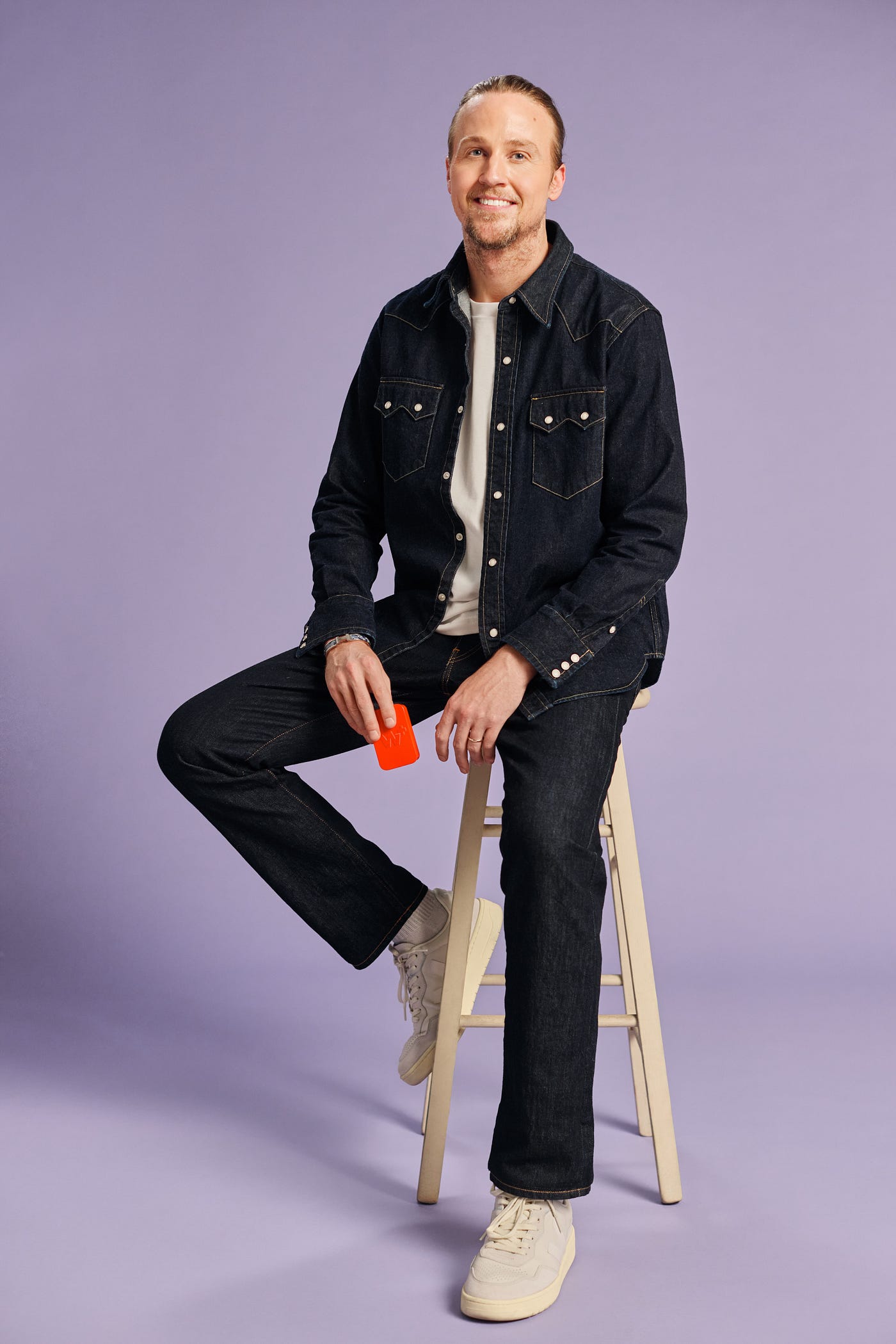
Lorne Lucree is the Founder and CEO of Wizard Wellness, a nasal wellness brand pioneering a microbiome-first approach to allergy and sinus health. Before launching Wizard, he built his career in the beauty industry, giving him a unique perspective on how wellness, personal care, and consumer behavior intersect. He founded Wizard to reimagine nasal care as an everyday wellness category, helping people support their body’s natural defenses rather than simply masking symptoms.
Thank you so much for joining us in this interview series! Before we dig in, our readers would like to get to know you a bit more. Can you tell us a bit about your “backstory”? What led you to this particular career path?
I’ve spent more than 20 years in the beauty industry, developing products at Procter & Gamble, L’Oréal, Estée Lauder and Unilever Prestige, and working with luxury beauty incubators. My background is in formulation science, ingredient technology and sustainability, and over the years I’ve helped create products for brands like Clinique, Tatcha, L’Oréal, R+Co, IGK and ONE/SIZE by Patrick Starr, including its On ’Til Dawn Setting Spray.
But Wizard really started from a personal frustration. I’ve dealt with allergies my entire life, and for years I relied on the same drugstore sprays and pills as everyone else. Then, while traveling in Spain, I forgot my nasal spray and picked one up from a brand I’d never heard of. It worked incredibly well, but what really caught my attention was the ingredient list. It looked more like a skincare product than an allergy spray, with amino acids, vitamin C and botanical extracts. I remember thinking, “This is the first time I’ve actually been excited to use a nasal spray,” which is not something I ever imagined saying.
That experience made me question why allergy care had barely evolved while skincare had become so thoughtful and ingredient-driven. I couldn’t shake the idea. I had to build the company, because if I did not, someone else eventually would. We founded Wizard Wellness in 2024 and officially launched in January 2026.
Can you tell our readers what it is about the work you’re doing that’s disruptive?
The bigger shift we’re riding is that people have stopped waiting for permission to take control of their own health. They’re reading their own labels, managing their own routines, and thinking about wellness not as something you fix when it breaks, but as something you invest in daily to add good, healthy, high-functioning years to your life. Allergy care somehow got left out of that entire movement. Most people are still reaching for the same steroid sprays and antihistamines they’ve used for decades, not out of loyalty, but out of resignation. We surveyed nearly 600 allergy sufferers and only 7% said they were loyal to their current treatment. People weren’t attached to these products. They were settling, because nobody had given them another option.
So we built Wizard at the exact point where three things are colliding: consumers taking ownership of their health, the explosion of microbiome science, and the merging of beauty and wellness into one category. We approached allergy care the way the beauty industry approaches skincare, as a routine that works with your body over time rather than a pill that masks a symptom once it’s already flared. The first step is Cleanse, using our Sinus Rinse or Advanced Sinus Rinse to flush away pollen, dust and other irritants before they keep triggering inflammation. Next is Relieve, with our Daily Nasal Spray and Happy Nose Nasal Stick to hydrate, soothe and deliver fast, drug-free relief throughout the day. The final step is Balance, where our Multi-Benefit Oral Strips support the nasal microbiome and your body’s natural defenses over time. Each product works on its own, but they’re designed to work even better together. The science is the whole point, so we backed it with rigorous clinical validation, evaluating every product and the complete ritual in IRB-reviewed studies with board-certified ENTs alongside consumer perception testing.
We also believed allergy care deserved a complete design reset. Walk down the allergy aisle and everything looks clinical, like something you hide in a cabinet and feel vaguely unwell just looking at. We wanted Wizard to feel like a beauty brand, not a medicine-cabinet staple, with packaging people actually want to leave out on their bathroom counter next to their serums. If you’re using something every day, it shouldn’t feel like a chore. It should be effective, thoughtfully designed, and something you genuinely enjoy reaching for. That’s the real disruption: allergy care that fits into how people already think about their skin, their gut, and their long-term health, instead of asking them to treat their nose like a problem to be medicated.
Can you share a story about the funniest mistake you made when you were first starting? Can you tell us what lesson you learned from that?
Early on, I was so convinced we were a beauty brand that I almost forgot we were an allergy brand. We obsessed over how gorgeous everything looked, the packaging, the counter appeal, the whole “you’ll actually want to display this” vision, and in one of our first consumer tests someone picked up the product, loved it, and then asked, completely sincerely, what it was for. That was humbling. It turns out you can make allergy care beautiful, but if a shopper can’t tell in three seconds that it clears their nose, the pretty bottle is just decoration. The lesson stuck: lead with the benefit, then make it beautiful. Never the other way around. In a category people shop with watery eyes and a pounding head, clarity is the kindest thing you can offer.
We all need a little help along the journey. Who have been some of your mentors? Can you share a story about how they made an impact?
Two people shaped how I lead and how I bet on myself. The first is Reuben Carranza, Group CEO of Amika, Ethique and Eva NYC, who taught me that kindness and authentic leadership aren’t soft skills, they’re the whole job. Reuben showed me that how you treat people on the way up is not separate from building a great company, it is building a great company. In an industry that can reward ego, he leads with generosity and honesty, and watching him do it gave me permission to run Wizard the same way, as someone people actually want to work with and for.
The second is Kim Burrs, a true beauty legend, who taught me the importance of taking risks and trusting my own intuition. Kim has an instinct for what’s next that most people only recognize in hindsight, and she pushed me to stop over-engineering every decision and start believing in my gut. Wizard itself is proof of that lesson. Creating a category nobody asked for, in an aisle nobody loves, is not a move you make from a spreadsheet. It’s a move you make because you feel it’s right and you’re willing to be wrong. Kim is the reason I had the nerve to try.
In today’s parlance, being disruptive is usually a positive adjective. But is disrupting always good? When do we say the converse, that a system or structure has ‘withstood the test of time’? Can you articulate to our readers when disrupting an industry is positive, and when disrupting an industry is ‘not so positive’?
Can you share some examples of what you mean?
I think the best disruption comes from solving a problem that people genuinely want fixed. Listening to customers is the first step in building something that better suits their needs.
When we looked at allergy care, we saw a category that hadn’t evolved alongside the rest of wellness. Consumers had become used to more thoughtful, ingredient-focused, and personalized approaches in areas like skincare, and we believed allergy relief deserved that same level of attention.
At the same time, creating something new comes with a responsibility to earn consumer trust. Wellness has seen a lot of trends come and go, and some of them have made big promises without the science to back them up. We wanted to take a different approach by pairing innovation with the clinical rigor people expect. Every Wizard product, along with the full system, went through IRB-reviewed studies with board-certified ENTs because we believe new ideas still need strong validation behind them.
Retail was another place where we thought carefully about the consumer experience. While an online-first model may have been the easier path, we knew people already shop for allergy relief alongside their everyday essentials. Being available at retailers like Walmart, CVS and Target allows us to meet consumers in the moments when they’re already looking for solutions.
For us, disruption is about making allergy care feel more modern, more effective and more enjoyable, while respecting the things that matter most: trust, accessibility and science.

Can you please share 5 ideas one needs to shake up their industry?
1. Find the gap people have stopped noticing.
The thing that surprised me most was how complacent allergy sufferers were, myself included. We had all gotten used to the same routines and the same products, even if they weren’t delivering the experience we wanted. That familiarity made the opportunity easy to miss. Sometimes the biggest opportunities are hiding in the things people have stopped questioning.
2. Borrow inspiration from industries that understand behavior.
Beauty has done an incredible job of making daily care feel intentional. People understand the value of a routine, the importance of consistency, and the experience of using a product. We brought that same mindset to allergy care by creating a three-step daily system inspired by skincare. The goal was to make allergy support something that could naturally fit into people’s lives, because consistency is what drives results.
3. Balance speed with rigor.
Coming from large CPG companies, I was used to having extensive data and resources before making decisions. Building Wizard taught me how to move with more agility while still being thoughtful. You have to make decisions with the information you have, stay close to feedback and adjust quickly when needed. Throughout that process, clinical validation remained a priority. We conducted IRB-reviewed studies with board-certified ENTs and consumer perception testing across every SKU.
4. Meet customers where they already shop.
Retail was a priority from the beginning because that’s where consumers are already looking for allergy solutions. Depending on the retailer, up to 96% of allergy purchases happen in store. Our first retailer meeting happened in February 2025, while we were still in R&D, and we completed our national rollout across Target, Walmart and CVS, reaching more than 4,000 doors within four weeks.
5. Treat education as part of the product experience.
One of the biggest challenges has been helping consumers rethink what allergy care can look like. Skincare shoppers are already familiar with concepts like the microbiome and barrier health, but those ideas are newer in allergy care. A big part of our work is helping people understand that the nose deserves thoughtful, daily care too.
We are sure you aren’t done. How are you going to shake things up next?
While we may have just launched, we’re already deep into what comes next. I’m a product person at heart, so there’s always a long list of ideas we’re chasing, and our innovation pipeline is full of newness this category has frankly never seen before. We’re not interested in making a slightly better version of what already exists. We’re building formats, rituals and technologies that don’t have a shelf yet, because that’s what real category creation looks like.
A lot of that momentum comes from growing alongside our retail partners. Our relationships with Walmart, CVS and Target have been true partnerships from day one, and we’re expanding access together, reaching more consumers across the country and deepening our footprint in the markets that are responding. Watching retailers lean into something genuinely new in an aisle that hasn’t changed in decades tells us the appetite is real, and it gives us the runway to keep pushing.
But the bigger opportunity is the one we set out to own from the start: redefining how people think about nasal care entirely. For years, allergy relief has been something you reach for only when symptoms show up. We believe in a completely different model, one built on daily care, beautiful design and stronger science. The nose is one of the most important ways our bodies interact with the world, and it has been overlooked for far too long. We intend to keep pioneering in this space, keep creating the category as we go, and keep building Wizard into the brand that changed what allergy care could be.
Do you have a book, podcast, or talk that’s had a deep impact on your thinking? Can you share a story with us? Can you explain why it was so resonant with you?
Honestly, between building a company and raising a family, I barely have time to read anything these days. The reading I do actually get to do is to my daughters at night, and one of my favorites to read to them is Oh, the Places You’ll Go! It sounds funny to cite a kids’ book as a business influence, but it’s a better founder manual than most of what’s on the shelf. It’s all in there: the thrilling start, the inevitable slump, the lonely stretches where nothing’s working, and the reminder that you keep going anyway. Building Wizard has been every one of those pages, usually in the same week. Reading it out loud to my kids is a nightly reminder that the hard parts aren’t a detour from the journey, they are the journey, and that the whole point is to keep moving toward the places you haven’t been yet.
Can you please give us your favorite “Life Lesson Quote”? Can you share how that was relevant to you in your life?
“If you don’t build it, someone else eventually will.” It’s the exact thought I had standing in a hotel room in Spain holding a nasal spray that read like a skincare product, and it’s the thought that wouldn’t let me go back to my comfortable career and forget about it. I’m a product person at heart, so I see gaps everywhere, but most of them you can admire and walk past. This one I couldn’t. The quote is really a dare: conviction only counts if you act on it before the window closes. Wizard exists because I decided I’d rather be the one who built it than the one who watched someone else do it.
You are a person of great influence. If you could inspire a movement that would bring the most amount of good to the most amount of people, what would that be? You never know what your idea can trigger. :-)
Seasonal allergies impact millions of people, and for many, feeling congested or uncomfortable for part of the year has become so normal that they don’t even question it anymore. I think we’re moving toward a future where we stop accepting everyday discomfort as something we just have to live with.
We’ve become really good at reacting when something goes wrong, but there’s a bigger opportunity in building routines that help support our bodies before we get to that point. That’s the approach we’re taking with allergy care: creating something people can use consistently and proactively, not just when symptoms flare up.
If I could hope for one thing for anyone managing an ongoing condition, it’s that care starts to feel less like a compromise. People deserve solutions that are proactive, effective and thoughtfully designed, but also enjoyable enough that they actually want to make them part of their routine.
How can our readers follow you online?
You can find me at @lornewizard on Instagram and @lornelucree on Tiktok, and Wizard at wizardwellness.com and @wizardwellness on Instagram and TikTok, plus Facebook (facebook.com/wizardwellness) and YouTube (@WizardWellness). Products are also at Target, Walmart, CVS, Amazon and TikTok Shop.
Thank you so much for the time you spent sharing these insights with us. We wish you continued success!