After practicing meditation every day for eight weeks, my health issues resolved. I continued to meditate every day, and after about a year, I heard the call to teach.
As a part of my series about “How To Develop Mindfulness”, I had the pleasure of interviewing Marcy Westcott
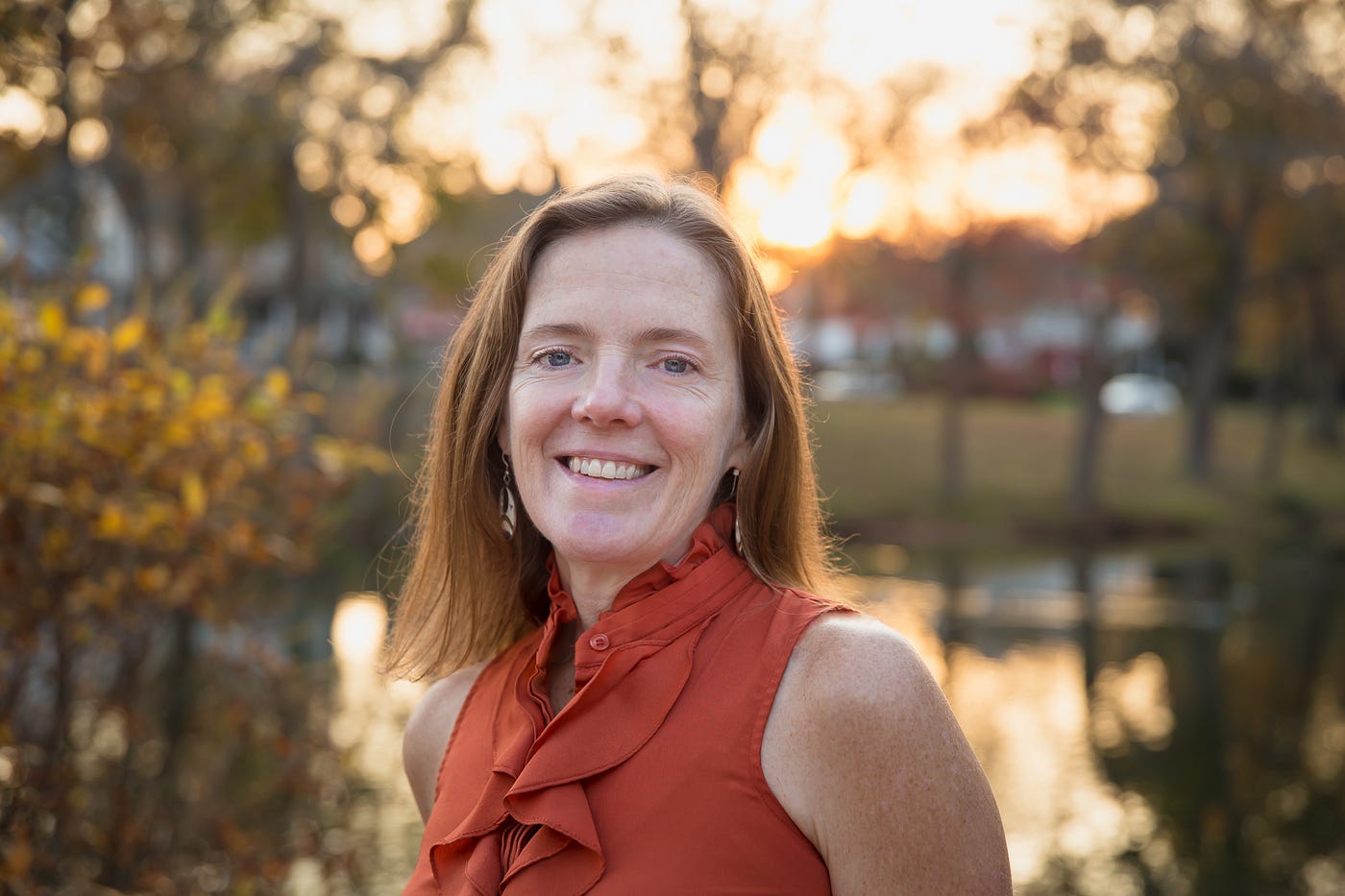
Marcy Westcott is a highly sought-after international mindfulness and meditation teacher certified through the McLean Meditation Institute. She is the author of the recently released book, Searching for Sanity. Marcy is the winner of the 2025 NAWBO Inspiring Woman of the Year Award.
Thank you so much for doing this with us! Our readers would love to “get to know you” a bit better. Can you share with us the backstory about what brought you to your specific career path?
I had a very successful twenty-year corporate career in a male-dominated industry. I worked 70 hours a week in a toxic, overwhelming environment. After fifteen years of that pace in that kind of environment, I developed high blood pressure, insomnia, digestive issues, and took medication for anxiety. All of that was a result of not managing the stress and pressure of my job. At year twenty, I left my career due to burnout. I continued to carry that stress and anxiety in my nervous system for several years because I didn't know how to release it. A friend talked me into going to a yoga class one night, where I meditated for the first time. It was the most profound experience I’d ever had. After practicing meditation every day for eight weeks, my health issues resolved. I continued to meditate every day, and after about a year, I heard the call to teach. I went into training and earned my certification as a meditation and mindfulness teacher.
Can you share the most interesting story that happened to you since you started your career?
In 2023, I experienced a series of three crises, each separated by just a few weeks. One of those was the return of a major medical crisis I had experienced previously in year 18 of my corporate career. At that time, I had frequent panic attacks, which had a painful effect on others because stress and attitude are emotional contagions. They spread just like the flu. I didn't have the tools to manage my stress and anxiety, so not only did I suffer, but so did those around me. After I learned to meditate and live mindfully, I was able to apply these practices to navigate the series of crises in 2023 in a completely different way. There were no panic attacks, and those around me were able to support me positively. Thanks to my practices, I experienced firsthand the benefits I teach others. The experience was so impactful that it became the impetus for me to write my memoir/self-help book, Searching for Sanity. It was an incredible opportunity to show those I teach how life-changing mindfulness and meditation can be.
What advice would you give to other leaders about how to create a fantastic work culture?
First, it takes buy-in at the top. A leader must be committed to creating a culture change. It takes more than pizza parties, casino nights, and golf outings.
I train companies to cultivate a culture of mindfulness in the workplace. My top ways to do this are:
Create a psychologically safe work environment. Treat mistakes as learning opportunities, use non-judgmental language, and promote authenticity. Remove unreasonable expectations about workloads and schedules.
Protect and encourage personal time.
Develop emotional intelligence. This is a skill that can be learned. Offer training in self-awareness, empathy, and compassion.
Practice gratitude and acknowledgement. These two alone can change a culture. Everyone needs to be seen and heard. Expressing appreciation and acknowledging contributions can create a profound impact on any organization.
Provide mindfulness training and resources. Offer tools, coaching workshops, and retreats. Access to this kind of training can help make any other training more sustainable.
Most people spend at least one-third of their lives at work, and for most, it is the least enjoyable part. Employees should be able to go to work feeling like others have their backs, rather than feeling like they have to watch their own. Healthy, happy, empowered employees are engaged, vibrant, and resilient. This is a direct improvement to an organization's bottom line.
Is there a particular book that made a significant impact on you? Can you share a story or explain why it resonated with you so much?
The book that really stands out to me is "The Untethered Soul" by Michael Singer. I often recommend it to my clients. It explores consciousness and wisdom that lead to inner peace and personal growth. These are the basics of meditation. I became aware of the constant mind chatter and negative self-talk I experienced. Meditation and Singer's book helped me see how common this issue is. It's a widespread habit for many of us. Singer's book taught me that we are not our thoughts, emotions, or experiences; instead, we are the observers of them. When we realize this, we can live in peace from a place of expanded awareness, inner stillness, and unconditional joy. The book resonated so deeply that I was inspired to share my own story of navigating crisis with mindfulness in, 'Searching for Sanity.' Thanks to my meditation practice and the idea of the Untethered Soul, I transformed my mental chatter— which I call 'Bad Roommate"— into the compassionate voice of wisdom I call 'Inner Knowing.'
Ok, thank you for all that. Now let’s move to the main focus of our interview. From your experience or research, how would you define and describe the state of being mindful?
There are almost as many definitions of being mindful as there are renditions of the Star-Spangled Banner. John Kabat-Zinn, who is often referred to as the godfather of mindfulness, defines it as “paying attention in a particular way, on purpose, in the moment, without judgment.”
There is an even easier way to say that, which is “paying attention to what you're doing while you're doing it with a non-judgmental attention.” And non-judgmental means without evaluating or analyzing. Without deciding if something is good or it's bad, we want it or we don't want it, we like it or we don't like it. Being mindful means being aware, moment to moment, instead of projecting into the future or ruminating about the past. It means being focused on the task at hand. The present moment is where our lives are happening, not an hour from now or 20 minutes ago.
This might be intuitive to you, but it will be instructive to spell this out. Could you share with our readers some of the physical, mental, and emotional benefits of becoming mindful?
Most people come to mindfulness for three reasons: reducing stress and anxiety, and improving sleep. However, there are numerous other reasons to establish a practice, and we can categorize the benefits of being mindful into four groups.
Physical benefits may include lowering blood pressure, improving your immune system, or reducing chronic pain.
Emotional/psychological benefits can include increased self-awareness, self-compassion, and self-confidence, as well as one of my personal favorites: reducing dependency on other people's opinions for your own sense of self-worth.
Mental benefits may include improved decision-making, enhanced mental clarity and memory, and reduced negative self-talk.
Spiritual benefits could include gaining a greater appreciation for life & acceptance of death, a clearer sense of purpose and fulfillment, and deepening your faith.
Ok. Here is the main question of our discussion. The past 5 years have been filled with upheaval and political uncertainty. Many people have become anxious from the dramatic jolts of the news cycle. From your experience or research, what are five steps that each of us can take to develop mindfulness during such uncertain times? Can you please share a story or example for each.
1. Remember your breath. The single most important thing in your life is your breath. Without it, you’re not here. It’s powerful beyond measure. It’s always available, and it can be profoundly healing. The breath can be easily taken for granted; most of the time, we don't pay attention to it until there is a problem. Even then, we can be oblivious to what is happening with it. Before I became a meditator, when I was angry or stressed, I would hold my breath, and I didn't even realize I was doing it. When I'm teaching someone, I love to ask them, “What is the single most important thing in your life? The typical answer is “my family, my health, my job.” And yes, of course, these things are critically important, but it all starts with your breath. Try taking long slow deep breaths for one or two minutes when you begin to feel overwhelmed. This calms the emotional centers in your brain.
2. Move toward what nourishes you and away from what doesn’t. Things like news and social media can be overwhelming. Set boundaries around what you take in. You can stay informed without being overwhelmed. Technology can be both helpful and chaotic. If we don't pay attention to what and how much we consume, it can harm our well-being. I once had a client who became so addicted to her social media that she would ignore her friends even during social gatherings. This began to damage her relationships. In meditation class, I helped her develop awareness to limit her intake so she could regain her friendships and personal interactions.
3. Feel it to heal it. Say it to allay it. Labeling emotions can help take the charge out of them, rather than being overwhelmed by them. We can loosen the grip of stress. When we name our emotions, it is called ‘noting’. This is a powerful mindfulness practice. Neuroscience has shown that this technique helps regulate what we are feeling. I had an 'aha' moment when I learned that the word 'emotion' means energy in motion. When we treat them like the energy in a weather pattern, we can allow them to move in, stay for a while, and then move out. This helps discharge the stress that can build up in our nervous system.
4. Ground yourself in a restful routine. Creating simple healing rituals can be powerful and bring order to your life, rather than chaos. When we practice small rituals mindfully, they can be healing. Simple activities, such as making tea, lighting a candle before meditation, or taking a short walk in nature, can help ground us in the present moment. My morning ritual begins with waking up and bringing my awareness to my breath. I get up slowly and have a glass of water. Then I make some coffee or tea, sit in my rocking chair on the porch, and meditate. After that, I feel ready to start my day. I can do all of this in about 30 minutes. I love encouraging my clients to set their alarms just a little earlier so they can incorporate a ritual and see how much it can positively change their day.
5. Connect with community. After all, we are hardwired for it. Group meditation, spiritual communities, and authentic conversations allow us to find strength in ourselves and in one another. Research has shown how mindfulness can deepen our connections and help us to savor our relationships. Meditation isn't just a solo practice. I have observed numerous times in my group sessions that the experiences of others can have a profoundly positive influence on someone. One of my creeds as a teacher is “when one teaches, two learn.” I learn too, from the experiences of those I teach. Coming together in a community of all types is a wonderful way to support one another
LINK FOR “ 5 THINGS” VIDEO: https://youtu.be/Zxe1OoFDbX0
From your experience or research, what are five steps that each of us can take to effectively offer support to those around us who are feeling anxious? Can you explain?
I believe true support isn't about doing but about being. After all, that is what we are—human beings. As a mindfulness teacher, there are five ways I can support someone who is feeling anxious.
One of the most valuable things we can give someone is our attention. Sometimes, we say it best by saying nothing at all. Truly listening to someone with mindfulness is an act of love and compassion. Be present rather than trying to fix.
We must be aware of the energy we bring to interactions. The steadier we are, the safer others feel. This is a hallmark of emotional intelligence, and mindfulness can be the key to developing it. Stay grounded in presence with someone-they will benefit from your energy.
One thing I think is often overlooked is the importance of validation. Phrases like 'don't worry' or 'it could be worse' can come across as dismissive. Acknowledging someone's emotions is an act of empathy. Be empathetic, supportive, and acknowledging.
Offering support as an anchor can be very specific. Asking 'What can I do?' might only increase someone’s anxiety. Instead of trying to fix things, ask if going for a walk or simply sitting with them and sharing a breath might help. Offer gestures rather than solutions. Be aware of how support can feel for someone.
Anxiety can make you feel like you're stranded on an island or completely broken beyond repair. I like to offer someone a sense of “common humanity,” meaning our struggles, imperfections, or feelings of disconnection are shared experiences. My hope is that through teaching mindfulness and meditation, I can step into someone's lifeboat and help them row to shore with a message of I see you. I feel you. I hear you. I've been where you are. Be a lighthouse or a source of strength to help them row to shore.
What are the best resources you would suggest for someone to learn how to be more mindful and serene in their everyday life?
Books can change lives. If I may be so bold, my own offering entitled Searching for Sanity has been a wonderful resource for many. I mentioned The Untethered Soul previously, and I think The Four Agreements by Don Miguel Ruiz would change the world if it were required reading. We examined community and rituals, and now we have more resources than ever before—there are not only books but also apps and podcasts that are readily available. Those are wonderful to take advantage of, but there is just one thing missing. You can't interact with them. This is partly why I became a teacher—the benefit of sharing your experience, being able to ask questions, and having personal support can be invaluable.
Can you please give us your favorite "Life Lesson Quote"? Do you have a story about how that was relevant in your life?
One of the quotes that has had the most impact on me is this one.
“When I let go of who I am
I become who I might be.”
That pearl of wisdom comes to us from the ancient philosopher Lao Tzu. We can let go of anxiety and overwhelm and become calmer and more relaxed. We can let go of distraction and poor focus and become more productive and efficient. We can let go of reactivity and a lack of self-awareness and become more responsive and emotionally intelligent.
Mindfulness enabled me to grasp the meaning of these concepts. It led me to hear the call to teach and set me on the path to self-actualization. That is a fancy way of saying I am finally doing what I was meant to do. For me, it answers the question, “Why am I here?”
I would close with this by paraphrasing the Dalai Lama: If everyone in the world meditated, there would be peace on earth. It begs the question: wouldn’t that be a beautiful thing?
You are a person of great influence. If you could start a movement that would bring the most amount of good to the most amount of people, what would that be? You never know what your idea can trigger. :-)
It feels like the world is spinning faster and louder every day. If I could start a movement, it would be to slow down, be still, and come back to yourself. It's about peeling back the layers to find out who you really are. Once again, I have to quote my favorite philosopher, Lao Tzu, because I think he said it best.
“At the center of your being, you have the answers.
You know who you are, and you know what you want.”
When we come home to ourselves, life happens for us, not to us. In the stillness, we can hear our Inner Knowing. That's the movement I'm here for.
What is the best way our readers can follow you online?
Follow me here:
www.TheStillStateMeditation.com
https://www.linkedin.com/in/marcy-westcott-meditation-instructor/
https://www.facebook.com/MarcyWestcottMeditation
https://instagram.com/thestillstate/
Thank you for these fantastic insights. We wish you only continued success in your great work!