Once I made that decision, it seemed as if the universe aligned to support it. I am one of the few folks in my class who has worked in Ayurveda ever since graduating.
(If you are unable to download it, please click here or click File-Download)
Please answer the questions, and leave the questions formatted as they are in the document. We may schedule a follow-up call or zoom call to round things out.
Often when we refer to wellness, we assume that we are talking about physical wellbeing. But one can be physically very healthy but still be unwell, emotionally or mentally. What are the steps we can take to cultivate optimal wellness in all areas of our life; to develop Mental, Physical, Emotional, & Spiritual Wellbeing? As a part of our series about “How We Can Cultivate Our Mental, Physical, Emotional, & Spiritual Wellbeing”, we had the pleasure of interviewing Kimberly Kubicke.
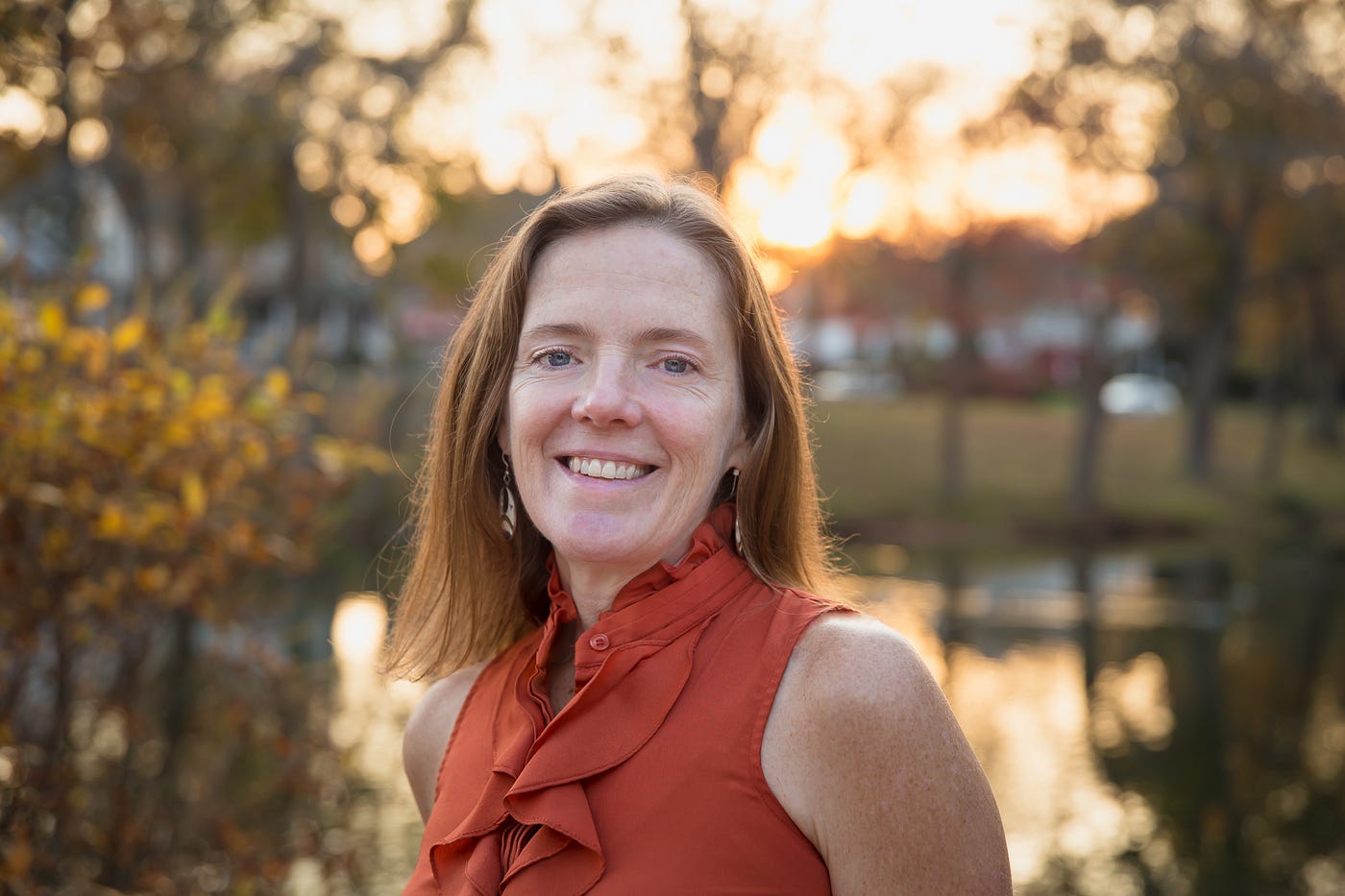
Kimberly Kubicke is an Ayurvedic Practitioner with over 20 years of experience helping people restore balance in body, mind, and spirit. She founded Indra Holistic Health to offer personalized guidance rooted in nature and daily rhythm, supporting clients with everything from digestion and hormone health to burnout and the desire to age with vitality. Her work bridges ancient Ayurvedic wisdom with modern-day life, making holistic health intuitive, empowering, and doable.
Thank you so much for joining us in this interview series! Before we dive into the main focus of our interview, our readers would love to “get to know you” a bit better. Can you tell us a bit about your childhood backstory?
I had my share of ups and downs, but all in all I had a happy childhood. I felt loved by my parents and siblings, did well in school, and had a good friend group. We lived on a street with a bunch of other kids my age. I spent many days outside running wild. My dad was a fisherman and gardener and had his own restaurant and catering business, so food and celebration were central to my upbringing. We ate a typical American diet which didn’t digest well for me, so I struggled with chronic sinus and digestive issues growing up. My parents did the best they could, but I grew up in the eighties amidst the glorification of processed foods and microwave cooking.
What or who inspired you to pursue your career? We’d love to hear the story.
As mentioned, I struggled with chronic sinus and digestive issues for most of my childhood into young adulthood. I was convinced I’d be dependent on prescription medication for the rest of my life. And then I met a friend - Sewa - whose grandfather was an Ayurvedic doctor in India. He gave me a few simple, easy, free recommendations to change about my diet and lifestyle that revolutionized my health. I felt so empowered by Ayurveda’s unique approach and wanted to share that with as many folks as possible.
None of us can achieve success without some help along the way. Was there a particular person who you feel gave you the most help or encouragement to be who you are today? Can you share a story about that?
My Aunt Lorraine played a huge role in shaping who I am today. She was a nun for thirty-two years who set up shelters for runaway youth in her hometown of the South Bronx, NY. She did amazing work in the field of social justice. She funneled the resources of the Catholic church to the folks most in need of them and was a pillar in her community. She was also a therapist with a PhD and worked with folks who were dually addicted in her private practice in New York city. She introduced me to so much beyond the bounds of my suburban upbringing - Broadway shows, meditation, yoga, art, creative expression and many folks who were living outside the box. She died suddenly when I was twenty-one and her death was as transformative for me as her life. It shifted my view from making decisions based on a future that might not exist, to being more present with life and where it was guiding me to go in the moment.
Can you share the funniest or most interesting mistake that occurred to you in the course of your career? What lesson or take away did you learn from that?
I almost didn’t follow my dream to study Ayurveda with Dr. Vasant Lad at The Ayurvedic Institute. I ignored it for ten years because it seemed so impractical and expensive. And then one day while I was folding laundry I had this epiphany kind of moment. I asked myself - Are you just going to dream about this for your entire life and die having never done it? It became clear that I needed to take the plunge and just do it already. Once I made that decision, it seemed as if the universe aligned to support it. I am one of the few folks in my class who has worked in Ayurveda ever since graduating. This experience reaffirmed my belief in listening to my heart - to that place of inner knowing that holds our truths. I wouldn’t say that choosing Ayurveda as a career path is easeful, but I know it’s what I’m supposed to be doing.
Is there a particular book that made a significant impact on you? Can you share a story or explain why it resonated with you so much?
The Disobedience of the Daughter of the Sun by Martin Prechtel. The book shares a Mayan myth in the first chapter and then gives five layers of understanding in the following chapters. The final chapter talks about language and explores the immense control it has over our ability to think. It specifically discusses languages that use the verb “to be.” No indigenous language has this kind of judgment. Indigenous languages speak in metaphor about what is happening now with an awareness that nothing is set in stone. Change is life and it’s more accurate to think of life on those terms. I think this is such a poignant point to be aware of in our Western culture that seems to be founded on an illusion of control.
Can you share your favorite “Life Lesson Quote”? Why does that resonate with you so much?
“The difference between what the most and the least learned people know is inexpressibly trivial in relation to that which is unknown.” — Albert Einstein. It rings so loudly of truth. There is so much beyond the ken of human understanding. As much as we know, there will always be significantly more that we don’t know and we should be mindful of that.
What are some of the most interesting or exciting projects you are working on now? How do you think that might help people?
My Ayurveda practice is a big focus and inspiration in my life. Watching folks transform through the power of Ayurveda is rewarding. People who have been struggling with chronic health issues for months, years, decades, or sometimes even their whole lives find relief and the freedom that comes with good health. Folks make small shifts in their diet and daily habits, develop a new understanding and awareness around their body and completely revolutionize their reality. Feeling vibrant and healthy enables folks to make their unique mark on the world, to be more available for supporting others, to be the change they wish to see in the world. It’s powerful medicine.
Being an aunt has been a life-giving experience. I have always loved children and connecting with them and have cared for many over the years. But there’s something special about having one that you know you’ll be connected to for life. It’s an honor to get to support this little human unfurl and develop her unique personality. I’m also grateful to be able to support my sister and brother in law in parenting because I think parenting is very under-supported in Western culture. Plus, knowing how much my Aunt Lorraine influenced me inspires me to aspire to do the same for my niece.
I volunteer my time with the Coastal Rhythms Collective. We are a collective of women who produce conscious events in the Asbury Park, NJ area. Through ecstatic dances on the beach, song circles, grief ceremonies and more, we seek to weave a web of connection, joy and self expression amidst substance free fun.
OK, thank you for all of that. Let’s now shift to the core focus of our interview. In this interview series we’d like to discuss cultivating wellness habits in four areas of our lives: Mental wellness, Physical wellness, Emotional wellness, & Spiritual wellness. Let’s dive deeper into these together. Based on your research or experience, can you share with our readers three good habits that can lead to optimum mental wellness? Please share a story or example for each.
Make breathwork a part of your daily routine.
How our breath flows dictates our experience. Breath carries sensation, thought, feeling and emotion. And it follows our attention. Thoughts affect the rhythm of our breath and our breath affects the rhythm of thoughts. When we’re stressed and panic, our breath becomes more rapid and shallow. When we relax, our breath becomes slower and deeper. Just as our thoughts control our breath, the reverse is also true. By controlling how we breathe, we can control mental activity.
Learn to master and control your senses.
We are all overstimulated. There is so much sensory information to take in at any given moment. Ayurveda recommends discernment around what we allow our senses to be exposed to. Everything we take in has to be digested. Too much news, screentime, sweets, touch or loud music are examples of stimuli that can harm our mental health. You might notice that you feel calmer if enjoying device-free time in the woods. Ayurveda recommends creating boundaries around sensory input.
Commit to a regular meditation practice.
Working with the mind through a consistent practice supports mental health. This serves to steady the mind and increase self awareness so that we are better equipped to respond rather than react to life. Start with a few minutes and slowly grow your practice.
Do you have a specific type of meditation practice or Yoga practice that you have found helpful? We’d love to hear about it.
I practice hatha yoga daily. My lineage is based in the Sri Vidya tradition. I include asana, mantra, breathwork as well as meditation focused on the breath. Different approaches work for different folks, but I have always found that following my breath is the most potent approach for me.
Thank you for that. Can you share three good habits that can lead to optimum physical wellness? Please share a story or example for each.
Follow a daily and seasonal routine that supports the body’s natural rhythms.
Living in alignment with nature and the seasons supports our physical health. Ideally we wake with the sun, eat at regular mealtimes, engage in daily movement appropriate to our energy and the season, and get to bed by 10pm. Cultivating a daily rhythm supports digestion, elimination, good sleep and our nervous system. Seasonally speaking, fall is dry, we need more moisture and to cleanse the heat that accumulated over summer. Spring is wet and humid, we need to dry out and shake off winter’s heaviness. Ayurveda recommends adjusting our diet and lifestyle to create balance in relation to our surroundings.
Eat in a way that nourishes your unique body.
Digestion is the cornerstone of health in Ayurveda. Eat when you’re hungry. Stop when you’re full. Eat wholesome, freshly prepared cooked foods that you digest well. Avoid multitasking while eating. Aim to eat at the same time every day. Avoid eating fruit with other food. Ideally, have a bowel movement each morning shortly after waking. Ayurveda has many general guidelines like this - as well as guidelines specific to each of the three gut types (discover yours and how to feed it via the link in my bio above).
Prioritize good quality sleep.
Good quality sleep is a pillar of health. Craft a screen-free evening routine that allows the body to wind down and prepare for sleep a couple of hours before bed. Aim to get to bed by 10pm so that the body has ample time to detoxify and rejuvenate overnight. When we stay up past 10pm, we may get a second wind - but that second wind is meant to be used by the body to cleanse and repair. If we stay up late, we cut this health-promoting process short. We are diurnal beings meant to wake with the sun and sleep when it’s dark. The sleep you get by going to bed early is better quality than that of going to bed late. And while it might seem challenging for night owls to go to bed early at first, with a consistent evening routine and gradually dialing back bedtime, it’s entirely possible. I’ve helped many clients do this and they feel much better as a result.
Do you have any particular thoughts about healthy eating? We all know that it's important to eat more vegetables, eat less sugar, etc. But while we know it intellectually, it's often difficult to put it into practice and make it a part of our daily habits. In your opinion what are the main blockages that prevent us from taking the information that we all know, and integrating it into our lives?
Time. Money. Temptation. These are the most common challenges my clients share. We have this idea that eating well has to be very expensive and time consuming. It doesn’t. Whole foods and cooking for yourself is actually much cheaper than eating processed foods and takeout. I help folks find a better rhythm with this. And then there’s the temptation of convenience. It’s everywhere. I find that for many of my clients, once they start tuning into how they feel after eating and deepen their body awareness, it’s easy for them to connect the dots and notice that the convenient foods don’t make them feel good. Once we have the visceral connection, the temptation wanes.
Can you share three good habits that can lead to optimum emotional wellness? Please share a story or example for each.
Avoid becoming overly attached or averse - whether it’s clinging to praise or resisting change.
The first verse of one of the most respected classical Ayurvedic texts says that misdirected attachment and aversion are the causes of disease. It’s important to note the word “misdirected” here. There are things worthy of being attached or averse to, but there are many things that we are attached or averse to that we needn’t be. Clinging to what we like and avoiding what we dislike disturbs our emotional balance. It may be useful to look at what is behind the intensity of the clinging and avoiding. There may be some deeper work to do there. Ideally we do our best and remain unattached to the outcome. We suffer less when we accept reality and practice seeing experiences as temporary.
Practice self oil massage regularly.
Anointing the body with oil is considered to be an act of self love. It supports our nervous system which is often at the root of emotions like fear and anxiety. This nourishing somatic practice helps to move stuck, stagnant emotions and creates a healthy boundary between us and the external world. It’s simple - lovingly massage your body from head to toe with a good quality oil like sesame, coconut or olive before you shower. The warmth of the shower with open your pores and allow the oil to penetrate deeply - hydrating your tissues, soothing your nervous system and supporting your resilience.
Eat a wholesome diet.
What we eat directly affects our mind and emotional state. Spicy foods, alcohol, and stimulants like caffeine get us fired up and make us more prone to heated emotions like anger. Heavy foods like ice cream, bread, and meat weigh us down and can lead to heavy emotions like depression. Ideally we favor fresh, lightly spiced, seasonal ingredients and our meals are composed of mostly vegetables.
Do you have any particular thoughts about the power of smiling to improve emotional wellness? We’d love to hear it.
I think smiling is great for emotional wellness - as long as it’s sincere. Pretending to be happy when you’re not, is not a good long term support to emotional wellness.
Finally, can you share three good habits that can lead to optimum spiritual wellness? Please share a story or example for each.
Live in alignment with your innermost essence.
Well being (on all levels) is directly related to living out our purpose in life. When our actions reflect our values, we feel at peace with ourselves and whatever higher power we connect with. According to Ayurveda, the purpose of health is to be able to live our life’s purpose.
Keep good company.
Surround yourself with people, teachings and environments that uplift and inspire you to be the best version of yourself. The more we are in the company of folks who share our values, the easier it is to prioritize them. We are undeniably influenced by our surroundings; choosing them wisely supports and safeguards our spiritual path.
Selfless service
Serving without expectation connects us to something greater than ourselves and makes the world more beautiful to live in. The message of one of the classical texts of Yoga and Ayurveda, the Bhagavad Gita teaches us to renounce the fruits of our actions. Act with love. Do our best. And accept the outcome without need for recognition or ownership.
Do you have any particular thoughts about how being “in nature” can help us to cultivate spiritual wellness?
Ayurveda sees us as part of nature. We are made up of the same five elements that comprise everything that exists in nature - space, air, fire, water and earth. Spending time in nature connects us with the same forces that create and sustain us. It allows us to unplug from the overstimulation we’re bombarded with and reconnect with a slower pace, natural rhythms and the cooperative spirit of living in harmony. We remember the impermanence of life in the changing seasons. We give thanks for the daily rituals of sunrise and sunset. We ground ourselves walking barefoot on the earth. The sounds of the ocean quiet the noise of our minds and help us reconnect with our innermost essence and the web of life that supports us. Nature is good medicine.
Ok, we are nearly done. You are a person of great influence. If you could inspire a movement that would bring the most amount of good for the greatest number of people, what would that be? You never know what your idea can trigger.
A return to the gift economy from which we all came.
Modern capitalism disrupts not only our communities and ecosystems, but also our individual well-being. It pulls us out of rhythm with nature, commodifies the ways we once supported each other (shared meals, childcare, healing, wisdom etc.) and ties our worth to productivity. In Ayurveda, health is defined as a state of balance in body, mind, senses, and spirit and I believe the current economic system creates challenges to all four.
Debt is now the foundation of global wealth. Most money isn’t printed. It’s typed into existence as debt. Its value is no longer tied to anything real, but upheld by policy, bailouts, and, when needed, force. This artificial system breeds insecurity, anxiety, burnout, and spiritual disconnection.
But money is a recent invention. For most of human history, people lived in gift-based cultures - offering what they had and receiving what they needed. These systems were rooted in trust, reciprocity, and a deep sense of belonging. We see echoes of this in nature: the sun shines without asking for payment, trees bear fruit freely, and rivers welcome all to swim in their cool waters. Ayurveda teaches that aligning with nature supports health. So what if we built an economy that did the same?
What if we started remembering how to live in a web of care instead of a marketplace?
We are very blessed that some of the biggest names in Business, VC funding, Sports, and Entertainment read this column. Is there a person in the world, or in the US, whom you would love to have a private breakfast or lunch with, and why? He or she might just see this, especially if we both tag them :-)
Bernie Sanders.
How can our readers further follow your work online?
Thank you for these really excellent insights, and we greatly appreciate the time you spent with this. We wish you continued success.