I certainly learned this lesson when I left my last job, around the time of pandemic, and turned to being a full-time independent writer.
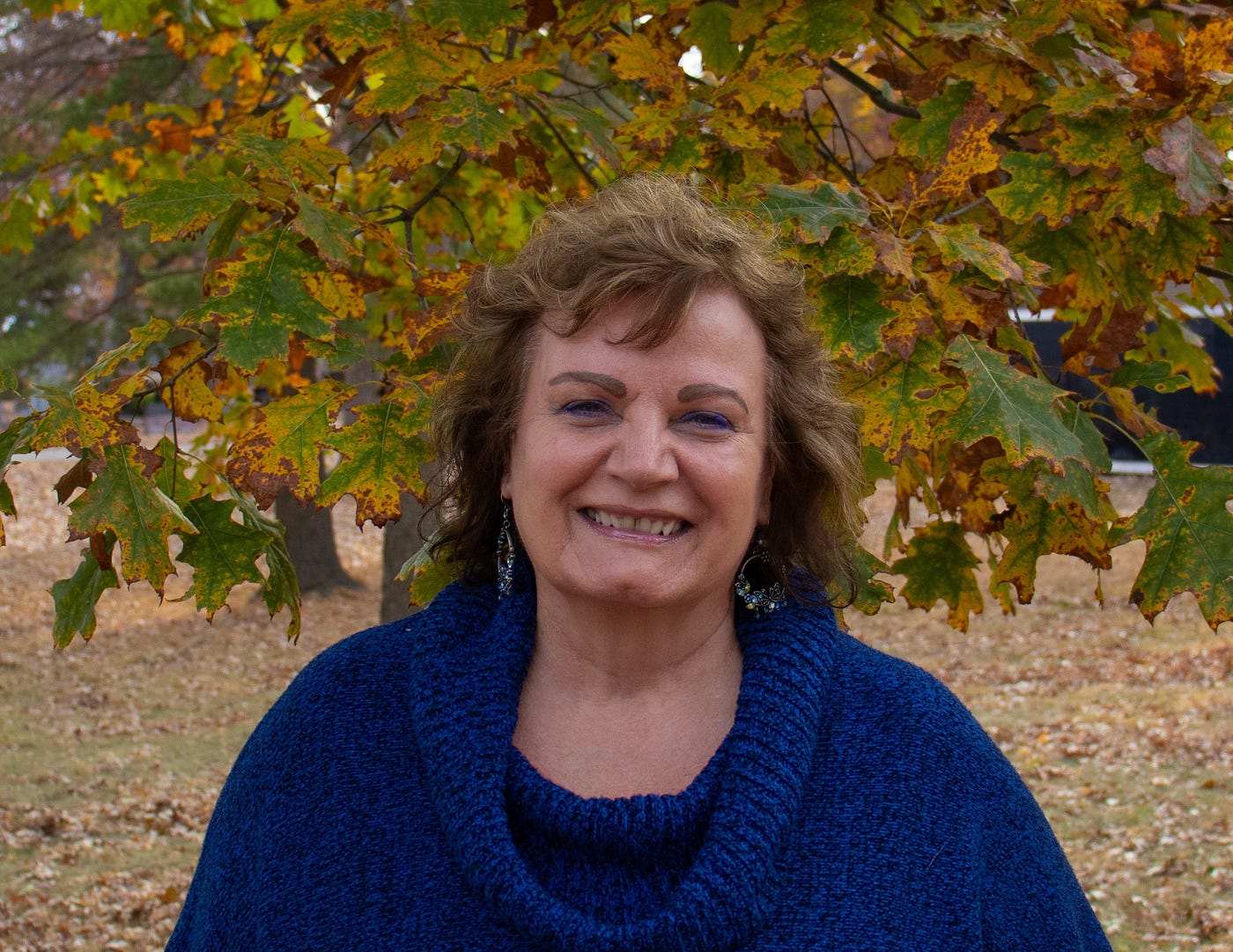
As a part of this series, we had the pleasure to interview Amy L. Bernstein.
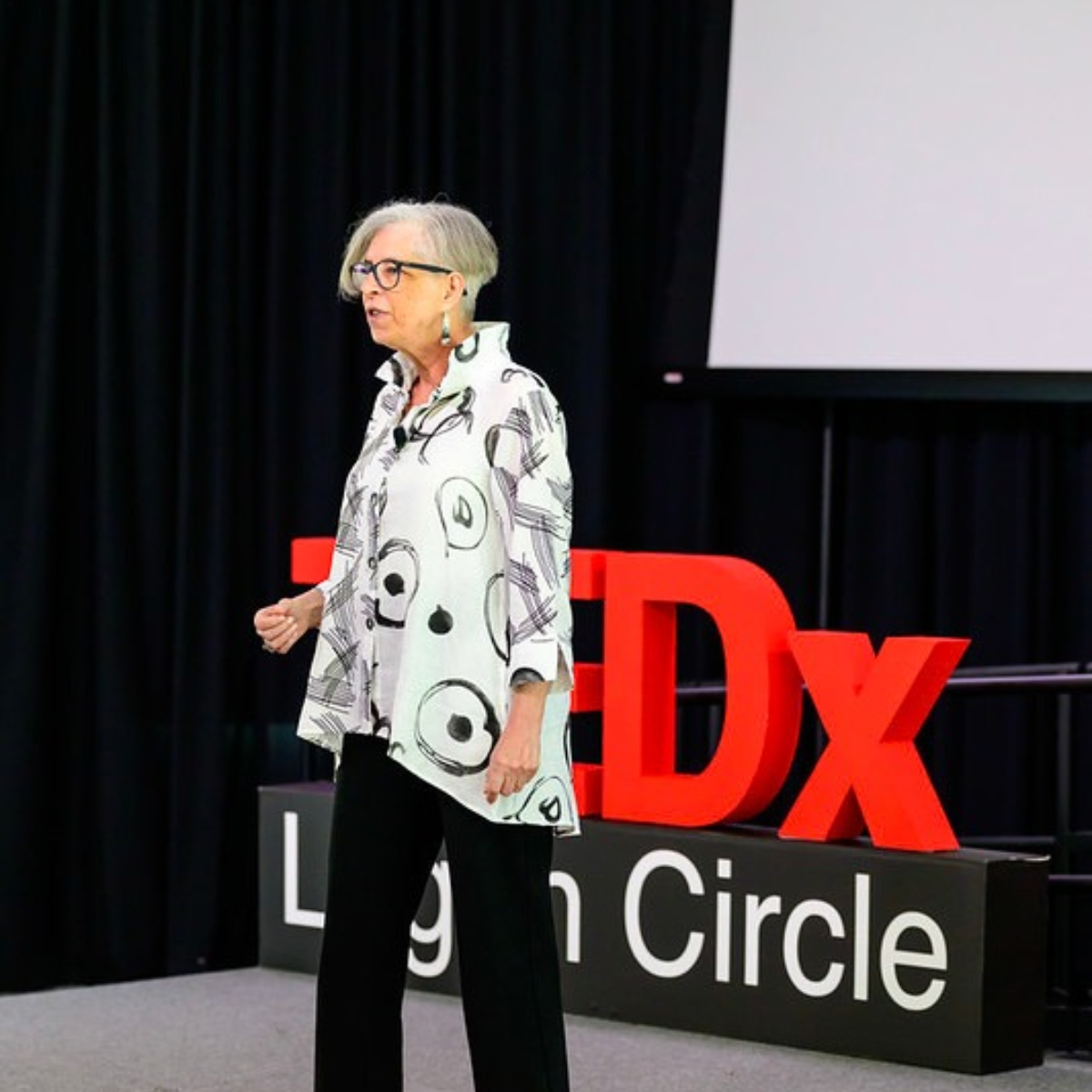
Amy L. Bernstein is an award-winning author of seven books and a certified nonfiction book coach. She is a frequent presenter at writers’ conferences around the U.S. and on podcasts around the world. Amy is a proud TEDx speaker and the recipient of multiple humanities grants to produce creative projects.
Thank you so much for joining us in this interview series! Before we start, our readers would love to “get to know you” a bit better. Can you tell us a bit about your childhood backstory?
I grew up as the oldest of five children in a family with Normal Rockwell pretensions: My business-executive father supported us all; my mother was a superlative home-maker; and we kids never got into truly serious trouble, even though we moved around to serve my father’s career. And yet, looking back, I always felt as though I was on the outside looking in: a very good girl afraid to break the “rules” and yet sensing I was missing out on what life was really about. Yeah, I was a pretty introspective kid. I still have a painting I made when I was around 8, a colorful vase of flowers on black construction paper. I suspect that was an early inkling of the artist buried within.
Can you please give us your favorite “Life Lesson Quote”? Can you share how that was relevant to you in your life?
“No one can make you feel inferior without your consent.” — Eleanor Roosevelt
It’s taken me the better part of a lifetime to accept the truth of this and recognize that I’m responsible for valuing my self-worth. Feeling “less than” is deeply limiting and inhibiting and has nothing to do with your objective reality. You can appear “successful” and still feel deeply inferior, which holds you back from feeling like someone worth betting on — whether by others or yourself. Once you see clearly that you define yourself, then there are no limits.
You have been blessed with much success. In your opinion, what are the top three qualities that you possess that have helped you accomplish so much? If you can, please share a story or example for each.
The first quality is more of an ability: the ability to give yourself permission to place big bets on yourself, specifically, on your ability to tackle huge challenges that may feel just out of reach, knowing you may fail. I gave a TEDx talk that was enormously challenging to prepare for and to deliver on a bare stage with no notes, no prompts, no slides. I couldn’t have achieved that without giving myself permission to believe that I had a worthwhile idea to share, which led me to pitch to a deeply competitive process and then do the hard work of preparing to deliver.
The second quality is a willingness to live with, even to embrace, the discomfort that comes with uncertainty, for that’s how we grow. When you set out to try something new — whether that’s starting a business or acquiring a new skillset — you cannot predict outcomes of any kind. I certainly learned this lesson when I left my last job, around the time of pandemic, and turned to being a full-time independent writer. Every day was fraught with uncertainty: What would my future hold? What would my work days look like? Would I ever make any money? Earn anyone’s respect? Get anything published? I was deeply uncomfortable — and in time, decided this was a super-power that enabled me to risk more, and therefore, “win” more.
The third quality is a commitment to being a lifelong learner, by which I mean, keep yourself open not only to new ideas from unexpected sources (including younger generations), but also open to learning new technologies, new mindsets, new approaches to solving problems. We don’t succeed at anything by allowing ourselves to grow stagnant. So I work to avoid that by learning, among other things, how to make social media work for me; how to spread my ideas through Substack and other platforms; how to sufficiently master technologies that serve my purposes; how to pitch my expertise; and much more.
Let’s now shift to the main part of our discussion about ‘Second Chapters’. Can you tell our readers about your career experience before your Second Chapter?
I spent decades in full-time writing or managerial communications roles in a variety of traditional, hierarchically structured organizations. This included federal and state government agencies, a newspaper, and nonprofit organizations. My career can be summed up as researching, writing, gathering, and communicating information clearly to various constituencies — on behalf of agendas made and enforced by others.
And how did you “reinvent yourself” in your Second Chapter?
Reinvention begins with imagining a future that doesn’t look like the present. Seriously, I had to picture myself working outside of other people’s agendas — which meant working independently. I proceeded in stages. I moved to jobs in a series of smaller organizations at lower pay in exchange for more personal freedom and a reduced commute (which meant more time to pursue other things). When the pandemic hit, I had already gone down to part-time, and then quit altogether…launching myself into thin air with an intention to write and reinvent my purpose. The only agenda in sight was the one I set for myself.
Can you tell us about the specific trigger that made you decide that you were going to “take the plunge” and make your huge transition?
Yes! I call it the train platform moment. The day I nearly did not hop the train to work in DC, but to head to New York and play hooky instead, because my head and heart were misaligned. I was earning more money than I’d ever imagined — and I was dying inside. That day, my inner voice grew too loud to ignore: I had to make a change. Half my life was over, and I hadn’t given myself permission to figure how to truly live a meaningful life.
What did you do to discover that you had a new skillset inside of you that you haven’t been maximizing? How did you find that and how did you ultimately overcome the barriers to help manifest those powers?
I began testing new skills ahead of the actual transition point, while still working full-time for others. I enrolled in a playwrighting class, met a bunch of playwrights, and began writing plays to be read and performed. I also wrote my first novel on the commuter train. And through a friend I took on freelance work writing condensed history booklets for children, for a famous publisher. All these efforts were to prove to myself that I had more to offer than I had so far revealed; I needed to prove this to myself, first. These efforts were instrumental in goading me to keep making changes leading up to the really big change.
The barriers never truly disappear: You will always fear the unknown, failure, and uncertainty to some extent. But by beginning to explore my potential as a creative writer — to prove that I could produce passable work — was a huge impetus to keep doing precisely that, and face the barriers, both seen and unseen.
How are things going with this new initiative? We would love to hear some specific examples or stories.
I’m still astonished by what I’ve accomplished in the last six years or so. I’ve had seven books published (only one of them fully written before my transition). I work as a certified book coach, helping nonfiction writers bring their books to life (a boutique consulting practice). I teach writing workshops, master classes, and webinars at writers conferences all over the country. I’ve been on dozens of podcasts to speak about publishing and creativity. One of my books, the award-winning Wrangling the Doubt Monster: Fighting Fears, Finding Inspiration, is an ongoing source of discussion in creative communities. And I’m developing a keynote speaking practice. I’m also a member of multiple local and national writers’ communities, which has led to a number of opportunities for me to mentor other writers and creatives.
Is there a particular person who you are grateful towards who helped get you to where you are? Can you share a story about that?
Interestingly, because I’ve never been mentored (formally or informally), or found someone to open doors for me, I make a point of doing that work for others on a consistent basis.
Can you share the most interesting story that happened to you since you started in this new direction?
Getting books published — with different publishers — is interesting in and of itself. So is hosting events where no one shows up! (Great lessons in graciously handling failure and adversity.) But I have to point to the TEDx talk as the most interesting experience. Simply being selected as one of 9 presenters from over 800 applications tells a story about persistence and self-belief. (You can’t win if you don’t try!). And to be surrounded by professional videographers, submit to on-camera interviews, deliver a live, recorded talk to a roomful of strangers…all of that was inspiring, empowering, and deeply informative.
Did you ever struggle with believing in yourself? If so, how did you overcome that limiting belief about yourself? Can you share a story or example?
I consider myself a life-long self-doubter. I always doubted that I “belonged” at tables where I wanted to belong. I wouldn’t call myself a “writer” until I was in my 50s because I thought that was for “special” people (not me). I long believed I wasn’t talented enough, or simply good enough, to chase after big goals.
I wrote Wrangling the Doubt Monster: Fighting Fears, Finding Inspiration as a way of talking out loud about self-doubt and how to manage it. I wanted to normalize conversations around this particular vulnerability. And the more I did that — shared my self-doubts and developed coping mechanisms — the easier it became to put doubts aside, not all the time, but more often than not.
The biggest lessons I learned, through managing my own mindset, revolve around recognizing that you can “walk with doubt,” meaning, it’s okay to question yourself and still go forward; doubt can be fuel as well as foe; and that doubt can be counter-balanced by recognizing your own competence and where you’ve already succeeded.
In my own work I usually encourage my clients to ask for support before they embark on something new. How did you create your support system before you moved to your new chapter?
Building a support system begins with finding allies who will support and encourage your efforts, especially the big, wild swings, without questioning your sanity. Too often, we’re surrounded by adversaries who mean well (and even love us) but who nevertheless discourage us when we want to venture beyond the status quo. So finding allies and sidelining adversaries is an important starting point for any support network.
For creatives, in any discipline, it’s also important to find people who practice your craft and speak your language. Finding your community of practitioners is a vital aspect of support.
Starting a new chapter usually means getting out of your comfort zone, how did you do that? Can you share a story or example of that?
Starting a new chapter usually entails changing behavior, leaving behind old patterns, adopting a fresh mindset, and so on. I often say if you’re not uncomfortable in the process of doing that, you’re not making meaningful change. When I initially left my last officially salaried job, I experienced waves of panic: What now?! Who was I without a job-related title or identity? But over time, I developed an appreciation for the advantages that flexibility and unpredictability confer. When you learn to stay open to unexpected offers and opportunities; when each day unfolds a bit differently; when you are in control of “making” your purpose rather than having it handed to you…this means you’re operating outside of standard “comfort zones.” That’s a huge plus because you learn to adapt on the fly, to leap before looking (more advantageous than it sounds), and to improvise. Those are all great skills for surviving and growing over the long haul.
What are your “5 things I wish someone told me before I started” and why? Please share a story or example for each.
1. There will be days when you believe you’ve made a mistake. I’ll never forget a friend who said, upon learning that I’d quit my job, “Why on earth did you do that?” For several days, I thought he might be right. My phone didn’t ring; I had no meetings; I was at loose ends. But change is uncomfortable! Don’t run from it; lean into, grow used to it, and you’ll adjust.
2. Making a big change often involves skills you haven’t mastered. I thought since I’d been a professional writer for years that I knew how to write a good novel. Wrong! Writing full-length fiction is entirely different from, say, journalism. I finally figured out that I was tapping into new skillsets that required a lot of practice and training. I do wish someone had warned me about that.
3. Many people will assume you’re retired. The moment you’re not on somebody else’s payroll, people assume, if you’re over 50, that you’ve retired. I hate that word! And it doesn’t describe my life as a busy writer, teacher, coach, speaker, and so forth. I resent that label, since I am indeed still working, and I didn’t expect it would be applied to me.
4. You’ll need to make a lot of new friends. I hadn’t anticipated the extent to which I would need to find new professional friends and communities as my new “workplace,” since I no longer had that traditional network. I couldn’t do half the things I do without my book coaching and writing communities and other organizations I volunteer with to further bolster my professional networks. These have developed over time, and I didn’t anticipate how important they would become.
5. Be patient! I typically want everything to happen fast; for people to get back to me; for organizations to say “yes” the moment I submit something. But that’s not real life. And when you take the kind of creative jumps I’ve taken, you must learn to be patient with so many processes beyond your control. It’s taken years to build my networks, develop a new identity, gain some public traction and recognition (even on a modest scale). It’s taking years to build a mailing list! I didn’t think about how long all this would take. But it’s been worth it!
You are a person of great influence. If you could inspire a movement that would bring the most amount of good to the most amount of people, what would that be?
My TEDx talk focuses on the necessity of treating artists as workers and paying them a living wage. I talk about the ways our culture denies economic opportunities to creative workers and expects creatives to somehow survive on air and inspiration, when in fact, they are highly trained, skilled workers who ply trades that should be compensated, whether that’s sculpture, painting, filmmaking, music, writing, or something else.
So I fervently wish that public and private sectors could come together to offer more consistent, viable financial support to working artists.
How can our readers further follow your work online?
One source for all my work and sites is here. But a quick trip to my main website is also here.
Thank you so much for sharing these important insights. We wish you continued success and good health!