Some might call it stubbornness, but I prefer the term determination. As a mother of eight homeschooled children, I clung to my creativity through freelance writing.
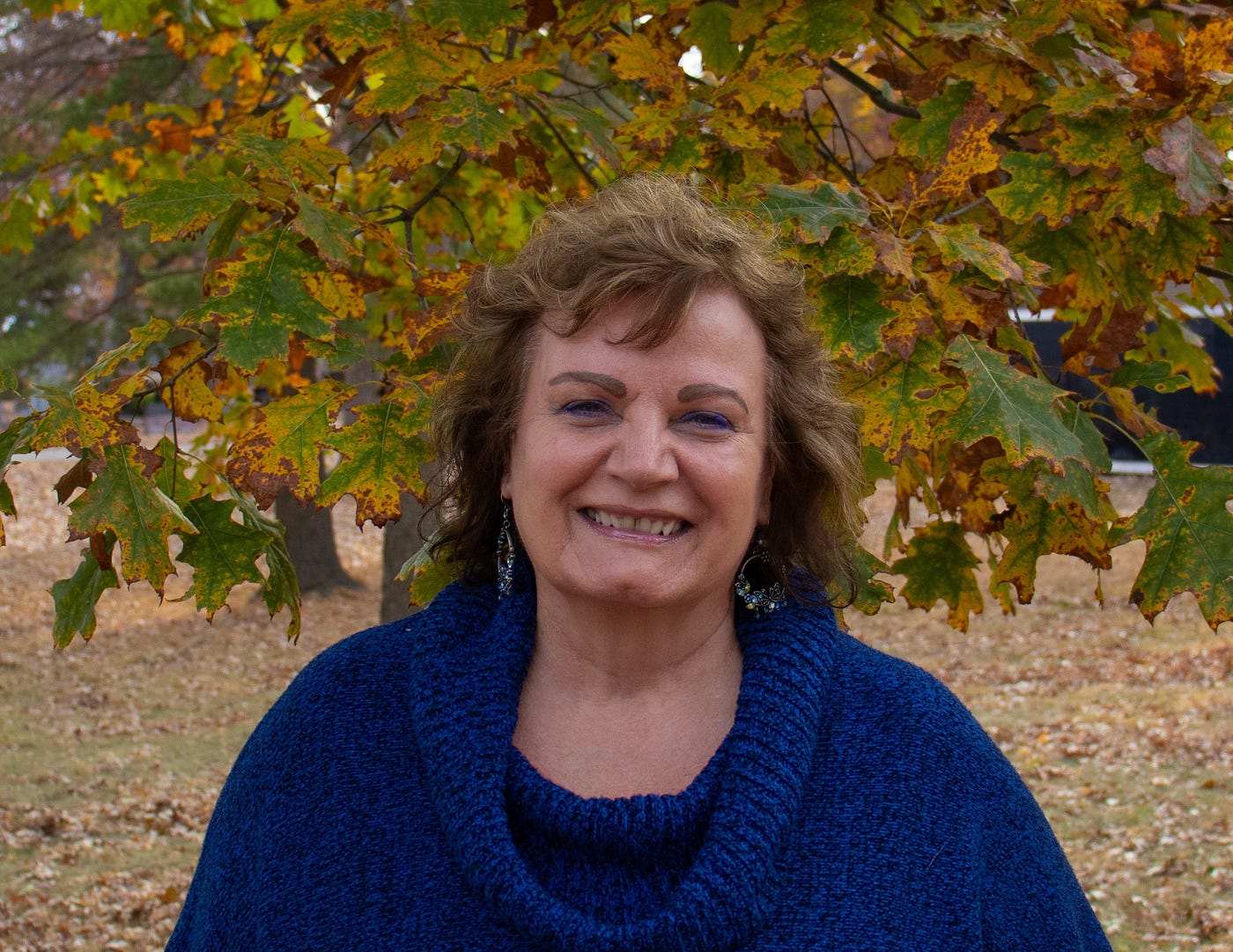
As a part of this series, we had the pleasure to interview Mary Portzen.
Mary Portzen graduated from the University of Northern Iowa and is a certified grief counselor trained under world-renown grief expert David Kessler. She is the author of seven books under the name Mary Potter Kenyon, including the award-winning “Called to Be Creative: A Guide to Reigniting Your Creativity” and “Refined by Fire: A Journey of Grief and Grace.” Mary and her husband Nick are co-authors of “Soul Mates: Path to a Praying Partnership” and coordinators of an annual Cedar Falls Writer’s Conference in Cedar Falls, Iowa, where they live.
Thank you so much for joining us in this interview series! Before we dig in, our readers would like to get to know you a bit more. Can you tell us a bit about your “backstory” and how you grew up?
I was seventh of ten children, with parents who were extremely creative in providing for a large family, despite poverty. Dad was a competent gardener and poultry farmer, Mom a skilled homemaker who canned produce, dressed chickens, and crafted beautiful wall-hangings, rag rugs, and quilts that beautified our home. She sold wood-carvings and paintings as a home business.
I learned to read before first grade and became a regular patron at our small-town library as soon as I could print my full name. Books were a form of escapism when I became the target of bullies in elementary school. Though I escaped the bullying in junior high, books remained my best friends. In high school and college, I loved essay tests and anything that involved research. That delight in writing and research carried over into adulthood with my freelance writing and in homeschooling eight children.
Let’s talk about what you are doing now, and how you achieved the success that you currently enjoy. Can you tell our readers a bit about the work you are doing?
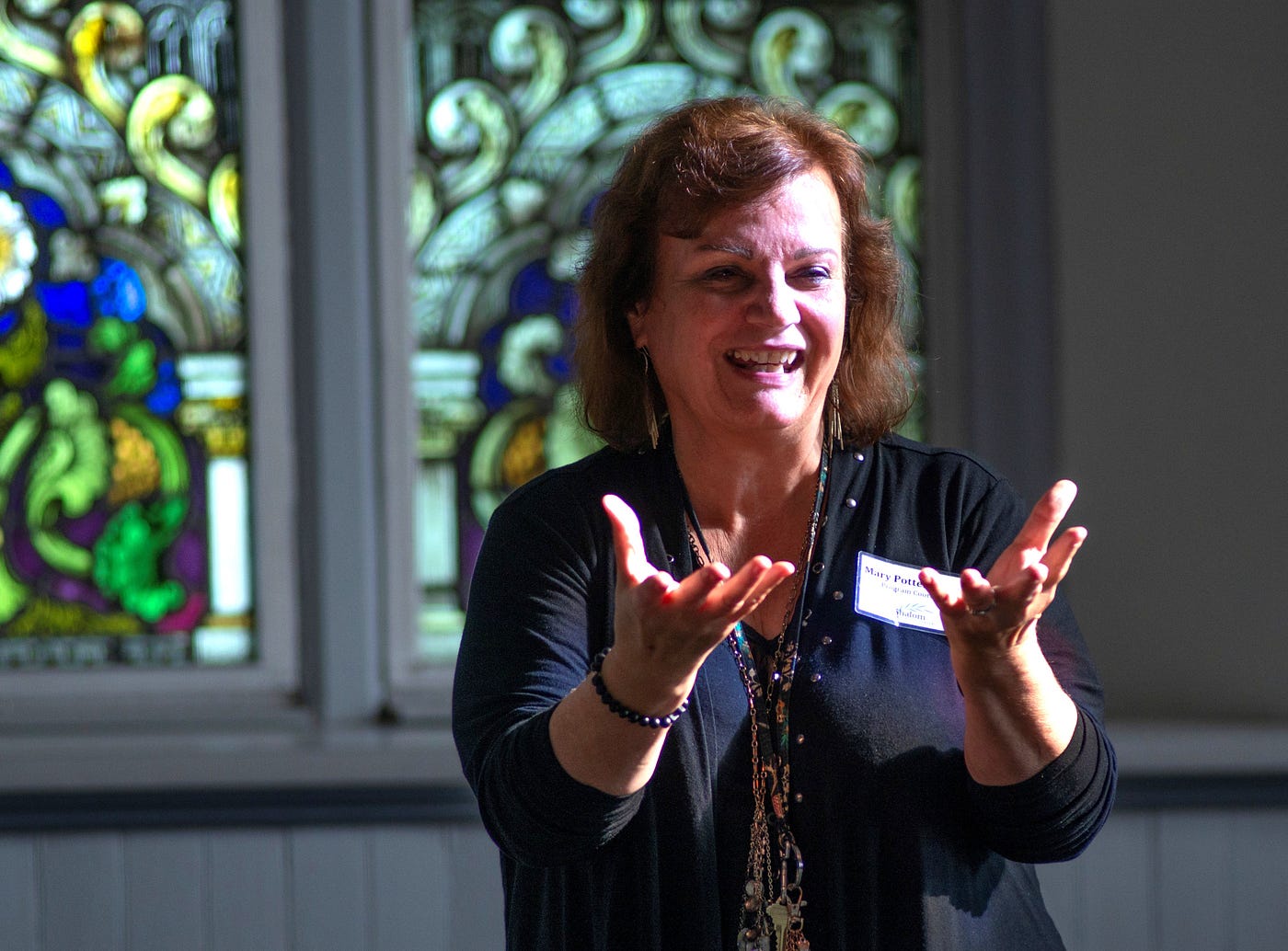
I’m an author of seven non-fiction books, including two that required a great deal of research, an ethnographic history of couponing and Called to Be Creative: A Guide to Reigniting Your Creativity. I’ve co-written a book with my husband and we coordinate an annual writer’s conference. I do public speaking and presentations on the topics of creativity, grief, and prayer in marriage. My children’s book on grief will be published by Familius Publishing in late 2027 or 2028. I continue to write essays for Guideposts and Chicken Soup anthologies.
You are a successful leader. Which three character traits do you think were most instrumental to your success? Can you please share a story or example for each?
#1) Some might call it stubbornness, but I prefer the term determination. As a mother of eight homeschooled children, I clung to my creativity through freelance writing. It meant getting out of bed in the wee hours of the morning to write before the children were up, writing by the soft glow of a nightlight as I sat next to a child falling asleep in bed, or sitting on the closed lid of the toilet writing while a toddler played in the bathtub. I was bound and determined to write, and have over 700 published pieces because of it. Determination is a good trait for a wordsmith since we face repeated rejections. A successful writer is one that doesn’t let a rejection stop them. I still have the notebook pages I used to keep track of the 80+ publishers and agents I approached for one of my earlier books. While many didn’t respond at all, rejections were fast and furious for a book I ended up selling some eight years after I wrote it. Now, that’s determination.
#2) I’m a natural autodidact, believing in lifelong learning. For those unfamiliar with the term, autodidacts are self-taught, choosing their own resources and learning from informal instruction. The root of my learning outside of formal schooling stems from childhood. Not only did I learn to read before I attended school, I missed thirty-six days of third grade due to extended illness and came back ahead of my peers. It helped that I had parents who demonstrated lifelong learning themselves. I often saw my father reading poultry or farming magazines and my mother took copious notes from her own reading and research.
#3) Compassion and a willingness to help others is important whether writing self-help non-fiction or in grief counseling. I wouldn’t be much of a grief counselor if I didn’t have compassion for the people I want to help, and I wouldn’t be much of a writer if I wasn’t willing to be transparent and honest about what I’ve learned through my own experiences and research.
What’s the WHY behind the work that you do? Please share a story about this if you can.
My interest in writing may have been there since childhood, but the majority of my writing and workshops are intended to help others. Ever since I lost three important people in the space of three years, I’ve wanted to help others who are grieving the loss of a loved one. I’ve done grief retreats, expressive writing for healing workshops, and spoken in front of church groups on the topic of grief. I’ve also done workshops on jumpstarting creativity because I love helping others identify and develop the creative part of themselves. (Because we all have a creative side!) As for the writer’s conference my husband and I coordinate, I want to help others write in a way that glorifies God.
None of us are able to achieve success without some help along the way. Is there a particular person who you are grateful towards who helped get you to where you are? Can you share a story about that?
I’ve had many mentors in the world of writing and publishing, but the one that stands out is author Cecil Murphey. In 2012, I won one of his writer’s scholarships for a writer’s conference. That fall I attended a conference where he was teaching so I could thank him in person and learn from him. I felt an instant connection the moment I met him, and we’ve stayed in touch ever since, me through handwritten letters and him through emailed responses. I’ve kept every email because he so often said exactly what I needed to hear; about writing and publishing, but more often on personal and spiritual issues. He’s in his nineties now and just starting to slow down. He’s written more than 125 books and mentored many writers.
Let’s now jump to the primary focus of our interview. I’m an author and I believe that books have the power to change lives. Can you please tell our readers about “The Book That Changed Your Life”? Can you share a story about how it impacted you?
I can’t believe I was 52 years old before I picked up the bible to read. Though I was raised in a faith-filled home with devout Catholic parents, I can’t remember ever seeing them read the bible. They may have, since my father claimed a favorite bible verse and my mother often noted bible passages in her notebooks, but I never observed them perusing it. I, too, picked up favorite bible verses from church readings or through the voracious reading I did, but my older children never saw me or their dad reading the bible either. As a newlywed, I devoured Christman marriage and parenting books. I also went through a phase of reading Grace Livingston Hill, Janette Oke and Frank Peretti books, along with other Christian fiction, so I was exposed to a type of faith that depended on a personal relationship with a Savior, but I certainly didn’t understand what the term “born again” meant. In fact, I was wary of anyone using those confusing words. The bible that was displayed prominently on my bookshelf felt unapproachable, with “thee” and “thou” language. I’d pull it off the shelf once a year on Christmas Eve, dust it off, and read the section on the birth of Jesus to my children.
Losing my faith-filled mother on my 51st birthday opened my heart in an unexpected way. I started thinking about the reality of heaven and hell. On the morning my husband died some seventeen months later, I instinctively knew I needed two things; the bible and prayer, and not the kind of rote prayer I’d grown up with. My spouse’s death became the catalyst for the faith journey that had begun the night my mother died. My 16-year-old daughter, who’d begun attending a youth group at a nearby church just months before her dad died, not only gave me her softcover NIV bible to study, but sent me to her youth leader for the kind of conversational personal prayer I needed. What I discovered in the ensuing months was that I could experience a personal relationship with my Savior, that His Word was truth and meant to be the authority over my life. I needed to know that God had a purpose and plan for my life because within a few months after my husband’s death, I faced the imminent loss of my eight-year-old grandson, Jacob. Jeremiah 29:11 promised “you will seek Me and find Me, when you search for Me with all your heart.” I did just that, searching and studying the bible, while also studying the science of bereavement. Faith and science demonstrated the human body, mind, and heart are designed to withstand grief.
I found God during a dark period in my life, and He didn’t let me down. He guided me in everything, with perfect jobs and Christian mentors. My first job as a library director allowed me to bring my youngest daughters with me. I can honestly say now I never felt closer to God than during that season of grieving those three loved ones. The only time in my life I’ve fallen to my knees in homage was the moment I stood before the couch where Jacob lay dying. Sensing I was in a holy space, my legs gave way and I knelt before the child who was closer to God than anyone I’ve ever known.
What was the moment or series of events that made you decide that you wanted to take a specific course of action based on the inspiration from the book? Can you share a story about that?
The cumulative losses of mother and husband drove me to begin reading the bible, developing a personal relationship with Jesus, and learning to pray with the expectation of getting answers. My grandson’s terminal diagnosis in 2013 kept me in the practice of bible reading. I couldn’t imagine facing his death without God right there by my side, and I knew the place to find him was in His Word. It seemed natural, then, I would desire to help others through their own grieving season. 2 Corinthians 1:3–4 praises God as the Father of compassion who comforts us in all our troubles so that we can comfort others. I took that to heart, wanting to share the hope I’d found in the pages of the bible, not just in grieving, but in how we live our lives.
Can you articulate why you think books in particular have the power to create movements, revolutions, and true change?
Though we live in a time when many people get most of their information from news media, videos and podcasts, there is something timeless about a book. As a former librarian, journalist, and as an author, I can attest to the fact that there are still many people who derive their knowledge from books, whether they are audio or, my preference, print.
A book has many aspects, of course. For example, you have the writing style, the narrative tense, the topic, the genre, the design, the cover, the size, etc. In your opinion, what are the main, essential ingredients needed to create a book that can change lives?
Bottom line, we all need truth. Fiction is one thing, dependent upon the writer’s (and reader’s) imagination. When it comes to non-fiction, however, the writer is responsible for doing the pertinent research needed to accurately cover a topic. Even fiction can affect us, in positive or negative ways. We can identify with characters and not feel so alone. My favorite books as a child were the books that had characters who enjoyed life despite poverty.
What are your “5 Things I Wish Someone Told Me Before I Started My Career” and why?
1. The importance of networking and building a support system
I never realized the importance of networking in business, and until I was widowed, I didn’t realize how helpful it is to have a support system through family, friends, or a church. I was fairly isolated as a homeschooling mother at home. I kept busy with a home business and freelance writing, but didn’t have a lot of friends or get out much. After the death of my husband, I needed to obtain a job outside of the house. I also began doing workshops and public speaking. I formed a creativity group, a bible study, and founded a grief retreat and writer’s conference. My world became so much bigger. Connections I made in the world of publishing means I also have a pool of potential speakers for our conference.
2. The bible contains answers to every question or dilemma I’ve ever faced
I wish someone had told me that the bible contains answers to every question or dilemma I’ve ever faced. It would have made life a whole lot easier. I’d always considered the bible too difficult to comprehend, but the more I read it, the more I understand.
3. The power of prayer
I wish I’d known the power of prayer years ago. Between us, Nick and I had over 75 years of marriage under our belts when we met in 2021. Neither of us had prayed with our previous spouses. So, what exactly possessed me to ask Nick to pray with me at the beginning of our second date? I’d gotten so close to God as I raised my three youngest daughters alone, depending on Him to guide me, lead me to the right jobs and the right people, and take care of me. In fact, my personal relationship with God had developed to the point that there was no way I was going to begin a new relationship without inviting Him into it. My first date with Nick lasted all of two hours, but felt like two minutes. We fell into easy conversation, sharing things we’d never told anyone, not even our first spouses. By the end of that first date, I was convinced this was a man God had chosen for me. The first time we held hands was to pray together. We’ve been praying together daily ever since. We are in awe of the difference that simple ritual has made in our marriage relationship. In the five and a half years we’ve been married, we’ve prayed our way through the sale of Nick’s business, retirement for both of us, my cancer, his chronic kidney disease, a major move, writing a book together, and coordinating an annual conference and grief event.
4. Truth is not dependent on an individual’s perception
Truth is not dependent on an individual’s perception of what is truth. There is no such thing as “your truth” and “my truth.” There is only the truth. Unfortunately, as a psychology major in college, I likely spouted a lot of psycho-babble and pseudo-spirituality through the years, repeating things like “follow your heart” or “do what makes you happy.” The bible teaches that the heart is deceitful, and what makes us happy in this world doesn’t necessarily align with God’s will. We don’t always know what is best for us. The truth is, God does have a plan and a purpose for each of us, and when we discover what that is, we will experience true joy, despite our circumstances. Our heart and desires will begin to align with His.
5. Everyone is broken in some way
Everyone is broken in some way. I’m learning that through my grief work and bible study. If we can treat each person we meet with kindness, compassion, and the understanding that we never know what they might be going through, the world would be a better place.
The world, of course, needs progress in many areas. What movement do you hope someone (or you!) starts next? Can you explain why that is so important?
A movement where everyone thinks before they speak, remembering our mother’s or grandmother’s admonition: “If you can’t say something nice, don’t say anything.” What would that movement be called? Common courtesy?
How can our readers further follow your work online?
www.marypotterkenyon.com, Facebook Pages: Soul Mates: Path to a Praying Partnership, and Cedar Falls Christian Writers Conference
Thank you so much for taking the time to share with us and our readers. We know that it will make a tremendous difference and impact thousands of lives. We are excited to connect further and we wish you so much joy in your next success.