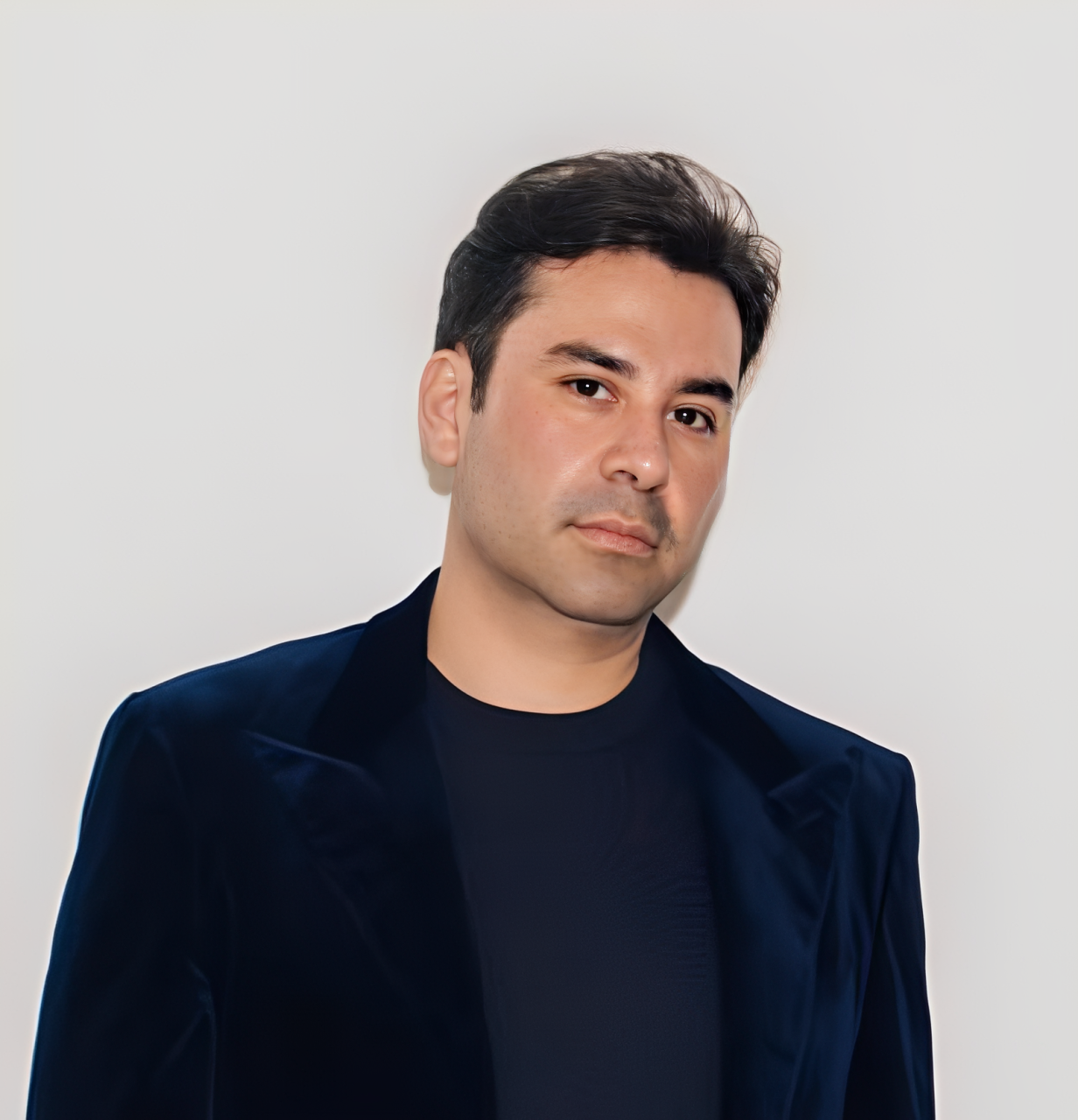
I worked with the HR Leadership Team at RBS in Edinburgh and at the BBC in Manchester alongside the television producer Richard Denton, and I rode the dot-com boom in London working in the creative and media sectors.
In an age dominated by digital communication, the power of articulate and effective verbal communication cannot be understated. Whether it's delivering a keynote address, leading a team meeting, or engaging in a one-on-one conversation, impactful speaking can open doors, inspire change, and create lasting impressions. But what truly sets apart an effective communicator? What techniques and nuances elevate a speech from mundane to memorable? As part of this series, we had the pleasure of interviewing Louise Medve.
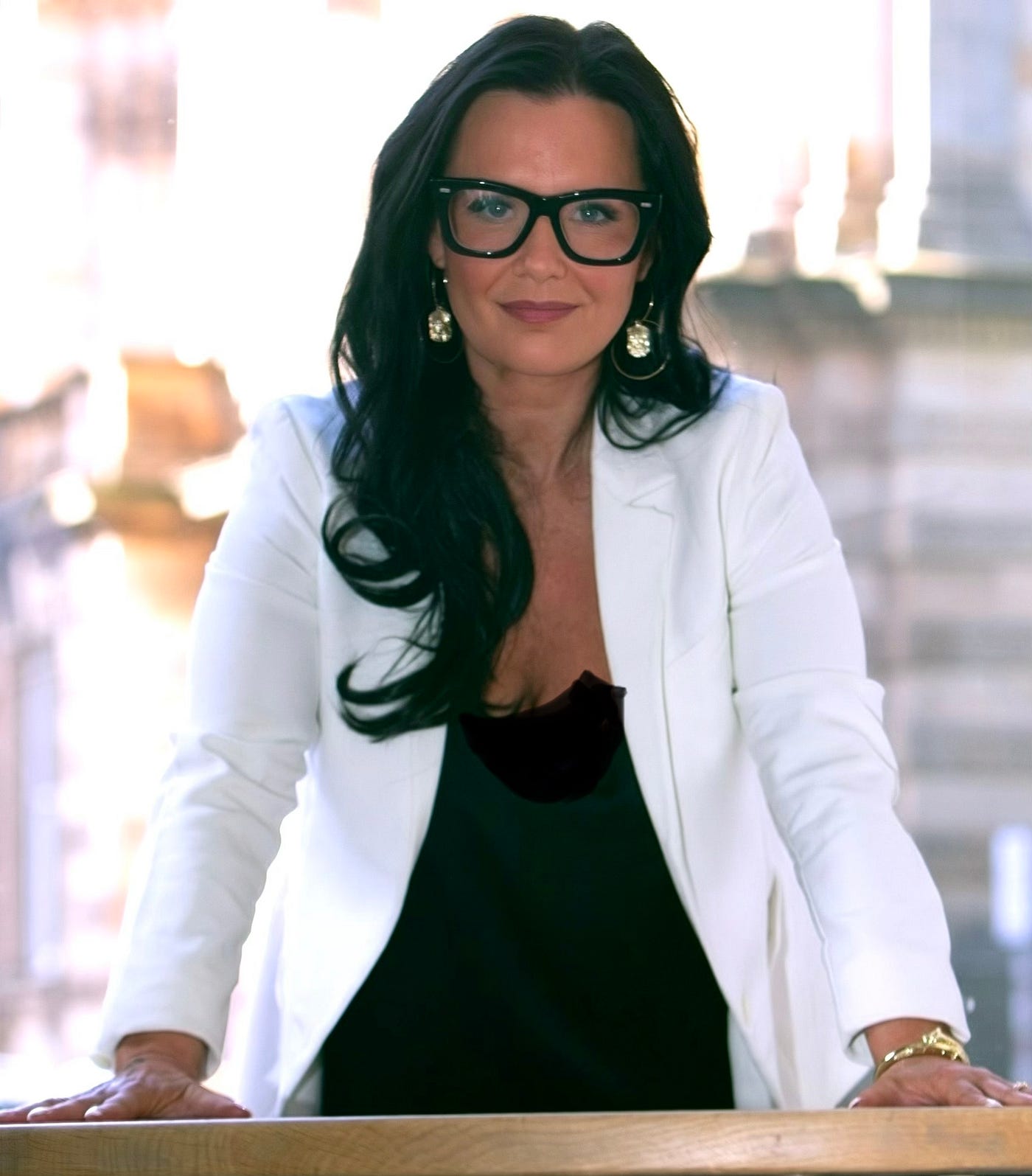
Louise Medve is a Get Paid to Speak Strategist, Founder and CEO of SpeakELITE, the award-winning agency that positions entrepreneurs, experts and leaders to get paid to speak. Named Most Influential CEO 2026 UK, with SpeakELITE recognised for Best Speaker Programs UK, her mission is simple and fiercely held: every expert deserves to be heard, and paid, for what they know. She equips her clients to command fees of £5K to £25K+ per talk in the UK, and up to four times that in the US, and to use the stage to win far bigger contracts, transforming expertise into influence, impact and income.
Thank you so much for joining us in this interview series. Before we dive into our discussion about communication, our readers would love to “get to know you” a bit better. Can you share with us the backstory about what brought you to your specific career path?
Picture an eighteen-year-old from Edinburgh standing in the crowded halls of the High Court, scanning a sea of barristers and calling out the names of people she'd never met, and that was me. I'd gone straight from school into a law firm instead of going to university, and they sent me there, and although I was terrified at first it taught me something that has stayed with me my whole life, which is that I could hold a room. Getting up on a stage has felt natural to me ever since, and pretty much everything I know I learned on the job and face to face with people, which is the experience my clients seem to value most.
Long before that, I grew up the daughter of a teacher and an electronics engineer, and between them they gave me a love of learning and a stubborn belief that every problem has a solution. Even as a child I was the organiser, the one who'd find a way when there wasn't an obvious one, and I'd always rather work out how to do something than wait to be told, which hasn't changed one bit.
From there I built a career across marketing, business development, sales and events and worked my way up into leadership. I worked with the HR Leadership Team at RBS in Edinburgh and at the BBC in Manchester alongside the television producer Richard Denton, and I rode the dot-com boom in London working in the creative and media sectors. My career took me to live and work in Edinburgh, Manchester, Washington DC, London, Durban, Sydney, Kuala Lumpur and Auckland, often travelling on my own, and I've spoken for business and pleasure on five continents.
Life has thrown me some huge curveballs along the way. In April 2010 I founded my first agency, helping businesses win clients through CRM, sales and marketing systems, and that same year I lost my beloved dad to pancreatic cancer, which is still the hardest thing I've ever been through.
I've always rebelled against the pressure to live a "perfect and normal" life, and later on I found the courage to leave my marriage, start a new business and embrace being single, all while raising my daughter Emily, who's now 18 and works alongside me on the SpeakELITE team. SpeakELITE came out of a gap I kept seeing over and over, where brilliant people were being overlooked because they didn't know how to position themselves with authority, even though they were more than good enough. My mission now is to make sure my clients become the speakers organisers choose first.
Can you share the most interesting story that happened to you since you started your career?
One of the moments I treasure most came when I wasn't pitching at all. Out of the blue, the CEO behind a well-respected annual conference for Scottish entrepreneurs got in touch with me. I hadn't chased her or sent a proposal or begged anyone for an introduction, she'd simply seen my work, and that was enough for her to invite me to speak and run a session on growth.
That room held around two hundred and fifty experts, leaders and business owners who had paid handsomely to be there, the kind of people who expect every minute to be worth it. I remember reading her message and feeling a rush of pride and something close to disbelief, because all the persuading had happened long before we ever spoke, through the work and the reputation I'd spent years building.
That moment summed up everything I now teach at SpeakELITE. When your positioning and your speaker assets are working for you, the trust walks into the room before you do, and some of the best invitations arrive without you ever having to ask for them.
You are a successful business leader. Which three character traits do you think were most instrumental to your success? Can you please share a story or example for each?
If I had to boil thirty years down to three traits, they'd be tenacity, presence and being able to communicate in a way that makes people feel something.
Tenacity
In 2010 I launched my first agency, and in that very same year I lost my dad to pancreatic cancer. I remember trying to build a business with my heart in pieces, and it would have been the easiest thing in the world to stop, but Dad was the one who taught me that every problem has a solution, so I kept going. That year gave me a tenacity that nothing has shaken since, and that business went on to become an award-winning agency, picking up industry awards in 2023. Years later the same grit gave me the courage to leave my marriage, start a new business and step into single life, and I loved it. Every leap terrified me at the time, but I've landed on my feet every time and come out stronger and much more sure of who I am.
Presence
Turning fifty stopped me in my tracks, and I found myself asking what I wanted to create, and give back, over the next twenty years, and the answer lit me up. For me, presence is having the confidence to be unapologetically yourself, to walk into any room and share your views without flinching, and that lightbulb moment became the heart of my signature talk, The Mothership. Its message is one I live by every day: life will always throw curveballs, and you can catch them laughing, in heels.
Communication
I've lived and worked in eight cities across five continents, from Washington DC to Durban and Sydney to Kuala Lumpur, often travelling completely alone, and in every one of them communication was my passport. It opened doors with strangers and helped me find common ground with people whose lives looked nothing like mine. That same belief runs through everything we do at SpeakELITE, because where most speaker coaches polish the talk, we build the whole speaking business around it, from positioning and speaker assets like a one sheet and showreel to pricing, CRM, outreach and speaker bureau relationships. We help speakers who get booked now and again become Global Authority Speakers who get represented, because they've deliberately built a track record people can see. Nothing gives me a buzz like looking out at a room and seeing eyeballs that shine, and I'm determined that every expert who speaks gets paid what they're worth.
Ok, thank you for that. Let’s now jump to the primary focus of our interview. Let’s begin with a basic definition so that we are all on the same page. How would you define an “Effective Communicator?” What are the characteristics of an effective communicator?
My passion is keeping human connection alive through the power of paid speaking, and I believe effective communication is paramount to that. When it's done well it gets past the slides and the job titles and the polite nods and takes people into their own genius zone, that place where they suddenly see what they're capable of. For me an effective communicator is someone who holds up a mirror so people can see their own brilliance, and you can always tell, because people leave the room standing a little taller than when they walked in.
I've spent 30 years around stages, on them and sat out in the audience, and I can tell you exactly what it looks like when a speaker and an audience connect. In those first few minutes people get goosebumps because they recognise themselves in what the speaker is saying, and that's what opens the door. By the end you look out across the room and see eyeballs that shine with purpose, with people already working out what they're going to do with what they've heard. That's the moment I live for, and it's how I measure every speaker I work with.
The brilliant communicators I've watched always know exactly what they want the audience to walk away with, and they've got the discipline to build the whole talk around it. They're curious about the people in front of them and brave enough to be human rather than polished. Underneath it all is something I call People First, because the best communicators spend far less time worrying about how they're coming across and far more time thinking about what this room needs from them right now.
How can one tailor their communication style to different audiences or situations?
I always start with the audience and never with my content, so before I build anything I want to know who's in the room, what's keeping them up at night and what would make this the best use of their time all week. A boardroom of finance directors and a hall full of founders might need the very same idea, but they'll need it said in a completely different way.
Tailoring doesn't mean turning into someone else, because your core message and your personality stay exactly as they are. What changes is your examples and your vocabulary, how much detail you go into and the energy you bring, which is why I always tell my speakers to keep the spine and change the clothes.
Can you provide an example of a time when you had to adapt your communication style to reach a particular audience successfully?
I learned this one in my twenties, when I moved to Washington DC with a suitcase, a business I'd just registered and an idea I was probably far too excited about. I'll never forget walking into the business centre where we set up our first office, with glass walls everywhere and sunlight pouring through, and people striding past with an energy you could feel through the whole building. Coming from the old stone buildings of Edinburgh with all their history, it felt like I'd landed on another planet, and I remember standing there with my heart pounding, convinced I'd made it. Then the meetings started, and Americans talked about their work with a plain confidence that made me squirm in my seat, because where I came from you let your work speak for you. So I softened every pitch and hedged my words and let a silence sit where a bold sentence should have been, and more than once I watched a room's attention drift off while I was still politely working up to the point.
Slowly it dawned on me that nobody was going to stumble across my value by accident, and the day I finally just said it plainly, without the apology in my voice, it felt almost rude, but it worked. That's when I understood that adapting to your audience isn't about giving up who you are, it's about meeting people in the language they trust. I think of that young woman every time an expert tells me they'd rather not "oversell" themselves, because if you won't say what you're worth, nobody else is going to say it for you.
Years later I put that lesson to work on a much bigger scale when I organised a conference for RBS in 2012 that was streamed live around the world. Suddenly we were talking to people in different countries and time zones, so we rethought everything, with tighter segments and clear signposting, visuals that worked on a small screen and speakers who talked to the camera as if it were one person rather than a crowd.
How do you handle difficult or sensitive conversations while maintaining open and effective communication?
I'm straight-talking by nature, and I've learned that honesty only works when it comes with care. In my world a difficult conversation usually means telling a hugely talented expert that they're not bookable yet, or that their fee doesn't match the proof they've got right now, and that can sting.
So I start with what's working, then I'm clear and specific about the gap, and then I give them a way forward, because I'd never leave someone holding a problem without a next step. I also ask a lot more questions than people expect, since half the tension in a hard conversation comes from people feeling they're not being heard. I'm a warm, emotional person and I've trusted people too quickly at times (I'm still working on that!), and it's taught me how to stay kind while being very clear about boundaries.
In your experience, how does storytelling play a role in impactful speaking? Why do you think stories are effective in communication?
I think stories are what make facts stick, because data informs people but stories make them care, and people act on what they care about. When I'm sitting in an audience I can feel the whole room lean in the second a speaker says "let me tell you about the day…", and everyone's attention comes straight back.
Stories work because they let the listener step inside the experience instead of watching it from the outside. We need to relate to the people we speak to, because they have to feel that connection before any emotion sparks, and it's that emotion that makes the message stay with them long enough to have a lasting impact and make a difference, which is also what gets you rebooked and recommended. I teach my speakers IGNITE, our signature talk framework (Intrigue, Grip, Name, Illuminate, Trigger, Echo), because a story without structure is just a ramble, whereas a story with a golden thread, a relatable arc and a loop back to where it started can be very persuasive.
Here is the main question of our interview. What are your “5 Essential Techniques for Becoming an Effective Communicator”? If you can, please share a story or an example for each.
1 . Put People First, always.
Before you write a single word, get obsessed with your audience, who they are, what pressure they're under and what would make them say "that was worth it". I worked with a very technical expert who was brilliant but kept losing rooms because he was talking about his subject instead of their problem. We rebuilt his talk around the three questions his audience actually asked him over coffee, and that same expertise got a completely different reaction.
2 . Open with intrigue and seize attention in the first ten seconds.
You get a very short window before people decide whether you're worth listening to, which is exactly why I created Signature Start™. Instead of opening with your CV or "thank you for having me", open with a question or a moment from a story that makes people desperate to know what happens next. When it's done well the audience gets goosebumps in those opening seconds because they see their own experience reflected back at them, and that feeling of "that's me" earns their trust for the rest of the talk. I've watched speakers become far more bookable by changing nothing but their first ten seconds.
3 . Structure everything so it's easy to follow and easy to remember.
I believe clarity is kindness, because when a message has a clear shape the audience can relax and take in what you're giving them. That's why my own work runs on frameworks like the E.L.I.T.E. Method™ (Establish, Launch, Implement, Target, Elevate) and IGNITE, our signature talk framework (Intrigue, Grip, Name, Illuminate, Trigger, Echo). Structure matters before you ever get on stage too, which is why my speakers pitch to event organisers using STAGE (Standing, Trust, Authority, Gain, Edge), so every conversation with a booker is clear and confident. I've sat in so many audiences watching brilliant experts lose the room because nobody could follow where they were going, even when the content was strong, and I've learned that if you give people a clear path they'll happily walk along it with you.
4 . Tell true, vulnerable stories.
Polished success stories impress people, but honest stories connect with them. At that RBS conference in 2012, one of the speakers was a well-known television newsreader, and within minutes of walking on stage she told us how she had found out her husband was having an affair, and how painful and public that had been when everyone knew her face. She didn't dress any of it up, she walked us through the shock and the hurt and how she slowly pieced herself back together, and the whole room went completely still and I had goosebumps. Then her face lit up as she told us how she'd become a completely accidental entrepreneur, building something brand new out of the hardest chapter of her life. Hardly anyone in that room had lived her exact story, but every one of us had known heartbreak or embarrassment or a time when life didn't go to plan, which is why it landed the way it did. People connect with the moment they recognise themselves in you, and that's when you see eyeballs that shine with purpose.
5 . Read the room and be brave enough to adapt live.
The script is your plan, not your prison, so keep watching the faces in front of you, and if the energy dips, ask a question, move around, change your pace or bring out the story you were saving for later. Having sat on both sides of the stage for 30 years, I can tell you the speakers that organisers rebook are the ones who respond to the room they've actually got rather than the one they imagined. That's what makes you a safe pair of hands, and it's what turns a good talk into one where the whole room lights up.
How do you integrate non-verbal cues into your communication? Can you provide an example of its importance?
Your body is speaking long before you've said a word, so I pay a lot of attention to stillness, eye contact and pace. Nervous speakers tend to rush and wander about, whereas confident speakers plant their feet, pause and let a key line breathe, and some of the most powerful moments in any talk are the silent ones.
It works the other way too, and I'm always reading the audience, noticing folded arms, phones creeping out and people leaning forward. When I'm coaching I'll often watch a talk with the sound off first, because if the message isn't landing visually it won't land at all. I once worked with a speaker whose content was superb but who stood welded behind the lectern the whole time, gripping it, and the moment we got him out from behind it and using open gestures, the audience warmed to him straight away and the Q&A came alive.
How has digital communication changed the way you convey your messages? Are there any specific challenges or advantages you've encountered?
Digital communication has changed everything, especially now that over 65% of paid speaking happens inside organisations, with so much of it hybrid or virtual. The hard part is that you lose the energy of a shared room, so you have to work much harder to connect through a lens, which means shorter segments, more interaction and a lot more direct eye contact with the camera.
The upside is reach, because LinkedIn, podcasts and video mean an expert in Scotland can build authority with decision-makers anywhere in the world. Your digital presence has become your shop window, and event organisers and agents will look you up online before they ever book you, so every post, clip and podcast appearance is either building your proof or quietly chipping away at it.
What fires me up most, though, is how short of trust people are right now, with AI flooding every feed with content that sounds polished but feels hollow, and that makes human connection more precious than ever. The experts who stand out will be the ones who show up as themselves and share their stories honestly, the ones who make people feel something. Technology can amplify your message, but only you can make someone trust you, and no algorithm is ever going to replace the feeling of a room that believes in you.
Public speaking is a common fear. What techniques or strategies do you recommend to manage and overcome stage fright?
I still get nervous before every event, large or small, because I'm a self-confessed perfectionist and I get the fear every single time, so now I communicate with my inner critic and remind myself to enjoy the butterflies, because they feel just the same as excitement. That's what I tell the speakers I work with as well, because that racing heart only means you care, and saying "I'm excited" instead of "I'm nervous" does change how it feels.
Next, over-prepare the start of your talk, because nerves peak in the first minute, and if you know your opening inside out your confidence will carry you into the rest of the talk. Get there early, walk the stage and chat to a few people in the audience so you're speaking to friendly faces rather than strangers, and before you go on, breathe slowly and remind yourself that the audience wants you to do well. Most of all, turn your focus outwards, because once you stop worrying about how you look and start thinking about what they need, the fear has far less to hang on to.
I've got a little helper too, because a client recently gave me a voice pebble, and what a special touch that was. I've been given stones to hold before, but never one that came with such an adorable intention, where you can feel inspiration, calmness and courage bubble up from each of the wee nodules. Every time I pick it up and run my thumb over it, it sparks a creative and positive focus in my head, and it now has its very own spot on my desk. I've named my pebble Parrhesia, the ancient Greek word for speaking boldly and truthfully.
What additional resources do you recommend for individuals looking to improve communication skills?
Watch speakers relentlessly, the brilliant ones and the average ones, and ask yourself what makes the difference. Record yourself and actually watch it back, because although it's uncomfortable nothing helps you improve faster. Join a speaking practice group where you can get honest feedback in a safe space, and say yes to smaller stages like podcasts, panels and internal events to sharpen your skills.
I'd also point people towards my book, Worth The Fee, which launches in February 2027 and is full of the frameworks I've mentioned here, along with reflection exercises to help experts build the confidence and proof to get booked and paid well for what they know. If someone wants personal guidance in the meantime, they can book a Speaker Success Session™ with us at speakelite.co.uk.
You are a person of great influence. If you could start a movementthat would bring the most amount of good to the most amount of people, what would that be? You never know what your idea can trigger. :-)
The Human Hour for Speakers
The nagging question in me has always been why songwriters get royalties for ever and speakers get paid once. A speaker walks off the stage and that's it, and I'd love to see that change, so my mission is royalties for speakers, where a talk keeps earning every time someone listens to it again. It matters more now than ever, because we're in a global trust recession and we need to embrace human connection, with AI churning out content that sounds clever but feels empty and people crying out for the real thing, a live person on a live stage telling the truth.
That's where The Human Hour comes in, and I can't stop thinking about it. On one day a year, live talks would follow the sun right round the world through some of the cities that shaped me, starting in Auckland, then on to Sydney, Kuala Lumpur and Durban, home to Edinburgh, Manchester and London, and finishing up in Washington DC. You'd buy one pass and get the lot, every ticket would gift a free seat to someone who couldn't otherwise afford to pay to listen, and every talk would be recorded and licensed so the speaker earns each time it's heard again. By the time DC closes the day, people on five continents will have sat listening to a live human being and hopefully been moved to share the experience over and over again!
The manifesto
In a world drowning in free content, real human wisdom is worth paying for. When you listen, the speaker earns. When they're heard, we all rise.
When you communicate with heart and a bit of courage, you stop delivering a message and start unlocking people. You take them into their own genius zone, and they walk back out into the world ready to make their own difference. People are hungry for trust and craving human connection, and that's the greatest gift a speaker can give. I'll never stop championing the experts brave enough to give it, because nothing beats a room full of eyeballs that shine.
How can our readers further follow you online?
Website: www.speakelite.co.uk
LinkedIn: linkedin.com/in/louisemedve
Speaker bios: speakelite.co.uk/louise-medve-speaker-bios
Signature talks: speakelite.co.uk/louise-medve-signature-talks
Speaker one sheet: louisemedvespeakeronesheet.netlify.app
Case studies: speakelite.co.uk/case-studies
Free speaker evaluation: calendly.com/louise-speakelite/getpaidtospeak
Thank you for the time you spent sharing these fantastic insights. We wish you only continued success in your great work!
About The Interviewer: Tavares Beverly is the Founder and CEO of Beverly Boy Productions, a national video production company that has helped organizations tell their stories through video for more than two decades. Over the course of his career, he has worked with everyone from Fortune 500 executives and healthcare professionals to politicians, nonprofit leaders, educators, and artists, gaining a unique perspective on the role communication plays in leadership, business, and human connection.
A frequent contributor on topics including communication, entrepreneurship, leadership, and personal development, Tavares believes that the ability to communicate effectively is one of the most valuable skills a person can develop. His work is driven by a passion for helping organizations connect with their audiences and helping individuals unlock their potential through mentorship, perseverance, and meaningful relationships.
To learn more, connect with Tavares on LinkedIn or visit BeverlyBoy.com. If you're interested in using the power of storytelling and communication to grow your organization, strengthen your brand, or inspire your audience, he welcomes the opportunity to connect.