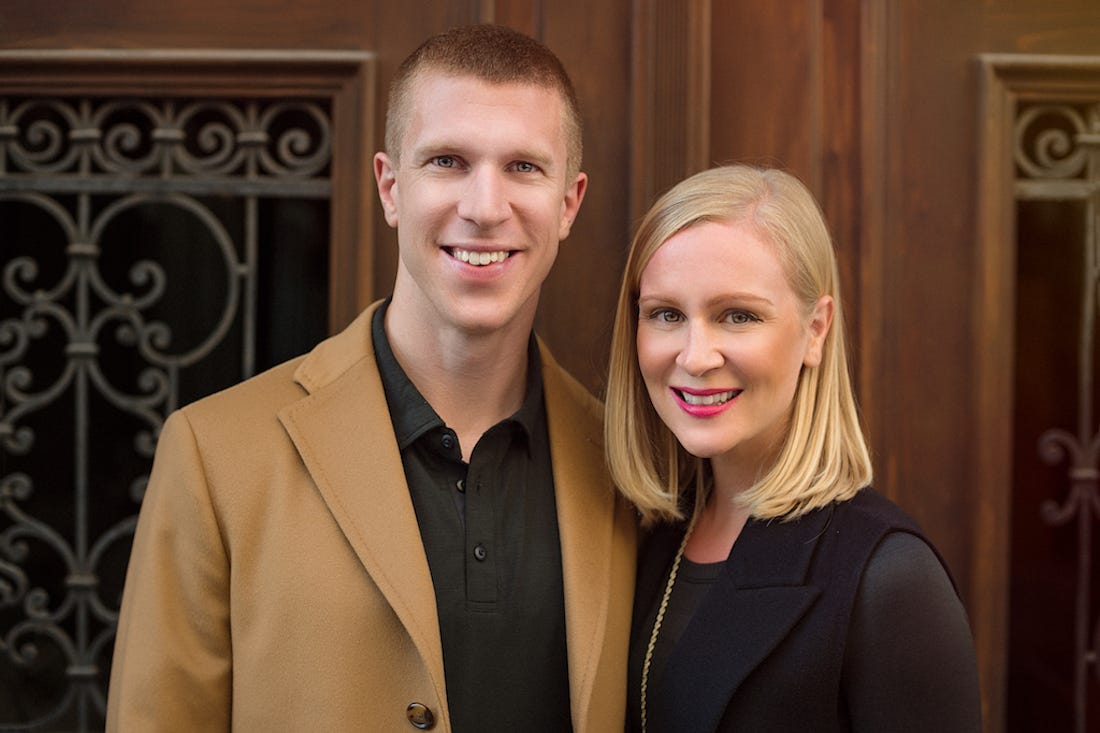
When he’s not treading the boards or slinging drinks, you’ll catch him nervously cheering on D.C.’s professional sports teams, or going for a run.
Thomas Daniels from 'Murder, We Spoke' On How To Get Past Your Perfectionism And 'Just Do It'
(If you are unable to download it, please click File-Download)
Please answer the questions, and leave the questions formatted as they are in the document. We may schedule a follow-up call or skype to round things out.
INTERVIEW QUESTIONS:
Many successful people are perfectionists. At the same time, they have the ability to say "Done is Better Than Perfect" and just complete and wrap up a project. What is the best way to overcome the stalling and procrastination that perfectionism causes? How does one overcome the fear of potential critique or the fear of not being successful? In this interview series, called “How To Get Past Your Perfectionism And 'Just Do It', we are interviewing successful leaders who can share stories and lessons from their experience about "how to overcome the hesitation caused by perfectionism. As a part of this series, I had the pleasure of interviewing Thomas Daniels.
Thomas Daniels is the Managing Director of Tantrum East Productions, who just released the narrative podcast “Murder, We Spoke”. He is also an actor, producer, director (and bartender!) based in New York City, with degrees from Marietta College and Ohio University. A native of the Washington, D.C. area, he’s a lover of both classical texts like Shakespeare and Anton Chekhov, but also of brand new works by writers you’ve never heard of. When he’s not treading the boards or slinging drinks, you’ll catch him nervously cheering on D.C.’s professional sports teams, or going for a run.
Thank you so much for doing this with us! Before we start, our readers would love to “get to know you” a bit better. Can you tell us a bit about your childhood backstory?
And thank you for having me! And absolutely. I think my childhood, and how it led me to where I am today as an actor, is best summed up in a family-favorite story. When I was 5 or 6 I had an old cassette tape (remember those?) that had a narrated version of Snow White and the Seven Dwarves on it. And I would listen to this cassette every night when I went to sleep. One evening, after a few weeks of listening to this tape as the soundtrack to my bedtime, I stood up and began to recite it. Word for word, sound effects and voices included.
If it wasn’t obvious I was destined to try out this “acting” thing then, it should have been! But this story is pretty emblematic of my childhood. We loved our stories in my home. And we loved to watch/ listen to/ experience our favorites over and over again. The Lion King, Fiddler on the Roof, The Princess Bride, these stories were constantly in the background of my childhood. We loved how these stories made us feel, and we liked feeling those feelings again and again.
Can you please give us your favorite "Life Lesson Quote"? Can you share how that was relevant to you in your life?
One that has always stuck with me is, “[n]othing is ever as good or as bad as it seems in the moment.” I couldn’t tell you who first said it, or if it’s even an actual quote from someone. But I like that it works in both directions. When I’m feeling on top of the world it helps to keep me grounded. It helps me remember that it’s okay to celebrate and bask for a bit in triumphs. But there’s always more to be done! And when I’m feeling defeated it helps to give me perspective that, “this, too, shall pass.”
My other favorite one is “I didn’t have time to write you a short message, so I wrote you a long one instead.” I think it’s misattributed to Mark Twain. But I have a tendency to ramble and overexplain (can you tell?), and it takes way more effort to coalesce those thoughts into something cohesive and structured than it does to make the reader parse it out themselves!
Is there a particular book, podcast, or film that made a significant impact on you? Can you share a story or explain why it resonated with you so much?
My favorite film of the last decade or so is Whiplash starring Miles Teller and J.K. Simmons. It asks some questions that I think I’m still grappling with and will be for the rest of my life. Do you have to make sacrifices in order to be a great artist? If so, do you sacrifice physical and/ or mental health? Relationships? If that is the case, is it worth it? How far can you go before sacrifice becomes destruction? What’s the nature of the mentor/mentee relationship, and where is the line between abuse and tough-love in that relationship? Is there room for an effective mentor/ mentee relationship that values constructive criticism over destructive? Or is it true that, as the villain (or hero?) of the film claims, “[t]here are no two words in the English language more harmful than ‘good job’”? I watched that film as I was finishing up my Master of Fine Arts in Acting at Ohio University, so those types of questions were top-of-mind when I first encountered it. But I revisited the film just a few months ago and I found that they were just as salient to me now, almost 10 years out from graduating, as they were back then.
You are a successful business leader. Which three character traits do you think were most instrumental to your success? Can you please share a story or example for each?
You flatter me! But yes, the humble amount of success I’ve attained in my field can, I think, be attributed to a couple of traits.
I do my best to be kind. I tend to think that people do their best work when they feel supported, and you cannot create a culture of support without a base level of kindness and empathy. I think back to the early days of my acting career when summer stock theatres still existed (are any still around?). This was 12-13 weeks in the company of maybe 30-40 actors, designers, and technicians who filled almost every role in a season of 5-7 productions. You would wake up in the morning and rehearse one play, take an hour for lunch, rehearse another play, take 2 hours for dinner and a rest, and then perform a third play in the evening. One show would open on Tuesday night, you’d run it until Sunday, load in the next one on Monday, and then open that one. It was grueling, It was stressful. It was fast-paced. And if you were lucky, it was fun! When you were lucky, it was when the director, stage manager, and whoever else in the room was in a position of power, was actively kind. You were more willing to put in the work for a kind leader instead of just counting down the minutes when you got to leave. You weren’t petrified of failure and you were more willing to take risks that would pay off. This, perhaps, cuts against my love for the film Whiplash and the truly unkind ways that the characters in the film treat each other. But maybe that’s exactly why I respond to it so much. Maybe I could use more of an edge!
Another important attribute to me is preparedness. Especially when you’re the leader of a group. People who are putting in work for you can absolutely smell someone who is unprepared. And if the boss is unprepared, why should they bother putting in the work either? I’m loath to give a negative example, but this is one I re-learn the hard way every time I fail at it. I was directing a staged reading once. Nothing fancy, nothing life-changing. But that was my problem. Maybe I had overcommitted myself that week, maybe I had family drama that popped up and took up too much time, I honestly couldn’t tell you. But for whatever reason I read through the script once and thought, “okay, I got it it, I’ll figure out what I want to do with it on the day.” I didn’t spend any time preparing, thinking, determining which moments were the important ones that needed highlighting, possible staging ideas etc. And my actors could sense it on me when their questions were met with either silence or bumbling. And I think it was ultimately a failure.
Lastly, and an important counterpoint to preparedness, I think it is absolutely imperative that you be humble. There’s a fine line between being prepared and being a know-it-all or a dictator. I think the most underutilized answer among leaders is “I don’t know” and it should be followed up immediately with, “let’s find out together” or “what do you think?” As long as you’re not utterly unprepared, this signals to your team that 1) You’re not just making up answers to seem smart 2) You care enough about their question to start problem-solving immediately and 3) You value their input as much as your own. Especially in theatre, which is the ultimate group-project, collaboration is key. And you don’t get collaboration if the leader isn’t humble enough to let people voice their collaborative ideas and test them. When I was an undergraduate one of my teachers used to model this behavior to me in the rehearsal room by constantly asking his stage managers what they thought of a scene. That may not seem like a big deal, but there are directors (and stage managers!) out there who view the stage manager as ... just that. The manager of the stage, and the things that go onto and off of it. Their artistic opinions are often unasked for, ignored, unwanted, or even discouraged. That’s a view that I think, thankfully, is trending downwards.
Let’s now shift to the main part of our discussion. Let’s begin with a definition of terms so that each of us and our readers are on the same page. What exactly is a perfectionist? Can you explain?
This one might make me some enemies, but I think most people who call themselves perfectionists are people who don’t want to put in the work and are trying to temper expectations early so that when they turn in a mediocre product they can say, “well, see, I said I was a perfectionist and I wasn’t able to acheive perfection because I’m such a perfectionist.” And, not to out myself too much, but most of the time (though not always) I think I fall into this camp. I don’t necessarily see this as a fatal flaw. I think it’s largely about protecting your own feelings, which can be important. I’ll call these people pseudo-perfectionists.
But I think 1 out of every 20 people who describe themselves as perfectionists are the ones I see as true perfectionists. These are the people who have truly spent hours on a project, reworking it, retracing their steps, trying it from different angles etc. only to discover that what they’ve ended up with is a mish-mash. It’s sort of like that old joke, “a camel is a horse designed by a committee”, except the committee is the multiple versions of that same person who are fighting for creative control over the project.
The premise of this interview series is making the assumption that being a perfectionist is not a positive thing. But presumably, seeking perfection can’t be entirely bad. What are the positive aspects of being a perfectionist? Can you give a story or example to explain what you mean?
For what I’m calling the true perfectionists, one of the positive aspects is that you cannot fail to be prepared. If you’re actually a perfectionist then you have looked at a problem, or a project from almost every conceivable direction and considered every solution inside the box and a good deal of the ones outside. So when decisions need to be made, you can rest easy knowing that you could not have done anything more to prepare. And I hope you’ll indulge my extended metaphor from above when I say that, if a perfectionist delivers a camel instead of a horse, maybe there are times when the camel is an improvement.
Not to get too theatre-nerdy on you, but I am reminded of my Theatre History undergraduate courses and a turn of the century German duke, the Duke of Saxe-Meiningen. He pioneered Realism in theatre at a time when live theatrical performance was dominated by melodrama, broad strokes, and big exclamatory poses and voices. People were stunned to see actors behaving “realistically” on stage. And the way that he acheived this was by rehearsing a play for weeks, even months, to make sure every prop was realistic, every actor speaking and behaving truthfully, every movement by every person in a crowd scene choreographed and made natural, every set piece designed and painted to look like the real deal. While I think it would have driven me absolutely crazy to work for this man in a rehearsal setting, who knows where the fields of acting and theatre would be without him?
What are the negative aspects of being a perfectionist? Can you give a story or example to explain what you mean?
For what I call the pseudo-perfectionists, people who use “perfectionism” as a way to lower expectations, the negative aspects are clear. The product you deliver is unlikely to be your best work, because you’ve already resigned yourself to that thought, and haven’t put in the work necessary. The worst outcome is paralysis though. Someone asks you to do a project. For whatever reason you aren’t motivated to put in the work. So you temper expectations. But then when it comes time to deliver you are embarassed by the final product. So maybe you ask for another week. But you’re still not motivated. You do some work on it, but it still doesn’t feel right. Rinse and repeat until you either get removed from the project, or finally deliver something subpar, weeks late, that is no longer useful.
For the true perfectionists, the danger is the same. But the path there is more painful. Someone asks you to do a project. You’re so motivated to do it, you spend hours upon hours on it. You start from scratch three or four times. You try out some unorthodox angles on it that prove fruitless. The deadline approaches. You’re not happy with it. You ask for an extension. Rinse and repeat until you get removed from the project. Or maybe you finally deliver a camel, weeks late, when they really needed a horse.
From your experience or perspective, what are some of the common reasons that cause a perfectionist to “get stuck” and not move forward? Can you explain?
I think for both versions of perfectionists that I’ve described, the most common reason is a supervisor who fails at being “kind, prepared, and humble” like I talked about above. A true perfectionist has an impeccable work ethic. And if, as a supervisor, you make it utterly clear that failure is an option, and that failure is something that we learn and grow from, you’ll watch as your hard-working perfectionist throws everything plus the kitchen sink at a problem and comes up with a solution. For the pseudo-perfectionists, I think they’re far less likely to feel a need to temper expectations if they’re not frightened of harsh repercussions for falling short.
“But Thomas,” you say, “what if it’s a project you’re undertaking on your own and you don’t have a supervisor?” Excellent question! In this case, you are your own supervisor. And guess what? When we are our own supervisors, we are too often unkind, unprepared, and lack humility when supervising ourselves!
Here is the central question of our discussion. What are the five things a perfectionist needs to know to get past their perfectionism and “just do it?” Please share a story or example for each.
VIDEO LINK: https://youtu.be/27N5kR4eJ_o
1. Be a good self-supervisor
Whether you’re working underneath somebody or not, at the end of the day you are the person in charge of the work you do. So you’re always your own supervisor. And the same rules apply. Be kind. Be prepared. Be humble. If you ‘re unkind and beat yourself up for not getting it done, you’ll internalize the guilt and you won’t be motivated. If you skip steps and start in on a project without preparing the groundwork, you’ll quickly get lost and you’ll become disheartened. If you assume that your first crack at a problem is the answer without stepping back with some humility and looking at it from a different angle, then you’re probably wrong. I spent almost two years producing, acting in, and editing the narrative podcast, Murder, We Spoke (available wherever you get your podcasts!) with some colleagues. There were plenty of moments where I was feeling disheartened by the amount of work left to do on it. And there were moments where I let that feeling keep me from putting in the work. Or I let it force me into skipping steps because I wanted to be done. If I’d been a better supervisor to myself, I could have avoided some bad feelings, or avoided having to re-do some work because I wasn’t prepared enough.
2. Impose deadlines
The key here is the plural, deadlines. There’s a reason all of our teachers in school would make us turn in each step of our big final projects every few weeks. Anything worth doing is going to involve a lot of steps, and each step requires its own devoted attention. Break the thing up into steps, give yourself deadlines for each step, and do your best to stick to them.
Don’t worry, you’ll probably be late. We certainly pushed back one, or two (or three, or four) deadlines when we were creating Murder, We Spoke. But each time we missed one it was like a little jab in the side. “Hey, you missed that deadline” and it was motivation to get back on the horse and try to catch up. Be careful though, if you’re a bad self-supervisor you can start to make yourself feel overly guilty for missing the deadline, and then you’re doomed! Be kind to yourself!
3. Ask for a ton of feedback...
Sometimes people ask me if I still get stage fright. What a ridiculous question. I’ve been a professional actor for a decade and a half. The obvious answer is, ABSOLUTELY 100% YES EVERY SINGLE TIME. Every single show I do, as I’m waiting in the wings about to make my first entrance, my mind is racing. “What if they hate you? How did you trick this theatre into hiring you? Your performance is boring and wooden.” It all goes away the very second I step onstage, but it sure does suck in the moment.
So what does this have to do with asking for feedback on a project? Well, there aren’t many things more vulnerable than doing something creative and then putting it in front of others to judge. But the pressure of having an audiennce will motivate to you get that first draft out. And now, you finally have a draft! It took your whole being to force yourself to finish it, and now you have it. And you have to share it, like an actor sharing a performance on stage, with an audience who is going to have a opinions.
It’s absolutely terrifying. But you have to do it. Because their opinions will (sometimes) be instructive.
4. ... and take it all with a grain of salt
With that said, a lot of people don’t know what the heck they’re talking about. Even (especially?) the ones who seem the most confident. Just because you ask for a ton of feedback doesn’t mean you need to incorporate all of it. Ideally, you can cultivate a community of people whose feedback you trust. But even then, you are the expert on the project that you’ve created. So take the feedback, but trust your gut.
And you don’t always need to take the feedback at face value. Sometimes when someone says they don’t like something, that’s an indication that it’s working exactly as intended. When the big bad wolf says that he hates houses made of bricks, you now know that you should always build your houses out of bricks!
5. Get some distance
As an actor I do a lot of auditions on tape these days. Sidenote: this is a great way to squash perfectionism, because there’s no time to be a perfectionist. You’ll get an audition request in the evening on a Monday, and it’s due Wednesday morning, and you’re working all day Tuesday. So you’re either going to record that tape right now before you go to bed. Or you’re going to wake up at the crack of dawn on Wednesday, film it really quickly and get it sent off just minutes before the deadline.
But the point is, this part of the industry forces me to put out a lot of content (short scenes, monologues, songs, improvisations etc.) And from time to time I’ll have some reason to revisit an old tape. The number of times I’ve rewatched an audition that I felt great about at the time and then thought, “wow, that’s the take I chose to send?” is depressing. But the reverse is true too. I’ve sent tapes that I’ve not felt great about, and when I revisit them I think, “damn that was some pretty good work!”
When you undergo a creative project, you need to get that first draft out as soon as you can. And then you need to put some time and distance between you and it. In the immediate aftermath you will never be able to properly evaluate it. But the version of you that is 6 months older, and hasn’t thought about it since you finished, is a different person. And that person is more likely to be honest about what they think than the version of you that just turned it in.
You are a person of great influence. If you could inspire a movement that would bring the most amount of good to the most amount of people, what would that be?
You flatter me again, you...!
I’ve worked a lot in food service, and there’s an idea amongst food service professionals that nobody who’s ever worked in food service treats those workers poorly. But if I could inspire a movement to bring about good I think I’d extend this sentiment to beyond food service. I don’t think this is a revolutionary idea or anything, but I think we would all do well to try and imagine walking a mile in other people’s shoes. Why does someone need to have worked in food service in order for them to be kind to food service workers? Could they take a few seconds to consider how challenging it is working forty hours a week on your feet, in a position that is 90% face-to-face customer service, in and out of cramped dining rooms and kitchens, and earning below minimum wage on the hope that they will tip you well? When I find myself getting frustrated with anybody, I do my best to take a breath and see if I can empathize. I often fail. But when I succeed I feel better.
Is there a person in the world whom you would love to have lunch with, and why? Maybe we can tag them and see what happens!
Oh boy! At this moment in time I guess I’d say Allison Janney? She’s been one of my favorite actors since I saw Juno when I was 16 years old. She seems like she’s really embodied the phrase, “take the work seriously, but don’t take yourself too seriously,” which is a fine line that many of my most admired actors seem to have mastered walking.
How can our readers follow you online?
You can find me at www.thomasrdaniels.com! I’m not terribly active on instagram but if you’d like you can absolutely find me there too at @flomasito_80
Thank you so much for sharing these important insights. We wish you continued success and good health!
Photo Credits: Rick Stockwell (Headshot), DJ Corey Photography (Action Shot)