I didn’t become less of a teacher when I stopped pretending I had all the answers. In many ways, I became a better one.
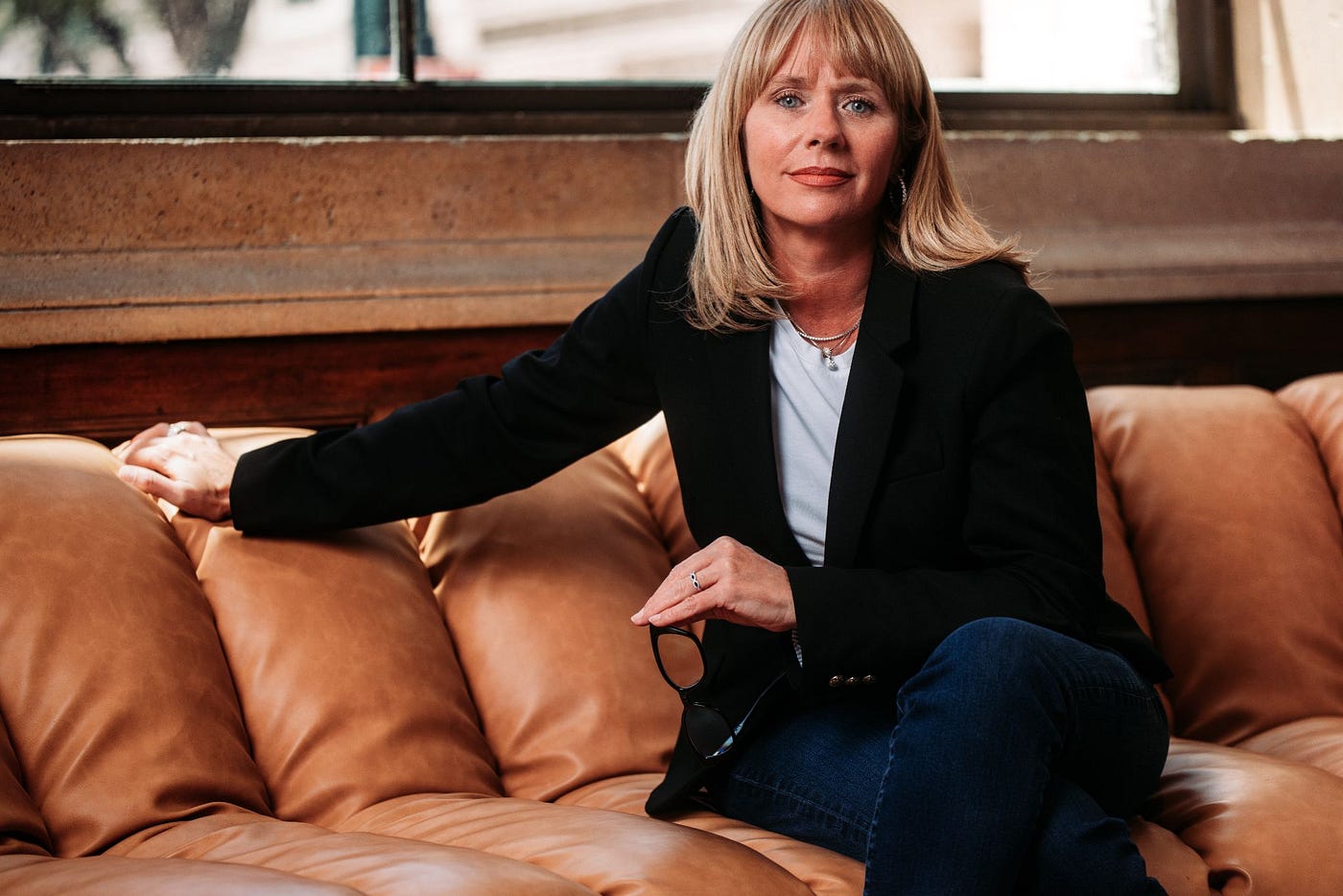
Lorraine Connell from Peers not Fears On 5 Things You Need To Know To Be A Highly Effective Educator or Teacher
As a part of our interview series about “5 Things You Need To Know To Be A Highly Effective Educator”, I had the pleasure to interview Lorraine Connell
Lorraine Connell is a TEDx speaker, movement-builder, author, and founder of Peers Not Fears and the Speak Boldly Showcase—two platforms redefining what leadership looks and sounds like.
For more than twenty years, Lorraine has been helping people uncover the courage to use their voice, own their story, and lead from who they truly are. From classrooms to stages, her work sits at the intersection of leadership, storytelling, and transformation.
Through Peers Not Fears, she equips youth with the confidence and emotional intelligence to lead. With the Speak Boldly Showcase, she has created spaces where women step into vulnerability, visibility, and power. Lorraine believes leadership is not reserved for a chosen few—it is awakened through practice, voice, and brave action.
Her message is simple and radical: when people speak boldly, they change lives—including their own.
Building courageous leaders through story, voice, and belonging
Thank you so much for doing this with us! Our readers would love to “get to know you” a bit better. Can you share the “backstory” behind what brought you to this particular career path?
I was a high school teacher, and I started noticing something that felt very familiar, students who reminded me of myself were avoiding opportunities to lead. They weren’t stepping up, not because they didn’t care, but because they didn’t believe they were good enough. That hit home.
Growing up, I didn’t see myself as a leader either. I wasn’t the most popular, I wasn’t a star athlete, and while I did well in school, it didn’t come easy. I had to work hard for every grade. I assumed other people were just naturally better, and that maybe leadership wasn’t meant for someone like me.
But as a teacher, I could clearly see the strengths in my students that they couldn’t see in themselves. Even when someone told them they had potential, they didn’t believe it. And that’s when something shifted for me. I realized that my true gift wasn’t just teaching chemistry, it was helping others do hard things, especially when they didn’t believe they could.
That became my mission: helping young people believe in themselves. I left teaching in 2021 to expand this work, because I saw how narrow our definition of leadership was in schools. Too often, leadership was reserved for a select few, and those few were expected to be perfect. If they made mistakes, they were punished or dismissed, and that sends the wrong message.
I started Peers Not Fears to change that, to help all young people see that leadership isn’t about being chosen, it’s about being brave enough to grow.
Can you share the most interesting story that happened to you since you started your teaching career? Can you tell us what lesson you learned from that?
Honestly, my biggest moments as a teacher came when I stopped seeing myself as the teacher and started seeing myself as a learner alongside my students.
I didn’t always have the best language to describe what was happening in my classroom. At one point, I told my students and their parents, “I am not teaching.” That statement was not well received, and it actually cost me a lot of support from my administration. But what I meant wasn’t that I had stopped teaching. I was no longer dictating the path my students needed to take to learn. Instead, I was guiding them toward finding their own pathways, asking questions, solving problems, and figuring out what they needed to move forward.
That was challenging for people to understand because we have had a very specific picture of what teaching is supposed to look like for a very long time. The teacher stands at the front, delivers the information, and the students learn from the teacher. When you challenge that model, it can feel like you are challenging the very definition of what it means to be a teacher.
That experience is a big part of why I want to share these ideas with educators and your readers. If we only think of teaching and teachers in the way we have always known them, it can be incredibly difficult to shift how we show up in the classroom—even when the world around us is changing.
What I learned by stepping off the stage and stepping beside my students is that we are lifelong learners, and if we want our students to embrace learning, we have to be willing to demonstrate that ourselves. I didn’t become less of a teacher when I stopped pretending I had all the answers. In many ways, I became a better one.
Are you working on any exciting new projects now? How do you think that will help people?
OMG, I am so excited to finally share more about the Peer Impact Program I spoke about in my TEDx, February 2026.
I’ve been developing and testing this program for the past couple of years, and I’m now ready to bring it to educators working with students of all ages. At its core, it is a train-the-trainer model that treats students as one of the most valuable resources in a school—and uses that resource to actually take work off teachers’ plates.
Instead of continually asking teachers to do more to support students’ social, emotional, and leadership development, Peer Impact asks a different question: What happens when we empower students to support and lead one another? The exciting part is that we’re not just developing the students we traditionally identify as leaders. We’re creating opportunities for students who are often overlooked, underestimated, or never given a chance to lead.
I believe this has the potential to be a game changer for advisory programs. In my experience, advisory can sometimes feel like the emperor’s new clothes—everyone knows it isn’t working the way we hoped, teachers are struggling, and administrators know it, but because the goal is to support students’ mental and emotional growth, it can be difficult to acknowledge that the current model isn’t meeting the needs of either students or teachers.
Peer Impact offers a different approach. Rather than asking teachers to carry one more responsibility, we build the capacity of the students themselves to create connection, belonging, leadership, and support within their school community. That is what I’m most excited about: finding a way to make schools better for students while also making the work more sustainable for the adults who are already carrying so much.
Ok, thank you for that. Let’s now jump to the main focus of our interview. From your point of view, how would you rate the results of the US education system?
Unfortunately, I think we are at a crossroad in education. Technology is making the traditional objective of education increasingly obsolete. The U.S. education system was largely designed around teaching children to switch tasks as assigned, follow instructions, and reproduce information. Teachers were the people who held the knowledge, and if we wanted our children to learn, we needed educators to deliver that knowledge in ways that seemed to work. Technology has fundamentally changed that equation.
Knowledge is something students can access almost instantly, and AI can provide answers, explanations, and even help them work through problems. In response, we have continued to focus on finding better ways to deliver the same content. Teacher preparation programs emphasize classroom management and a variety of instructional methods. Those things have value, but they are addressing a system that is changing much faster than the training designed to support it.
I think we need to step back and ask a more fundamental question: What is the purpose of school, and is that purpose the same as the purpose of our education system? If we can answer that question honestly, we may be able to address many of the challenges we are facing.
As you will see in my answers below, I believe the education system provides enormous value to children, families, and communities. But if we are measuring the success of schools by whether they are effectively educating children for the world they are entering, I don't believe the traditional model is producing the results we need.
We are trying to solve a problem within a system that may no longer be designed for the world we live in.
Can you identify 5 areas of the US education system that are going really great?
My answer to this question might surprise your audience—but perhaps not.
The U.S. education system is doing several things very well, but many of them have little to do with what we traditionally think of as education.
1. We feed children.
Through our schools, we are able to provide breakfast and lunch to children who might otherwise go without reliable meals. Regardless of how we feel about the larger education system, making sure children have access to food while they are at school is an enormous accomplishment. A child who is hungry is not in a position to learn, so meeting that basic need matters.
2. We bring trusted adults into children's lives.
Teachers, counselors, coaches, administrators, and other school staff have the opportunity to become trusted adults for young people. For some children, that relationship may be one of the most important connections they have. We don't always measure the impact of those relationships, but we should. Sometimes the most important thing a teacher gives a student isn't content knowledge—it is the experience of having an adult see them, believe in them, and care about them.
3. We provide access to childcare.
Public education also provides something we don't always acknowledge as part of the system: supervised childcare. For families with children, having a safe, structured place for their children to be during the school day allows parents the opportunity to work. That has an enormous impact on families and on our economy. We may not call it education, but it is an important function that our schools provide.
4. We create opportunities for creating community.
Schools bring children and families together in ways that few other institutions can. They create opportunities for relationships, friendships, activities, shared experiences, and connection within a community. At their best, schools can become places where children and families feel that they belong to something larger than themselves. That sense of community is incredibly valuable, even though it can be difficult to measure on a standardized assessment.
5. We have made public education broadly available to children.
Perhaps the most important thing the U.S. education system has done well is make school available to children across the country. Regardless of whether we agree on the purpose of education—whether we believe schools should primarily educate, provide food, provide supervision, build community, or some combination of all of these—we have created a system that makes access to school broadly available to children.
If we can recognize those strengths, we can begin to ask a better question: How do we build on what is already working while rethinking the parts of education that are no longer serving us?
Can you identify the 5 key areas of the US education system that should be prioritized for improvement? Can you explain why those are so critical?
1. Rethink the purpose of education.
I would absolutely say the most important area to prioritize is the purpose of education itself. For generations, one of the primary roles of schools was to provide access to knowledge. But schools are no longer the sole source of content knowledge. Information is everywhere. With technology and AI, students can access answers to almost any question instantly.
So we need to ask: What is the purpose of school when information is no longer scarce? The COVID-19 pandemic gave us an extraordinary opportunity to ask that question. We sent students home, removed them from the traditional classroom, and then welcomed them back. Yet I don't believe education truly evaluated what happened on either end of that experience.
I am going to say this boldly: that missed opportunity tells me more about our education system than almost any other data point. If we had seriously evaluated what was and wasn't effective during that period, we might have realized that simply putting students back into the traditional system was not necessarily the answer. We had an opportunity to step back and ask what schools are actually designed to accomplish, what students truly need from us, and what parts of the traditional system are no longer serving that purpose. Until we answer what education is for, it is difficult to know what we should change.
2. Rethink assessment.
For as long as we have had formal assessment in the U.S. education system, much of it has been based on teaching information, learning that information, and then reproducing what was taught. But do we really need that process anymore? Maybe we never did.
We need to ask what we want graduates of our education system to leave with. Do we want them to be able to reproduce the content that was delivered to them, or do we want them to be able to think, evaluate, question, and work through problems? With AI and technology, I no longer need to be able to tell you everything you just taught me. I can search for answers to almost any question. But can I determine whether the answer I found is correct? Can I recognize misinformation? Can I check my own work? Can I work through a problem that doesn't look exactly like the example I was given in class?
Those are the skills I want to know my students have when they leave my classroom. Our assessments should tell us whether students can think with knowledge, not simply reproduce it.
3. Rethink what we believe learning should look like.
We need to prioritize what we actually want the classroom experience to be for students. For too long, classroom management has often meant compliance: following the rules, sitting quietly, and behaving in a particular way.
This was an area where I struggled with my own administration as a teacher. My classrooms rarely looked like the traditional picture of a quiet, orderly classroom. But I had to ask myself: What does learning actually look like?
For me, learning has never been quiet. When I am learning, I am excited. I am asking questions. I am challenging ideas. I am talking through problems. Being quiet is probably the furthest thing from my natural learning process.
We need to stop confusing a well-managed classroom with an effective learning environment. A classroom can be noisy, active, messy, and full of discussion and still be a highly effective place to learn. The question shouldn't be, "Are the students behaving?" It should be, "Are the students learning?"
4. Rethink the role of the teacher.
I think the answer to the question about attracting top talent to teaching is connected directly to this one. If the primary job of a teacher is to manage a classroom and deliver content, then we aren't necessarily looking for highly talented educators. We are looking for managers and supervisors.
So what do we actually want a teacher to be able to do? We want teachers who can foster curiosity, build relationships, challenge students, create meaningful learning experiences, recognize what individual students need, and help them learn how to think.
Maybe a 45-minute class period in middle and high school doesn't allow teachers to do the things we say we want them to do. So instead, we fall back on classroom management and content delivery. And frankly, that can be boring and frustrating—for students and for teachers.
We will not attract and retain top talent in education if we don't give talented people a role that requires their talent. If we want teachers to inspire curiosity, think creatively, solve problems, build relationships, and engage students, we have to give them the autonomy, time, and support to actually do those things.
5. Rethink the role of the student.
If we reshape the role of the teacher, we also have to reshape the role of the student. As a student, I was trained to take down what my teacher said or put on a screen, read it, learn it, and reproduce it. That isn't what we should be asking of students anymore.
We need to bring students into the process of learning and curiosity. We need to give them opportunities to help shape what happens in the classroom. When we bring students into learning rather than simply asking them to learn from us, they become active participants instead of passive recipients.
And that shift is where true engagement happens. This is very similar to what I see in my Peer Impact program when we build connections among students. We don't simply tell students how to connect with one another. We create opportunities for them to learn with each other.
We can do the same thing in the classroom. Students can be resources for one another. They can ask questions, solve problems together, teach each other, challenge each other's thinking, and contribute knowledge that the teacher doesn't have.
The goal shouldn't be for every student to leave the classroom knowing exactly what the teacher knows. The goal should be for students to leave knowing how to learn, how to think, how to question, how to solve problems, and how to learn with and from other people. That is the education system I believe we should be building.
Super. Here is the main question of our interview. Can you please share your “5 Things You Need To Know To Be A Highly Effective Educator?” Please share a story or example for each.
1. You are not the one with all the answers.
For a long time, teachers were the ones with the information, and our job was to dole that information out to students. In the younger years, we help students learn how to learn, but as students get older, that can get lost in the pressure to cover as much content as possible in as little time as possible.
Today, with AI and technology, we are no longer the only ones with access to knowledge. Frankly, Google can give a student an answer much faster than waiting for a teacher to get to their question in a classroom of 20 or 30 other students.
Teachers need to think of themselves less as the person who has all the answers and more as the map for helping students find them. We can provide the detours, obstacles, questions, and challenges that help students learn how to navigate the terrain.
When we stop thinking of ourselves as the person who delivers the content and instead see ourselves as the person who helps students engage with and explore that content, something changes. Students become more engaged, and teaching becomes more fun. We may even learn things we didn't know ourselves because we are exploring alongside our students.
2. Consider how you will assess knowledge.
For most of my teaching career, I used traditional assessments: 20 multiple-choice questions, two or three easy problems, two or three medium-level problems, and one or two difficult problems. That was my formula for almost every assessment. The content changed, but the structure stayed the same.
As I began pushing against traditional approaches to assessment, I first changed how I evaluated those assessments. I put more emphasis on what I wanted every student to know and less emphasis on whether they could answer the hardest questions.
Then I changed the assessment itself. I removed the multiple-choice questions completely. There was no longer room for a student to demonstrate a fragment of knowledge because the answer was simply right or wrong. I also reduced the number of problems. I asked myself, Why does a student need to show me three times that they can solve the same type of problem?
Yes, more opportunities can be helpful, but they also require more effort from the student. So instead of requiring three similar problems, I gave students a choice of one. Same opportunity to demonstrate understanding, less effort.
Eventually, I made the assessments optional. If students could demonstrate that they understood the content, I allowed them to choose whether they wanted to challenge themselves with harder material—with no penalty if they didn't get it right.
What I discovered surprised me. Students who I considered average began pushing themselves harder. My strongest students began taking risks they had previously been afraid to take. I realized that many students were not unwilling to do challenging work. They were unwilling to risk their perfect score to try it.
Once I removed the possibility of a grade penalty, students were much more willing to challenge themselves.
3. It is not as much about classroom management as it is about student engagement.
When I first thought about classroom management, I worked very hard to identify which students were going to be challenging and which were going to be easy. In order to be good at classroom management, I knew I needed to make those decisions as soon as students walked into my classroom.
I didn't see anything wrong with this until I realized that sometimes I missed the mark on how I had identified a student. Worse, students seemed to comply with whatever label I had given them. My approach to management was focused on getting as many students as possible to comply with what I thought needed to happen in order to get the material in front of them.
But that wasn't the same as learning. When it came to classroom management, compliance was acceptable. When it came to education, learning, and engagement, it wasn't enough. I had to shift my thinking from management to engagement.
It took more effort, but the payoff was incredible. The students I would have labeled as challenging often didn't give me problems in either scenario. In my old way of thinking, I either shut down the potential problem before it started or managed the behavior once it appeared. In my new way of thinking, I found ways to engage students where they were.
I grouped students together so they could learn from each other. I allowed students to have more ownership over their path to learning rather than being responsible for dictating exactly what learning had to look like from the front of the room. The more engaged students became, the less I had to manage them.
4. Foster curiosity and problem-solving.
One of the most powerful tools a teacher has is the ability to foster curiosity. When information is simply collected—or when students are constantly waiting for information to be given to them—we can lose the desire to learn and grow.
Think about the last time you were genuinely curious about something. That desire to find out more, to understand what you didn't know, can feel almost like an engine inside you. The same is true for every child in your classroom.
If you can foster that curiosity, you may find that you don't have to manage your classroom nearly as much. The challenge is figuring out where each child is, what they are curious about, and what they need to make the classroom a place where that curiosity can grow.
You also want to give students appropriate challenges that require them to solve problems. This can be a significant investment of time and energy for a teacher, but when you give a child a challenge that matches where they are, the experience of struggling, figuring it out, and ultimately succeeding can become incredibly motivating.
I often demonstrated this through games with my students. Games don't carry the same consequences of failure as classwork or assessments, which allows conversations about risk-taking to happen much more naturally.
Imagine a game of tag. If being "it" feels like too much of a risk for a student, they may move to a corner where they won't be noticed. Eventually, they get bored because they aren't really participating. So they test the waters. They step into the center of the game for a moment, then retreat to the corner when the risk feels too high. That back-and-forth is exactly what we want to create in learning. We want students to be able to test the waters, take a risk, step back, and try again. But we also need to give them language for what they are experiencing.
When a child becomes bored, they often look for a way to become more engaged. In a game, they enter the play. In a classroom, they may seek attention or create disruption. If we don't recognize boredom as a need for greater engagement, we end up managing the behavior instead of addressing the need.
The goal is to find the challenge that offers the right amount of risk. It is a dance—and with 20 or 30 students in a classroom, expecting one teacher to manage every part of that dance alone is unrealistic.
Which brings me back to number one: We cannot do it all ourselves. We have to see our students as a resource.
5. Students have as much to share with each other as you do.
Whenever I speak with a new school, one of the first things I ask is how they are using the resource of their students. Whether your school is small or large isn't the issue. The question is: How are you tapping into every student?
Too often, the students who are asked to share their voices, take on responsibility, or hold leadership positions are a very specific type of student: they follow the rules, achieve highly, and are already involved.
My estimate is that this represents perhaps 15–20% of your students. That leaves 80–85% of your students as an enormous untapped resource. I know this because I was one of those students.
I think about how many of my students were like me as a child—waiting for someone to tap them on the shoulder, ask them to participate, or simply see them. When I realized how many of my students were waiting to be seen, I had to confront something in myself. I had to be willing to allow students to struggle and make mistakes. That was difficult because I was afraid their mistakes would reflect on me.
This was the heart of my TEDx talk. I didn't want to ask the students who might make a mistake to step into roles because I was afraid they wouldn't get it right the first time.
But when I finally let go of that fear, I saw something I never expected. I saw hunger. Students who I had overlooked were suddenly engaged because, perhaps for the first time, they felt like I was actually seeing them. And I was teaching 16-year-olds. Can you imagine waiting to be seen for 16 years and then finally being seen?
The motivation and engagement were palpable. And the ripple effects went much further than I ever imagined. Students are a resource. When we engage all of our students as resources—not just the students who are already high-achieving, compliant, or involved—we grow as a community in ways we could never achieve on our own. It takes courage because, for as long as I can remember, we have viewed students primarily as receivers of knowledge rather than as equals, contributors, and sometimes even experts. Shifting that perspective will feel uncomfortable. Sometimes it will require you to take risks you aren't ready to take. But your students are waiting for you to see them. And when you do, it can be a game changer.
As you know, teachers play such a huge role in shaping young lives. What would you suggest needs to be done to attract top talent to the education field?
It is not just about money. Would more money help? Absolutely. But we all know that most people do not go into education with the intention of becoming rich. People enter education because they are looking for the fulfillment that comes from seeing the light turn on in a student. That feeling—that moment when a student finally understands something or sees themselves differently—is one of the most rewarding experiences a teacher can have.
The challenge is that we have become very attached to the idea that the teacher must be the person with all the knowledge. If we are willing to let go of that role and experiment with new ways of teaching and learning, that fulfillment can come in different ways. But for that to happen, school systems and administrators have to become more comfortable with change and experimentation.
That also means relying less on universal assessments as the primary measure of success and more on the evidence that is right in front of us. There are too many variables across schools, communities, students, and classrooms to believe that one universal assessment can tell us everything we need to know about learning or teacher effectiveness.
Attracting top talent means creating schools and classrooms where people can find fulfillment in their work. The world outside of education is changing at a rate and speed that schools are struggling to keep pace with. We have to be willing to let go of the belief that everything needs to be controlled and managed.
A teacher who is trusted, valued, and supported is more likely to stay in the profession and share the fulfillment they experience with others. The opposite is also true. A teacher who feels undervalued, unsupported, and micromanaged is more likely to leave the profession—and may ultimately speak negatively about it, making it even harder to attract the next generation of talented educators.
So many young people choose to become teachers because of a teacher who changed their life. That is powerful. But if we cannot support and value the people already doing this work, we will not attract the talent we need.
And that is why I don't believe this is simply a money problem. We are watching wonderful, incredibly talented people choose other professions. If we want them to choose education, we need to make teaching a profession where talented people can grow, experiment, feel trusted, and experience the fulfillment that made so many of us become educators in the first place.
Can you please give us your favorite "Life Lesson Quote"? Can you share how that was relevant to you in your life?
Maya Angelou
"I've learned that people will forget what you said, people will forget what you did, but people will never forget how you made them feel".
This connects so deeply with the way I engage as an educator. It really has nothing to do with the content I share or how I teach the students. What matters more than anything else is the confidence, the courage and the leadership my students feel when in the classroom or learning space with me. This sentiment guides everything I do and say, because I know the impact words and actions can have when you don’t consider the person you are saying those words or doing the action to - when you do you are more likely to come from a place of learning and understanding of each other.
We are blessed that some of the biggest names in Business, VC funding, Sports, and Entertainment read this column. Is there a person in the world, or in the US, with whom you would love to have a private breakfast or lunch, and why? He or she might just see this if we tag them :-)
I would love to have a moment of time with Brene Brown!
How can our readers follow you on social media? Instagram is where much of my content and engagement happens!
Thank you so much for these insights! This was so inspiring!