Early in my career I was a complete conflict avoider. In general, I believed that conflict stood in complete opposition to every fiber of my being.
(Lisa Gordon): Emotional Intelligence; What It Is, Why It Is So Essential, And How We Can Increase It
As a part of our series about “Emotional Intelligence, I had the pleasure of interviewing Lisa Gordon).
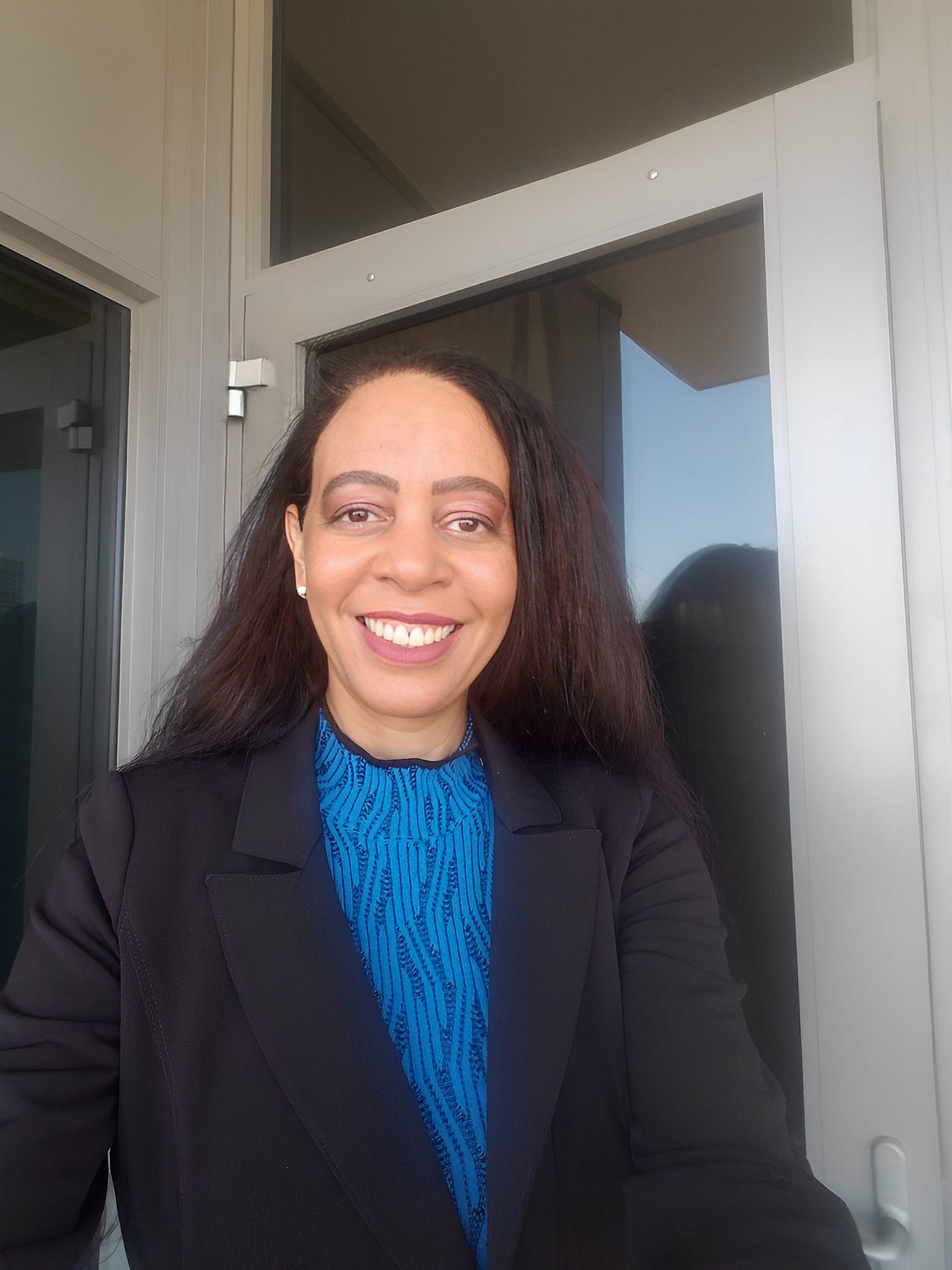
Lisa Gordon is a Speaker, Trainer, Facilitator, and Consultant and the CEO of Lisa Inspires specializing in leadership, conflict management, and emotional intelligence. By leveraging her more than 25 years of experience of rising up the ladder of success “without a ladder,” Lisa helps people look through the lens of people, power, position, and belief to clarify their path to advancement and “lead from the edge.”
Thank you so much for joining us in this interview series! Before we dive into the main focus of our interview, our readers would love to “get to know you” a bit better. Can you tell us a bit about your childhood backstory?
I am a very proud fourth generation native San Diegan. I had a wonderful childhood and upbringing filled with positive experiences, and appreciation for people of all races, places, and faces. I was a very motivated and ambitious child raised with a focus on faith, family, education, and the performing arts, and spent most of my childhood singing, dancing, acting, and performing in numerous plays, recitals, and dance productions. The stage was my special place to connect with people through music, dance, theatre, and song. My faith and religious upbringing have also shaped me into the person I am today, and my faith continues to guide me daily.
Additionally, my education and love for learning have been motivating forces in my life. I am so grateful my parents instilled the value of education in me at an early age. My education and college degree have given me the opportunity to pursue an adventurous career in communications where I worked on behalf of a mayor, city, school district, non-profit organization, radio station, public agency, and thousands of small businesses. This myriad of diverse career experiences inevitably led me to launch my business, “Lisa Inspires,” a training, facilitation, and consulting firm serving corporate, government, and non-profit entities. Launching Lisa Inspires has been one of the best decisions of my life as I truly have been able to live out my passion of inspiring people in the workplace.
What or who inspired you to pursue your career? We’d love to hear the story.
A combination of people and interests have inspired my career in communications. Initially, my dream was to be a television news reporter and become the next Barbara Walters (Rest in heaven) as she was a pioneer and role model for women in television, news, and communications. Ultimately, I did not become a television news reporter. However, I ended up having a very adventurous career with no regrets!
Oprah Winfrey has also been an inspirational force in my life and career. While pursuing a Master’s degree in Organizational Leadership six years ago, I had the incredible opportunity to meet Oprah and that experience left me profoundly inspired and forever changed. My “Oprah Experience” came at a time when I had been working in government for nine years and I felt burned out, disillusioned, and stuck underneath “the glass ceiling.” My Oprah experience was exactly what my soul needed, and it became a catalyst for launching my business and inspiring change in the workplace.
None of us can achieve success without some help along the way. Was there a particular person who you feel gave you the most help or encouragement to be who you are today? Can you share a story about that?
My parents have been the greatest supporters and encouragers of my life. My mother exudes a “joie de vivre” unlike anyone I have ever known. Her loving and passionate way of being, and endless belief in me have encouraged me in immeasurable ways. I like to think that I am a loving, passionate, and joy-filled person because of her, and this way of being impacts how I “show up” each day. My father (May he rest in heaven) was an amazing man, role model, and human being. He had a successful career and achieved great things despite only having a high school diploma. My father’s wisdom and work ethic were unmatched and he had a standard of excellence in all that he did, said, and pursued. I know I have inherited this standard of excellence in all that I do, say, and pursue. My father’s influence has profoundly shaped me into the person I am today.
Can you share the funniest or most interesting mistake that occurred to you in the course of your career? What lesson or take away did you learn from that?
I wish I had a funny mistake to share. Instead, I’ll share a mistake in my thinking that turned out to be a great life lesson. Early in my career I was a complete conflict avoider. In general, I believed that conflict stood in complete opposition to every fiber of my being. I have always been someone that sees the “silver lining” and the glass half full versus half empty. My thinking was that conflict is “bad,” prevents people from coming together, and yields negative outcomes. Hence, I was a complete conflict avoider because I certainly didn’t want to be a part of any type of negativity.
What I learned later in life is that conflict is neither good nor bad. It is neutral. Conflict is neutral until you decide if it is good or bad. If you think conflict is bad, it may “darken” your experience throughout the conflict. If you think conflict is good, you may have a better chance of resolving the conflict and a more positive outcome. I also learned that conflict can be a catalyst for change and yield great things. It can bring people together and spark innovation, ideation, collaboration, new opportunities, and alternative solutions.
The lesson is that your perception of conflict matters and can influence your life and career experiences. Additionally, how you perceive conflict can make a difference in resolving the conflict or not. This dramatic shift in thinking has allowed me to open myself up to the possibilities of conflict. My takeaway is that my approach to conflict matters, and now I look for opportunities in conflict.
The road to success is hard and requires tremendous dedication. This question is obviously a big one, but what advice would you give to a young person who aspires to follow in your footsteps and emulate your success?
This may sound cliché, but the advice I would give is: education is key. It is the key to opening the doors of opportunity throughout your life and career. Education brings you experience. Experience brings learning. And learning gives you a platform to stand on to move you up the ladder of success. My education and commitment to learning have allowed me to open many doors of experience and pursue opportunities I never imagined.
My advice to all generations coming after me is to NEVER STOP LEARNING no matter your age. I pursued a master’s degree at the age of 50 and it has opened doors that I never want to close. Higher education has changed the trajectory of my career and has given me a firm foundation of knowledge that no one can ever take from me. Your education can never be taken from you, and it can give you the platform of expertise you need to succeed.
Is there a particular book, film, or podcast that made a significant impact on you? Can you share a story or explain why it resonated with you so much?
As a woman of color, the movie Hidden Figures profoundly resonated with me and impacted me in so many ways. It made me laugh and it made me cry. I enjoyed watching the wonderful relationship unfold between these smart, witty, and talented women of color. However, it made me cry to see the challenges these women had to endure despite their incredible intellect, expertise, and potential. These women were all “hidden figures” in the shadows of men in an era when people couldn’t look past race or gender, even if the smartest people in the room were women. Watching this film made me think of all the women who currently feel “hidden” in the workplace. These women are ready and qualified to advance, yet are being overlooked or held back because of their race or gender. The stories within Hidden Figures continue to impact me, and have inspired me to design programs to help women become “seen, known, and heard” in the workplace.
Can you share your favorite “Life Lesson Quote”? Why does that resonate with you so much?
My absolute favorite “Life Lesson Quote” comes from Oprah Winfrey. She said, “You become what you believe.” This quote is simple, yet profound. I think that what you believe about yourself is a key indicator of how you “show up” in life, work, relationships, and business. If you have positive belief about yourself, it can positively impact your life, career, and relationships. The opposite is also true. Negative belief can create all kinds of barriers and prevent you from becoming the person you are meant to be. Hence, you must be careful with what you believe about yourself.
What are some of the most interesting or exciting projects you are working on now? How do you think that might help people?
As I mentioned earlier, I have a passion for women who feel “hidden” at work. These women feel “unseen, unknown, and unheard” in the workplace and are not living out their full potential. In fact, they are being overlooked for promotions and/or they are not seen as potential leaders at work. Additionally, there may not be a fair or clear path to advance at work. I am thrilled to announce that I am in the process of writing a book and creating a group coaching program to help women advance and become “seen, known, and heard” in the workplace. I can’t wait to share this book with the world. I know it will make a difference for women seeking to advance and lead at work.
OK, thank you for all of that. Let’s now shift to the core focus of our interview. Can you briefly tell our readers a bit about why you are an authority about Emotional Intelligence?
I became fascinated with the topic of Emotional Intelligence while pursuing a Master’s degree in Organizational Leadership. Learning about Emotional intelligence came at a profound moment in time when I was working for a very “emotionally unintelligent” boss and leader. At the time, I couldn’t really pinpoint the issue I was having with my boss. However, while identifying how emotions impact the workplace it became crystal clear. I saw so many connection points between how people behave around expressed and unexpressed emotions, and how emotions positively or negatively impact morale, relationships, productivity, and performance. I also became fascinated with the nexus between Emotional Intelligence and leadership. My learning experience, work experience, and study of Emotional Intelligence are the reasons why I teach, train, and coach executives on Emotional Intelligence today.
For the benefit of our readers, can you help to define what Emotional Intelligence is?
Emotional Intelligence (EI) goes beyond being “in touch” with our emotions. In short, it is an awareness, understanding, and management of your own emotions and the emotions of others. It is a balance of self-awareness, self-management, social awareness, and relationship management. It is the ability to understand the impact of your emotions and the emotions of others in the workplace and beyond.
How is Emotional Intelligence different from what we normally refer to as intelligence?
“IQ” stands for Intelligence Quotient and is a measure of our intellectual capacity and capabilities. Emotional Intelligence is commonly known as “EQ” (Emotional Quotient) and is a measure of our emotional capacity and capabilities. I like to refer to IQ as “knowing how” and EQ as “knowing you.” Historically, people have championed the importance of IQ in the workplace, yet haven’t paid enough attention to how much EQ matters. Emotional Intelligence (EQ) can make a critical difference in succeeding in life and at work. Your EQ impacts relationships; how you behave/conduct yourself; how you communicate; and how you influence, manage, or lead others. In short, your IQ may get you hired, but your EQ may get you promoted.
Can you help explain a few reasons why Emotional Intelligence is such an important characteristic? Can you share a story or give some examples?
Emotional Intelligence is critical in managing ourselves and understanding others. Without it, we’re not in touch with how our emotions are impacting people, behavior, relationships, and ourselves. Being emotionally intelligent can help you discover whether your emotions are positively or negatively impacting people, circumstances, relationships, and your performance at work. Exploring the emotion of stress (as an example) can help us better understand the cause of the emotion and why we are behaving in a certain way. This is also important for identifying our emotional “triggers” which create patterns of behavior. Emotional Intelligence gives us insight into what is causing the emotion or behavior which is important to consider before we react or respond.
Would you feel comfortable sharing a story or anecdote about how Emotional Intelligence has helped you in your life? We would love to hear about it.
I previously shared how studying Emotional Intelligence helped me better understand people and behaviors in the workplace, and that Emotional Intelligence is an essential component to becoming a better leader. Now I would love to share how Emotional Intelligence can impact a marriage. My husband is absolutely amazing, successful, and a wonderful human being, however, he is an alpha male with a very direct communication style. I, on the other hand, am a more passionate, outwardly loving, “heart on the sleeve” human being with a more indirect communication style. I do consider myself to be highly emotionally intelligent where my husband has room for improvement. Learning about our Emotional Intelligence as individuals helped us better understand our communication challenges and moments of conflict, and how our emotions might be affecting our communication with each other. This has helped us improve our marriage.
Can you share some specific examples of how Emotional Intelligence can help a person become more successful in the business world?
Emotional Intelligence (EI) is a key factor in succeeding in life and business. By becoming more emotionally intelligent at work, you are more aware of how emotions are impacting decision making, problem solving, workplace culture, and relationships. Because your Emotional Intelligence can help you deepen relationships and motivate others, it can spark ideation, innovation, and collaboration which can boost productivity and performance at work. Additionally, your EI helps you sense how people are feeling, whether morale is high or low, and it gives you better insight into issues at work.
Emotional Intelligence can also enhance your experience as a leader. EI is what separates the average leader from the outstanding leader. An emotionally intelligent leader is effective at bringing people together to achieve shared goals and objectives. When you are emotionally intelligent you know yourself on a deeper level, then by extension you know others. This gives you more insight into how to motivate, inspire, and bring out the best in people at work. Ultimately, Emotional Intelligence can make a difference in how your lead, impact, and influence at work.
Can you share a few examples of how Emotional Intelligence can help people have better relationships?
Emotional Intelligence can help you have better relationships by creating more meaningful connections. Relationships are critical in life and at work, and they give us something to lean on when we are challenged, struggling or need help. When you are emotionally intelligent you have a deeper sense of how people are feeling or thinking and what might be influencing behavior. With this insight, you are better able to “weather” the challenges of relationships, and give people time, space, or grace when they need it. Additionally, empathy is a key component of Emotional Intelligence that helps us honor the views, perspectives, and contributions of others. The byproducts are belonging, respect, a deepening of relationships, and a more meaningful life and career. As we become better at honoring our emotions, we can connect at deeper levels and bring out the best in our relationships.
Can you share a few examples of how Emotional Intelligence can help people have more optimal mental health?
Emotional Intelligence can help people have more optimal mental health because it is predominantly centered on a deeper awareness of self and what our emotions are telling us. Calling upon your Emotional Intelligence allows you to intimately “check in” on your mental health and wellbeing. We become more mindful of our mental state, and why we’re thinking what we’re thinking or feeling what we’re feeling. Emotional Intelligence can improve how we think and respond to life’s challenges. We become more mindful of what is going on inside ourselves before we react or respond.
Ok. Wonderful. Here is the main question of our interview. Can you recommend five things that anyone can do to develop a greater degree of Emotional Intelligence? Please share a story or example for each.
Here are five things anyone can do to develop a greater degree of Emotional Intelligence:
1. Know thyself. This means becoming more self-aware and knowing your “triggers.” Being in touch with how your emotions are impacting at home, at work, and really anywhere matters! If you truly know yourself, you’ll have insight into what is triggering you, so you can better navigate why you feel the way you feel and more objectively address the situation or circumstances. Knowing yourself in this way can positively impact your wellbeing, how you navigate life’s ups and downs, and bring a healthy balance to your life and career.
2. Honor your emotions good or bad. Our “good” emotions or positive emotions (i.e., happy, excited, open, peaceful, relaxed, content, etc.) give us insight into our moods and motivation for doing things. And let’s face it, we all want to feel good! As a result, we are motivated to do things to experience our “good” emotions over and over again. It is healthy to honor our “good” emotions. However, honoring our “bad” emotions can help us too!
Honoring our “bad” emotions (i.e., sad, frustrated, disappointed, angry, etc.) means we acknowledge that the emotion exists and we don’t suppress it. Yet, we also don’t give into it and let it take control! Otherwise, it might cause us to behave badly. By honoring our bad emotions, it gives us time to calm down, be honest with ourselves, and process how we feel before we react. This also prevents us from “bottling up” our negative emotions and letting them explode elsewhere.
Honoring your emotions good or bad gives you the opportunity to think and act responsibly versus reacting in a way you might regret later.
3. “Catch” yourself before you react or respond. “Catching” yourself is sometimes a split-second decision. Let’s say you just received an e-mail from your colleague at work and you are about to respond and press “send” on an emotionally charged e-mail. “Catch” yourself before you press send! Otherwise, you might regret it! “Catching yourself” helps you stay present in the moment and examine how your emotions might be impacting. I call this “the pause before the cause.” Pausing is exactly what we need to do when we feel emotionally reactive or out of control. We pause before the emotion causes us to behave badly. It allows us to “catch” ourselves before our negative emotions get the best of us and we respond in a way that isn’t reflective of our best selves.
4. Don’t expect perfection. Life is hard and we’re certainly not perfect. That is a given. In trying to develop your Emotional Intelligence, it is not going to be easy nor a perfect path to get there. You might even have setbacks and experience some not-so-perfect behavior along the way. It is going to take time, people, and experience to develop and improve your Emotional Intelligence. Let each person, experience, or circumstance be your teacher, and over time you will see how your Emotional Intelligence makes a difference in your life and career.
5. Check in and reflect on your progress. Becoming more emotionally intelligent is an ongoing self-reflective process and journey. Having periodic “check-ins” with yourself will help you assess your progress and identify whether your Emotional Intelligence is increasing. Ask yourself the following questions to check in and reflect on your progress: Do I feel more self-aware? Am I more aware of how my emotions are impacting my work, productivity, or relationships? Am I in control of my negative or “bad” emotions? Have I proactively “caught” myself before I reacted or responded in a negative way? What emotion is motivating me right now? What is the status of my relationships (family, friends, colleagues)?
Do you think our educational system can do a better job at cultivating Emotional Intelligence? What specific recommendations would you make for schools to help students cultivate Emotional Intelligence?
Indeed! I think our educational system can do a better job at cultivating Emotional Intelligence. But it’s going to have to start with acknowledging that society as a whole does not pay enough attention to how impactful our emotions are in our everyday lives. Our emotions motivate us to think, say, and do. If we could better understand the power of our emotions, it will help us all be better humans in and out of the workplace.
Our educational system is a great place to start in helping people learn how our emotions impact our lives and careers. More courses in higher education that focus on how emotional intelligence positively impacts personal and profession development; enhances management and leadership roles; improves collaboration; strengthens relationships; and boosts ideation, innovation, and performance could make a difference. I think we’re at a tipping point and seeing the pendulum swing towards opening more conversations about Emotional Intelligence at work, and I am here for all of it!
Ok, we are nearly done. You are a person of great influence. If you could inspire a movement that would bring the most amount of good for the greatest number of people, what would that be? You never know what your idea can trigger.
I don’t know if such a thing already exists, but I would love to inspire a “Day of Empathy” or a “Day of Listening” where we would demonstrate empathy and “actively listen” to one another. This could be a day of experiencing someone of a different race, religion, culture, gender, or background, or listening to people who have different ideas, perspectives, or ways of thinking. Each person would be required to listen to understand rather than listening to respond. We would listen intently to honor, appreciate, and respect one another so we can better love one another as human beings. I believe that loving one another despite our differences is what we are called to do.
We are very blessed that some of the biggest names in Business, VC funding, Sports, and Entertainment read this column. Is there a person in the world, or in the US, whom you would love to have a private breakfast or lunch with, and why? He or she might just see this, especially if we both tag them :-)
I would love to have a private lunch with Oprah Winfrey at her Montecito estate in the exact setting where she hosts “Super Soul Sunday” and celebrity interviews. I can totally see myself sitting in Oprah’s Garden having a joy-filled, meaningful, and powerful conversation full of “A-ha” moments, laughter, and tears. Oprah has been such an incredible role model for me throughout my life and career, and she has influenced my path and purpose. Additionally, her life is a story of profound impact, and that is what I want to see when I look back and reflect upon my life and career. I want to look back and see a long, long line of people I have helped and inspired along the way.
How can our readers further follow your work online?
You can connect with me via:
Website: www.lisainspires.com.
LinkedIn: www.linkedin.com/in/lisagordonsandiego
LinkedIn / Lisa Inspires: https://www.linkedin.com/company/lisainspires/
Instagram: https://www.instagram.com/lisainspires/
Thank you for these really excellent insights, and we greatly appreciate the time you spent with this. We wish you continued success.