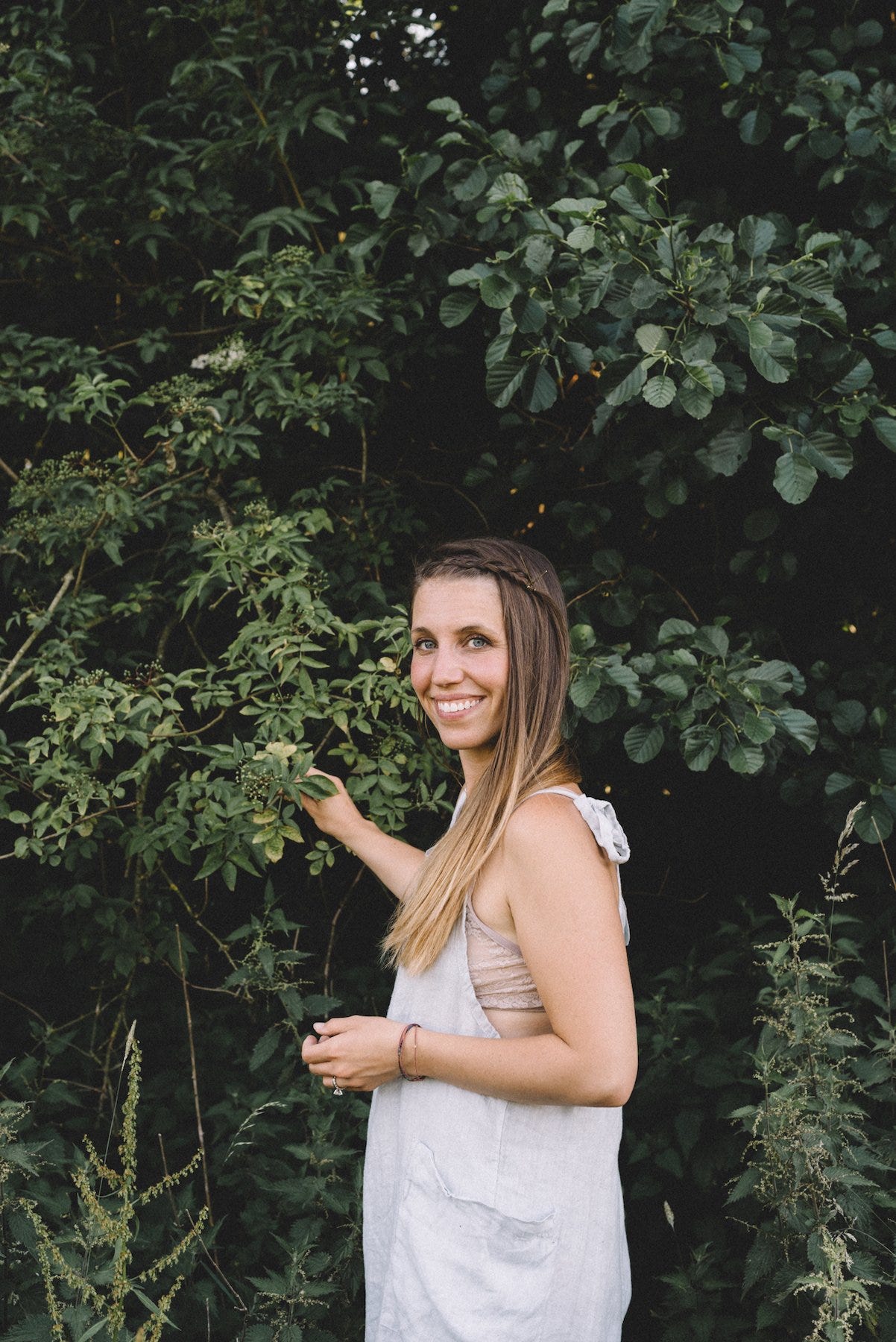
I’ve been intuitively and spiritually tuned-in since early childhood and I was fortunate to have a loving, supportive family.
Wellness
Bevin Niemann: Why Highly Sensitive People Must Stop Giving Away Their Power to Avoid Conflict
The CEO of Perceptive Souls shares her journey from feeling overwhelmed by sensory processing sensitivity to empowering a new generation of conscious leaders.
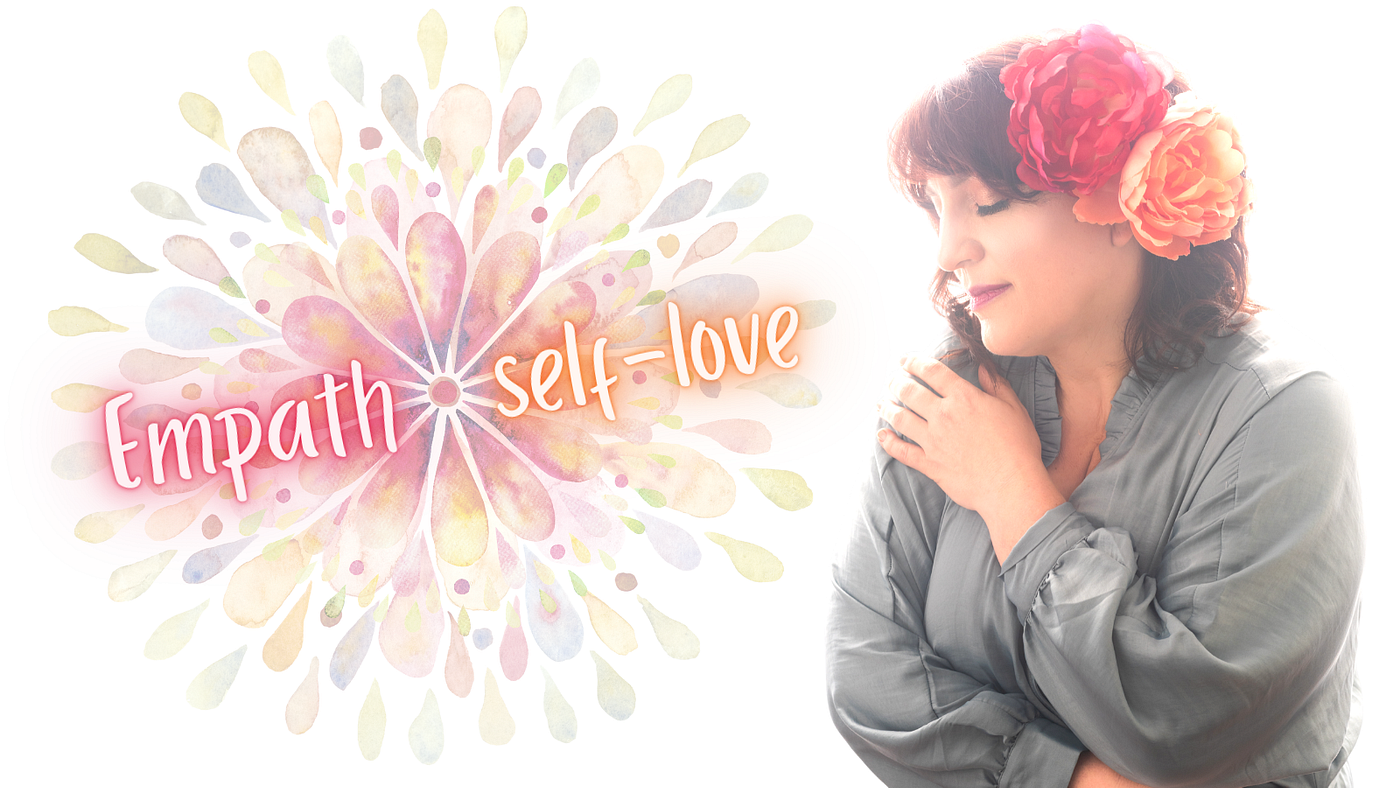
As a part of our series about How to Survive and Thrive as A Highly Sensitive Person, I had the pleasure of interviewing Bevin Niemann.
Bevin is the CEO of Perceptive Souls and a leadership mentor for empaths, lightworkers and mystics, helping sensitive people pursue their soul mission and embody their CONFIDENT presence in the world. She’s the two-time host of The Shift Network’s Evolved Empath Summit, which reached 60,000 sensitive souls with the message that sensitivity is normal and a gift. Her writing has been featured on Conscious Reminder, Mind Body Spirit Network, Medium.com, The Shift Network’s Catalyst and Elevate Life! Magazine.
Bevin leads the Empowered Sensitive Leaders community, a freely open, sacred gathering space for spiritual and holistic practitioners, conscious entrepreneurs, and empaths with a heart for service.
Thank you so much for doing this with us. Can you tell our readers a little bit about yourself and what you do professionally?
I’ve been intuitively and spiritually tuned-in since early childhood and I was fortunate to have a loving, supportive family (which is not the case for many sensitive people). Yet, when I ventured out into the big, wide world, I often felt misunderstood and misperceived. Bevin, you think too much. Why can’t you just let this go and relax? Do you always have to make a big deal out of everything? Because of these external messages, I disregarded my intuition, stopped sharing what I knew, and tried to turn off my strong emotions. As an unrecognized, untrained empath, I was enmeshed in other people’s energy, although I didn’t understand then why I was building such strong walls around my heart.
At age 40, I experienced a spiritual re-awakening; this is when I became aware of research on the temperament trait of sensory processing sensitivity, commonly known as being a highly sensitive person. When I learned 1 in 4 people are sensitive, I immediately wanted to connect with others like me.
Up to that point, I’d been living like an introverted hermit, but I summoned my inner courage and invited a small group of highly sensitive people into my living room for a workshop called Sensitivity 101. At the end of the event, we stood together in a group hug, with tears streaming down our faces. We had found our tribe!
As I continued to lead these grass-roots gatherings, it didn’t take long to realize this was a huge part of my life purpose — to be a loud and proud advocate for what I call Perceptive Souls, the combination of being highly sensitive + empathic + intuitive + a spiritual seeker.
Nine years later, having worked with thousands of sensitive clients, the focus of my work is shifting to meet the rising energy. Many sensitive people spent a number of years in therapy and with various healing modalities to reframe their past, heal old, dysfunctional patterns, and are now actively seeking a way to make a difference. They’re ready to use everything they’ve personally learned, to reach a hand back to those just a few steps behind them. It’s why I became a mentor, to pass on what I’ve learned to the next generation of sensitive leaders.
Can you help define for readers what is meant by a highly sensitive person? Does it simply mean that the feelings are easily hurt or offended?
I was honored to be amongst a small number of practitioners to study directly with Elaine Aaron, Ph.D., who coined the term Highly Sensitive Person (HSP), and who’s conducted more than 30 years of scientific research on our trait. Elaine outlined four core characteristics of the HSP, the first of which is depth of processing, or how a sensitive person’s brain sorts, categorizes and makes sense of everything. Sensitives are very deep thinkers and great at connecting patterns, which makes us excellent problem solvers.
The second is our tendency to become overstimulated, when life comes at us too fast. We must learn to set healthy boundaries and ask for what we need, even when it’s different than what others need. HSPs have the opportunity to role model a healthier pace of life, because what’s good for a sensitive person is generally good for everyone.
Third is emotional responsiveness and empathy. HSPs respond more strongly to both positive events and negative events. A gorgeous sunset moves us to ecstatic tears, and the loss of a loved one is devastating. When a deep-hearted sensitive person expresses themselves without holding back, the people around them may become uncomfortable. It doesn’t mean the HSP was wrong for their emotional expression, but that our society has outdated ideas about emotions — favoring intellect and logic. Sensitives can be role-models for emotional intelligence.
The final characteristic is sensitivity to subtleties. We notice EVERYTHING. This is a blessing as it helps us to be conscientious, but it can also backfire if we spiral down into perfectionism. Each sensitive person can honor this gift and also needs to allow what they’ve created to be good enough.
I want to debunk the idea that everything is difficult for highly sensitive people. We’re intelligent, creative, and capable, often lauded as the best performing employees and the go-to person in our friend and family circle. However, because we live as a temperament minority in a society which is often too fast, too loud and focused on ‘superficial’ metrics, sensitives can experience challenges.
Because HSPs have a central nervous system that’s more reactive to our environment, we must pay attention at all times to how our body is feeling, to minimize overwhelm and energy drain. More than simply drinking a green smoothie or taking a yoga class, self-care must be a way of life.
I’m constantly beating the drum that highly sensitive people are not here to merely survive. When we make conscious choices about the people, environments and activities we engage with, a perceptive soul can thrive. I’m an example of someone who used to be barely getting by, and now I’m thriving on a regularly basis. Please know, you deserve to be happy, healthy, calm and vital. It’s your birthright.
Does a highly sensitive person have a higher degree of empathy towards others? Is a highly sensitive person offended by hurtful remarks made from other people?
Sensitivity is a human trait. Every human being on Earth is responsive to their environment and that includes all the people in our lives. As sensitives, we may perceive others as insensitive or less conscientious. I can’t count the times I’ve thought to myself, ‘Why in the world would someone say or do that?’
Certainly, there are a small number of people who deliberately act in ways that hurt other others. However, I’ve come to recognize most people are simply unconscious about the effect of their words or actions. Even sensitive people say or do things sometimes which are hurtful to others. We all have a shadow side. But to be crystal clear: no one deserve abuse of any kind. You do not have to tolerate harassment, bullying, psychological manipulation, gaslighting or emotional neglect. These are unacceptable and not your fault.
Let’s talk about when someone makes an off-hand remark and it hits you right in the heart, right at your core. For most of my life, I was very emotionally reactive. It’s taken time, mindfulness and lots of practice to remind myself to pause, sit with my strong emotions and feel them fully before deciding what to say or do.
Ask, who do I know this person to be? Do they always treat me this way? In that case, it’s likely time to express a healthy boundary or to disengage. If it only happened once, could I tell them how I feel but also give them grace? Or, what if I decided not to take this personally? What then would I be able to understand about this situation?
We need to cultivate our inner, compassionate observer, the part of ourselves that’s able to detach just a bit from a difficult emotional situation to see the bigger picture. Practicing being consciously responsive instead of reactive is a skill you can master. It involves recognizing we each have different ways of perceiving and we all have unique triggers. What triggers me will be different than what triggers you, based on past traumas, experiences where we felt betrayed or trust was broken, we were in danger, or someone was dismissive of our way of being.
I want to reiterate because 20% of the human population are highly sensitive and 80% are less sensitive, doesn’t mean they are less valuable, and sensitives are more (or vice versa). We don’t want to fall into a dynamic of viewing anyone who’s not highly sensitive as the enemy, who will never understand us. Most humans are moderately sensitive, so there’s a lot of common ground to meet on. It’s healthy to spend time with people who are different, as long as there’s a foundation of mutual respect and a genuine attempt to look through each other’s eyes.
Highly sensitive people can acknowledge that less sensitive people play an important role, just as we do. Plus, we must understand not everything is personal, and other people do not get to define us.
Does a highly sensitive person have a greater difficulty with certain parts of popular culture, entertainment or news that depict emotional or physical pain? Can you explain or give a story?
I’ve struggled with this since childhood. I remember as a young girl sitting with my parents, watching the news. I watched people hurting each other, extreme violence and war. I felt like an alien, like my people had dropped me off on the wrong planet.
What’s wrong with humankind? Why can’t we get along? Why do we have to hurt each other? Why are we fighting over territory, resources or ideologies? Can’t we just have peace?
It’s been my personal journey as well as for many of the sensitive clients I work with, to find a balance between being present to what’s happening in the world and maintaining a healthy energetic field. We can easily spiral down into empathy overload when we witness destructive acts, or the drama highlighted by most media outlets.
We don’t want to turn away from systemic racism, sexism, economic inequities or global climate change. We need to speak up about these injustices; many sensitive people are sacred activists.
We do though, need to understand our tolerance level. How much can you be present to highly charged events, and when do you need to detach and pull your energy back? I’ve noticed a tendency for sensitive people to feel guilty if we’re feeling good, because we witness so much suffering. We think, if I’m enjoying life, then maybe I don’t care enough. That’s not fair.
You’re not here to save the world, only to do your small part. Trust that 1.4 BILLION SENSITIVE PEOPLE on this planet are all pitching in and doing their piece to shift us into a higher level of consciousness. It’s perfectly fine to allow yourself to feel joy, rest, be happy and fulfilled in your relationships and career. When you make your mental, emotional, physical, financial and spiritual wellness a priority — you then have a greater capacity to help and serve.
Can you please share a story about how your highly sensitive nature created problems at work or socially?
I was fortunate to grow up with several family members who are also highly sensitive. None of us knew at the time, yet in our household, we celebrated being a deep thinker, heartfelt, creative and quirky. Weirdness was the norm for my family, and I mean that as a compliment.
When I went to elementary school, later to university and then into the workforce. I was shocked so much of our culture was not aligned with how I felt inside, and I struggled to fit in. First, I tried being a chameleon. Without a solid sense of Self, I shifted my beliefs and opinions depending on who I was around. I tried to be less emotionally intense by stuffing years of feelings inside my heart and my body. I tried to keep up with the pace of the corporate world, as a workaholic pulling 65-hour weeks. I was always the first one to volunteer, thinking perhaps if I did one more thing, maybe I would be appreciated.
Seeking validation from the outside eventually caught up with me. I hit maximum burnout, became extremely ill and couldn’t work for six months, which brought up intense anxiety and depression. Looking back, I view this dark night of the soul as a valuable spiritual wake-up call. Laying on the couch, feeling helpless and worthless, I had no choice but to finally embrace my intuitive, empathic nature.
Most sensitive people are too other-focused. Many of us left relationships with power-hungry people and we never, ever, want to become like that. So, we have the tendency to swing the pendulum completely the other direction, giving our power away. I’ll be whoever you want me to be, I’ll say whatever you want me to say. It seems easier, as there’s no conflict. But eventually, your true inner nature will not be denied.
I had to overcome my fear of conflict. There were multiple times when I spoke up at work when the leadership of the company was not acting in integrity. One time I got fired for being so outspoken; I literally paid the price for standing up for what I thought was right, the treatment of the workers I supervised. Getting fired ended up being the greatest catalyst for the work I’m doing now. At the time, I was running a part-time coaching business, but this was a neon sign from the Universe I was meant to put in the time and effort to make this a full-time mission.
As sensitives, we need to embrace the idea that disagreements are helpful to clarify where we end and where another person begins. We can practice conflict resolution and assertive communication skills, which allow us to hold our presence by sourcing our power from within.
When did you suspect that your level of sensitivity was above the societal norm?
As a young child, it was clear I was very different in the way I perceived the world than most people. You probably know what it’s like to share a part of your rich, inner world to be met with a blank stare or worse, a put-down. I’ve always been powerfully intuitive; I know what I know without any logical explanation. I used to dismiss these flashes of insight, prophetic dreams and constant synchronicities as mere coincidence. I ignored my intuition, which often led to less than favorable consequences. Intuitive regret is a real thing.
Now, I’m practicing being fluent in the language of energy. If we begin with the premise that everything in life is talking to us, and we decide to keep our ears open and our eyes peeled, a magical world is revealed. An energetic eco-system, where radical trust, following one sign, then another, opens you to unbelievable opportunities.
For example, my intuition led me to attend a meditation class where they were speaking about spiritual gifts where I officially recognized I was an empath (even though I’d been sensitive all my life). That realization prompted me to start a sensitive community, which then called me to become a coach to help those who attended my workshops. As a budding entrepreneur, I applied and was accepted into a Visionary Leadership program, where I asked to host what would become a hugely successful global summit. Because I listened and trusted, even when the way forward was foggy and unclear, 60,000 sensitive people from 105 countries received the message on this summit they are valuable and worthy.
See how following the energy works?
I’m sure that being highly sensitive also gives you certain advantages. Can you tell us a few advantages that highly sensitive people have?
There are so many gifts with this temperament trait. Highly sensitive people have an innate ability to know what to say and when to say it. We empathize deeply when someone is hurting, and many HSPs and empaths self-identify as healers. We have to be careful though, not to cross the line into rescuing and fixing. We must affirm that everyone is strong enough to walk their own path, because there’s a world of difference between being supportive and engaging in a co-dependent relationship.
With our strong intuition, we’re great at putting together the pieces to make a cohesive whole. This leads to innovative solutions. Many sensitive people are drawn to creative pursuits: writers, actors, musicians, storytellers. These are roles sensitives have probably held since ancient times.
Empaths are visionary. We look at the future and think, if we make this particular decision, how is it going to impact multiple generations and our planet? Let’s slow down and consider if it’s the right thing to do, instead of making a hasty decision. Because of our depth of processing and our ability to consider different angles and perspectives, sensitives make great leaders.
Whenever we feel pressured to do something RIGHT NOW, it’s fine to ask for more time. Pausing to be more thoughtful about decisions doesn’t appear to be a wide-spread norm in leadership, but it should be.
Can you share a story from your own life where your great sensitivity was actually an advantage?
My sensitive nature definitely serves me well as a coach, mentor and leader, it’s a great advantage. I’m able to connect deeply with my clients, intuit emerging patterns in the groups and communities I lead. Because of the strength of my inner knowing, I’ve been able to take risks others might not — with a sense of certainty that even if the transformation feels difficult in the moment, what emerges will always be in my best interest.
For example, I lived in the Dallas, Texas area for close to twelve years. About a year and half ago, I received a strong intuitive hit that it was time to move on. I had no idea where I to go next. I researched the entire United States, as well as several other countries. Some felt close, but not quite right.
And then, a chance meeting online prompted me to explore New Mexico. As soon as the plane touched down, I knew this was my new home — it was simply a matter of uncovering the details, when to move and where I would live. Once I’d decided, a series of difficult loses rapidly followed. I lost my feline companion of thirteen years; she would not make the 10-hour trip with me. A few weeks after, one of my closest friends left the Earthly plane, which felt like a huge void. At times during the move, I questioned, but held faith. My final week in Dallas found me driving through two feet of snow to get the rental truck and loading it in frigid weather. But off I went and never looked back.
Once I arrived in New Mexico, everything shifted in a positive direction. My health has improved dramatically, I feel so connected with the natural world and most importantly, I am cultivating a new, conscious relationship with a soulmate. I feel I’m doing the best work yet with my clients and my writing muse has been flowing. Life is good.
You see, we came here to master self-trust. A radical level of self-trust. Where we embody the notion that there is no wrong decision, everything is drawing us into deeper resonance and awareness. I’ve watched it happen time and again. Yes, the voice of inner doubt will arise, but I graciously acknowledge it and then step forward anyway. At this point, there’s no other choice for me.
There seems to be no harm in being overly empathetic. What’s the line drawn between empathetic and highly sensitive?
I love the definition Elaine Aaron created for highly sensitive people. Every sensitive client I’ve ever worked with resonates with all four aspects of the trait. She’s developed an amazing body of work and I’m excited that hundreds of other researchers around the world are also advancing our knowledge of sensitivity.
But at some point, I realized something was missing for me and a good number of the clients I served in the current scientific definition. Based on my own life experiences and after polling over 7,000 sensitive people, a pattern emerged. There’s another level: an extremely sensitive person, more commonly known as an empath.
Having worked with HSPs and empaths (and many who are both), the way I describe the difference between the traits is an HSP brain is wired to pick up on all the subtleties in their physical environment, like when someone’s body language changes.
An empath, or extremely sensitive person, has abilities that go beyond noticing in the physical world. Empaths sense shifts in energy, unfelt by most, but which are clearly having an impact.
For example, the highly sensitive part of me dives into a good book, then stops to contemplate how the paragraph on page 17 relates to a recent movie I watched, which reminds me of something I recently discussed with a colleague and inspires me to write a new blog post. My highly sensitive, depth of processing function is gathering information, experiences and synthesizing them into a new, patterned meanings.
The empath part of me sits at lunch with a dear friend who made the difficult decision to put her canine companion to sleep after a long illness. As my friend shares how she feels, I notice a ball of energy surrounding and contracting my heart. I can barely breathe; the pressure on my chest is intense. I literally feel her grief inside my body as if it were my own.
Many empaths can sense when something big has happened without turning on the news because we have the ability to tap into collective energy. Earth empaths can sense changes in seasons far in advance, or a thunderstorm a day before it arrives because we feel it in our bodies. Some empaths channel messages from those who’ve passed on, often referred to as mediumship. Other empaths experience dramatic physical, mental and emotional shifts depending on the alignment of astrological bodies.
I believe the line between being highly sensitive and empathic is thin and a bit fuzzy. Some people attribute certain characteristics and attributes to HSPs, and others to empaths. Because there’s been very little scientific research conducted on how empaths perceive the world, we often face skepticism. I’ve had doubters on social media who state, ‘Calling yourself an empath is just a sci-fi fantasy or a desire to be a special snowflake.’
It is not.
Those with empathic gifts have to continuously manage their energetic field. We must be alone every day, to be healthy and function productively. Sometimes we receive information we don’t want to know or is very painful. Being an empath requires strength, resilience and the ability to discern what’s yours, and what is not. I refer to empaths as ‘sacred mirrors.’ We’re here to bear compassionate witness to the good, the bad and the ugly of our world — without losing ourselves in the process.
Social media can often be casually callous, how does social media affect a highly sensitive person? How can they utilize the benefits of social media without being pulled down by it?
I think most sensitive people have a love/hate relationship with social media. On one hand, we have this huge desire to be connected. It’s at the core of our essence, we want to be unified with others and we’re curious about diverse experiences. And yet, so much of what’s posted on social media involves egotism, conflict, pain and desperation. People trying to prove themselves through superficial means by posting all these beautiful images, when an empath can sense underneath, they’re really unhappy. The Internet arguments, whew that’s some dense energy! Yes, there are online scammers, but there’s also the opportunity to connect with like-hearted people, speak up about injustices and make a difference. Social media is a mixed bag.
I’ve been able to step back and see the emergence of the world-wide web as a gift. At this stage of human evolution, the platforms we engage in allow marginalized people to have a voice in a way they haven’t before. It’s literally democratizing our world, bringing us closer and opening dialogues that would have never happened without this digital connection.
Are we truly ready to honor the full spectrum of human diversity? Social media is highlighting the communication and cultural competencies we possess, and which ones are still lacking.
Notice what platforms make you feel good, and which ones don’t. Be present where it resonates and leave the rest. Recognize you’re participating in a huge social experiment. It’s okay for you to express your voice and it’s okay to respectfully disagree. Blocking people who are harassing or abusive is why they made the feature. And it’s fine to stop following anything or anyone that zaps your energy. I definitely limit my exposure and draw very clear boundaries with people I don’t know, and sometimes even with those I do know.
How would you respond to something you hear or see bothers or affects you, but others comment, you’re being petty or it’s minor?
I think this happens to a lot of sensitive people because we point out things other people don’t notice. For example, the music and noise level in restaurants is often overwhelming to me. I become disoriented, find it hard to concentrate on the conversation or feel drained. I usually only go to restaurants during off-peak hours versus when it’s crowded because the sights, sounds and smells are just too much.
I also advocate for my needs. If the music is too loud, I respectfully say to the waiter, ‘I’m having a little difficulty hearing my friend. Could you please turn the music down?’ Sometimes they’re happy to oblige. A few servers have looked at me strangely. I repeat, ‘Can you please turn the music down?’ Essentially stating, this is not petty, it’s important, so all your customers can have a pleasant dining experience.
I once flew on an airplane which was freezing cold. I could feel every muscle in my body contracting and complaining — it was so frigid I hurt. I spoke up and asked the flight attendant to raise the temperature, which they did. Five minutes later, I noticed my own body relaxing as well as the bodies of the passengers around me. My willingness to speak up for my needs also helped everyone else on the plane.
Sensitive people need to practice asking for what we need, instead of worrying we’re going to be a bother. The other person may be willing to meet you there, or they may not. Then you get to choose if you stay or go.
In 2017, I focused the entire year on releasing the need to be validated by other people. What if I don’t allow myself to be defined by who others think I should be? If they don’t agree or like me, that’s their choice and I also get to choose. As you can imagine, numerous opportunities showed up to help me practice.
What are the myths you would like to dispel about being a highly sensitive person? Can you explain what you mean?
There are myths held by some who are less sensitive that perhaps something is wrong with empaths, we are too emotional, too particular, too high maintenance, too strange. The deepest wound for a highly sensitive person is to be misunderstood, and most of sensitives have been hurt by this repeatedly.
I also think there are myths we tend to perpetuate internally. It’s not just that other people assume this about us, we actually think these things about ourselves. So, we share in some of the responsibility. One of those myths is that we’re too emotionally fragile. This is just not true. Caring deeply about people and our planet is a strength. It is not a weakness.
Much of our modern society, especially the business world, has been predicated on the fact that we need to push others down in order to climb, compete or realize success. Part of my mission is to change that mindset, shift that paradigm. Our world is crying out for more empathy, compassion and connection.
What if empaths are the leading edge of the evolution of humanity? What if at some point, all humans will have the ability to sense shifts in energy? Some of us simply awakened to these gifts sooner rather than later. I believe empaths are here to role model new ways of living, being and serving. So, anytime there’s a myth that a sensitive person is overly anxious, stressed out, overly emotional, can’t handle anything, we need to call it out.
We need to stand up and say no; point out the misuse of power. We’re the ones speaking up, we’re the ones coming forward, attempting to role-model a different way.
Another myth we might unconsciously embody as an empath is that everything about life is dangerous. Every place I go to is going to be overwhelming and energy vampires are everywhere! Someone can absolutely choose to hold that belief, but I’m choosing to practice sovereignty over my energetic field. Nothing gets in unless I allow it, so there’s a next level of personal responsibility I’m taking.
As you know, one of the challenges of being a highly sensitive person is the harmful and dismissive sentiment of why can’t you just stop being so sensitive? What do you think needs to be done to make it apparent that it doesn’t work that way?
I think it’s our responsibility to educate both highly sensitive and less sensitive people about our trait. I’ve educated my doctors, my financial advisor, my family, friends, my massage therapist and work colleagues. In those rare incidents when someone makes an offhand remark, my response would be:
Maybe you’re not aware that over thirty years of scientific research has shown 20 -25% of all human beings have a brain and central nervous system wired to be more responsive to the environment. Yes, I am a highly sensitive person and that means I think about everything more deeply and express stronger emotions.
It’s literally how my brain is wired, just like you have specific characteristics because of your neural pathways. It’s not something I can change any more than I can change my eye color or my height. These are innate traits, and therefore there’s nothing wrong who I am. It’s just different than the way you are.
Initiating that type of conversation takes courage, especially when you’re a triggered. Maybe the person will be open to your perspective, or maybe they won’t. Regardless, you took a stand for yourself, and for billions of sensitive people across our world.
You are a person of great influence. If you could inspire a movement that would bring the most amount of good for the greatest number of people, what would that be? You never know what your idea can trigger.
I’ve been working every day to be a catalyst for a global movement of Empowered Sensitive Leaders. I believe highly sensitive people and empaths have exactly the gifts our world needs, yet we need to know we’re not taking on some of humanity’s biggest challenges alone. We need to connect in aligned communities, acknowledging and reinforcing the sacred activism already taking place. It’s less about creating something new and more about recognizing sensitive people have always been, and will continue to be, the voice of our collective conscience.
Can you share with us your “5 Things You Need to Know to Survive and Thrive as a Highly Sensitive Person? Please give a story or an example for each.
Please reference my video at https://youtu.be/hcQmQgB7eZ8
How can our readers follow you online?
Website: www.PerceptiveSouls.com
Empowered Sensitive Leaders Community: www.1millionempaths.com
This was very meaningful, thank you so much! We wish you continued success!
PB
Written by
Penny Bauder
Editor & Journalist · Authority MagazinePenny Bauder is a senior columnist at Authority Magazine covering Tech and Social Impact, conducting primary-source Q&A interviews with founders, executives, and industry leaders.

Published inAuthority MagazineTop Lessons, Top Authorities · 42K Followers
Exclusive, curated interviews with the leaders and changemakers shaping tomorrow. Leadership lessons, industry deep dives, and executive profiles.