When I started practicing I used to share every detail with patients about their condition outlining all the possibilities of what they may be suffering from.
Wellness
Sanjay Juneja: Inside the Quest to Demystify Cancer Care Through Social Media and Digital Patient Education
Triple board-certified oncologist Dr Sanjay Juneja shares how losing his eyesight in high school shaped his empathetic approach to patient education and digital advocacy.
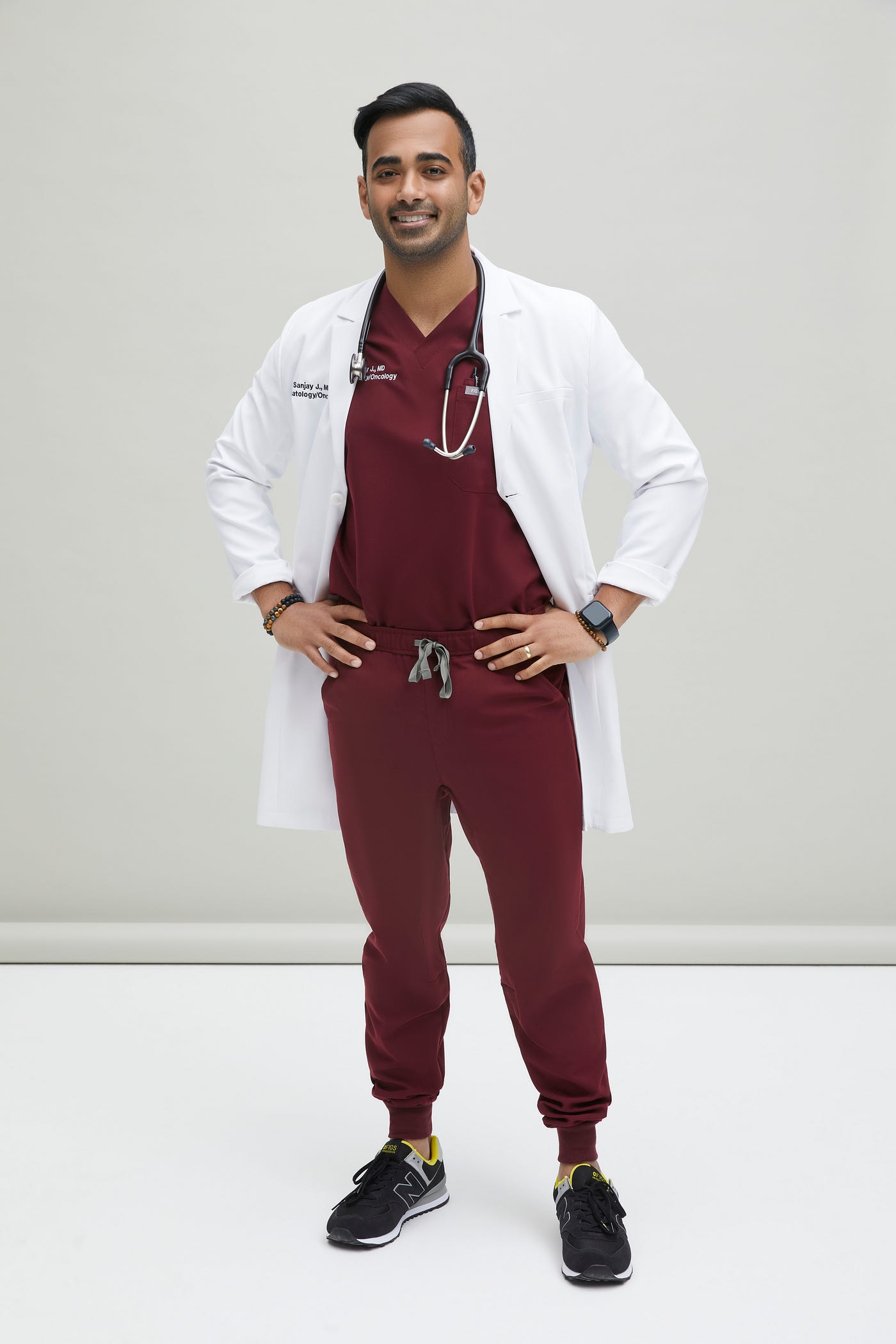
As part of my series about healthcare leaders, I had the pleasure of interviewing Dr Sanjay Juneja.
Dr Sanjay Juneja is a passionate, influential, and triple board certified hematologist and medical oncologist and Chief Medical Officer of the Cancer Channel on the online health and wellbeing platform Doctorpedia. Better known online as ‘TheOncDoc’, he prides himself as a social media educator and medical influencer with over 500,000 followers. He’s also a regular guest on TV news channels and podcasts, and has partnered with several cancer organizations to support awareness initiatives.
During his time at Louisiana State University (LSU) School of Medicine, Dr Juneja developed a strong appreciation of the pivotal role of education in supporting patients through medical challenges, including cancer, by empowering them with a solid understanding of their diagnosis and treatment.
After completing residential training in Internal Medicine at LSU’s Health Sciences Center, Dr Juneja served as a Chief Fellow in Hematology/Oncology at the Feist-Weiller Cancer Center in Shreveport, LA. In 2019 he returned to his native city of Baton Rouge to work with the Hematology/Oncology Clinic, an American Oncology Network division. He was certified by American Board of Internal Medicine in Internal Medicine, Hematology and Medical Oncology.
Thank you so much for joining us in this interview series! What is your “backstory”?
I actually wanted to become a teacher for much of my childhood. It was not until I temporarily lost my eyesight in high school after an accident that I considered a future in medicine. As scary a situation that might have been for someone so young, it wasn’t at the time and I was not sure why. Later, I realized that was because my ophthalmologist taught me everything about what was happening to me. We’d set small goals to work towards and he’d help me every step of the way. That’s when I learned the value of teaching and education as it related to medicine.
It’s been a long but rewarding road over 14 years of training with three specialities. More recently I got involved with social media, sharing content on cancer and other scary conditions where I’m trying to make them relatable and easy to understand for patients, and I’ve now gained half a million followers. My core focus here is to educate people and help them on a much bigger learning journey with health-related issues, whatever they may be.
Can you share the interesting story that happened to you since you started your career?
I never planned to become a social media influencer. In fact, I didn’t even have Twitter — still don’t in fact — or use Instagram before going into practice. I simply began posting idiosyncrasies or anecdotes about medical culture on social media and have now become a landing station for people wanting information on cancer and blood disorders. A number of my followers have gone back to their doctors saying, ‘hey I think I’ve got such and such’ and many have told me their lives have changed since accessing some of the content. I am proud to share online, particularly as it pertains to anemia and nutritional deficiencies. It’s really rewarding to be able to go far and wide to connect with people who I would otherwise be unable to reach outside the radius of my practice.
Can you share a story about the funniest mistake you made when you were first starting? Can you tell us what lesson you learned from that?
When I started practicing I used to share every detail with patients about their condition outlining all the possibilities of what they may be suffering from. There was however an older patient in his seventies who came to see me with his wife. I started covering all of the things that could potentially be of concern, and excitedly explained why those did not apply to his case, lab by lab. The next day he called us to say he and his wife had been up all night wondering whether he did, or did not have those scarier diagnoses we talked about. That’s when I realized that though I may be excited to teach facts I find interesting, not everyone may be. That’s where I learned to be more adaptive in my delivery to patients. Now when I find myself starting to talk about the, “now if your labs had shown this…”, I’ll catch myself and stop to ask if they’re interested in this, or want to check out.
Are you working on any new or exciting projects now?
I’m very pleased to be working with Doctorpedia, a global platform where we are collaborating to make information about health and wellbeing easily accessible and free for patients so that they can feel more comfortable with their health and medical decisions.
We know it’s hard to get enough face-to-face time with physicians in America, and that despite the plethora of information online, it’s difficult to navigate what is relevant or applicable. I am Chief Medical Officer of the platform’s oncology channel where we go top to bottom in sharing every step of the process surrounding a cancer diagnosis, not only for patients but also for family members so they have the knowledge of how they can best support them.
None of us are able to achieve success without some help along the way. Is there a particular person who you are grateful towards who helped get you to where you are? Can you share a story about that?
That person is my wife, who continues to inspire me to be like her. Though we are arguably quite different on the surface, she has been a constant reminder about the importance of grace and humility in tackling life’s challenges. She is also an oncologist, and is actually the mastermind behind a lot of my content in the social media and online space. Although charming and radiant, you won’t find her behind the camera as it’s well outside of her comfort zone.
I always joke that she is twice as smart and twice as humble as me, so I have to double down on the bravado for both of us.
Is there a particular book that made an impact on you? Can you share a story?
The Art of Body Language has been influential as it highlights how much is communicated between people that isn’t said out loud. One of my favorite quotes is “we have different tongues but we all share the same primary language — and that is body language.” I think this is particularly true when it comes to cancer and physicianing. With the doctor patient relationship there’s often times things are left unsaid, and it is productive to be aware of cues on whether someone’s scared, or confused, etc. As an oncologist you need to quickly adapt to the feelings of those in the room so you can support them best.
How have you used your success to bring goodness to the world?
Because of my personal experience of the power of education during my eyesight loss, I try my best to educate others while also putting them at ease. That’s certainly my objective in my role with Doctorpedia and on social media. Cancer is debatably the most intimidating diagnosis a person or family could receive, but if you could equip someone with what is ahead and empower them with education, then it can make something a little less scary. That’s the ultimate goal with tangible education on social media — help those who need and deserve more. I’m humbled by the feedback I’ve been given during this journey, especially online where I can help people that I couldn’t otherwise reach.
Can you please give us your favorite “Life Lesson Quote”? Can you share a story about how that was relevant to you in your own life?
It’s Mark Twain’s quote: “Kindness is the language that the deaf can hear, and the blind can see.” It’s a language that we should all use to interact with each other. Outside or underneath the dialogue we all have to engage in, there’s always a subtext and, if that subtext is kindness, we could all be better off navigating this world with other factors that aren’t in our control. To behave that way, doesn’t cost us anything.
Can you share your top three “lifestyle tweaks” that will help people feel great?
A valuable lesson I learned in residency was ‘fool me once shame on you, fool me twice shame on me.’ If you can promise yourself that if you make a mistake, no matter how big or small, that you will not harp or fixate on it but instead ensure you will never do it again and move forward, you will be doing your psychological headspace a big favor.
Periodically consider whether all of the things in your life at any given moment are (1) sustainable, and (2) something you want to be present even ten years in the future. It sounds silly, but doing this will ensure you don’t spend a large portion of your life with a situation or a relationship that did not fulfill you wholly. You deserve to be surrounded by the things that make you better, and happy. And this does not necessarily mean let go of those things immediately, but it prompts you to take action and construct a timeline on when you would like those circumstances to change, and how.
Be grateful every day, for something. Whether it’s a “thank you” you received, or taking a second to be happy to be doing what you’ve always wanted to do, be grateful. It protects burnout and makes stressors a little stressful.
What are your “5 Things I Wish Someone Told Me Before I Started” and why. (Please share a story or example for each.)
- You should always be aware of the human nature — the adaptation to people’s needs, and emotions. You can’t remove that from medicine — it’s part of it, but unfortunately often neglected. They call it “practicing medicine” because you’re always learning and will never be perfect, but you should also as eagerly be conscientious on how you interact with people, perceive their needs, and develop yourself with your experiences through the years.
- You will never feel comfortable, or at least you shouldn’t. If your desire or fulfilment in life comes from being the master of something, then this field may not be the right field for you, especially in oncology. In fact, it may be dangerous. With the rapidity by which this field is growing, new research and novel therapeutics — let alone the general understanding of cancer itself — you should never feel comfortable that you have mastered it. Instead, you should be fervently chasing its growth and trying to consume as much volume as you can, and be okay that you will never eat the whole piece.
- Realize that there are external factors, administrative and bureaucratic, that will disrupt your ability to practice medicine for its essence alone. If you expect to be able to practice medicine without cumbersome and sometimes frustrating factors that interfere with patient care and relationships, you will be at risk of burnout. Instead, embrace the moments where magic happens just as you hoped to have it when you started your pursuit for medicine, and accept there will be non-science based challenges that simply come with its practice. You’ll persevere through it.
- As resident I always told myself that I would be autonomously in control of prioritizing family over my work schedule, but that’s just not true. You will have to regularly make difficult decisions and sacrifices. Do you spend extra time with a patient’s family member who could not make it to the hospital to repeat everything on their daughter’s new cancer, or go to your son’s baseball game after missing the week’s previous game for the same reason? I’ve learned it was naïve to think you’re in a position where you can have complete control of your day or schedule if you operate with emotions and empathy. And thus, there will be instances your family endures a disappointment for choices you had to make that they, by all accounts, never had a choice on.
- You’re not going to be the doctor that beats the ‘always late’ stereotype. I say this half comically but not only is it true, it’s also a more representative allegory of being a physician as a whole. Whereas I may have naively thought being on time was based on personal discipline, I quickly realized you give up a large amount of autonomy in practice, but conversely you should rightly take responsibility for those external factors. You learn grace quickly. It doesn’t matter how early you get in to work or how little you sleep, you cannot account or prepare your schedule for patients that had to be late, or unexpected imaging results and treatment toxicities, or even family members that are now in town for a visit, eager to know everything about someone they love. It’s important to learn to be okay with being imperfect. You go from spending the first 30 years of your life with precision level schedules, discipline and accountability and overnight have to be okay with letting a large amount of daily autonomy or predictability go.
If you could start a movement that would bring the most amount of wellness to the most amount of people, what would that be?
It’s important to take a step back and acknowledge there are several problems with our current healthcare system, but also that there isn’t purely one bad player — at least as it pertains to patients and working medical professionals. First and foremost, we should all recognize and acknowledge that ultimately, patient care is suffering from the seemingly disjointed and fragmented constituents of the healthcare system that seem to be evolving independently. On the flip side, we as patients also need to acknowledge medical professionals are also just pieces of a large system and they too experience frustrating mandates and impositions that patients also experience. In under- represented communities that do not have enough specialists to meet the volume, more time seeing patients also means more time — as long as 3–4 weeks — that a patient and family with a new cancer diagnosis has to wait on that same oncologist for information and begin treatment. These are both awful things for patients, right? For this reason, doctors and patients are required now more than ever to collaborate as a team and to make up for the shortcomings in the healthcare system. That is why education is so critical.
The more we can spend on education and empowering someone with the knowledge of their health, the more qualitative and high yield those healthcare visits can be.
We are very blessed that some of the biggest names in Business, VC funding, Sports, and Entertainment read this column. Is there a person in the world, or in the US whom you would love to have a private breakfast or lunch with, and why? He or she might just see this if we tag them :-)
This is an incredibly hard decision, I mean there’s so many greats including Lil’ Wayne, Hasan Minhaj, Cobie Smulders…but I think I’m going to have to go with Bradley Cooper.
What is the best way our readers can follow you online?
TikTok, Instagram, Youtube: @Theoncdoc
Doctorpedia link: https://www.doctorpedia.com/doctor-profile/sanjay-juneja/
Thank you so much for these insights! This was very inspirational and we wish you continued success in your great work.
LK
Written by
Luke Kervin, Co-Founder of Tebra
Columnist & ContributorAuthority Magazine Columnist & Contributor

Published inAuthority MagazineTop Lessons, Top Authorities · 42K Followers
Exclusive, curated interviews with the leaders and changemakers shaping tomorrow. Leadership lessons, industry deep dives, and executive profiles.