Having lived with OCD and ADHD my whole life made me so fixated on having a good routine and having things in order. However, when I progressed in my real estate career, I had more responsibilities, and so I could no longer manage my routine, and I lost it, which led me to a path of depression and anxiety.
As a part of our series about Women Founders, we had the pleasure of interviewing Liana Lazarevski.
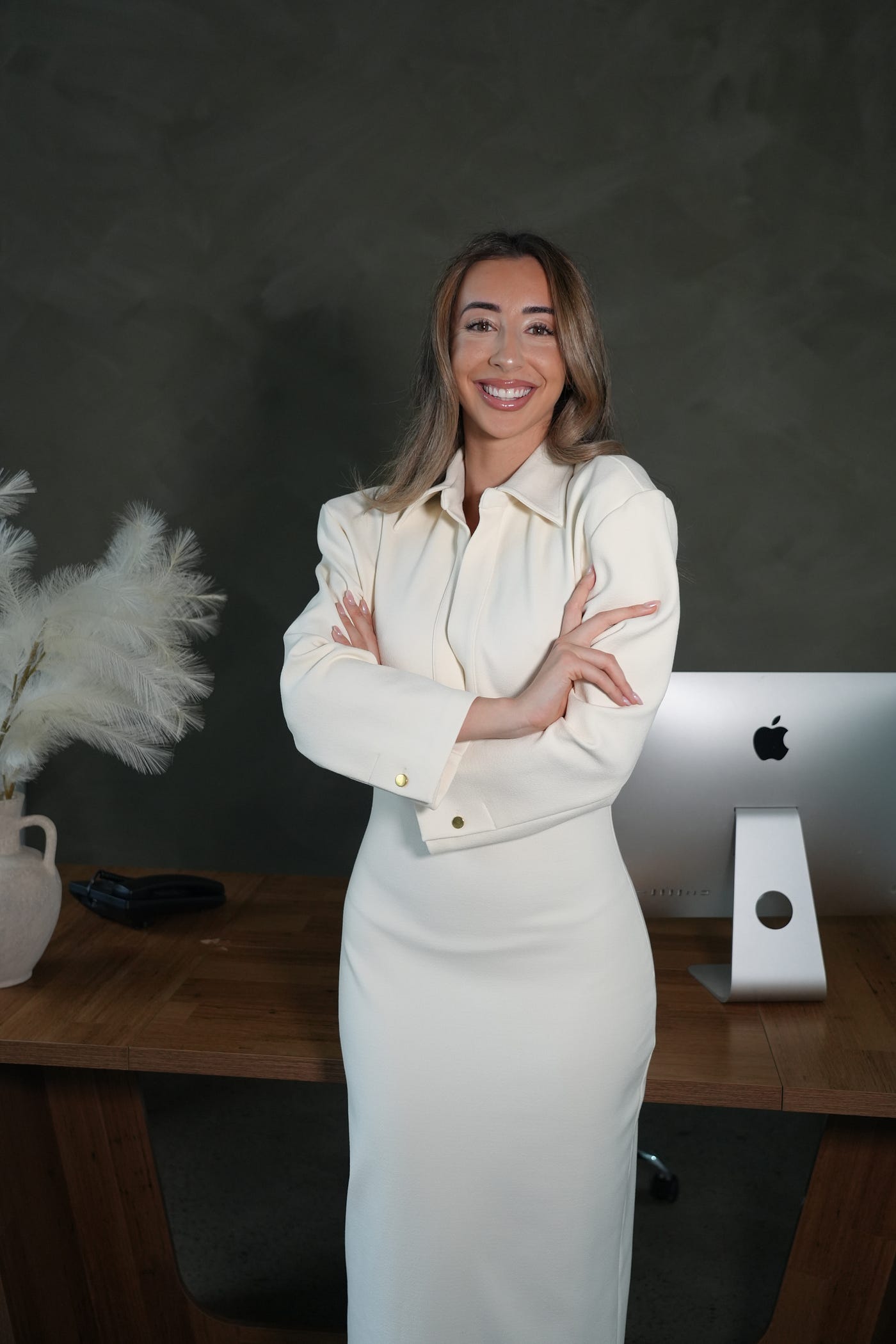
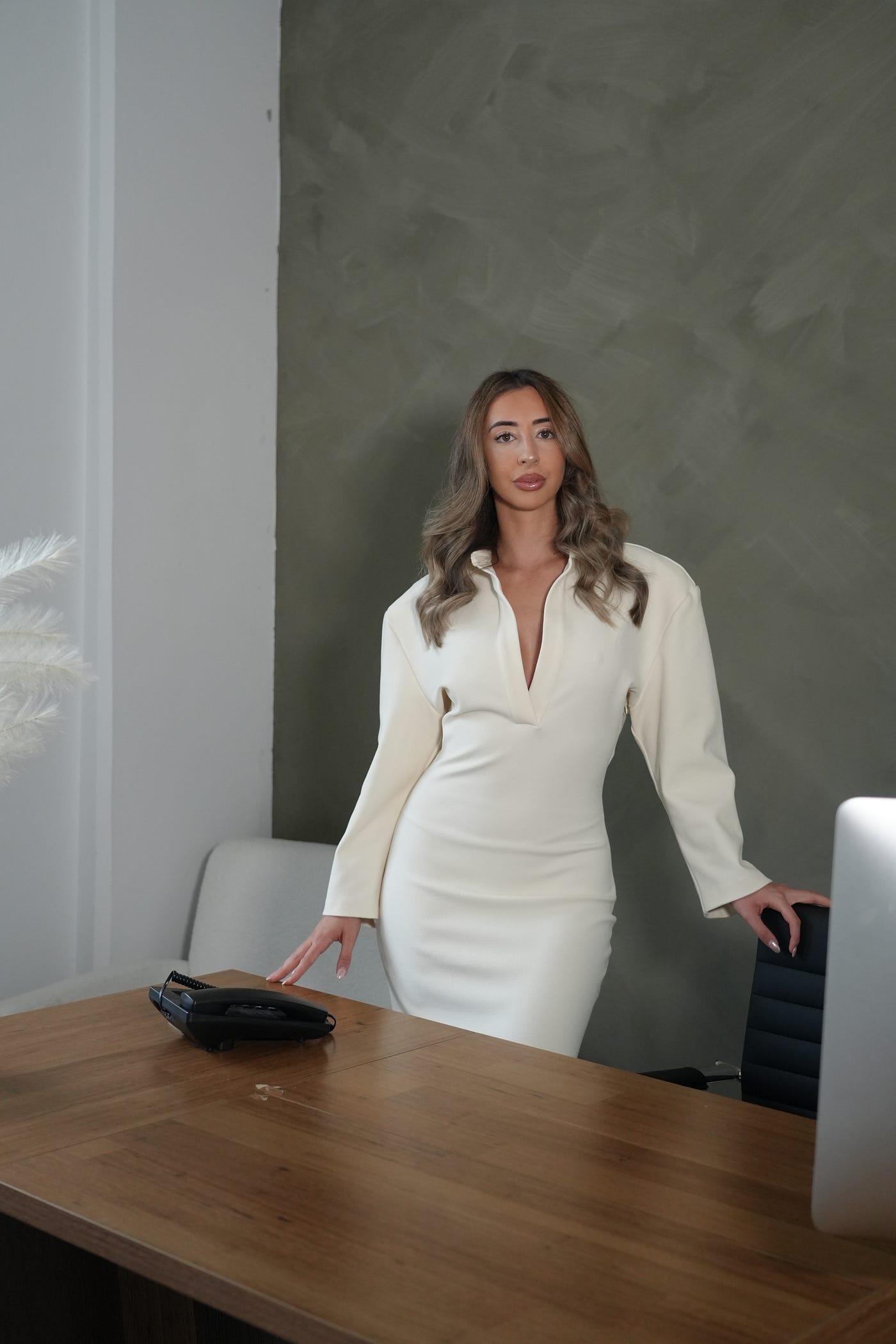
Liana Lazarevski is an Australian entrepreneur, founder of Routine. Beauty, actress, and model driven by innovation, creativity, and building meaningful businesses that stand out with a point of difference from her competitors. Her philosophy of Routine. is centred around a personal problem, turning it into a mission and vision to teach people about Routine. and how it can change one’s life. The brand is bigger than just skincare.
Thank you so much for joining us in this interview series! Before we dig in, our readers would like to get to know you a bit more. Can you tell us a bit about your “backstory”? What led you to this particular career path?
Absolutely, first of all, thank you for having me. I’m so excited to share my journey and talk about all things business and women’s empowerment. It all began standing at the front of my house with my dad, seeing two men rock up in a Mercedes-Benz and come out in suits to sell the house across the road at an auction. I asked my father what these people do, and he said these people are real estate agents. And I said, “Do you have to go to university to become a real estate agent?” Because at the time, in school, as young kids, we were taught that if you go to university, that means you’re successful, and if you don’t go, there’s no other way to success. And so he said to me, “No, you don’t. You can go to TAFE.” And so I asked, “Can you make as much money as you want?” And he said, “Yes, you can earn your own commission.” And so at that point, I realised I wanted to be a real estate agent. Determined and set on my path from a young age, I moved from a Catholic school to a public school so that I could complete my TAFE course in real estate and be ready to enter the industry as soon as I finished high school. I started my course, and I absolutely loved it. I wanted to start properly and learn everything from the ground up. I have always believed that there are no shortcuts or cutting corners. My dad always taught me that if you’re going to do something, do it right or don’t do it at all. So, nine years later, I’ve worked my way up through almost every position in the industry, starting as a receptionist and progressing to leasing consultant, property manager, sales assistant, sales associate, sales executive and sales agent. Eventually, I made my way to one of the most prestigious agencies in Australia’s Eastern Suburbs, The Rubinstein Group. Then I realised that I couldn’t actually make all the money in the world because there was only a certain number of houses I could sell in a year. On top of that, I realised I couldn’t become the entrepreneur I wanted to be because I was limited to working for one company. I loved selling, but I no longer wanted to sell houses. I wanted to sell something else. I wanted to sell something I loved. So at that point, everything was aligned to start Routine. John (my partner and co-founder) and I sat down and went through all the different avenues that led to starting Routine. He had a love for creating and building businesses, especially innovative products. I had the same passion for creating innovative products and building a brand. Having lived with OCD and ADHD my whole life made me so fixated on having a good routine and having things in order. However, when I progressed in my real estate career, I had more responsibilities, and so I could no longer manage my routine, and I lost it, which led me to a path of depression and anxiety. It was at that point that I realised how important my routine was and that it meant everything to me. So, when it came to naming the business, the first thing that came to mind was Routine. I wanted a name that symbolised something personal to me, and I had come to realise just how important routine is in every aspect of life: your health, your skin and your mindset, everything.
Can you share the most interesting story that happened to you since you began leading your company?
The most interesting story is definitely our viral product and the way we came up with it. We had been overworked and stressed with our first product, the red and blue light therapy device. It was a little bit more expensive, and I think it was a hard product to sell because it took some time for people to actually see results. It wasn’t a cheap impulse buy. You needed to use it consistently, and I think a lot of people also just didn’t know much about red light therapy. At that point, I was really stressed. I had become so overworked that I had developed under-eye bags from the stress of running the business. We were looking at a new product and thought, why don’t we invest in something that could actually make a difference, starting with my under-eye bags. We then started looking into patches and went through the process of investing in and developing these completely different, unique patches that hadn’t been seen before. They had a needle-like format, with the external side designed to stay dry so they wouldn’t lose any moisture. The serum itself also had to be something different because all the other patches were so similar and never really seemed to change anything. That journey was the next step towards us actually succeeding. We created the product, it went completely viral, and the business took off. It was kind of ironic because we were so overworked from the business and nothing was really taking off, and it ended up being that exact problem to which we found a solution, to which then we ended up finding the success from that solution, so it was actually really sentimental to John and I.
Can you share a story about the funniest mistake you made when you were first starting? Can you tell us what lesson you learned from that?
The funniest mistake we’ve made would have to be our first photo shoot for the business. I feel like we haven’t actually learnt this lesson, to be honest, because we keep repeating the same cycle. Our first photo shoot was up on the Gold Coast because we had a few connections there, and a few things aligned with the models, the photographer, and the studio. We had planned this whole photo shoot, and then we were notified that we might not have our product in time. Obviously, the product was what we needed to do the photo shoot for, and there was a chance it wouldn’t arrive in Sydney before we had to travel to the Gold Coast to do the shoot. We were pulling our hair out and stressing. We ended up changing one of the delivery addresses to John’s parents’ home on the Gold Coast so we had a backup in case our initial box didn’t arrive. To be honest, we weren’t in any rush. This could have very easily waited, but it’s just the way John and I are. We like being frantic, and we’re always running towards getting everything done ASAP. We finally got to the Gold Coast, and our products arrived the day before we left, which was crazy. We got to the Gold Coast and had everything ready to go. Then, the night before the shoot, the model actually said she might not come because she had some skin concerns, and she was the face of the shoot. So we were freaking out again, only to find out in the morning that she was completely okay, her skin was good, and she was coming to the shoot. We also almost missed the first half of the photos because we were running late. It was a complete success towards the end, but the whole process just felt like a disaster. We were so stressed. And to answer that last question, we actually haven’t learnt that lesson because we did the exact same thing for our last shoot, which was a few weeks ago. We basically had everything planned in two days. We almost didn’t have our sample product arrive in time, which is our new peptide serum we’ve just released, we almost had an issue with a model, and we had to organise another model just two days before the shoot. So I don’t know why we keep doing this, but I think we definitely need to learn our lesson. This is a good question to remind us to actually learn it!
None of us are able to achieve success without some help along the way. Is there a particular person who you are grateful towards who helped get you to where you are? Can you share a story about that?
Absolutely, my co-founder and partner in life, John Di Genua. He is the most successful man I’ve ever met in my life, both from a personal perspective and from a business perspective. The business would not be where it is today if it wasn’t for him. I’ve never met anyone like him. His perseverance and strength to overcome any challenge is inspiring, but most importantly, his dedication to achieving his goals. The amount of energy, time, and effort he has put into this business is truly incredible. I don’t know anyone who can work as hard as him, so he’s definitely added immensely to the success of Routine.
Ok, thank you for that. Let’s now jump to the primary focus of our interview. According to this EY report, only about 20 percent of funded companies have women founders. This reflects great historical progress, but it also shows that more work still has to be done to empower women to create companies. In your opinion and experience what is currently holding back women from founding companies?
In my opinion, I feel it’s the basic things that are holding women back from building a business: the responsibility of having a family, being a mother, holding the house down, being a wife and being a daughter. All of these things are already a huge job, and so I feel that women naturally have this thought: How could I also run a business? I don’t necessarily think that it’s the outside world. More so, I feel that nowadays we are in a very open and inviting society around women working and being founders, which I’m proud to acknowledge. I want to enforce that more and more through my work and mission, but I will say I think the external side of things isn’t a factor when I talk to a lot of women. It’s usually their personal responsibilities that are holding them back from building a business.
Can you help articulate a few things that can be done as individuals, as a society, or by the government, to help overcome those obstacles?
I believe this tall poppy syndrome towards people starting a business is daunting, and I think there are always a few things that can be done to overcome these obstacles as a society. From a community perspective, one being as individuals, to support one another and be kinder. Even from a female founder perspective, I get negative commentary on social media and things that are not necessary when all I’m trying to do is get my product into people’s hands to experience results and give women confidence in their skin. And so that can be really daunting for a first-time founder. As a society, I think we need to talk more about the effects bullying has towards everyone. I think we need to educate the younger generation as well in regards to how we communicate, how we support, and how we should lift one another up. Specifically from the Australian government, they need to take our founders more seriously and work in their best interest because they’re usually the ones providing employment for people, paying a huge amount of tax, and providing new opportunities for people. I feel that small business owners are always treated poorly, constantly being pushed around by the government and not respected enough.
This might be intuitive to you as a woman founder but I think it will be helpful to spell this out. Can you share a few reasons why more women should become founders?
Absolutely. Honestly, this might be the easiest question I can answer! I believe when you start, own, and run a business, it forces you to become the best version of yourself to sustain and grow that business. It leaves you with no other option, and it truly is life-changing. I have become the best version of myself because of this business journey, and I want that for women. I want them to feel their best. I want them to experience what I’m experiencing, and that’s why I’m such a huge advocate for women becoming founders.
What are the “myths” that you would like to dispel about being a founder? Can you explain what you mean?
I would say a common myth about being a founder is that you need to listen to everybody when it comes to advice about business. You don’t. Don’t listen to everyone’s advice because it’s not going to be relevant to you, your business, your vision, or your future. Take parts of it and just truly sit with it and think about what benefit that could have towards you and your future, and if it is the right piece of advice for you. Every time I have done this, I have ended up in a better position. Additionally, another myth is that everything needs to be perfect before starting and that having an audience is a necessity straight away. I don’t think that’s right at all. Your business starts when you start. Tiny bits of work compound into the bigger story and the success. Start and worry about perfecting and changing later once you know your audience.
Is everyone cut out to be a founder? In your opinion, which specific traits increase the likelihood that a person will be a successful founder and what type of person should perhaps seek a “regular job” as an employee? Can you explain what you mean?
Yes, I do believe that everyone can be a founder. However, you need to be willing to learn and humble enough to know that you don’t know everything. Coupled with the discipline to implement that knowledge and work day in and day out without giving up. Everyone has it in them to be a founder and entrepreneur, but the truth is they allow the fear to overtake that. We’re all capable of something special. Most of us just choose the easy way. We can change, and we can improve. Those are choices, and we have to make them and stick to them. So, do I think that everyone is cut out to be a founder? Yes, I do, but it comes with those two frameworks mentally in order to grow the business.
What are your “5 Things I Wish Someone Told Me Before I Started” and why?
1. The sooner you leave a job that isn’t making you feel your best, the sooner you will feel your best — As seen with my transition from real estate into beauty. I knew where my passions were focused, and I explored that further. Which resulted in what I do today — Routine. Beauty.
2. Invest in yourself before you invest in the business — Knowing your personal limits is a necessity in balancing work and life. I learnt that the hard way with overwhelming myself in my previous job and losing my routine. Coming back from that low point, I invested in myself, found my routine, and ultimately found my mission for my business along the way.
3. Take time to enjoy the process. Every stage is an experience. Enjoy it — We’re still learning this. Most founders get swept up in the chaos, and it’s easy to do, especially on photoshoot days! But pausing to acknowledge how far we’ve come keeps us grounded and reminds us why we started.
4. Hire people who actually care about the brand and are honest. Fire fast. — We hired a girl who we possibly knew at the start didn’t have the right experience or skills for the job, but we were desperate and valuable, which meant we settled for less. And that ended up costing us more.
5. Don’t say yes to everything. Your time is more valuable than you think. — At the start of our business journey I was open to anything and everything. Later I realised how much time I wasted in areas of potential opportunity I thought would benefit the business and in fact it didn’t, and my time could have been spent more wisely in areas that actually needed assistance to move the needle.
How have you used your success to make the world a better place?
For me, one of my goals is to change the world for the better through my experience and success. Right now, the things that I have done have been helping women in their business journey, teaching them, communicating with them, and supporting their businesses. That makes me feel my best, and I’m so proud of how strong these are! Looking ahead towards the future, I want to build another part of Routine that symbolises my personal journey with OCD and ADHD. Losing my routine and going through such a state of depression and anxiety reinforced how important my routine truly is and how organising systems and plans have really changed my life. I want others to feel the same and experience that. I know there are so many people with OCD and ADHD who are unable to manage a simple plan for the day. I want to help others experiencing this obstacle and find a system that works for them.
You are a person of great influence. If you could inspire a movement that would bring the most amount of good for the greatest number of people, what would that be? You never know what your idea can trigger.
This is a great question because I’ve been coming back to this statement in my own way through a lot of self reflection lately, and I think one of the biggest messages I want to preach is simply to be nicer and kinder to people. It sounds so simple, yet it’s something we don’t do enough of, and we’re not reminded enough about. Just be a good person. So many people struggle with the way they’re treated, the traumas they have experienced, the bullying, and I think if we could all make a conscious effort to encourage positive commentary and positive communication towards one another, the world would be a better place. I’m currently living by the statement — be the change you want to see in the world. There is no amount of money that could create that kind of impact, and no materialistic item that could ever replace it. I genuinely believe that being kinder to one another is one of the most important things we can do.
We are very blessed that some very prominent names in Business, VC funding, Sports, and Entertainment read this column. Is there a person in the world, or in the US with whom you would love to have a private breakfast or lunch with, and why? He or she might just see this if we tag them.
My favourite prominent person has to be Margot Robbie. I’m so fascinated with her history in acting, her determination to get into the industry, how hard she works, and how beautiful she is. She is someone i have always looked up to in many ways, and I feel very motivated by her and her achievements. She is truly an inspiring lady!
Thank you for these fantastic insights. We greatly appreciate the time you spent on this.
About The Interviewer: Vanessa Morcom is a millennial mom of three and founder of Morcom Media, a performance PR shop for thought leaders. She earned her degree in journalism and worked for Canada’s largest social enterprise. She can be reached at vanessa@morcom.media